
Quick Take
- When a Gaboon viper yawns after a meal, it has nothing to do with being full or tired. The real reason reveals something unsettling about how ready this snake always is to kill. Why vipers yawn →
- The viral caption calling Francisco's behavior 'fang fold practice' was technically wrong, and the correction actually exposes something even more alarming about how vipers work. The fang fold correction →
- The Gaboon viper's fangs aren't just record-breakingly long. Their shape makes escape from a bite physically impossible, and the design reason is more deliberate than it looks. See the fang design →
- The Gaboon viper's venom isn't the most potent drop-for-drop, yet a single strike can kill far more than almost any other snake. The reason why challenges what most people assume about snake venom danger. Explore the venom volume →
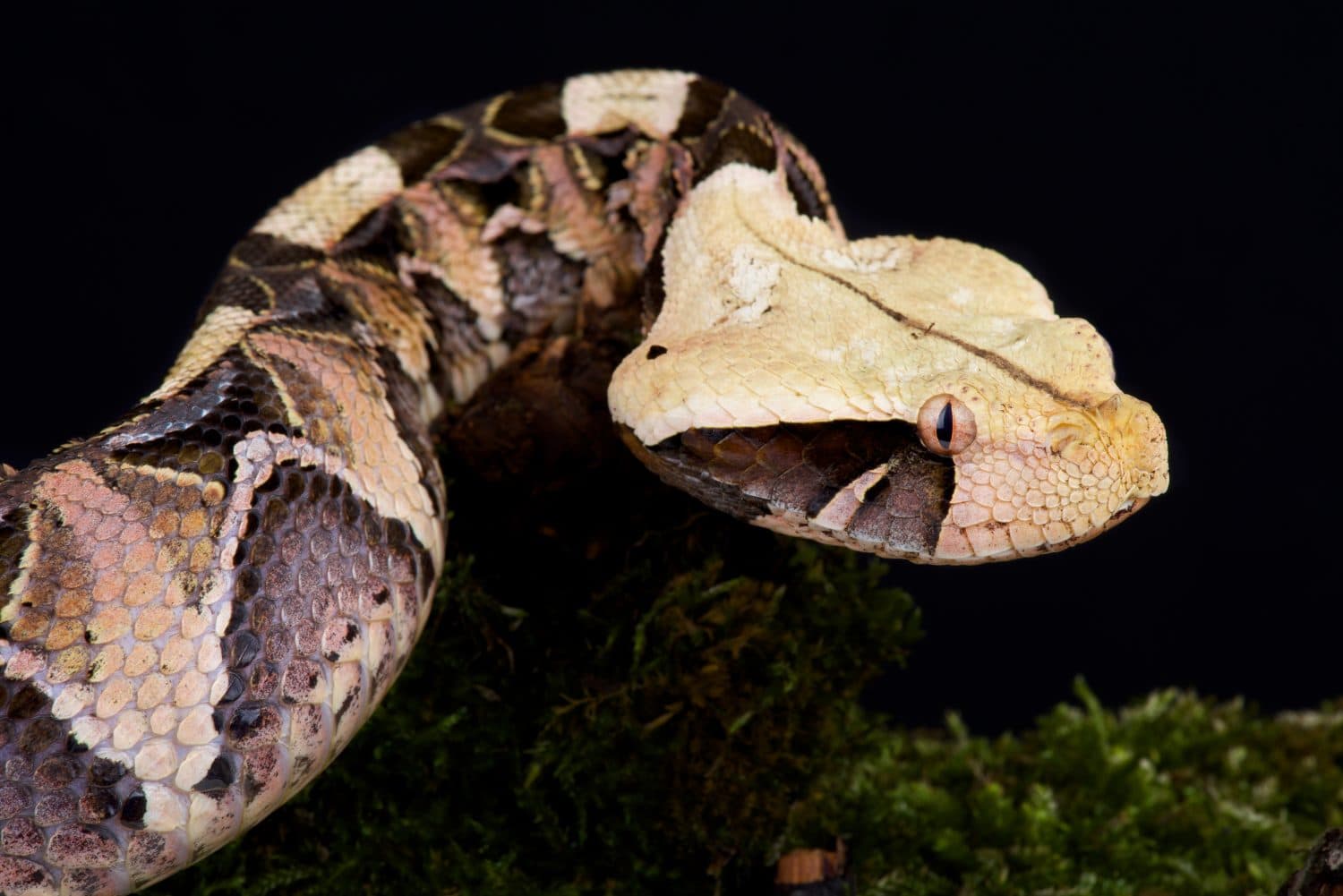
Gaboon vipers have the longest fangs of any snake on earth. The venomous species’ fangs are so long that they must retract when not in use. When Gaboon vipers strike, their fangs are released at a 180-degree angle, allowing them to take down prey at lightning speed.
One Gaboon viper named Francisco has gone viral on Instagram for his yawning. In the video, his massive fangs, which were folded seamlessly against the top of his mouth, pop out like switchblades. These retractable fangs generally only make an appearance right before a snake attacks.
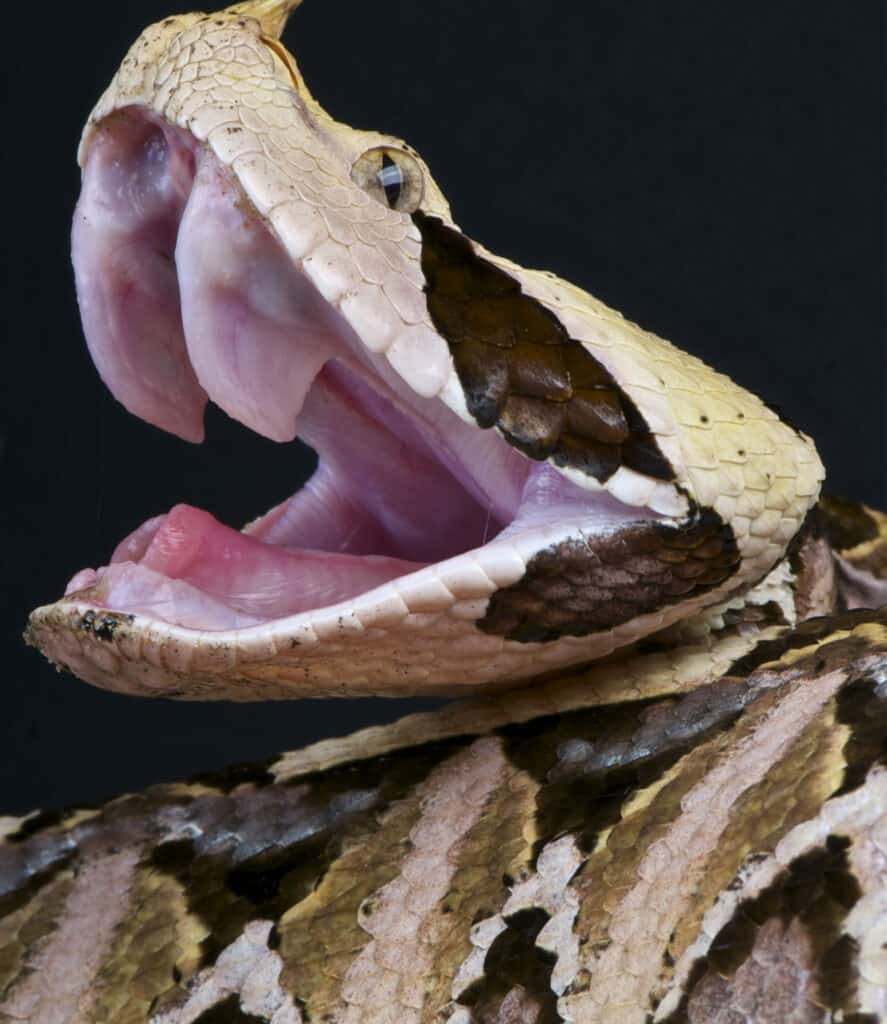
Gaboon vipers’ fangs retract against the top of their mouths, known as the fang fold.
©reptiles4all/Shutterstock.com
According to the caption, Francisco was practicing the fang fold, the position where a viper’s fangs lie flush against the roof of its mouth when not in use. This protects the fangs from being broken and prevents precious venom from seeping out.
It should be noted that the fang fold is an involuntary response. Francisco cannot choose to fold his fangs; it happens automatically. It is not something the snake is consciously practicing, as the video implies.
Why Gaboon Vipers Yawn After Eating
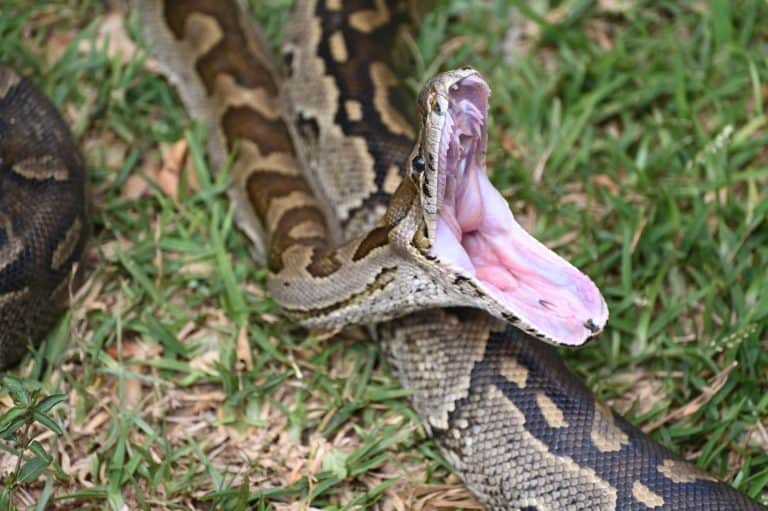
After a satisfying meal, humans are often ready for a nap. But while Gaboon vipers yawn after eating, it is not because they are satiated and tired. Instead, they yawn to reset their jaws and prepare for their next strike.
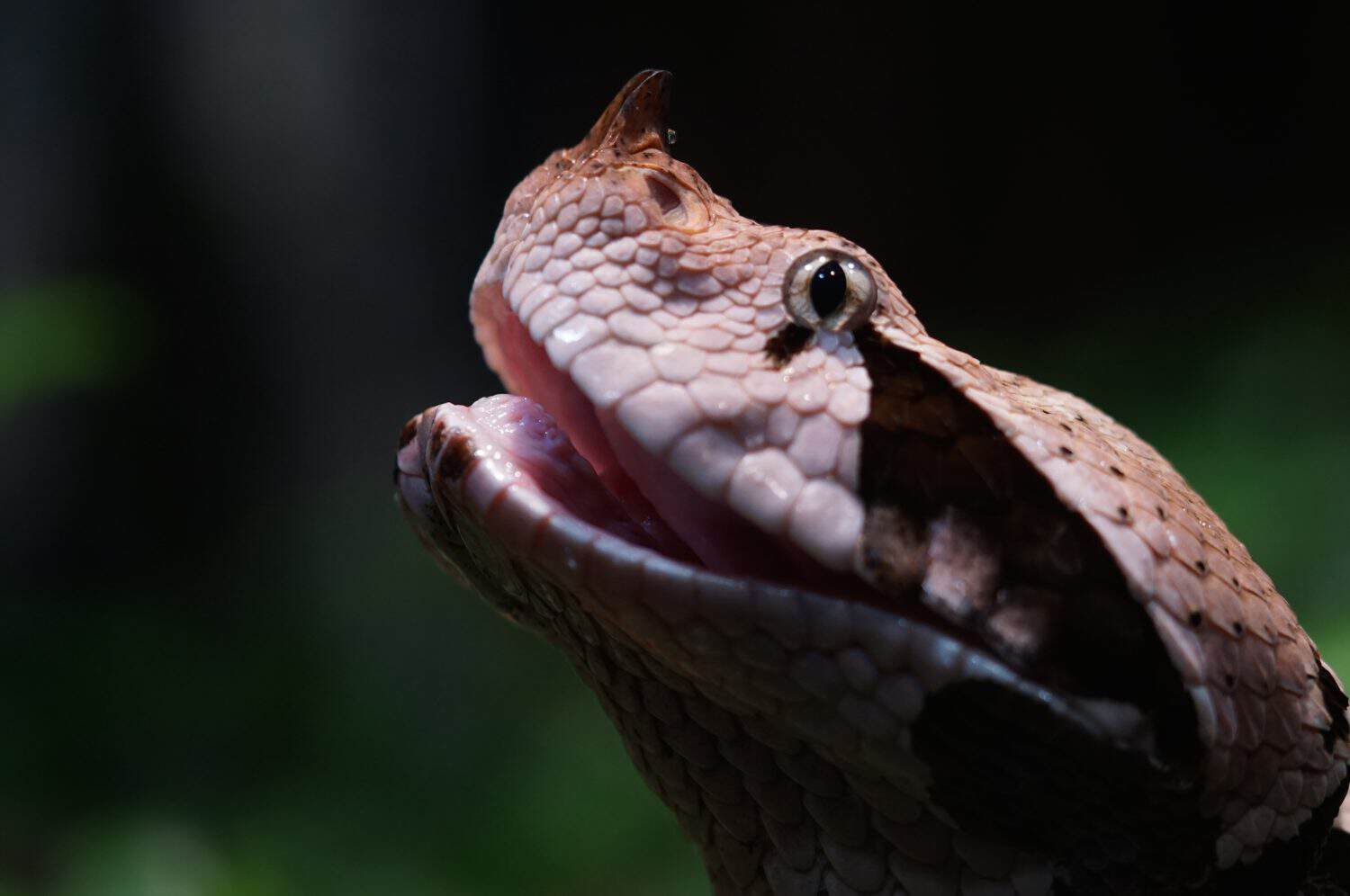
Gaboon vipers yawn to realign their jaws.
©makasana photo/Shutterstock.com
Gaboon vipers, like other vipers, have flexible jaws, allowing them to swallow their prey whole. However, opening the mouth incredibly wide takes the jaw out of alignment. To be ready for the next kill, Gaboon vipers simply yawn to relax and realign their jaws.
When yawning, the fangs protrude. However, as the Gaboon viper closes its mouth, the fangs retract again and remain in this position until it is time to hunt.
How Long Are Gaboon Viper Fangs?
Vipers are ambush predators. They have adopted this approach to hunting because they are not fast-moving snakes. To be effective hunters, they need long fangs to deliver enough venom to incapacitate their prey. However, when it comes to fang length, Gaboon vipers are in a class of their own.
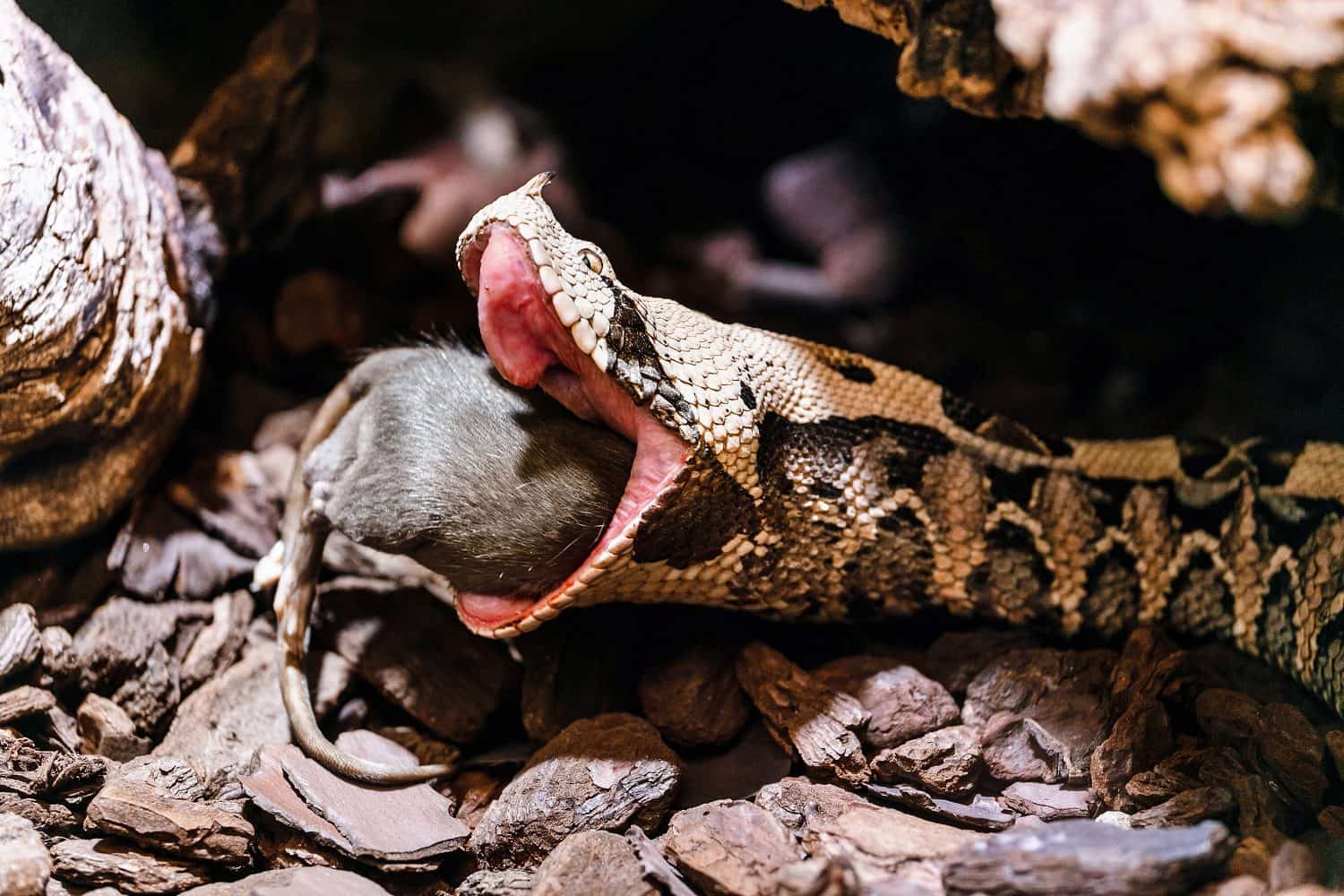
Gaboon vipers’ fangs are two inches long.
©frantic00/Shutterstock.com
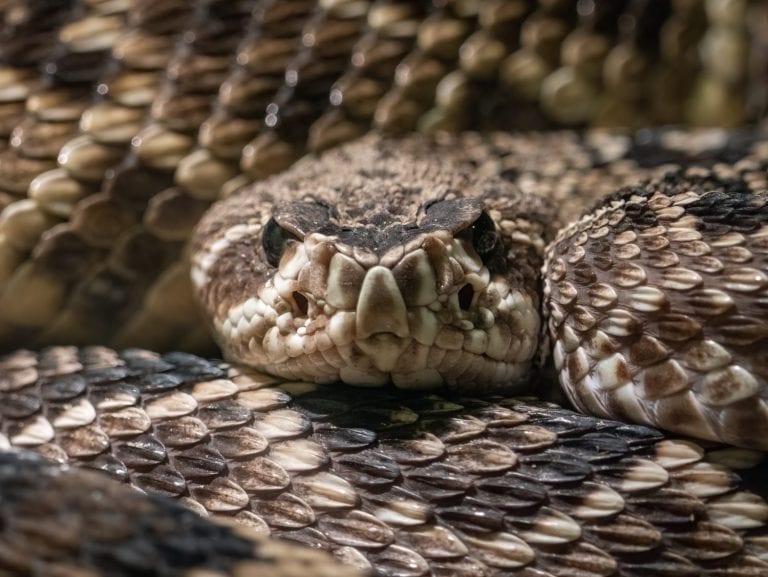
Gaboon vipers have some of the longest fangs in the world, measuring approximately two inches long. The needle-like fangs are hollow, allowing the snakes to deliver large amounts of venom to prey with a single strike.
Additionally, the fangs are “recurved,” meaning they are bent in such a way that prey cannot escape. Consequently, once a Gaboon viper has prey in its grasp, the combination of deep penetration and fang curvature leaves little chance of victim survival.
How Deadly is the Gaboon Viper Venom?
When vipers strike, they inject their fangs into their prey to release venom. The potency of the venom varies between vipers, with the saw-scaled viper considered the most dangerous. Gaboon vipers also inject deadly venom, but not for the same reason as other vipers.
Though Gaboon viper venom can kill six adult humans with a single strike, it is not the potency per milligram that makes these snakes so deadly. Instead, it is the amount of venom injected at a single time. In total, a Gaboon viper can deliver between seven and nine milliliters of wet venom, which is equivalent to up to 1,000 milligrams of dried venom.
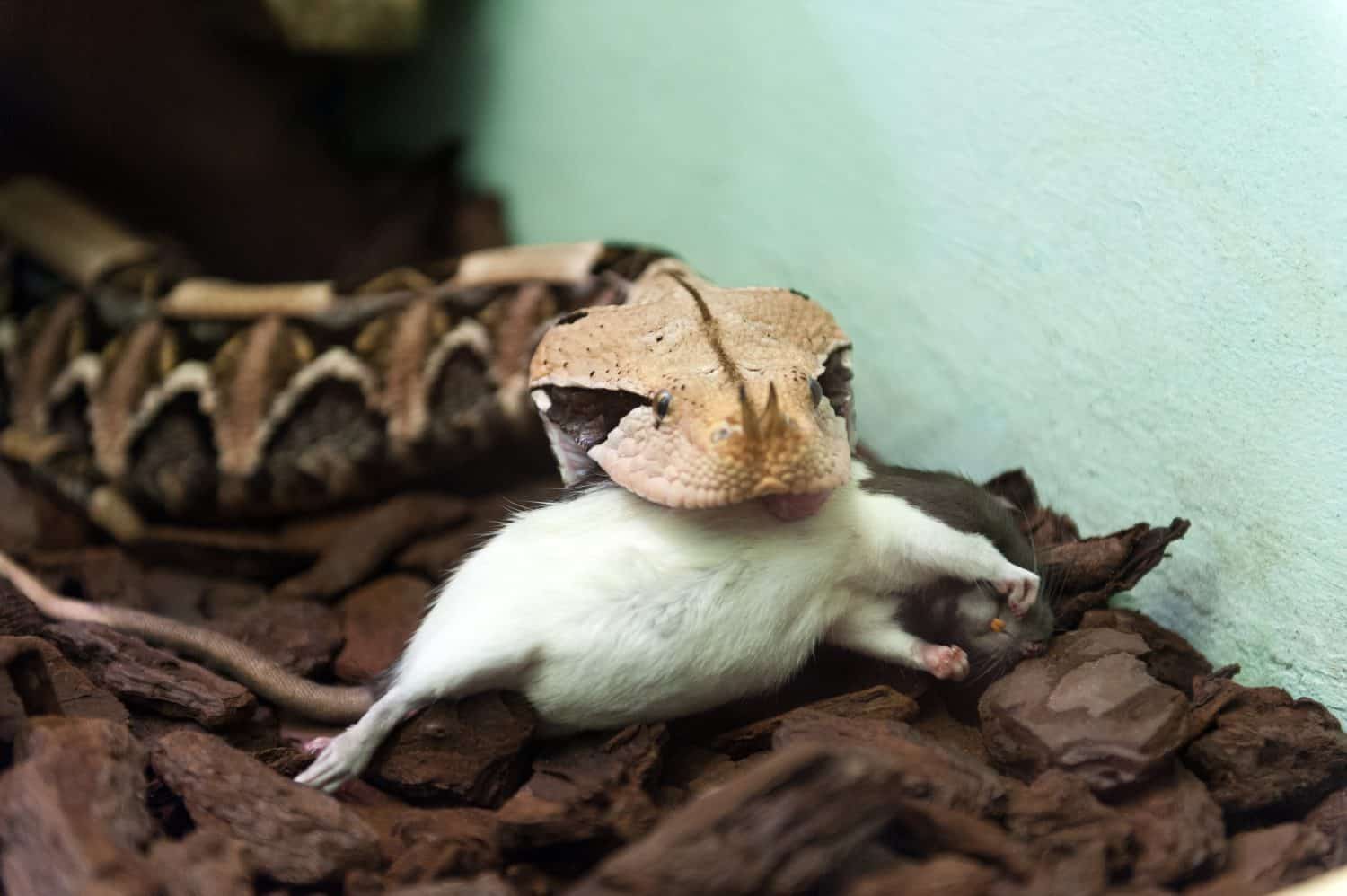
Gaboon vipers’ venom is potent enough to kill six men with one strike.
©weintel/Shutterstock.com
The venom is both cytotoxic and hemotoxic, meaning once the venom enters the body, it quickly begins to destroy cells and cause internal bleeding. Prey are disabled within minutes, rendering them defenseless.
Fortunately, Gaboon vipers are not known to bite humans often. During human encounters, these vipers typically prefer to hiss and retreat. However, antivenom is available in the rare case of envenomation. The sooner antivenom is administered, the better the prognosis for anyone unfortunate enough to encounter the Gaboon viper and its massive fangs.