
Quick Take
- The item killing Kiawah's bobcats was not a weapon. It is sold at every hardware store and used in millions of homes. See the common culprit →
- Bobcats never touched the poison directly, yet it still killed them. The chain reaction explains why. Trace the chain reaction →
- A surge in summer tourism triggered a wildlife crisis no one saw coming, though the connection between the two is far from obvious. See how tourism triggered the crisis →
Bobcats are an elusive species. While they lurk in the shadows cast by dawn and dusk, they become the silent heroes of their ecosystems. These big cats actively hunt rodents, deer fawns, and raccoons, keeping all populations in check. Without them, the food chain would fall woefully out of balance. This is especially true in locations with small, isolated ecosystems, such as South Carolina’s Kiawah Island.
When its bobcat population began dropping, the signs were there. Rodent populations spiraled, and there were more deer fawns than ever before. On an island known for its tourism and year-round eco-friendly living, something didn’t add up. And as researchers investigated, they found the cause of death for the Kiawah bobcats was a common household item.
Continue reading
Kiawah Bobcat Survival Rates Plummeted In 2020
Prior to 2020, Kiawah Island had a healthy bobcat population. This ten-mile-long island was home to approximately 30 to 35 individuals, none of whom showed signs of poor health. But as South Carolina welcomed tourists back for another summer season, the bobcat population plummeted to about ten individuals. Over the next four years, Kiawah’s bobcats continued to die from an unknown cause.
The situation grew dire. Kiawah’s bobcats were at risk of extinction, and no one could determine why. Meghan Keating, a doctoral candidate at Clemson University, focused her efforts on saving Kiawah’s vulnerable predatory population. “When I saw that they were looking for someone to come in and do some good science and help them solve their problem, I just felt like that was a really cool opportunity to get connected with some on-the-ground conservation and help people with their wildlife management,” Keating told Clemson News.
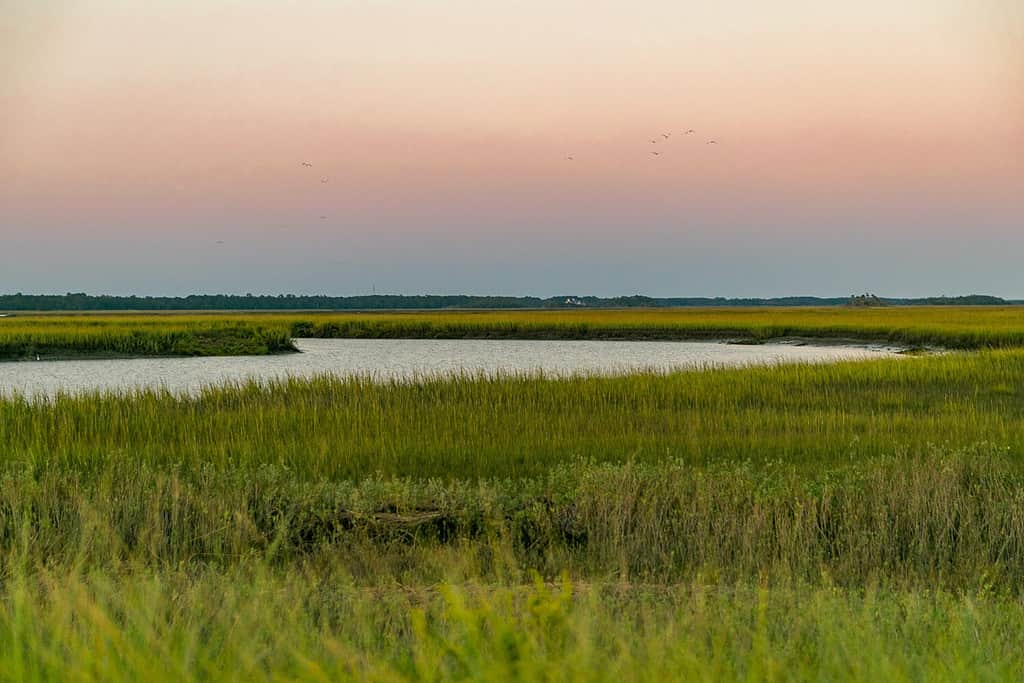
Kiawah’s full-time population is only about 2,000, but it surges to 10,000 during the summer.
©Elizabeth Foley/Shutterstock.com
Together with David Jachowski, a Clemson professor of wildlife ecology and director of the Clemson Boone and Crockett University Program, the two began their research. They followed every clue, which led them to investigate the surge in short-term rentals on Kiawah Island. From 2018 onward, between 8,000 and 10,000 tourists spent summers on the island. As a result, rental owners became increasingly concerned about pest control. This raised the question: Was the decline in Kiawah’s bobcat population the result of a chain reaction?
Anticoagulant Rodenticides Harm More Than Those They Target
The average full-time population on Kiawah Island is only about 2,000 people. The sudden surge in tourists led to more rental bookings and pest control than ever before. In a remote beach setting like this, mice and rats are all too common. To deal with the problem, anticoagulant rodenticides—such as warfarin and the more potent brodifacoum—are used to poison rodent populations. Instead of traps, which must be left, checked, and thrown out, poison can kill rodents where they stand.
This poison works by preventing clotting in the animal, which causes internal bleeding. It’s highly effective, and second-generation rodenticides, such as brodifacoum, kill mice and rats with only one bite. The problem with this is that it can harm other wildlife, not just rodents.
Bioaccumulation Showed Signs Of Rodent Poison In Bobcat Tissue
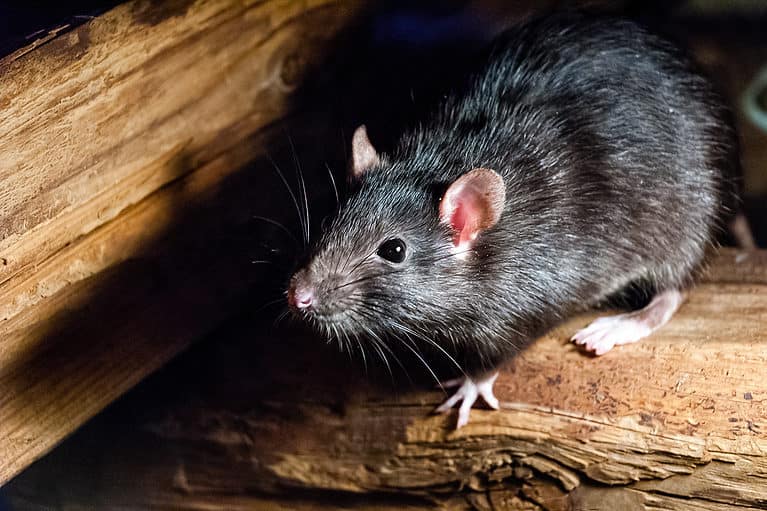
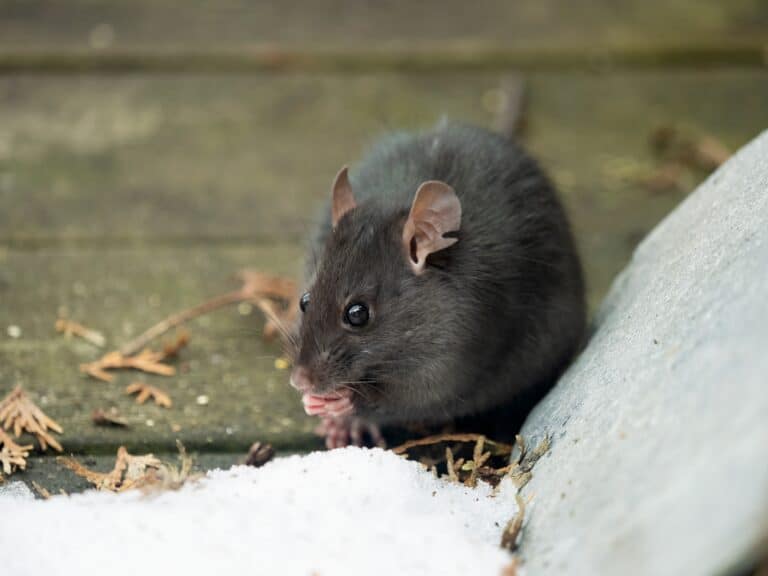
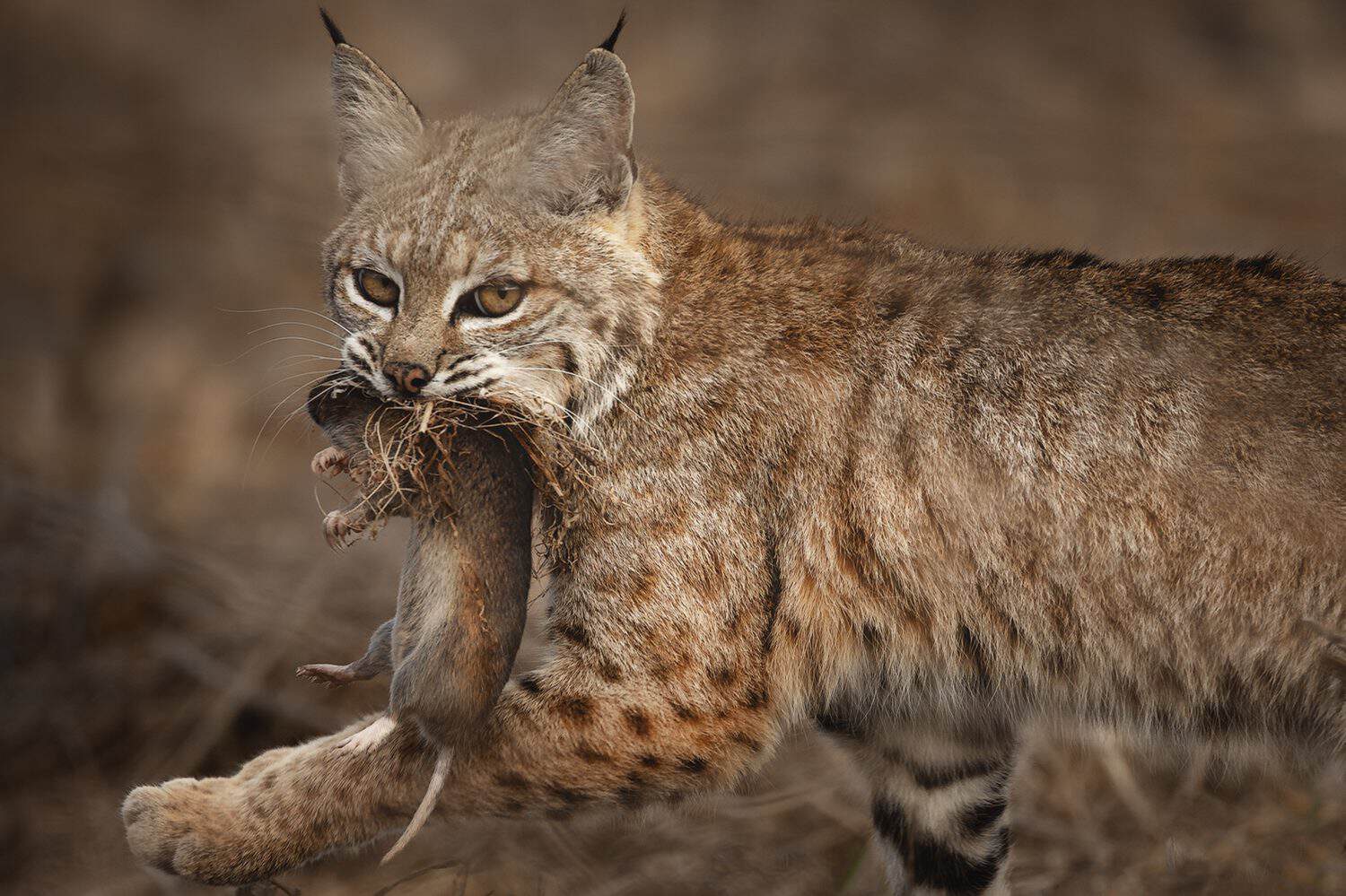
The next step in learning why so many bobcats were dying was to determine how they were ingesting rodenticide. It was quickly confirmed that bobcats did not have direct access to poison. Most is placed within a house where rodents are active, which does offer some protection barrier to wildlife. However, nothing was keeping bobcats from ingesting rodents that had taken the toxic bait.
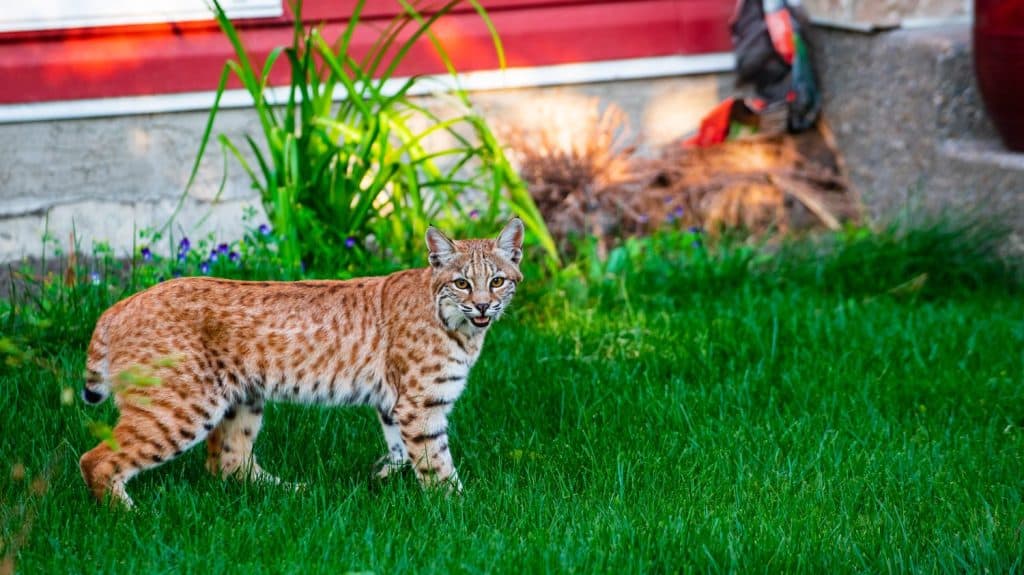
Bobcats didn’t need to be inside homes to ingest a deadly poison.
©BGSmith/Shutterstock.com
Blood, fecal, and liver samples from deceased bobcats finally provided the answer. In addition to finding rodent remains, roughly 70% of all bobcats tested also had trace amounts of rodenticide. Even more jarring was how many rodenticides were found in a single bobcat. Test results also showed at least four different chemicals in a single bobcat, indicating repeated exposure to various baits.
The evidence was solid, but the critical turning point was when a bobcat mother and her kits turned up dead. Their tragic story resonated with the community, sparking the action that would lead to saving Kiawah’s bobcats. From this, the Bobcat Guardian Program was born.
The Bobcat Guardian Program Saves Kiawah’s Mascot
As the bobcat population declined from 2017 through 2020, the community’s actions prevented them from becoming extinct. The discovery of second-generation anticoagulants as the cause of death for at least seven bobcats during this time drove voluntary efforts. Through community outreach, many on Kiawah Island pledged to either stop using or never use second-generation anticoagulants. This included:
- Brodifacoum
- Bromadiolone
- Difenacoum
- Difethialone
The locals’ actions were tremendous, especially given how much tourism funds the island during the summer season. Now, pest control methods are limited to chemical-free traps, sealing holes, and other preventive measures. If pesticides are used, they are strictly reserved for large indoor infestations and are never used outdoors. Pesticide use also has a 10-day limit, after which it can no longer be used as a pest control option. For this reason, Kiawah only allows the use of bromethalin or cholecalciferol, which are considered slightly safer options.
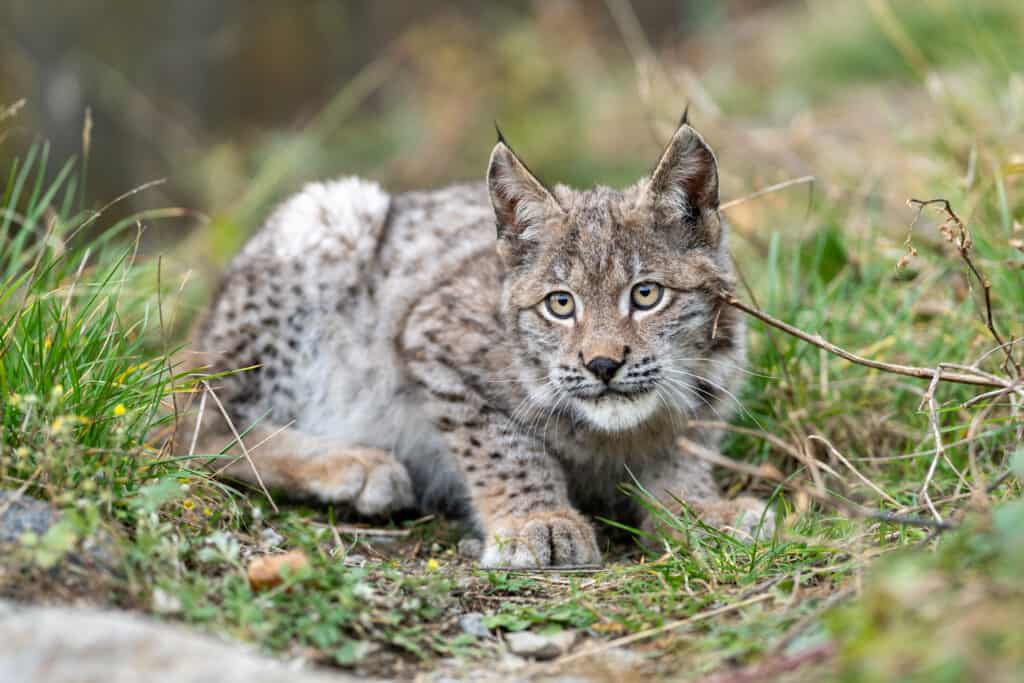
Now, Kiawah Island has steps in place to protect its vulnerable bobcat population.
©Vaclav Sebek/Shutterstock.com
Kiawah Island’s Bobcat Guardian Program is proof that community and volunteer efforts work. It’s also a reminder that human actions can have significant consequences for the wildlife around us, even if those effects are indirect. Keating’s study details the harrowing effects of anticoagulant rodenticides on predators, and how, if not stopped, extinction is a very real possibility. As of 2026, ten pest control companies have also signed the Bobcat Guardian Program pledge.