Many are familiar with the saying, “When pigs fly.” But what about when pigs turn blue? California game and wildlife officials have confirmed that the Golden State has pigs that are turning neon blue. While this may sound like a new species of swine, the fact that pigs are presenting with flesh of an unnatural color is concerning, especially because of the implications for those who make wild pig a staple in their diets.
In March, local hunters reported to the California Department of Fish and Wildlife that wild pigs had meat that was not pink, but instead blue. A warning was immediately issued in hopes of stopping anyone from consuming wild pigs with this coloration. This is because it is not a natural occurrence for pigs to be this color. Instead, it is the result of poisoning.
California Pigs Are Being Exposed to Poison

Wild pigs are being directly or indirectly poisoned with the rodenticide, diphacinone.
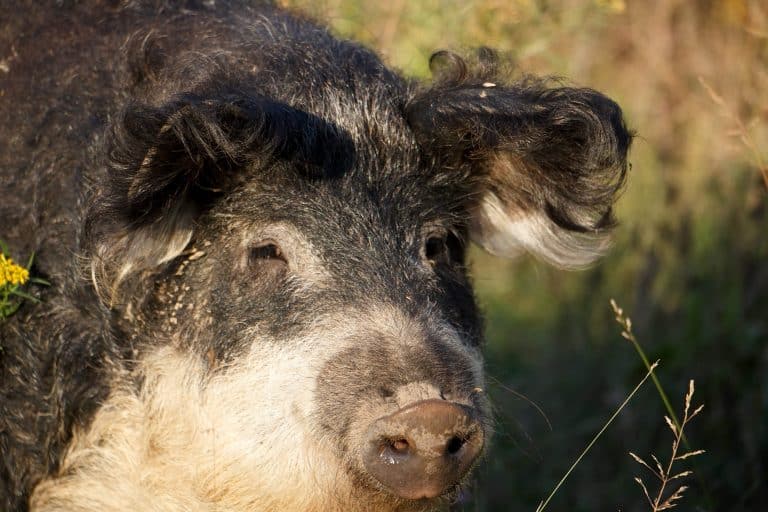
©Adrian Eugen Ciobaniuc/iStock via Getty Images
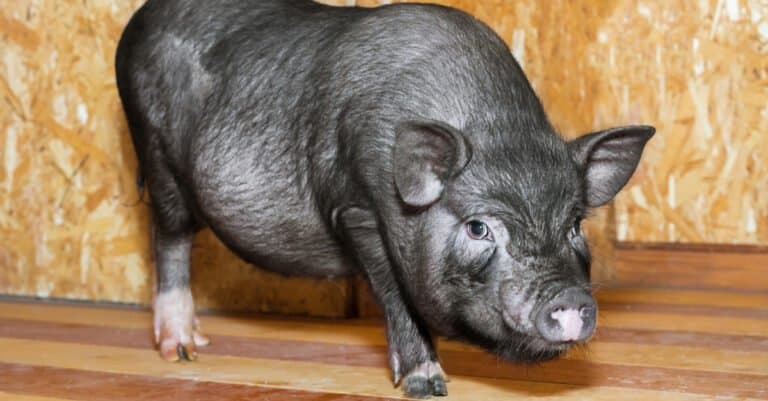
A concerning trend is occurring in Central California. Wild pigs being hunted for both population control and food are suddenly presenting with neon blue skin. This is not because a new species of pig has been discovered. Instead, the pigs are being poisoned. In Monterey County, hunters have reported that several of the wild pigs they have killed have blue flesh. This is an indicator that the pigs have been either directly or indirectly exposed to diphacinone, a poison that is used for rodent control.
It is not clear how the wild pigs have managed to consume diphacinone. However, near the areas where the wild pigs forage, there are squirrel baits set up that contain food laced with diphacinone. Therefore, it is a likely possibility that the wild pigs ate the bait and were the unintentional recipients of the rodenticide.
Some hunters in Monterey County donate the wild pigs to organizations that feed low-income families. With the presence of diphacinone in the pigs, that practice has been paused until it is certain that the wild pigs are again safe to consume.
It has not been disclosed whether any wild pigs have died from eating diphacinone-laced food. So far, only pigs that have been hunted have been found to be exposed. The California Department of Fish and Wildlife has warned hunters, trappers, and anyone who eats wild pig to stay away from blue colored meat. It is not safe to consume due to the diphacinone being present. Furthermore, the CDFW is asking anyone who comes in contact with wild pigs that have discolored tissue to report it to the agency so that the extent of the poisoning can be determined.
What Is Diphacinone?
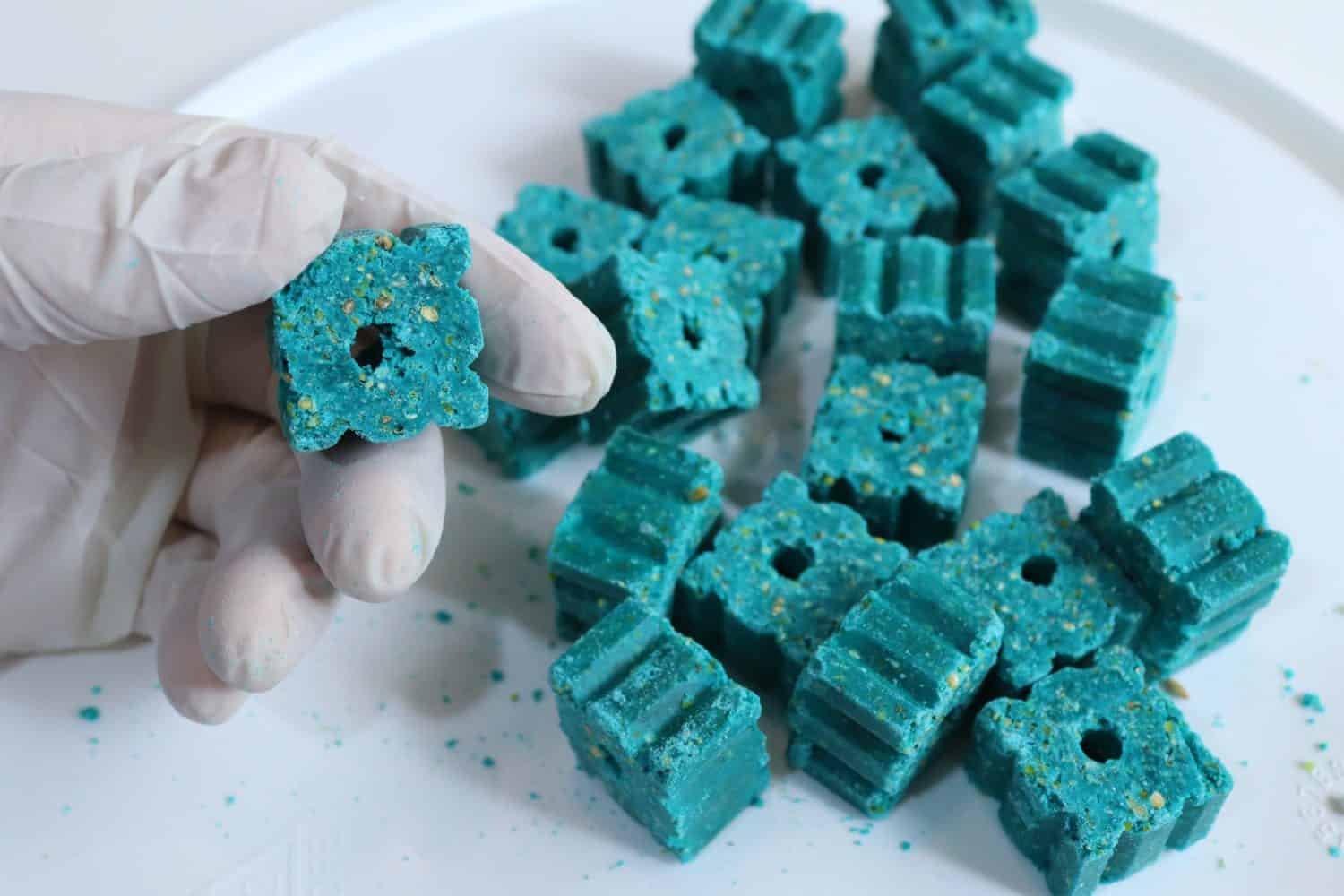
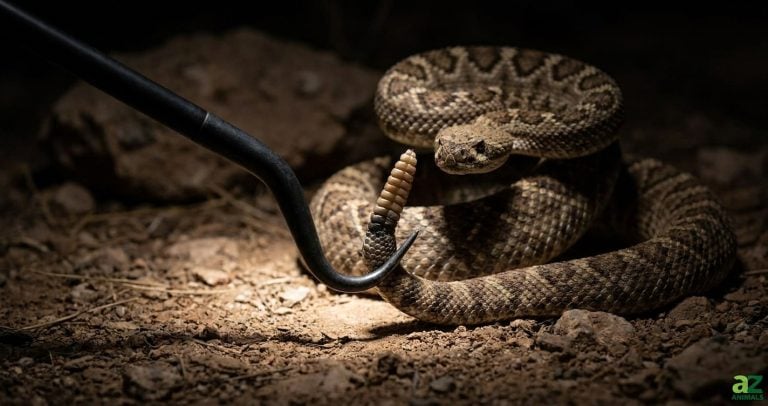
Diphacinone is dyed blue, like this bromadiolone, another anticoagulant rodenticide, causing affected animals’ tissue to turn blue.
©speedshutter Photography/Shutterstock.com
Diphacinone was invented as a way to exterminate rodents. It is an anticoagulant that has delayed effects. This is important because it allows multiple rodents to take the bait from the trap without fearing it will harm them. First invented in 1962, diphacinone was widely used throughout the United States to keep rodent populations in check. The toxin works by stopping the blood from clotting, which will eventually lead to internal bleeding and death. Unfortunately, while diphacinone is very potent at killing the animals that eat bait laced with it, an unintended consequence was harming or killing other animals via second-hand poisoning and then exposing people to the rodenticide. Consequently, a safety feature was added to diphacinone that became a clear sign an animal had consumed the toxin. That safety feature was blue dye.
Why Diphacinone Turns Tissue Blue
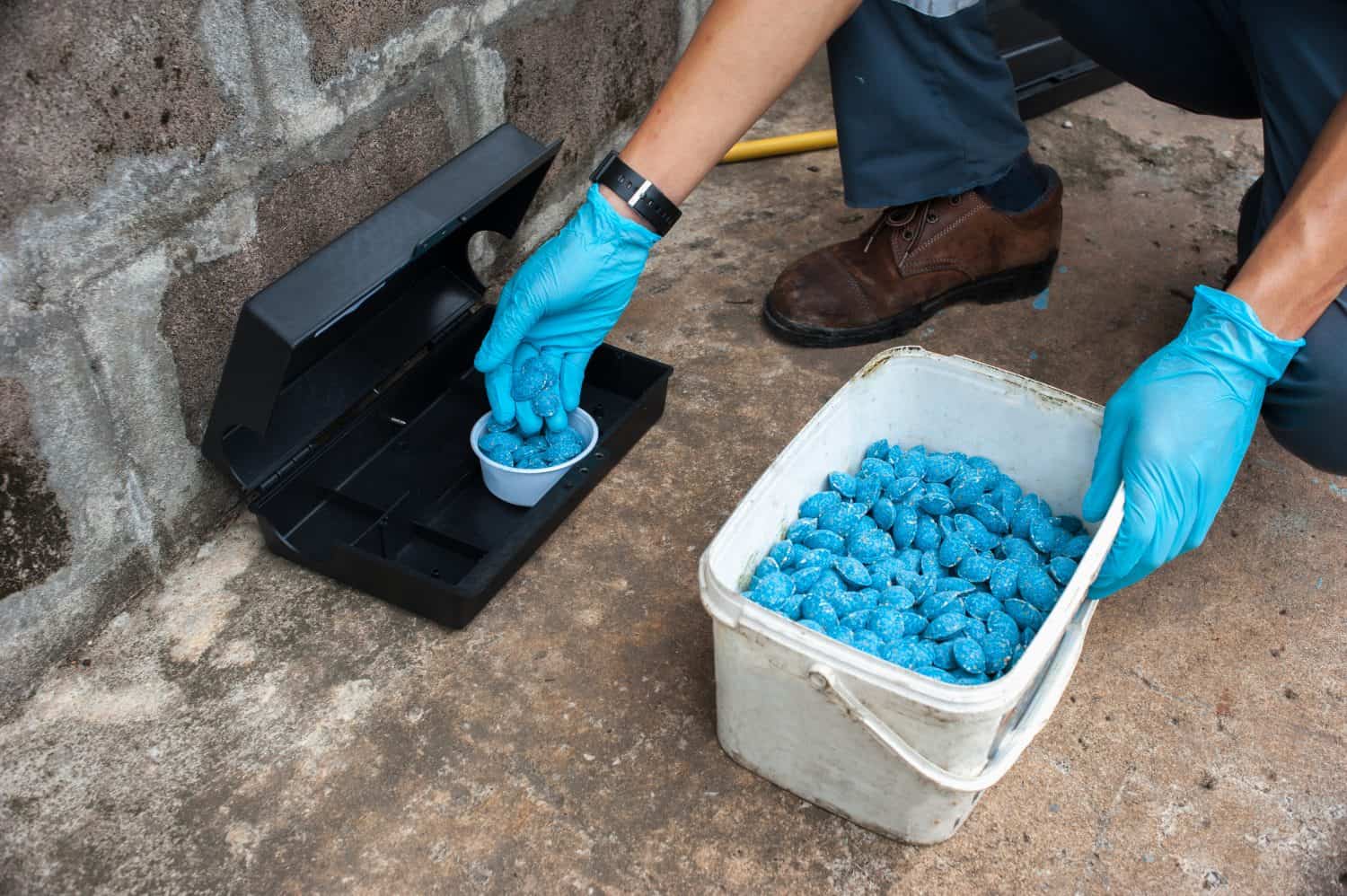
Diphacinone is dyed blue, like this rodenticide, because animals that consumed it would not be identifiable to the naked eye otherwise.
©dokurose/Shutterstock.com
Alone, diphacinone is not a substance that turns the insides of those who consume it blue. The odorless and colorless rodenticide comes in a crystalline form that is crushed into a powder and then placed in wild animal feed to exterminate rodents and prevent them from returning to an area.
To signal that diphacinone is present, scientists dye the bait with the toxin blue. When diphacinone was first introduced to the market, it did not contain the blue dye. It is unclear when that occurred. However, as the blue dye is absorbed by the animal that eats it, it begins to build up in the body. Therefore, the more diphacinone that is consumed, the bluer the tissue will be. The blue coloration is not visible if the animal is left intact. It is not until the tissue, specifically the fatty tissue, is inspected that the blue coloration will appear, making it evident that the animal in question has had exposure to diphacinone.
Consequences of Consuming Diphacinone-Contaminated Pork
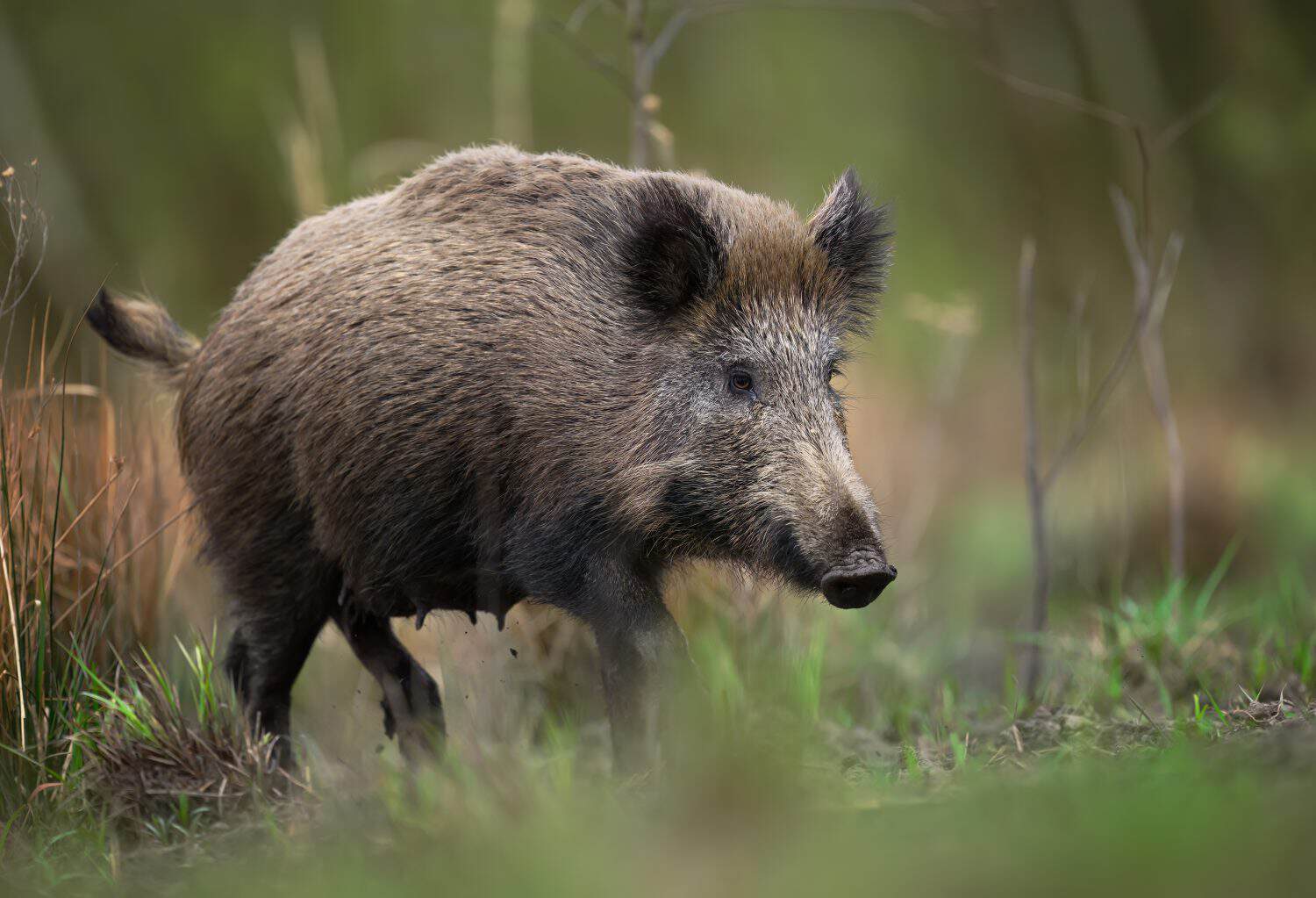
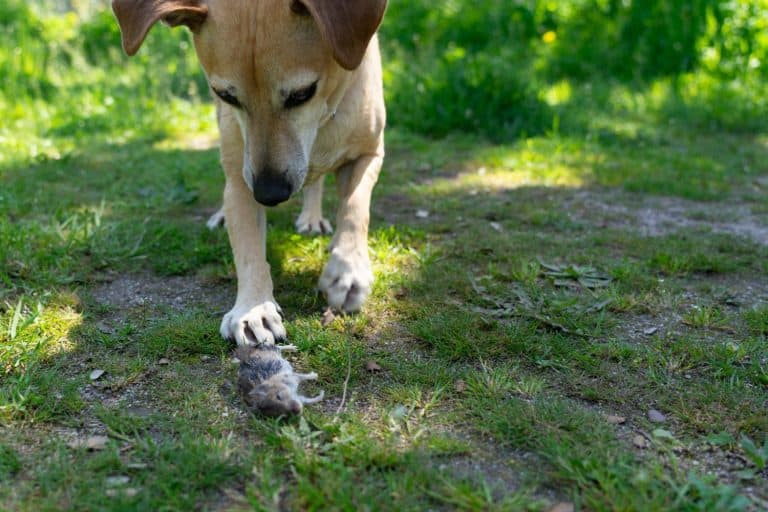
People who eat wild pig meat contaminated with diphacinone will face serious health consequences.
©Piotr Krzeslak/Shutterstock.com
It is easy enough to avoid diphacinone if left in its well-labeled container. But because diphacinone is odorless and colorless, it can go undetected in animals that consume it. This is the reason that diphacinone is dyed blue, as animals that consume the rodenticide will have toxic meat that should not be consumed by people. If people decide to consume the toxic meat, there are health consequences associated with it. Some of those health issues that can occur after consuming meat with diphacinone include:
- Nose bleeding
- Gum bleeding
- Blood in urine
- Bloody stools
- Excessive blood under the skin leading to bruising
- Coughing up blood
- Abdominal pain
- Back pain
- Dizziness
- Low blood pressure
- Shortness of breath
- Blue coloration of the skin due to lack of oxygen
- Fever
Diphacinone is not only an anticoagulant, but it is also a poison. This is why reports of animals found to have diphacinone need to be taken seriously. Before any meat is consumed, it should be tested for the presence of rodenticide to ensure it is safe to eat, regardless of whether it has a blue color. However, because diphacinone has been prohibited in California except for a few exceptions, hunters may not realize they are being exposed if the animal has not consumed enough for blue tissue to appear.
Diphacinone Regulations in California
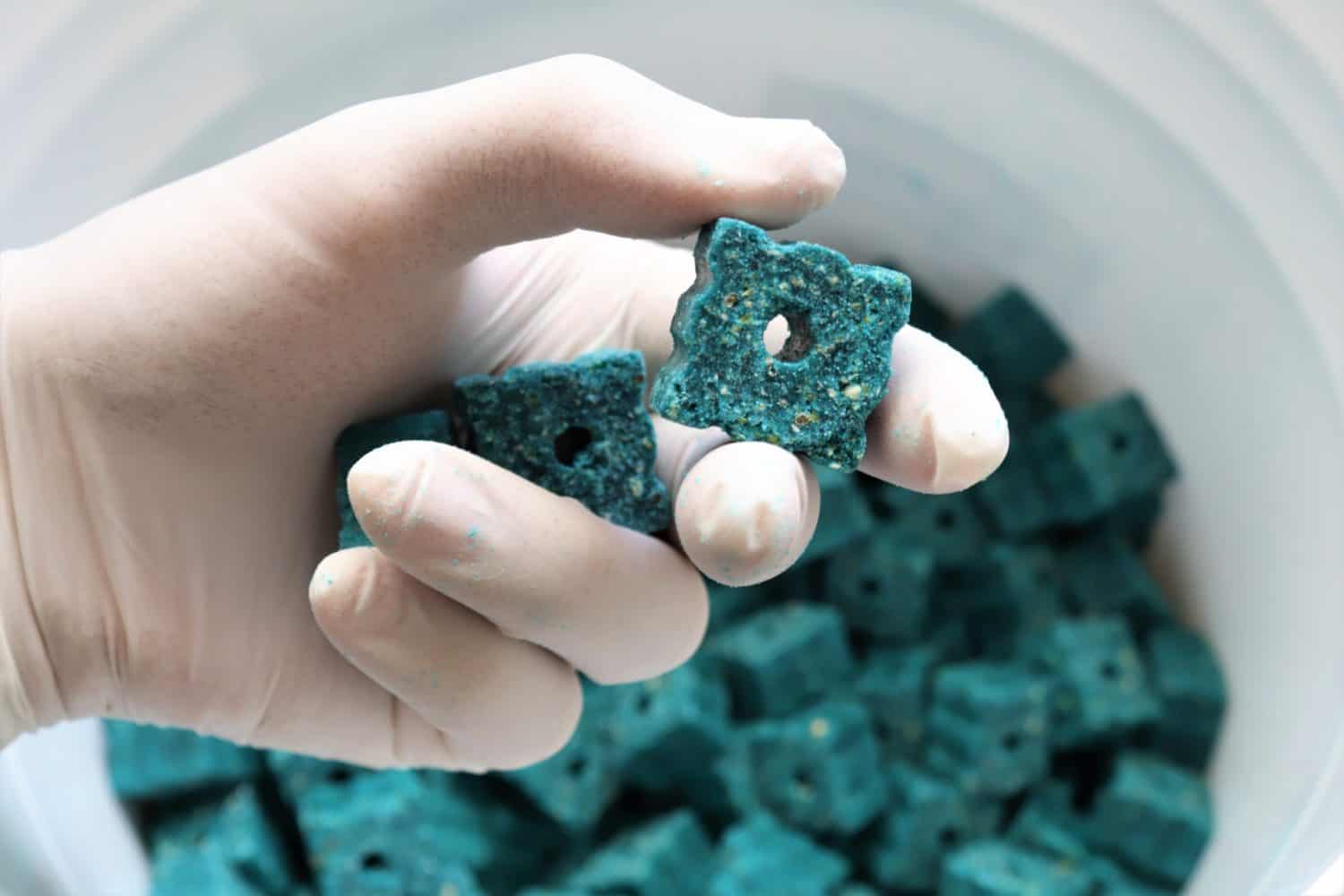
Diphacinone, like bromadiolone, was prohibited in most of California.
©speedshutter Photography/Shutterstock.com
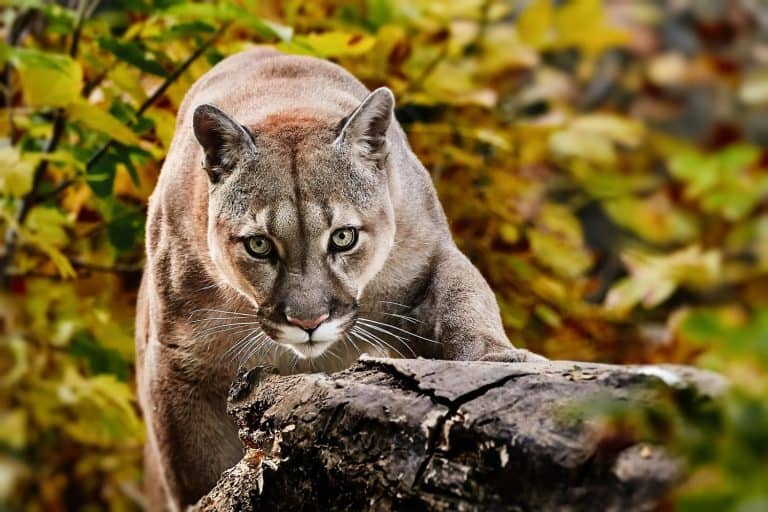
Diphacinone was once a rodenticide that was used in California to keep the rodent population under control. Farms, wineries, breweries, restaurants, and more used the toxin to effectively keep rodents out of food for human consumption. However, beginning in January 2024, the use of diphacinone was prohibited for most users. This was done because there was evidence that wild animals, such as bears, mountain lions, and the like, were eating the rodents that had ingested the toxin and were becoming sick or dying as a result. There were some exemptions to the use of diphacinone in the state. Those exemptions include:
- Mosquito vector control
- Areas where non-native species are threatening the habitat of offshore islands
- Regions where rodent populations threaten endangered species
- Specified agricultural sites
- Warehouses where human-grade quality food is stored
- Farm water storage facilities
- Factories
- Some wineries and breweries
It is not clear where the squirrel baits were located that the wild pigs got into on the Central Coast of California. However, until the source can be identified and secured so that the wild pigs are unable to access it, hunters in the state are being warned against eating the pigs they hunt. This is specifically if the meat is blue, but in some cases, officials warn, there may not be any discoloration present if not enough diphacinone has been consumed by the wild pigs.
How Wild Pigs Are Controlled in California
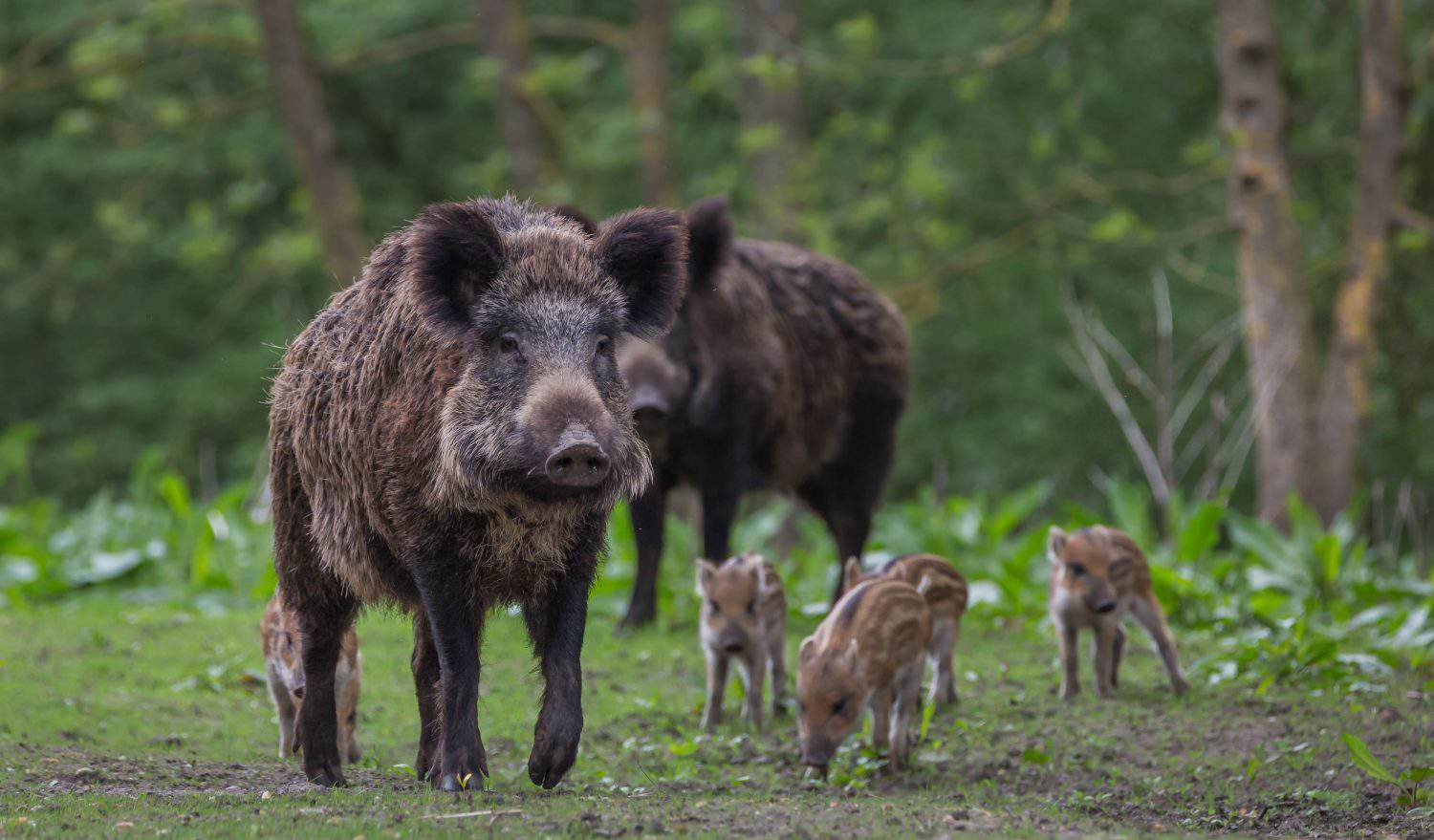
Wild pigs are controlled in California via hunting, trapping, and state-run programs.
©Randy van Domselaar/Shutterstock.com
Some states have passed laws that allow the use of a toxin to kill wild pigs. The Warfarin-based anticoagulant works as it builds up in the pigs’ systems, preventing blood from clotting. This eventually leads to death. California is not one of those states. Instead, to control the wild pig population, other methods have been approved to help manage the estimated 200,000 to 400,000 wild pigs causing damage in 56 of the 58 counties in the Golden State. Some ways that wild pigs are managed in California include:
- Hunting
- Trapping
- State-run management plans
More recently, the price of tags to hunt wild pigs has been reduced. The hope is that more wild pigs will be hunted, bringing the population under better control.
Unfortunately, if the trend of finding blue tissue continues, the practice of donating meat from wild pig hunts will have to stop. Instead, as contaminated pigs are killed, safe disposal methods will need to be found to avoid contaminating groundwater, soil, or air. Hopefully, if it is proven that wild pigs are getting into squirrel feed that is laced with diphacinone, the issue will be stopped sooner rather than later. This is the only way to ensure that wild pigs hunted and donated to those in need are free of toxins and safe to consume.