
Quick Take
- A smaller, more docile snake shouldn't have stood a chance. Yet it won, and scientists still don't know how. See the full encounter →
- Easier prey was right there, so it raises the question of why the python ignored it and went after something that could kill it instead. Explore the prey mystery →
- Two snakes from the same region almost never meet, but the rare moment they do reveals something deadly about their instincts. Why they rarely meet →
- This two-hour encounter was a first of its kind, and researchers are still working out what it means for both species. Read the documented case →
It is not uncommon to spot a Burmese or reticulated python constricting and killing prey in their natural habitat. However, seeing a giant python eating another giant python is incredibly unusual, and scientists are still stumped as to why this happened.
Burmese Python Consumed a Live Reticulated Python
Burmese pythons and reticulated pythons rarely come in contact with one another. When they do, however, the results can turn deadly.
According to a 2024 study published in Reptiles and Amphibians, Burmese and reticulated pythons exhibit unexpected behavior when they interact within the same territory. The two snakes, which tend to live solo in the wild, will try to constrict the other.
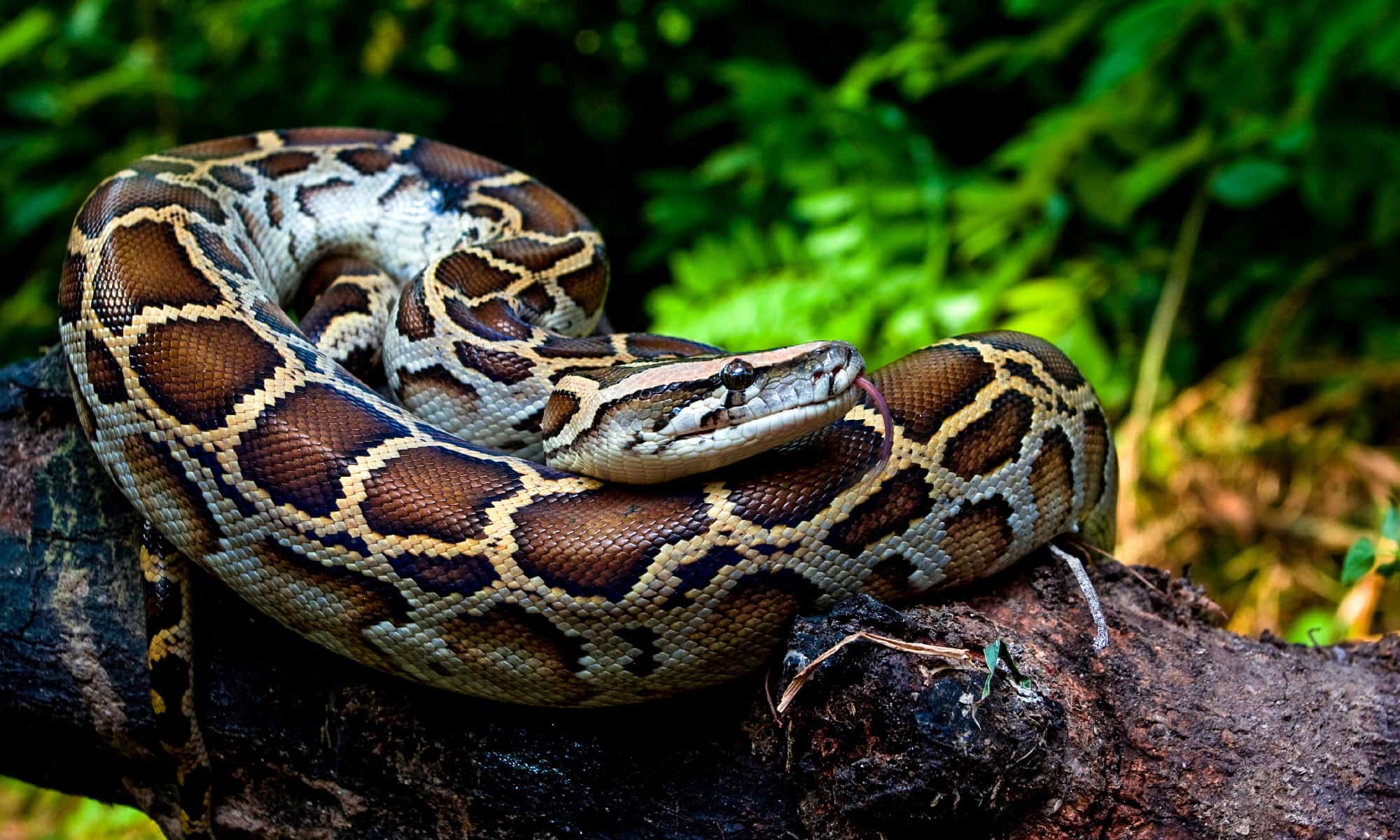
A reticulated python, similar to this one, was consumed live by a Burmese python.
©papi8888/Shutterstock.com
Burmese pythons are smaller than reticulated pythons. Therefore, one might expect that the reticulated python would easily overcome the Burmese python’s attempts at constriction. However, as the study states, the 10-foot Burmese python was wrapped around the larger reticulated python.
The Burmese python not only gained the advantage over the reticulated python but also began to swallow it. Over the course of two hours, the Burmese python swallowed the living reticulated python. This is believed to be the first-ever documented case of a Burmese python actively pursuing and consuming a reticulated python.
Why Was the Burmese Python Attacked When Better Food Options Were Available?
On Akiz Wildlife Farm, there are plenty of food options that suit both species far better than a fellow python, according to Ashikur Rahman Shome, co-author of the study and wildlife ecologist at Dhaka University in Bangladesh. Yet, the Burmese and reticulated pythons chose to go after one another. The specific reason as to why this happened is still being considered.
“There are a number of chickens at the site,” Shome told LiveScience. “They make a better meal.”
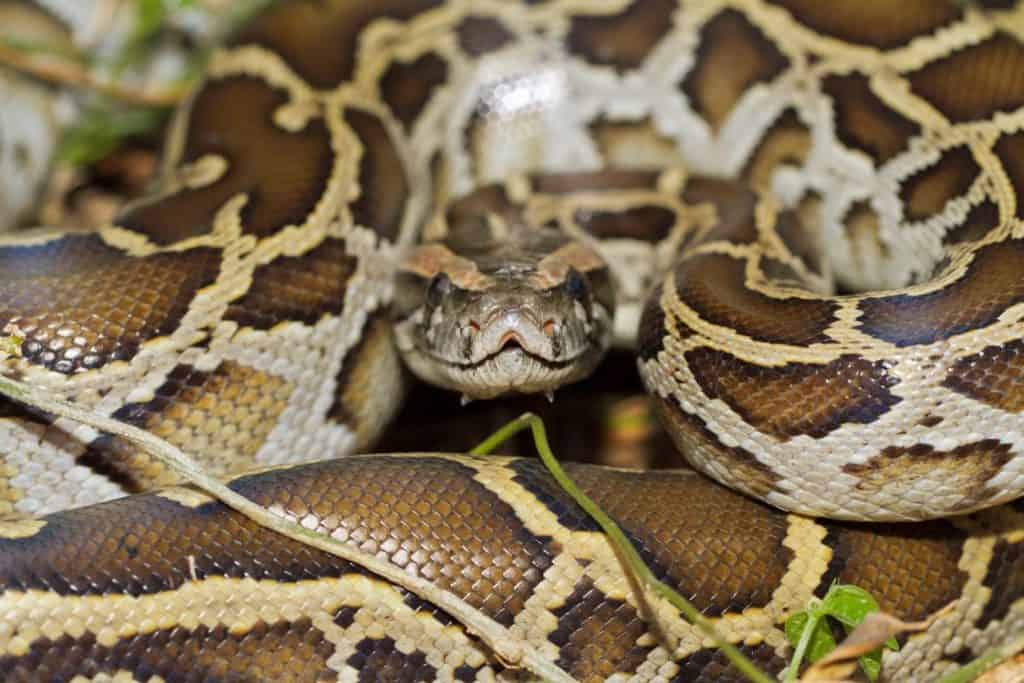
A Burmese python was thought to have consumed a reticulated python over a territory dispute.
©dwi putra stock/Shutterstock.com
The most likely reason the two pythons targeted one another is competition over territory. Both Burmese and reticulated pythons are very territorial. They live solitary lives, only coming together during breeding season. Because of this, the pythons will defend their territory when other snakes enter it.
What is interesting is that Burmese pythons are more likely to back down from an encounter than reticulated pythons because of their smaller size and less aggressive temperament. Why and how the Burmese python gained the upper hand is still a mystery.
Why Burmese and Reticulated Pythons Don’t Come in Contact More Often
Given that both Burmese and reticulated pythons are native to Southeast Asia, many would think that the large snakes would come into contact often. However, the pythons rarely make contact with one another in their wild habitats.
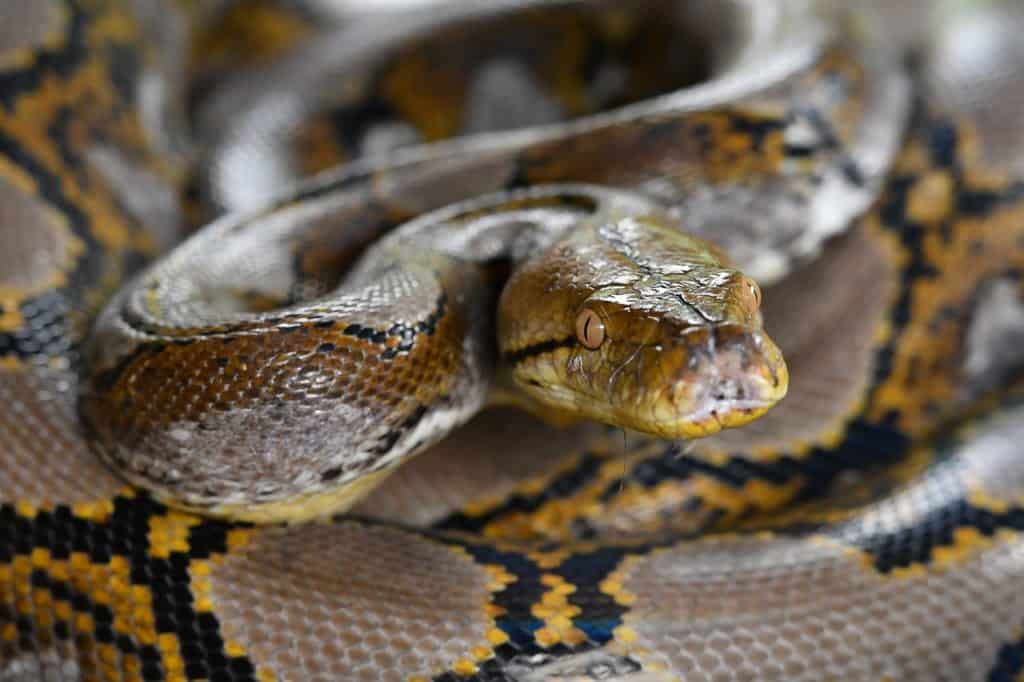
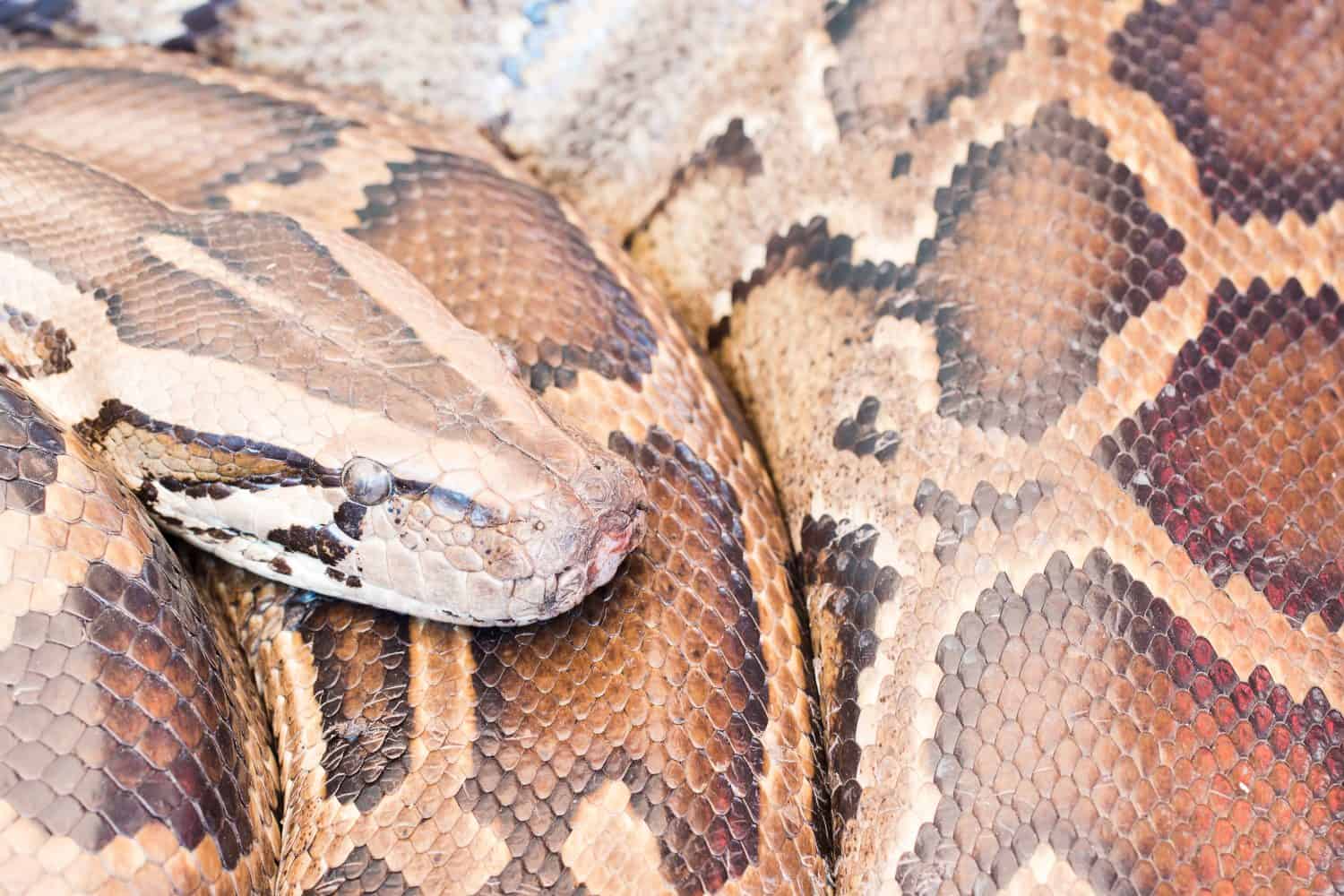
Reticulated pythons live in different habitats than Burmese pythons do, making their contact with one another infrequent.
©jaiman taip/Shutterstock.com
Burmese pythons and reticulated pythons inhabit different environments. The Burmese pythons prefer grasslands, marshes, and forests. Reticulated pythons are instead found in more aquatic environments, such as streams and rivers in rainforests. This means they do not typically go after the same prey. But on occasion, their habitats overlap, leading to competition for meals. As detailed by the encounter between the Burmese and reticulated pythons, sharing the same territory can be deadly.
With Burmese pythons being the more docile and smaller of the two, victory tends to favor the reticulated pythons. However, Burmese pythons are clearly capable of winning the battle. Just how often this occurs in the wild, though, is still unknown.