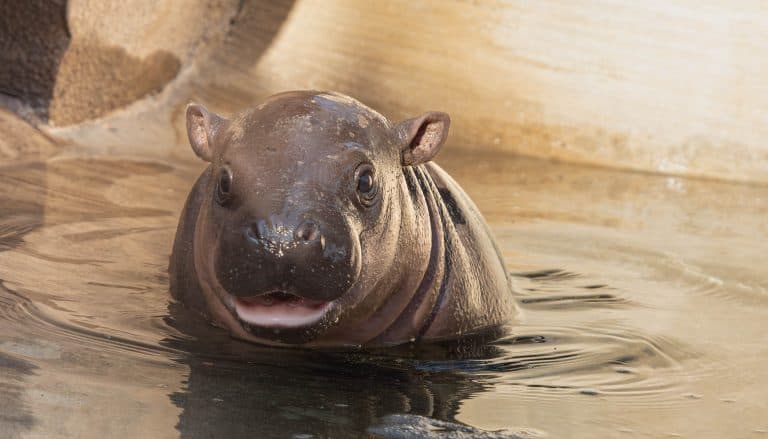
Before Moo Deng became a viral sensation, baby Obi was making waves with his mom at the Melbourne Zoo in Australia. A YouTube video from Zoos Victoria shows the baby pygmy hippo taking its first swim in the larger pool of its enclosure, accompanied by its doting mother. The video was filmed when Obi was only three weeks old.

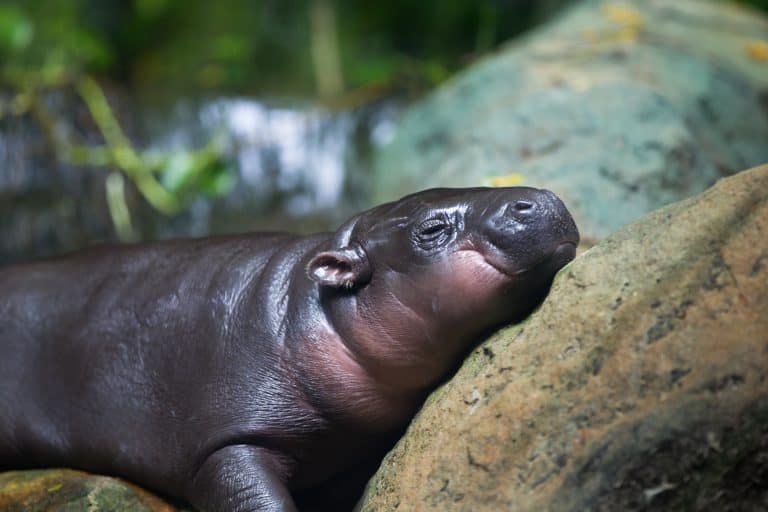
Pygmy hippo babies stay with their mothers for several years.
©lovelypeace/Shutterstock.com
Who Is Baby Obi?
Moo Deng, born in 2024 in a Thai zoo, has become famous around the world, bringing awareness about the adorable species of pygmy hippos. However, before Moo Deng, there was another enchanting baby hippo delighting zoo visitors in Australia.
Baby Obi was born at the Melbourne Zoo in 2015 as part of the zoo’s breeding program for pygmy hippos. Obi’s name means “heart” in Igbo, a Nigerian language.

Baby Obi is a pygmy hippo that was born in the Melbourne Zoo.
©Zoos Victoria / YouTube – Original
We can see in the video how Obi’s mother, Petre, keeps a close watch as Obi swims around her. The video caught footage of the first time Petre brought Obi to the larger pool in their exhibit. Obi weighed a mere 11 pounds when he was born, but three weeks later, when the video was shot, he was already up to 28 pounds.
How Are Pygmy Hippos Different From Common Hippos?
They may look similar and eat a similar diet, but pygmy hippos are not just miniature hippos. Common hippos can weigh anywhere from 3,000 to 4,000 pounds. Pygmy hippos, on the other hand, weigh much less, about 400 to 600 pounds. However, there are more than size differences between the two species.
Pygmy hippos are native to the swamps and forests of West Africa, while common hippos live around bodies of water across sub-Saharan Africa. Pygmy hippos are rarer and more reclusive than the common hippo. They are also nocturnal, foraging the forests for grasses, fruits, ferns, and other plants at night. Although common hippos are not nocturnal, they also forage for their food during the cooler evening hours.
Common hippos live in herds, but pygmy hippos tend to live alone unless it’s a mother raising her young. Pygmy hippos are more elusive and harder to spot than common hippos. They are also likely to flee when they sense danger. Common hippos, on the other hand, are known to be territorial and aggressive.
Finally, pygmy hippos spend less time in the water than common hippos and are more likely to be seen wandering in the forests, foraging for food, rather than in bodies of water.
Do Pygmy Hippos Have Natural Swimming Abilities?
Despite their adeptness in the water, neither common hippos nor pygmy hippos know how to swim. It may look like they are swimming, and their bodies have developed adaptations to make moving through the water easier.

Pygmy hippos can hold their breath underwater for five minutes.
©apple2499/Shutterstock.com
However, hippos bounce through the water, walking along the riverbed and propelling themselves forward. Hippos’ bodies are too dense to float, but pygmy hippos can walk underwater. Their webbed feet help them walk along the muddy river bottom without getting stuck. They can even stay underwater without breathing for up to five minutes at a time.
How Mother Pygmy Hippos Guide Their Young
Most of the information we have about how pygmy hippos take care of their offspring comes from captive pygmy hippos. These elusive animals are hard to observe in the wild. Pygmy hippos are excellent mothers and bond closely with their calves.
Pygmy hippo calves will drink their mother’s milk until they are around six to eight months old. They will begin to eat vegetation at three to five months old. The calves continue to stay with their mothers after weaning until they are several years old. The babies follow their mothers closely, learning everything they need to know about how to forage and avoid predators by watching her.
Endangered Status of Pygmy Hippos
The pygmy hippo is listed as endangered on the IUCN Red List. Sadly, scientists estimate there are only around 2,000 individuals left in the world, and their population is in decline. The biggest challenge pygmy hippos face today is the loss of their habitat. Pygmy hippos are losing their habitats to deforestation. The forests where they forage and shelter are being cut down for wood or to make room for crops like coffee, maize, and oil palms.
Many zoos around the world are working toward conservation goals to help the species. In Australia, where Obi was born, a 40-year ban on importing hippos and pygmy hippos has recently been lifted. Australian zoos hope to increase their breeding programs by bringing in more male hippos and pygmy hippos to Australian zoos.