
Quick Take
- Baby porcupines make a sound so eerily human it'll stop you in your tracks, which is not what you'd expect from a spiky rodent. Hear the human-like sounds →
- Not all porcupine sounds come from their vocal cords, and some of those other sounds could save their life. Discover non-vocal sounds →
- A newborn porcupette looks nothing like what you'd imagine, particularly when it comes to those infamous quills. See newborn porcupettes →
- Porcupines scream, and the reason why will genuinely surprise you. Find out why they scream →
Prepare yourself for a cuteness overload because the little guys in this YouTube clip will melt your heart. This collection of baby porcupine clips shows them making the cutest noises. So, we explored the world of baby porcupines and their vocalizations.
What Are Porcupines?
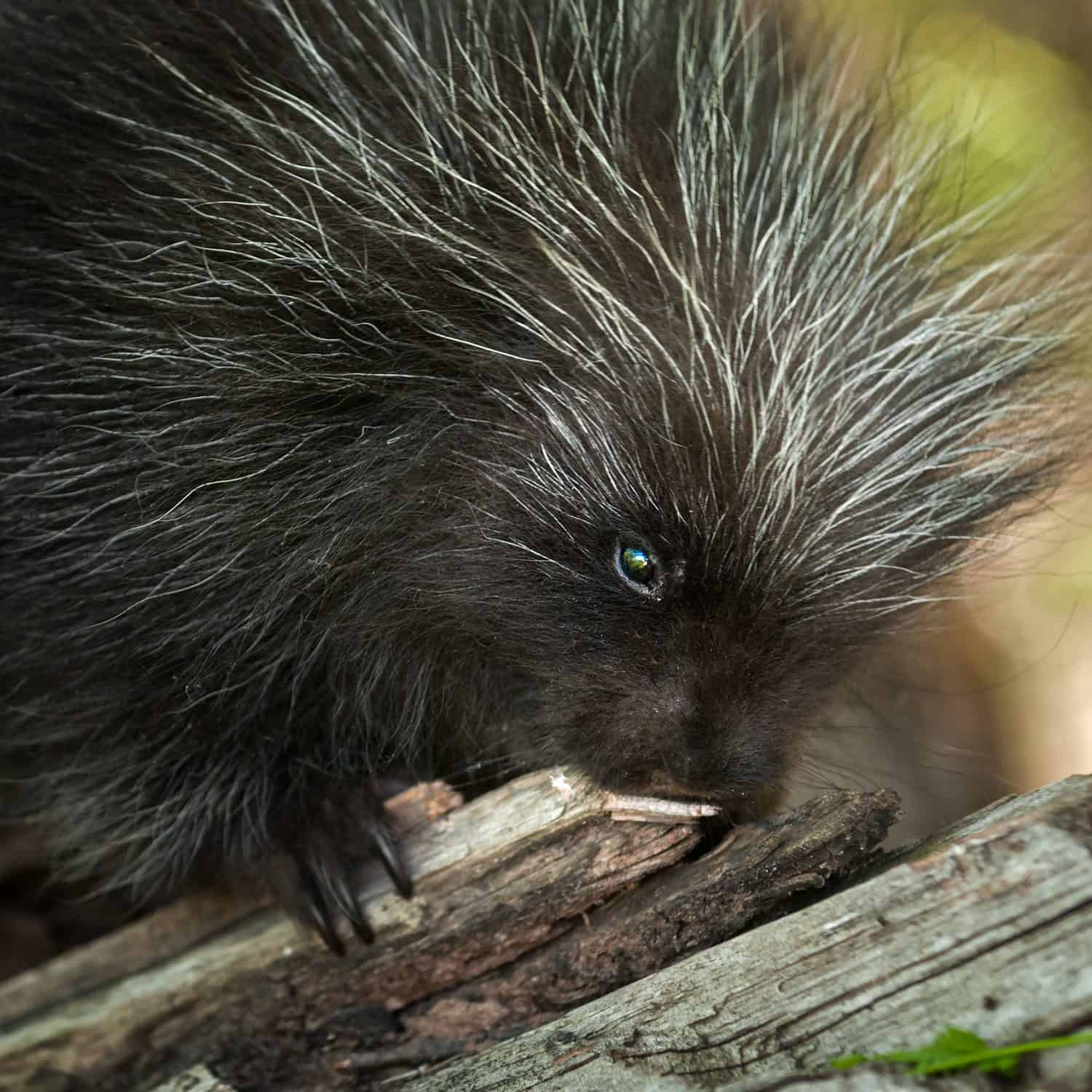
Porcupines are mammals and a type of rodent. There are more than two dozen porcupine species worldwide, with the North American porcupine being the only native species in the US. Their distinguishing feature is the thousands of barb-tipped quills (modified hairs) that cover the upper parts of their body as well as the top and sides of their tail. These quills protect them from predators.
Porcupines give birth just once a year, and typically only one baby is born at a time. They are called porcupettes. At birth, their quills are soft and flexible but harden after a few days.
As shown in the video, baby porcupines are not only adorable but also surprisingly vocal.
Porcupine Vocalization
Porcupines use sound as well as chemical, visual, and tactile communication. They use vocalization for communication and to deter predators. Some of their sounds, especially those made by the babies, are strikingly similar to the human voice, which makes them particularly endearing.
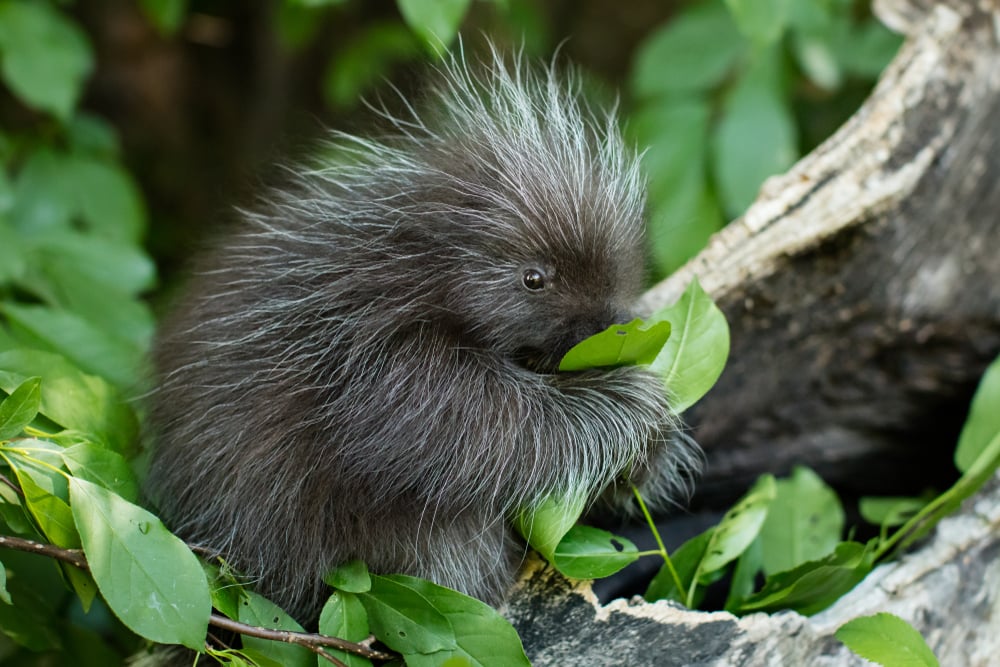
Baby porcupines make noises as they eat.
©Warren Metcalf/Shutterstock.com
While their sounds are very variable, most porcupine noises are loud and high-pitched. Vocalization is common during breeding when the females communicate their readiness to mate by screaming. Both males and females have a siren-like mating scream. Before a porcupine charges at a predator (such as bobcats and wolves), they stamp their feet and grunt. Grunting is also used to communicate their presence to another porcupine.
The repeated huffing noise that they make sounds very similar to a newborn human baby. Porcupines also make contented squeaking noises when they are eating. When they run around while making their excited cooing noises, the sounds become even more pronounced.
Not all porcupine sounds are made using their vocal cords. They will also chatter their teeth. In some of these clips, it even seems as if the porcupine is having a conversation with their human friends!