
Quick Take
- That wide-open hippo mouth looks like the start of a bite, but wildlife experts classify it as something else entirely. Decode the threat display →
- A 1973 scientific theory about game strategy quietly predicts exactly how this standoff ends, including why both animals prefer it that way. See the game theory →
- Dry land shifts the power dynamic between these two giants in a way most people never consider. How dry land shifts power →
- Hippos are famous as Africa's deadliest large mammal, yet something surprising keeps these heavyweight showdowns from turning lethal. Why standoffs stay nonlethal →
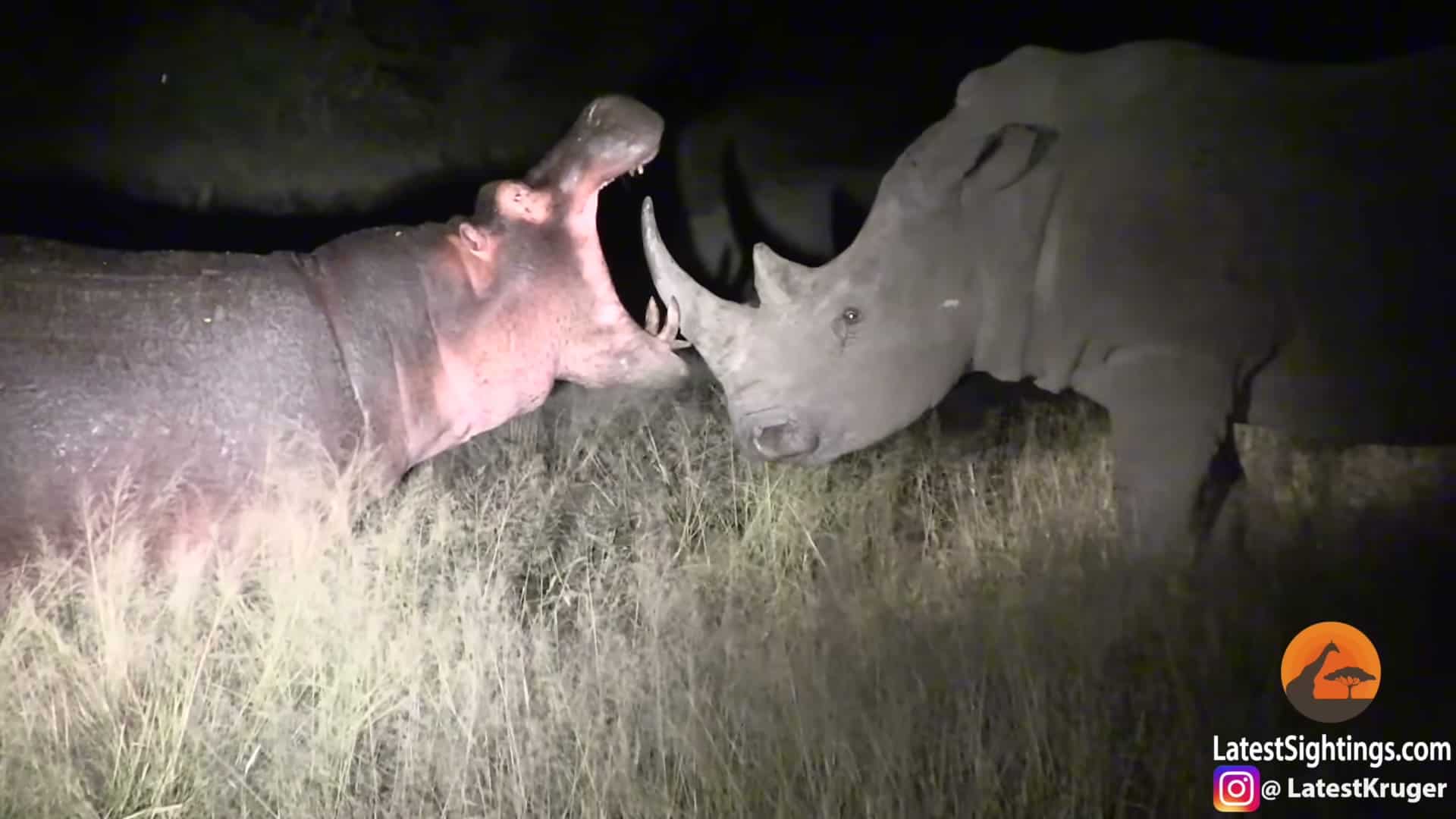
A hippo squaring off with rhinos on an open road makes for some seriously striking footage. The clip delivers pure drama, from a face-to-face standoff to a massive, wide-open mouth. But while it looks like a heavyweight brawl is about to explode, what these animals are actually doing is performing a finely tuned ritual.
Decoding the “Yawn”
That wide-open mouth is often misread as an attempt to bite, but it’s actually a threat display known as “gaping.” Hippos use it to flash their weaponry, showing off lower-jaw canines and incisors that can grow over 15 inches long.
Because hippos rarely fight to the death without a very good reason, this display serves as an honest warning: “Here is what I’m packing, and I’m willing to use it.” Smaller or less confident animals usually back off rather than test the claim. Experts at institutions like the San Diego Zoo Wildlife Alliance have documented this behavior extensively, noting that it’s a go-to move for males defending their territory or establishing dominance.
Out of Their Element
Meeting a rhino on dry land puts a hippo in an unusually vulnerable position. Common hippos spend most of their days submerged in water or wallowing in mud, waiting until nightfall to come ashore and graze. When they get caught out in the open during the day, especially around other massive herbivores, they get stressed out and short-tempered.
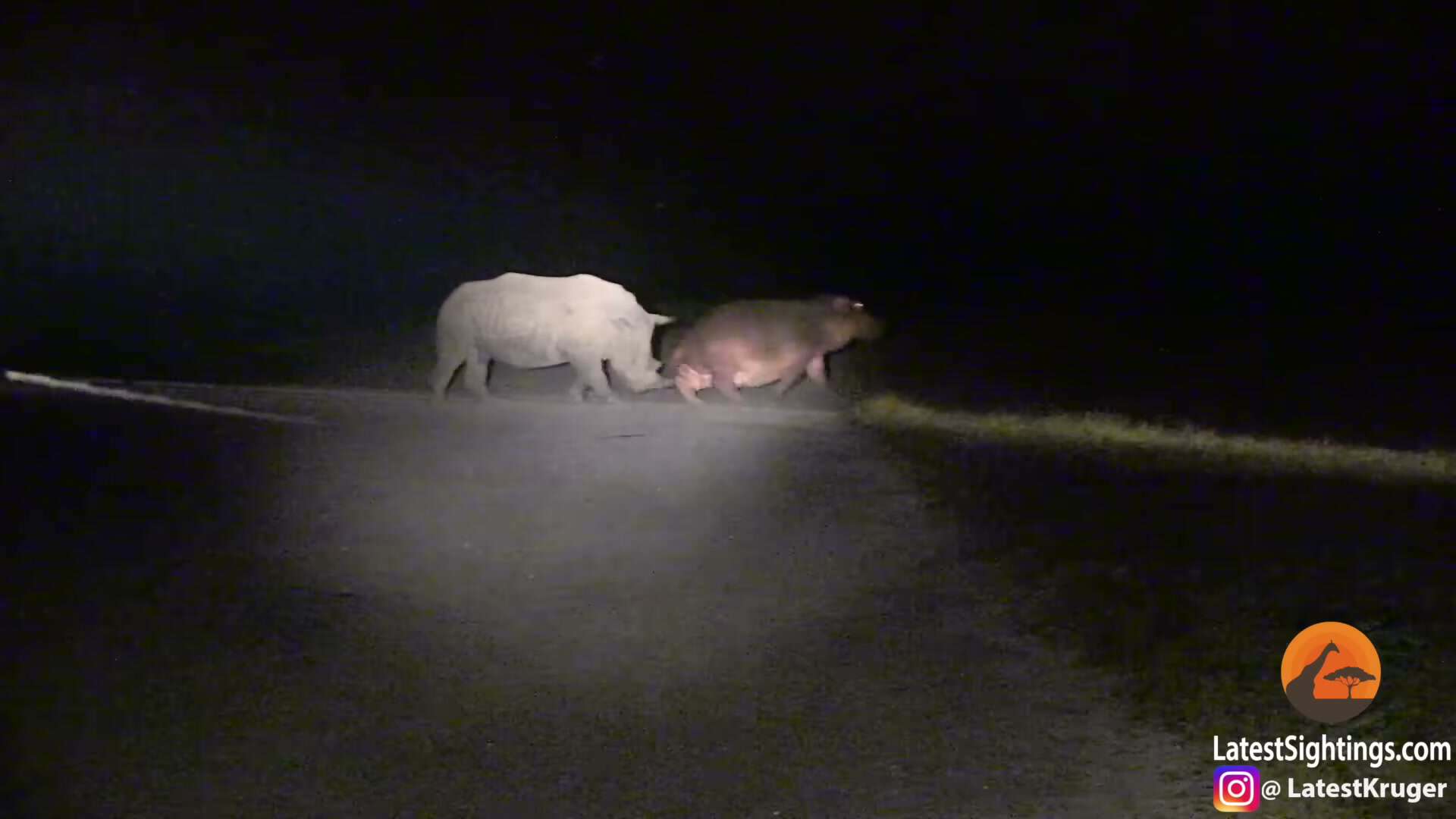
The gape is often misleading, seeming like a fight may break out. In reality, it’s just a way in which each animal is sussing out the other.
©Latest Sightings via YouTube — used under fair use – Original / License
According to the International Union for Conservation of Nature (IUCN), which lists hippos as a Vulnerable species with only about 115,000 to 130,000 left in the wild, these aggressive encounters usually spike when a hippo feels cornered or cut off from safety.
The rhinos in the video are no pushovers either.
- White rhinos are the larger of the two African species and tend to be more laid-back, often hanging out in loose groups.
- Black rhinos are browsers, eating bushes rather than grass, and they have a reputation for being much more reactive, especially protective mothers with calves.
As groups like Save the Rhino International point out, both species have terrible eyesight and rely heavily on scent and hearing. When a rhino lifts its head and points toward a hippo, it isn’t necessarily getting ready to charge, it’s just sniffing the air and listening closely to figure out what’s going on.
What looks like mutual aggression in the footage is actually a mutual assessment. Each animal is gathering data on the other’s size, position, and attitude. The hippo gapes, the rhino holds its ground, and neither one actually attacks.
The Logic of Animal Conflict
This is exactly what wildlife biologists expect to see. In 1973, scientists Maynard Smith and George Price “logic of animal conflict,” showing that because physical fighting carries a massive risk of injury for both sides, nature favors dramatic displays that resolve disputes without anyone actually throwing punches.
The end of the video, where the animals simply walk away down the road, fits this pattern perfectly. Once both sides have signaled their willingness to defend their personal space and recognized that the other isn’t going to back down easily, walking away becomes the smartest, cheapest option.
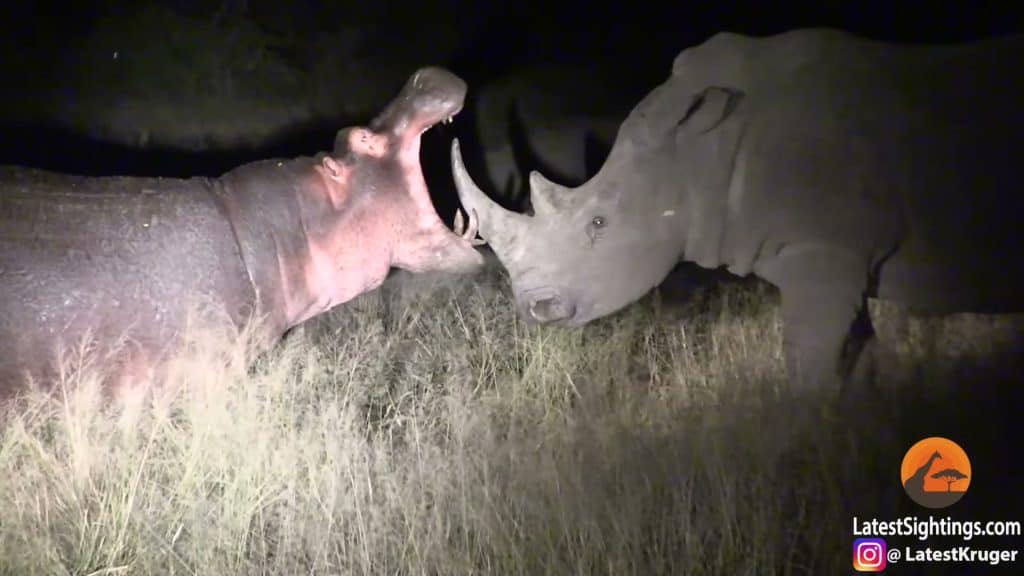
The hippo offers the rhino a gentle reminder that it, too, has some weapons it can use.
©Latest Sightings via YouTube — used under fair use – Original / License
Setting the Record Straight
There are a few common myths about this encounter worth busting:
- Despite what you might read in tourist captions, hippos don’t yawn because they are sleepy or hot. The gape is strictly a social warning.
- Don’t let their shape fool you; hippos can run at roughly 19 miles per hour (30 km/h) over short distances. That speed is exactly why other large animals take their threats seriously.
- While hippos are widely cited as the world’s deadliest large land mammal, killing an estimated 500 people per year in Africa, showdowns between hippos and rhinos are rarely lethal. Both animals are built like tanks, and luckily, they are very good at reading each other’s signals.
Ultimately, this video is a perfect example of how Africa’s giant herbivores manage to share the same neighborhood without constantly hurting each other. The gape is loud, the standoff looks cinematic — but the quiet resolution is precisely what both animals sought all along.