
Vaccinations are essential for protecting pets from dangerous and potentially fatal diseases. In 2025, staying current on your pet’s shots is just as important as ever. It’s not only for their health, but also to help prevent illness from spreading through animal and human communities. This guide covers the most up-to-date vaccine schedules for cats and dogs and highlights National Pet Immunization Awareness Month, recognized each August.
August Is National Pet Immunization Awareness Month

Vaccines are vital to keeping your pet healthy.
©iStock.com/macniak
Each August, the United States observes National Immunization Awareness Month, including a special focus on National Pet Immunization Awareness Month. This campaign encourages pet owners to make sure vaccinations are up to date before the start of fall. It’s a great opportunity to check your pet’s health records, schedule booster appointments, and take advantage of free or discounted vaccine clinics in your area. It’s also a time to learn how simple steps like routine vaccinations can protect your pet and contribute to public health.
Why Pet Vaccines Matter

Vaccinating your pet helps make sure they have a long, healthy, and happy life with you.
©Ekaterina43/Shutterstock.com
The Center for Infectious Disease Research & Policy at the University of Minnesota reports a spillover in vaccine skepticism from people concerned about the COVID-19 vaccine and others. In a 2023 survey, anywhere from 22–37% of dog owners considered dog vaccines unsafe, ineffective, or unnecessary. To understand the benefits of pet vaccinations better, check out the American Veterinary Medical Association website.
Vaccines prepare a pet’s immune system to fight specific infections before they become serious. With proper immunization, pets are much less likely to contract highly contagious diseases such as rabies, parvovirus, distemper, and feline leukemia. These illnesses are not only dangerous but often deadly. Vaccinating pets also protects other animals, reduces the risk of outbreaks, and in some cases is required by law.
We Asked an Expert

Dr. Huyn Han is a veterinarian with TelaVets, providing virtual care for pets nationwide.
A-Z-Animals: Dr. Han, what do you say to pet parents who are hesitant to vaccinate their animal for one reason or another?
Dr. Han: I totally get it — we’re all being more thoughtful these days about what goes into our bodies and our pets’ bodies. But vaccines aren’t about overmedicating; they’re about protecting pets from truly awful, often fatal diseases. Parvo, distemper, and rabies aren’t just “old” problems — I still see cases every year. And when those diseases hit, they hit hard. Vaccines are one of the safest, most effective tools we have in veterinary medicine to keep our pets — and communities — healthy.
A-Z-Animals: That makes sense. Are there any dog or cat illnesses that could spread to people if their pets are not immunized?
Dr. Han: Absolutely. The big one is rabies. It’s fatal, it’s transmissible to humans, and it’s 100% preventable with a vaccine. That’s why it’s not just recommended — it’s required by law in most places.
Other concerns include leptospirosis and certain respiratory infections. Some of these are zoonotic, meaning they can pass from animals to people, especially kids, the elderly, or anyone with a weakened immune system. Keeping your pet vaccinated isn’t just about them — it’s about protecting your whole family.
Are Pet Vaccines Safe?

Pets may not like vaccinations, but they’re safe and they work.
©Dina da/Shutterstock.com
Pet vaccines are widely used, thoroughly tested, and essential for preventing serious diseases. Veterinarians tailor vaccination schedules based on your pet’s age, breed, health history, and lifestyle. The goal is always to provide the best possible protection while minimizing any risks. Most pets experience no side effects at all. When reactions do occur, they are typically mild and short-lived. Your dog or cat might feel sleepy, develop a low fever, or show minor swelling near the injection site. Serious allergic responses are rare and can be treated quickly by a vet.
Keeping your pet vaccinated isn’t just about them — it’s about protecting your whole family.
Dr. Huyn Han, veterinarian with TelaVets
What If You Can’t Afford Vaccines?

Animal shelters often provide basic vaccines for free or at low cost.
©hedgehog94/Shutterstock.com
If you are concerned about the cost of vaccinations, don’t skip them—many communities offer affordable options. Local animal shelters, nonprofit organizations such as Petco Love Care and Paw Fund, and community veterinary programs often provide basic vaccines for free or at low cost. Veterinary schools and mobile clinics may also offer discounted vaccine packages, particularly during National Pet Immunization Awareness Month. To find these services, check with your local animal control agency, follow area shelters on social media, or ask your veterinarian. These programs are designed to ensure that every pet has access to essential protection, regardless of family income.
2025 Dog Vaccination Schedule
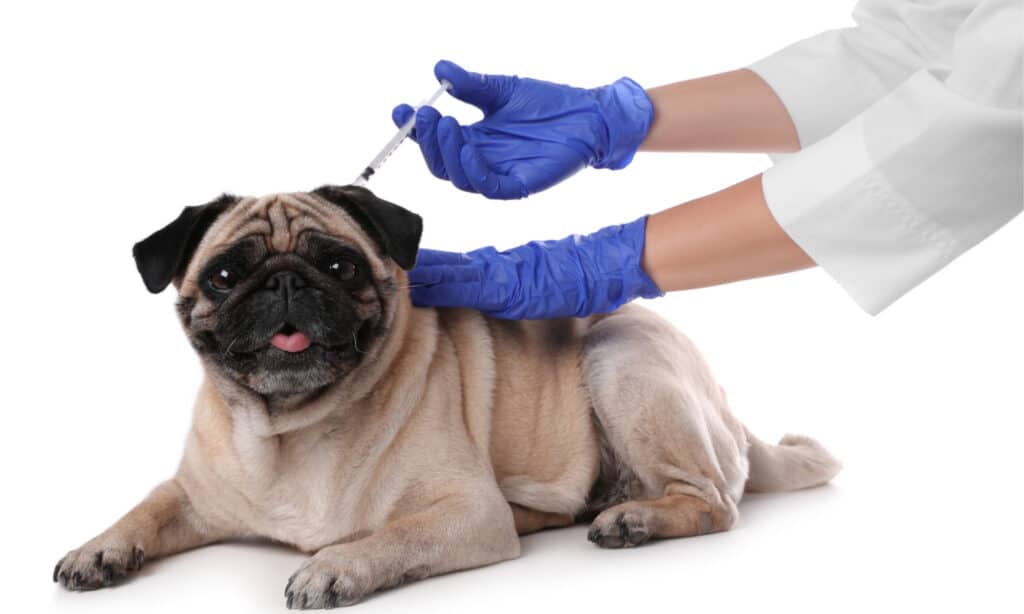
Dogs need to be vaccinated on a regular schedule.
©iStock.com/Liudmila Chernetska
Vaccines fall into two main categories: core vaccines, which are recommended for all pets, and non-core vaccines, which are given based on a pet’s habits, environment, or risk of exposure.
Core Dog Vaccinations
Puppies should begin receiving vaccinations at around 6 to 8 weeks of age. The core vaccines they’ll need include protection against distemper, adenovirus (hepatitis), parvovirus, and rabies. The standard schedule usually goes as follows: at 6–8 weeks, the first core shot (often given as DAP or DHPP); at 10–12 weeks, a booster shot and any lifestyle-specific vaccines; and at 14–16 weeks, the final booster and the first rabies shot. A booster is then given a year later, followed by boosters every three years or as recommended by your vet.
Non-Core Vaccinations
Non-core vaccines may also be recommended, depending on the dog’s lifestyle and risk level. These include vaccines for Bordetella (kennel cough), leptospirosis, Lyme disease, and canine influenza. Some of these may be required if you plan to have your dog groomed or boarded so that they don’t pass infection on to other animals.
Dog Vaccination Maintenance
Adult dogs need regular vaccination maintenance. Core vaccines are generally boosted every one to three years, while non-core vaccines may be needed annually if your dog is still at risk.
2025 Cat Vaccination Schedule
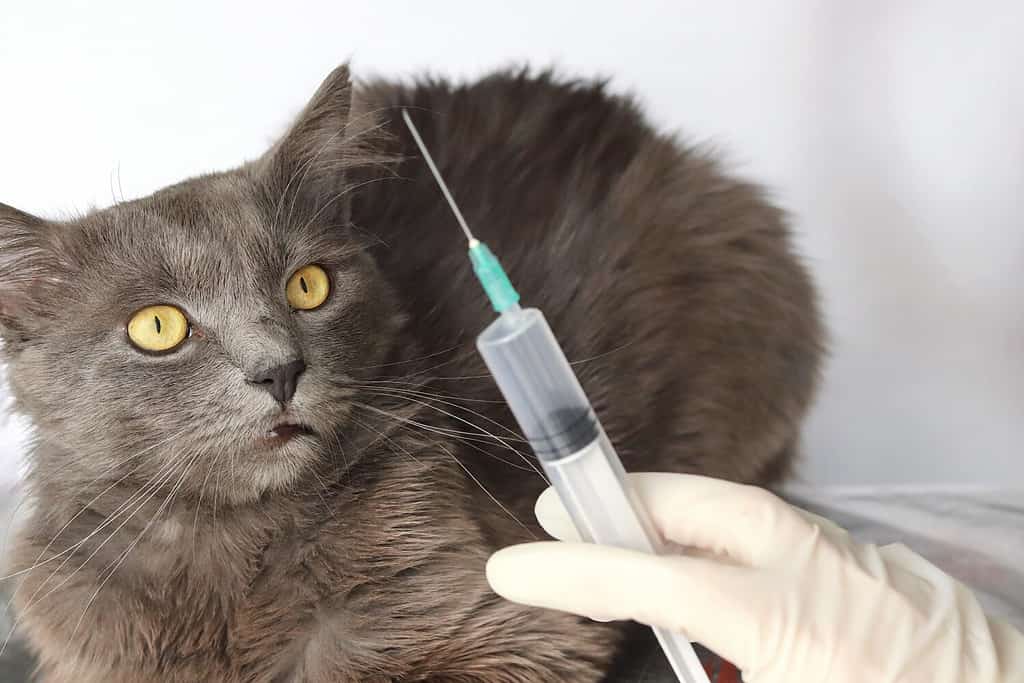
Cats will need to get their first set of vaccinations at six weeks of age.
©Alesia Fes/Shutterstock.com
Like dog vaccines, those for cats fall into two main categories: core vaccines, which are recommended for all pets, and non-core vaccines, which are given based on a pet’s habits, environment, or risk of exposure.
Core Cat Vaccines
Kittens need their first vaccinations starting around 6 weeks of age. The core vaccines include FVRCP (which protects against feline viral rhinotracheitis, calicivirus, and panleukopenia) and rabies, which is often required by law. The typical schedule begins with FVRCP at 6–8 weeks, followed by a second dose at 10–12 weeks. At 14–16 weeks, kittens receive their final FVRCP booster and rabies shot. A follow-up booster is needed a year later, with additional boosters every one to three years, depending on the cat’s lifestyle.
Non-Core Cat Vaccines
The feline leukemia virus (FeLV) vaccine is not considered a core vaccine, but may be recommended based on your cat’s risk. It is often given during kittenhood—starting at 10–12 weeks with a booster at 14–16 weeks—especially for cats that go outdoors, live in multi-cat households, or are otherwise at risk of exposure. Indoor-only cats may not need it, but your vet can help you decide.
Adult Cat Vaccines
Adult cats should receive FVRCP and rabies boosters every one to three years, and FeLV annually if they are at risk of exposure to other cats.
Staying on Track

Not only is August National Pet Immunization Awareness Month, but the 8th is International Cat Day.
©ToKa74/Shutterstock.com
Keeping vaccinations up to date doesn’t have to be complicated. Vets will usually send you reminders when your pet is due for another shot. Store all health records in a safe and accessible place, and ask your vet at each visit whether any shots are due. Consider setting an annual reminder in your calendar to check your pet’s vaccination status. If you’re unsure whether a booster is needed, ask your vet about titer testing to measure existing immunity.
What About Other Pets?

Ferrets receive some of the same vaccines as dogs.
©Tom Lester/Shutterstock.com
Dogs and cats are the most commonly vaccinated pets, but some other indoor animals may also require vaccines. Ferrets, for example, are often vaccinated against rabies and canine distemper. In some countries, rabbits may be vaccinated against viral hemorrhagic disease. Most birds, rodents, reptiles, and amphibians do not require vaccines. However, their health still depends on proper care, hygiene, and habitat maintenance.
Prevention Is Protection

Talk to your vet if you have any questions or concerns about pet vaccinations.
©FamVeld/Shutterstock.com
Vaccinating your pet is one of the most loving, effective, and affordable ways to keep them healthy. It helps protect them from painful illnesses, saves you money on future treatment, and provides peace of mind—especially if you travel, board, or groom your pet. If you have questions about side effects or scheduling, talk with your veterinarian. If finances are a concern, explore the many programs offering free or low-cost vaccines. And if you’re not sure whether your pet is due for a shot, use National Pet Immunization Awareness Month in August as your annual check-in point.