
Quick Take
- Changes in routine or environment can confuse cats and lead to stress-related behaviors.
- Cats rely heavily on predictable routines, clear signals, and consistent interactions to feel safe.
- Simple adjustments—like respecting boundaries and maintaining routines—can quickly improve your cat’s behavior and trust.
Cats have a unique reputation for being mysterious, independent, and even a little aloof, but your pet is not to be taken lightly. The truth is that cats are actually incredibly observant and sensitive creatures that require a life of consistency, clarity, and subtle communication. When their environment suddenly becomes unpredictable, it can be incredibly confusing to your cat and lead to behavioral issues, stress, and even withdrawal.
The tricky part is that many cat owners may be confusing their cats without realizing it. If you’ve noticed that your cat has suddenly lashed out during petting, stopped using their litter box, or seemed suddenly distant, you may need to make a change. Luckily, there are nine common issues and practical fixes that can return your cat to its loving self.
Sudden Changes to Their Routine
Cats are creatures of habit. In the wild, predictability means safety. Knowing where their food comes from, when it’s time to be active, and when it’s time to rest helps them feel secure. If your schedule shifts even the smallest bit, it can throw your cat off more than you’d expect. Maybe you used to feed your cat at 7 AM, but lately, work has delayed mealtime to between 6:30 and 8 PM. Randomness can drive your cat up the wall. As a result, some cats can become more clingy than usual while others may withdraw or act out.
The best way to help is to anchor your cat’s day with at least a few constant checkpoints. Feed at the same times every day, keep play sessions predictable, and, if possible, maintain a constant bedtime. These stable moments will give your feline friend some much-deserved comfort.
Changing the Litter Box Setup
You may find that your cat is making a mess in its litter box or is showing other odd bathroom behaviors. The issue may be that you’ve suddenly changed their setup. Many small changes can have a big impact. Whether you’ve changed to a new litter box, moved it to a new location, added a lid, or changed how you clean the box, you may be causing your cat some physical harm. Cats are very particular about their litter box. They rely on familiarity, scent, and location memory, and when those change, your cat may no longer recognize the litter box as a safe or appropriate place.
In reality, the best fix to this issue is to never change the litter box setup, but that may not be possible. If you must make changes, make them gradually and avoid frequent relocations. Try to keep the box in a quiet, low-traffic area and maintain a constant cleaning routine so there are no surprises.
Petting Past the Point of Comfort

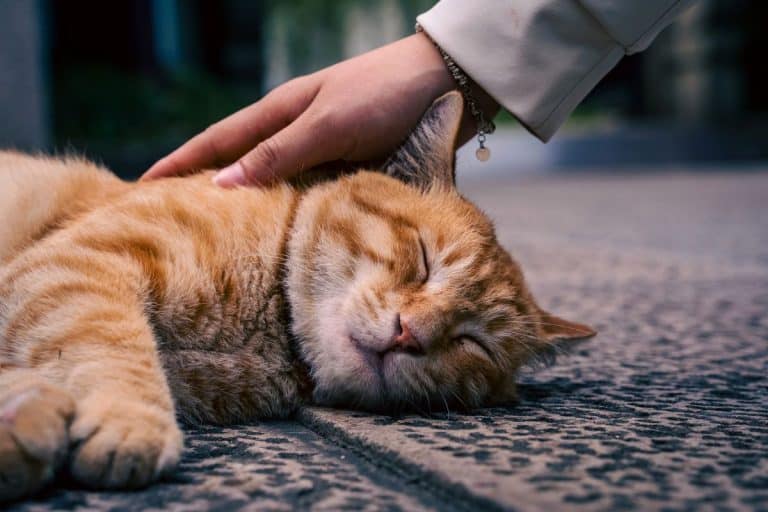
You may love petting your cat, but if your pet starts to stiffen or begins to flick its tail, it may be a sign to stop.
©Aleksandr Khmeliov/Shutterstock.com
When many people think of cats, they imagine a movie in which someone sits in a chair, stroking their furry friend for hours. However, that’s rarely the case. Every cat is different, and many have a lower tolerance for prolonged physical interaction than many humans expect. What you may interpret as affection may feel like overstimulation to them. When your cat becomes uncomfortable with your petting, they may exhibit subtle signs, such as ear rotation, skin rippling, or tail flicking. If they don’t believe that their desire to be left alone is being understood, the next step may be swatting and clawing.
The easy fix is to be aware of the warning signs that your cat is uncomfortable. If you’re petting your cat for a while, you may start to witness the following:
- Tail starts flicking or thumping
- Ears turn sideways or backward
- Body stiffens or shifts away
If you notice these signs, it means it’s time to stop petting your cat. Short, positive petting sessions build trust far better than long ones that end in frustration.
Forcing Attention When They Want Space
You may be confusing your cat by suddenly showing affection. You know your cat loves you, so you’re assuming they’d love a quick cuddle, but sometimes a sudden shock of love can cause more harm than good. This type of love can often cause mixed signals. What you may see as an impromptu sign of affection can appear to be a loss of control to your cat. Felines can often be temperamental, so you need to watch for the signs that this is not the time. When you notice signs like your cat flattening its ears, walking away, or tensing its body, take it as a sign to back away.
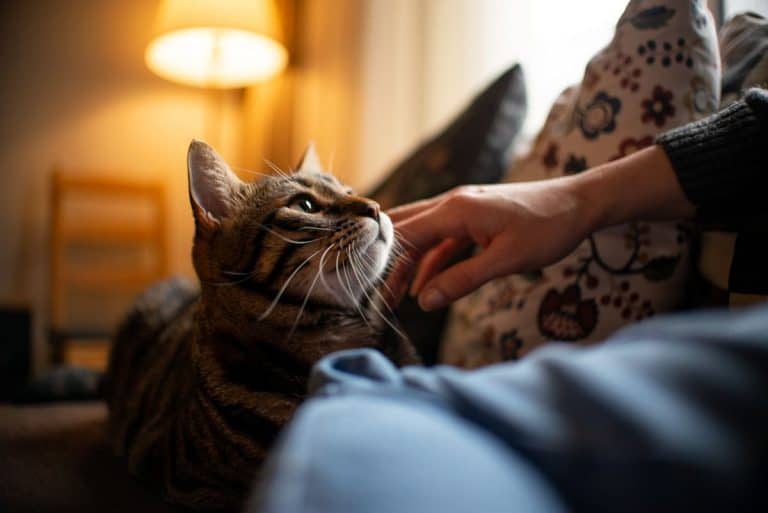
There’s nothing wrong with giving your cat attention. You just need to do it right. Instead of picking your cat up into your arms, sit nearby and let your furry friend come to you. Offer your hand so your cat can head-bump you if they wish. They may come back for more or walk away. Either way, respect their wishes.
Using Your Hands as Toys
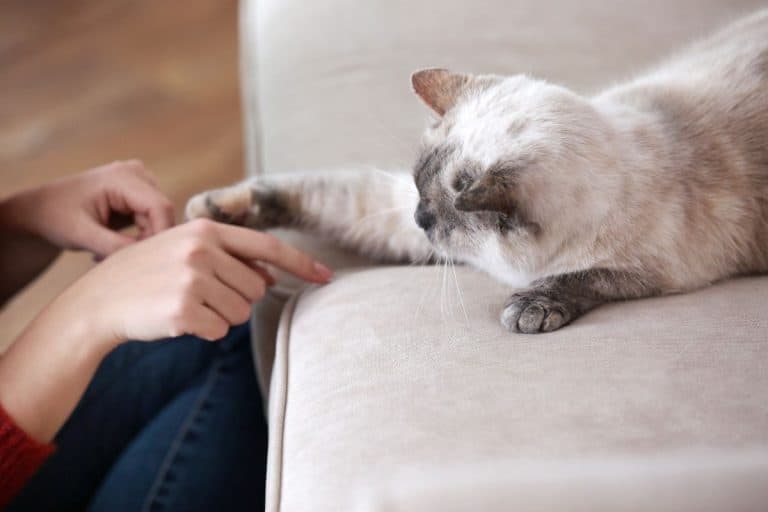
When it comes to cats, a behavior that may seem simple can quickly become confusing for them. Take using your hands as toys. You may think it’s innocent to wiggle your fingers under a blanket or let your kitten pounce on your hand, but do it too often, and the behavior could begin to confuse your cat. This is because even domestic cats are natural hunters. When your hands become part of their play, they start to see them as appropriate targets. Your cat may swat or try to bite as a result.
The solution to hand confusion is simple. Use other items for interactive play, such as toy wands, feather teasers, and laser pointers. Keep your hands out of the “prey” category entirely, and you’ll establish a clear distinction between play and affection.
Mixed Signals During Playtime
While you don’t intend to cause your cat mental unrest, you may be doing so by giving mixed signals during playtime. Consistency is key. Maybe sometimes you encourage chasing, but other times you discourage it. Or maybe play sessions end abruptly before your cat can “catch” anything. Giving mixed signals can disrupt your cat’s natural hunt cycle. Their routine often goes in this order: stalk, chase, pounce, catch, eat, and rest. Disrupt that sequence, and it can leave your cat feeling agitated or unsatisfied.
An easy fix is to structure play sessions intentionally and feed into your cat’s instincts. Use toys that mimic prey movement, follow play sessions with a treat, or let your cat “win” your games at the end.
Sudden Environmental Changes

Your cat feels comfortable when they’re familiar with their environment, so make new changes gradually.
©Pixel-Shot/Shutterstock.com
Though they may seem like they’re in their own world, cats notice everything. They can spot new furniture, unfamiliar scents, and even subtle rearrangements. Something as simple as moving a chair or bringing in a new decoration can feel significant from your cat’s perspective. These changes can confuse your cat because they disrupt the mental map of their territory. When that map suddenly changes, it can feel like their environment is no longer predictable or safe.
That doesn’t mean you can never modify your space; you just need to introduce changes gradually. Avoid making too many changes at once and let your cat explore new items at their own pace. If you do make changes, keep familiar objects nearby (beds, blankets, scratching posts) so your cat can see that some things stay the same.
Inconsistent Responses to Behavior
Another way you may be confusing your cat is by giving sudden, inconsistent responses to behaviors they do all the time. For instance, if you have a cat that likes to jump on the counter, and you laugh at the behavior one day and then scold them the next, your cat’s likely to be confused. To you, your responses may be situational. To your cat, it’s like two different worlds. Cats don’t always understand rules that change, so they may continue bad behavior because they know that sometimes you’re okay with it.
The easy fix is to be consistent. Decide what behaviors are acceptable and stick to them. Reinforce desired behaviors with rewards and redirect unwanted behaviors calmly every time. You’re not trying to be harsh. You’re just trying to provide clarity.
Ignoring Their Communication Signals
The final way you may be confusing your cat is by ignoring the things your pet is trying to tell you. Cats are constantly communicating—just not in ways that are always obvious. Many subtle signals, such as blinks, tail positions, vocalizations, and body posture, carry meaning. Your cat may be trying to tell you that it’s hungry, wants affection, or desires to be left alone. If you ignore your cat when they’re subtle, they may resort to more obnoxious or dangerous behaviors, like swatting.
The easy fix to this problem is to pay attention to your cat. Watch how your cat acts before doing anything. Notice how your cat greets you, how the tail moves in different situations, and pay attention to their preferred interaction times. Use the knowledge you’ve learned the next time your cat gives you the same signal. You can even show you’re on the same page by mirroring their behavior, like slow blinking when your cat blinks at you.
Clarity Brings Confidence
When you avoid all of the confusing behaviors discussed here, you’ll create an environment of clarity that will be more enjoyable for you and your cat. You don’t need to be perfect, but you should strive for consistency and create an environment that works best for your pet. Make an effort, and over time, you may notice fewer behavioral issues, more relaxed body language, and increased affection and trust.