
Quick Take
- One Oklahoma lake carries a title so bold it sounds like marketing, though the biology behind it makes it completely legitimate. Discover the striped bass capital →
- Catching trout in Oklahoma during summer heat sounds impossible, but one specific stretch of river makes it a year-round reality. Explore the trout tailwater →
- Fishing Oklahoma's biggest lake at the wrong time of day is the most common mistake anglers make all summer long. Fish Oklahoma's largest lake →
- One of the top bass fishing destinations in the entire United States is hiding in Oklahoma's Ozark foothills, yet most anglers outside the state have never heard of it. See the Ozark bass destination →
Oklahoma offers numerous freshwater reservoirs, winding rivers, and well-stocked ponds where anglers can cast a line for largemouth bass, striped bass, catfish, and crappie. During the summer months, when Oklahoma’s surface water temperatures rise into the 80s and large sportfish retreat to deeper water during the midday heat, the best fishing occurs around dawn and dusk. Continue reading to discover some of the best fishing spots in Oklahoma.
Lake Of The Arbuckles
Lake of the Arbuckles lies completely within the borders of the Chickasaw National Recreation Area, nestled at the northern edge of the Arbuckle Mountains.
This 2,350-acre reservoir was created in 1967. There are 36 miles of quality shoreline and a maximum depth of 82 feet. Fish found in the lake include crappie, catfish, largemouth and white bass, perch, and bluegill. Take advantage of the covered fishing piers and the nearby tackle shops.
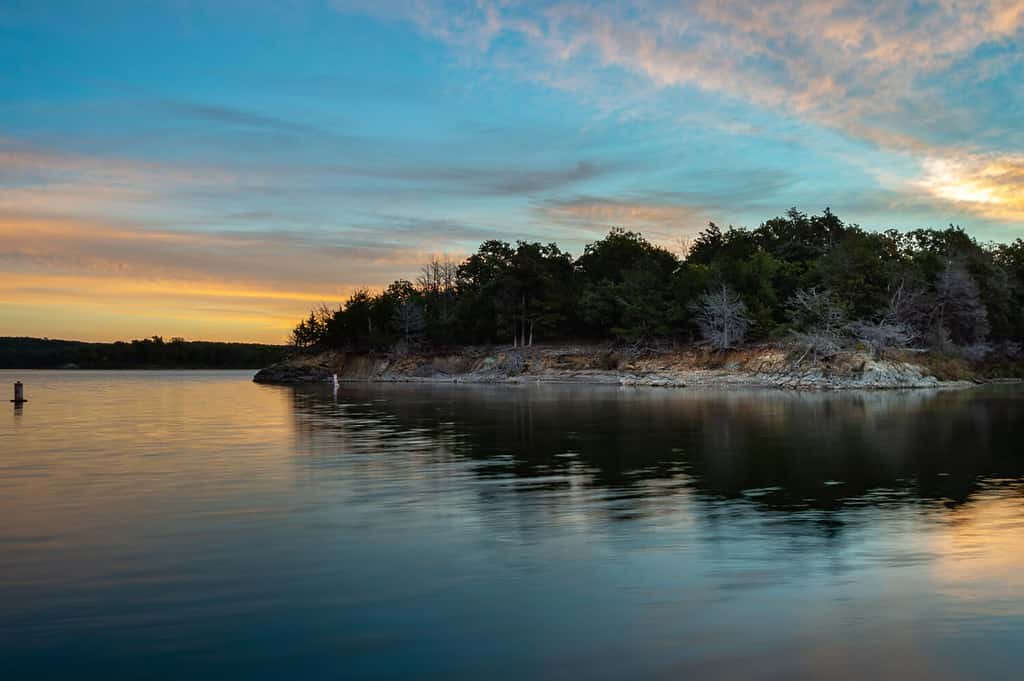
Lake of the Arbuckles is located in south-central Oklahoma.
©Seth Schubert/Shutterstock.com
Quanah Parker Lake
Fish the 89 surface acres of water and access the three miles of shoreline at Quanah Parker Lake. Located within the Wichita Mountains Wildlife Refuge, this lake offers numerous recreational opportunities.
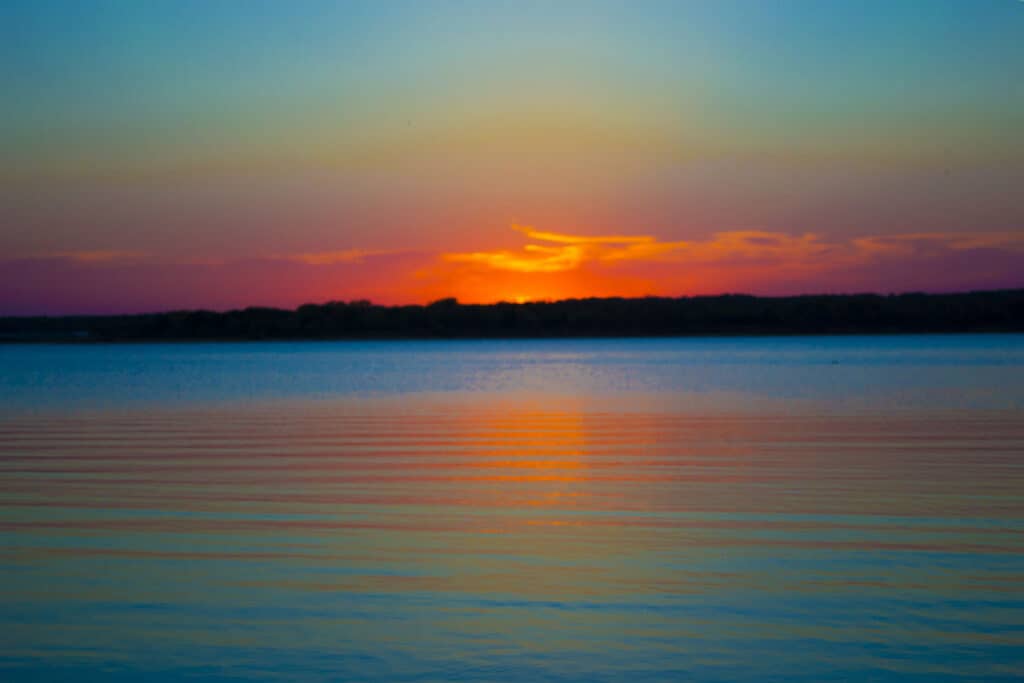
Quanah Parker Lake has 89 surface acres.
©iStock.com/asiantiger247
Along with fishing, you can hike, rock climb, or picnic. While fishing, you may use electric trolling motors and hand-powered boats. Get ready to reel in bass, sunfish, crappie, and channel catfish.
Lake Eufaula
Stretching across four counties, Lake Eufaula is a massive 102,000-acre reservoir located in Eastern Oklahoma. Lake Eufaula is the state’s largest lake and a nationally recognized fishing destination, featuring over 600 miles of shoreline.
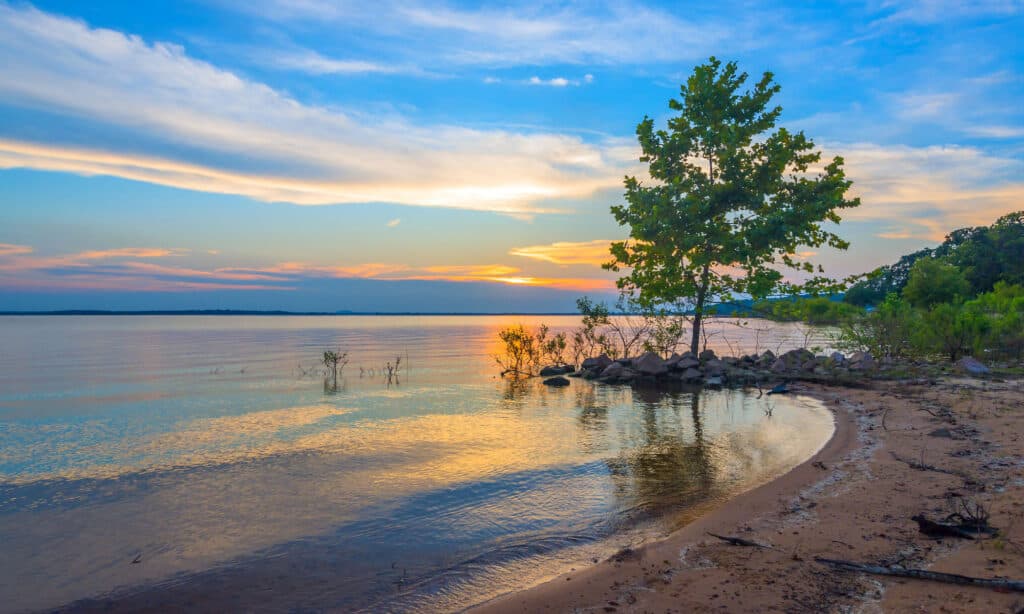
During summer at Lake Eufaula, fishing peaks during early mornings and late evenings, as warm water pushes largemouth bass, crappie, and catfish toward deeper, cooler water.
©JohnDSmith/Shutterstock.com
Anglers can cast a line for the abundant populations of largemouth and smallmouth bass, crappie, white bass, and trophy catfish. Lake Eufaula is one of Oklahoma’s tournament lakes, hosting annual local, regional, and national fishing events.
Beavers Bend State Park
Beavers Bend State Park is home to both Broken Bow Lake and the Mountain Fork River. The 3,482-acre park wraps around the southern shoreline of the 14,000-acre Broken Bow Lake. The crystal-clear Mountain Fork River flows straight out of the reservoir’s dam and cuts through the heart of the park.
Broken Bow Lake
Broken Bow Lake lies in the Ouachita Mountains in Southeastern Oklahoma. The lake is known for its deep, crystal-clear water. The 14,200-acre reservoir offers anglers excellent opportunities to catch largemouth bass, smallmouth bass, crappie, and catfish.
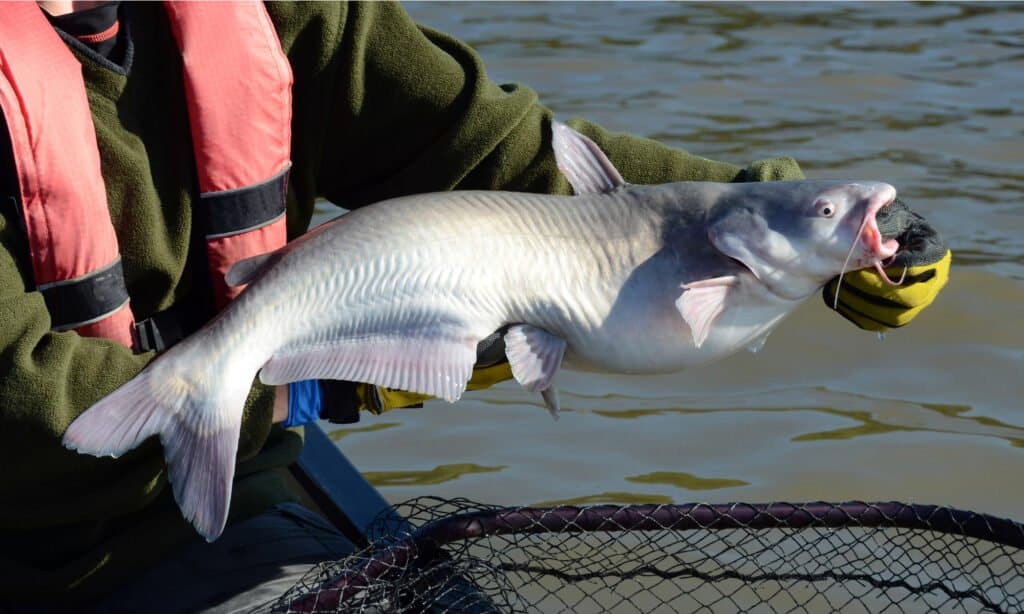
Broken Bow Lake in Oklahoma is a great fishing spot for catfish.
©M Huston/Shutterstock.com
Mountain Fork River
The Mountain Fork River was dammed to create the Broken Bow Reservoir. The river was blocked by the construction of the Broken Bow Dam, which was completed in 1968, backing up the river’s waters to form Broken Bow Lake. However, the reservoir dam releases water, forming the river’s tailwaters.
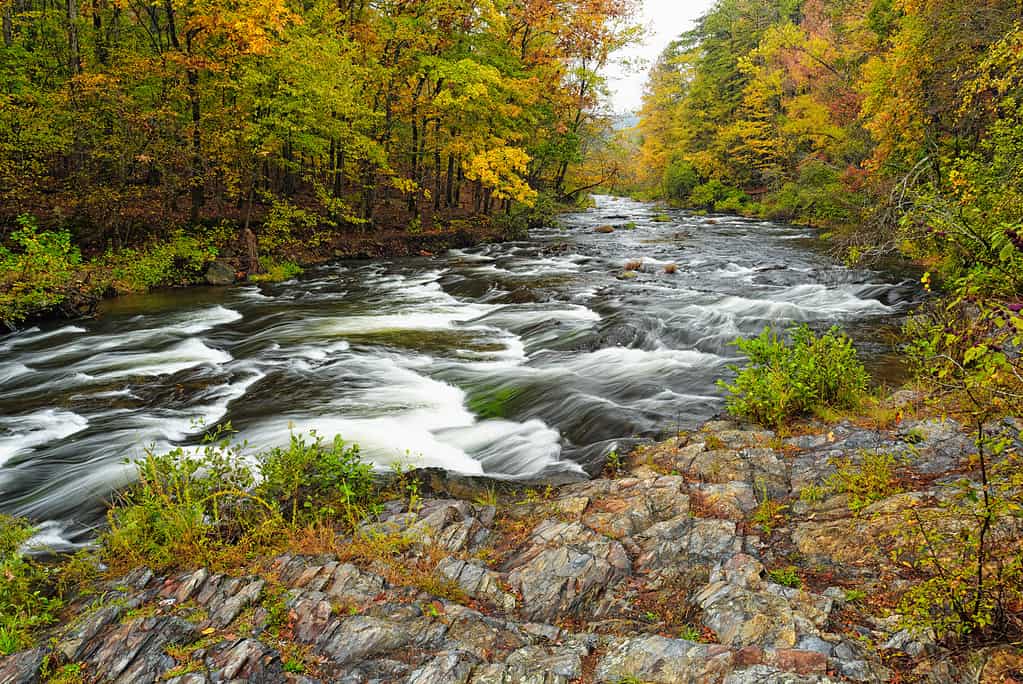
Mountain Fork River at Beaver’s Bend State Park, Oklahoma.
©Silvio Ligutti/Shutterstock.com
The Mountain Fork River is a year-round tailwater fishery. Cold releases from Broken Bow Lake sustain healthy populations of stocked rainbow and brown trout, making the river’s lower 12-mile stretch a destination for fly fishing and wade angling.
Grand Lake O’ the Cherokees
Grand Lake O’ the Cherokees is a 46,500-acre reservoir located in the foothills of the Ozark Mountains in Northeastern Oklahoma. The lake is ranked among the top bass fishing destinations in the United States as of 2026. The lake also hosts major bass fishing tournaments. This is because the lake teems with largemouth, spotted, and white bass. Anglers can also cast a line for crappie and catfish.
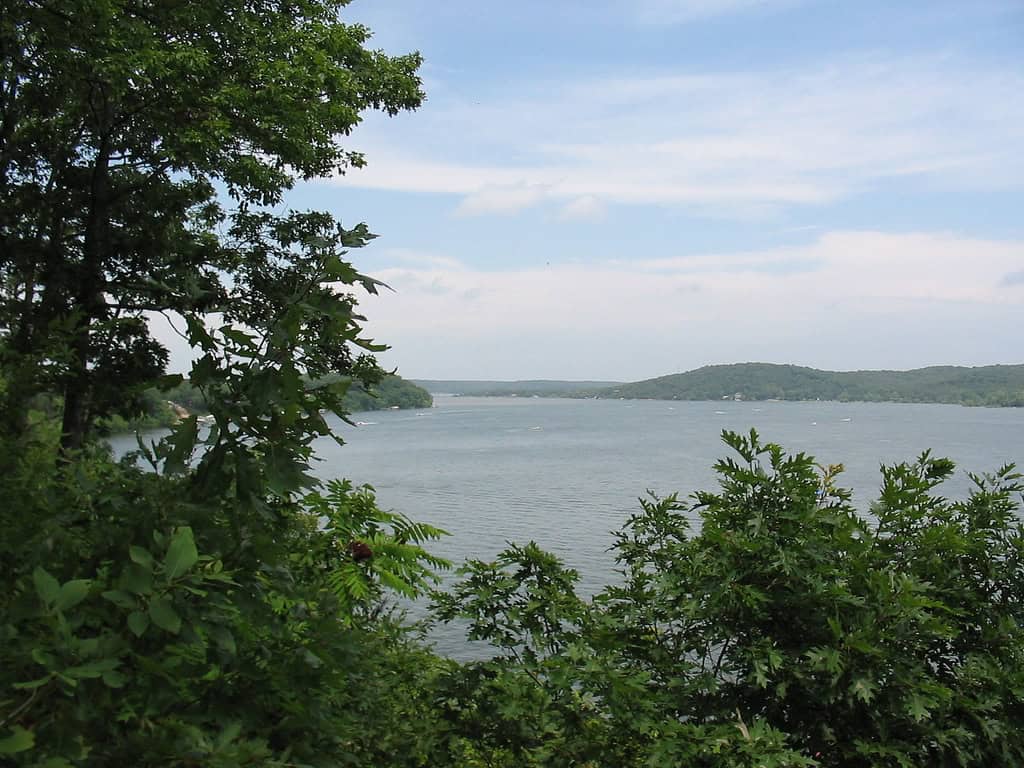
Grand Lake O’ the Cherokees is a man-made reservoir created by damming the Grand River, also called the Neosho River.
Foss Lake
Foss Lake, or Foss Reservoir, is located in Western Oklahoma. As the largest lake in the region, it spans 8,800 surface acres and offers exceptional year-round fishing for largemouth and smallmouth bass, white bass, hybrid striped bass, walleye, and channel and flathead catfish.
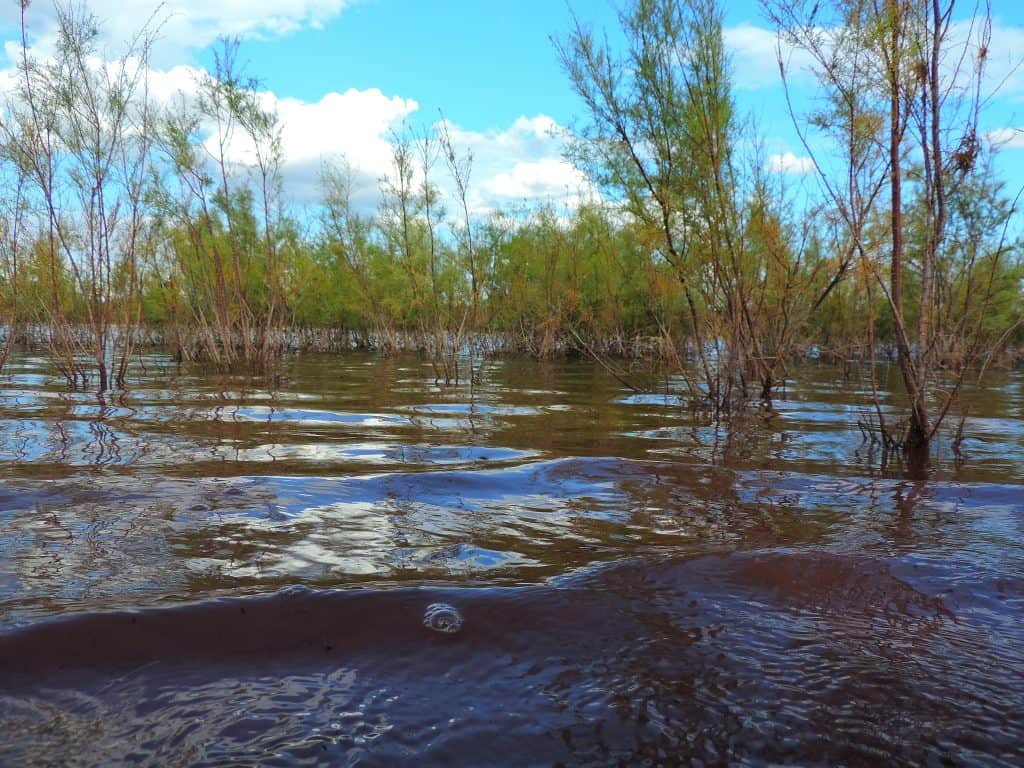
Foss Lake after a good rain.
At Foss Lake, anglers can cast a line from boats, the shore, or a covered fishing pier. Boaters can utilize multiple ramps around the lake to access open waters, which is highly effective for trolling for hybrid striped bass and walleye
Miles of accessible shoreline within Foss State Park provide excellent bank fishing opportunities, particularly in brushy coves where catfish and largemouth bass tend to congregate.
The lake features a lighted, enclosed, and ADA-compliant fishing dock near the main marina, offering a comfortable and sheltered option for catching crappie and panfish year-round.
Lake Texoma
Located in Southern Oklahoma along the Red River, Lake Texoma is an 89,000-acre reservoir known as the Striped Bass Capital of the World. Lake Texoma remains one of the few inland reservoirs where striped bass naturally reproduce, offering world-class fishing with thriving populations of striped bass, largemouth bass, crappie, and trophy blue catfish.
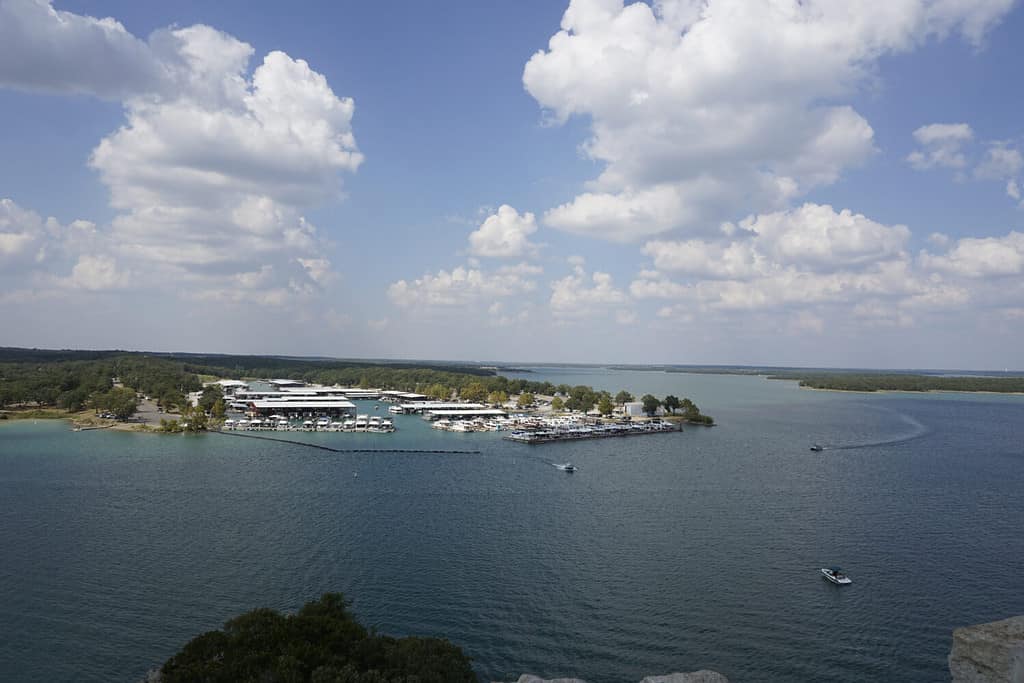
There are over 80 boat ramps and numerous fishing piers, docks, and public access points scattered across the lake’s 580 miles of shoreline.
©Jose Naldy Resto/Shutterstock.com
Lake Texoma was created in 1944 with the completion of Denison Dam. The dam and its spillway were built to provide flood control and hydroelectric power for the area. As the reservoir filled, it permanently submerged several small towns, roads, and farmlands.
Tenkiller Ferry Lake
Tenkiller Ferry Lake is a 13,000-acre reservoir located in the Ozark Mountains in Eastern Oklahoma. Famed for exceptional water clarity, Tenkiller Ferry Lake is renowned for its excellent largemouth and smallmouth bass, crappie, and catfish. The lake is adjacent to the lower Illinois River, a popular year-round trout fishery in the cool tailwaters directly below the Tenkiller Ferry Dam, which was completed in 1952.
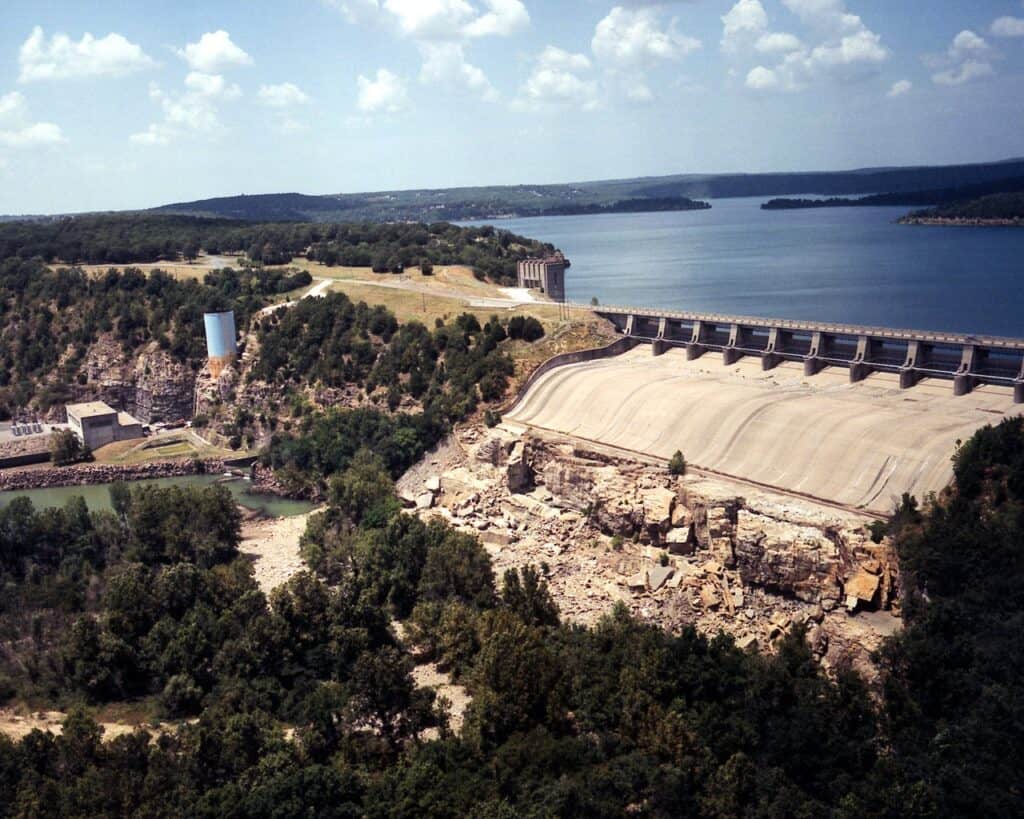
The lake and dam were named after the Tenkiller family, a prominent Cherokee Nation family who owned the land and operated a vital ferry service crossing the Illinois River.
©U.S. Army Corps of Engineers, photographer not specified or unknown / Public domain, via Wikimedia Commons – Original / License