
Quick Take
- One fish on this list is completely off-limits to keep during Florida's summer peak, even though targeting it remains wildly popular. Snook closure details →
- Florida has an unusual landing rule for one of these species that exists specifically to stop a widespread illegal practice most anglers don't know about. Wahoo landing rules →
- One fish here can change its skin color on demand, a fact that tells you a lot about why most anglers struggle to find it. Snapper's color adaptation →
- Showing up at the wrong hour in Florida's summer heat goes beyond mere discomfort. The fish simply aren't there. Seatrout timing on flats →
Summer saltwater fishing in Florida offers intense action, warm coastal waters, and diverse marine environments from deep offshore wrecks to shallow grass flats. Anglers brave high temperatures and frequent afternoon thunderstorms by targeting the early morning or late evening hours. Success requires adjusting techniques to match sluggish predator behavior and seeking deeper or moving water where currents provide cooler temperatures and steady food supplies. Both surf fishing and charter excursions are popular in summer. Surf fishing is best done during the cooler hours around sunrise and sunset, when anglers can avoid the blistering midday sun and find active marine life closer to shore. Charter boat excursions offer all-day flexibility with professional captains who can provide access to deep, cool offshore waters where large marine life remains active throughout the day. Continue reading to discover five of the most popular saltwater fish to catch in Florida this summer.
Snook
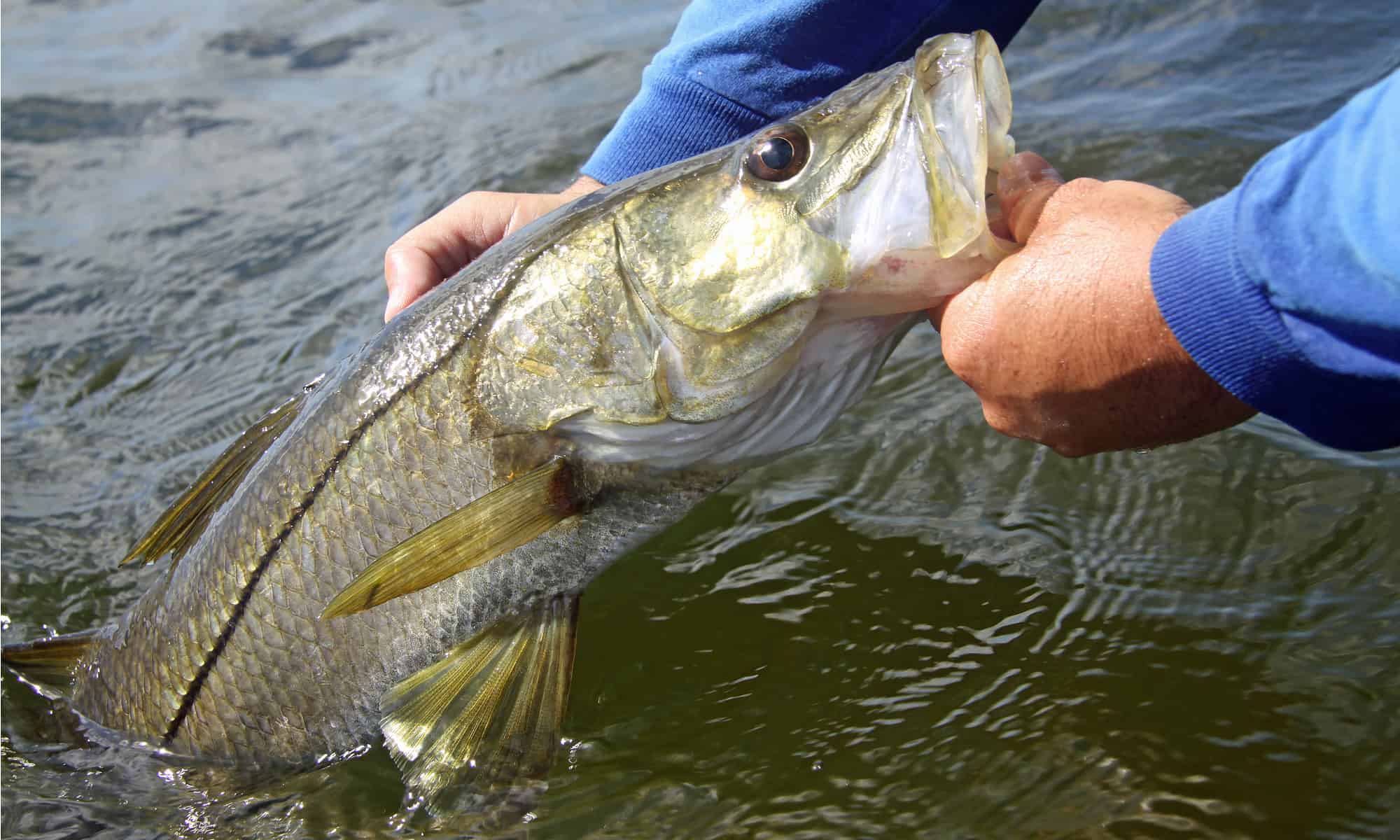
Common snook (Centropomus undecimalis) migrate from backwaters and estuaries to Florida’s coastal beaches, passes, and inlets to spawn in the summertime. Anglers can cast a line for these powerful sportfish by sight-fishing the surf or night fishing around bridge and dock lights. During the summer, which is their peak spawning season, snook are protected by strict catch-and-release regulations.
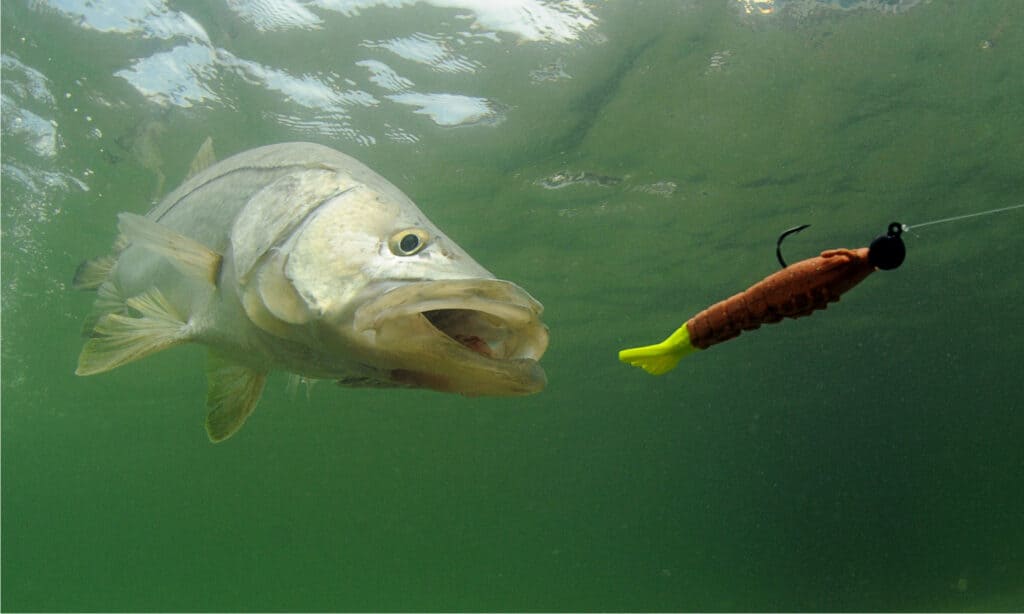
There are four species of snook in Florida’s coastal waters. The largest, the common snook, can be found as far north as the Crystal River in West Central Florida. While 5 to 10 pounds is the typical weight for common snook, they can reach up to 50 pounds.
©FtLaud/Shutterstock.com
Spotted Seatrout
The spotted seatrout (Cynoscion nebulosus), commonly called speckled trout, has a dark gray or greenish back that fades to a silver belly, with distinct black spots on its upper body and tail. The average spotted seatrout has a length of 15 to 25 inches and weighs between one and five pounds. Spotted seatrout thrive during Florida’s summer by ambushing baitfish in shallow seagrass flats and around tidal channels.
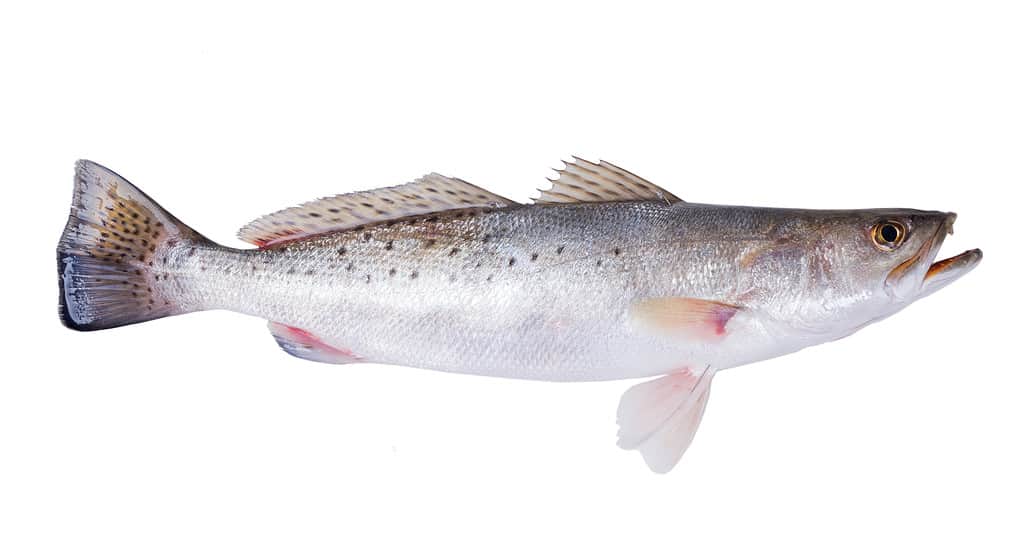
Spotted seatrout have fang-like canine teeth.
©IrinaK/Shutterstock.com
Be aware that there is a recreational bag limit for spotted seatrout in Florida, which ranges from 2 to 5 fish per person per day. A uniform slot size limit of 15 to 19 inches generally applies across the state.
Mangrove Snapper
The mangrove snapper (Lutjanus griseus), or gray snapper, thrives during Florida’s summer as warm waters trigger massive spawning aggregations. They are slender fish with a pointed snout and a light-colored body with faint light brown spots. However, mangrove snapper can rapidly change their skin color to match their surroundings. Depending on where they are, they may have gray, red, or coppery tones. Mangrove snapper average 10 to 14 inches in length and weigh 1 to 2 pounds inshore, though larger specimens school around nearshore and offshore structures.
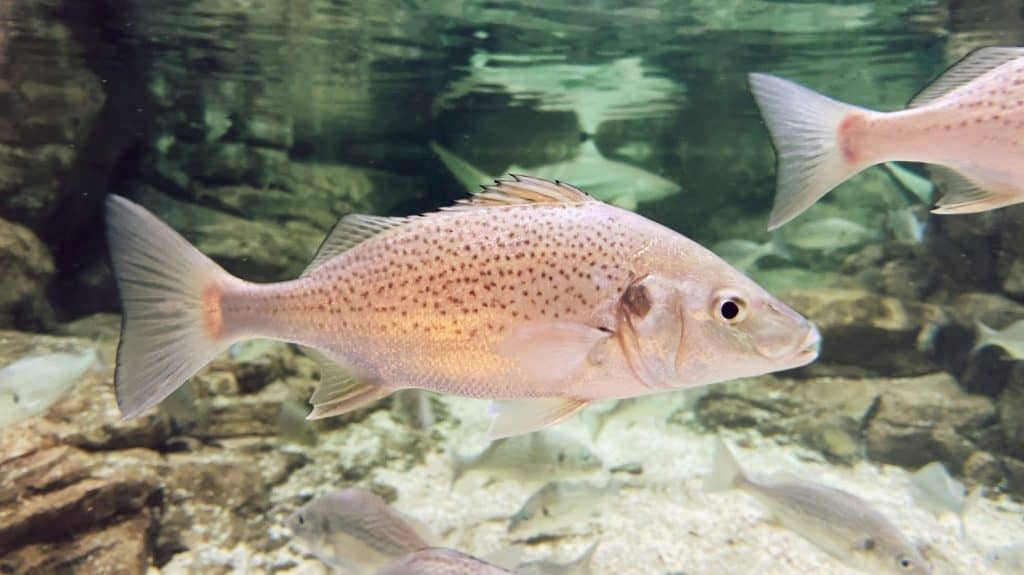
Mangrove snapper are highly adaptable and easily transition between high-salinity marine reefs and low-salinity coastal rivers.
©Wirestock Creators/Shutterstock.com
In Florida state waters, the recreational bag limit for mangrove snapper during the summer is 5 fish per person per day, which counts toward a broader 10-fish bag limit for all combined snapper species. If you transition into federal waters, the daily limit increases to 10 fish per person. These limits remain in effect year-round.
Spanish Mackerel
The Spanish Mackerel (Scomberomorus maculatus) is a sleek, fast-swimming game fish with a bluish-green back, silvery sides, and distinctive irregular golden-yellow spots. Weighing between one and three pounds with an average length of 12 to 18 inches, they appear in large schools during warmer months. Spanish mackerel can be found nearshore in the surf, around coastal passes, and in shallow grass beds or reefs.
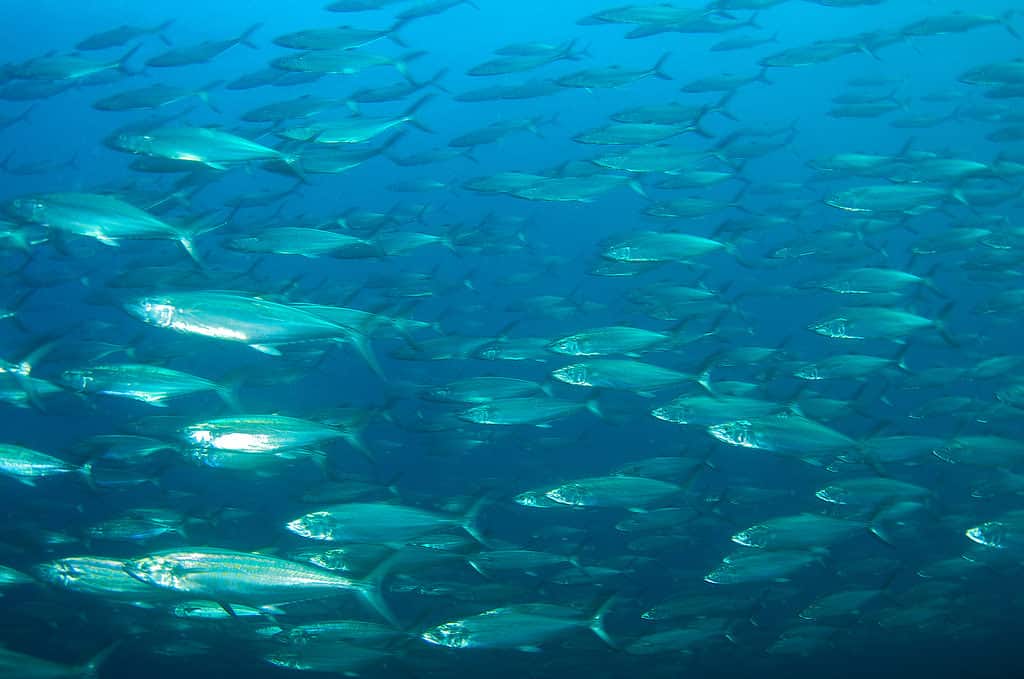
School of Spanish mackerel.
©Peter Leahy/Shutterstock.com
The bag limit for Spanish mackerel in Florida during the summer is 15 fish per person, per day, with a minimum size limit of 12 inches fork length, which measures to the fork of the tail, excluding the tail fin. These regulations apply across both Gulf and Atlantic state waters year-round.
Wahoo
The wahoo (Acanthocybium solandri) is a sleek, torpedo-shaped gamefish with an iridescent blue back and striking vertical blue-black tiger stripes. Weighing 20 to 50 pounds on average, they are prized for their blistering speeds of up to 60 miles per hour (mph).
During summer, they are best found offshore along the Gulf Stream edges, weed lines, and drop-offs off southeast Florida and the Keys. The recreational bag limit for wahoo in Florida state and Atlantic federal waters is 2 fish per person per day.
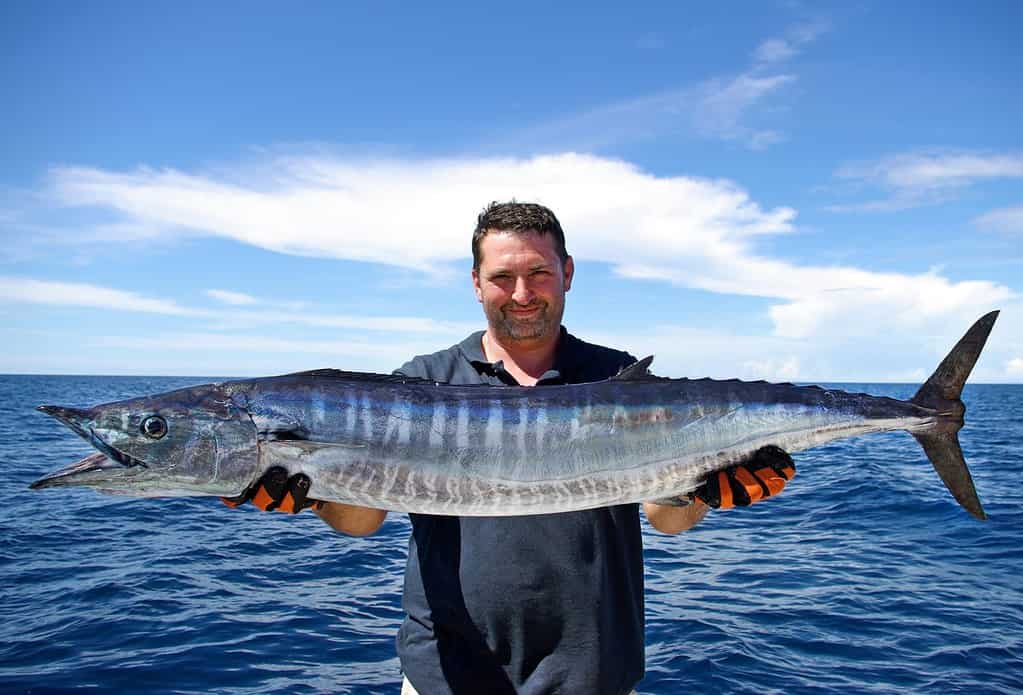
In Hawaii, wahoo is called ono, which means good to eat.
©Fabien Monteil/Shutterstock.com
There is currently no minimum or maximum size limit and no closed season for wahoo, though the fish must be landed with its head and fins intact. This regulation exists to prevent illegal filleting at sea, a practice sometimes used to hide undersized fish, exceed bag limits, or swap species. Without heads and fins attached, the fish cannot be reliably identified or used to verify catch limits.