
What you can see in this YouTube clip is very different from most of the underwater footage that you will come across online. It features a diver picking up sea urchins using a metal tool and breaking one open for a patiently following fish. This is not a tourist exploring the ocean floor; rather, it is a combination of harvesting and pest control. Watch the clip, then read on to discover exactly what is happening and why the fish finds the sea urchin so tasty.
Sea Urchins on the Sea Floor
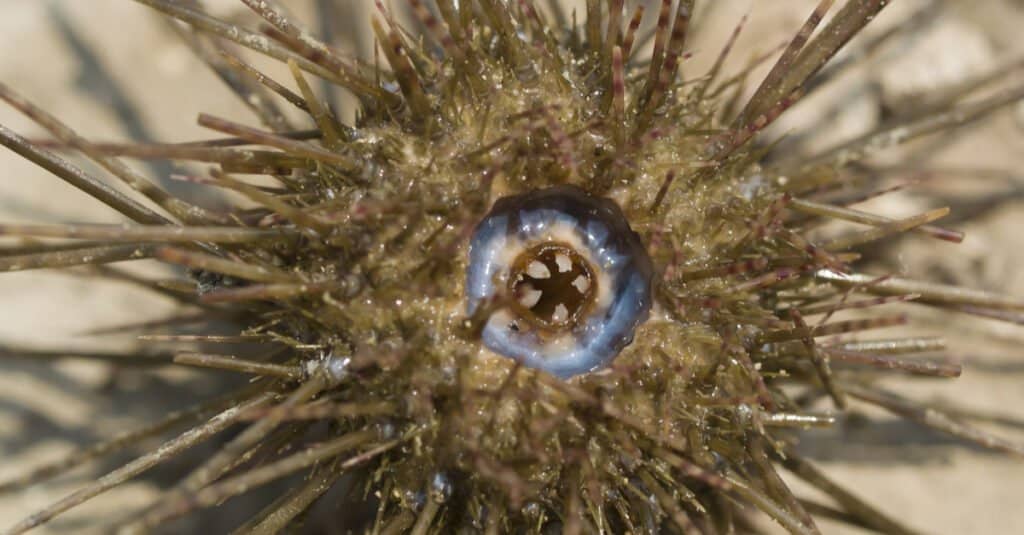
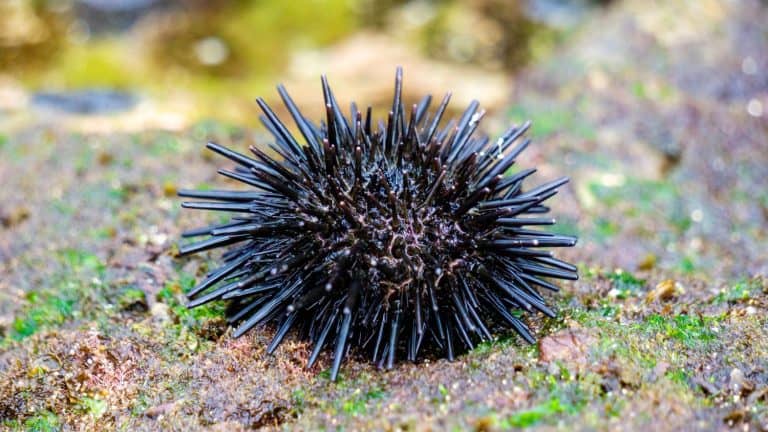
Sea urchins’ mouths have five teeth.
©narupong sooknatee/Shutterstock.com
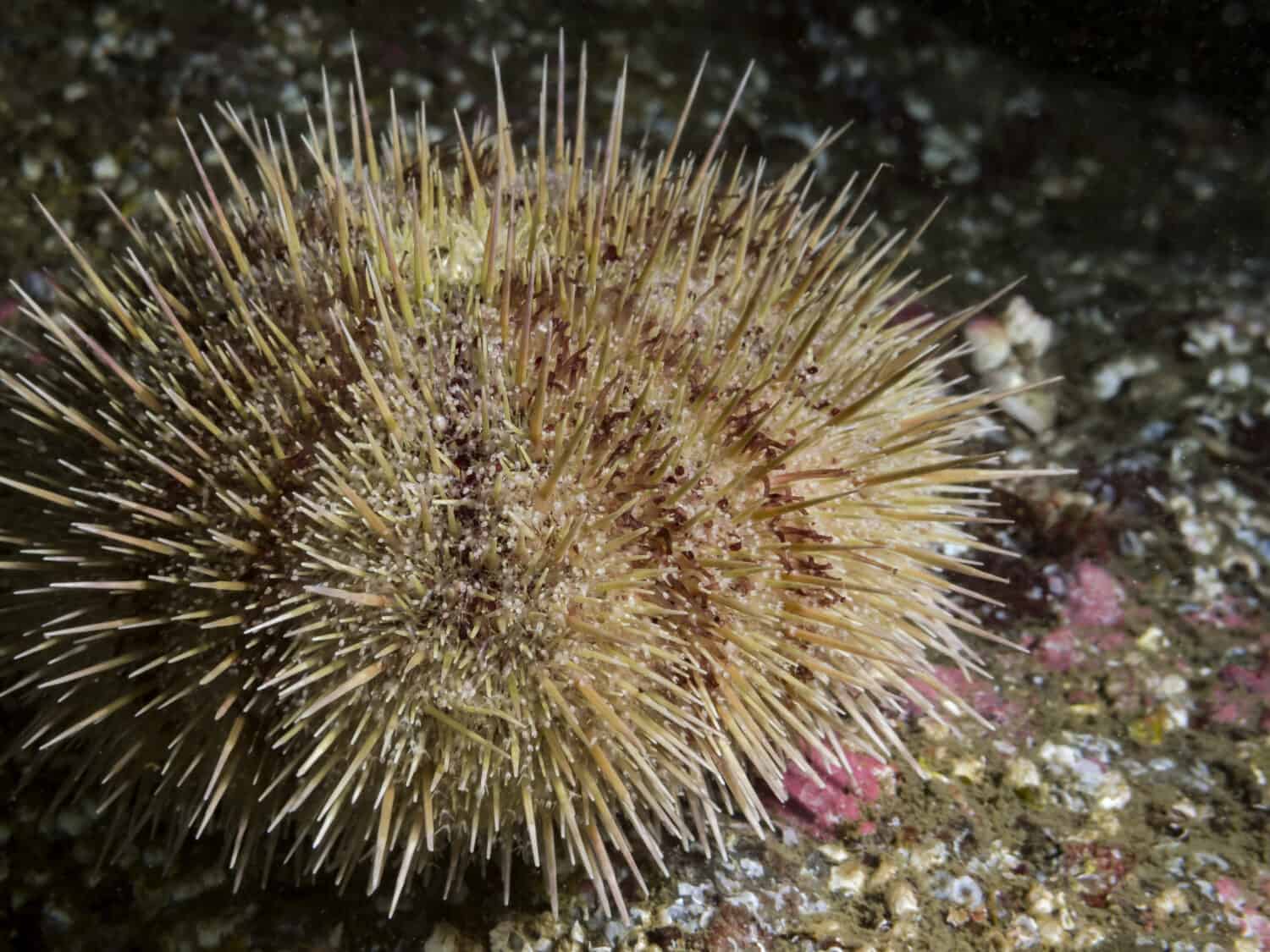
Sea urchins are globe-shaped marine invertebrates called Echinodermata. There are over 1,000 species with varying characteristics, and they are found throughout the Earth’s oceans. The sea urchins in this clip are Evechinus chloroticus but they are called Kina in New Zealand where they are a traditional Māori food. As shown in the clip, they live on rocky sea floors at shallow depths. As shown in the clip, they live on rocky sea floors at shallow depths.
Kina feed at night through a hole at the base of their shell. They use their five small teeth to scrape away at plant matter such as kelp and algae. Dozens can gather in one place and decimate entire fields of seaweed. Usually, their numbers are kept in check by predators. Very few fish are equipped to break open their hard casing. However, some benthic-feeding fish, starfish, and lobsters can, especially when hunting juvenile urchins. When the numbers of these predators are depleted, urchin populations can grow too large and start to damage local ecosystems. Their numbers need to be reduced, which is what is happening in the clip.
Traditional Māori Food
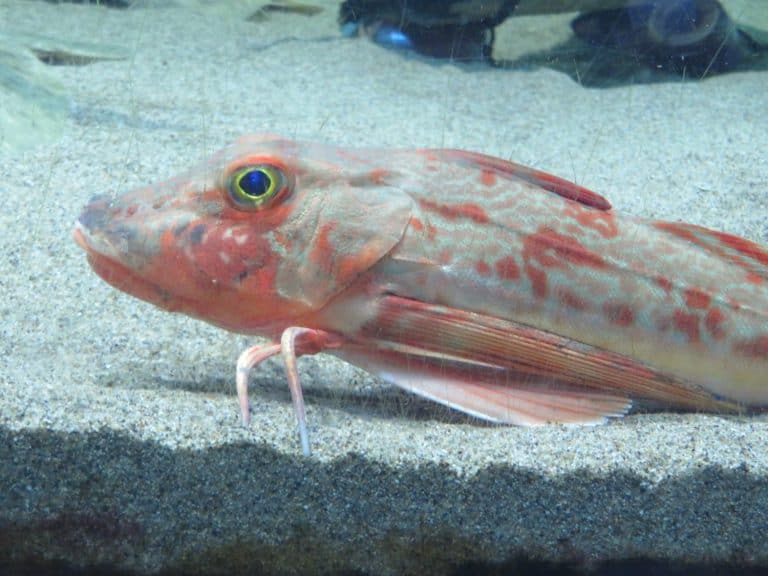
In the spring, the Kina start to reproduce. They have five reproductive organs, and they each swell with millions of tiny, yellow-orange, spherical eggs. This is what you see escaping from inside the sea urchin and being eaten by the fish in the clip. The fish linger nearby because they have learned that the presence of divers often means an easy meal.
Raw Kina roe is a traditional Māori food (eaten as sashimi), but is also a delicacy for many others. It can be served smoked or used as a sauce to flavor foods such as pies and pasta. Not everyone likes the flavor, but those who do describe it as rich, sweet, and briny. They are commercially harvested in the wild in New Zealand, with annual catches of around 750 tonnes recorded.
The Dangers of Collecting Sea Urchins
Kina fishermen use a special metal tool, called a dooka, to pick up the sea urchins and put them in a net. The dooka was given this name after the ‘dook dook’ sound it makes during collection. Divers need a tool because the sea urchin spines can cause injuries to human skin. Although you can see the diver handling one carefully when it is split open, this is only done while wearing gloves. Sea urchin spines can snap off when they pierce the skin, causing local tissue reactions. In some cases, they will migrate into deeper tissue where they can form a granulomatous nodular lesion. This is a hard lump created by the body’s immune system. In more severe cases, the spines can lodge against a bone or nerve, causing intense pain.
Damage Caused by Sea Urchins
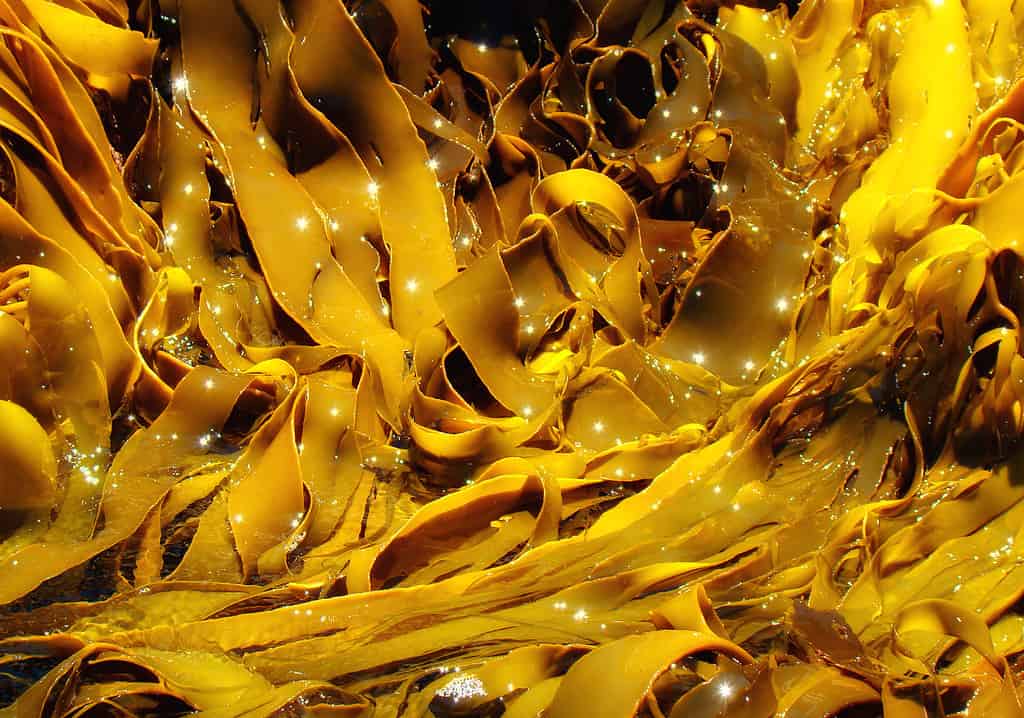
Kelp can be wiped out by the overpopulation of Kina.
©Bjørn Christian Tørrissen, CC BY-SA 3.0, via Wikimedia Commons – Original / License
Some waters off the coast of New Zealand have been described as ‘kina barren’. The overpopulation of urchins has wiped out the kelp and algae, upsetting the ecosystem. This has happened because their natural predators, the snapper and the crayfish, have been significantly reduced in some areas due to overfishing by humans.
Life is not great for the sea urchins here, either! With little food remaining, the urchins exist in a depleted state, eating very little and producing few eggs. The problem has worsened over the last few years, but thankfully, it is reversible.
Kina Fishing in New Zealand
There are plenty of rocky sites around New Zealand where Kina can be found. However, Kina fishing is strictly controlled. They must be removed by free diving only; divers are not permitted to use oxygen tanks. There are also daily bag limits per person, ranging from 25 to 150, depending on the region. A new initiative called Kinanomics collects the emaciated kina, fattens them up in commercial tanks, and then sells the roe. If successful, this could prove commercially viable and help restore kelp beds. Previous work has shown that kelp beds will recover within 18 months of the excess urchins being removed. The sea urchins also became happier and healthier.