Quick Take
- For indoor baths, use a sink for small dogs and a tub or standing shower for medium to large dogs.
- Water should be warm, not hot, about 90-100°F; make it warmer for puppies or senior dogs.
- Never use a human hairdryer; use a dog-safe dryer or blot with a microfiber towel.
Dogs are a human’s best friend, but they can also be one of our stinkiest best friends. They tend to poke their noses, quite literally, into every place they don’t belong. Sometimes, they escape unscathed. Other times, they escape smelling like a pair of wet gym socks.
If you smell a wicked stench every time your pup walks by, it’s time for a bath. Rather than smelling like a landfill every time they come up for cuddles, here’s how to give your bath indoors so you can touch them without gagging.
Where Should You Set Up an Indoor Bathing Station?
Not every dog is a fan of water, so your setup is crucial to the bathing process. If your dog is small or a puppy, then you’re in luck: The sink will do just fine. This is often easier than putting them in the bathtub, where they can slip and slide with too much room. Using the sink makes bathing easier, especially if you have a sprayer in addition to a faucet. Placing a towel or mat next to the sink will also keep your counters mess-free when it’s time to get out.
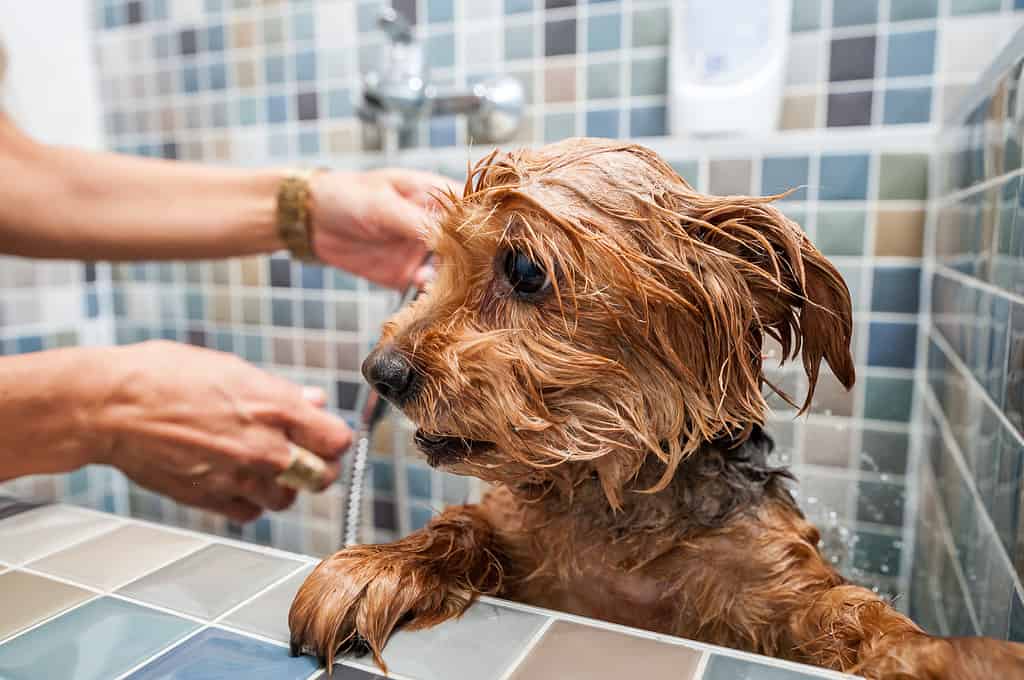
Smaller dogs are easier to bathe in the sink.
©Srdjanns74/iStock via Getty Images
If you have a medium- to large-sized dog, the bathtub or standing shower is the best option. Standing showers are often easier because dogs can get in and out without help. This is also great for senior dogs, who may have trouble getting over high bathtub sides. A detachable showerhead makes this process even easier. If all you have is a bathtub, filling the tub creates a calmer experience for your pup. When you’re done scrubbing, unplug the drain and give your dog a once-over rinse with the showerhead.
What Temperature Should Bath Water Be For Dogs?
Dogs do not need hot showers or baths. In fact, some dogs don’t enjoy them. This is why it’s so essential to get the bathwater temperature right. Ideally, the water should be warm, but not too hot. It should also never be cold, since that can shock a dog’s system. The temperature you’re aiming for is between 90 and 100 degrees Fahrenheit. This can also be adjusted based on the dog breed. For thick-coated dogs, the water can be slightly cooler to accommodate their natural insulation.
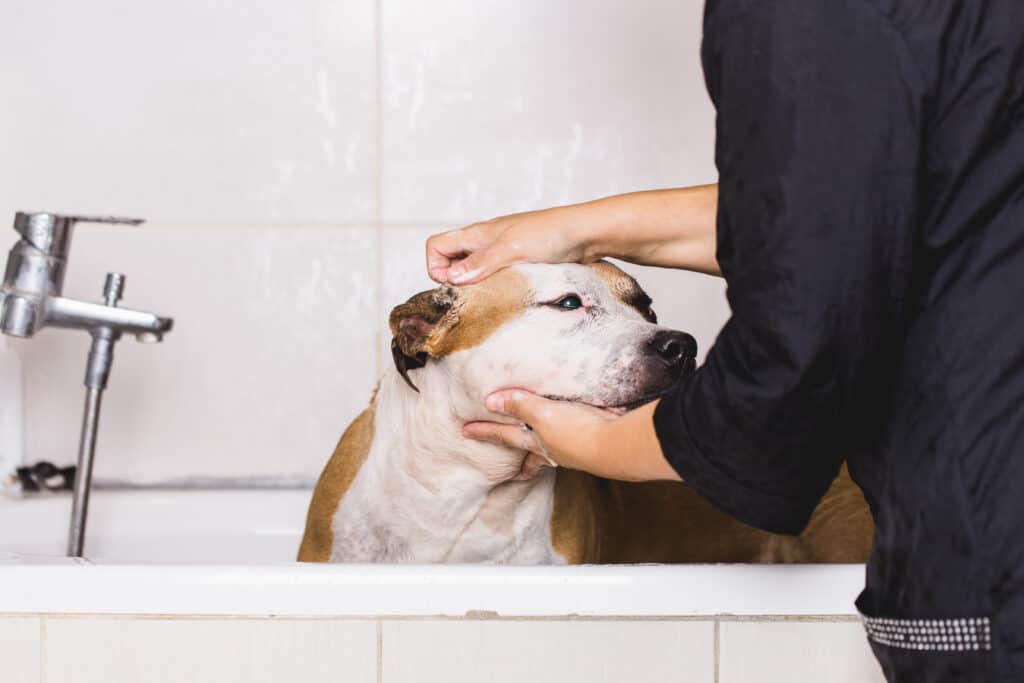
Bathing your dog not only helps with any bad smells but also keeps your dog healthy and helps you watch for potential injuries or infections.
©iStock.com/DuxX
For puppies and older dogs, the water can be slightly warmer. Puppies don’t have as much fur as adult dogs to insulate their bodies. Senior dogs can be more prone to chills, so a somewhat warmer water temperature can make them more comfortable. A good way to check the bathwater is to use your inner wrist or elbow. It should feel warm, but not hot to the touch. The easiest way to bathe your dog is to treat it like a baby.
Which Order to Use Shampoo, Conditioner, and Treatments
A bath can be as simple or extensive as you want, depending on your dog’s needs. Most people use only dog-safe shampoo and call it a day, while other pet owners also include conditioner and treatments, which depend on your dog’s skin condition.
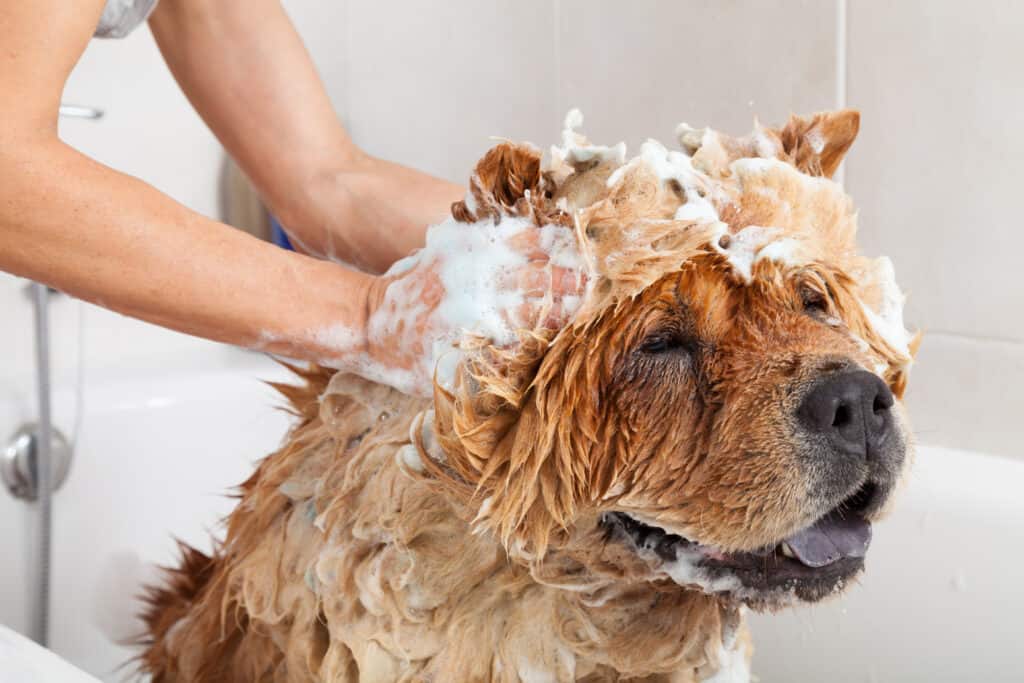
The frequency of baths depends on the dog breed and their hygiene.
©iStock.com/fotoedu
After brushing your dog’s coat, the best order to use products is:
- Shampoo: Wet your dog’s fur thoroughly, then lather with your chosen shampoo.
- Rinse: Be sure to rinse your dog’s fur starting from the top down, rinsing until the water runs clear.
- Conditioner: Optional, but it will give your dog a shiny, soft coat. Apply and then rinse again until the water runs clear.
- Dry: Brush and dry your dog, and gently wipe their ears and face clean.
- Serums and Treatments: This is when you can apply dog-friendly leave-in conditioners or oils for your dog’s skin and fur.
The Best Way to Dry Your Dog After the Bath
If you’ve ever had your dog groomed, you know that blow-drying is a quick and easy way to dry their fur. However, there is a caveat to this. You should never use a human hairdryer on your dog, because its temperatures are too hot for a dog’s skin. Instead, use only dog-safe hairdryers that maintain a low heat setting appropriate for their skin and fur. You’ll want to work in sections, ensuring each one is dry before moving to the next. For dogs with thick hair, consider using a brush to blow out long hair strands.
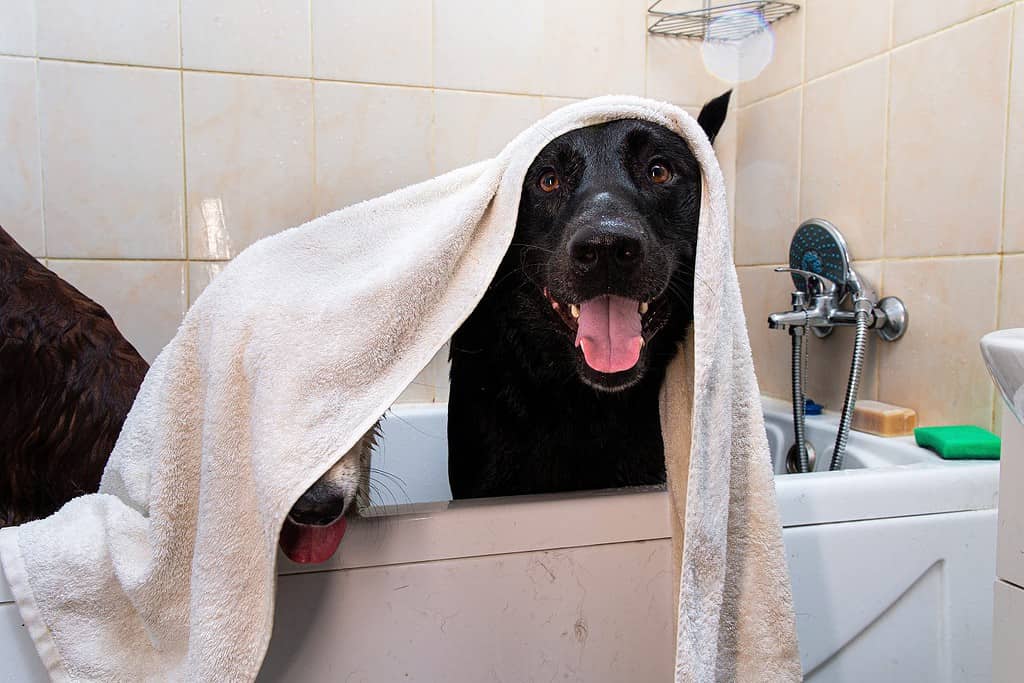
Choosing the right towel can eliminate the need for a dog-safe hairdryer.
©Alex Zotov/Shutterstock.com
Drying short-haired dogs is easier, and you might not even need a hairdryer. A good towel-dry is often all that’s required for these pups to get completely dry. When using a towel, it’s best to blot your dog rather than rub, as rubbing can irritate their skin. A microfiber towel is the best option due to its high absorbency rate and softness.
FAQs
Where should you bathe a dog indoors?
Small dogs and puppies can be bathed in a sink, while medium to large dogs are best bathed in a bathtub or standing shower.
What is the best water temperature for bathing a dog?
The ideal bath water temperature for dogs is warm, about 90–100°F, never hot or cold.
Can you use a human hairdryer to dry a dog?
No. Human hairdryers can get too hot and may burn a dog’s skin; use a dog-safe dryer or a towel instead.
What is the correct order to wash a dog during a bath?
Brush first, then shampoo, rinse, apply conditioner if needed, rinse again, dry, and finish with any leave-in treatments.
What is the safest way to dry a dog after a bath?
Blot the dog with a microfiber towel or use a dog-safe dryer on low heat; avoid rubbing or high temperatures.