
Quick Take
- A custom-built 32-foot trap, a live goat, and a team of determined researchers still couldn't catch him. Find out how Gustave kept outsmarting everyone sent to stop him. See how Gustave escaped →
- Nile crocodiles can go weeks without eating, and yet the amount they consume in a single meal defies logic. Discover their eating capacity →
- Modern Nile crocodiles are terrifying enough, but their ancient relatives made them look small. What those prehistoric giants were capable of is something else entirely. Meet the prehistoric giants →
- Nobody knows whether Gustave is still alive, and his last known sighting only deepens the mystery. Read about Gustave's fate →
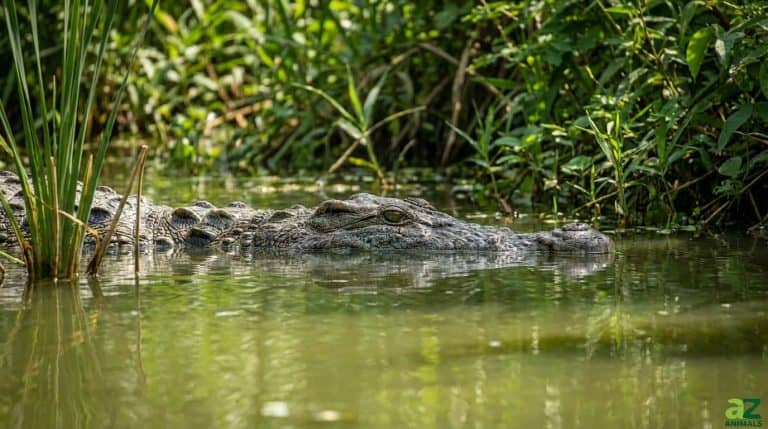
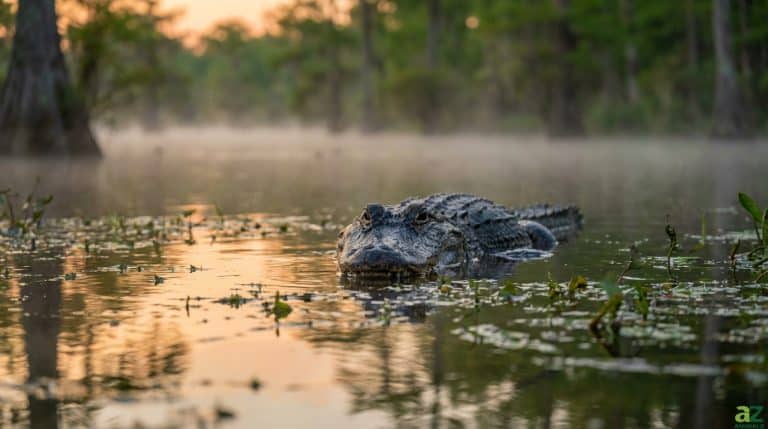
The Nile crocodile is one of the most fearsome predators in the world, sitting at the top of the food chain within its habitat. But every so often, a specimen pushes the dimensional boundaries of what we thought was possible. These massive reptiles, capable of overpowering nearly any creature that ventures too close to the water’s edge, inspire awe. We are also fascinated by their raw power and evolutionary excellence.
Among the largest Nile crocodiles, one individual stands out: a reptile so large that it set records and earned a permanent place in wildlife history, reportedly measuring 20 feet (6.10 meters) long. This extraordinary animal astonished researchers and locals alike with its staggering size, revealing insights into the biology, behavior, and adaptability of an ancient species that has thrived for millions of years. We’ll take a look at how this animal grew to be so massive, and the roles its environment and diet played in the process. This record-breaking reptile isn’t just a marvel of size; it’s a reminder of the wild power found in the natural world.

What is a Nile Crocodile?
©Naypong Studio/Shutterstock.com
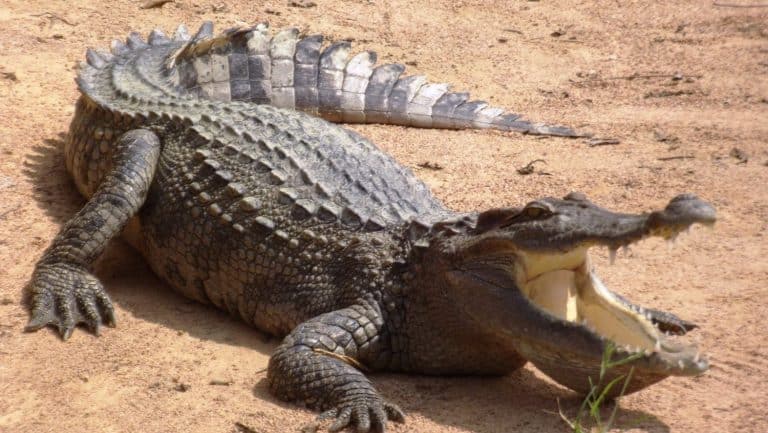
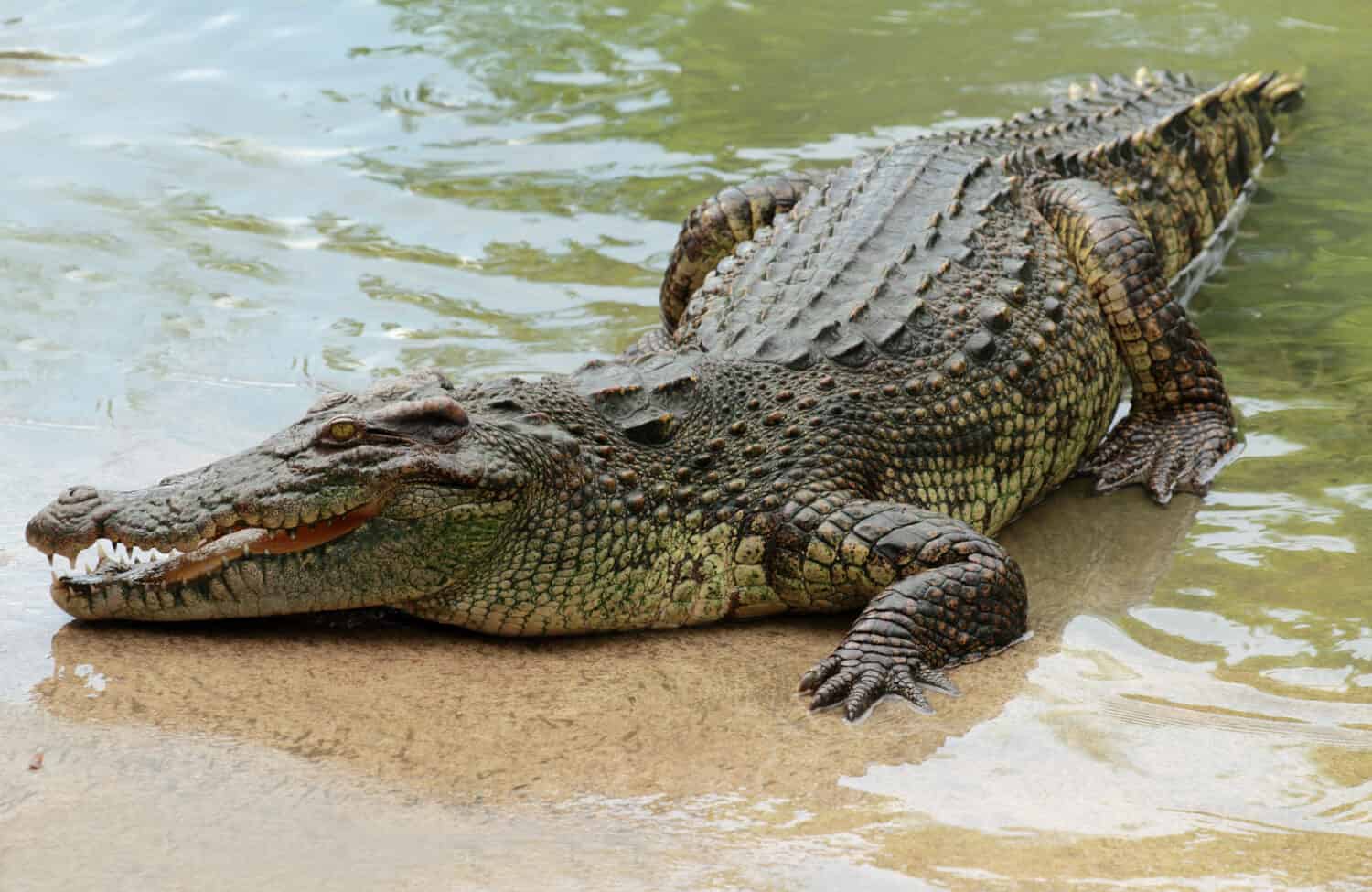
Nile crocodiles are the second-largest reptile in the world after the saltwater crocodile. They are a dark olive or brown color and have noticeable spots and stripes across their backs, along with yellowish bellies and flanks. Adult Nile crocodiles typically average 11.5 to 16.4 feet (3.5 to 5.0 meters) in length and weigh between 496 and 1,653 pounds (225 and 750 kg), with exceptionally large males reaching up to 20 feet (6.1 meters) or more.
Where Do Nile Crocodiles Live?
©StuPorts/iStock / Getty Images Plus via Getty Images
Nile crocodiles are native to Africa and are widespread across the continent. A few Nile crocodiles have been found in the wild in Florida; however, there is no established population, and they are not officially classified as an invasive species in North America.
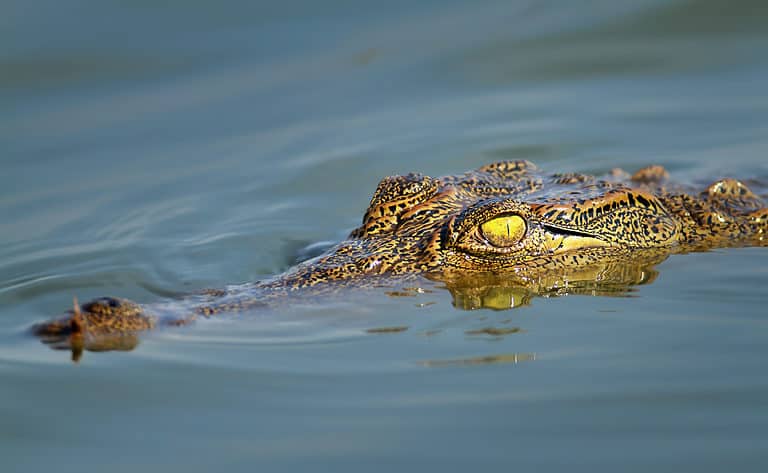
Nile crocodiles are found in a variety of habitats. They are rarely seen in saltwater environments but are sometimes found in brackish streams. However, they generally inhabit swamps, rivers, marshes, and lakes.
Hunting Style
©JMx Images/Shutterstock.com
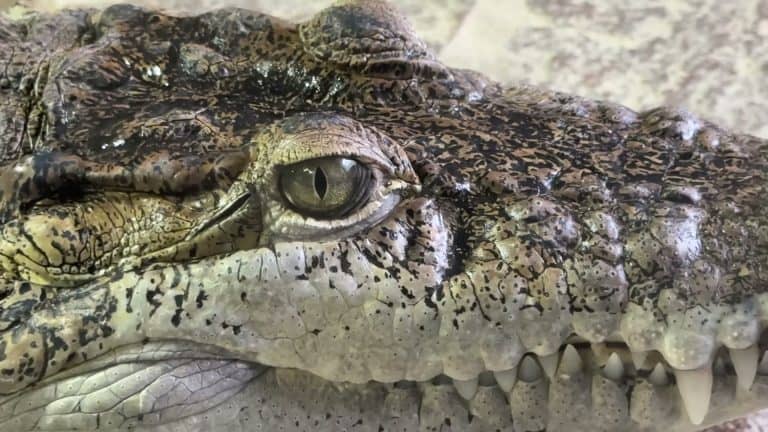
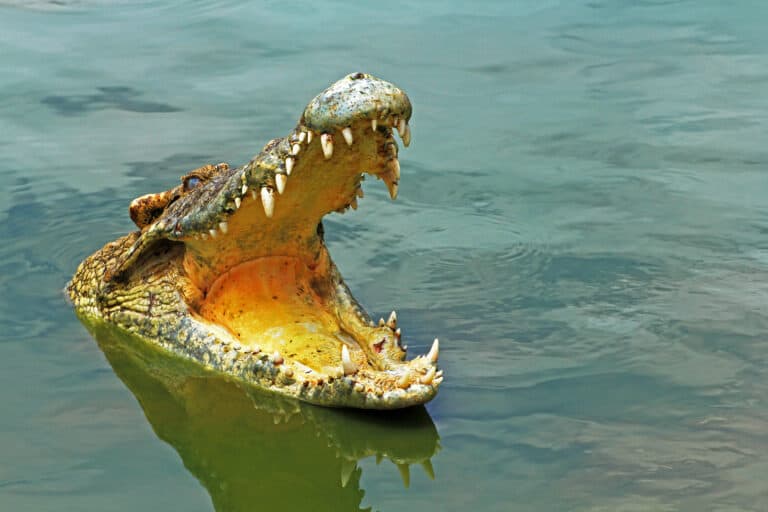
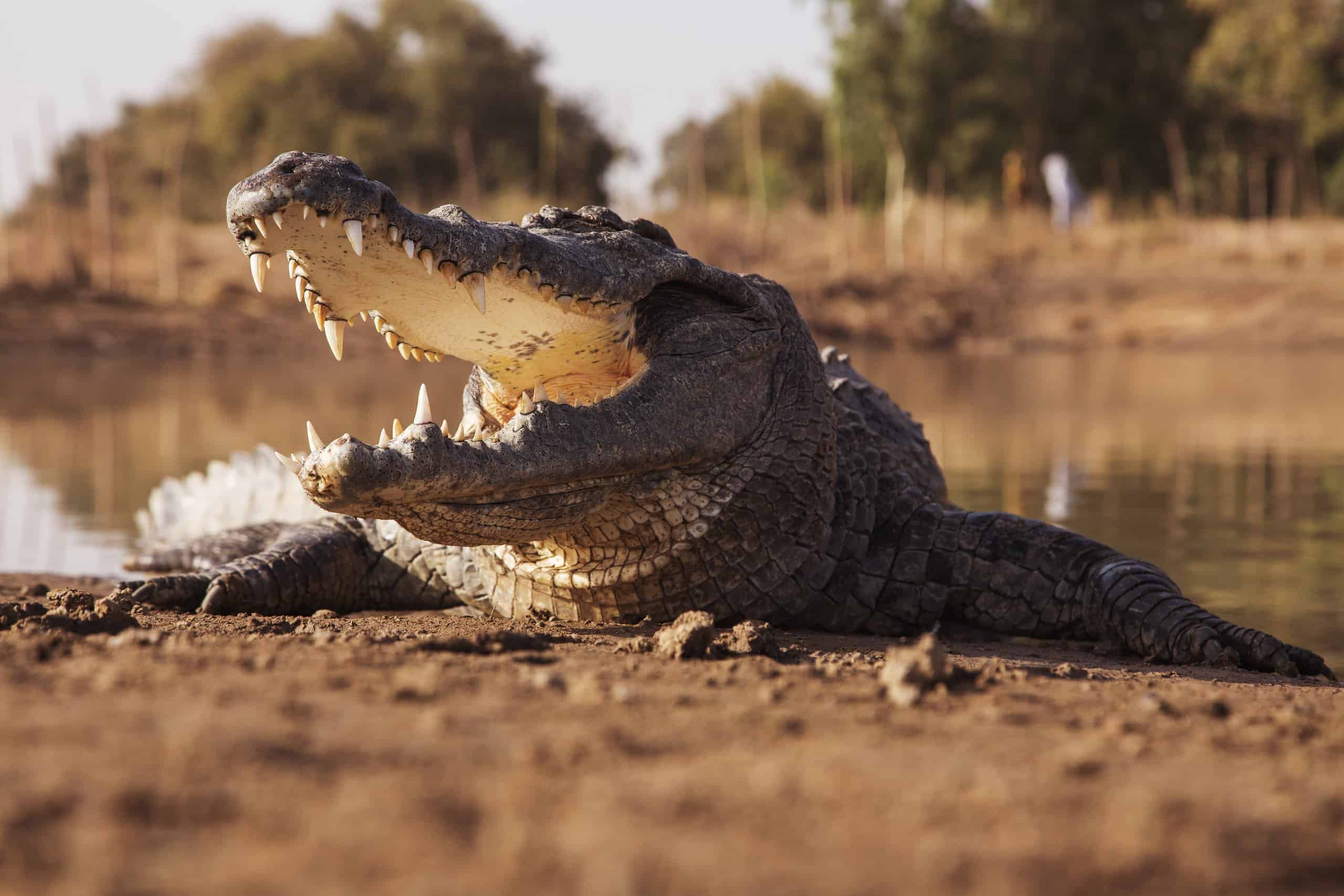
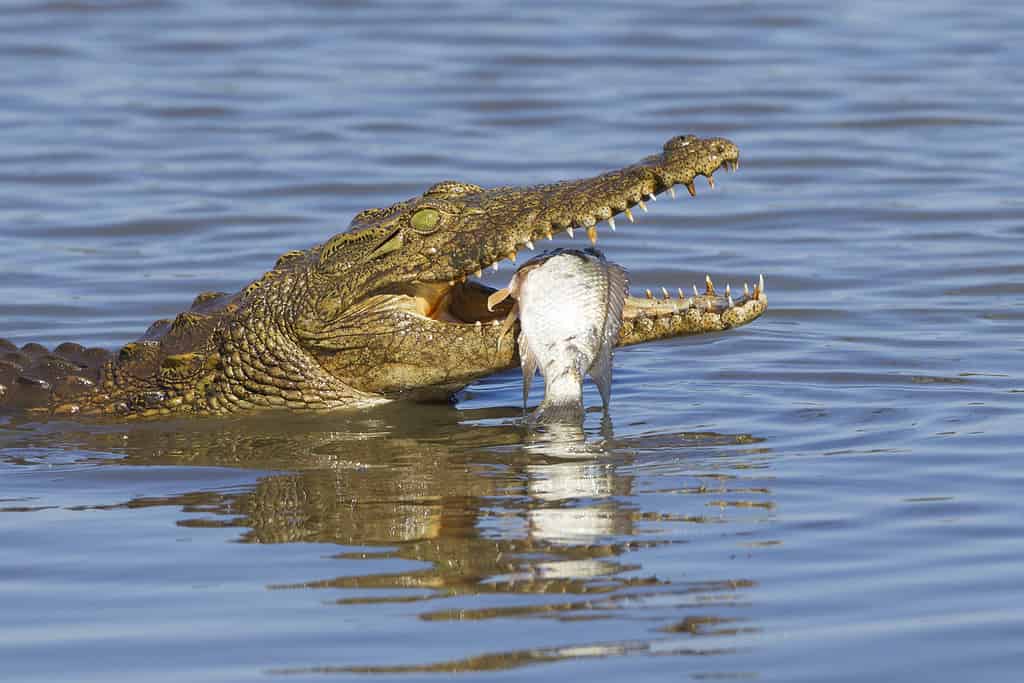
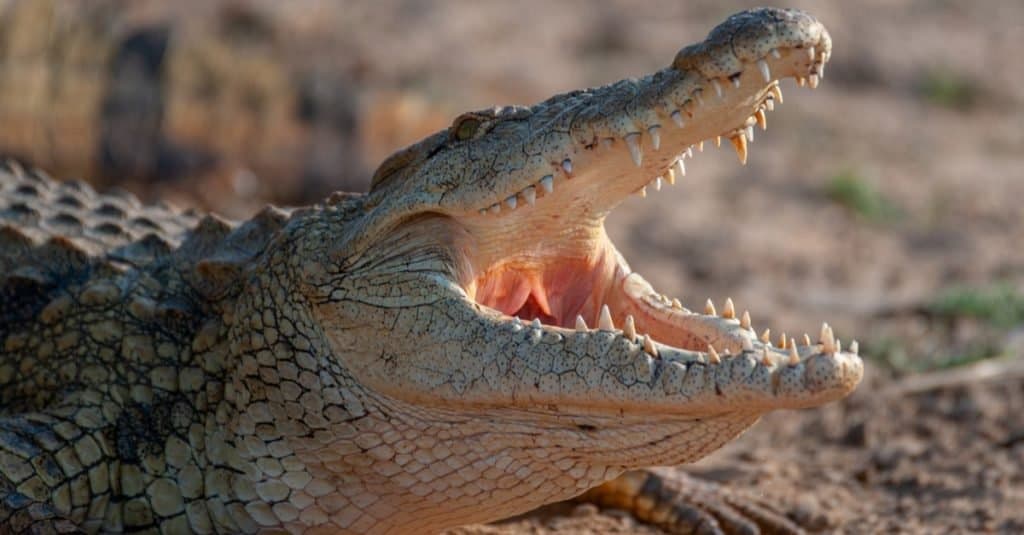
Nile crocodiles have between 64 and 68 teeth and have an incredibly powerful bite. They are ambush predators and have the patience to wait for days or weeks for the right moment to strike. Nile crocodiles can go for long periods between meals, but when they do eat, they can eat up to half of their body weight.
Nile Crocodile Diet

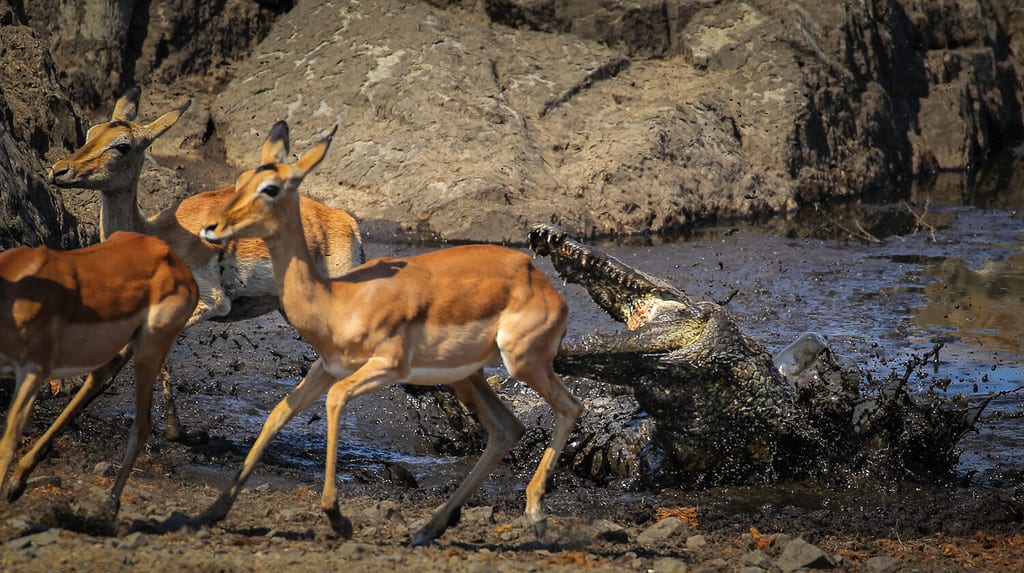
Nile crocodiles are apex predators that eat various fish, birds, mammals, and other animals. Nile crocodiles often prey on animals drinking at the water’s edge, such as antelopes.
Behavior of Nile Crocodiles
©Johan Swanepoel/Shutterstock.com
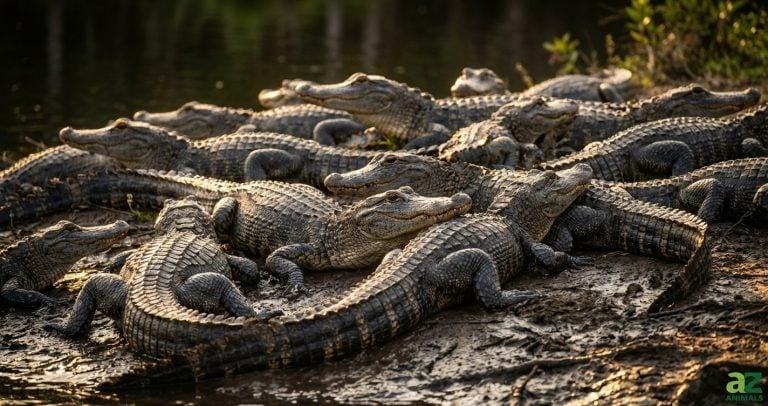
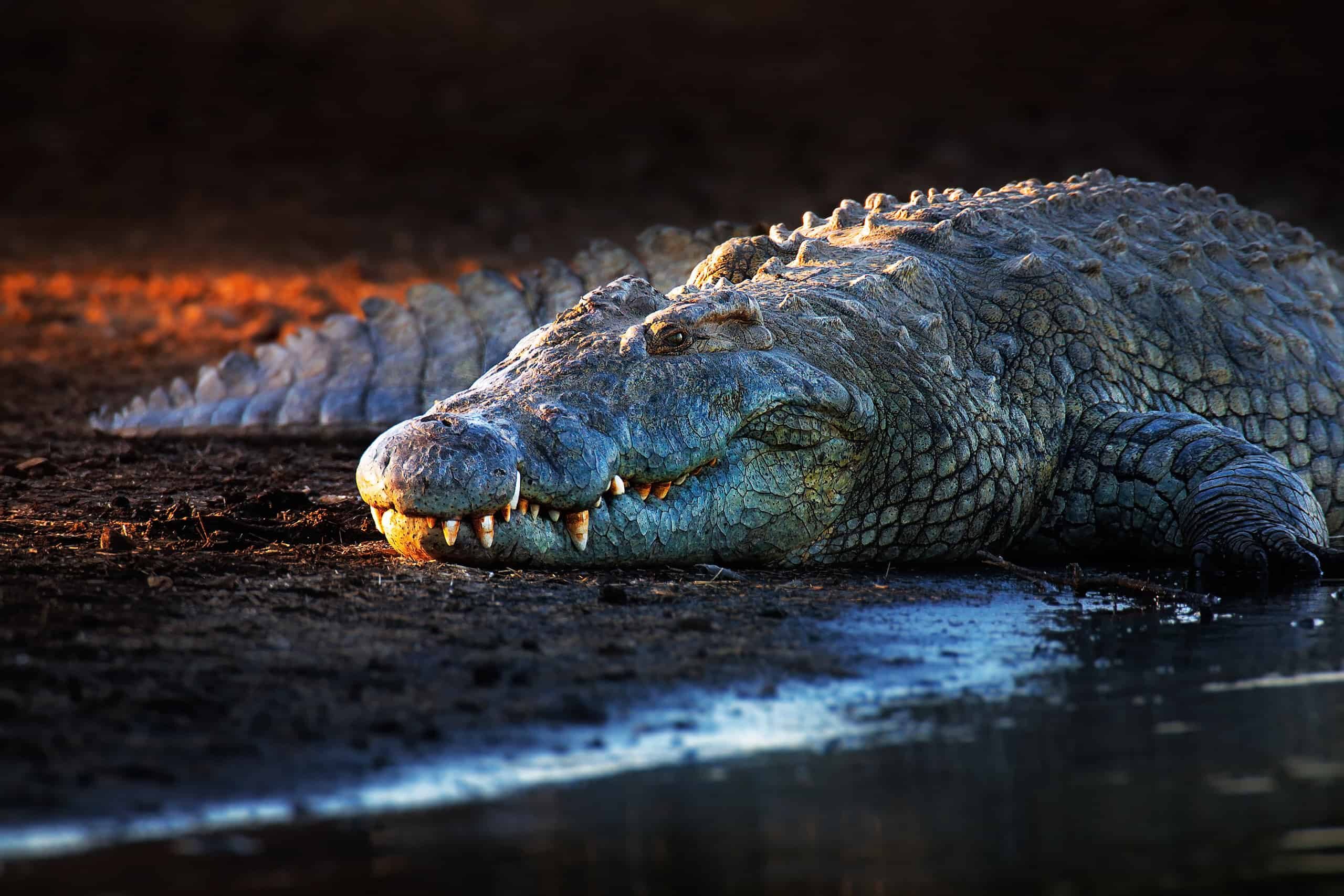
Nile crocodiles are relatively social animals and often share basking spots. They spend much of their day in the shallows or basking in the sun with their mouths open. Despite frequently appearing motionless, looks can be deceiving; they are always acutely aware of their surroundings and anything or anyone nearby.
Nile crocodiles have a strict social hierarchy, and at the top are the biggest and oldest males. These dominant males claim the best basking spots and priority access to food. For the most part, the hierarchy is well respected, but if any crocodile dares to break the rules, the results can be violent and bloody.
Although Nile crocodiles usually only dive underwater for a couple of minutes each time, they can remain underwater for up to 30 minutes if threatened. They are active, capable swimmers and can even manage short bursts of speed on land.
The Largest Nile Crocodile Ever Recorded
©Rudi Hulshof/Shutterstock.com
One of the largest Nile crocodiles ever reported was said to be 21 feet 2 inches (6.45 meters) long and killed by the Duke of Mecklenburg in Tanzania in 1905, though this measurement is unverified by modern standards.
The largest reliably measured Nile crocodiles are closer to 20 feet (6.10 meters) long. One such croc, Gustave, became famous for his man-eating tendencies, and several films and documentaries were made about him. Numerous attempts were made to catch him, including one involving a custom-built 32-foot (9.75-meter)-long trap and a live goat, but Gustave managed to evade them all, demonstrating remarkable intelligence.
The last reported sighting of Gustave was in 2015, when he was seen dragging an antelope into the water, but his current status remains unknown.
Whether alive or dead, the legend of Gustave is certain to endure for many years to come.
How Do Nile Crocodiles Compare with Other Crocodiles?
©Gaston Piccinetti/Shutterstock.com
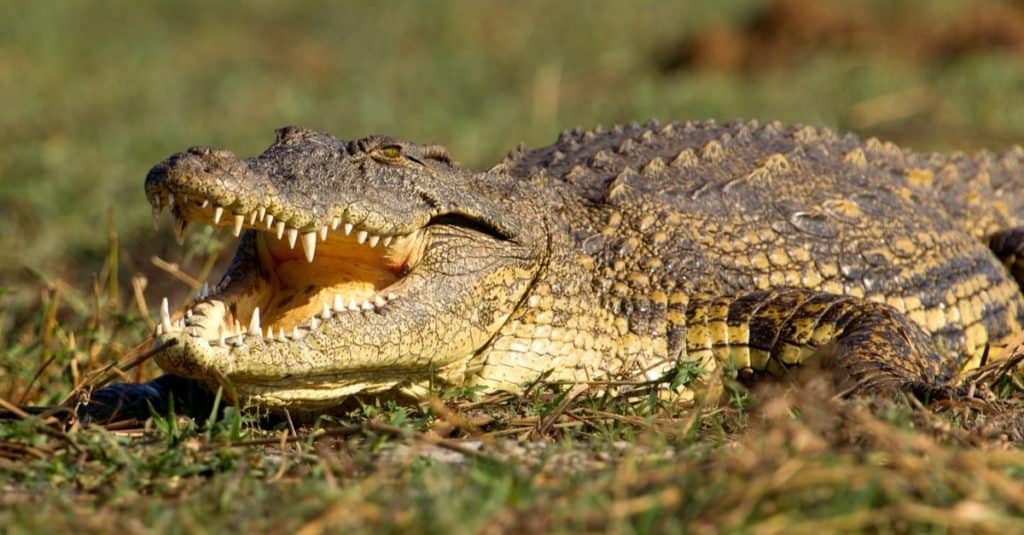
There are generally considered to be 16 recognized species of true crocodiles alive in the world today, and the Nile crocodile is the second largest. Saltwater crocodiles (Crocodylus porosus) are the largest species and can reach lengths approaching 23 feet (7.01 meters). Orinoco crocodiles (C. intermedius) are among the largest living crocodiles, with historical records of individuals reaching up to 22 feet (6.7 meters) in length, though large males today seldom exceed 16 feet and can weigh up to 1,000 pounds (450 kg). However, Nile crocodiles are much larger than the dwarf crocodile, which is the smallest crocodile species. Dwarf crocodiles (Osteolaemus tetraspis) only reach up to 6.2 feet (1.9 meters) in length and 100 pounds (45.4 kg) in weight.
Were Ancient Crocodiles Even Bigger?
©iStock.com/CoreyFord
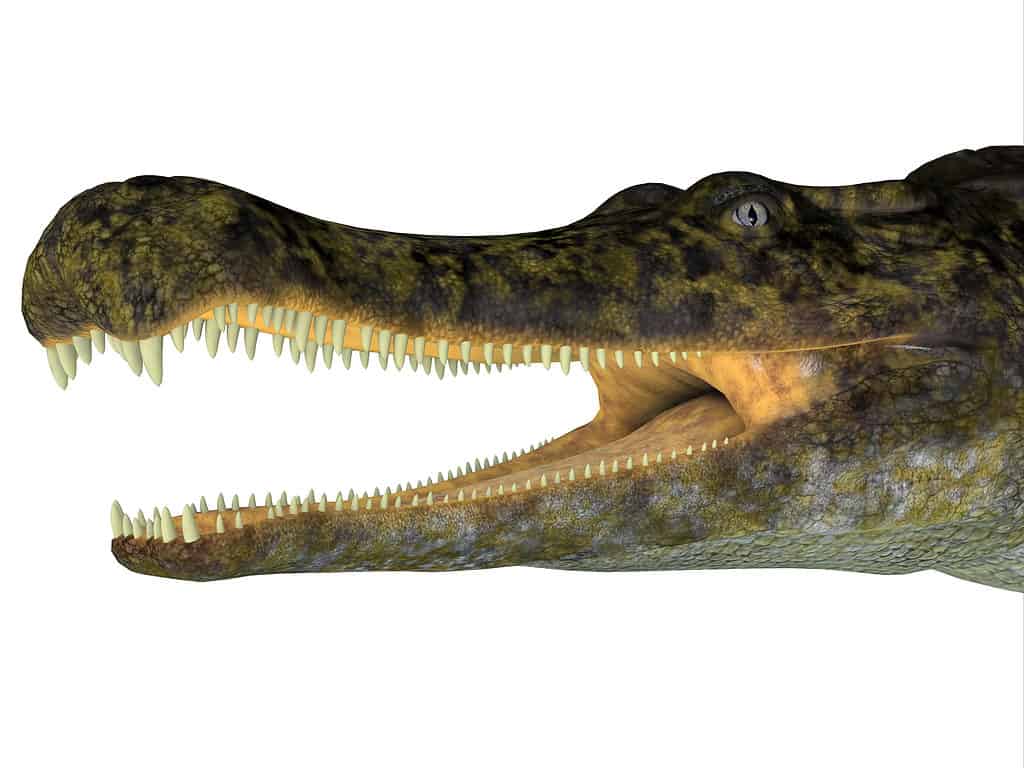
Ancient crocodiles were significantly larger than crocodiles today. For example, Deinosuchus, an extinct crocodilian that lived during the Late Cretaceous period in North America, is estimated to have grown up to 31 feet (9.45 meters) long and weighed around 9,400 pounds (4,264 kg).
Sarcosuchus imperator, known as the super croc, is another large, ancient relative of crocodiles that lived during the late Cretaceous period. The name literally translates to flesh crocodile emperor, and these fearsome beasts measured 35 feet (10.67 meters) long. They are believed to have been capable of killing large dinosaurs and feeding on a range of fish, sea turtles, and other aquatic prey.
How Do Nile Crocodiles Reproduce?
©Dewet / Creative Commons - Original
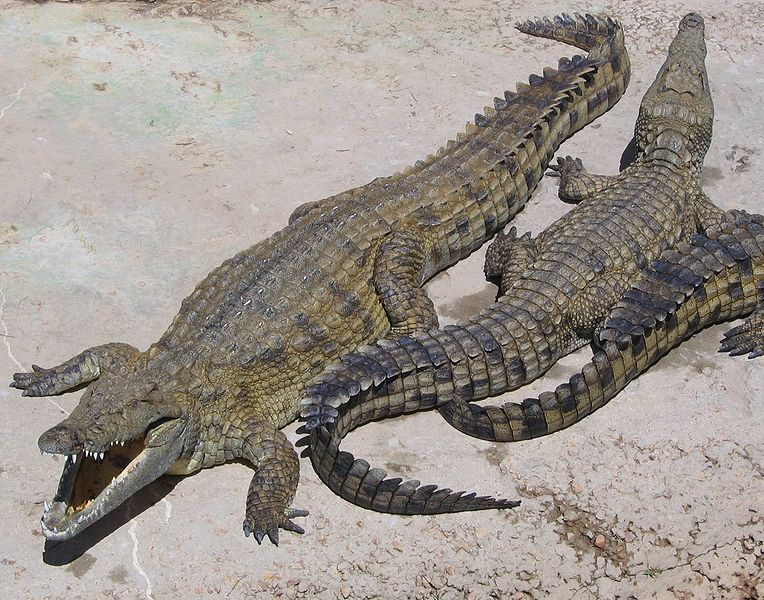
Nile crocodiles reach sexual maturity at around 14 years old or when males are about 10 feet 10 inches (3.30 meters) long. During mating season, males attract females by making a lot of noise. They do this by blowing water out of their nostrils and slapping the water with their snouts.
Females make nests around 20 inches (50.8 centimeters) deep on sandy shores, dry riverbeds, and riverbanks. On average, they lay between 25 and 80 eggs. Most other crocodile species cover their eggs with rotting leaves and vegetation, which provide a good source of heat.
The females guard the nests for three months, often only leaving to cool off in the water. When it is time for the eggs to hatch, they dig open the nest and help the young crocodiles out of the eggs.
Female crocodiles do this by picking up the eggs and rolling them in their mouths to crack the shells. Sometimes, they even carry the newly hatched crocodiles to the water in their mouths. Newly hatched Nile crocodiles measure only around 12 inches (30.48 cm) long.