
Quick Take
- A fly problem that looks small on Wednesday can be unmanageable by the weekend, and most people never consider the math behind why that happens. See why infestations explode →
- The fly on your fruit bowl and the one hovering near your drain are not the same pest, and treating them as if they were is exactly why most people stay stuck. Identify your fly type →
- Reaching for the spray can feels like the obvious move, but experts say sprays alone rarely solve the problem. Find out why sprays backfire →
- Flies don't just land on your food. What they do before they eat is the part that should actually concern you. Understand the real health risk →
Flies seem to appear out of thin air the moment the weather warms up. One day, your kitchen is clear, and the next, there’s a small squadron circling the fruit bowl. But they aren’t showing up by accident. Something is drawing them in, and once you understand what that is, you can shut the whole problem down.
“Flies aren’t appearing out of nowhere. If they’re around, you’ve got something they want,” says Ed Dolshun, Vice President of Business Development and Technical Director at Catchmaster. “They’re chasing anything decaying or sugary, and the smell carries a lot further than people think. Some species can pick up food from a long way off.”
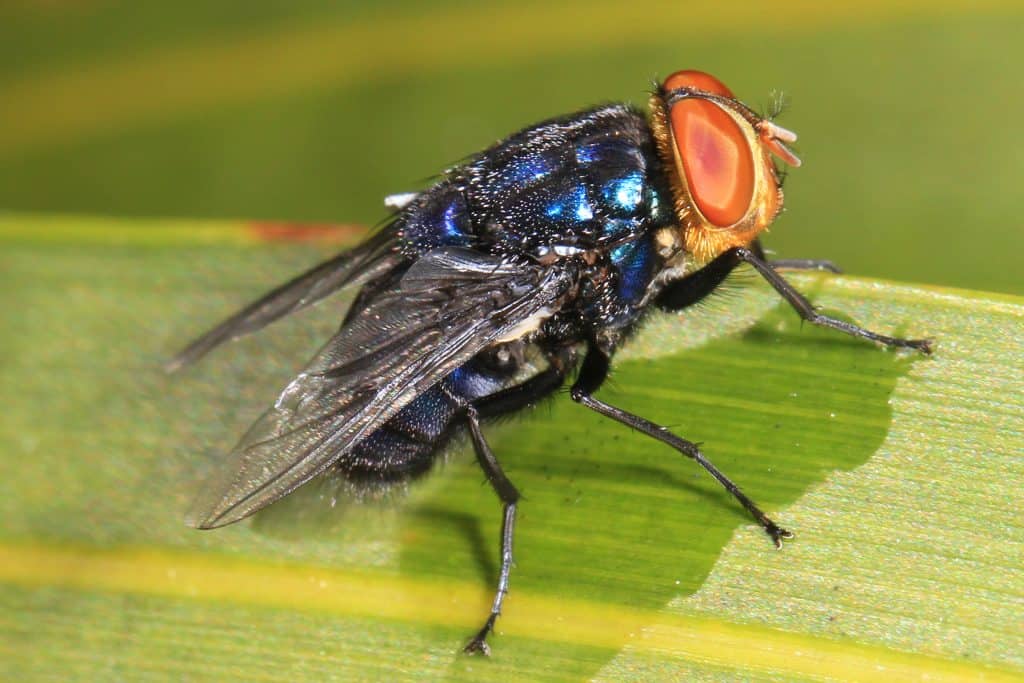
Flies are drawn to the summer messes we often overlook: trash, pet waste, spills, grease, and food that easily spoils like produce.
©Judy Gallagher, CC BY 2.0 , via Wikimedia Commons – Original / License
The Habits That Roll Out the Welcome Mat
Most of what attracts flies comes down to things we tend to overlook once summer arrives: garbage left out, pet waste in the yard, produce on the counter that has started to spoil, spilled drinks, grill grease, and any kind of standing waste.
“Leaving doors propped open on a nice day is another big one,” Dolshun notes. “Flies love to ride the air currents right into the house.”
Compost piles deserve special attention since they can quietly become breeding grounds. “A compost pile that’s too wet or has fresh scraps sitting right on top is basically a fly buffet,” Dolshun says. “Bury the new scraps and keep a layer of dry material over the top, and it’s far less of a problem. Uncovered food and open garbage are the same story, just inside.”
What makes flies so tough in summer isn’t just the food; it’s the speed at which they multiply. And the numbers are startling.
“The part most people miss is the math,” Dolshun says. “A single female lays about 150 eggs at a time, and in summer heat, an egg can become an adult fly in roughly a week. So a small problem mid-week can spiral into a real infestation by the weekend if there’s a food source sitting there feeding it.”
Know Your Flies
Not every fly in your home is the same, and knowing which one you’re dealing with points you straight to the source. According to Brandon Runyon, B.C.E., there are about four types you’ll commonly run into.
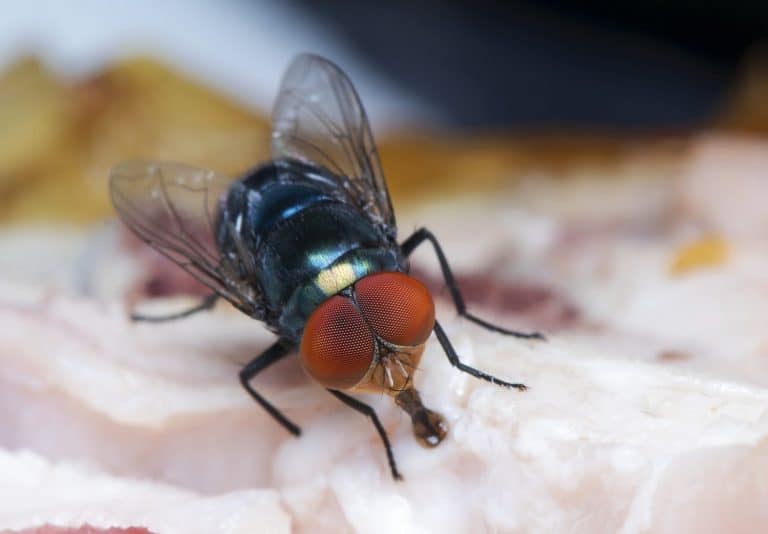
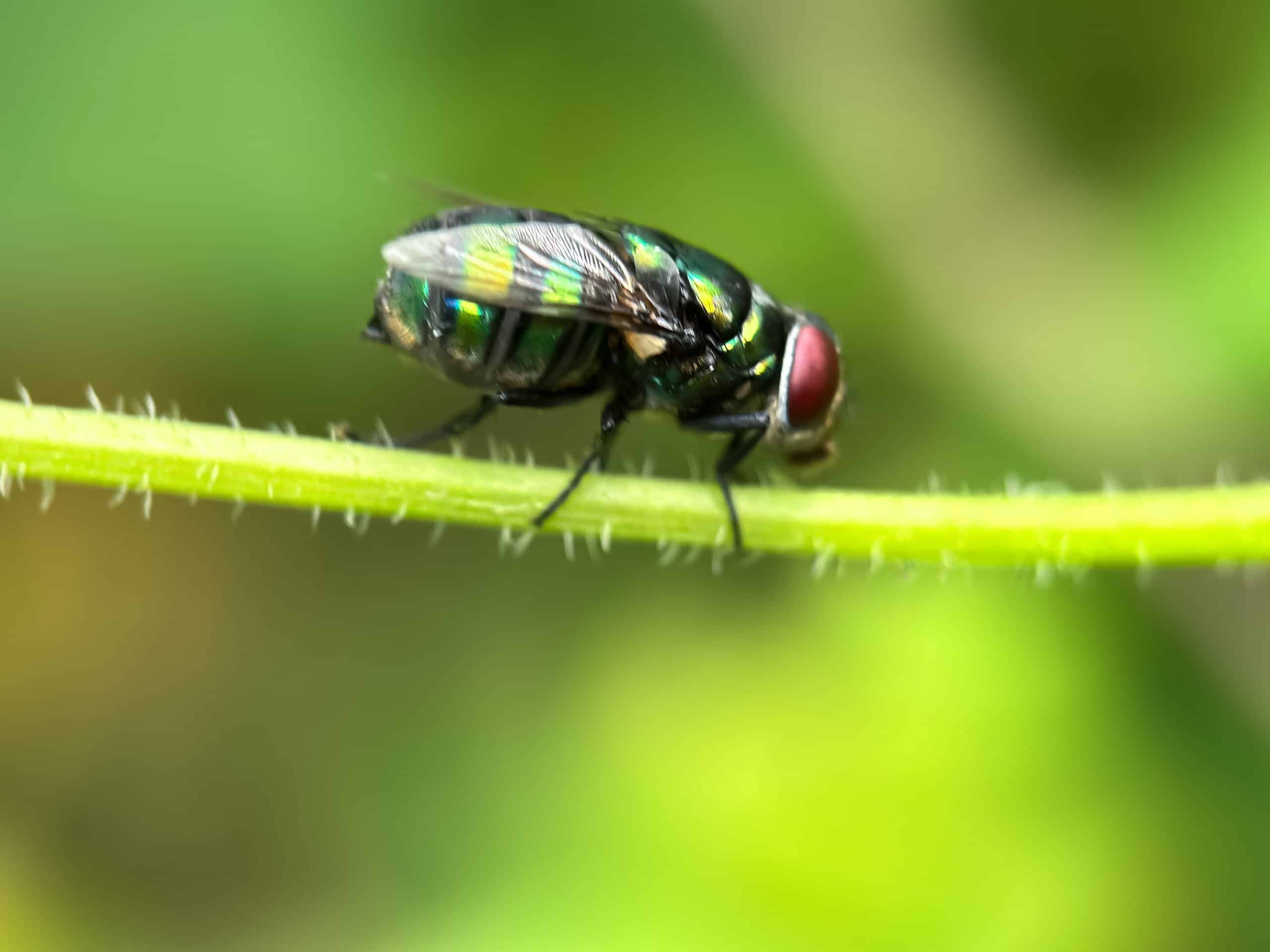
“Blow flies are the shiny, metallic ones. These guys are honestly pretty cool to look at. They are bigger than the house fly, but can be attracted to the same stuff. So we want to reduce decaying organic matter (dead things) and remove that pet waste. Keep your trash cans covered and clean them out from time to time to reduce organic buildup.”
Brandon Runyon, B.C.E., entomologist
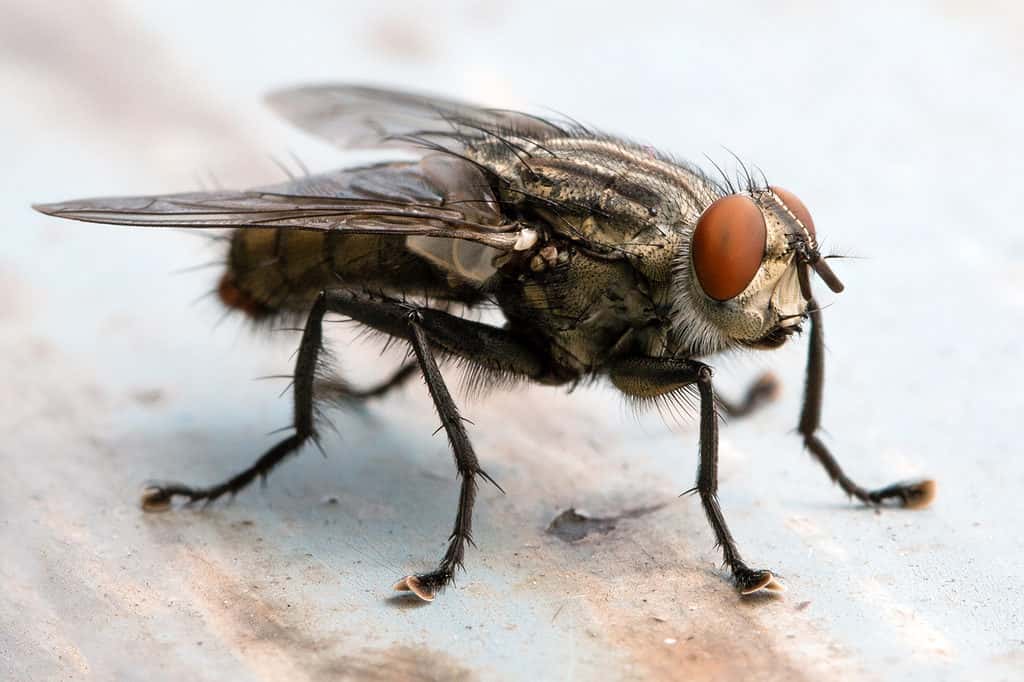
House flies are the ones most people picture. “They are ash gray to black with four dark stripes on the back,” Runyon explains. “They will also feed off food waste (your compost pile) and pet waste. Like all these other flies, there is a worry of them moving germs around.”
Fruit flies are the tiny tan-colored ones with red or dark eyes. “They will be on your old fruits, veggies, and around your drains,” Runyon says. “So sanitation is important here. Keep your fruit and veggies covered and throw out the old ones. Keep moisture down in your home; it goes a long way as well.”
Drain flies, meanwhile, are fuzzy and look like tiny moths. “They love the buildup that happens in your sinks and septic tanks,” Runyon says. “So be sure to use drain cleaners for your pipes and septic tanks and run ice cubes through your disposal to break up that buildup.” He also points out fungus gnats, which are easily mistaken for mosquitoes and thrive in the top layer of overwatered houseplants. To address this, he suggests adding nematodes to the plant soil or placing yellow sticky cards in the pots.
When a few flies still make their way inside, passive traps are the go-to solution.
©Abel Tumik/Shutterstock.com
Start Outside, Where They’re Coming From
Both experts agree that the real work begins beyond your walls. “Start outside, because that’s where they’re coming from,” Dolshun says. “Keep trash in sealed containers, and keep those containers away from the house, not right next to the door. Clean up pet waste right away. Nobody thinks about that one, and it’s one of the biggest fly attractants in a backyard.”
Runyon echoes that priority. “The best thing I can say for keeping your bottle flies and house flies in check is to keep your trash covered, your compost pile away from the home, and clean up that dog poop,” he says. “Keep moisture down around your home — around mulch beds and bird baths, for example.”
Inside, the rules are just as simple: cover food, wipe up spills, and don’t let produce sit out once it starts to go. “Inside, just keep up on cleaning the home, reduce standing water, and don’t leave out fruits and veggies,” Runyon adds. “Don’t forget to clean your sink regularly and clean out that garbage disposal. Sanitation is one of your best defenses against flies.”
Then there’s exclusion — cutting off the ways they get in. “Keep unscreened doors and windows closed, repair torn screens, and seal gaps around the frames,” Dolshun advises. “They don’t need much of an opening.” Runyon agrees: “Make sure the screens on your window and doors are intact and don’t have large holes.”
Trapping Without the Chase
For the flies that still slip through, both experts favor passive traps over swatting and spraying. “I use passive traps, so I’m not chasing anything,” Dolshun says. “A UV light trap pulls them in with UV-A light, and the glue board holds them. Make it the most attractive light in the room at night and cut down competing light, and you wake up to them all caught.”
He suggests a layered, round-the-clock approach: “Lights at night, traps during the day, 24-hour coverage without swatting or spraying anything.” Outside, he recommends placing a food-based lure trap a good distance from where people gather, so you’re pulling flies away from the patio, not toward it.
Why Sprays Fall Short
It’s tempting to reach for a can of insecticide, but that’s treating the symptom, not the cause. “A spray is reactive,” Dolshun says. “You might get the flies you can see, but you’re not touching what’s breeding or what’s coming in behind them. Kill ten flies on the counter, and it doesn’t matter if there’s still uncovered trash or pet waste feeding the next 150.”
Runyon frames it as a matter of habitat. “I have always said if we create an environment for the pest, the pest is going to use it,” he says. “So habitat control is one of the best methods. If you can reduce or eliminate their source of food, water, or shelter, you can reduce your pest problem.”
The most common mistake, he adds, is tunnel vision on the adults. “The most common mistake homeowners make is focusing only on the adult flies they can see, not the sites where flies could be breeding.”
More Than a Nuisance
There’s a health reason to keep flies off your food, too, and it’s not pretty. “Flies aren’t just a nuisance. They carry over 100 pathogens, and the real issue is how they feed,” Dolshun says. “A fly regurgitates onto food before it eats, then defecates as it goes. That’s the transfer point for things like E. coli and Salmonella. So keeping them off your food isn’t just about the annoyance factor.”
Achieving a fly-free summer requires more than just using a spray bottle. It’s found in the habits you tighten up around the house and yard. Seal your trash, move it away from the door, and empty it often. Clean up after pets. Manage your compost with a dry cover. Cover produce, wipe spills, run your disposal clean, and fix those torn screens.
As Dolshun puts it: “Take away the food, the moisture, and the way in, and you don’t have much of a problem left to spray.” Get ahead of flies before they multiply, and you won’t spend your summer chasing them.