
Quick Take
- Sally Lightfoot crabs don't jump just to show off. Their leaping actually serves a survival purpose most people wouldn't guess. See why they jump →
- These crabs look completely different as juveniles, and that dramatic transformation is no accident. Explore their appearance →
- A flat body sounds like a disadvantage on jagged, wave-slicked rocks, but it's actually what makes these crabs so hard to stop. Learn about their body →
Every animal in nature is the result of centuries of evolution, and there is always something new to learn about them. One fascinating example is the Sally Lightfoot crab, which is aptly named for its agility. This YouTube video from BBC Earth shows these crabs jumping between rocks for a unique reason. Read on to discover why these crabs are so light on their feet.
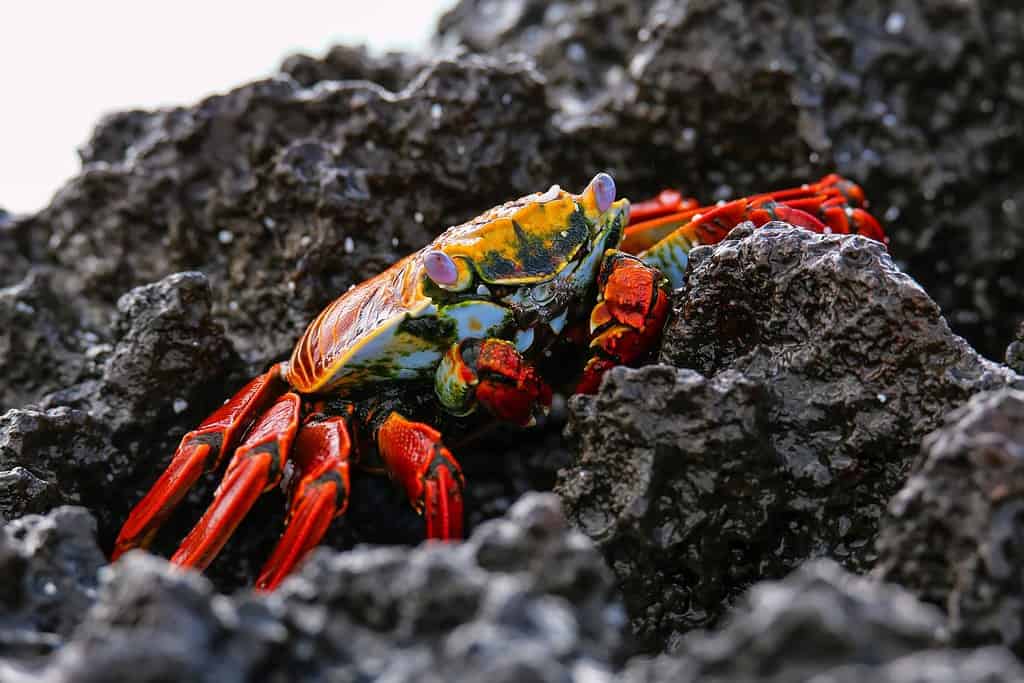
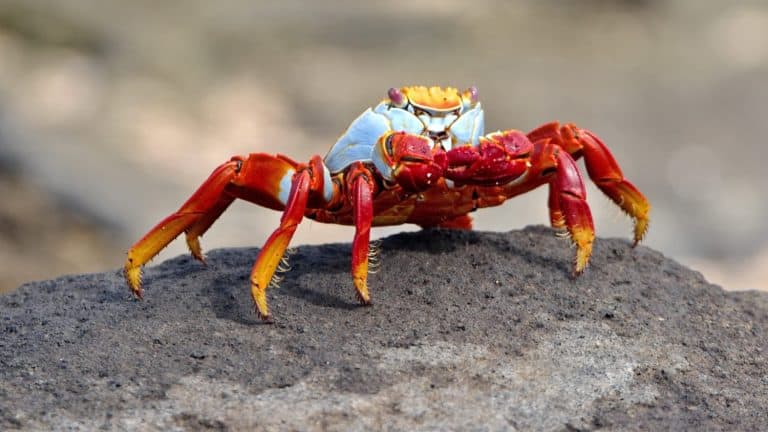
The Sally Lightfoot crab gets its name from its agility and maneuverability, and can run in zig-zag to avoid predators.
©Don Mammoser/Shutterstock.com
About the Sally Lightfoot Crab
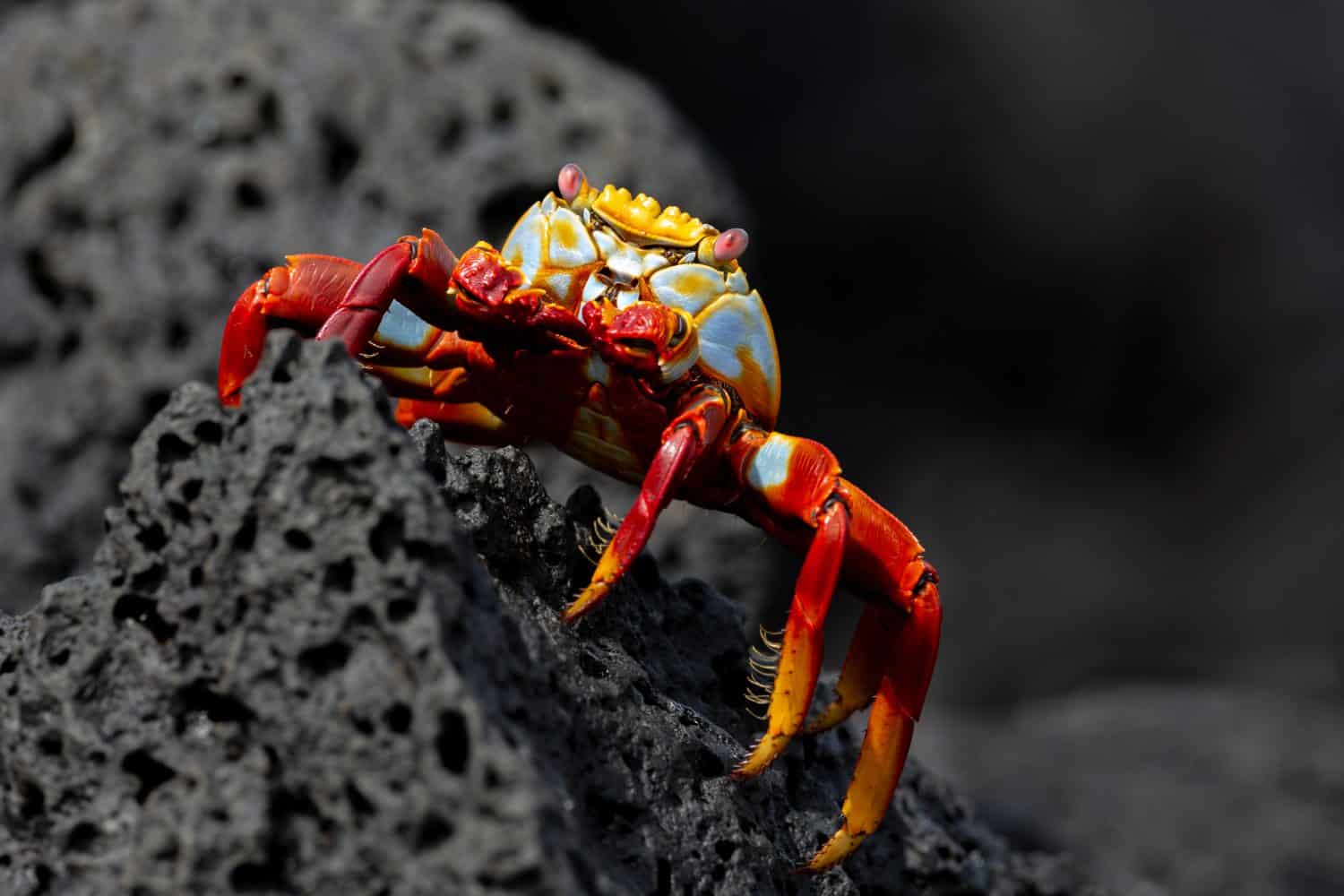
The Sally Lightfoot crab, scientifically known as Grapsus grapsus, is a shore crab mostly found in the Galapagos Islands. While they largely inhabit these islands, they also live along the Pacific coasts of Ecuador, Peru, and Mexico. Although their bodies are about three to five inches long, their long legs make them appear larger. As seen in the video, they have bright orange and red legs and claws with a greenish-brown back. The dark-colored back helps them blend in with their rocky environments when young, and they gain red, blue, and yellow markings as they mature. Their unique name comes from one of their most distinctive traits: their agility and quick jumps.
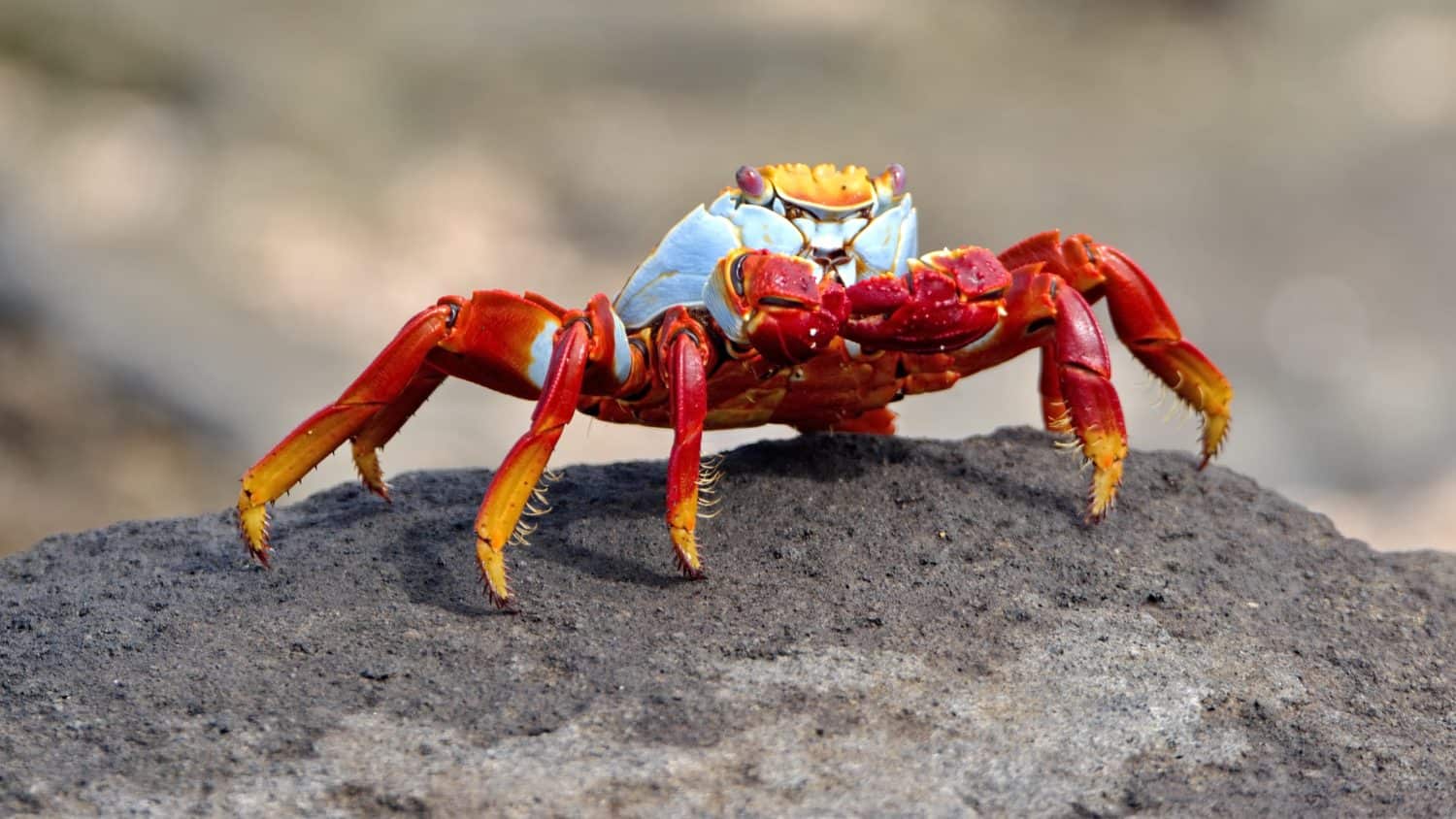
To get to scarce food as quickly as possible, Sally Lightfoot crabs jump between rocks to avoid being washed to sea.
©Angela N Perryman/Shutterstock.com
Why Sally Lightfoot Crabs Jump
These amazing crabs are famous for being quicker than most. They have incredible speed and fast reflexes that allow them to maneuver across the rocky and challenging terrain they inhabit. This speed serves an important purpose, as they need it to jump between coastal rocks. They have flat bodies that allow them to stabilize more easily than other crabs and strong legs that help them grip slippery surfaces. Using these legs, they quickly jump between rocks for good reason. For one thing, this helps them avoid waves that could drag them out to sea. Since Sally Lightfoot crabs are hunted by octopuses and larger fish, it is best to stay on shore. They can also escape predators on shore by quickly zig-zagging and jumping away.
In the video, the crabs are jumping to reach food quickly. Sally Lightfoot crabs are opportunistic scavengers, meaning they eat whatever dead fish or organic debris they can find. When the tide goes out, the crabs jump to reach the seaweed-covered rocks. While they aren’t the only crab species that jump like this, they are easily the most well-known. Other fast-moving crabs include ghost crabs, shore crabs, and nimble spray crabs, all of which are also known for their speed. Sally Lightfoot crabs are yet another example of the remarkable adaptations found in the wild.