
Quick Take
- Nine-banded armadillos almost always give birth to identical quadruplets, a rare mammalian quirk that rewrites expectations about reproduction.
- Nest-building by chest-hugging and backward jumps ties survival to creekside habitats, making wetland protection a conservation imperative.
- Shatters convention: buoyancy is boosted by swallowing air as armadillos walk underwater for short distances.
- Read on to discover the hidden special chamber where nest material becomes cozy insulation.
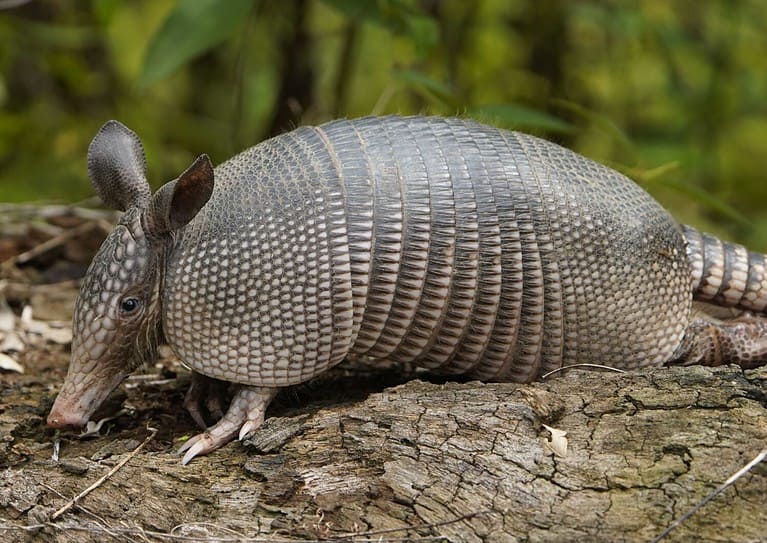
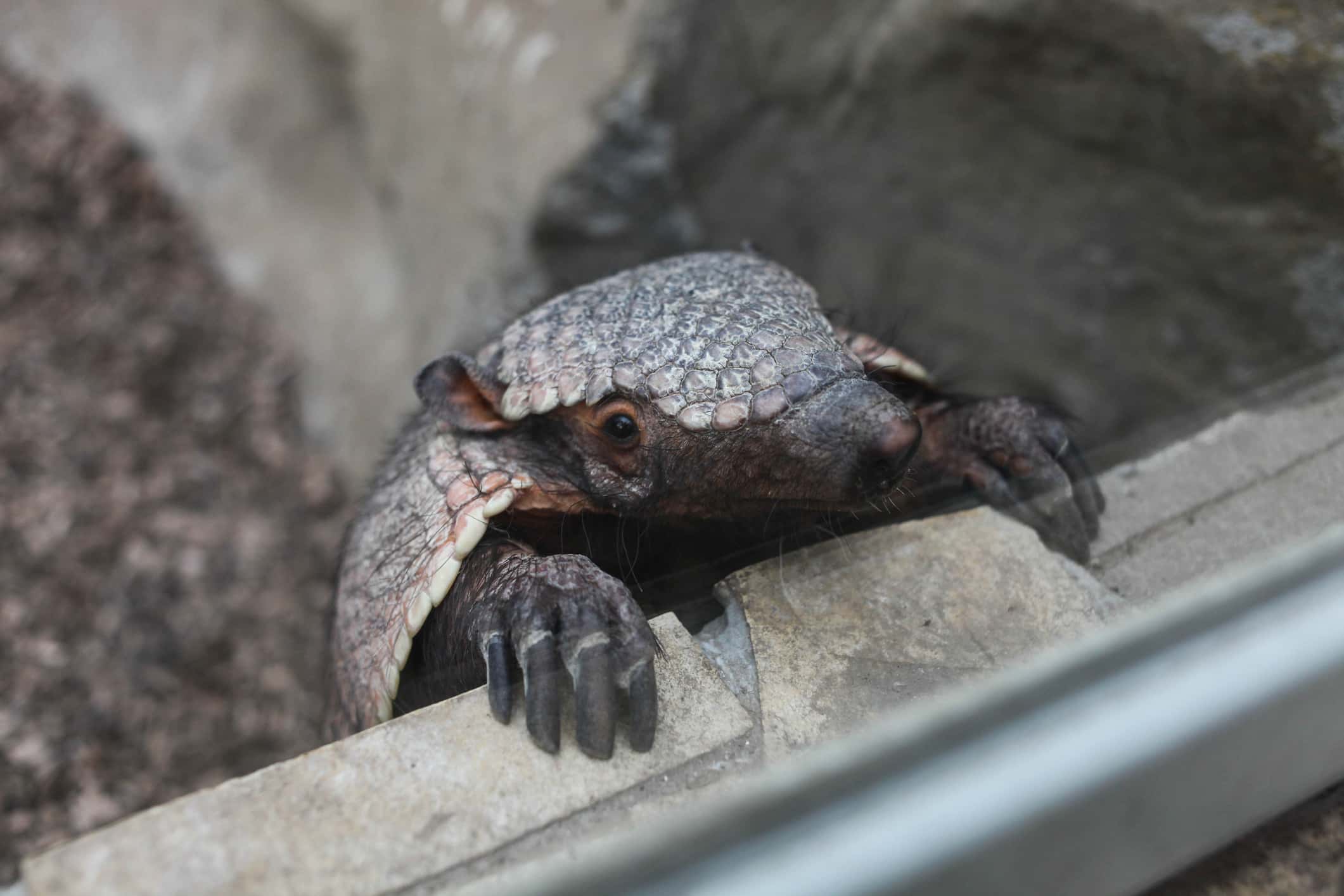
There is no other creature on earth quite as cute yet strange-looking as the armadillo. They can roll up into a ball that resembles a rock, and their bodies are protected by leathery armor. Other aspects of armadillo behavior are equally endearing. In this Instagram video, an armadillo grabs a heap of leaves, twigs, and other plant material using its clawed feet.
It grabs them easily, but holding onto all of this nest material is a challenge. Remarkably, the armadillo transports all these building blocks by pulling them close to its chest and jumping backwards. With each jump, it tightens its grip to keep the plant material from falling. It’s an impressive and adorable feat. Let’s learn more about how these creatures build their nests, how they transport the materials required to build them, and more.
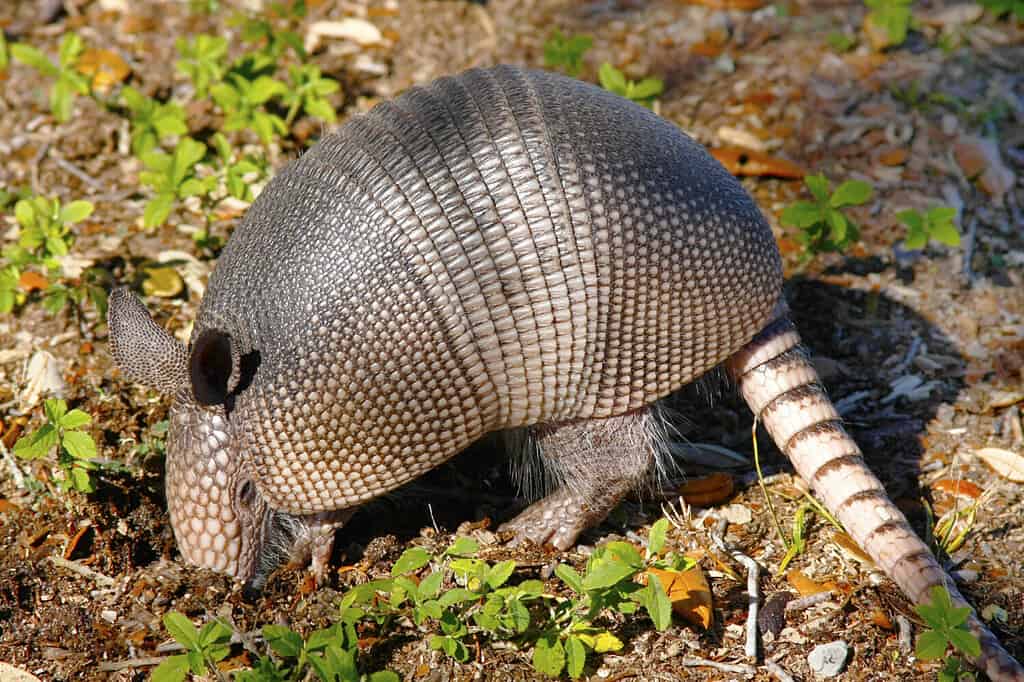
Armadillos both dig for food and build nests with their sharp claws.
©Steve Bower/Shutterstock.com
As seen in this Instagram video, an armadillo holds a heap of plant material to its chest and bounces backwards. While there isn’t a specific name for this behavior, it is an adorable demonstration of the sharpness and dexterity of armadillo claws. These creatures have poor eyesight but use their impressive sense of smell to find food or dig dens. They usually build their nests near creeks, streams, or arroyos; armadillos are better swimmers than runners. They can walk underwater for short distances, hold their breath for minutes, and even increase their buoyancy by swallowing air to inflate their organs.
Armadillos have five sharply clawed toes on their hind feet and three to five toes with heavier digging claws on their forefeet. Their legs are quite short, but they can move quickly. While it’s hard to say exactly what happened to this armadillo after the Instagram video ended, it likely didn’t have to travel far with its bundle of plant material. Once it returned to its nest, the armadillo probably arranged all the plant material in a special chamber. There, the plant material becomes cozy insulation.
The armadillo in this video could be gathering nest material, a behavior seen in both males and females. Remarkably, female nine-banded armadillos (Dasypus novemcinctus) almost always give birth to identical quadruplets, a unique reproductive trait among mammals. First, the female releases one egg, which is fertilized. The egg then divides into two embryos, and each of those divides again, resulting in four identical quadruplets. As even just this one fact illustrates, armadillos are strange but adorable creatures.