
Quick Take
- Cat bites can become infected quickly because deep puncture wounds trap bacteria like Pasteurella multocida under the skin.
- Bite locations such as hands, wrists, and fingers are high risk due to limited space for drainage and proximity to tendons and joints.
- Early medical evaluation and prompt antibiotics reduce the risk of cellulitis and severe infection, especially for older adults or immunocompromised individuals.
I have three cats, and one of our favorite games is Belly Blitz. This is where I flip them onto their backs and vigorously rub their bellies, getting them all riled up. They, in turn, attack my hands with their teeth and claws—all in good fun. It’s a great game that’s thoroughly enjoyed by all parties involved. I suspect you and your feline might have a similar game. The problem with this game, however, is that every now and then it leads to the puncturing of the skin on my hand. It doesn’t hurt much; it’s a small price to pay for the joy of Belly Blitz. However, there may be a much greater risk than just that minor pain.
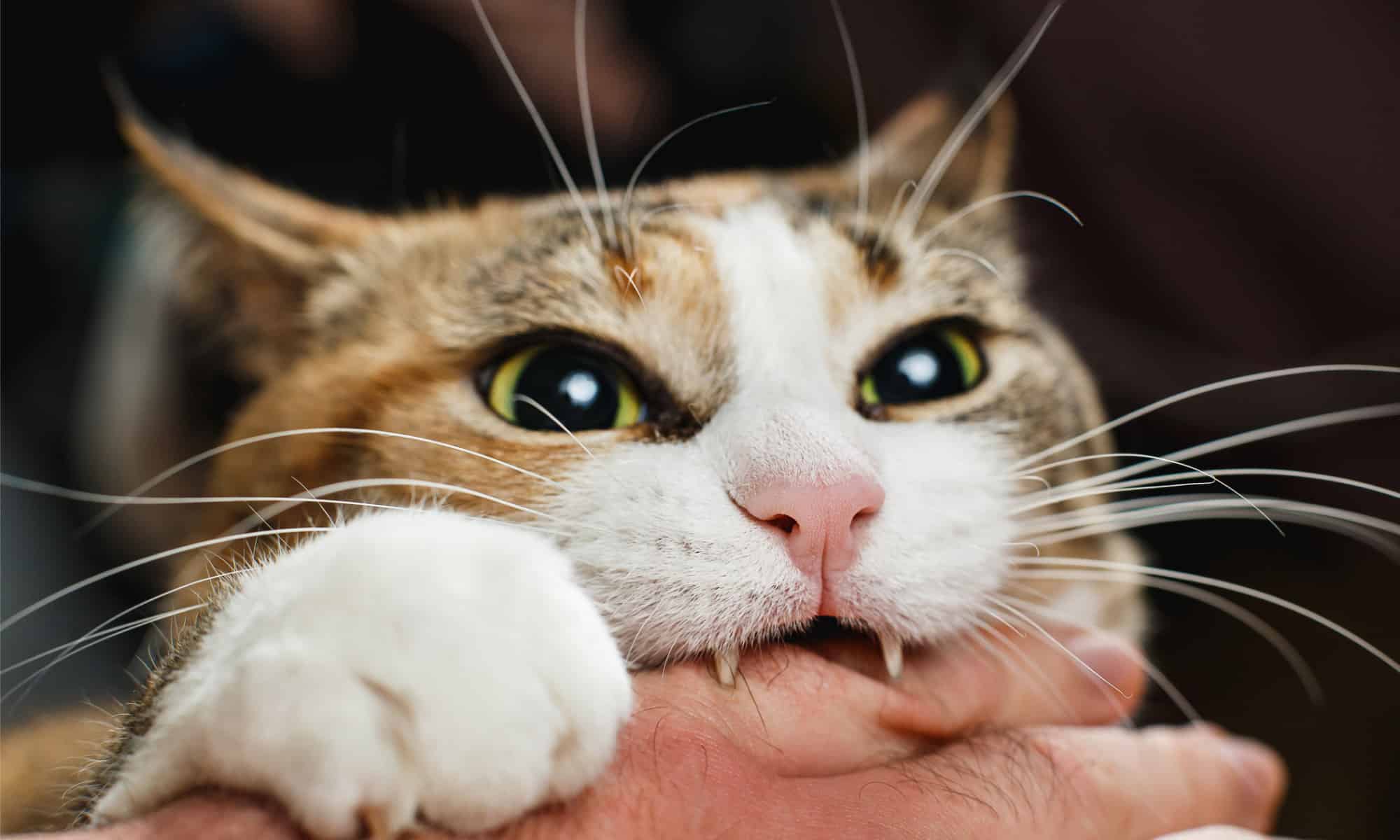
A cat bite can look tiny. Just a neat little puncture the size of a pinprick. You’re probably inclined to brush it off. That’s the dangerous part. Cats have sharp, narrow teeth that can stab bacteria deep under the skin and into tendon sheaths, joints, and even bone. Because of that anatomy and the types of bacteria living in a cat’s mouth, cat bites become infected far more often than many other animal bites. So before you play your next round of Belly Blitz—or whatever you call your version—you may want to read this article. Spoiler alert: You might want to stop playing Belly Blitz altogether.
What’s So Bad About a Little Cat Bite?
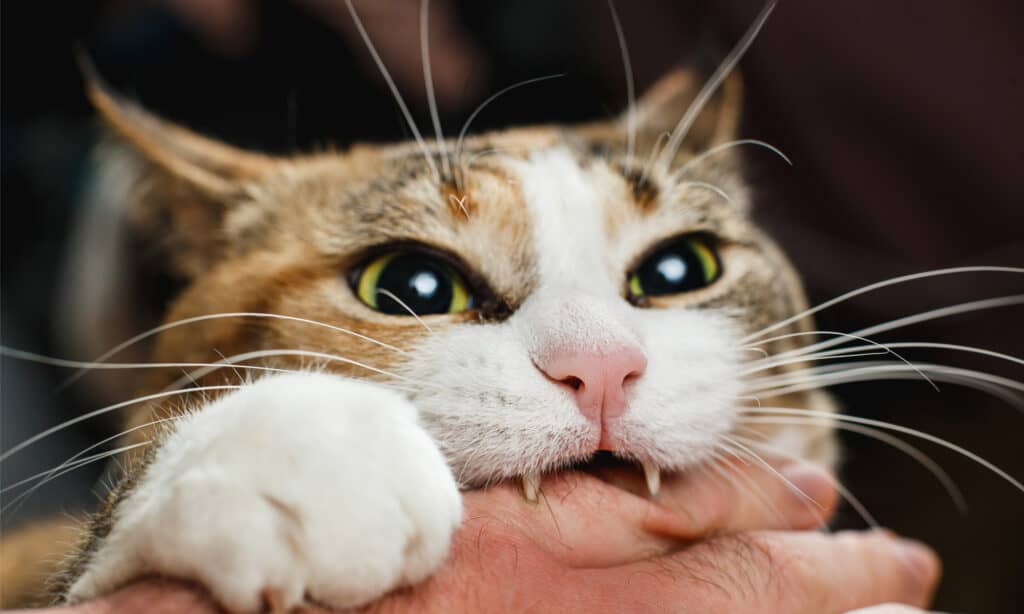
Because cat bites tend to penetrate deeply, they are more prone to infection than more superficial wounds.
©iStock.com/zsv3207
What’s so bad about a little cat bite? Short answer: Infection!
First, a cat bite is usually a deep, narrow puncture rather than a broad tear, such as a scratch. A deep puncture closes quickly on the surface but can leave a channel that traps bacteria under the skin, where the immune system and topical first aid can’t easily reach. This allows microbes to multiply in protected pockets of tissue, sometimes right next to tendons or joint spaces.
Second, the cat’s mouth is home to a distinctive mix of bacteria. The most commonly implicated organism after a cat bite is Pasteurella multocida, a fast-acting bacterium that normally lives in the mouths of cats and dogs. When P. multocida is introduced into a human bite wound, it can cause rapid soft-tissue infection and, in some cases, more serious invasive disease, especially in older adults or people with weakened immune systems.
Rates vary between studies, but cat bites become infected much more often than dog bites. Published analyses show a wide range, roughly one out of five to well over half of cat bites become infected. Reviews frequently report that while dog-bite infection rates are usually in the single digits or low teens, cat-bite infection rates have been reported anywhere from about 20% up to 80% in some clinical studies, depending on the criteria used and the types of bites included. That big difference is driven primarily by the puncture-wound anatomy and the bacteria involved.
What Does an Infected Cat Bite Look and Feel Like?

Hands, wrists, and fingers are commonly bitten areas. They’re also the most troublesome.
©Diana Taliun/Shutterstock.com
Infections after cat bites usually declare themselves quickly. Typical signs include increasing pain, redness, swelling, warmth around the wound, and sometimes drainage of pus. For bacterial cellulitis (a common form of soft-tissue infection), symptoms often appear within a day after the bite. Red streaks moving away from the wound (called lymphangitic streaking), fever, swollen lymph nodes, or loss of movement near a bite are warning signs that the infection is spreading or involving deeper structures.
Certain locations are especially high risk. Bites to the hand, wrist, and finger are especially troublesome because the anatomy there (small compartments, tendons, tendon sheaths, and joints in close quarters) lets infection spread quickly and makes surgical cleaning more difficult. Infections in those spaces can lead to tendon damage, joint infection, or even bone infection if not addressed.
When to Seek Medical Care

It’s important to know the signs that medical attention is necessary.
©ElenaBoronina/Shutterstock.com
Take these immediate steps if you or someone else is bitten:
- Stop any heavy bleeding with clean pressure.
- Prompt, thorough cleansing is the single most important thing you can do to lower infection risk. Rinse the wound under running water to flush out bacteria. Soap and water are recommended. Gentle irrigation is better than aggressive scrubbing, which might drive bacteria deeper.
- Remove visible debris, but do not try to dig deep into the wound.
- Cover the bite with a clean dressing and seek medical advice, especially for bites on the hand, face, near a joint, in people with weakened immunity, or if the cat was a stray or unvaccinated. Health professionals can assess the need for stitches, antibiotics, a tetanus booster, or rabies precautions depending on local risk.
Seek immediate medical care if you notice any of the following after a cat bite:
- Rapidly increasing pain, redness, or swelling around the wound.
- Pus or fluid draining from the wound.
- Fever, chills, or feeling unusually unwell.
- Red streaks moving away from the bite.
- Trouble moving a nearby joint or increasing stiffness, especially for bites on the hand.
What Happens at the Doctor’s Office?

A course of antibiotics is often prescribed for cat bites.
©KAA-photo/Shutterstock.com
Clinicians evaluate the wound for depth, contamination, location, and the health of the patient. They’ll also want to know whether the cat was a pet (and, if so, whether it’s up-to-date on vaccinations) or a stray or wild animal, because that changes rabies risk and follow-up steps.
Because cat bites carry a high risk of infection, many clinicians prescribe antibiotics as a preventive measure for most cat bites—particularly those on the hand, deep bites, or bites in immune-compromised patients. Short courses are typical, though the exact treatment plan depends on the clinical situation. Because cat mouths carry a variety of bacteria—some species of which actually produce enzymes that give them resistance to some antibiotics—clinicians commonly choose antibiotic regimens that cover a broad range of likely bacteria.
If a wound shows clear signs of infection, a clinician may take cultures, prescribe a longer course of antibiotics, and sometimes admit the patient for intravenous antibiotics and surgical cleaning. Infections that spread to joints, tendon sheaths, or bone require more intensive treatment to prevent permanent damage.
Potential Complications

Unvaccinated cats can create a whole other set of concerns if they bite someone.
©Oleg Troino/Shutterstock.com
Beyond Pasteurella, other organisms can be involved. Anaerobic bacteria and staphylococci or streptococci may be present, and in rare cases, other unusual pathogens can cause problems. Capnocytophaga species (more commonly associated with dog bites, but also possible with cats) can cause severe infections in people without a spleen or with other immune deficiencies. Very rarely, bite wounds can lead to bloodstream infections (sepsis), bone infections (osteomyelitis), or joint infections. For these reasons, doctors are cautious in certain high-risk groups.
Rabies is a viral concern after mammal bites in areas where rabies exists in wildlife. In many parts of the United States, rabies from cats is uncommon because pet cats are vaccinated, but stray or wild animals can still pose a risk. If there is any possibility of rabies exposure, public health authorities and clinicians will assess the need for rabies post-exposure prophylaxis, which can include immune globulin and a vaccine series. This is a separate decision from antibiotic treatment and depends on the circumstances of the bite.
Why Early Treatment Is So Important

If you suspect an infection, it’s important to get treatment right away.
©Sozina Kseniia/Shutterstock.com
There are several important reasons to treat cat bites quickly rather than waiting to see if they “get worse”:
Speed of infection: Because Pasteurella and other bite-associated bacteria can multiply rapidly, signs of infection often appear within a day. Early antibiotics can sometimes prevent a small, deep puncture from turning into cellulitis or a deeper infection.
Anatomic vulnerability: The hands, wrists, and joints have tight spaces where infection can become trapped and cause damage that’s hard to repair. Preventing infection early lowers the chance of tendon, joint, or bone complications that can require surgery.
Complications in vulnerable people: Older adults, people with diabetes, those on immunosuppressant drugs, and anyone without a functioning spleen are more likely to develop severe infections if bacteria gain a foothold. Early medical attention reduces that risk.
Not Just a Harmless Little Nibble

Cat bites are at a high risk of infection.
©Anna Krivitskaya/Shutterstock.com
A cat bite may look small, but the bite mechanism and the bacteria living in a cat’s mouth combine to make these wounds disproportionately likely to become infected. The most important things you can do are prompt irrigation and cleaning, being thoughtful about the wound’s location and the patient’s health risks, and, when appropriate, getting medical care for evaluation and possible antibiotic treatment. Early attention can prevent minor punctures from turning into painful, damaging infections.
If you or someone you care for is bitten, don’t ignore it: flush with soap and water, cover the wound, and contact a healthcare professional sooner rather than later. Treating a small wound properly is a lot easier than treating a deep infection later.
And for the love of all things holy, do NOT play Belly Blitz with your kitties. I was fortunate enough not to have learned this lesson the hard way; the next playful little nibble to the side of my palm could have led to a not-so-playful infection.