
Quick Take
- The shipwreck that led to the sea cow's discovery also sealed its fate, and the connection between the two is more direct than you'd expect. See the fatal connection →
- Its own biology made escape from hunters physically impossible. A built-in trait that should have been an advantage became a death sentence. Explore their physical vulnerabilities →
- The sea cow may have already been on the edge of extinction before humans ever laid eyes on it. What Steller found might not have been a thriving species at all. See the population evidence →
- A craze for fashionable hats in Europe played a hidden role in wiping out an Arctic giant thousands of miles away. Trace the fur trade link →
It took just 27 years for us to discover, formally describe, and drive a sea cow species to extinction. The Steller’s sea cow has the dubious honor of being the first marine species to be driven to extinction by humans. They have not lived on Earth since 1768, but here we share what is known about these unique creatures.
Getting to Know the Steller’s Sea Cow
The most complete account of the animal popularly known as Steller’s sea cow comes from a 1977 Geological Survey Professional Paper. The document identifies its scientific name as Hydrodamalis gigas, the giant Arctic sirenian. Most of the information about the creature was obtained from the account of the naturalist G.W. Steller, who was also the only person to observe the animal alive and the one who gave it its name.
It was first discovered in 1741 on the coast of what is now called Bering Island, which is part of the Commander Islands. Steller was aboard a Danish explorer vessel called the ‘Vitus Bering,’ which was serving the Russian government.
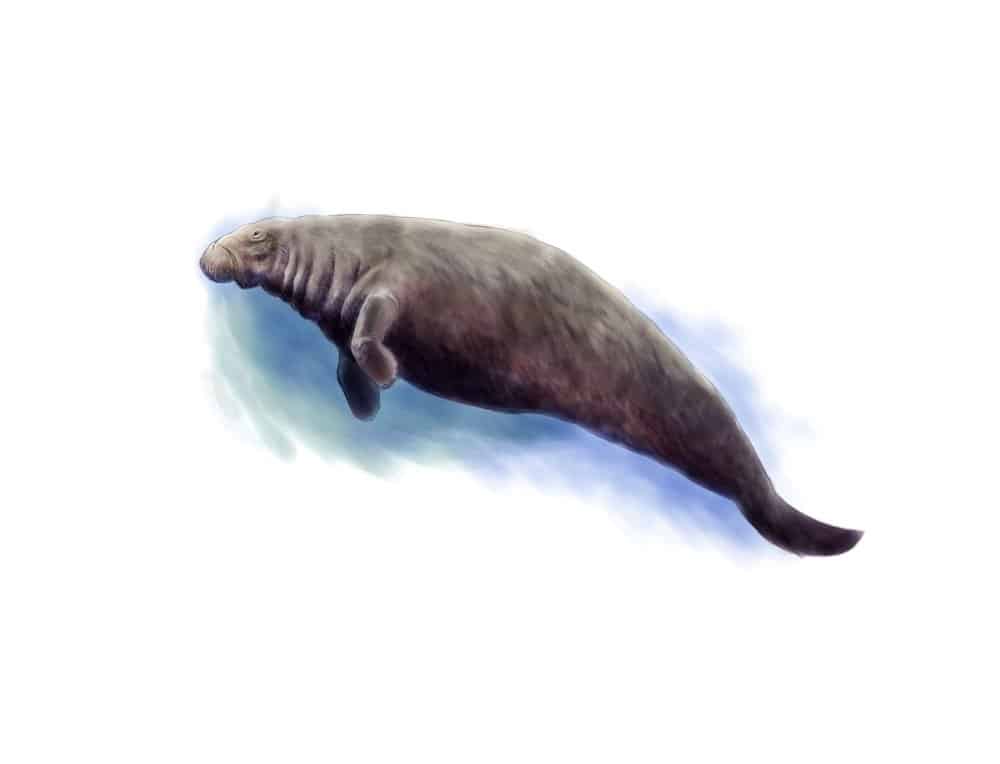
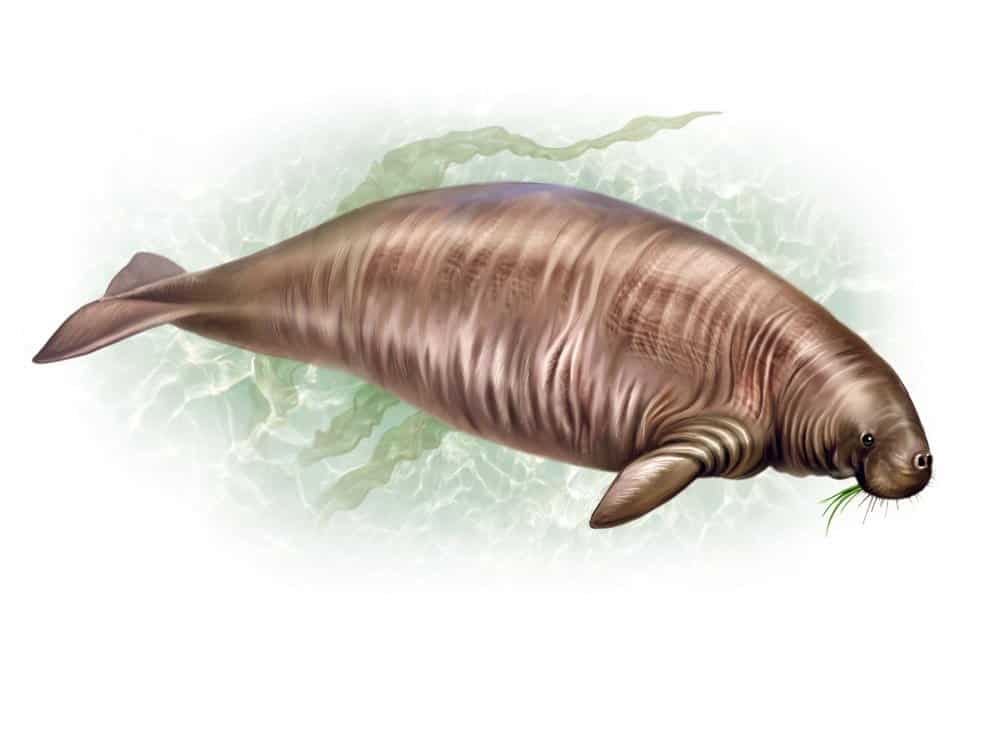
Steller’s sea cows are named after the naturalist, G.W. Steller.
©Nicolas Primola/Shutterstock.com
The individual Steller examined was a female and measured around 24 feet (7.4 meters) in length from the tip of her upper lip to the end of her tail. He estimated her weight as 10 metric tons, which is about 22,000 pounds.
How the Discovery of Steller’s Sea Cow Led to Its Downfall
The sea cow was discovered when G.W. Steller’s ship was shipwrecked on Bering Island while returning from North America. The crew was starving and captured some sea cows to eat. They were found to make an excellent meal!
Unfortunately, word of their usefulness as a food source spread to subsequent Russian voyagers who had been attracted to the area for fur-hunting expeditions. At that time, Europeans had a seemingly insatiable demand for fur hats, and Russian crews were eager to profit by supplying them. The waters around the islands scattered from Japan across what is now the Bering Sea and down into North America were rich in sea otters. Sea otters were prized for their fur, which was used to make hats, and the men who hunted them needed to be fed. During these long, cold journeys, having access to fresh meat was a significant advantage. The hunters stopped to hunt sea cows, using their meat to sustain themselves for the remainder of their voyages.
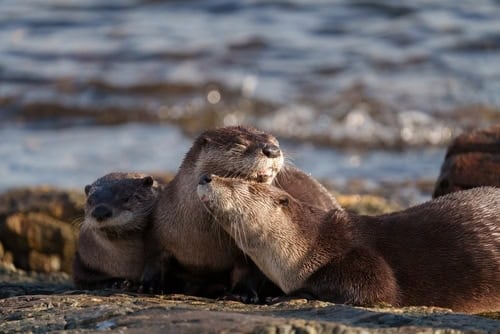
Sea otters were hunted for their fur.
©2009fotofriends/Shutterstock.com
The situation was summed up in an account from 1887 reported in the Geological Survey Professional Paper, which explains that between 1743 and 1763 “hardly a winter passed without one or more parties spending eight or nine months in hunting fur-animals there, during which time the crews lived almost exclusively on the meat of the sea-cow.”
The Decline of the Sea Cow
Hundreds of these animals were slaughtered and dragged ashore to be butchered and eaten. These animals were highly social, which likely made them even easier to catch. While he was stranded on the island, Steller observed that they gathered in herds to constantly feed on kelp in shallow water. They preferred shallow, sandy areas along the seashore, especially near the mouths of rivers and creeks. This made them easy for hunters to spot.
These animals are called sea cows for a good reason. As they grazed on seaweed, they moved one foot, then another, much like sheep and cows. It was a kind of half-swim, half-walk. Steller also described that they had a short but flexible neck, allowing them to bend their heads to feed, just like cattle.
Steller’s Sea Cows Disappear
Sea cows had specialized habitat requirements, as they needed to live near large areas of seaweed to feed. They are protected from the cold sea by their thick blubber layer, but again, this was related to their downfall. Apparently, their blubber was not only highly nutritious but also tasted very good, with a hint of almond. Additionally, their blubber made them incredibly buoyant, preventing them from diving to escape hunters’ harpoons.
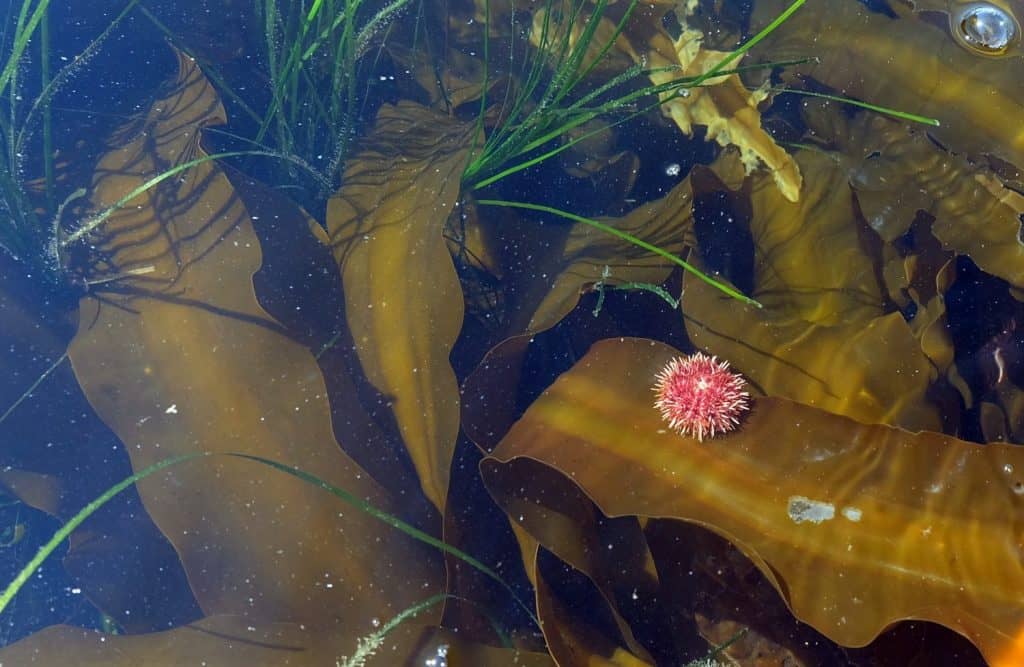
Steller’s sea cows ate a lot of kelp!
©Strannik88/Shutterstock.com
By 1768, less than three decades after they were discovered, the Steller’s sea cow was extinct. The fact that this came about so quickly suggests that there may not have been a very large population when they were discovered. There is some evidence that their distribution may have once stretched down the western coast of North America. The animals discovered by Steller may have been the last remnants of a once much larger population. They had become highly specialized for their sub-Arctic habitat. Instead of teeth, they had horny pads, perfect for eating kelp, and their bones were very dense to help counteract their extreme buoyancy. This specialization made them a highly restricted species and, therefore, very vulnerable.
This serves as a horrifying example of what can happen when humans exploit a wild animal as a resource. They may have been the first marine species driven to extinction by humans, but they are by no means the last.