Quick Take
- Some birds skip the costly spring molt entirely, though the energy they save comes with a hidden survival trade-off most people never consider. See the survival trade-offs →
- Feathers are engineered with built-in expiration dates, though only in specific zones. The reason comes down to an unlikely relationship between color and structural strength. Explore melanin's structural role →
- Sparrows use feather wear as a social weapon, and the timing of when their hidden markings emerge turns out to be far more calculated than it looks. See sparrows' social strategy →
- For at least one common backyard bird, feather abrasion doesn't reveal breeding beauty but instead erases it, and the cause is something the bird can't avoid. Discover what abrasion erases →
For most birds, looking good for spring means undergoing a partial molt. Because feathers are pure protein, shedding and rebuilding a wardrobe from scratch drains massive amounts of time, calories, and nutrients. However, a few clever species have found a way to avoid paying such a high biological tax by using an alternative strategy to reduce molting costs.
Instead of spending weeks and precious energy growing an entirely new set of feathers, these birds rely on mechanical abrasion — in other words, they let time, friction, and everyday life do the heavy lifting. As winter turns to spring, ordinary wear and tear naturally erodes the dull tips of their feathers, slowly revealing the striking breeding plumage beneath.
The Science Behind Feather Wear
Mechanical abrasion isn’t random damage to a bird’s wings — it is a predictable, highly engineered process governed by feather anatomy, pigmentation, and physics. While skipping a molt saves massive amounts of energy, it comes with a cost: compromised aerodynamics. As feathers are slowly chipped away, slight asymmetries can develop in the wings, reducing take-off speed and maneuverability. This leaves birds more vulnerable to predators, as they cannot fly as fast or as agilely as before.
Pre-Programmed to Fall Apart
The secret to mechanical abrasion lies in feather pigmentation. Feathers are essentially constructed with “expiration dates” in specific regions.
Feather areas rich in melanin (deep blacks, iridescent greens, and purples) are structurally reinforced. Melanin strengthens keratin, making these zones more resistant to wear.
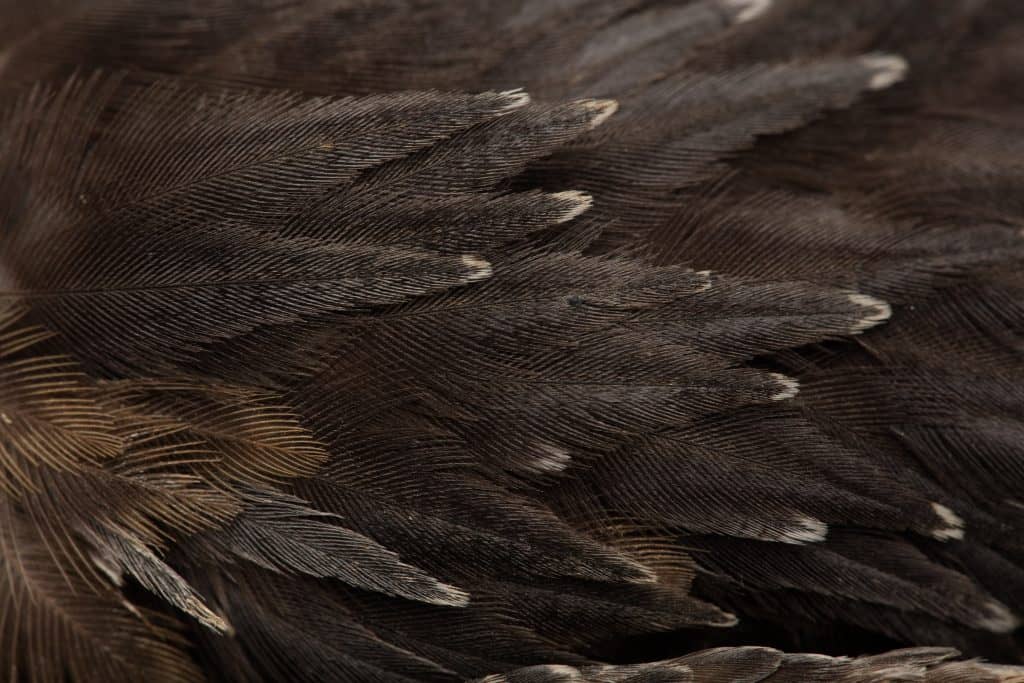
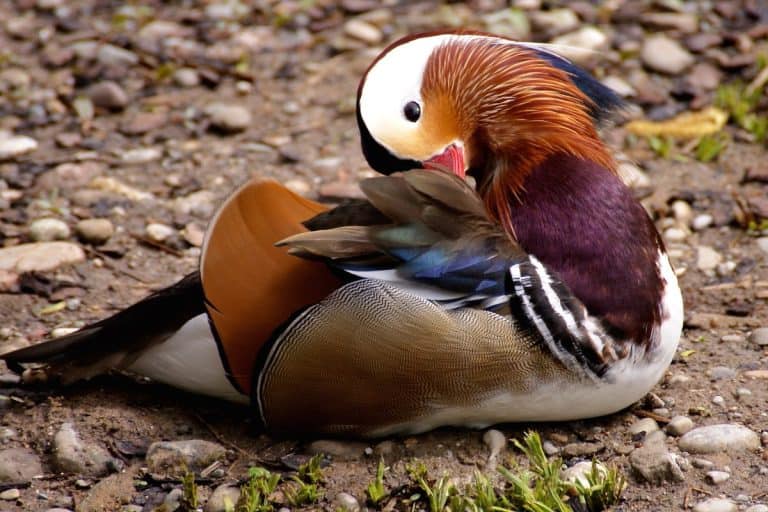
Pigmented color in bird feathers comes from melanins, carotenoids, and porphyrins.
©Auckland Museum Collections from Auckland, Aotearoa New Zealand / CC BY 2.0 / Wikimedia Commons – Original / License
Light-colored or white regions, which lack melanin, have no such reinforcement. These areas are weaker and more vulnerable to friction.
Because of this uneven design, feathers wear down at different rates. As birds go about daily life, fragile, unpigmented tips erode first, gradually revealing the tougher, high-contrast layers underneath.
The Cost of the Daily Grind
Feather wear does not occur all at once; its rhythm follows a bird’s behavioral calendar. Studies of passerines show that abrasion rates peak during the breeding season. This makes sense: nest building, territorial defense, and feeding chicks increase physical contact with vegetation and nest materials.
Migration, in contrast, is relatively gentle on plumage. Despite being a metabolic marathon, long-distance flight causes little direct abrasion. Air alone does not damage feathers — the real wear comes from physical contact, not from flying itself.
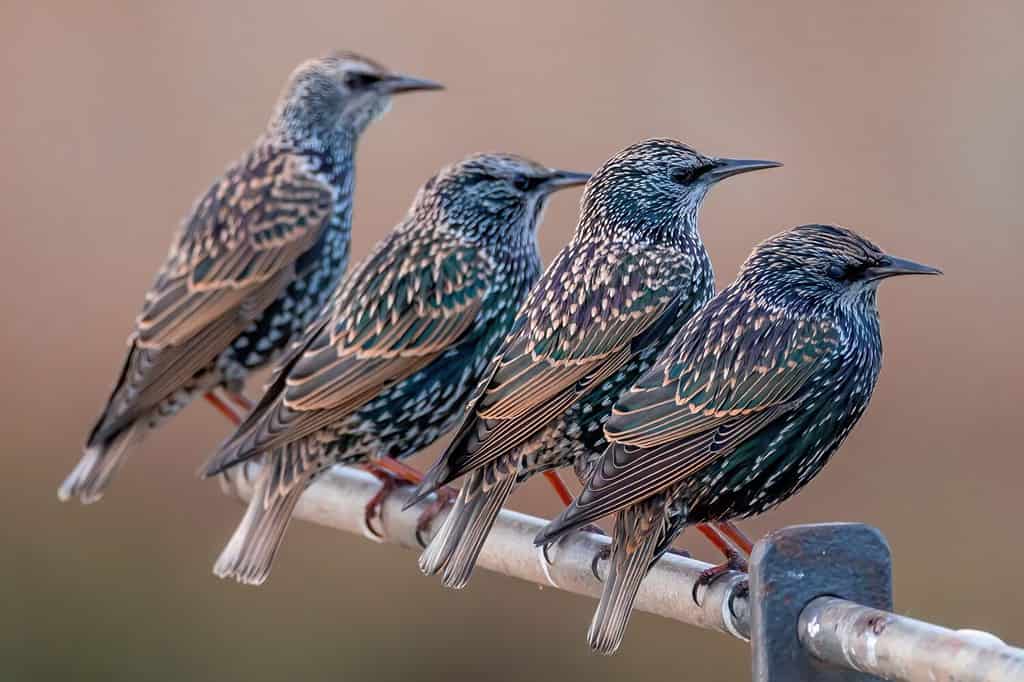
European starlings appear speckled in winter because of pale feather tips that later wear away.
©Estudax/Shutterstock.com
A Strategic Calendar
Because feathers inevitably break down, timing is critical. When a bird molts determines how fresh — or frayed — it appears during breeding. A pre-breeding molt produces fresh plumage just before the spring rush, allowing birds to enter the season with high-integrity feathers that resist early wear. Birds that molt after summer begin the next cycle with older, already worn plumage, increasing structural degradation. Ultimately, when feathers are replaced, it matters as much as how.
European Starling (Sturnus vulgaris)
Few species demonstrate differential abrasion more clearly than the European starling. In winter, starlings appear dark and heavily speckled with white spots. These pale markings are not pigment but the worn tips of their feathers.
As winter progresses, foraging and daily activity gradually erode these brittle tips. By spring, the speckling disappears entirely. The starling has not grown new feathers — it has simply worn away its winter camouflage to reveal glossy, iridescent breeding plumage underneath.
The House Sparrow (Passer domesticus) and Italian Sparrow (Passer italiae)
For sparrows, mechanical abrasion is more than a cosmetic shortcut — it is a tool for social regulation. In winter, pale feather tips conceal the black throat bib and darker head markings of males, reducing aggression in flocks by masking true dominance signals.
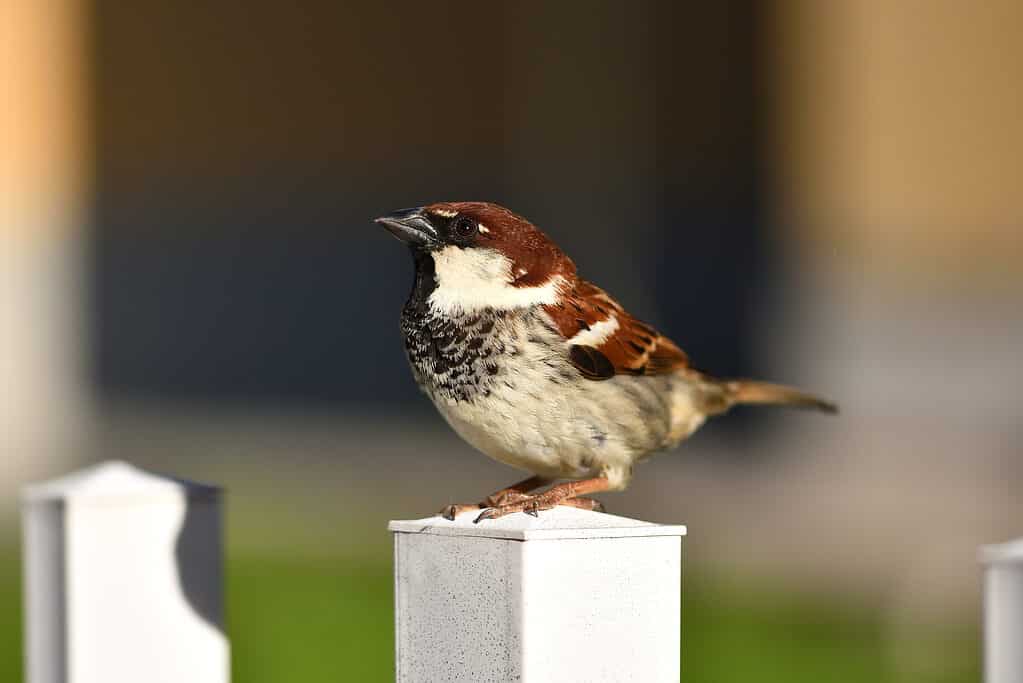
A male’s feather patterns in common sparrows signal its dominance.
©Davide Bonora/Shutterstock.com
The timing of this reveal is precise. Abrasion slows while birds remain in winter flocks, preventing chaotic, premature shifts in the social hierarchy. Only as groups break apart and breeding season approaches do the pale tips wear away, exposing the bold bib beneath. Females prefer males with the largest, darkest bibs — a reliable indicator of physical condition and reproductive health.
Bobolink (Dolichonyx oryzivorus)
The bobolink takes mechanical abrasion to an extreme, executing a dramatic transformation during migration. Males grow bold, black-and-white breeding plumage months in advance while wintering in South America, but this is initially hidden beneath dull, buff-colored outer feathers.
As they migrate north — often thousands of miles — these outer layers gradually wear away, revealing the tuxedo-like plumage underneath. By the time the birds arrive, the transformation is complete, with no additional molt required.
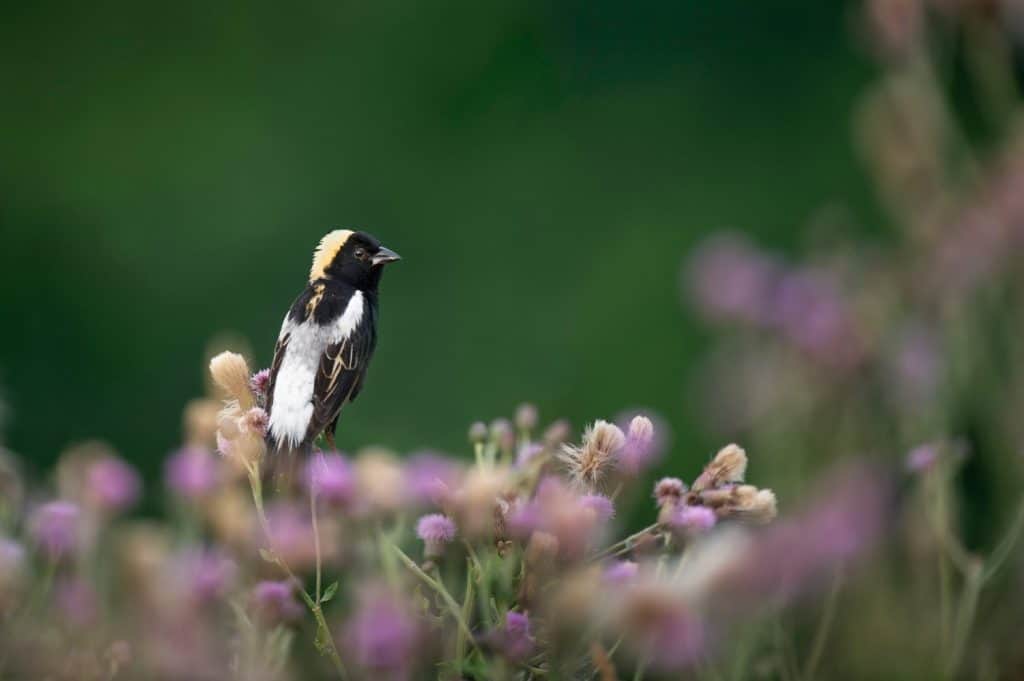
Male bobolinks grow their breeding plumage long before breeding season begins.
©Ray Hennessy/Shutterstock.com
Other Masters of the Molt Shortcut
The starling, sparrow, and bobolink aren’t the only birds letting friction do their tailoring. Several other species use the same low-energy strategy: Meadowlarks shed their dull winter fringes to reveal bright yellow chests. Snow buntings shift from sandy-brown to crisp white-and-black by brushing against snow and rocks. Red-winged blackbirds lose buff-colored feather edges to expose solid black bodies and blazing red shoulder patches. Longspurs strip away muted winter edges to reveal bold facial markings just in time for courtship.
The Vulnerability of Structural Color
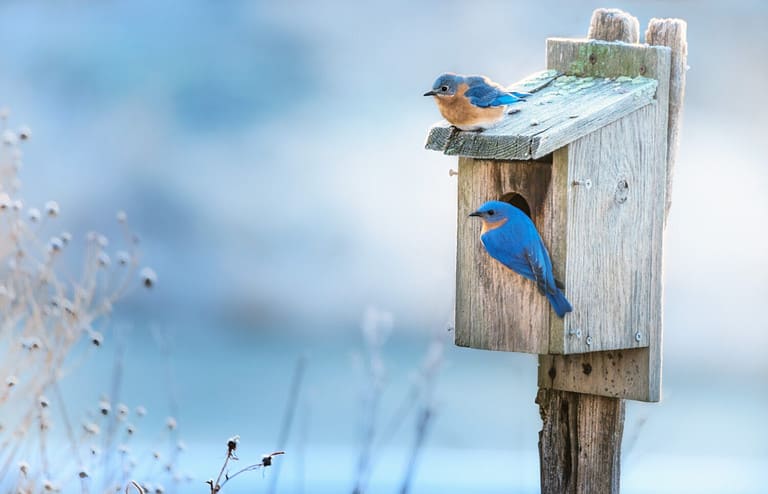
While abrasion is an efficient shortcut for some birds, it is damaging for others. In species like the Eastern bluebird (Sialia sialis), coloration is structural rather than pigment-based — produced by microscopic feather architecture that reflects specific wavelengths of light. This makes color highly vulnerable to wear.
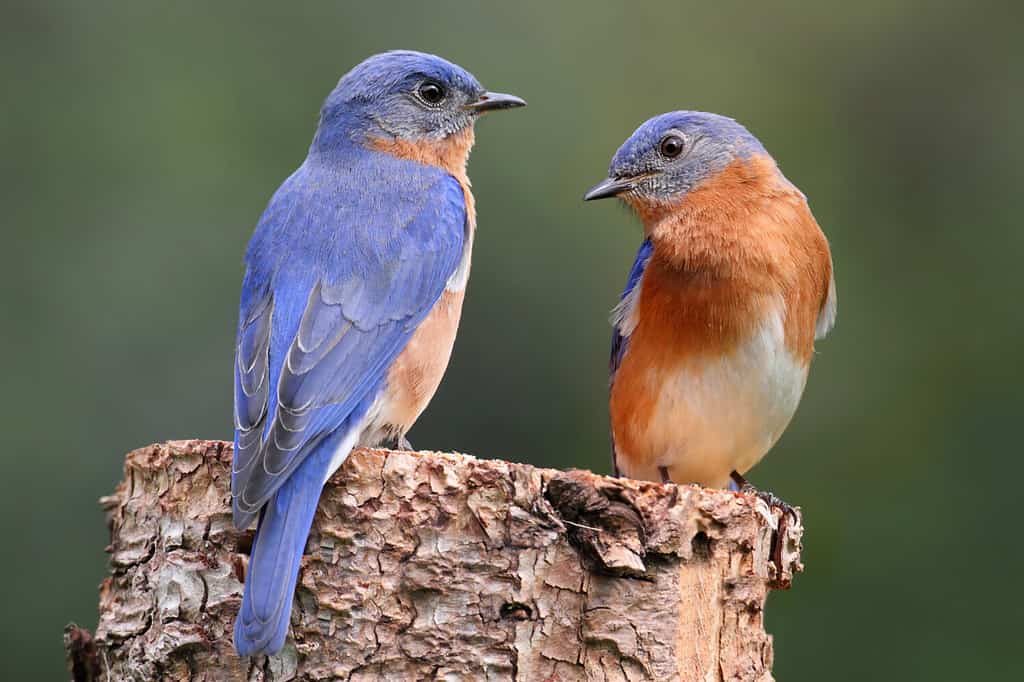
An eastern bluebird’s feathers are blue due to their microscopic structure rather than pigment.
©Steve Byland/Shutterstock.com
Studies tracking individuals across a single breeding season show clear degradation of their plumage:
- UV and blue reflectance steadily decline.
- The vibrant blue hue shifts toward a duller, muddy green tone.
- Degradation is most severe on the head and least on the rump.
This pattern reflects the birds’ daily behavior. Bluebirds experience the most friction on their heads when entering tight, wooden nest cavities to feed hungry chicks. In this case, abrasion does not reveal beauty — it destroys it. Ornamentation literally erodes away under the demands of parenting.
Rethinking Avian Beauty
Mechanical abrasion reshapes how we understand seasonal transformation. Shifting between winter and breeding plumage does not always require new feather growth. Instead, it can result from controlled structural wear — an elegant shortcut that relies on physics rather than metabolism.
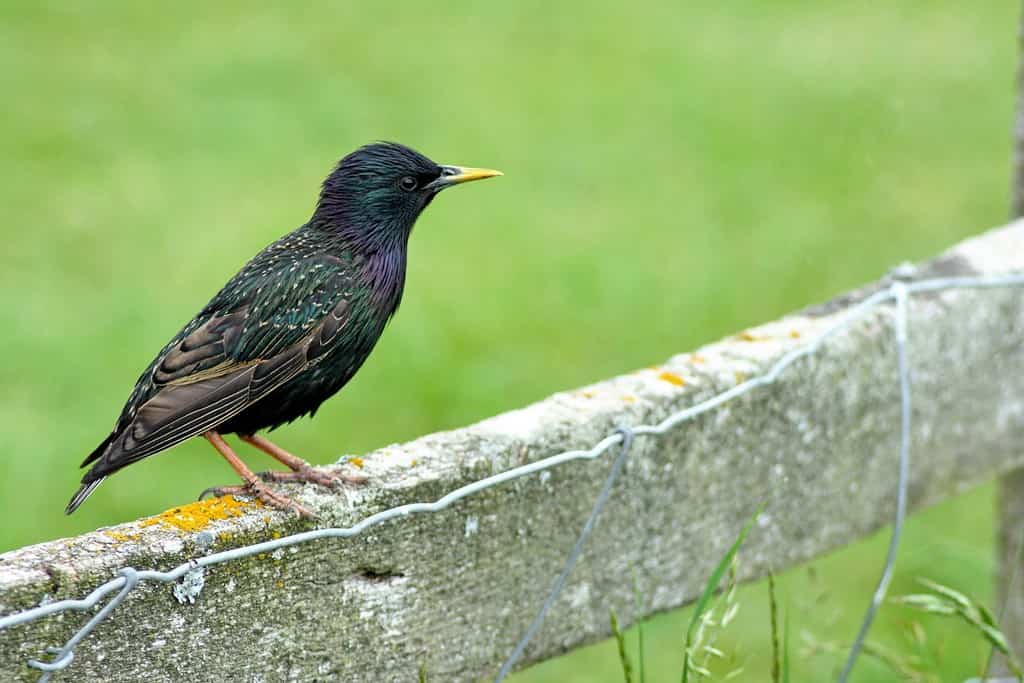
The lighter tips of a starling’s feathers wear away by spring.
©BreizhAtao/Shutterstock.com
However, this efficiency comes with trade-offs.
- Communication: Wear must occur at the right pace to reveal social signals on schedule.
- Survival: Even minor feather loss reduces flight performance and increases vulnerability to predators.
- Structural integrity: Degradation and wear affect aerodynamics and escape ability.
Ultimately, feather wear reveals a deeper truth about avian biology: beauty is not always created through new growth. Sometimes, it is shaped through the careful, timed, and gradual management of decay.