
Two new frog species have recently been discovered on the small, boulder-studded Dauan Island off Queensland. The frogs have been named for their granite boulder habitat: Choerophyrne koeypad (“rocky mountain”) and Callulops gobakula (“boulders”). The island’s unique geology and isolation have allowed these endemic species to evolve in habitats found nowhere else nearby. Interestingly, these frogs forego the tadpole stage by laying eggs on land.
It is no secret that Australia has a variety of not only unique but also large animals. Of the hundreds of thousands of species known to live Down Under, there are plenty more that have not been identified. But every once in a while, one of those species will make itself known, such as the recently discovered heaviest insect in Australia.
At the end of July 2025, a massive stick insect was presented to the world. While there are plenty of stick insects in Australia, this one stood out from the rest, given the robustness of the insect. What the stick insect lacked in length, it made up for in weight. However, just like all other stick insects, this giant was docile and of no harm to people, giving naturalists and scientists the rare opportunity to examine the stick insect without fear of being injured.
This post was updated on October 26, 2025 to include the two new frogs discovered in Queensland.
Giant Stick Insect Was Recently Discovered In Australia
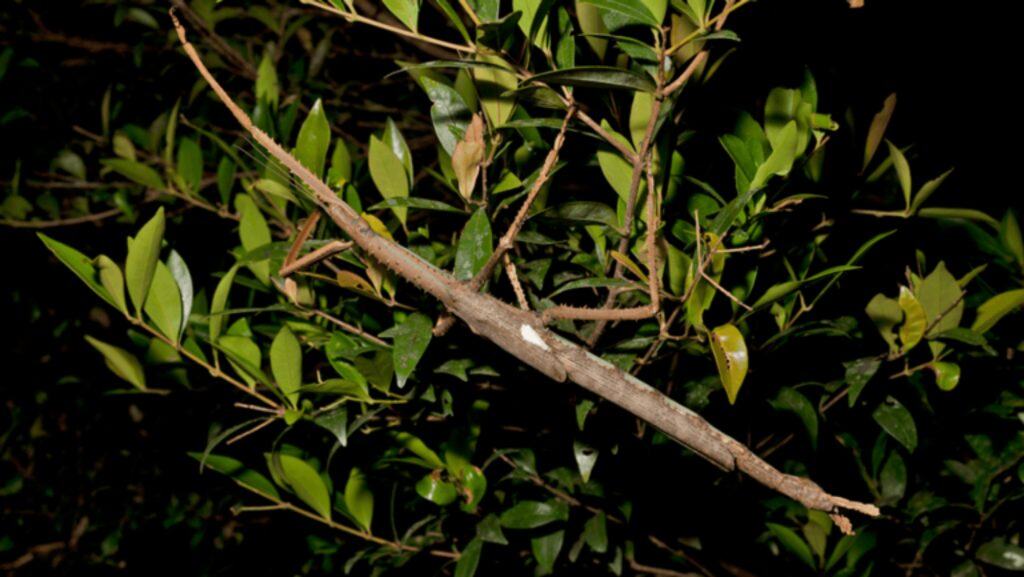
A newly discovered giant stick insect is the largest insect in Australia.
©https://www.youtube.com/watch?v=NzF51lfdS-c&t=15s
A giant stick insect was recently discovered in Australia. While stick insects are found in other regions of the country, this insect is not only large, but it is also heavy. According to a recent study published in the journal Zootaxa, the stick insect, named Acrophylla alta, was found by amateur naturalists who were hiking through a highland rainforest in the Atherton Tablelands. The area of the rainforest where the naturalists were hiking is not the region of the rainforest where Acrophylla alta lives, however. Therefore, it was by chance that the group came across the insect.
Acrophylla alta is believed to live in the 100-foot trees in the high canopy of the rainforest. Due to recent rains in the area, the consensus is that the insect may have slipped from its canopy home. This is why the group in the rainforest was able to find it. In many instances, insects like Acrophylla alta are overlooked simply because they camouflage so well with their surroundings. Despite Acrophylla alta being a hefty insect, it, too, blends in with the trees in which it lives. Consequently, finding Acrophylla alta or any other stick insect can be difficult.
What was surprising about Acrophylla alta was not the length of the insect, which was described as being the length of a human arm, but the weight of the insect. Weighing approximately as much as a golf ball, Acrophylla alta is far and away the heaviest of all stick insects discovered to date in Australia. Given that the insects at the top of the canopies of the trees in the Atherton Treelands are largely unstudied, there may be other specimens from Acrophylla alta that are larger than the one the naturalists happened upon. However, this can only be determined if, and or when, more of the species is observed.
How the Giant Stick Insect Compares to Other Stick Insects

Many other stick insects are longer than Acrophylla alta but weigh significantly less.
©P. Ditsayaalongkorn/Shutterstock.com
There are approximately 150 species of stick insects in Australia. Each and every one of them has incredible camouflaging skills. But the difference between these stick insects and the giant stick insect recently identified is the weight of the newest member of the species.
The majority of stick insects weigh no more than just over a quarter of an ounce. Comparatively, Acrophylla alta weighs over 1.5 ounces, making the weight differential substantial. What is interesting about Acrophylla alta, however, according to James Cook University researcher Professor Angus Emmott, who helped to identify the giant stick insect, is the fact that while Acrophylla alta is heavier than other stick insects, it is not as long as many.
“There are longer stick insects out there [in the region], but they’re fairly light-bodied,” Emmott explains in a statement from James Cook University. “From what we know to date, this is Australia’s heaviest insect.”
Typically, a stick insect will measure in at 20 inches long. Acrophylla alta is only 15 inches long. While the length is not significantly different than some of the longest stick insects, when placed side by side, the Acrophylla alta looks heftier thanks to the additional weight it is carrying. The fact that the Acrophylla alta was not discovered until now, given its burliness, seems a bit surprising. But when the habitat of the Acrophylla alta is examined, it becomes clearer why the giant stick insect remained hidden until recently.
Why the Giant Stick Insect Was Not Discovered Until Recently
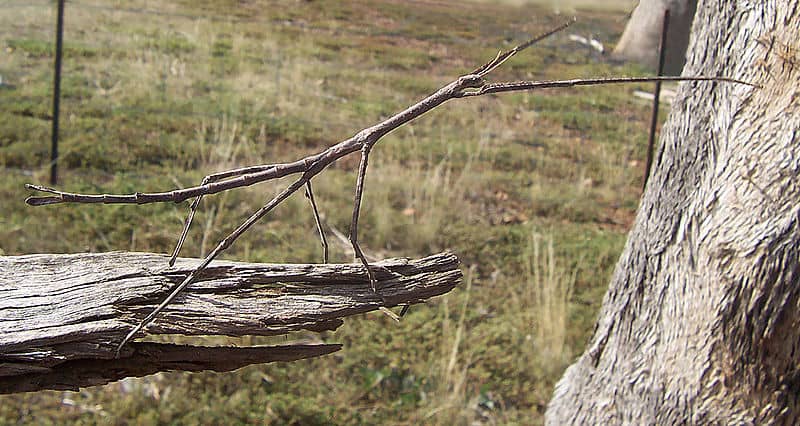
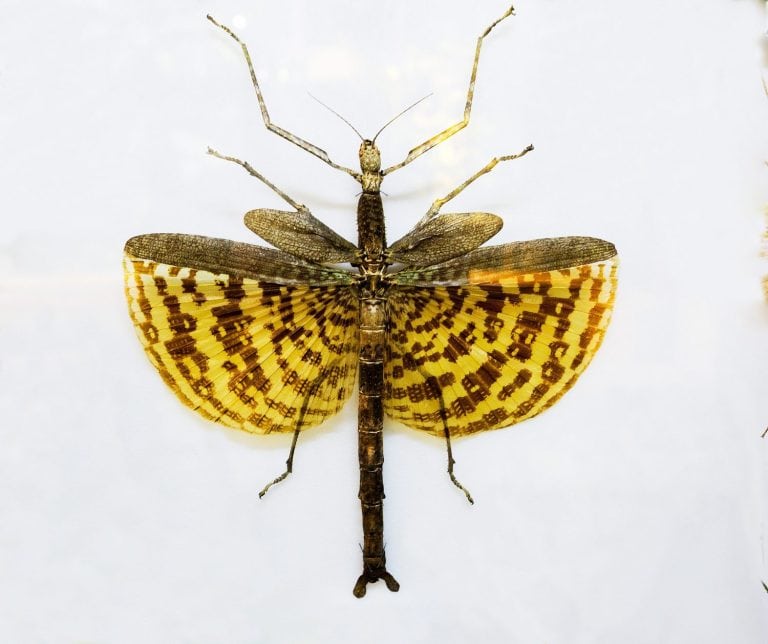
Acrophylla alta, similar to this stick insect, was not discovered until recently due to their habitat being high in the rainforest canopy.
©Fir0002 / Creative Commons – Original
It may seem odd that such a distinctive stick insect was only just discovered. However, given the habitat that Acrophylla alta lives in, the fact that it was found at all is nothing short of incredible. Acrophylla alta lives in the highland tropical forests. In the portion of the Atherton Tablelands in Queensland, Australia, the giant stick insect lives is not in the lower elevations of the tropical forest. Instead, Acrophylla alta is found in the canopies of trees that are 100 feet above sea level, or higher. Consequently, with not much time being spent by scientists in this portion of the rainforest, the Acrophylla alta could live without ever being noticed.
While the exact reason Acrophylla alta was found at lower elevations is just a hypothesis at this point, it is believed that a weather event triggered conditions that left the giant stick insect incapable of holding on in the higher canopy. Whether Acrophylla alta flew down or fell is unclear. This is because while 40% of known stick insects can fly, there were no details about whether Acrophylla altas’ wings help them to fly. What is known is that when Acrophylla alta was found, it appeared to be in good health, despite being far from the canopy habitat it calls home.
Where the Giant Stick Insect Lives
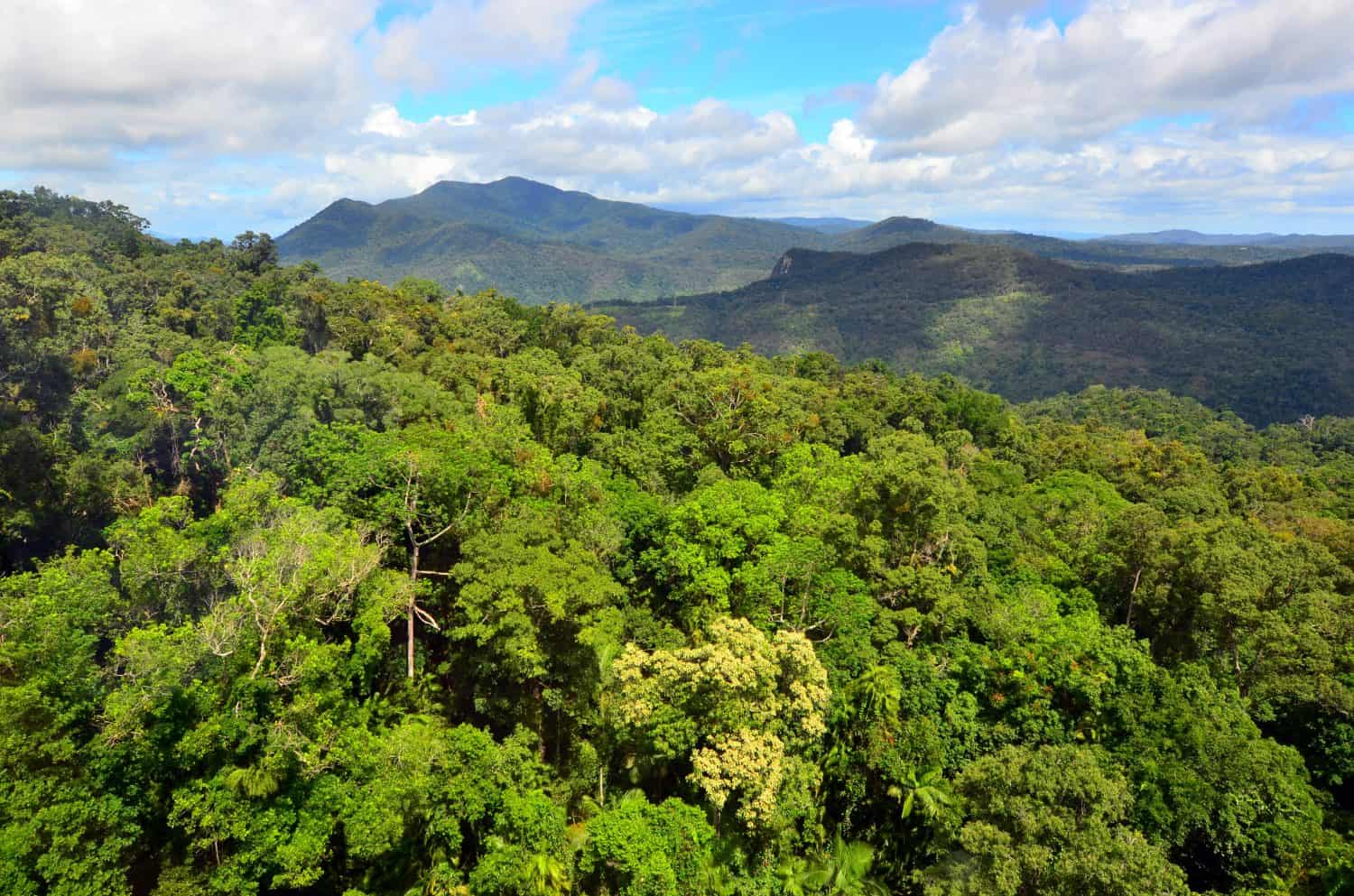
The Atherton Tablelands, home to the Acrophylla alta, are known for their unique and large animals.
©ChameleonsEye/Shutterstock.com
Finding Acrophylla alta in the Atherton Tablelands is not something that should be a huge shock to those who are familiar with the area. This is because the region is known for having some rather large and unique animals living in it, of which Acrophylla alta most certainly is.
Some of the other unique and/or large animals that live in the Atherton Tablelands include:
- Cassowaries
- Platypus
- Sugar gliders
- Lumholtz’s tree kangaroo
- Herbert River possum
- Musky rat kangaroo
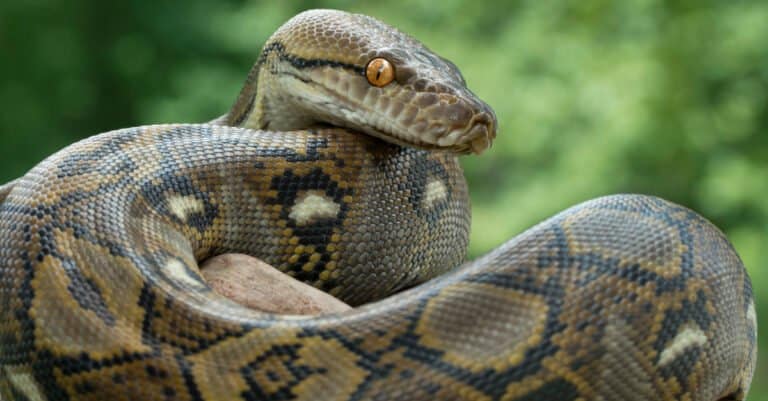
- Amethystine python
The reason that the Atherton Tablelands can support such a wide range of species is due to the numerous ecosystems, allowing for a vast amount of biodiversity. Between the savannahs, ancient rainforests, waterfalls, and lakes, the species that call Atherton Tablelands home have done so for centuries.
What is even more interesting still is that the public at large may never see the countless species within the Atherton Tablelands that are endemic to Australia. This is because the majority are nocturnal and only make themselves known at night. Therefore, between their ability to camouflage and their desire to sleep during daytime hours, creatures like Acrophylla alta are very infrequently seen.
Threats to the Giant Stick Insect
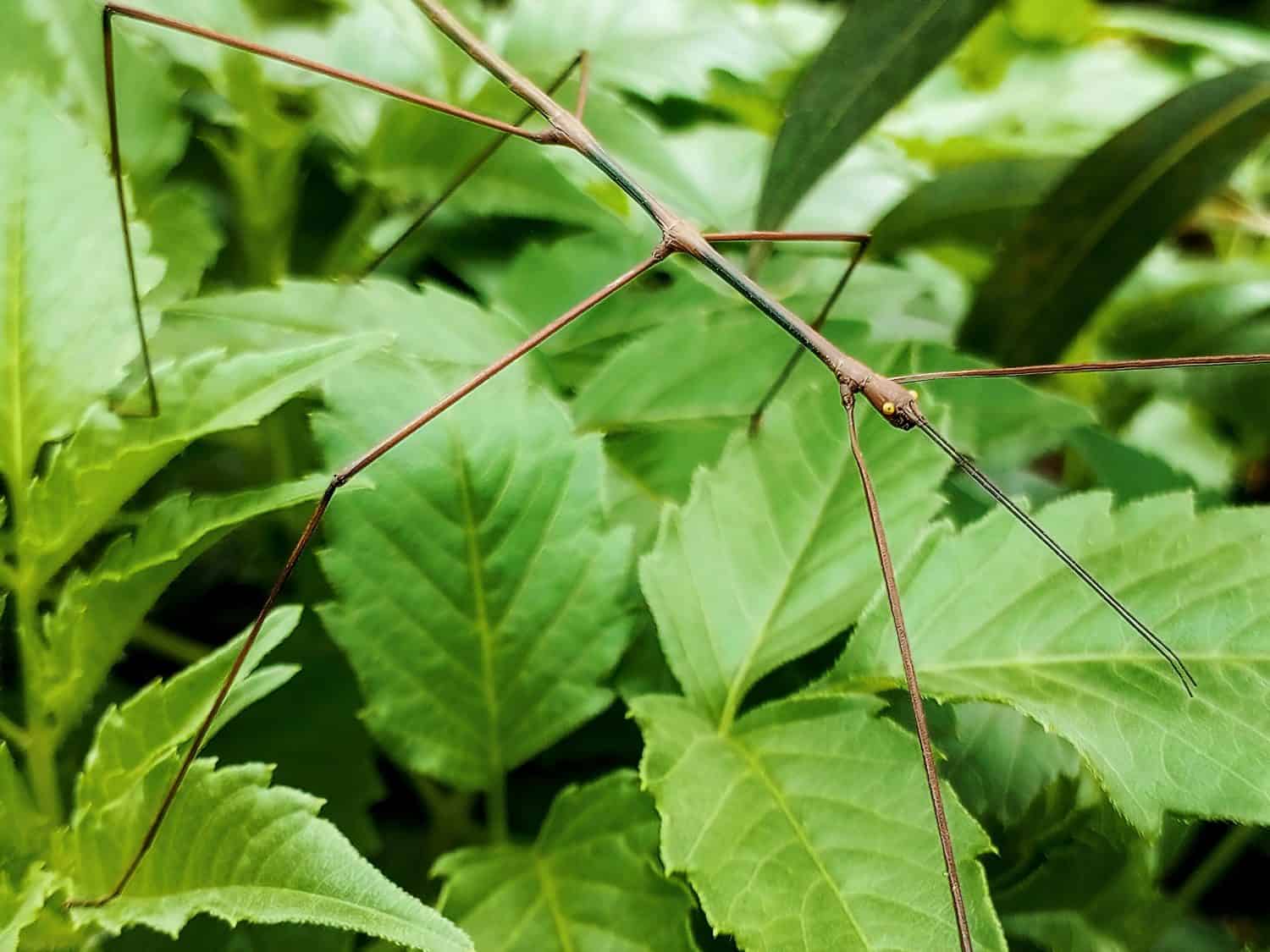
Acrophylla alta and other stick insects like this one face many threats in the Atherton Tablelands.
©Mey Dyana/Shutterstock.com
Acrophylla alta and other stick insects are not apex predators of the insect kingdom. This means they face threats in their habitats. But there are other threats the stick insects face that they have no control over.
Some of the threats that Acrophylla alta and other stick insects face include:
- Predators such as bats, birds, reptiles, and other animals
- Climate change is leading to the loss of prey
- Habitat loss
- Pesticides
- Contracting mites
Some of these issues have plagued Acrophylla alta and other stick insects for generations. However, thanks to climate change and habitat loss, there may soon be no place for Acrophylla alta to call home. Because of this, conservationists are calling for action to keep the stick insects and other animals within the Atherton Tablelands healthy and their populations growing, before it is too late to save them and they go extinct.