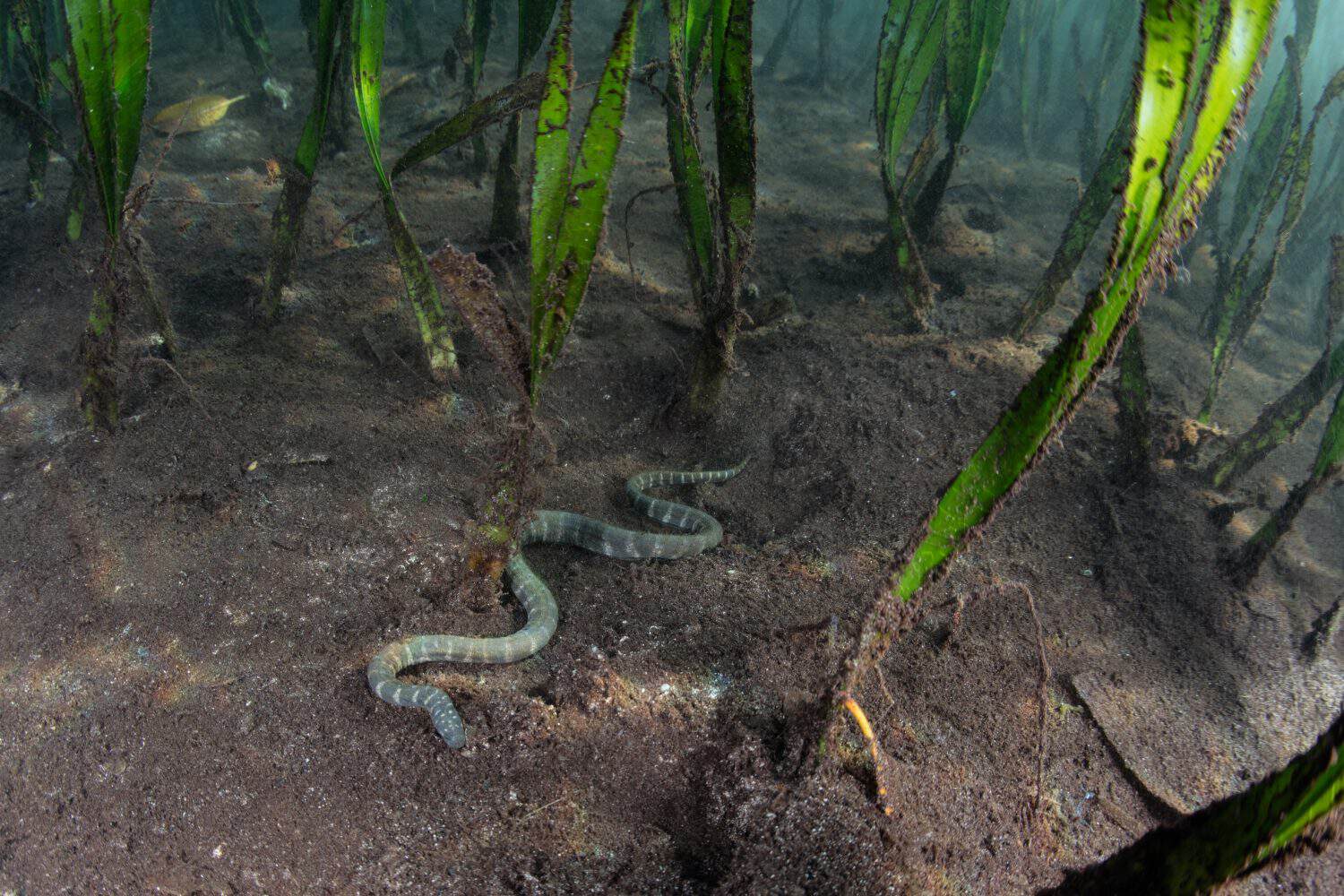

A night dive off Komodo Island, Indonesia, turned unforgettable when an underwater videographer came face-to-face with one of the ocean’s best masters of disguise: the marine file snake. At first glance, the creature looked like nothing more than a drifting clump of algae. But as it inched across the seafloor, its true identity came into view.
Underwater filmmaker John Roney recorded the moment and posted it to Instagram.
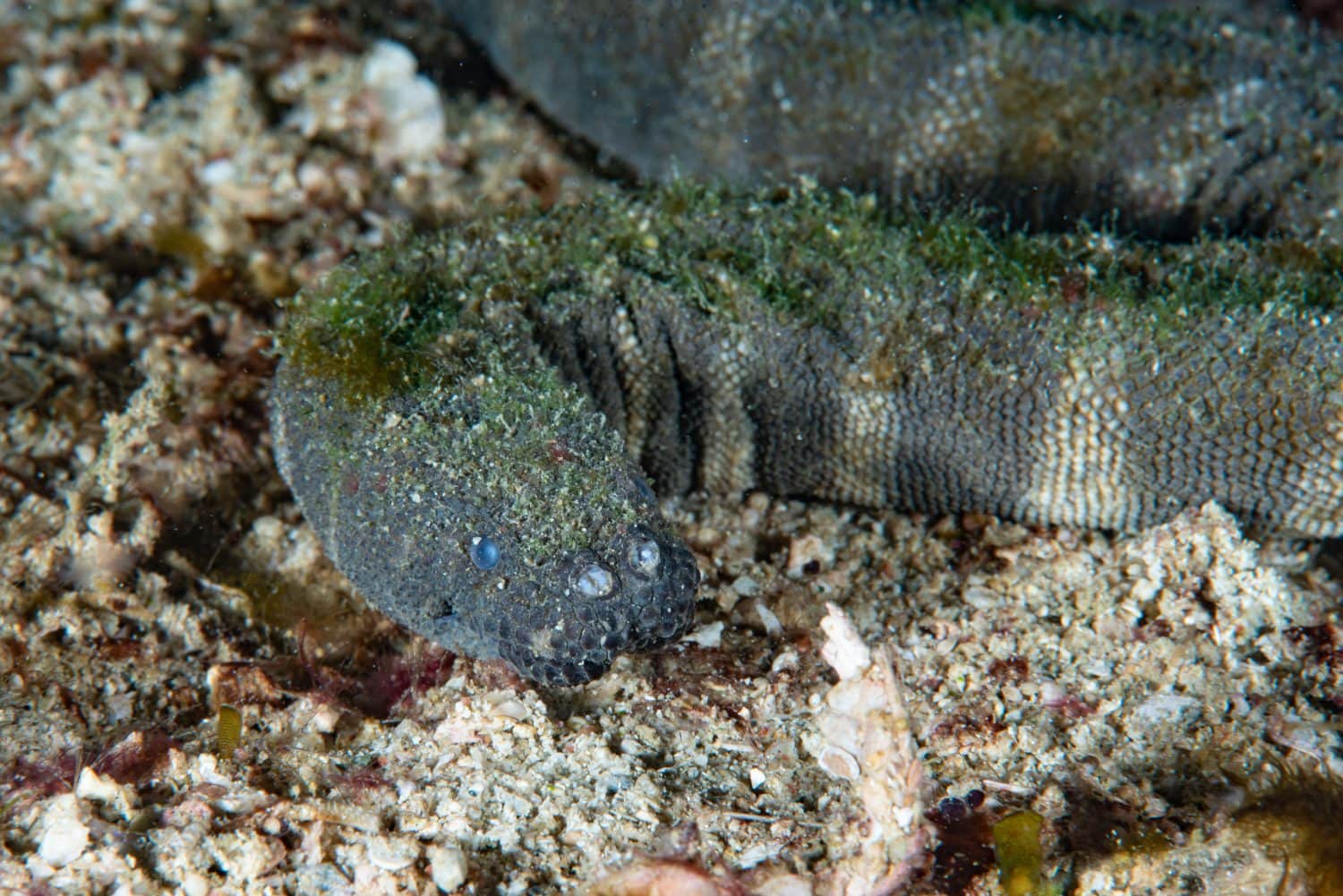
Marine file snakes are considered living relics.
©Francesco_Ricciardi/Shutterstock.com
A Snake Designed for Disappearing
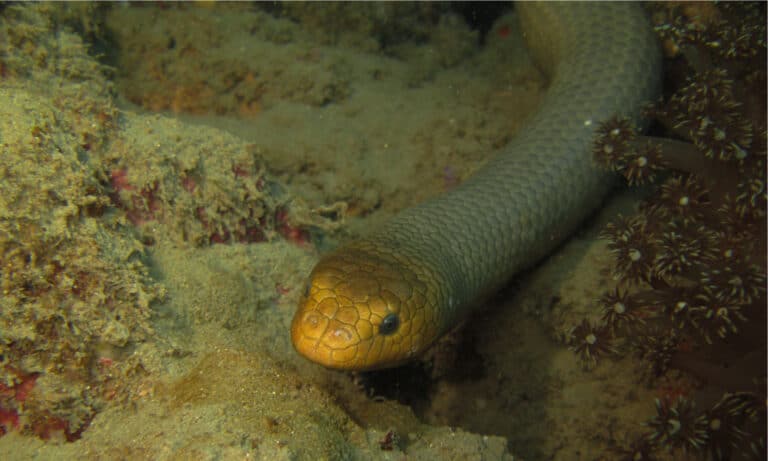
Marine file snakes (Acrochordus granulatus) are considered living relics — ancient, fully aquatic snakes with a look and lifestyle unlike anything else in their environment. Their secret weapon is their skin. Instead of smooth scales, these snakes have rough, sandpaper-like skin that provides the perfect surface for algae to grow. Over time, this creates a mottled green pattern that blends seamlessly with mangrove roots and seagrass meadows.
Roney explained that the snake’s camouflage forms because it spends long periods staying absolutely still, waiting for unsuspecting fish to pass within striking distance. The video shows just how effective that strategy is: the snake is so well-hidden that even experienced divers might swim right past it without noticing a thing.
Not Your Typical “Sea Snake”
Despite living in coastal waters, the marine file snake isn’t part of the true sea snake group (Hydrophiinae). Instead, it’s a unique, fully aquatic species that still relies on lungs and must surface to breathe. Its coarse skin helps it grip prey underwater — a useful feature for a slow-moving hunter that relies on stealth rather than speed.
These snakes inhabit Komodo National Park, a UNESCO World Heritage Site known for its remarkable marine biodiversity, from manta rays to tropical reef fish. A sighting like this highlights the park’s ongoing ecological richness, even as nearby habitats face pressures from overfishing and pollution.
A Harmless but Important Predator
According to the IUCN Red List, the marine file snake is listed as Least Concern, though the mangroves and seagrass beds they depend on are declining in many regions. Fortunately, these snakes pose no threat to humans and are generally calm, slow-moving animals.
Their presence helps maintain healthy coastal ecosystems, making them a quiet but essential part of the food web.