
When you think of great swimmers, animals like dolphins, fish, or penguins probably come to mind. But the animal kingdom is full of surprises, and many creatures you’d never expect to navigate well through water are actually excellent swimmers. Whether they swim to hunt, escape predators, or cool off, these animals showcase incredible adaptations that prove nature’s versatility. Here are 15 unexpected swimmers that might make you look at these critters a little differently.
1. Bats
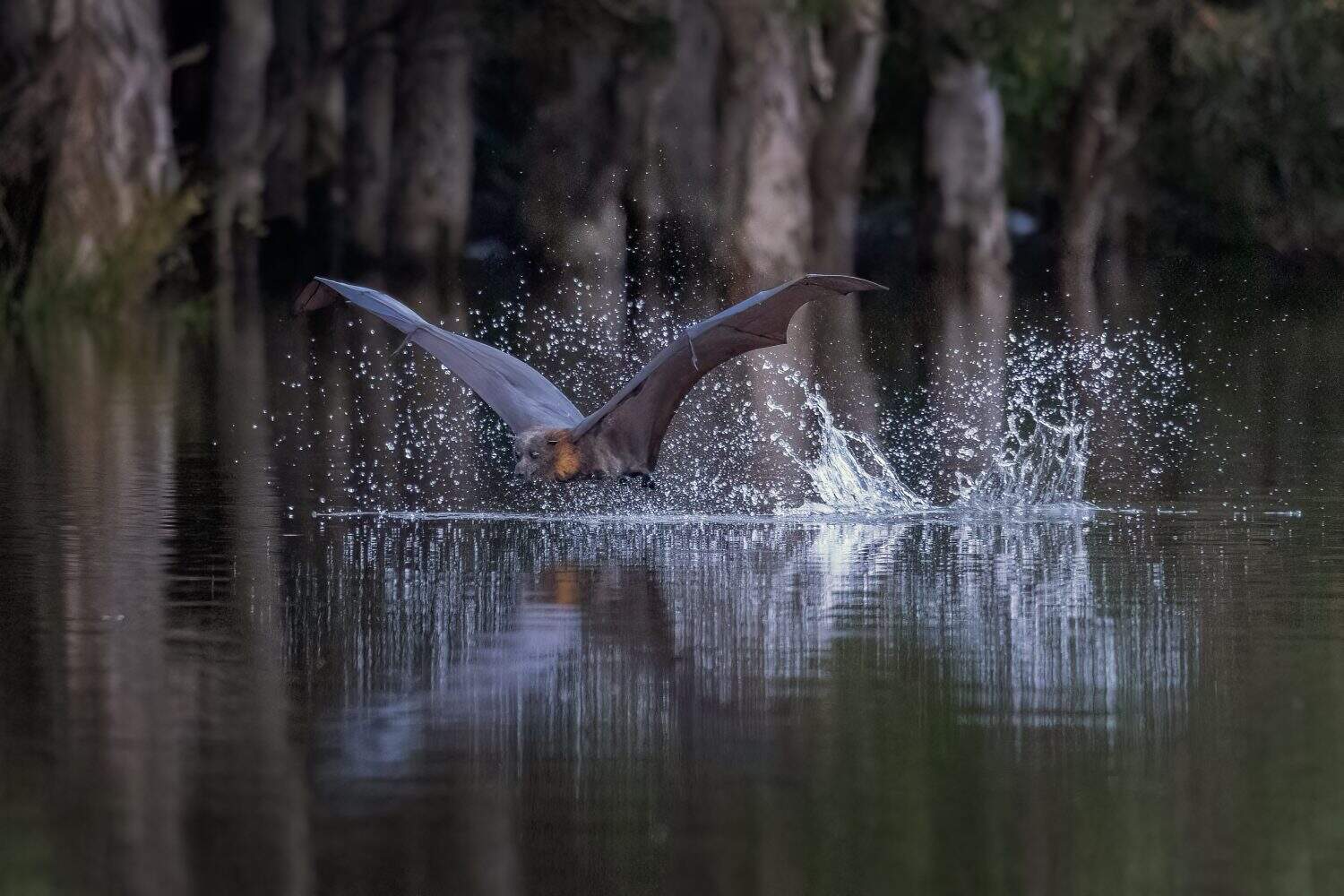
It may be shocking, but it is true: some bats can actually swim.
©Frank Martins/Shutterstock.com
It might seem impossible for a creature built for flight, but certain bat species can indeed swim. Using their wings as makeshift paddles, they glide across the surface of the water with surprising grace. Some fishing bats have even evolved to use this technique to catch small fish and insects, showing how adaptable these nocturnal flyers really are.
2. Camels
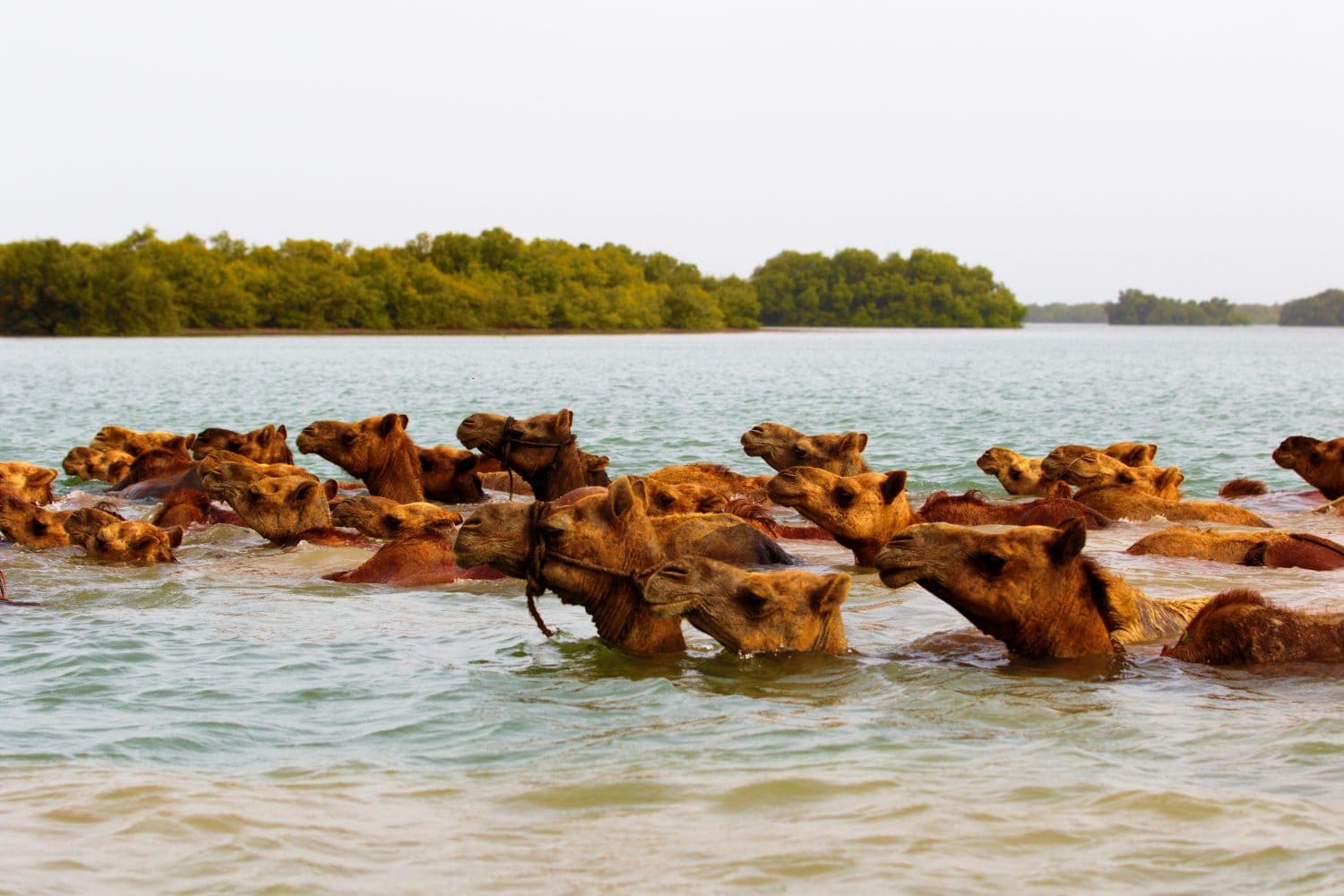
Camels have long, steady strokes, and they keep their heads above water thanks to their long necks.
©Pravin Indrekar/Shutterstock.com
Desert dwellers and swimmers? Believe it or not, yes. While camels don’t often encounter deep water, they can swim quite capably when they have to, propelling themselves with long, deliberate strokes. Their buoyant bodies and long necks help keep their heads above the surface, yet another reminder that these resilient animals are built to handle almost anything.
3. Cats
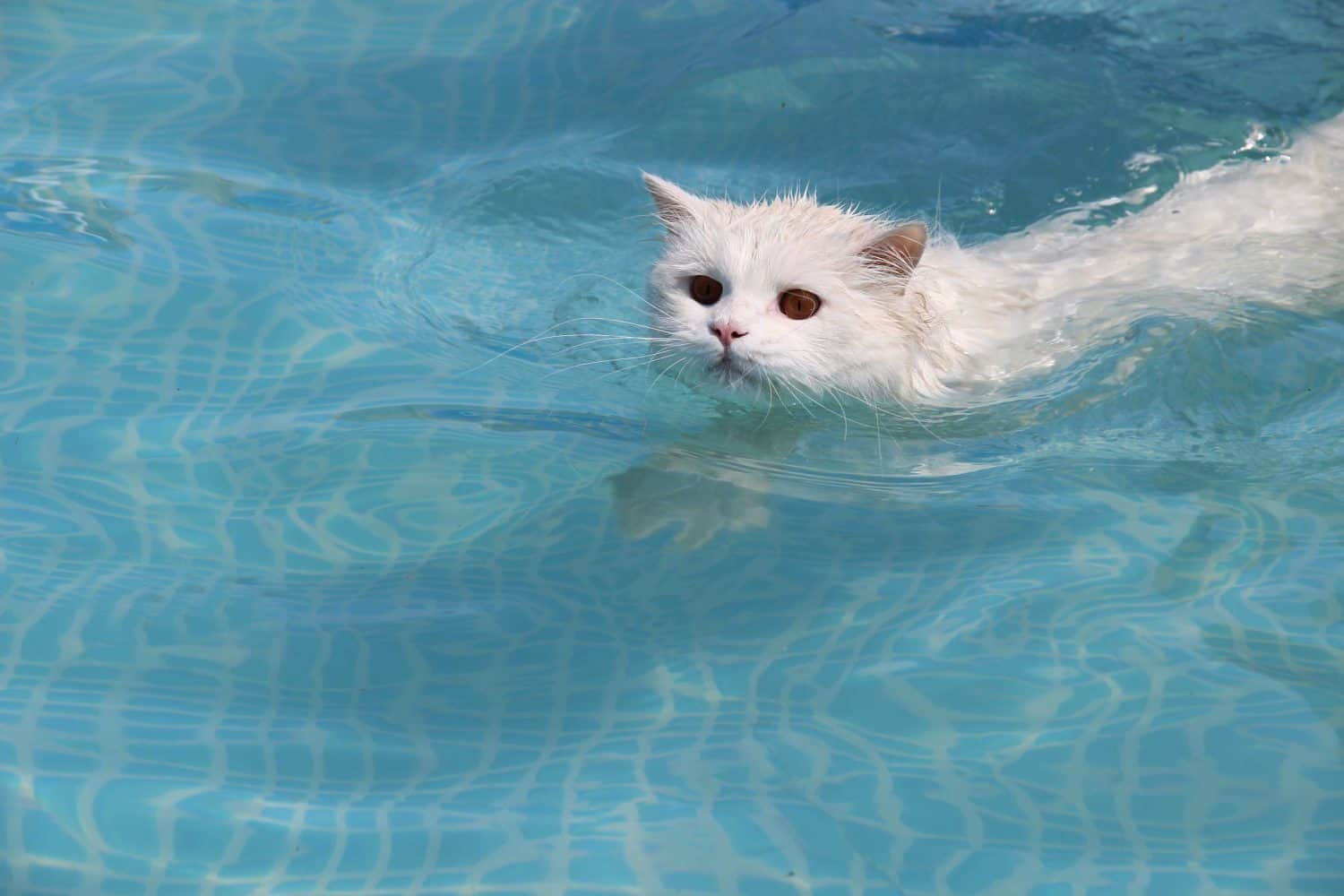
Not all cats hate water, but something other than the love of water may be the motivation to swim.
©Irina Kovynyova/Shutterstock.com
Cats are famous for avoiding water, but not all felines fit the stereotype. Some breeds, like the Turkish Van, are known for their love of swimming. Wild cats, too, such as fishing cats and tigers, often take to the water to hunt or to escape the heat. While domestic cats might not dive in willingly, they’re far more capable swimmers than most people realize.
4. Elephants
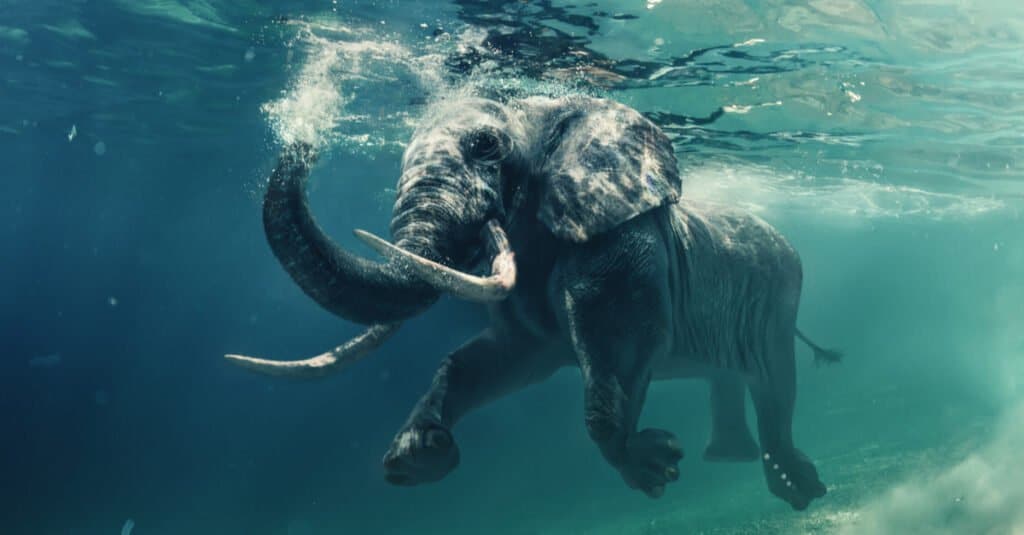
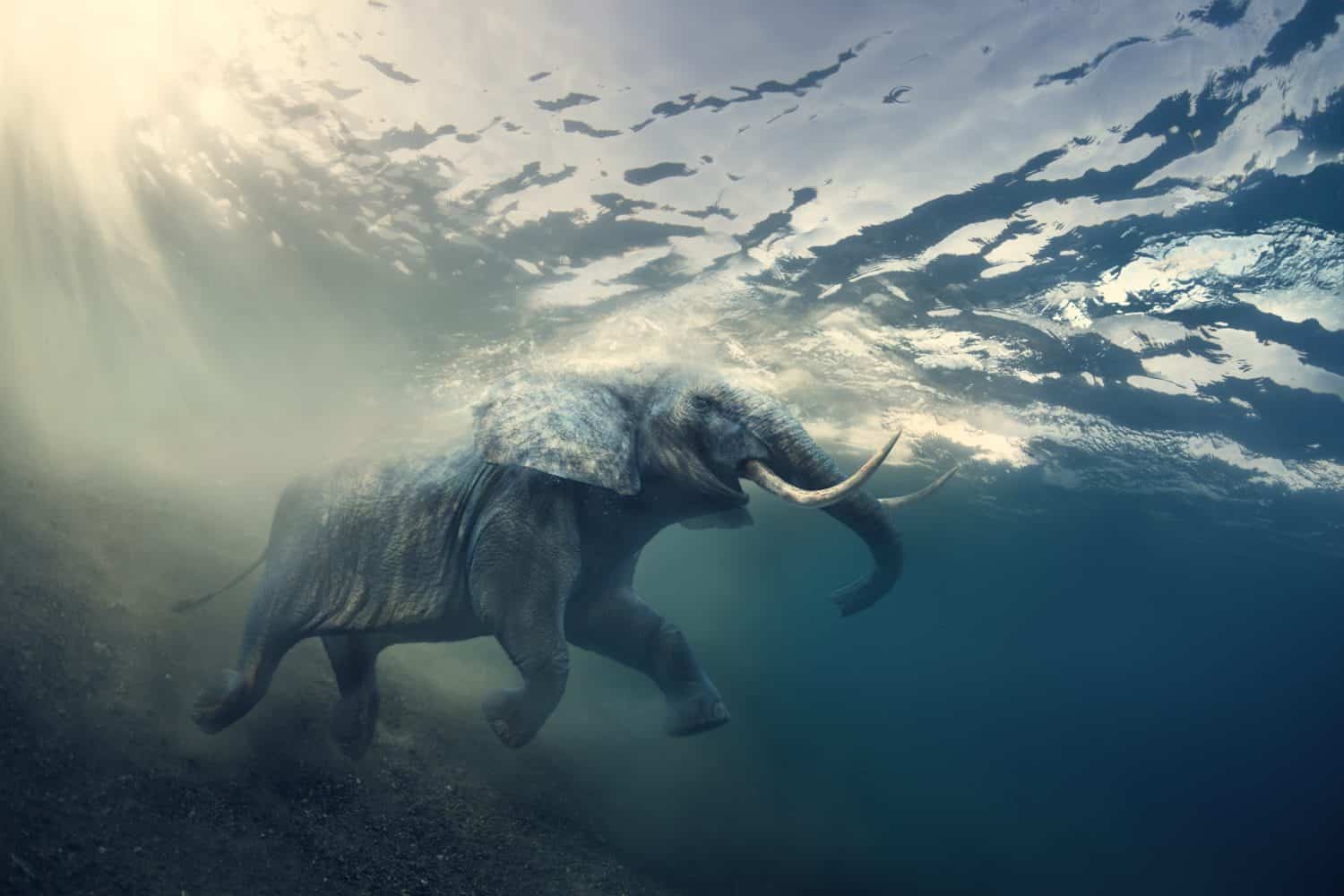
What a sight to see, a giant gracefully practicing their strokes underwater.
©Willyam Bradberry/Shutterstock.com
Yes, the largest land animals on Earth are excellent swimmers! Elephants use their massive trunks as snorkels, allowing them to breathe while crossing deep rivers. Their natural buoyancy and incredible strength allow them to swim for hours at a time, sometimes covering several miles. Swimming also helps them stay cool and travel between feeding grounds in the wild.
5. Flamingos
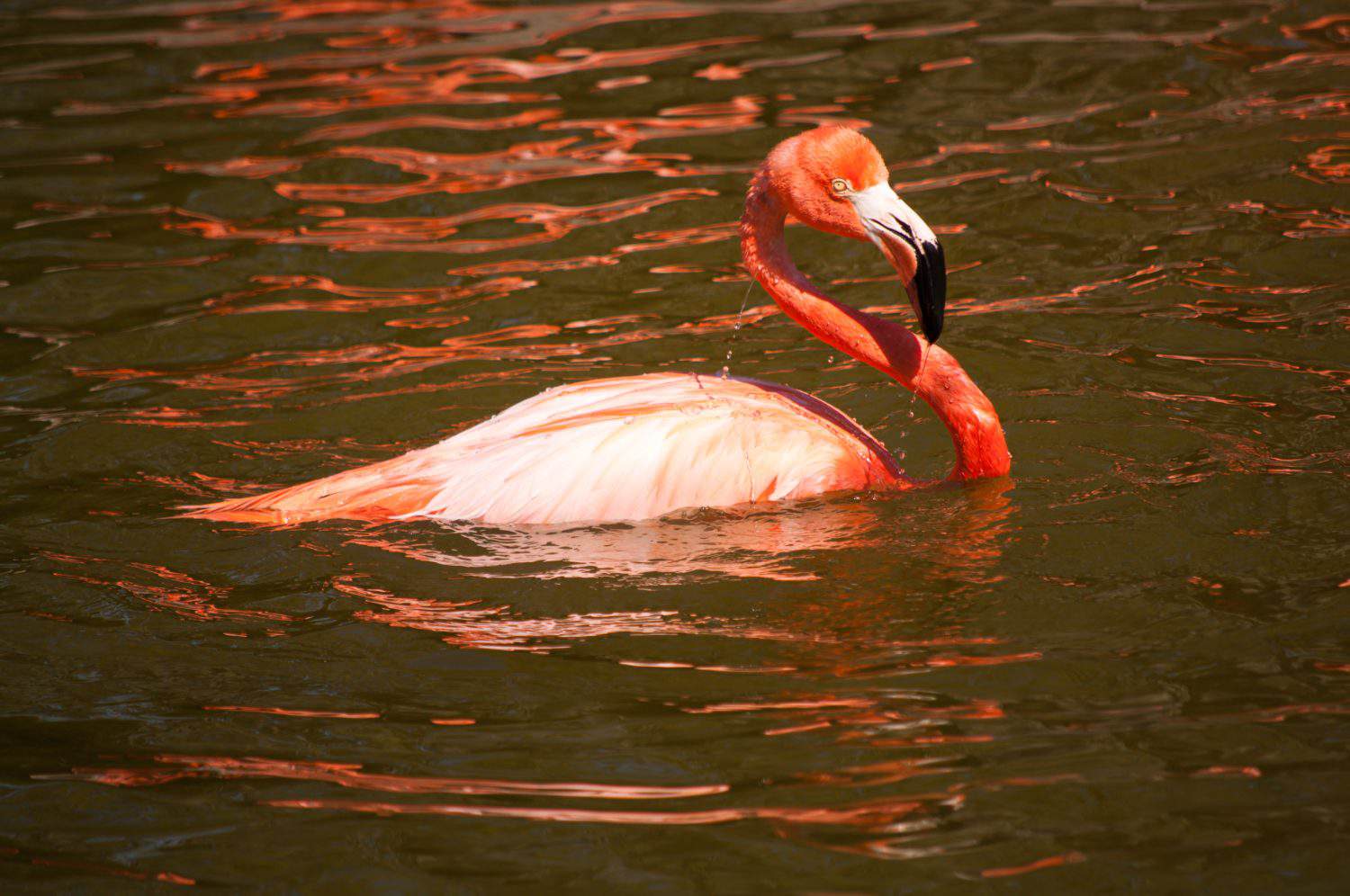
Elegant and social, flamingos are well adapted to life in and around water.
©Eugene Kalenkovich/Shutterstock.com
These vibrant birds are not just pretty to look at; they’re also skilled swimmers. While flamingos are more often seen wading in shallow lagoons, they can also swim when the water deepens. Using their long legs and webbed feet, these beautiful pink birds glide gracefully, feeding on tiny crustaceans and algae as they go.
6. Lizards
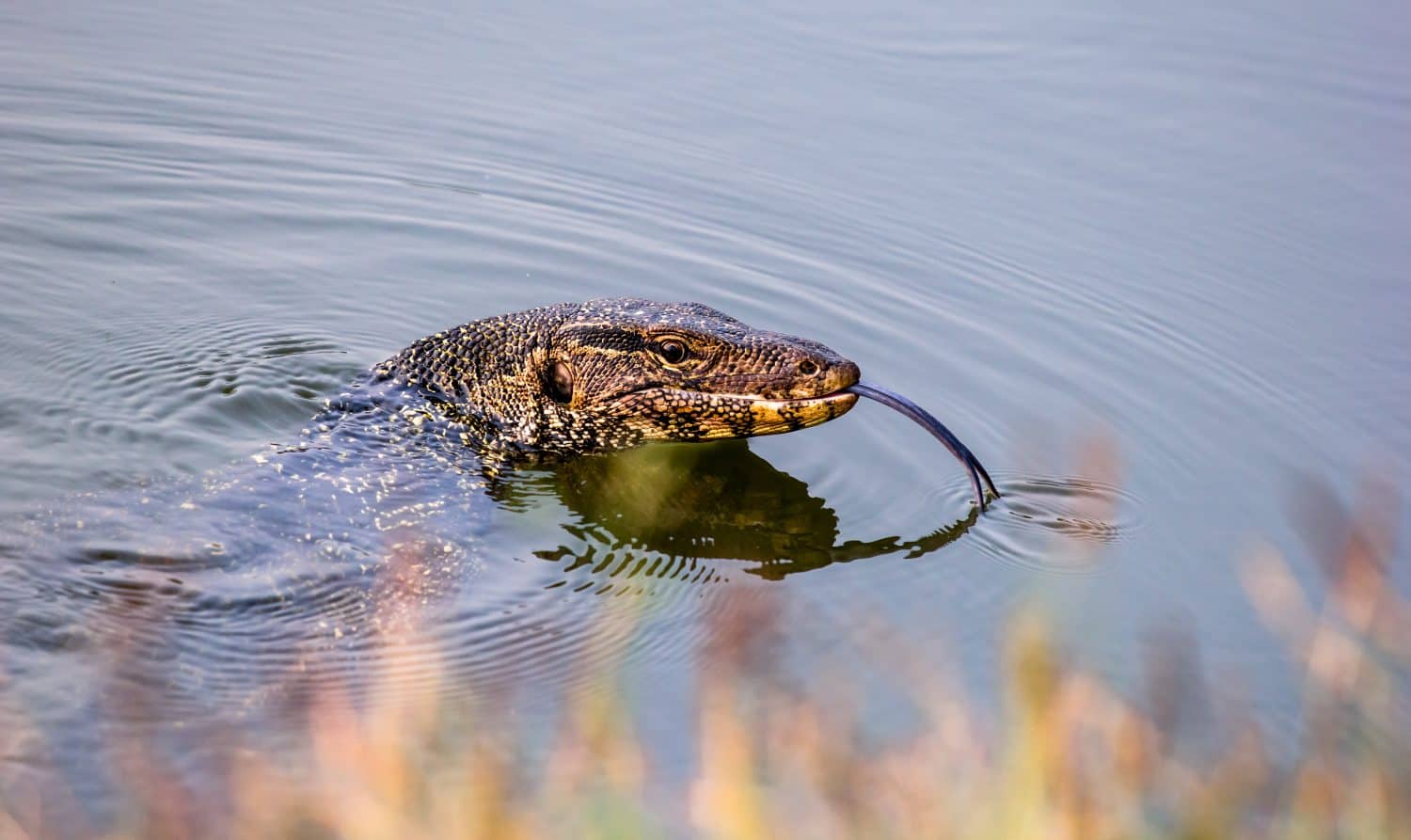
Lizards exhibit a fascinating range of adaptations that enable them to navigate their environments.
©Tom Black Dragon/Shutterstock.com
While not all lizards are strong swimmers, many species are capable of traveling short distances through water. Some species, like the marine iguana, are even adapted to diving for food. The ability to swim has ecological significance for lizards. It allows them to exploit new food sources, evade predators, and expand their habitats. In some cases, swimming lizards contribute to their ecosystems by aiding in seed dispersal and controlling insect populations in aquatic environments.
7. Hedgehogs
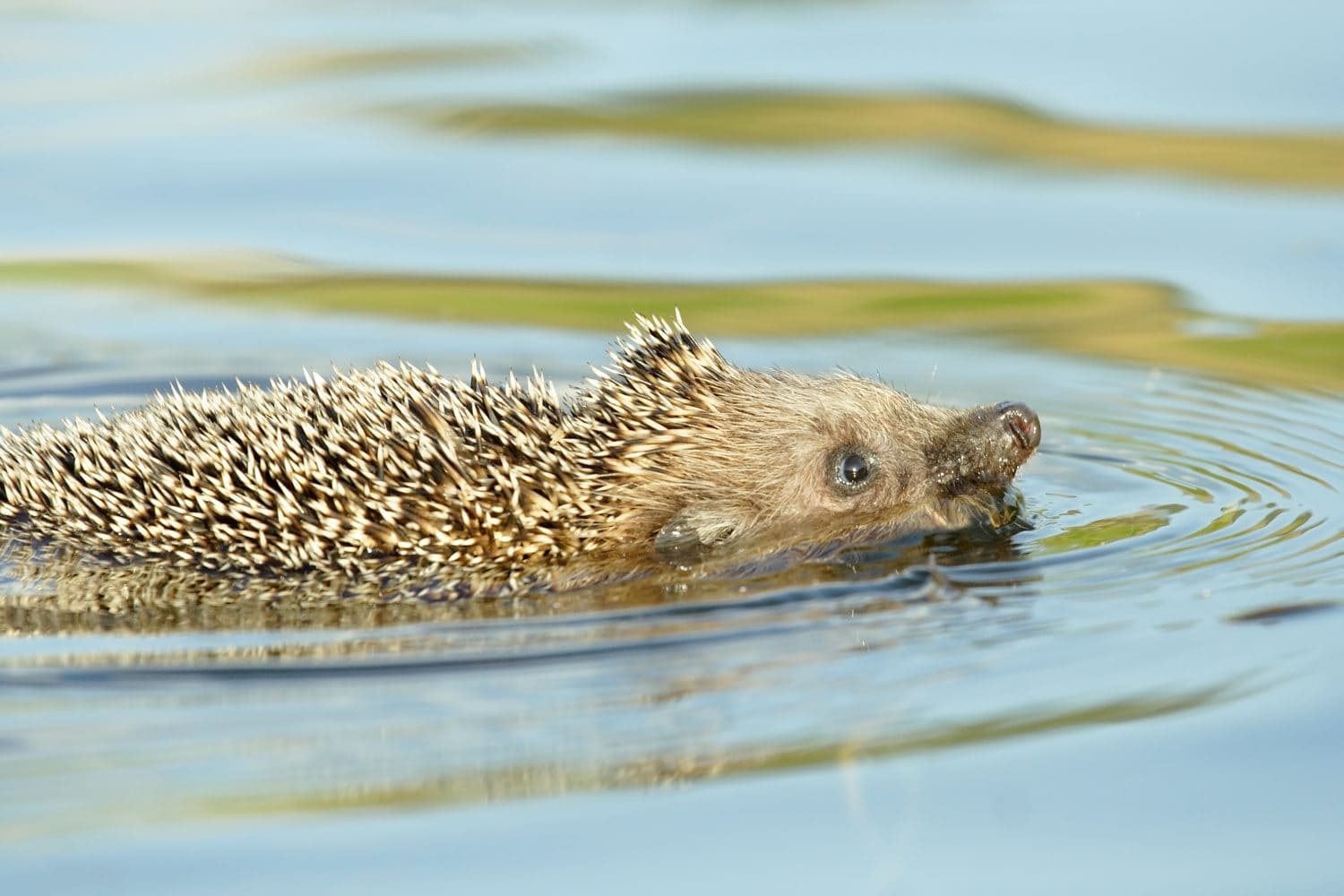
These spiny little creatures don’t look built for swimming, but wild hedgehogs are surprisingly adept.
©Vladimir Chernyanskiy/Shutterstock.com
These tiny creatures are surprisingly good swimmers! Wild hedgehogs often cross streams or ponds in search of food. They are even good at floating thanks to their natural buoyancy. However, pet hedgehogs should always be supervised around water; they can tire quickly and may struggle to climb out of deep pools.
8. Kangaroos
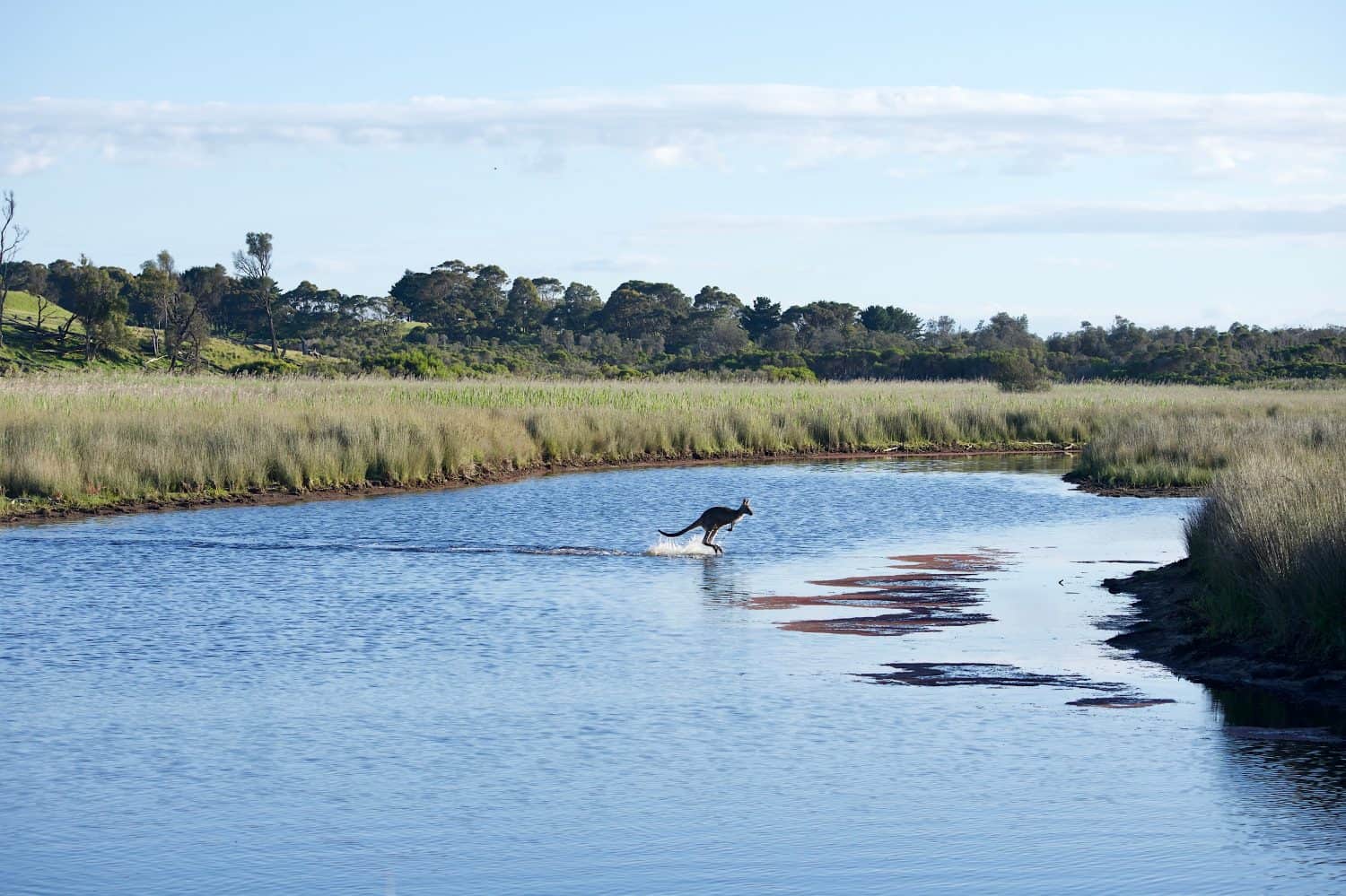
Kangaroos don’t swim on a regular basis, but they can if need be.
©Mari_May/Shutterstock.com
Australia’s iconic hoppers can also paddle! Kangaroos use a dog-paddle style stroke and their strong hind legs to propel themselves. They’re known to swim across rivers and creeks to escape predators or reach new feeding grounds.
9. Moose
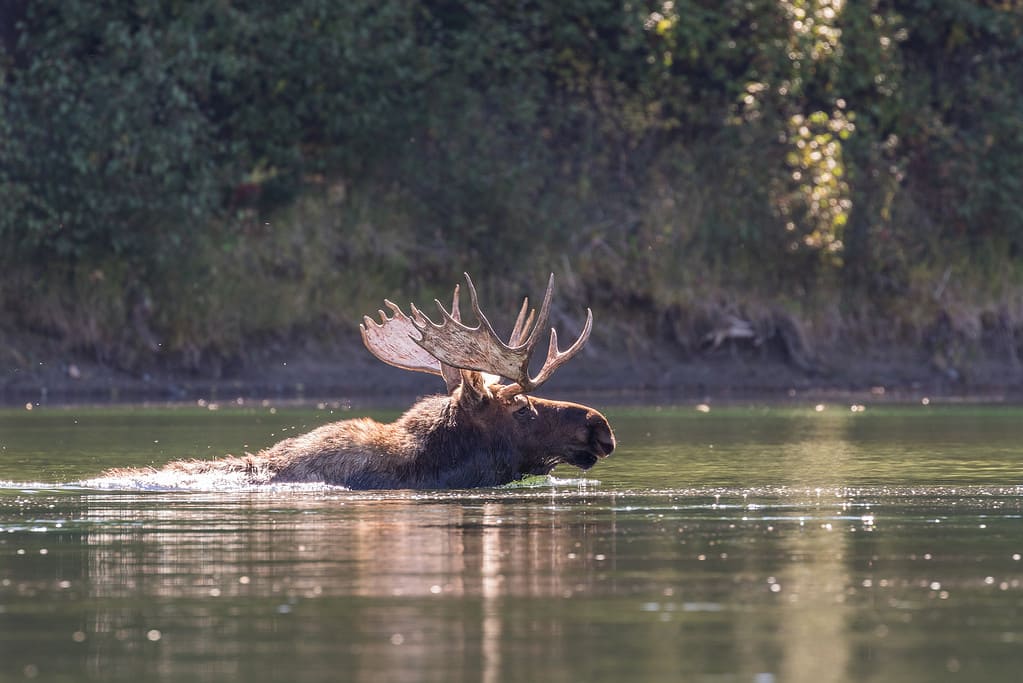
Moose are capable of swimming up to 6 miles per hour and can keep going for several miles.
©twildlife/iStock via Getty Images
These towering herbivores are surprisingly aquatic. Moose are strong swimmers and can cross large lakes or rivers with ease. They can search for food and dive up to 20 feet to reach tasty aquatic plants. Their long legs help them wade through marshes and deep water, while their powerful lungs and natural buoyancy make them perfectly suited for swimming. In summer, swimming also helps moose stay cool and avoid biting insects.
10. Pigs
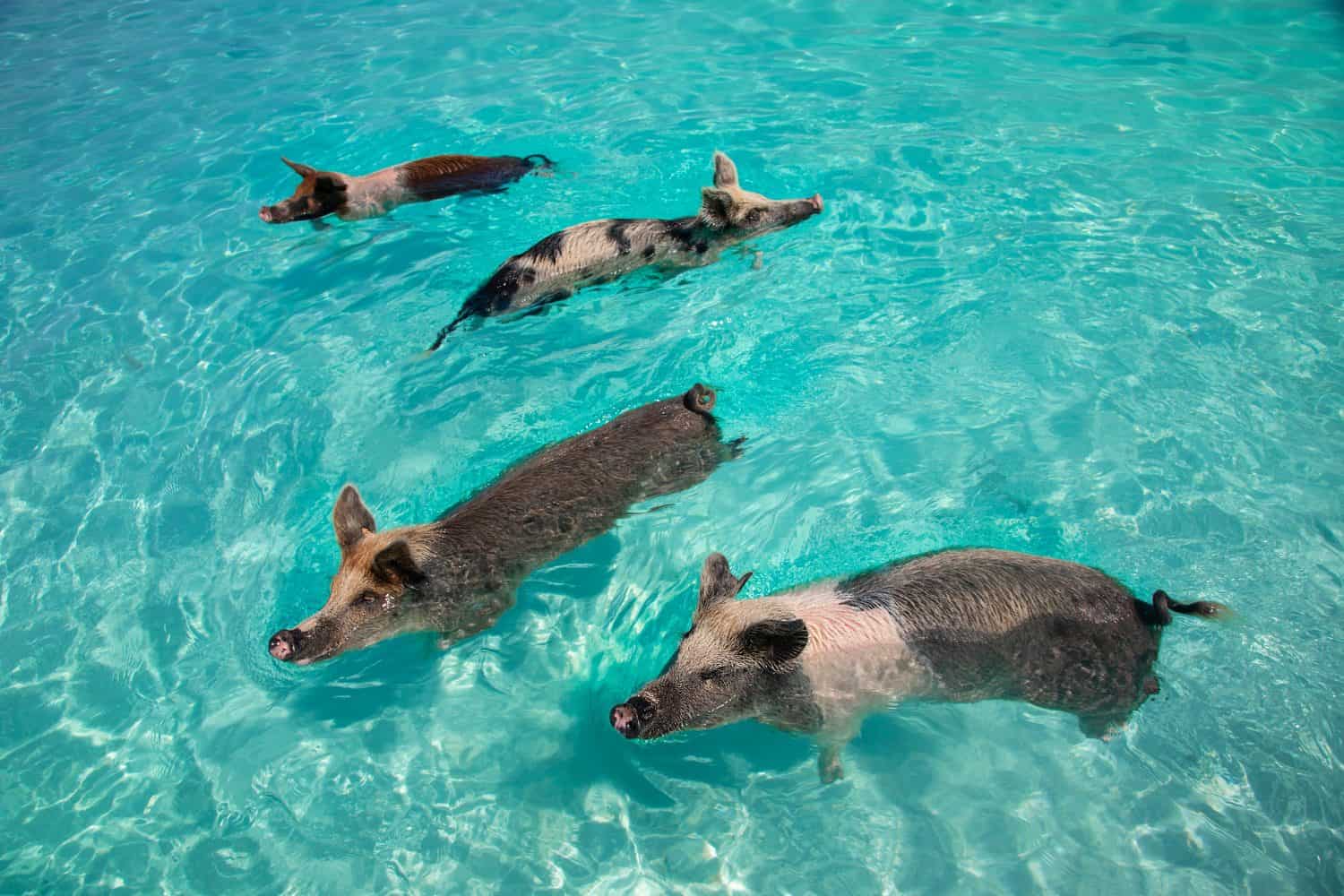
The Bahamas’ beach-loving, swimming pigs have even become a tourist attraction
©Lana Titov/Shutterstock.com
Pigs might not look like swimmers, but they’re natural water babies. From the famous “swimming pigs” of the Bahamas to farm pigs cooling off in ponds, they can paddle with ease thanks to their strong legs and buoyant bodies. Pigs actually enjoy swimming and will often take to the water to stay cool, find food, or simply play.
11. Raccoons
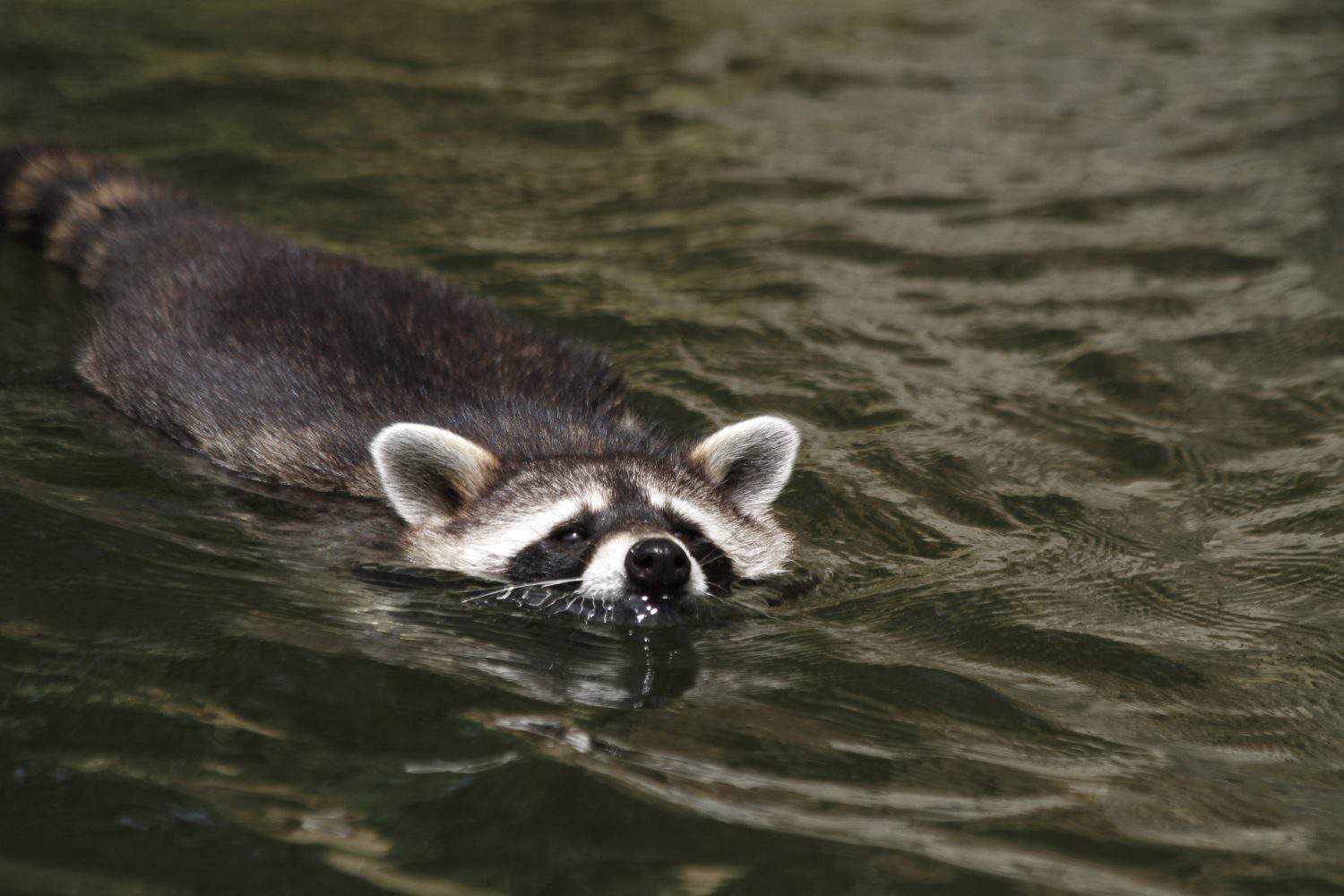
Raccoons’ swimming skills help them escape predators, search for food, and explore new habitats.
©Bildagentur Zoonar GmbH/Shutterstock.com
Known for “washing” their food in water, raccoons are also very competent swimmers. They’re rarely found far from a water source, which provides them both food and safety. Raccoons use their dexterous paws to catch aquatic prey like frogs and crayfish, and their dense fur helps keep them warm while swimming. They can paddle for long distances when necessary, proving that these clever scavengers are as adaptable in water as they are on land.
12. Rats
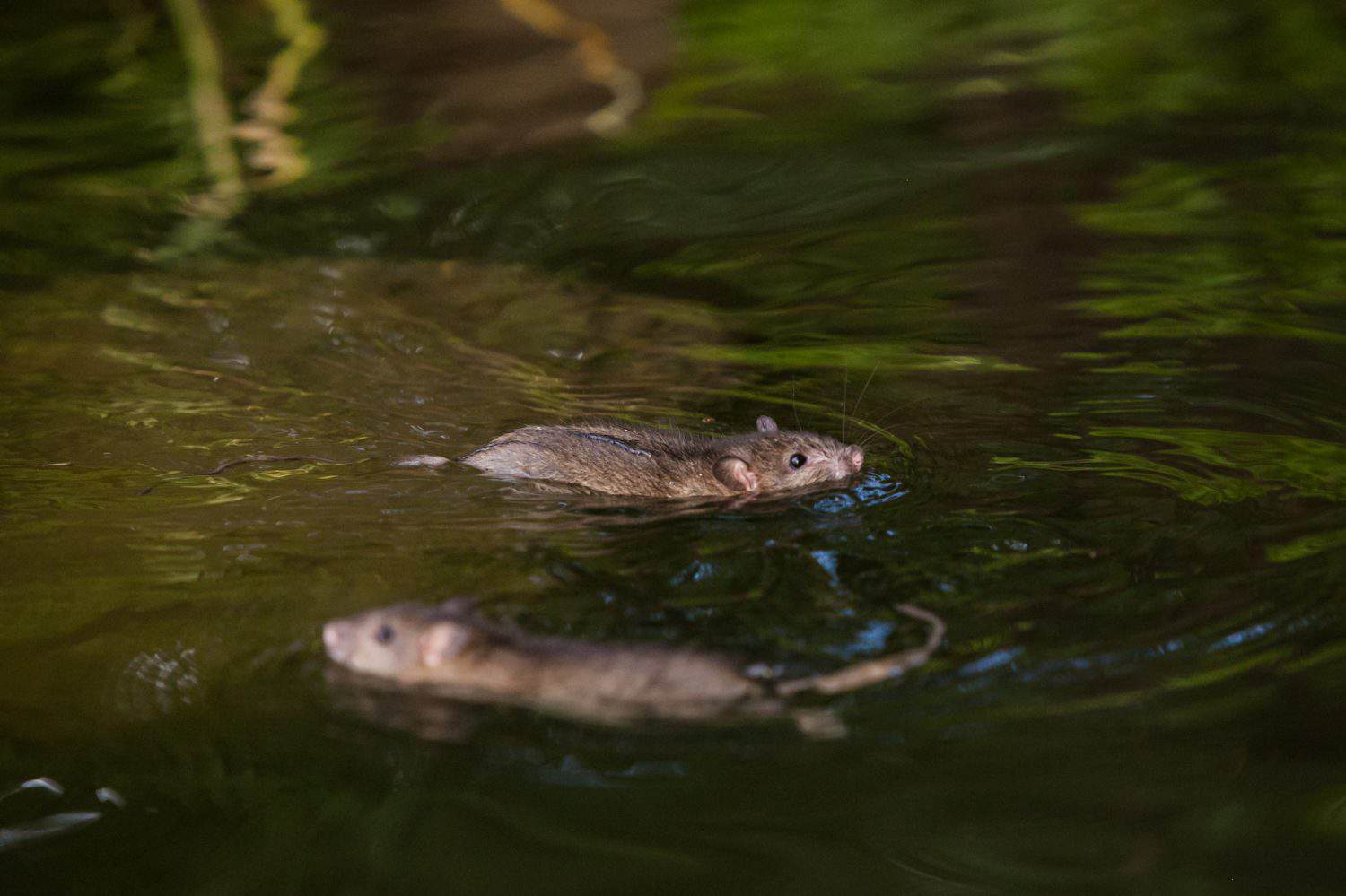
Rats often swim across rivers, sewers, and canals in search of food or shelter.
©Elena Rastaturina/Shutterstock.com
Rats are excellent swimmers and can hold their breath for up to three minutes. Urban legends of rats emerging from toilets aren’t just myths; they really can navigate plumbing systems by swimming through water-filled pipes! Some species, like the rice field rat, are almost semi-aquatic, spending much of their time in wetlands. Their endurance and adaptability make them one of nature’s most successful (and surprising) swimmers.
13. Sloths
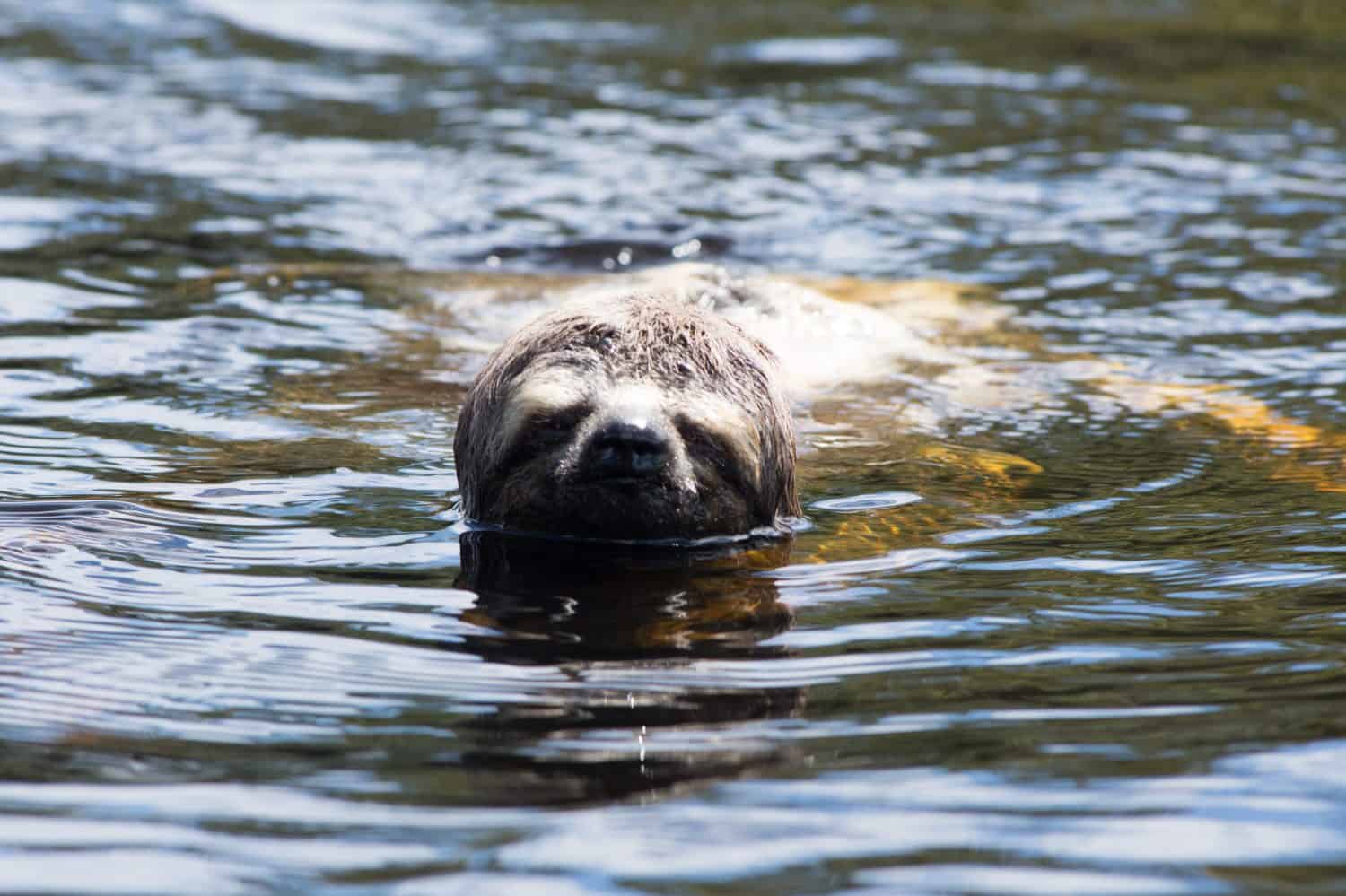
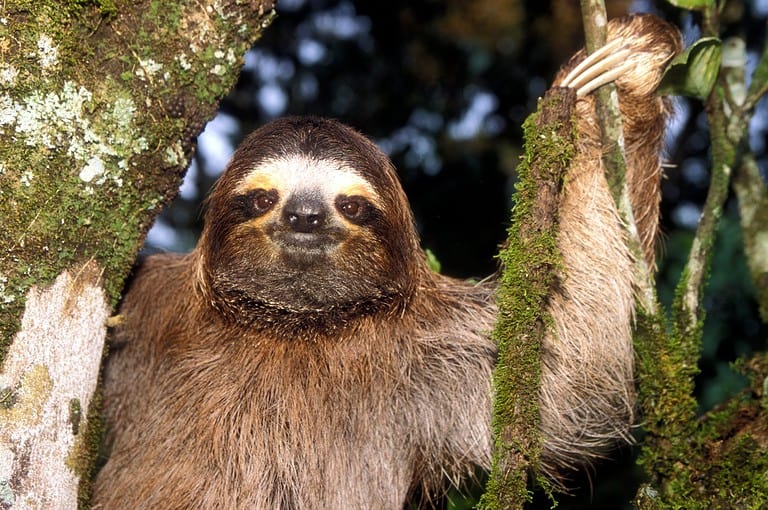
Swimming actually helps sloths travel between trees during floods or find new feeding areas.
©Leandro Reichert/Shutterstock.com
Oddly enough, sloths are three times faster in water than on land! They use a graceful, breaststroke-like motion and can hold their breath for up to 40 minutes by slowing their heart rate. Their long arms and lightweight bodies make them surprisingly efficient swimmers, allowing them to glide through rivers with a calm, steady pace that perfectly matches their laid-back lifestyle.
14. Snakes
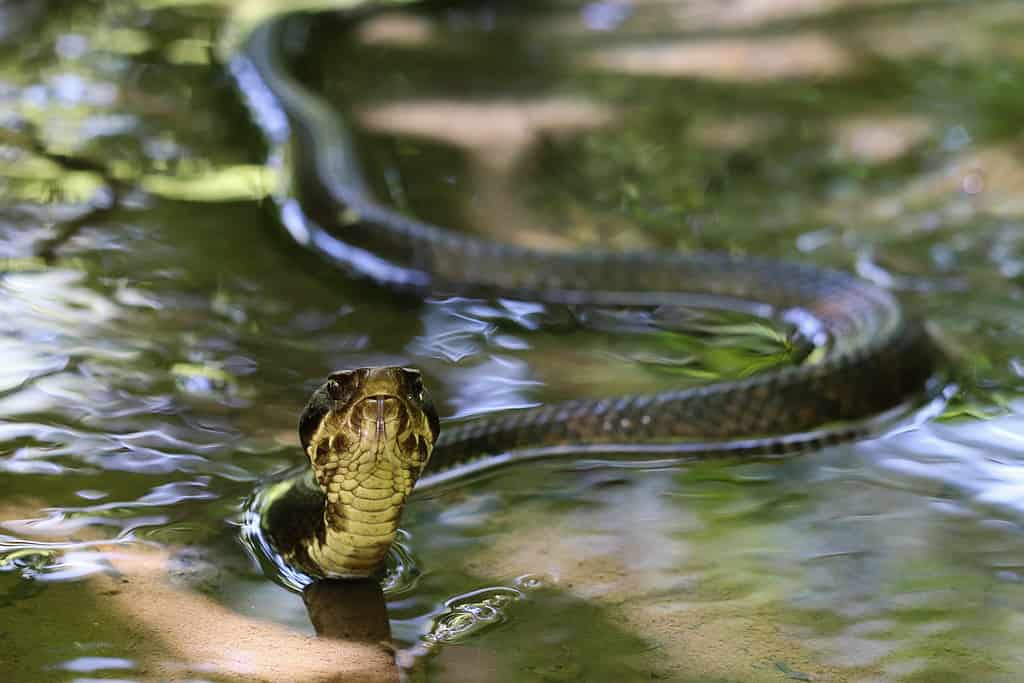
Snakes use their entire bodies to swim, employing a unique and effective method of locomotion.
©Rafael R Sandoval/Shutterstock.com
Many species of snakes are adept swimmers, gliding effortlessly across lakes, rivers, and even open seas. Even land-dwelling species can take to the water when necessary, using their characteristic side-to-side motion to propel themselves forward. Aquatic species like the water moccasin or sea snake are even more at home underwater, hunting fish and amphibians with precision. Whether on land or in water, snakes are masters of movement.
15. Tigers

Tigers enjoy swimming and often seek out rivers, lakes, and marshes to cool off in hot weather.
©Eliot Holzworth/Shutterstock.com
Unlike most cats, tigers love water. These powerful predators often swim to cool off, cross rivers, or stalk prey. Tigers have been observed swimming for miles, sometimes more than four miles at a time, in search of new territory or food. Their muscular bodies and webbed paws make them strong, confident swimmers. In the wild, water offers them both relief from the heat and a strategic hunting advantage.
Water Babies of the Wild
From kangaroos to sloths, the animal world is full of unexpected swimmers. For some, swimming is a survival skill; for others, it’s a way to explore, feed, or simply cool off. These creatures remind us how adaptable nature truly is; even the most land-loving animals can find their rhythm in the water when the need arises. So next time you spot an animal near a pond or stream, don’t be too surprised if it dives right in—it might be a better swimmer than you think!