
White-tailed deer are among the most abundant big game animals in North America. They are practically everywhere, found in widespread distribution across the continent, with their numbers only growing. In some areas, the population of white-tailed deer is so large that it is literally harming the environment, triggering a phenomenon called a trophic cascade. Their abundance also makes white-tailed deer the most hunted animal in America.
The journey of the white-tailed deer from just another large mammal to the veritable king of the country did not happen by accident. It’s the result of a confluence of factors: biology, culture, economics, and various methods of wildlife management. Symbolically, this animal’s dominion is evident in the United States. Over a dozen states feature the white-tailed deer as their state animal. White-tailed deer may be a common target for hunters in North America, but that’s only because they are everywhere. Furthermore, they’ve become such a destructive force on the continent’s various habitats that hunting white-tailed deer is a much-needed form of population control. Let’s learn all about white-tailed deer and why they are easily the most hunted animal in America.
Adaptable and Abundant
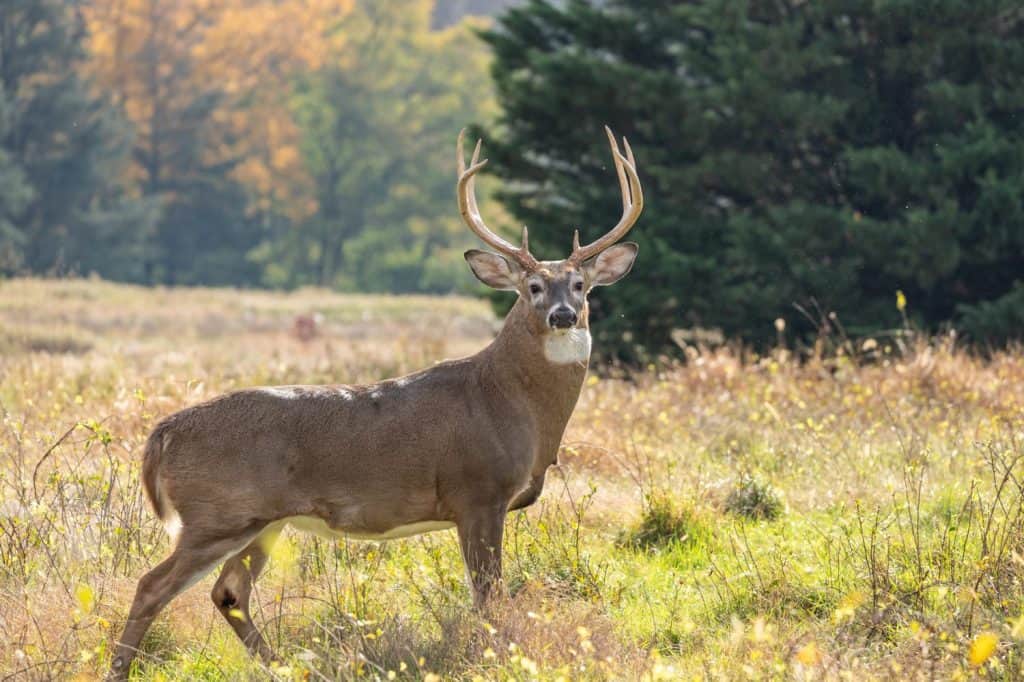
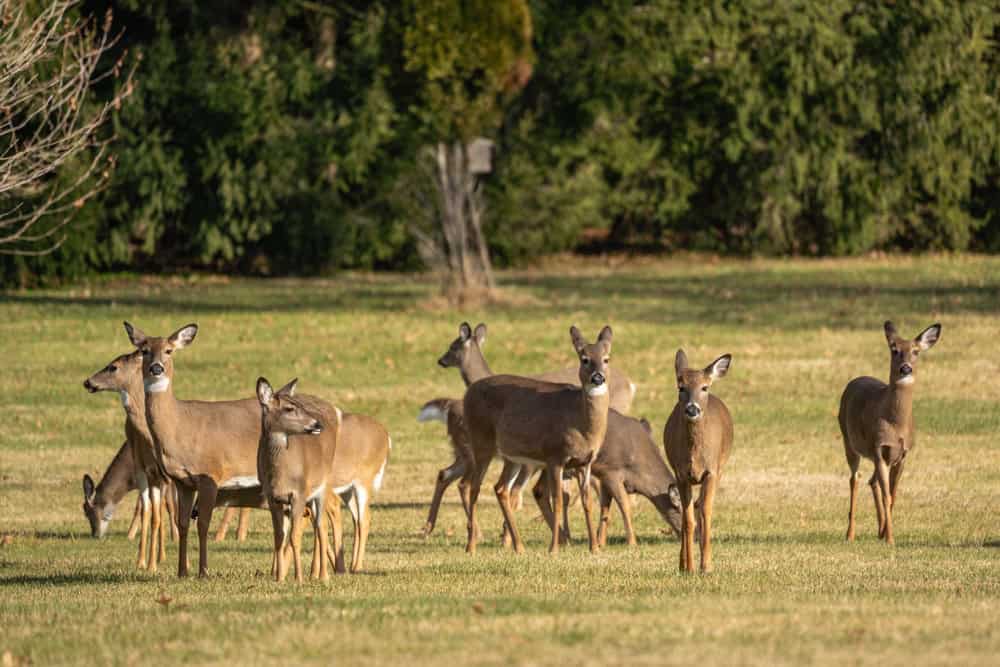
These deer form small social groups, but mature males usually travel alone.
©Amy Lutz/Shutterstock.com
White-tailed deer (Odocoileus virginianus) are among the continent’s most adaptable and abundant large mammals. They get their name from the flash of white fur on the underside of their tails, which rises up in the air when they are threatened. White-tailed deer weigh between 150 and 300 pounds, and feature seasonally-colored coats; in the summer, their fur is reddish-brown, while in the winter it turns gray-brown to trap heat better. While females lack antlers, male white-tailed deer grow large antlers that feature a velvet-like texture. Males use their antlers for displays and sparring with competing males, but shed them in the winter.
White-tailed deer may be herbivores, but they subsist on a wide range of foods. These include leaves, buds, stems, acorns, fruit, crops like cereals, and grasses. Thanks to their four-chambered stomachs, white-tailed deer can digest even the toughest plant fibers with relative ease. White-tailed deer are crepuscular, meaning they are most active during dawn and dusk, like many other prey animals. They form small social groups; does stay with their fawns, while bucks spend most of their time alone. White-tailed deer avoid predators by using their impressive sense of smell and excellent hearing.
They are also one of the most widespread large mammals in North America. White-tailed deer range from southern Canada through most of the United States and are at home in forests, fields, and even suburbs. Their adaptability and varied diet also allow them to inhabit regions as far south as Central and South America.
History of the Hunt
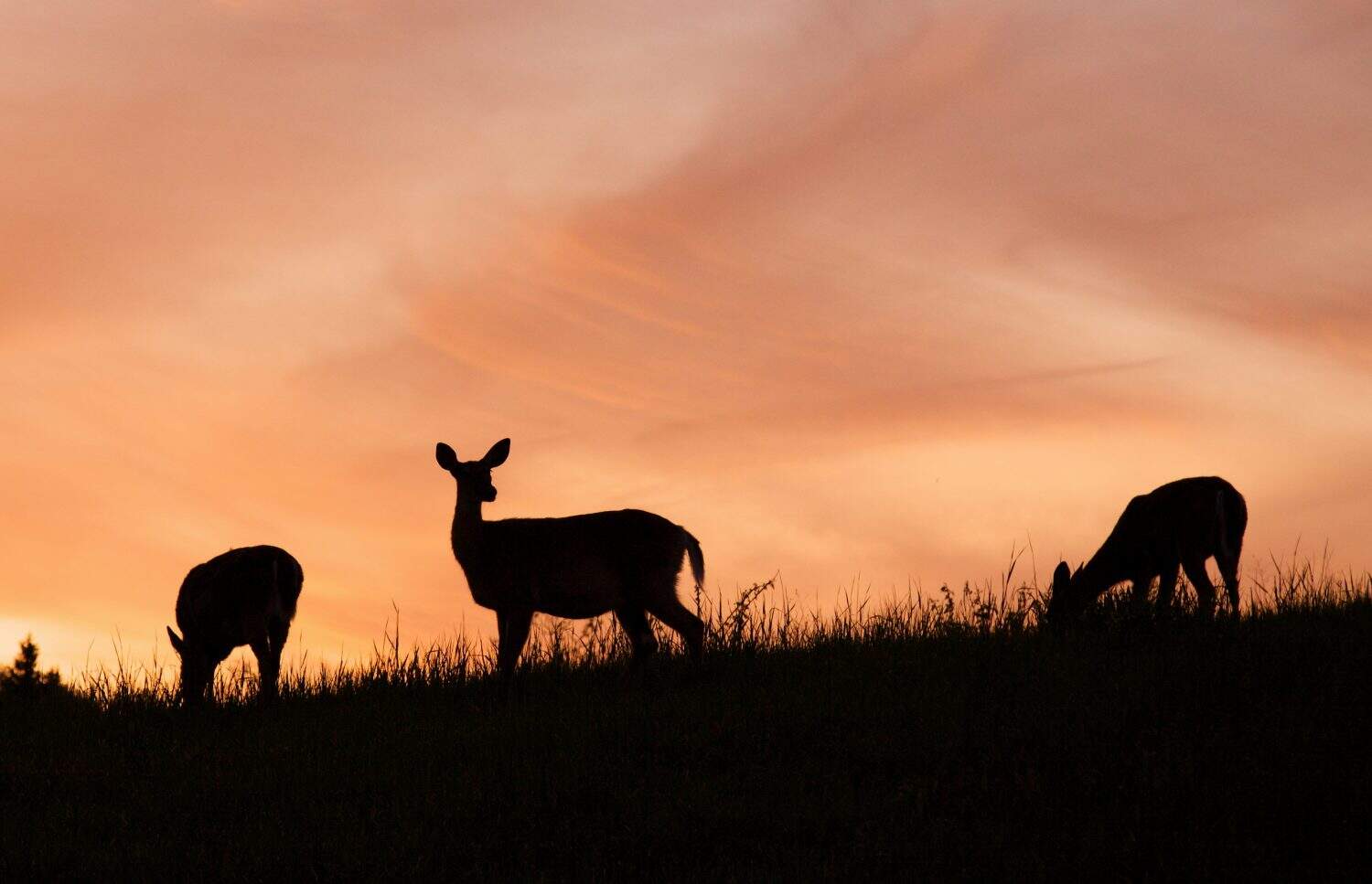
White-tailed deer were once known as Virginia deer.
©Tom Reichner/Shutterstock.com
White-tailed deer may be the most hunted animal in America today, but they have always held a special place in North American tradition. Several centuries ago, they were known as “Virginia deer” and played a central role in the survival of both Indigenous groups and European settlers. Their bodies provided meat, hides for clothing, bones for tools, and other commonly traded goods. As the centuries passed and the North American continent consolidated into countries like Canada and the United States, white-tailed deer hunting evolved into a more regulated pastime.
The advent of wildlife laws in the late 19th and early 20th centuries transformed white-tailed deer hunting from pure subsistence and market hunting into the regulated sport hunting it is today. There are even rituals to the activity, including the opening day of hunting season, family deer camp setups, and honored records passed down through hunting families.
These factors, along with the large population of white-tailed deer, make the species integral to American culture and ecology. As Kip Adams, the chief conservation officer for the National Deer Association, explained, “White-tailed deer are the most important game species in North America… More hunters pursue whitetails than any other species, and whitetail hunters contribute more financially than any other hunter segment.”
Accessible for Hunters
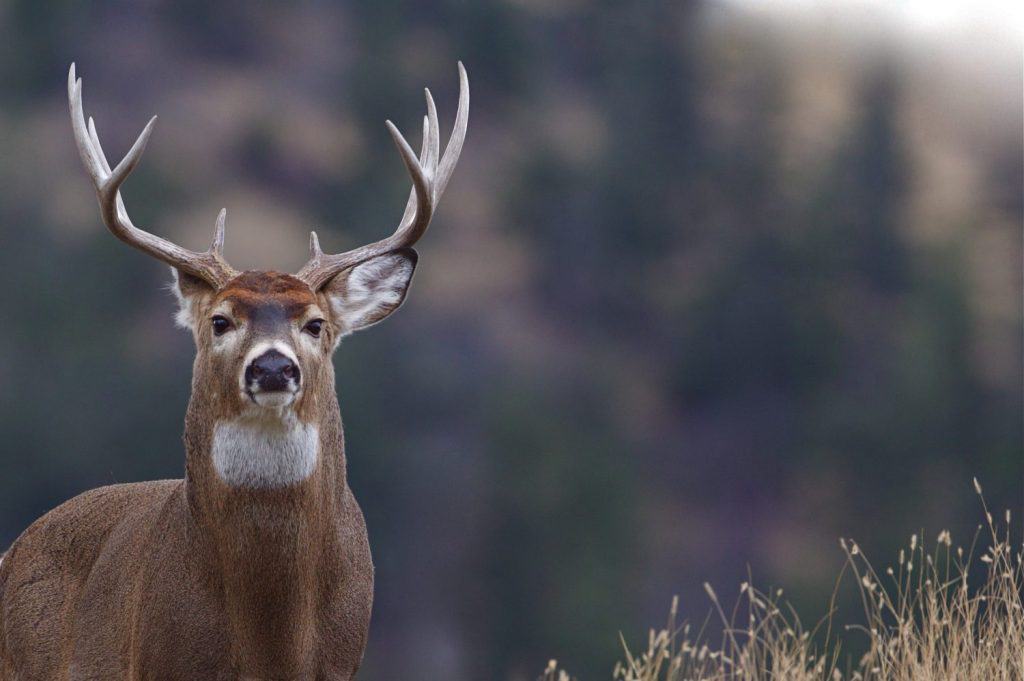
Whereas other large game animals are restricted to small areas, white-tailed deer can be found in almost every state in the union.
©Tom Reichner/Shutterstock.com
People often choose the easiest option available, and hunting is no exception. The widespread distribution of white-tailed deer in the United States makes them the most accessible game for hunting. They are the most common large game animal and the type that hunters are most likely to run into close to their homes. These deer live in the Appalachian foothills, Southern pine forests, and in the vast expanses of midwestern farm country. They adapt to different environments with ease, making them easy to find. Whereas other big game animals like elk or pronghorns are restricted to certain areas, white-tailed deer are found in practically every state in the union.
The numbers don’t lie: the number of hunting licenses issued in each state shows just how many hunters pursue white-tailed deer. In 2018, Texas issued over one million licenses. Smaller states like Iowa sold around 340,000 deer licenses in 2017, with at least 100,000 of those dedicated strictly to whitetails. Other types of game animals require more specialized licenses. Hunting white-tailed deer, however, usually only requires a basic deer license and a short drive into the country.
Another interesting factor is the distinction between public and private land. According to the National Deer Association, roughly 88% of white-tailed deer harvest occurs on private land. This allows hunters to source deer close to their homes, using land provided by family farms, leases, or small parcels of property. In Texas, around 99% of deer harvests occur on private land.
Conservation Commerce

White-tailed deer hunters are the biggest contributors to the American hunting industry.
©Stephanie Frey/Shutterstock.com
White-tailed deer hunting has become such a big business that it practically funds most of the country’s wildlife conservation. It provides the financial support necessary for other ecological maintenance strategies and initiatives. At least ten million people hunt in the United States each year. Those people spend a total of at least a billion dollars on licenses, equipment, travel, and other hunting-related expenses. Considering the abundance of white-tailed deer, it’s likely that a majority of American hunters are pursuing them.
Further data from the National Deer Association backs this theory up: white-tailed deer hunters are the single largest financial engine in the hunting industry. Their combined purchases indirectly fund state wildlife agencies through excise taxes as well. It’s a big business, made possible by the versatility of white-tailed deer.
Versatility

White-tailed deer may be the most accessible large game animal for inexperienced hunters, but they are wary enough to provide a satisfying challenge for veterans.
©iStock.com/Ralph Navarro
White-tailed deer may be the most easily sourced big game animal, but they are not without challenges. This balance of wary behavior and widespread abundance makes them the perfect game for the enterprising hunter. White-tailed bucks are shrewd, evasive, and willing to bolt at a moment’s notice. This forces hunters to step up their game. In turn, it makes for a rich tapestry of hunting, combining tradition and adventure. This accessibility also applies to the variety of hunting methods available.
Indeed, white-tailed deer hunting does not need to be done only with firearms. While modern firearms are the most commonly used weapons for hunting, bows and arrows, and muzzleloaders can also be used effectively. It also gives hunters a variety of options. Archery seasons, for example, extend through the fall and require a different set of skills. This also goes for muzzleloaders, which link hunters with more historical methods. Whatever method hunters employ, the combined accessibility and challenge of hunting large white-tailed deer bucks keep them coming back for more. It provides a learning curve just steep enough to be rewarding, but not so steep as to discourage young, potential hunters. This balance has undoubtedly contributed to whitetails becoming the most hunted animal in America.
Key Timing
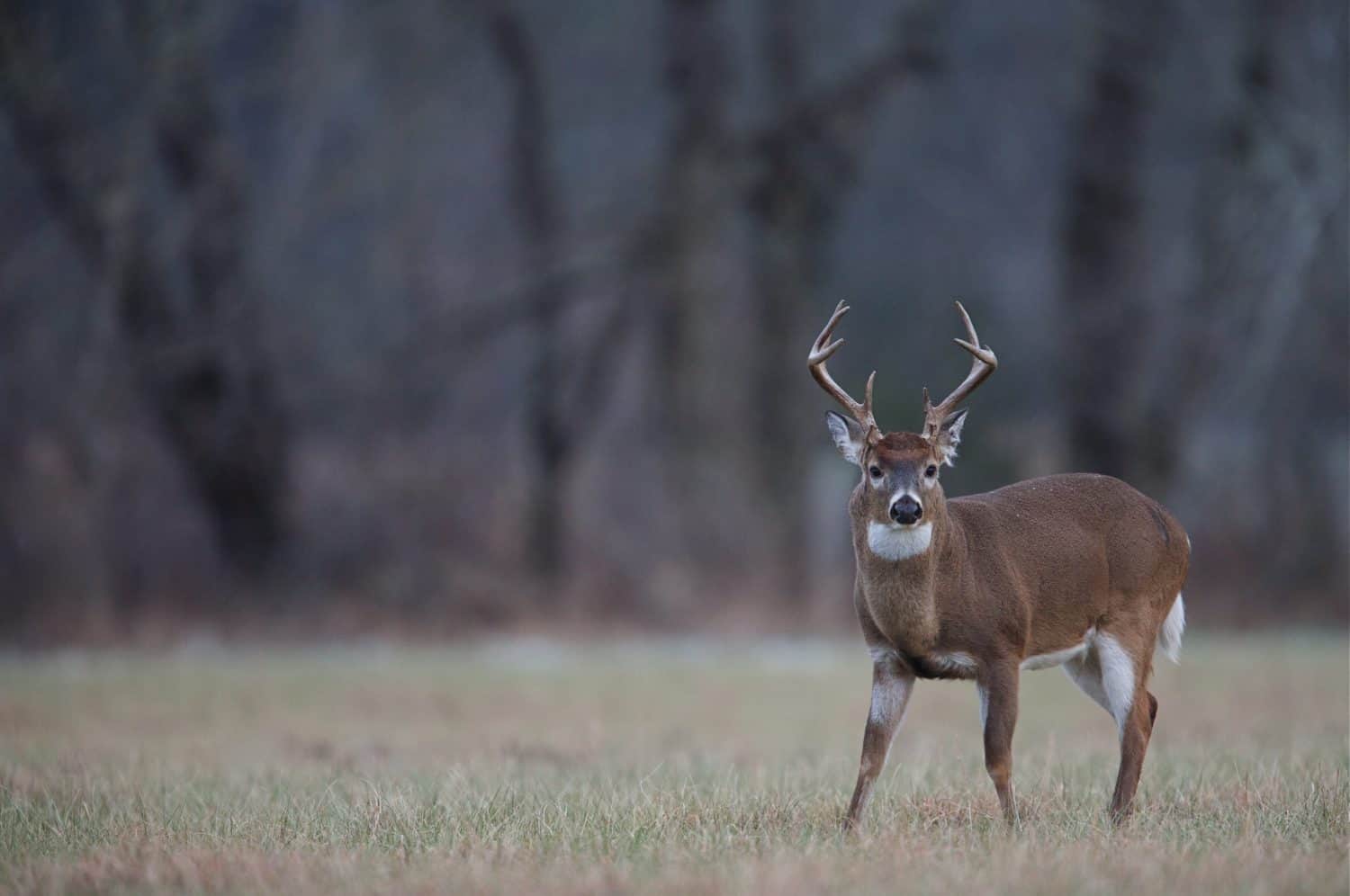
Deer hunting season coincides with the deer rut in the fall, the most active time for bucks.
©Amy Lutz/Shutterstock.com
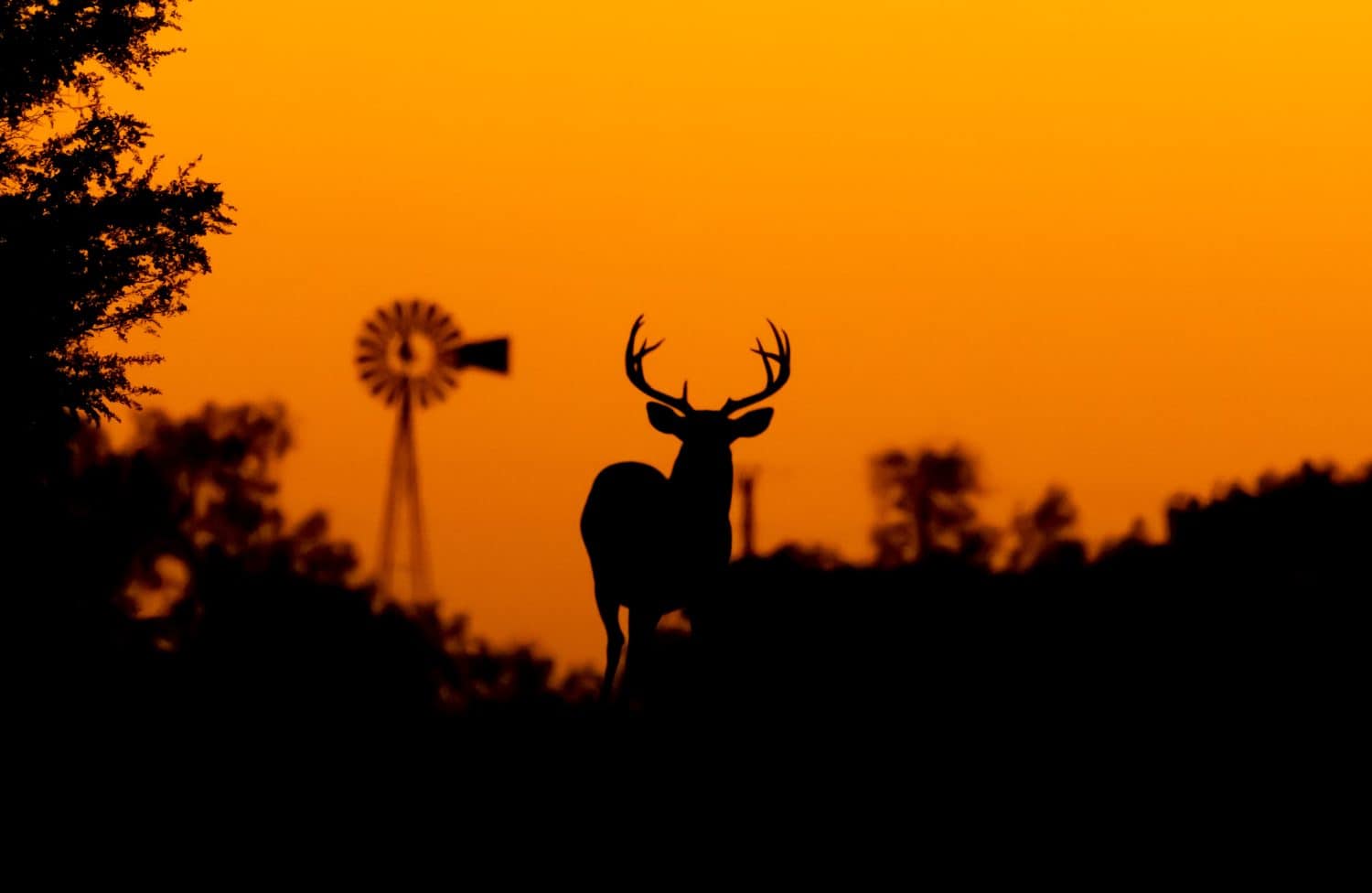
Another under-explored factor that contributes to whitetails being the most hunted animal in America is timing. Deer hunting season is timed to coincide with the social calendars of the deer themselves. This period in the fall is when whitetail bucks become most active.
Other game animals usually require more equipment, travel, or specialized knowledge. White-tailed deer hunting, however, is relatively straightforward. The seasons of their activity coincide nicely with hunting seasons. Archery season occurs in the early fall, before the conventional hunting season, which starts shortly after the prime rut begins.
Population Explosion
The United States white-tailed deer population has grown from several hundred thousand individuals during the early 20th century to roughly 30 million in the modern day.
©Tom Reichner/Shutterstock.com
The widespread distribution of the white-tailed deer population in North America may be a boon for hunters, but it also has significant consequences. Several factors have contributed to this nearly unchecked population growth, leading white-tailed deer to damage environments, harm forests, and cause increasing destruction to woodlands. However, it wasn’t always this way. In the early 20th century, white-tailed deer populations had dropped pretty low. Estimates at the time put their entire United States range at between 300,000 and 500,000 individuals. Since then, white-tailed deer have experienced one of the most impressive animal comeback stories in modern memory. Now, the United States deer population is estimated to be roughly 36 million.
This increase is good for the deer but not for the environments in which they live. The modern world has brought increased human development, and along with it, a steady decline in apex predators. This has allowed certain prey population numbers to explode. In turn, they gobble up too much plant material and ruin forest regeneration and biodiversity. Whitetails, for example, do so much browsing that they destroy new tree growth. They also tend to eat up far too many native plants. On the flip side, so many deer without proper culling have led to the spread of diseases. White-tailed deer are increasingly threatened by chronic wasting disease (CWD).
The growing number of deer can also be seen on the roadways. As per data from the Insurance Institute for Highway Safety, there are approximately one and a half million deer-vehicle collisions in the United States each year. This results in 150 deaths and between $8 and $10 billion in vehicle damage annually, with each claim costing an average of $3,995.
Population Control
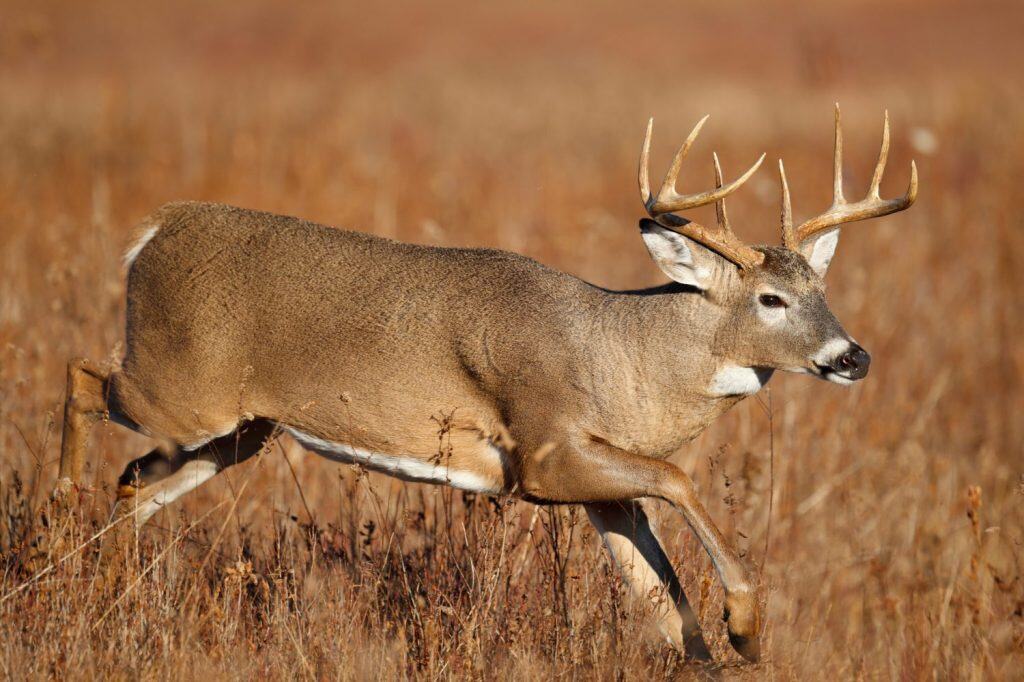
White-tailed deer are hunted more than any other animal in the United States.
©Paul Tessier/Shutterstock.com
As this article has illustrated, several factors combine to make white-tailed deer the most hunted animal in America. To keep their populations down, both biologists and wildlife agencies rely on regulated hunting to manage whitetail numbers. This helps combat over-browsing, crop depredation, and reduces vehicle collisions. That is another reason why states hand out a large number of deer tags. They also increase the number of deer culled each year by extending hunting seasons. Furthermore, they allow periods of antlerless harvests. With so many whitetails out there, hunters are the first line of defense in preventing them from overwhelming local ecosystems.