
Quick Take
- Pigeons share a vision trick with elite human performers, which is the last place scientists thought to look. See the shared vision trick →
- Something happens to a pigeon's eyes the instant it leaves the ground, and this change completely transforms how the bird perceives the world. Discover the eye change →
- Striped walls, open skies, short hops, and long flights all seem to make no difference. Pigeons do one thing in the air that never wavers, and researchers had no idea until now. See the consistent behavior →
Pigeons might be more like humans than scientists ever realized. A new study published in Current Biology by Harvard University reveals a surprising characteristic. When the birds take flight, they lock their eyes in a neutral position. This might sound strange, but researchers theorize it actually prevents pigeons from getting disoriented.
Those who experience motion sickness can relate to this all too well. Rather than risking disorientation or vertigo, pigeons have found a way to fly efficiently without getting overwhelmed. This is a game-changer for the species, allowing them to process incredible spatial data at rates beyond even our own comprehension.
Pigeons Learn to Hold Steady
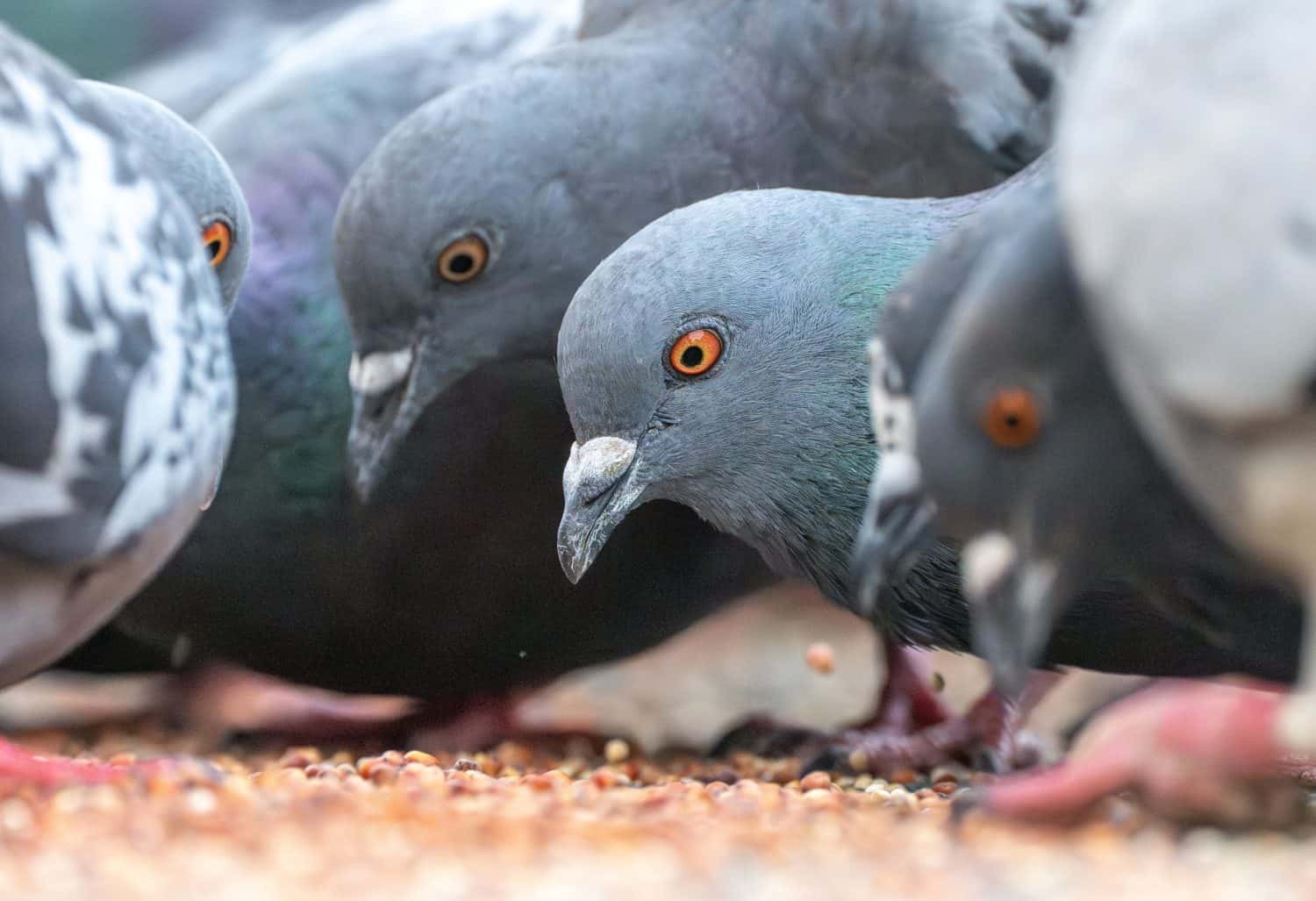
Researchers at Harvard University caught a detail never before seen during their study. After attaching a lightweight rig of cameras and mirrors to nine pigeons, the birds were observed in the moments before takeoff. On the ground, they typically move their heads and make minor eye movements to observe their surroundings. This is where the classic “pigeon tilt” comes from: pigeons tilt their heads from side to side to better observe their surroundings.
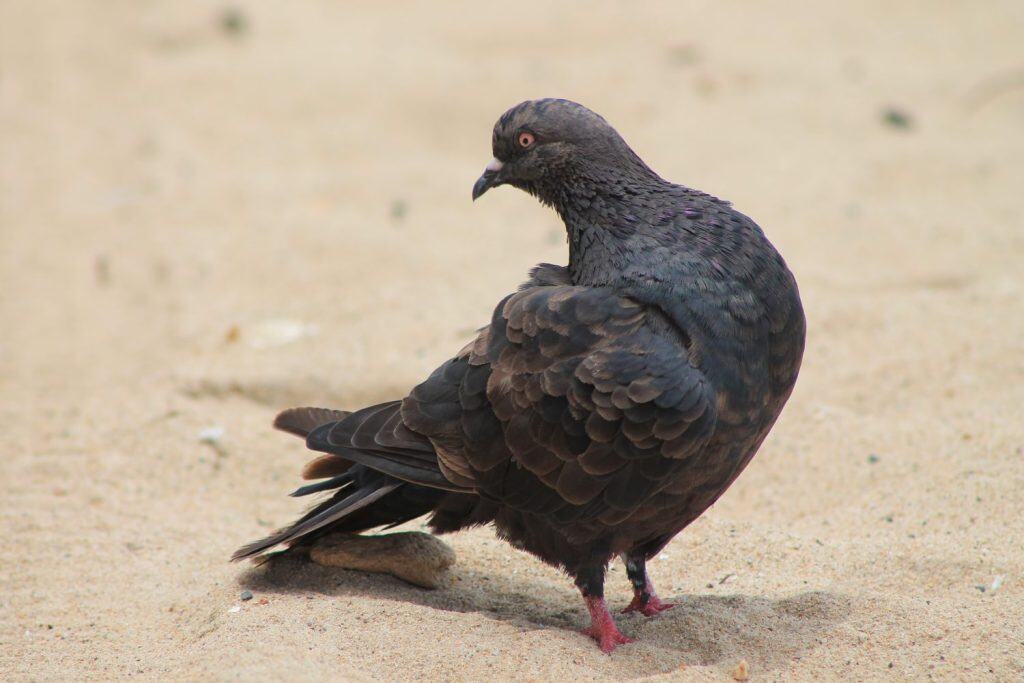
On the ground, pigeons use a combination of head movements and slight eye movements to observe their surroundings.
©Ednita/Shutterstock.com
But when the birds took off, researchers noticed a significant difference in their pupil sizes. As they watched, the pigeons’ pupils dilated by nearly 70% during flight. When this happens, it’s referred to as mydriasis. Pupils expand to allow more light to enter the retina. This is an evolutionary trait that helps animals, including humans, see better in dark or shaded places. With more light, our brains can better process our surroundings and observe certain objects or events. As it turns out, pigeons undergo the same process, but while they’re in flight.
The response itself is automatic, which is another thing that scientists found interesting. While in the air, researchers observed that pigeons barely move their eyes, keeping them stationary throughout the entire flight. Although this behavior is curious, there is a logical explanation.
Natural Motion-Blur Reduction
Imagine a pigeon in flight like a dancer doing pirouettes. To avoid getting dizzy, a dancer locks their eyes on one location. Every time they spin, they focus their eyes on that same exact spot. This prevents disorientation by stabilizing their vision, allowing them to control their body movements. Locking their eyes has a similar stabilizing effect on pigeons.
Harvard University researchers discovered that this is done by maintaining the same eye position within their heads. Just as a dancer barely moves their eyes from one spot, pigeons keep their eyes in a neutral position. Upon closer inspection, researchers also learned that this eye position is almost exactly aligned with the balance-sensing system in the pigeons’ inner ears.
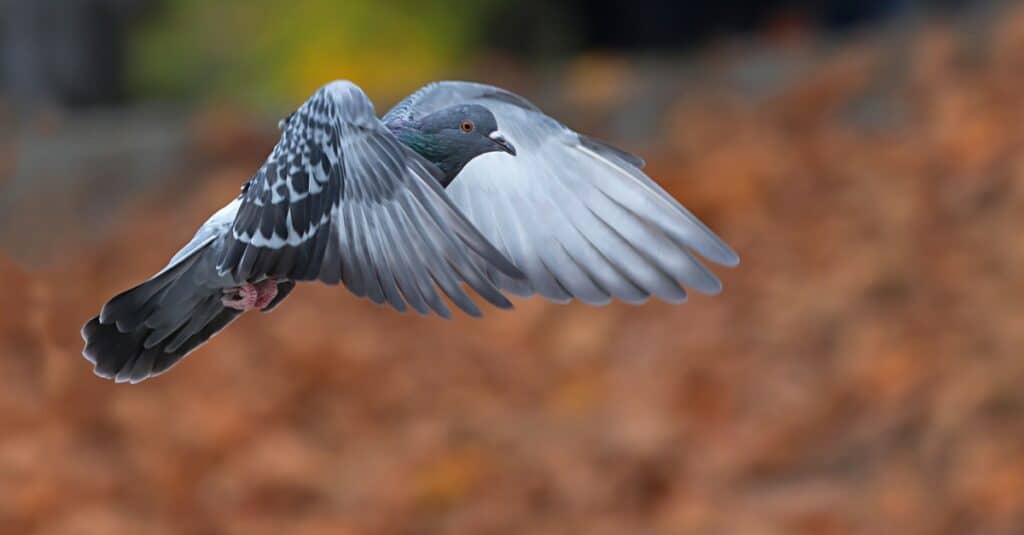
During flight, a pigeon’s eyes remain locked in place in alignment with their inner ear balance.
©N.Z.Photography/Shutterstock.com
This benefits the pigeons in two different ways. By aligning their eyes with their inner-ear balance, they have better flight control. They become more aware of themselves and their surroundings, resulting in better “steering” while in flight. Secondly, doing this allows the birds to absorb as much information as possible about their environment. As their eyes remain fixed, they take in details as they see them. This enables them to process important visual information at speeds far exceeding those of many other bird species.
Pigeon’s Eyes Don’t “Unlock” Until They’re On the Ground
Another interesting thing researchers found was the consistency of the pigeons’ eyes. Three of them flew just over 323 feet to and from their coops. The entire time, their eyes remained in the same place despite the long distance. Another six flew shorter distances under different visual conditions, and the data were the same. Each time, the pigeons locked their eyes from the moment they took off, maintaining this position until landing.
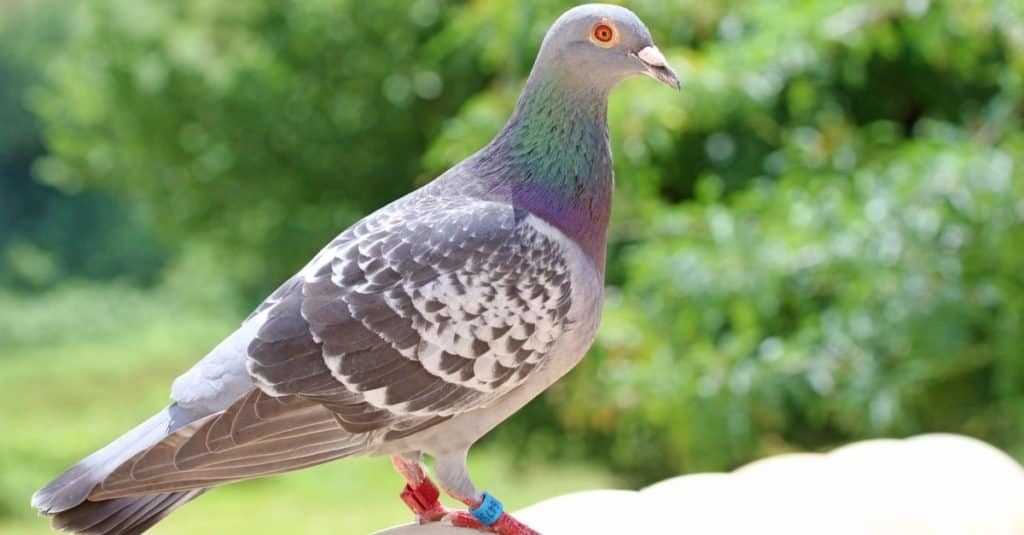
This characteristic implies a highly evolved mechanism that allows pigeons to maintain stability and balance.
©Ruth Swan/Shutterstock.com
Results showed that variations in the pigeons’ eyes were only about one degree between flights. The visual cues given to the birds also had no effect on the locked-eye position. Some pigeons flew through corridors with striped walls while others flew past plain, solid-colored walls, and there was little to no change. Their eye position didn’t change, regardless of whether they were flying indoors or outdoors.
This discovery implies that pigeons have evolved to make their flight patterns more efficient. As they stabilize their vision, they can better navigate the world around them. It’s a unique characteristic that has not previously been documented in birds during flight. More studies are necessary to better understand the locked-eye mechanism, but they prove pigeons are far smarter than most people think.