
Quick Take
- A black mamba can bite you and inject nothing, and the reason it sometimes holds back is stranger than you would expect. Understand dry bites →
- A black mamba bite follows a shockingly precise timeline, and the window between first symptom and no-return is far shorter than most people assume. See the bite timeline →
- The black mamba's massive size should make it slow, yet it somehow strikes nearly twice as fast as a human blink. Explore the strike speed →
- Despite its lethal reputation, the black mamba isn't even close to the most venomous snake on the planet, and the ones that outrank it share more with it than you'd think. Compare venom rankings →
Generally elusive and shy, and one of the most venomous snakes in Africa, the agile musculoskeletal system of a black mamba allows it to move quickly and strike rapidly. While there is research on the anatomy and behavior of the black mamba, specific statistics on the mamba — including its exact population, the frequency of attacks or dry bites, fatalities, and venom variations by region — remain scarce due to the snake’s evasiveness and the remote regions where most envenomations occur.
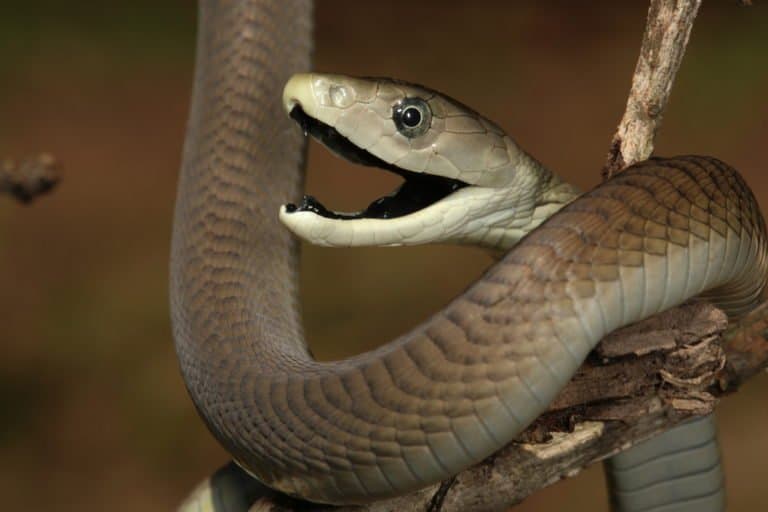
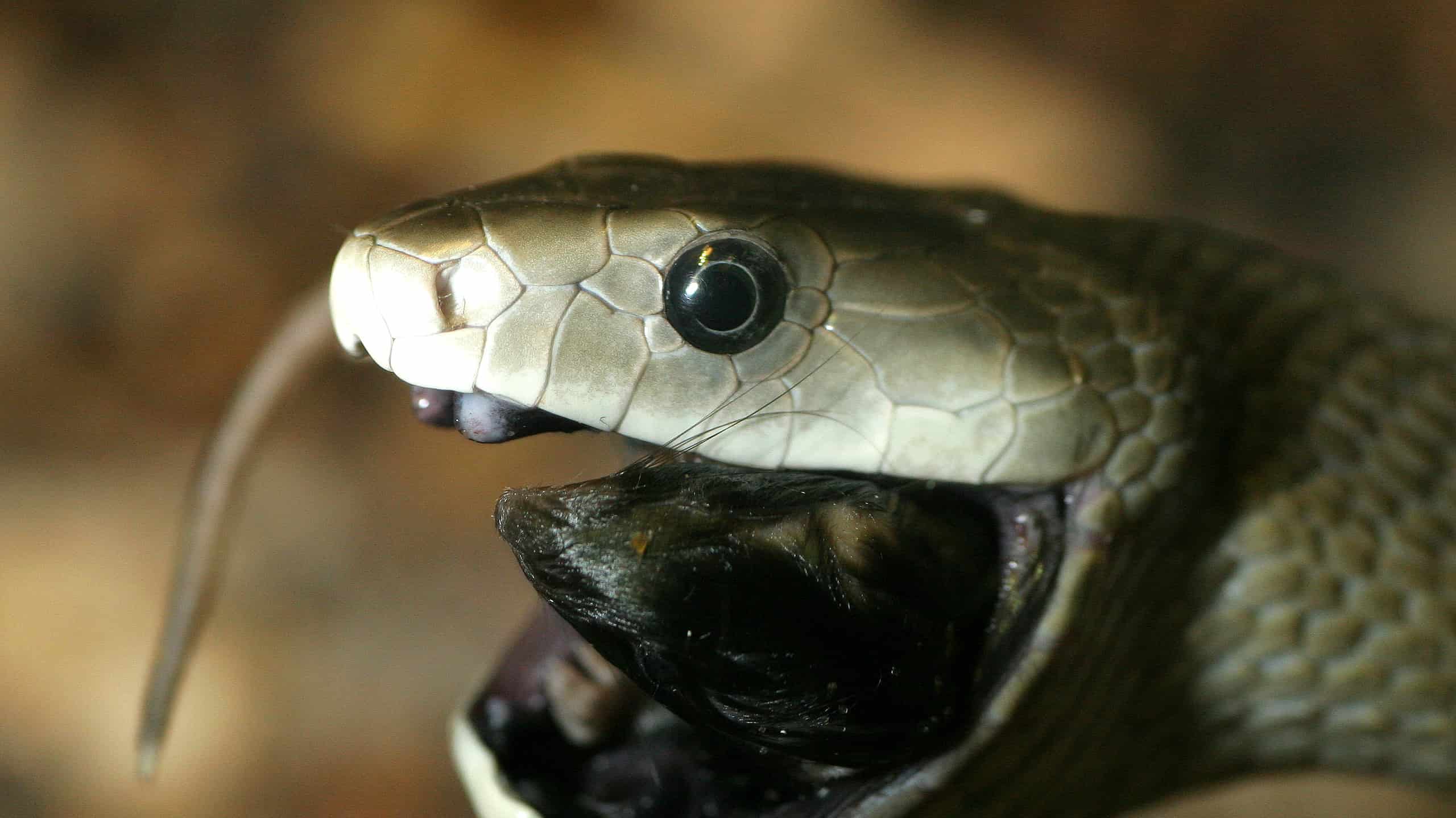
Though found at several research facilities and accredited zoos in the U.S., including the Houston and Indianapolis zoos, the scarcity of data about the black mamba — named for the color inside its mouth, with bodies that are more olive-brownish to gunmetal gray in tone — is due to the lack of researchers working in the remote areas where the snakes are found and the risk of fatality.
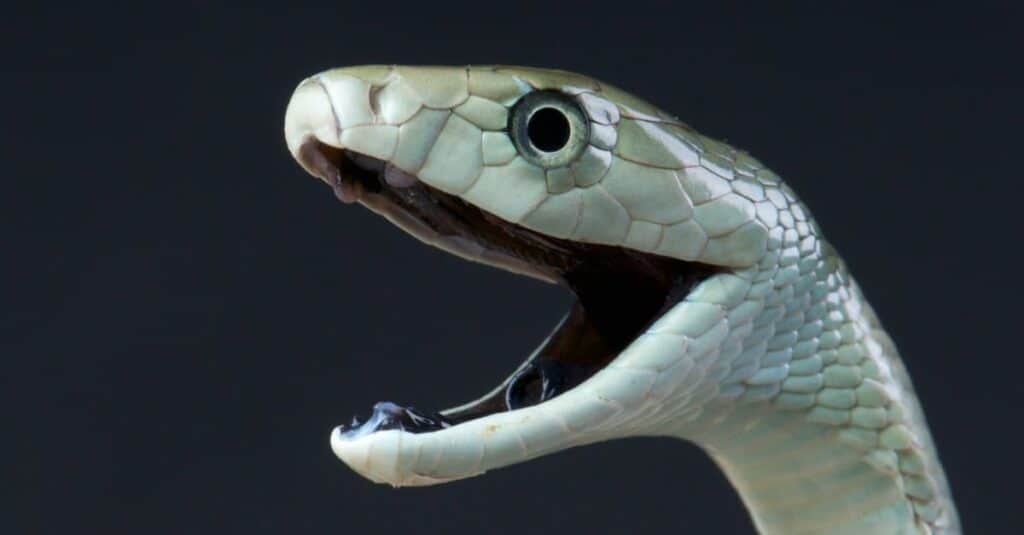
Black mambas are rarely black, and they’re actually named for the color inside of their mouth.
©reptiles4all/Shutterstock.com
Attacks by the mamba are almost always fatal if left untreated, with a very high mortality rate approaching 100 percent. Mamba strikes can also cause serious long-term injuries, but they are still less common than those by the Puff Adder, which is more widespread across Africa and responsible for the most human snakebite fatalities in the region.
The Fatal Strike
Since the mamba lives in some of the most remote regions, found throughout the savannas, woodlands, and drier scrublands of sub-Saharan Africa, getting antivenom in time, if struck, is nearly impossible. Without treatment, death can occur in as little as 20 minutes to a few hours, though it may sometimes take longer depending on various factors.
Within 15 minutes of being bitten by a mamba, a person will feel tingling, mild burning, and swelling sensations near the wound and a pins-and-needles-like feel around the mouth and lips. Other early symptoms include blurred vision, physical weakness, and a metallic taste in the mouth.
An hour after being bitten, a person can experience slurred speech and salivation as neurotoxins disrupt the muscles and nerves, along with increased thirst, sweating, vomiting, and muscle twitches or paralysis. As the envenomation progresses without treatment, it eventually leads to respiratory failure and cardiac arrest.
Oftentimes, a black mamba can also strike dry — that is, bite but inject no venom. “There are instances when venomous snakes will bite you and not release their venom,” says Henry Astley, Associate Professor of Biology and Polymer Science at the University of Akron. “They won’t spend this expensive venom on someone, but they’ll scare the crap out of them, and make them go away.”
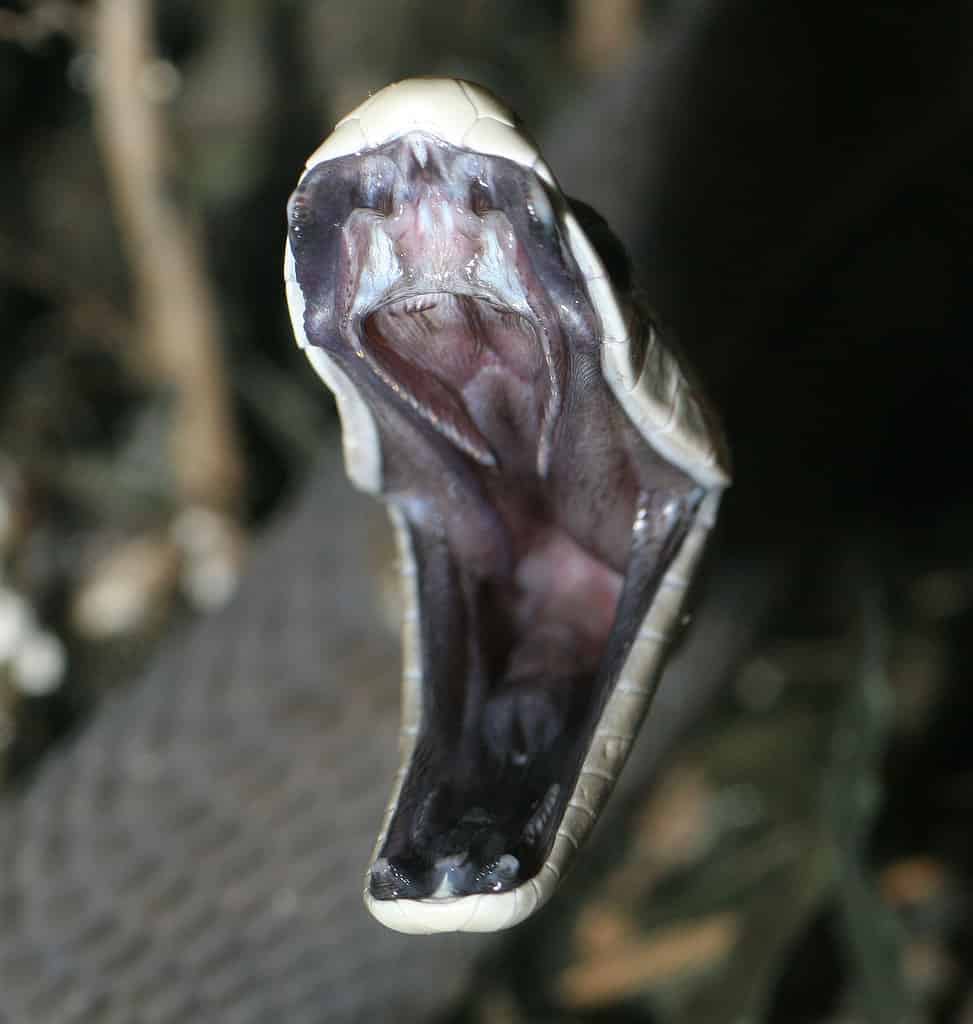
Tingling, mild burning, and swelling sensations near the wound and a pins-and-needles-like feel around the mouth and lips will generally start within minutes of being struck by a black mamba.
It all depends on the species. Some will dry-bite, while others fully strike, which affects humans in different ways because there are variables to take into account, including body chemistries and underlying health conditions.
“The liver is a big one, because it’s your body’s poison filter, so if you’re an alcoholic and don’t have a liver that functions terribly well, you’re going to have a much harder time recovering from a strike,” says Astley. “Even things that aren’t as highly venomous as the black mamba are nothing to sneeze at. People will get bitten by things that are nowhere near lethal, but they’ll still suffer permanent nerve damage, or loss of sensation, or lifelong kidney or liver problems.”
Mambas are very potent. I don’t want to say it’s not possible to survive, but if you don’t have antivenom available, you’re less likely to survive and more likely to have long-term effects.
Henry Astley, Associate Professor of Biology and Polymer Science at the University of Akron
Antivenom and Mortality
While the number of black mamba attacks and mortality rates are unclear, in some heavily populated regions of South Africa, including Zululand, there has only been one confirmed bite per year, according to the African Snakebite Institute.
Most snakebite victims live in poorer rural communities, who may not have access to antivenom or cannot afford the treatment, which can cost over $100 per vial and requires multiple vials, bringing the total medical bill to over $1,000.
“Mambas are very potent,” says Astley. “I don’t want to say it’s not possible to survive, but if you don’t have antivenom available, you’re less likely to survive and more likely to have long-term effects.”
Since antivenom requires strict refrigeration to maintain potency, it is often only available at larger, modern medical facilities, which can be hours away from black mamba habitats. “If you’re out in the middle of nowhere [where mambas typically live], and you’re a six-hour drive from anywhere,” Astley adds, “getting antivenom is nearly impossible.”
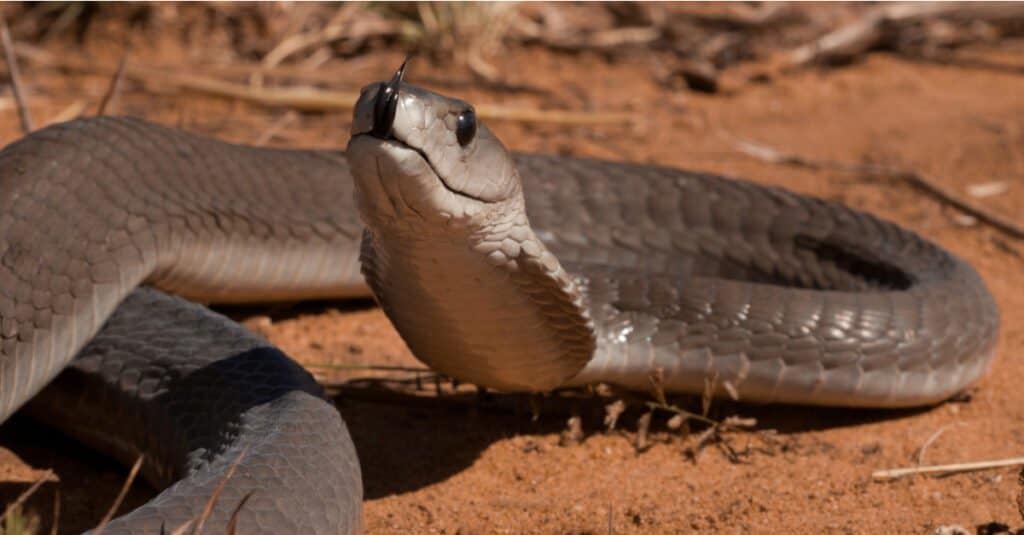
Despite its lengthy size, Black Mambas are among the fastest striking snakes, with strikes occuring in a fraction of a second, often faster than the blink of a human eye.
©131346563/Shutterstock.com
Mamba Mechanics
When it comes to snakes, size isn’t always an indicator of speed, says Astley. Oftentimes, increased size means more muscle mass and slower velocity. “The fastest animals are usually mid-sized — cheetahs are faster than lions, and dolphins are faster than whales. With the viper snake, there’s also a range in speed, and some babies strike at the same speed as the adults.”
Structurally, the body of the black mamba is quite large and complex, which has little effect on its physical speed. Black mambas are among the fastest striking snakes, with strikes that can occur in a fraction of a second, often faster than the blink of a human eye.
Its complex muscular structure and metabolism allow it to perform quick-burst attacks owing to its slender and lightweight anatomy (weighing up to 3.5 pounds). The elongated spine of a mamba can contain hundreds of vertebrae, and the snake can grow up to 14 feet in length, making it the longest venomous snake in Africa, while its lateral undulation — its snaking and sidewinding motion — also helps it navigate irregular terrain with fluidity in a series of S-curves. Mambas can also elevate nearly a third of their upper body, allowing easier movement through rockier or grassier terrain.
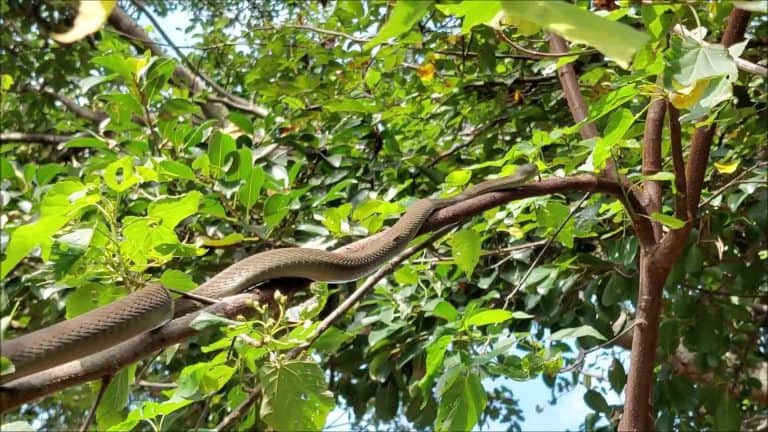
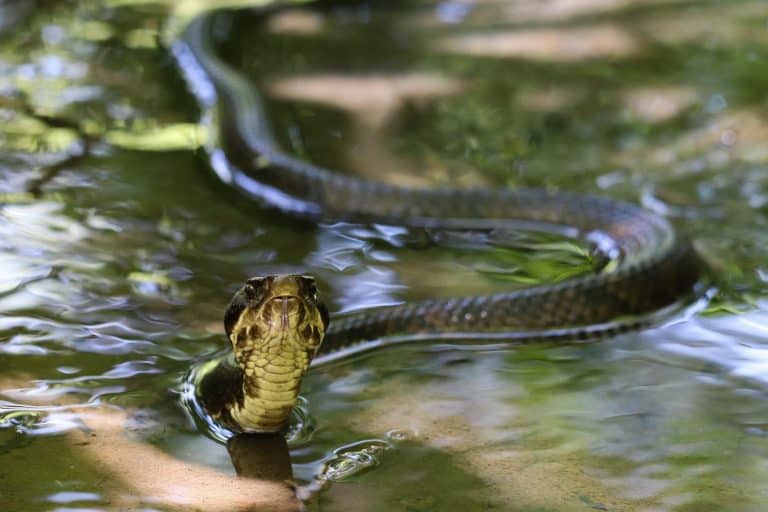
Known to slither at speeds up to 12 miles per hour — faster than a Komodo dragon — the mamba is also agile enough to climb trees and swim.
Despite the deadly strike of a black mamba, Astley says there are snakes with more dangerous bites. In Australia, the Eastern Brown Snake, the Coastal Taipan, and the Inland Taipan rank higher in toxicity than their African counterpart. Also categorized in the elapid family — characterized by fixed fangs at the front of the mouth — these more venomous snakes in Australia belong to the same group as the mamba.
Some African myths depict the black mamba as human-like or a supernatural creature, contributing to its reputation as one of the deadliest snakes in the world. Though lethal when they attack, mambas are generally shy and will try to escape if confronted, typically striking only when startled, cornered, or threatened.
“Mambas are one of these things where there are as many myths as there are facts surrounding their behavior and performance, but I don’t want to take that risk,” laughs Astley, who primarily works with non-venomous snakes, including corn snakes.
“They’re [mambas] not the worst thing in the world, but if you screw up, it’ll kill you,” Astley adds. “Mambas are fast, alert, and they’re clued into the world around them.”