
Quick Take
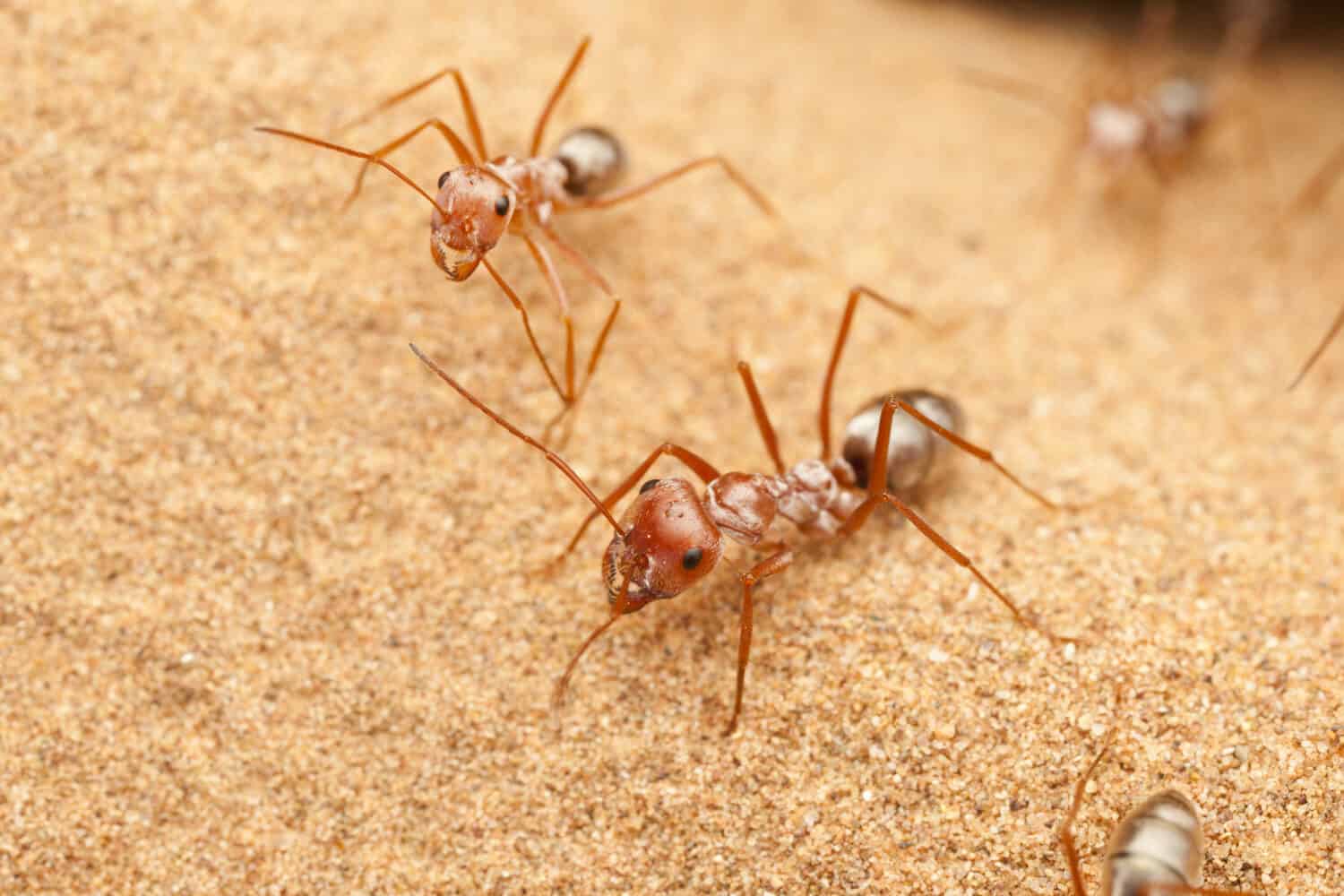
- The silver ant's color isn't just cosmetic. Its hairs have a bizarre geometric quirk that does something no other biological structure on Earth can replicate. See the hair geometry →
- Most animals activate their heat defenses after exposure, but this ant does something wildly different before it even steps outside. See the pre-exposure defense →
- At peak speed, this ant moves in a way that has never been documented in any other ant species, and it has a life-or-death reason to do so. Discover the unique gait →
- Navigating a featureless sea of sand with minutes to live sounds impossible, but the ant's solution is stranger than any map or scent trail. Explore the navigation system →
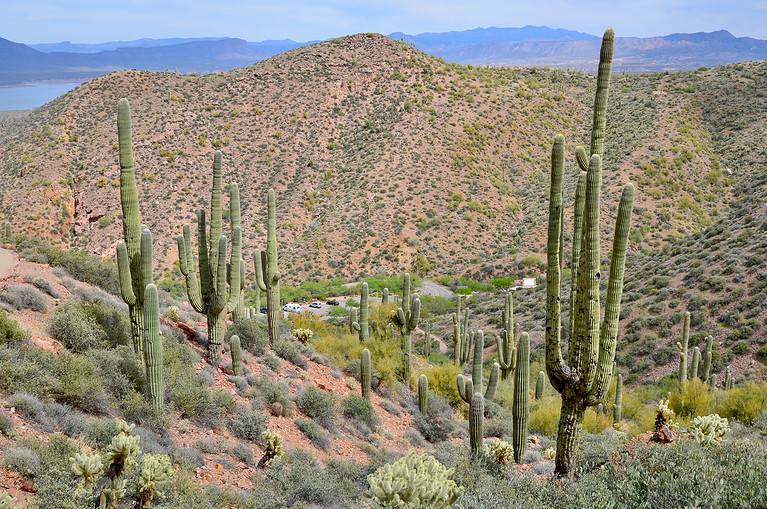
In the Sahara, it’s incredibly common for surface temperatures to exceed 50°C, or 122°F. By midday, most animals have retreated underground or into shade in order to survive. However, a small silver ant isn’t afraid to cross the sand, even though it only has roughly ten minutes before the heat will take its life.
The Saharan silver ant, known scientifically as Cataglyphis bombycina, is one of the most thermally extreme foragers on Earth. This is how its biology makes its window of activity possible, crossing the Sahara’s dangerous sands in a flash.
Continue reading
Why Would an Ant Hunt in 122°F Heat?
C. bombycina occupies a particular niche in the Sahara that no other forager can access: it is a thermophilic scavenger. Its main nutrition involves collecting the corpses of insects and other small animals that die in the midday heat.
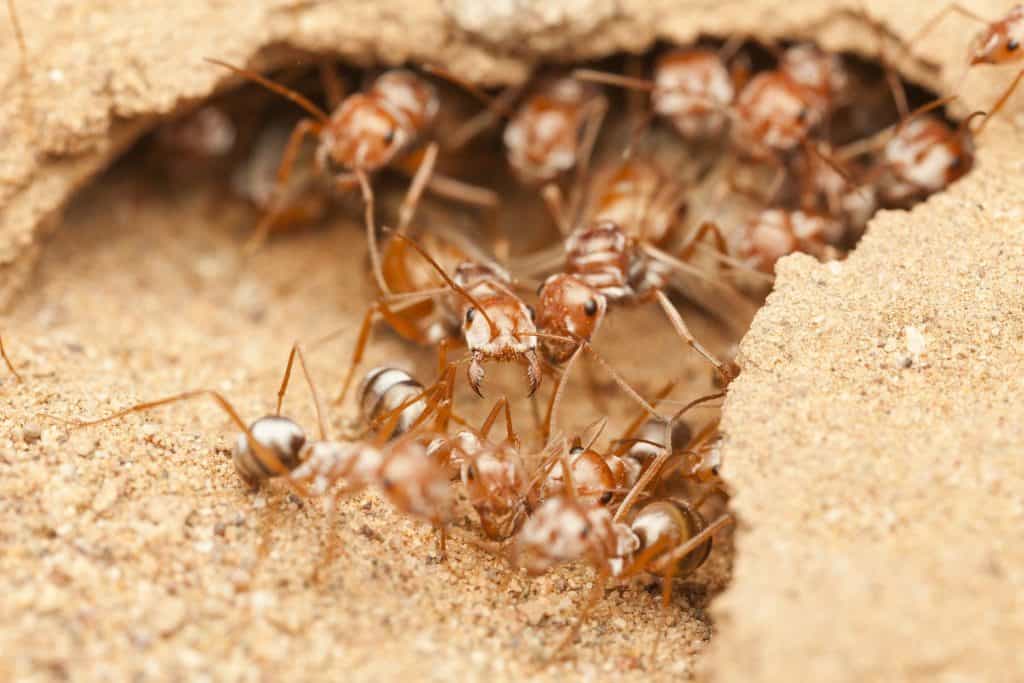
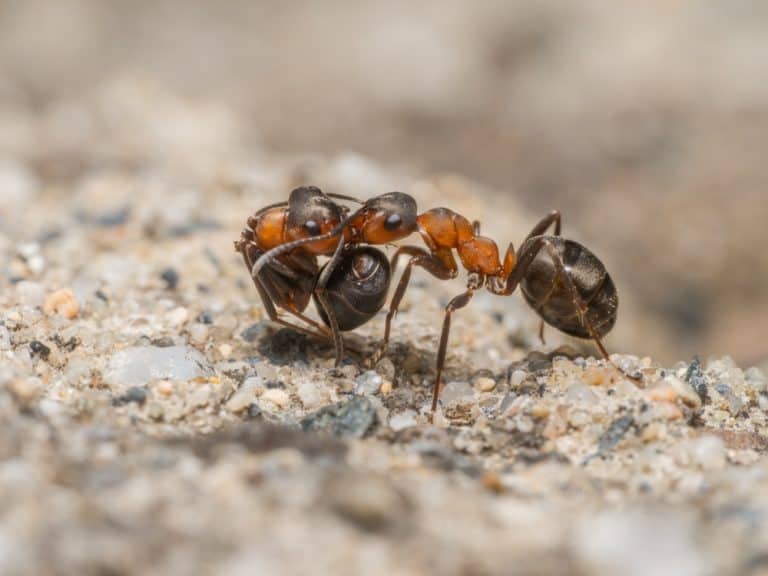
Saharan silver ants have roughly ten minutes to hunt before the heat takes them.
©Pavel Krasensky/Shutterstock.com
Plus, the silver ant’s competitors and predators, like lizards and other ants, cannot tolerate the temperatures that kill the silver ant’s prey. By foraging during the hottest part of the day, C. bombycina can eat its fill and live to forage another day.
However, operating at those temperatures requires the ant to solve a physiological problem that most animals simply cannot overcome. How does the Saharan silver ant stay cool and survive long enough to feed?
Why This Ant Is Silver
The Saharan ant’s silver appearance is what allows it to thrive. According to research published in Science, the hairs covering this ant’s head, thorax, and abdomen have a distinctly triangular cross-section, unlike the rounded cross-section typically present in most animal hairs. But why would triangles assist with heat reflection?
In practical terms, these corrugated surfaces act very similarly to prisms, causing light to undergo a process of internal reflection, bouncing away from the body at a rapid pace. The result is an impressive thermal management system, especially in such a small creature. Here’s how it works in greater detail.
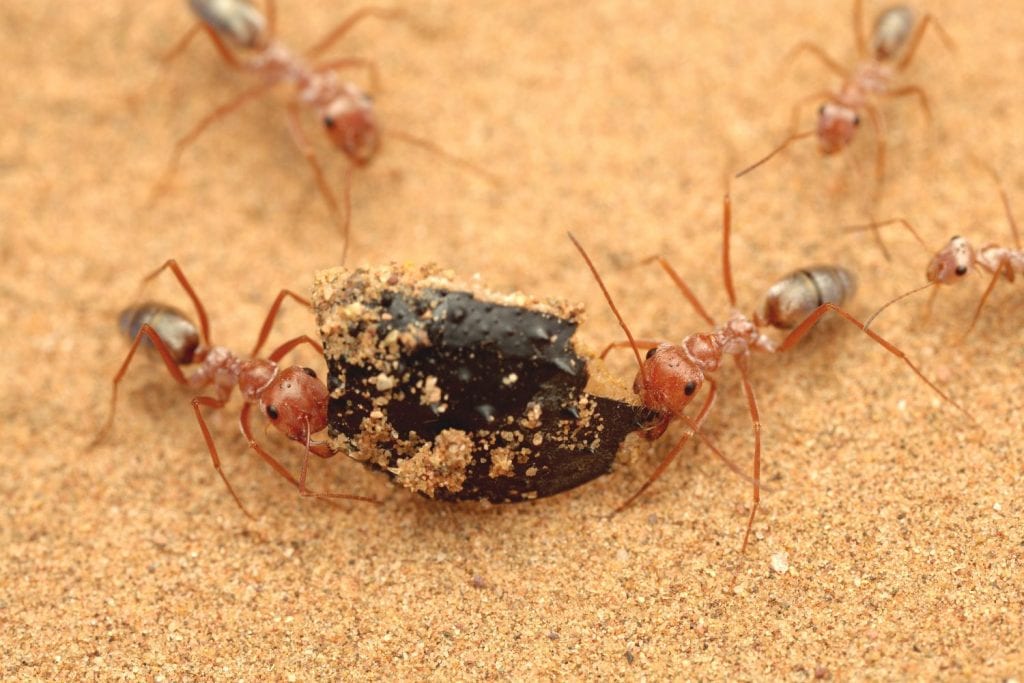
The Saharan silver ant was first scientifically identified in 1859.
©Pavel Krasensky/Shutterstock.com
In the visible and near-infrared range of light, where solar radiation is most intense, these hairs reflect incoming sunlight away from the body. In the mid-infrared range, where a heated body typically radiates thermal energy, the same hairs enhance the ant’s emissivity, shedding heat outward instead of retaining it.
In layman’s terms, these triangular hairs reflect light far more efficiently compared to bare cuticle, and no other known biological structure performs this type of thermoregulation across such a broad range of the electromagnetic spectrum simultaneously.
There’s one more physical advantage to note about the Saharan silver ant, especially when it comes to heat: longer legs also elevate the ant’s body above the hottest layer of air (the layer directly in contact with the sand), keeping it cool just long enough to survive.
Heat Shock Proteins: How Saharan Silver Ants Gear Up
Even with reflective hairs and elevated legs, foraging at Saharan sand surface temperatures means this ant’s internal temperature still rises during a run. However, C. bombycina has solved this biochemically: silver ant foragers produce heat shock proteins before they emerge from the nest rather than in response to heat stress.
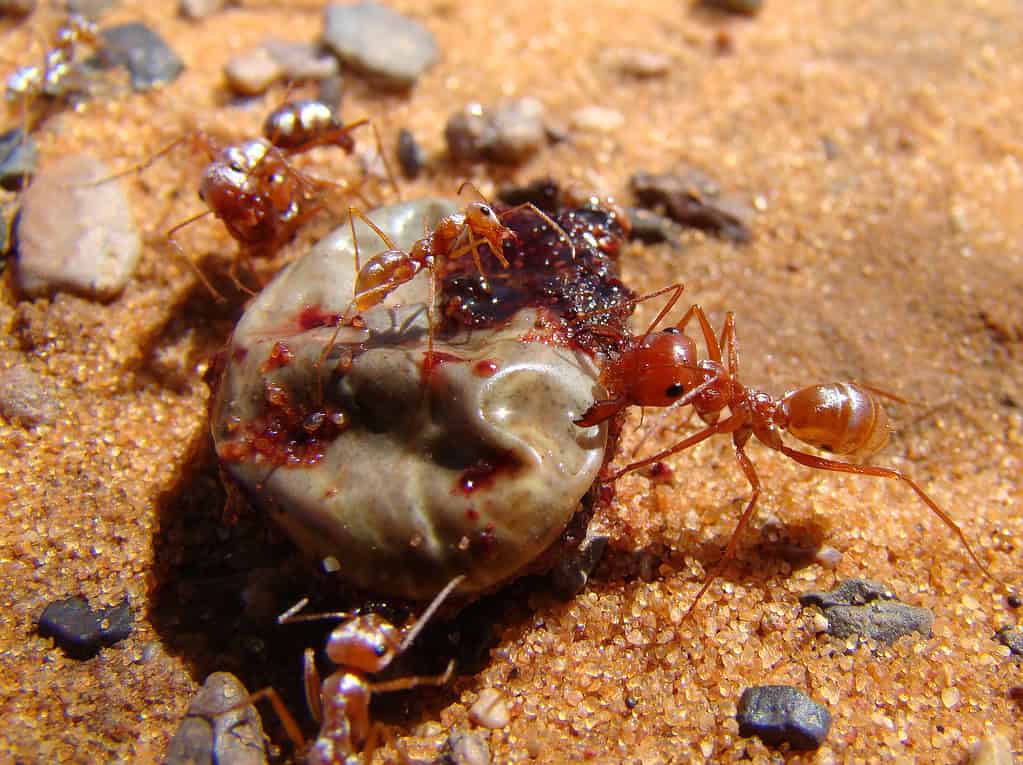
Heat shock proteins typically activate after animals enter a hot environment, but the Saharan silver ant activates them beforehand.
©Bjørn Christian Tørrissen / CC BY-SA 3.0 – Original / License
Most organisms produce these proteins reactively, as an emergency repair response after encountering damaging heat. The silver ant produces them beforehand, which means they arrive at the sand surface already protected, before any heat is absorbed.
How Fast Do Saharan Silver Ants Move?
Speed is vital to the Saharan silver ant’s overall survival, and for obvious reasons. But just how fast can they run?
Research reported by the Christian Science Monitor found that C. bombycina sprints at approximately 70 body lengths per second, making it one of the fastest rates relative to body size in any animal. Covering roughly a meter per second, these ants race to their prey, eat what they can, and dash back home.
Additional research confirms that the ant transitions into a gait at peak velocity where all six legs are briefly airborne simultaneously; this is a movement pattern not previously documented in ants. But of course, there’s a reason for this: if the Saharan silver ant spends more than roughly ten minutes on the surface, the heat will overcome every adaptation the ant has.

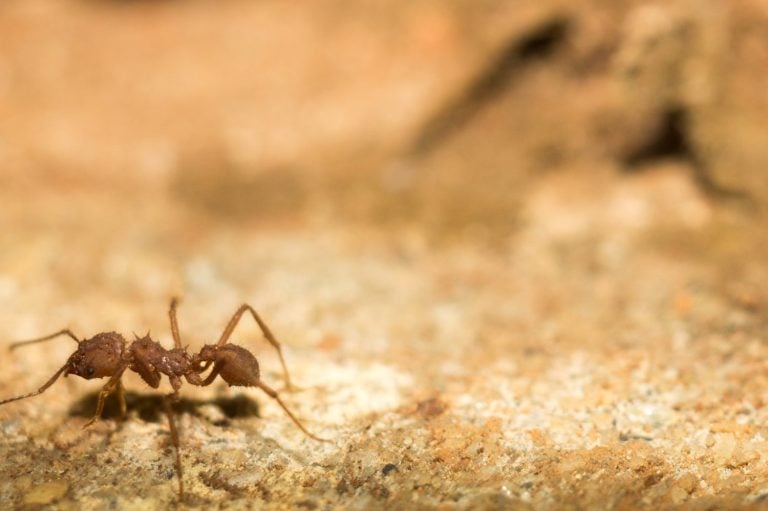
The Saharan Desert isn’t easy to navigate, but the silver ant manages well.
©fogcatcher/Shutterstock.com
Navigation in the Saharan Desert as an Ant
The final question to ask about silver ants is: how do they find their way home in a featureless sea of sand? As if this ant wasn’t remarkable enough, C. bombycina also uses a path integration system, or a sort of internal odometer. Tracking direction and distance continuously, this innate ability allows the ant to compute a direct return route to its nest from any point in its foraging run without retracing its steps.
An ant that uses solar polarization patterns as a compass and stride count as a distance measure — alongside all its other advantages — makes the Saharan silver ant an endlessly impressive species, regardless of its diminutive size.