
Quick Take
- Scientists believed they understood how ants recognize death, but the timing blew that theory apart. See the timing challenge →
- An ant's corpse can be removed from the nest in under an hour, which is long before any decay chemical could exist. How fast removal happens →
- Ants don't smell death. They smell something else entirely, and the distinction is more important than it sounds. What ants actually detect →
- The same chemical system that flags dead ants also stops living ones from being dragged out of the nest by mistake. How live ants stay safe →
Ants are a superb example of a social insect. The survival of the colony overrides the survival of individuals, and self-sacrifice is not unusual. Because they live in such dense colonies, they are highly susceptible to pathogens and parasites, meaning a dead body presents a significant hazard to these insects. Therefore, necrophoric behavior (the removal of dead colony members from the nest) is essential to protect the colony. So, how do ants recognize that one of their comrades is dead? We explore the fascinating world of ant chemical death signals.
Ant Colonies and Disease
Ant colonies can be vast. For example, the leafcutter ants of Central and South America live in interconnected labyrinths made up of brood chambers, fungus gardens, and waste storage facilities. These can stretch across areas the size of a tennis court and house six million ants. Then there are the Argentine ants, who create ‘super colonies’. One such supercolony spans 3,700 miles along the coasts of Portugal, Spain, France, and Italy. Within this colony, there are billions of ants!
Conditions within an ant’s nest are ideal for pathogen and parasite spread. Billions of tightly packed bodies living in cramped conditions can easily spread infections. Worker ants frequently have close physical contact with each other as they are undertaking their duties. Added to this are the high humidity and stable temperatures of the nest environment. This makes it an ideal place for the spread of disease.
Why Is Necrophoresis So Important to Ants?
It’s not surprising that the last thing a colony needs is a rotting body in their midst. Necrophoresis is a type of behavior seen in ants, as well as other social insects such as bees, wasps, and termites. It involves worker ants being able to recognize a corpse and carry it out of the nest.
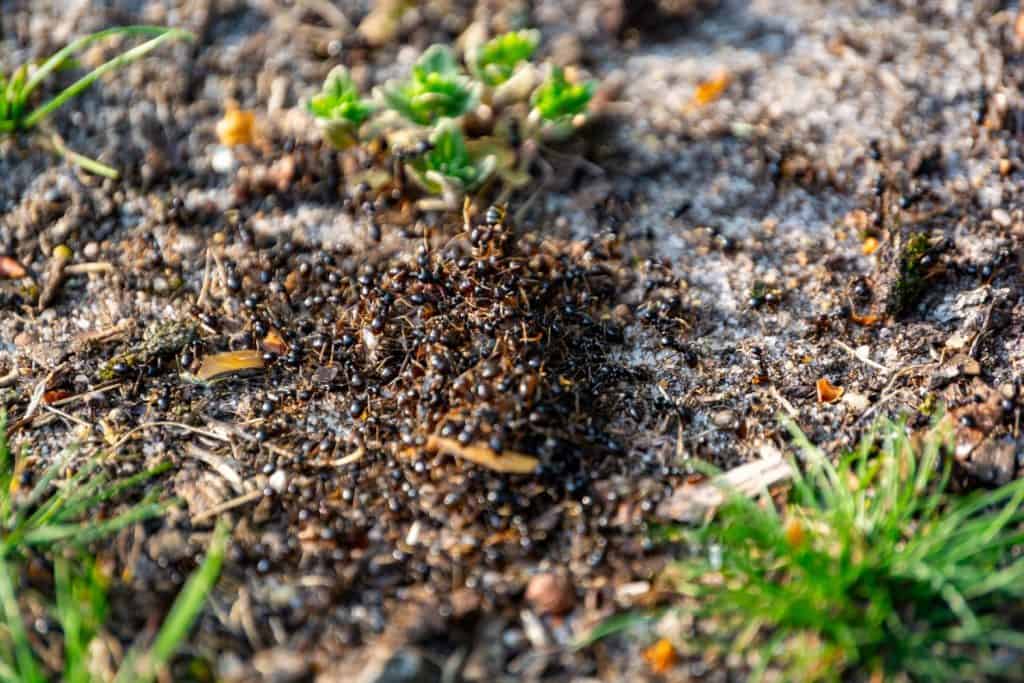
Ant colonies can contain billions of ants.
©Andrei Al/Shutterstock.com
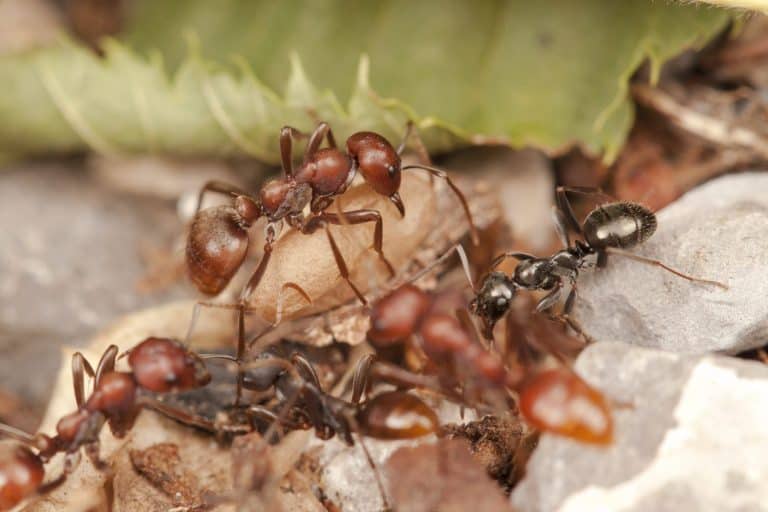
In many ant species, there are special ‘undertaker’ workers who have a slightly altered development cycle. They engage in more corpse removal than any other workers. The dead ants may be taken to a random location at some distance from the nest. Alternatively, they are put in a purpose-built refuse pile along with other waste. Other social insects use burial or even cannibalism.
This behavior has been a barrier when humans have tried to eliminate fire ant colonies by introducing a pathogen. The workers simply separate the infected ants and remove them!
How Ants Spot Their Nest Mate Is Dead
It was a long-held belief that ants could tell that their nest mate had died by the chemical signals the body was emitting. In particular, it was thought that the corpse gave off fatty acids such as oleic acid, linoleic acid, and myristoleic acid. These decomposition products were detected by the other ants. This may be the case for some species and life stages (e.g., larvae), but it is not the whole picture.
More recently, this assumption has been questioned because it cannot explain some aspects of necrophoric behavior. For example, in red imported fire ant colonies (Solenopsis Invicta), there is a very short delay between an ant dying and them being removed from the nest. It can take under an hour depending on conditions! Also, experiments on the Argentine ant (Linepithema humile) showed that freshly killed worker ants were carried away from foraging arenas and into refuse piles within one or two hours. The fatty acids of decomposition would not have been produced in this time. Scientists suspected that some other chemical signature was controlling the behavior. Perhaps the ants can detect a rapid decline in ‘life’ chemicals rather than the production of ‘death’ chemicals.
Ants Detect an Absence of Life
A fascinating study of Argentine ants showed that the chemicals that trigger necrophoric behavior are always present, but other chemicals usually inhibit the behavior. Shortly after death, the inhibitory chemicals dissipate or are degraded, and other workers can detect the ‘death’ chemicals.
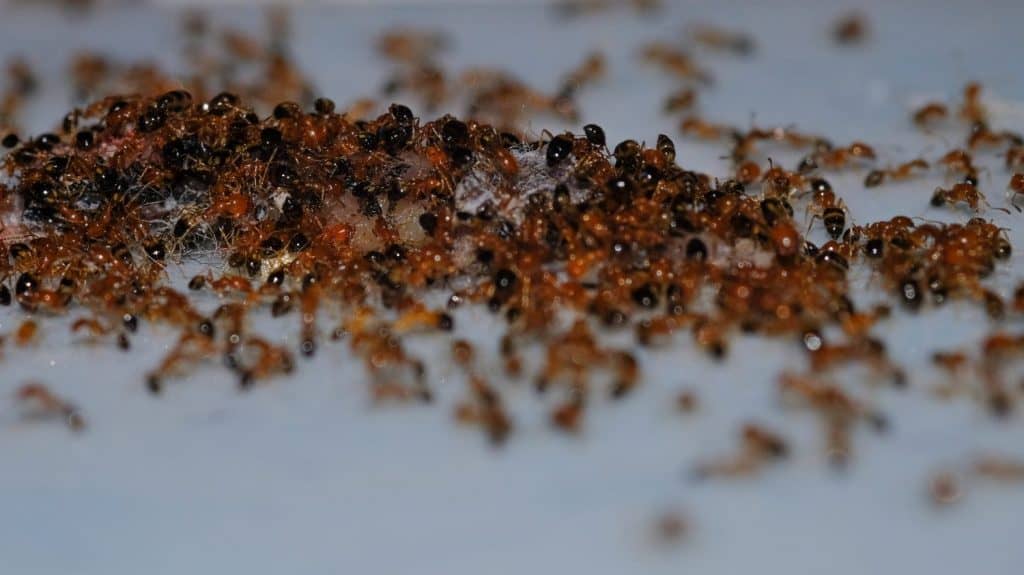
Argentine ants remove their dead from the nest.
©Creative Stock Studio/Shutterstock.com
Iridodials, dolichodials, and related compounds suppress the grasping and removing behavior of workers. However, within an hour of death, they have disappeared from the cuticle of dead worker ants. Previous research has shown that dolichodial is particularly reactive and is readily oxidized when exposed to air.
Why Does This Method Work Better?
Recognizing that a nestmate is dead via the rapid disappearance of a chemical vital sign is more beneficial than detecting death chemicals. The main advantage is that it allows ants to act quickly and remove the body before decomposition has started. This cuts down the risk of infection spreading from the corpse.
What’s more, this method avoids any embarrassing mix-ups! It means that live ants accidentally contaminated by fatty acids from other ants or even from plant seeds or prey are not hauled out of the nest by their comrades, who think they’re a corpse!