
Quick Take
- Chinese mitten crabs are invasive and have been found in the Willamette River, prompting rapid action by ODFW.
- Females can carry up to one million eggs and migrate to brackish water to reproduce.
- These crabs threaten native wildlife and fisheries by consuming eggs and young fish, eroding banks, and clogging water intakes.
When a nondescript, brownish crab was hand-caught in the Willamette River in November 2025, it raised the alarm at the Oregon Department of Fish and Wildlife (ODFW). Although this crab might not appear threatening to a casual observer, ODFW officials were immediately on high alert.
The invasive Chinese mitten crab had made its way into one of Oregon’s largest rivers. This followed the discovery of a mitten crab in April 2025 in the lower Columbia River east of Tongue Point, near Astoria. With this new finding on the Willamette, ODFW officials immediately sprang into action. Here’s what you need to know about the mitten crab, why it’s a threat to Oregon’s waterways, and what wildlife officials are doing to prevent a larger invasion.
Facts to Know About the Chinese Mitten Crab
The Chinese mitten crab is an invasive species in the U.S.
©Erni/Shutterstock.com
The Chinese mitten crab is native to the Yellow Sea bordering Korea and China. It makes its home in the coastal rivers and estuaries that feed the Yellow Sea.
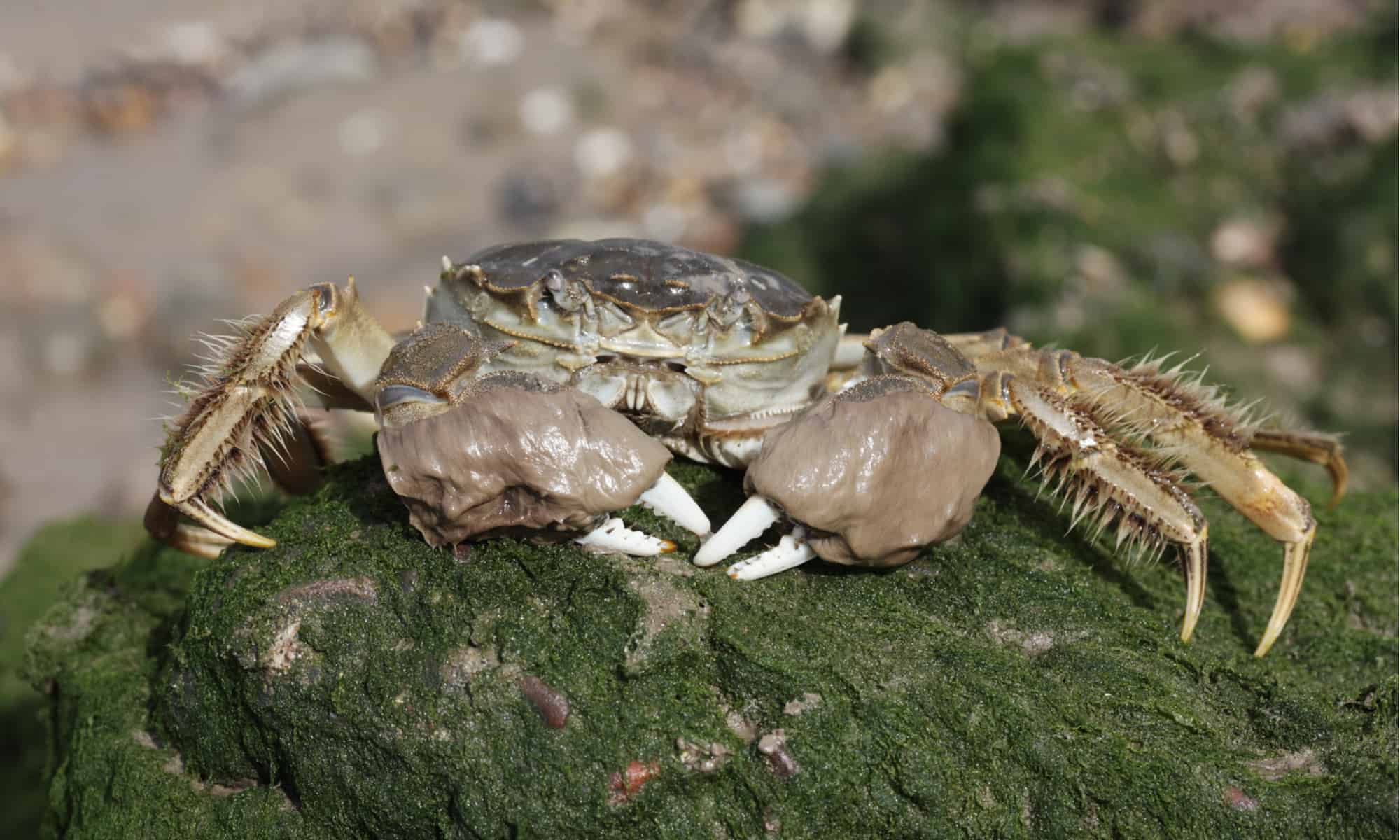
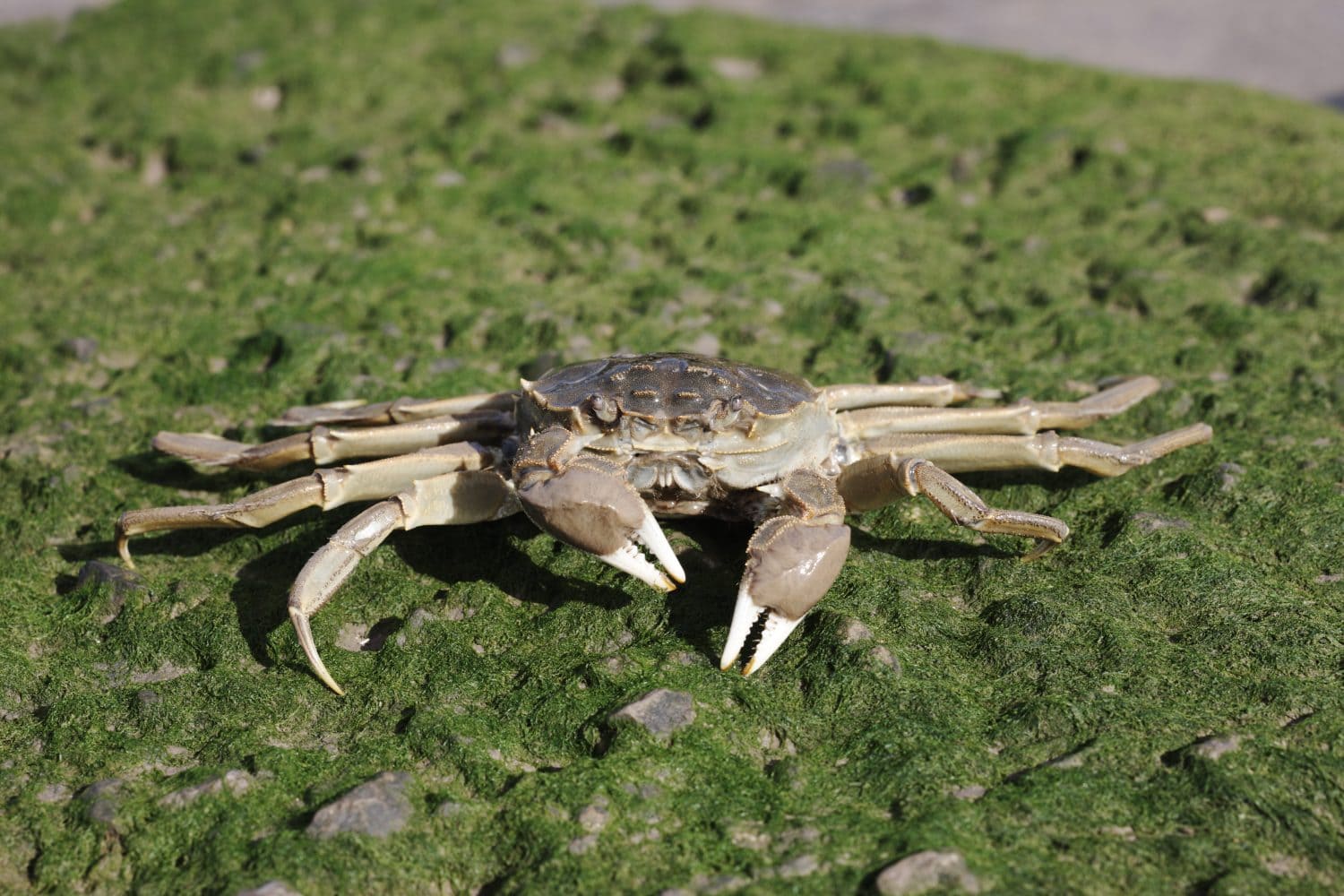
Its key identifying feature is the large, hairy, mitten-like claws that adorn the front legs of older juveniles and adults. The claws are also white-tipped, adding to their distinctive appearance. While the adult crab’s carapace is only about three inches wide, the crab’s front legs are usually twice as long as the crab’s carapace width. Both front legs are equal in size.
Unlike many crab species that prefer a saltwater environment, the Chinese mitten crab lives in freshwater. Chinese mitten crabs have been seen up to 800 miles upstream from the Yellow Sea. The female crab is capable of holding up to one million eggs until they hatch. She migrates to more brackish water to reproduce, where the freshly hatched larvae stay for one to two months to grow. Eventually, the young crabs return to freshwater to grow and reproduce.
Mitten crabs are omnivores. When they’re young, they usually stick to vegetation. As they mature, their diet becomes more varied. Older juveniles begin eating small prey like clams and worms. Adults feast on bait fish like shad and shrimp.
Mitten crabs are also quite capable of walking on land. They can easily navigate barriers such as dams or levees by scaling river banks and traversing land to re-enter the water elsewhere. Mitten crabs have been observed wandering city streets, entering homes, appearing in parking lots and on airport runways, and even turning up in swimming pools.
How Did the Chinese Mitten Crab End Up in the Willamette River?

The Willamette River is one of Oregon’s largest waterways.
©James Bentley Photography/Shutterstock.com
Nobody is certain how the Chinese mitten crab made its way into Oregon’s Willamette River. But scientists have a few theories. One is that the burrowing crab stowed away on a ship that was previously in the Yellow Sea or a U.S. port where Chinese mitten crab populations are already established, such as the San Francisco Bay Area. Upon reaching an Oregon port, the crab may have been released with ballast water. Following its natural behavior, it then made its way upstream to freshwater.
Another theory involves illegal activity. Chinese mitten crabs are considered a delicacy throughout Asia. It is possible someone illegally imported some of these crabs to start a fishery in U.S. waters. This would help meet the demand for the delicacy in the United States. Regardless of how it arrived in the river, removing it is critical.
Reasons to Remove Invasive Chinese Mitten Crabs
The Chinese mitten crab poses a risk to humans and native species.
©jack perks/Shutterstock.com
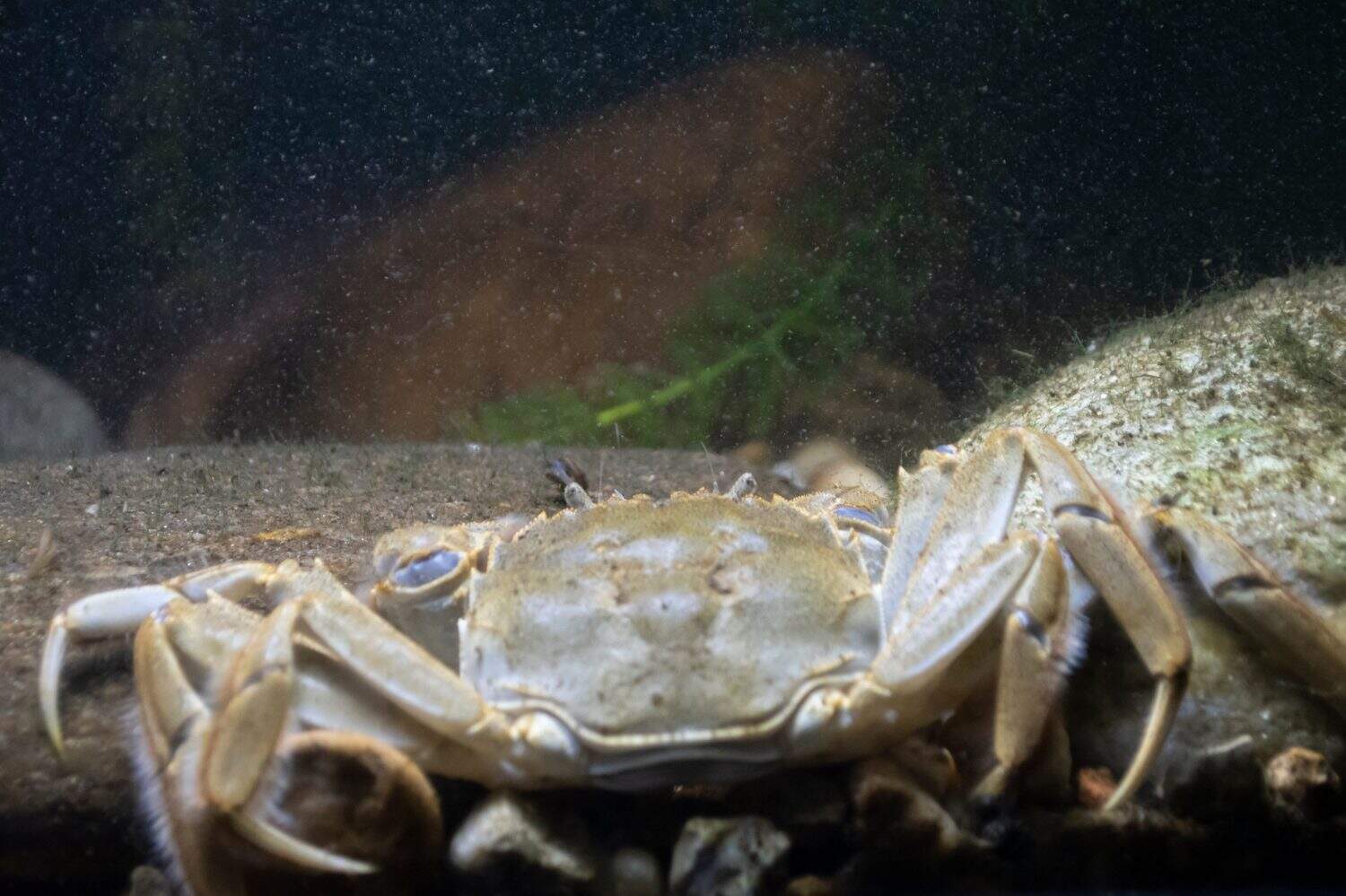
There are several reasons why eliminating Chinese mitten crabs — or at least keeping their populations under control — is essential in Oregon’s waterways. One of the most important reasons is that these crabs pose a threat to human health. Chinese mitten crabs are an intermediate host for the Oriental lung fluke, Paragonimus westermani. This flatworm infects the lungs and causes tuberculosis-like symptoms, including coughing, chest pain, fever, and bloody discharge. As of 2025, no Chinese mitten crabs in the U.S. have been found carrying the Oriental lung fluke, but the risk remains.
Another reason is that these crabs pose a significant threat to native wildlife. Chinese mitten crabs compete for the same food sources as native populations. When mitten crab populations soar, food becomes scarce for native species. Mitten crabs also eat the eggs and newly hatched young of salmon and sturgeon, putting future generations of these important fish species at risk.
The Chinese mitten crab’s burrowing nature also causes damage to river banks and levees, causing erosion that undermines their stability. When these crab populations explode, they can clog water intake pipes and pumps. This further endangers local fish populations, such as trout and salmon, that inhabit the reservoirs created by these water intake facilities.
Commercial fishing vessels are also affected when Chinese mitten crab populations increase. Trawlers report catching hundreds of mitten crabs in their nets. Not only do the crabs damage the nets, but they can also injure or kill the intended catch, resulting in negative economic impacts.