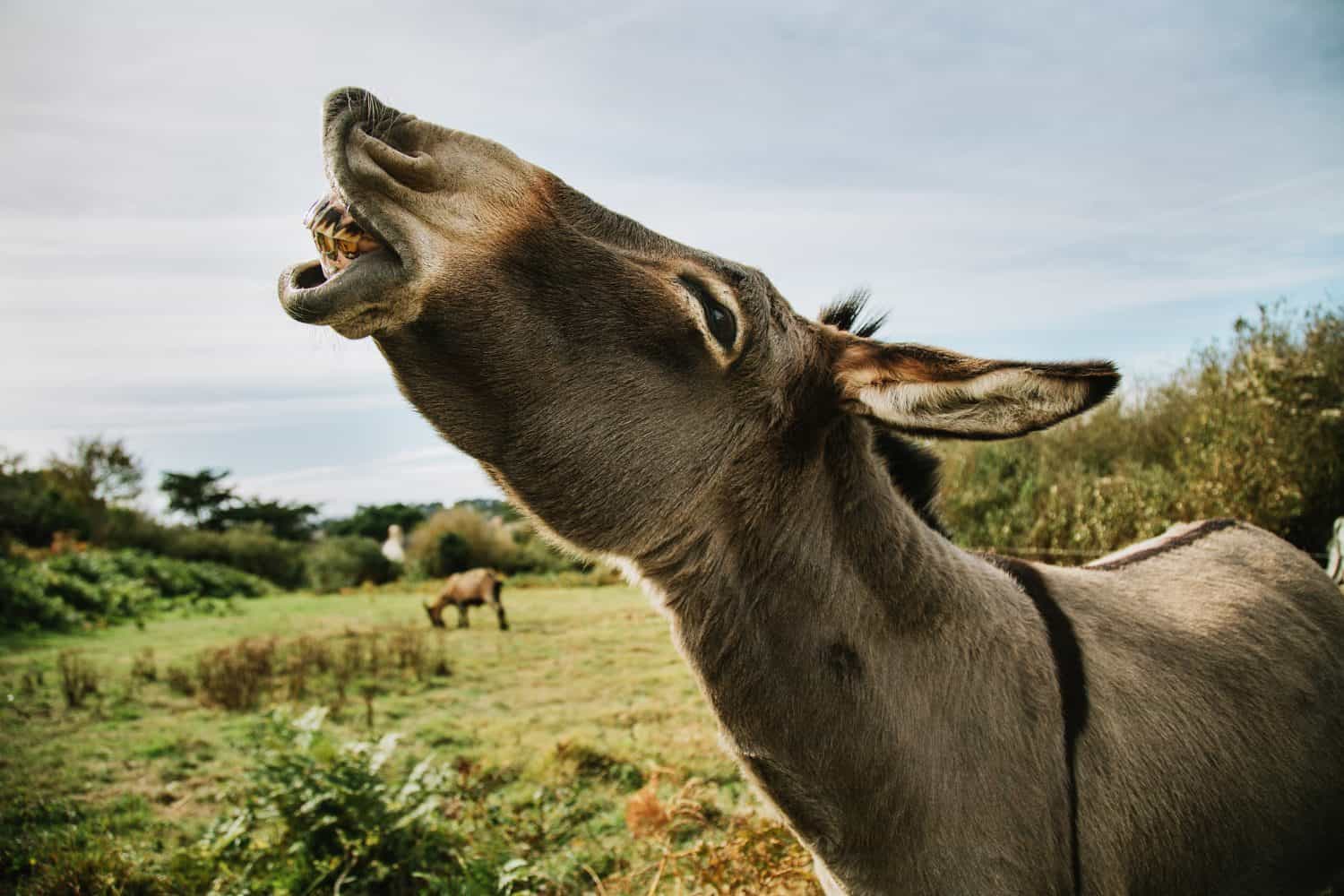

Donkeys are one of the more interesting and enigmatic characters on the farm, but it wasn’t always that way. These equine animals in their domestic form are derived from African Wild Donkeys (Equus africanus). Scientists believe they were first domesticated over 7,000 years ago in Africa. Since then, they have lived in lockstep with human beings, working for them, serving as transportation, and even functioning as companions. Donkeys are smaller in size than horses but just as spirited. In fact, donkeys are known for their inquisitive, affectionate, and stubborn natures. Whether living peacefully on a farm or working as beasts of burden, taking care of donkeys requires a lot of work. As such, let’s learn about ten fundamental aspects of care that make donkeys happy.
Good Grazing
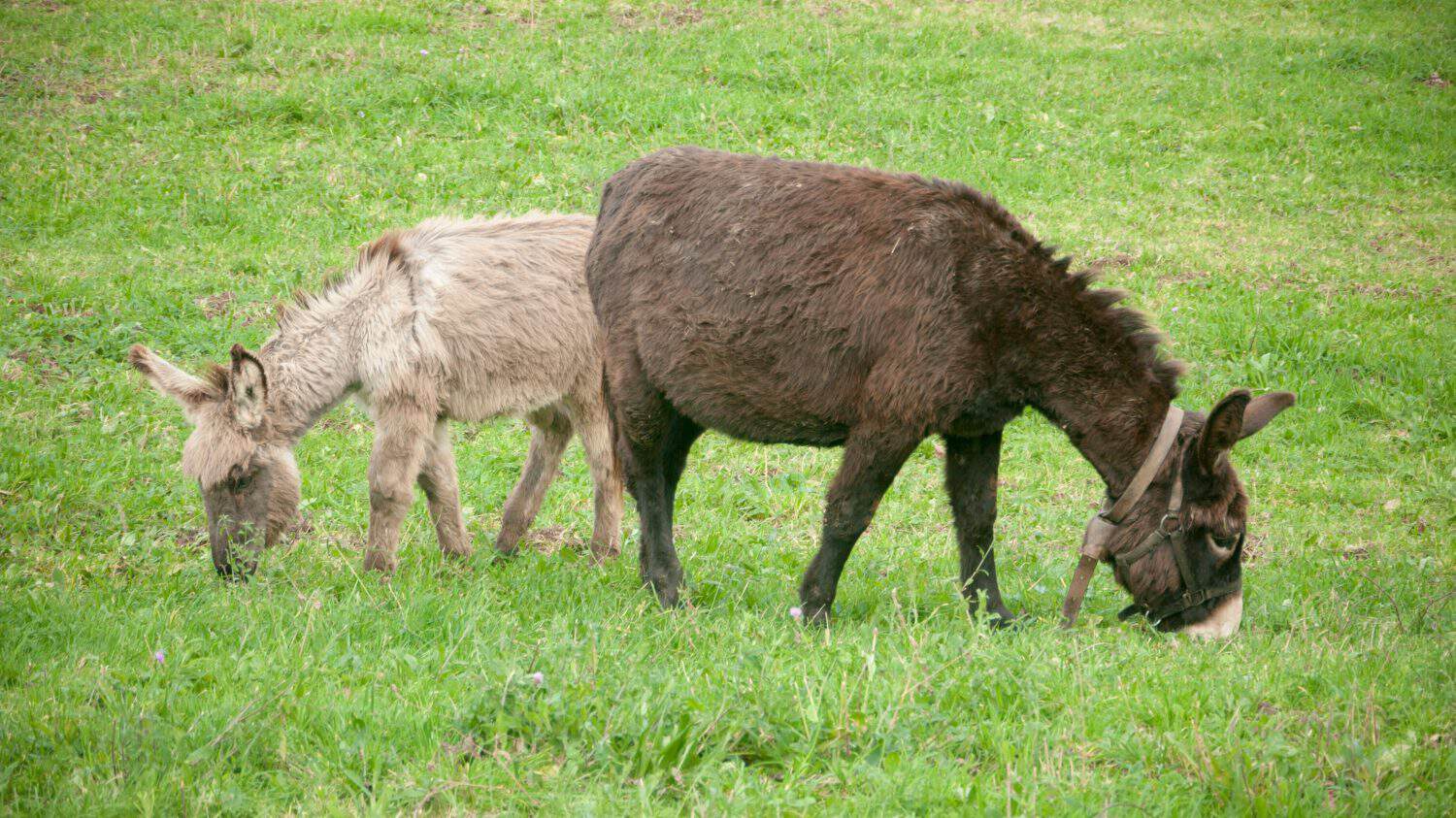
The average adult donkey eats about five pounds of food per day.
©Dario Pena/Shutterstock.com
Sure, you may think providing your donkey or donkeys with adequate feed is enough, but donkeys are foraging animals. That means they are happiest when they can forage for their food, which should be mostly straw without any added energy. An average-sized adult donkey needs about five pounds of food per day to stay satiated. They also need adequate access to clean water at all times.
Proper Shelter
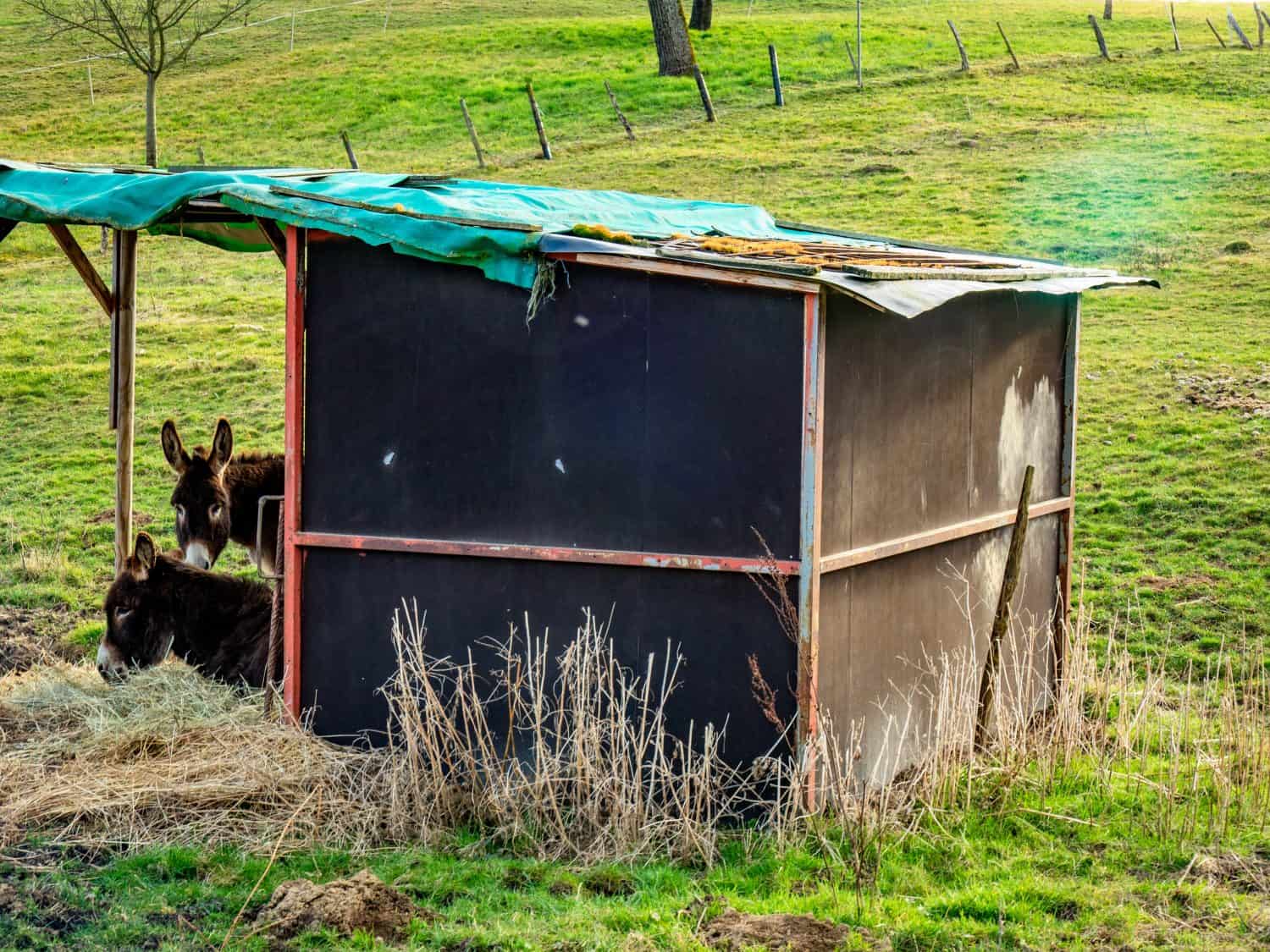
Donkeys don’t have waterproof coats, so they require shelter from the elements to be happy.
©Dietrich Leppert/Shutterstock.com
You may think that donkeys don’t need shelter like other equine creatures, such as horses. One difference between donkeys and horses, however, is that donkeys lack oil in their coats. Horses have this oil, which allows rain to bead off them, giving their coats a waterproof quality. Donkeys lack this luxury, so they should be given access to shelter at all times. A stand of trees can work, but a two or three-sided shed is best. This way, the donkeys are protected but still can look out at the goings on of the world around them.
Excellent Feed and Hay
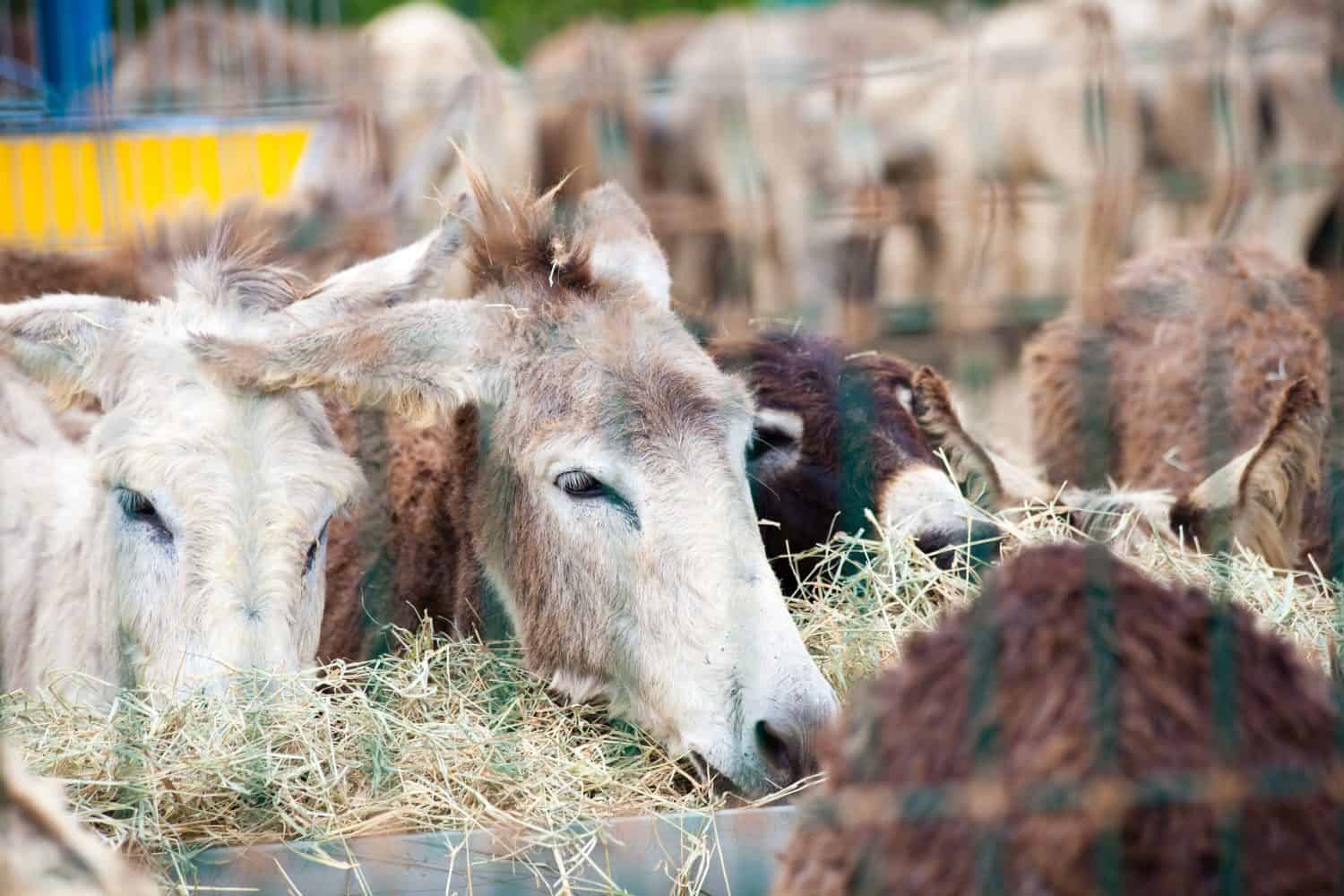
Donkeys should eat mostly straw, and only a little hay.
©HeyJenK/Shutterstock.com
In the wild, donkeys subsist on a variety of dense vegetation. In the domesticated realm, however, they usually eat straw and hay. When sourcing straw and hay for your donkey, be sure to find the best quality available. This can be confusing because many people think straw and hay are the same thing, so let’s put it this way: straw is a by-product of cereal crops, while hay is dried grass or legumes used as animal feed. When it comes to donkeys, they should eat a diet consisting mostly of straw because it’s high in fiber, and they can eat as much of it as they like without problems. Barley straw is best. Hay should only be a supplement. Eating high-energy foods like cereal grains can make donkeys gain too much weight and leading to health problems.
Consistent, Careful Grooming
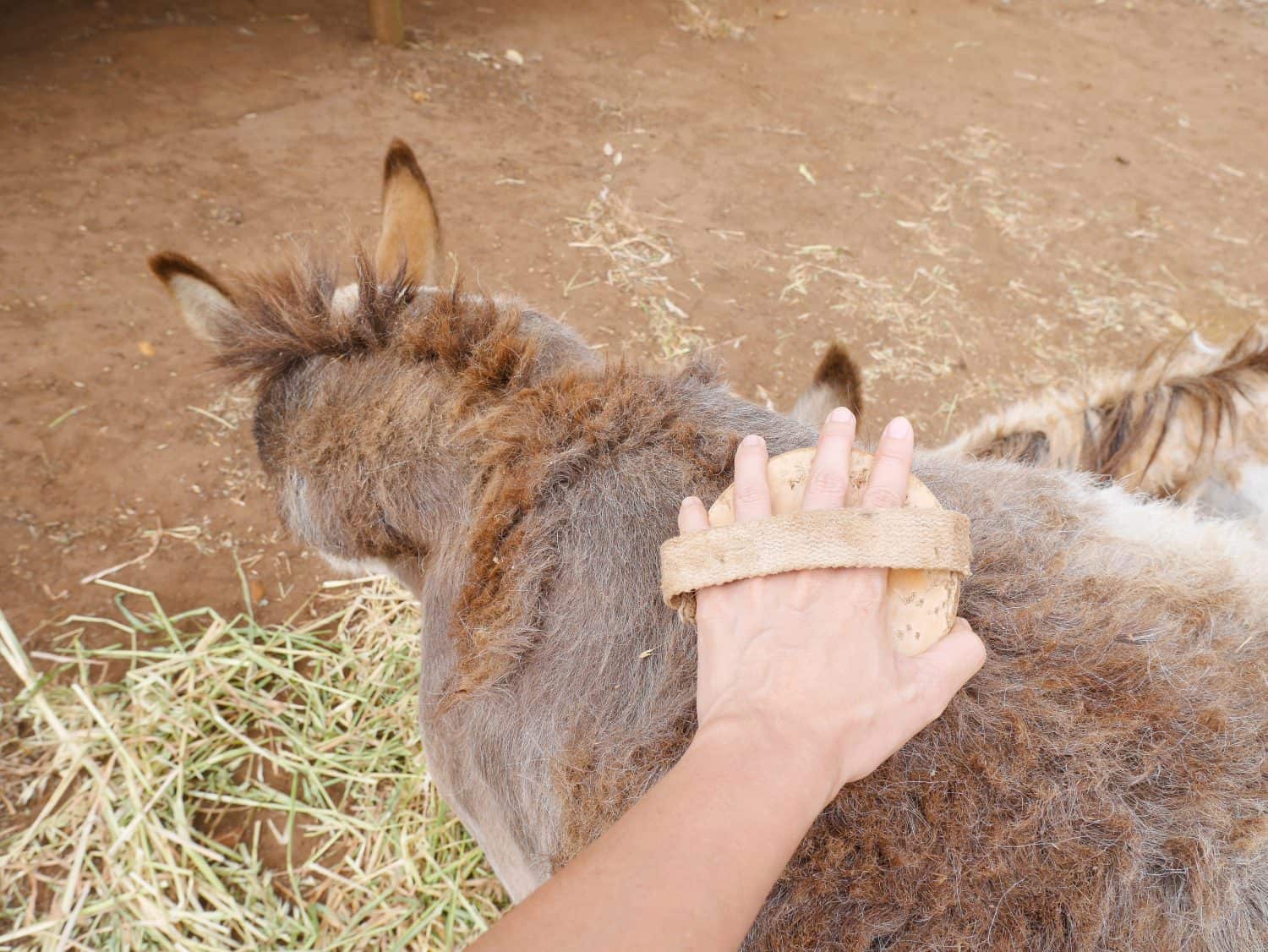
Donkeys need help getting dirt out of their coats.
©p_saranya/Shutterstock.com
Donkeys have short hair, so they don’t need much in the way of grooming, like, say, long-haired cats. That said, donkeys are happiest when they feel clean. This means you’ll make them smile by removing mud or dirt from their short-haired coats and regularly grooming them, even if it’s just a simple brushing.
Regular Health Care
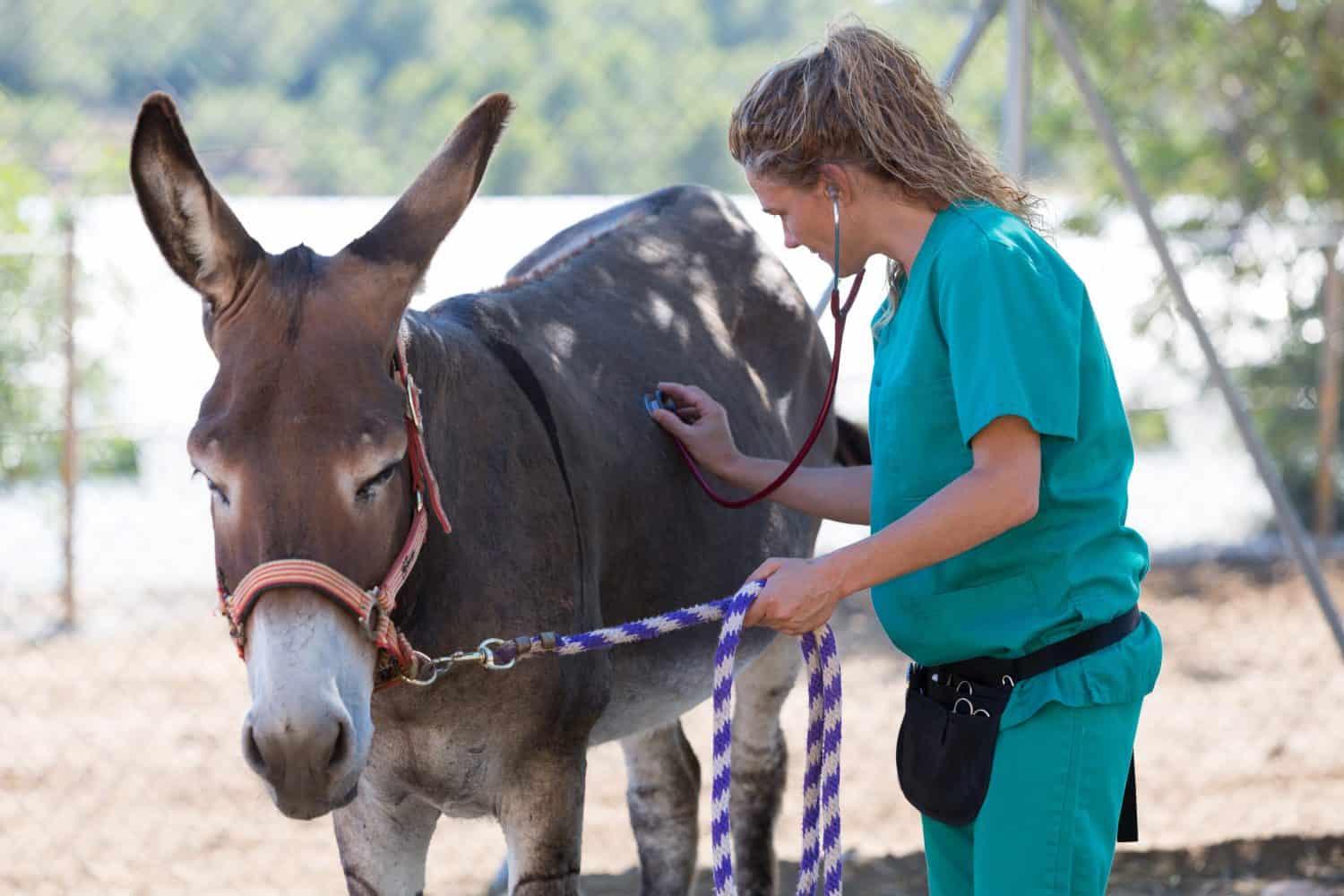
Consistent health care and regular checkups will help donkeys live up to thirty years.
©135pixels/Shutterstock.com
Health care is important for any animal. When it comes to the health and well-being of donkeys, however, there are key areas of focus. For one, they require regular dental checkups; otherwise, they can suffer from dropping food or excessive drooling. Donkeys also need hoof trimmings every two months or so, with daily cleaning. On the medicinal side of things, donkeys should be tested regularly for worms and given all the requisite vaccinations, such as vaccines for tetanus and equine influenza.
Predictable Schedules
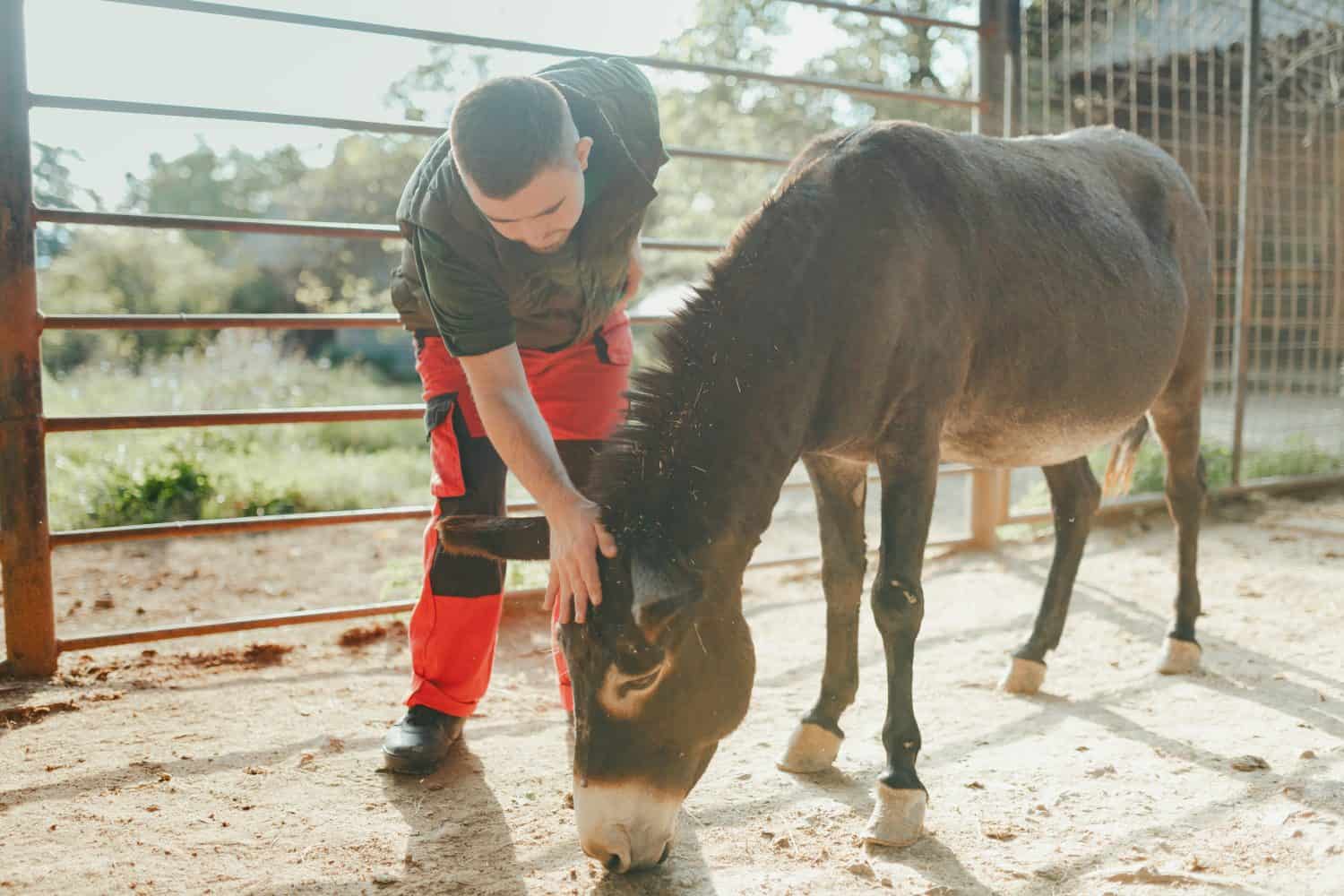
A regular schedule can help donkeys thrive.
©Halfpoint/Shutterstock.com
Donkeys may get bored quickly and scoff at orders more than horses, but they are actually pretty consistent animals. They can’t tell you as much, but they thrive with regular routines. Letting them exercise one day and keeping them in their enclosure for two more days will likely throw their heads into chaos. They expect some regularity in their life. Aspects of your care for them—be it feeding, exercise, or health care—should happen regularly to keep them from feeling too much stress. They seem to thrive when provided with a somewhat regular schedule. By knowing what to expect from their day, your donkey will be happy and far less stressed.
Exercise
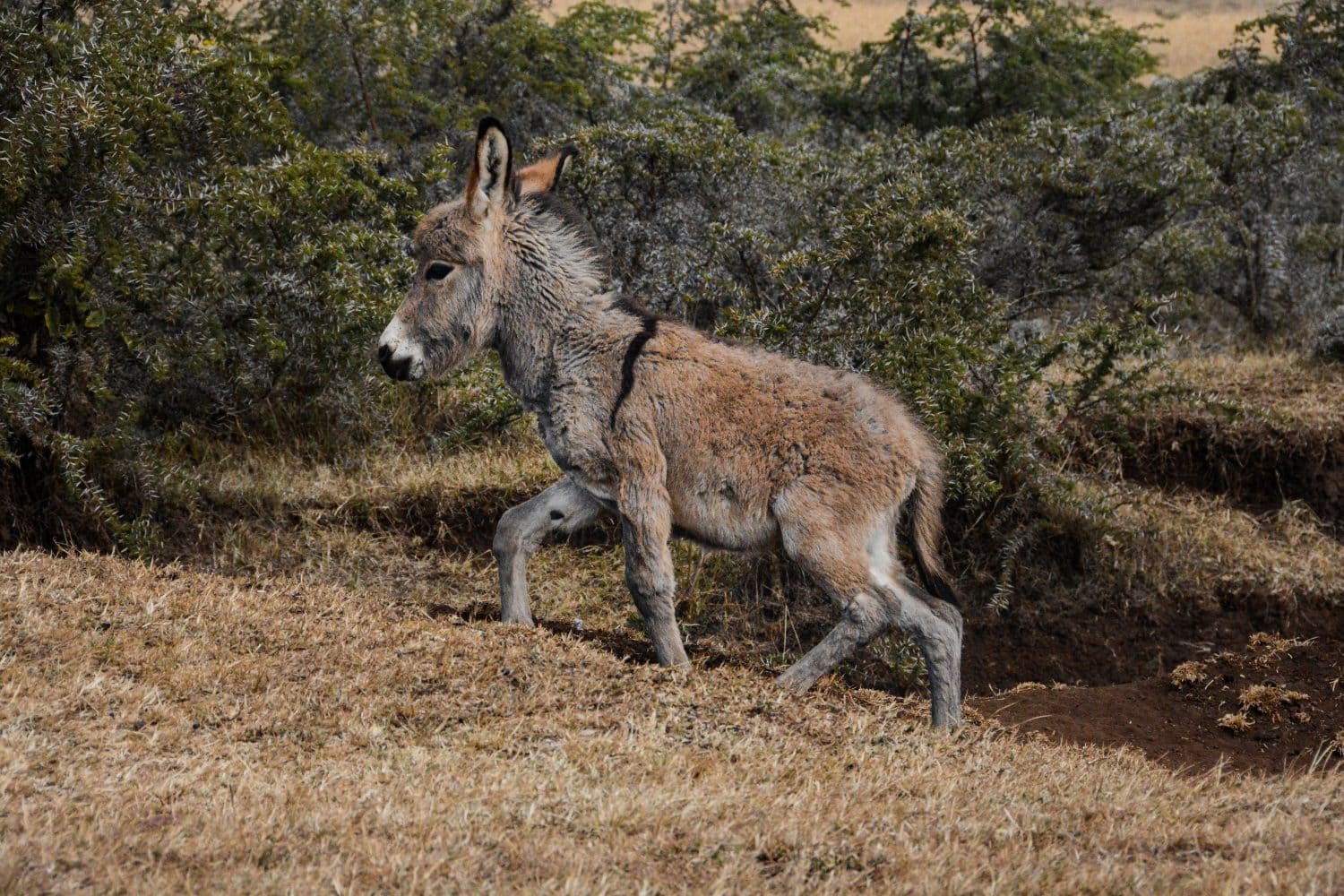
Donkeys need extensive exercise and freedom of movement to thrive.
©Sam Tuch/Shutterstock.com
Every creature needs regular exercise, and donkeys are no exception. When they live in the wild, donkeys walk up to 12 miles every single day. In the process, they encounter vastly different environments, all in the search for rough vegetation to eat. Cut to the life of a domesticated donkey, and its exercise time looks pretty lacking. Perhaps that’s why donkeys have developed a reputation for being stubborn.
You’d be stubborn too if you were forced to sit in an enclosure all day when you were used to so much more. Giving donkeys extensive and consistent exercise every day will keep them healthy, happy, and less likely to exhibit stubborn or negative behaviors. Furthermore, it’s important to provide them with some freedom of movement, as they are used to in the wild.
Cognitive Stimulation

Donkeys require mental stimulation in the form of toys or enrichment activities to stave off boredom.
©Rachele Totaro IT/Shutterstock.com
This point will keep coming up, but it’s worth repeating: donkeys are whip-smart animals. They don’t suffer fools easily or put up with mistreatment. Nor do they put themselves in unnecessary danger. This has led to their reputation of being stubborn or hard to work with. This stubbornness, however, is the other side of a fiery, keen spirit. Donkeys are quite curious creatures and seem to show an intuitive sense or interest in problem-solving.
Like any animal, donkeys can get bored, especially when they are cooped up in a small enclosure all day. That’s why one surefire way to make donkeys happy is to provide them with enrichment activities. Mental stimulation can come in many forms, be they toys, feeders incorporated into puzzles, or just simple items like sticks or balls. Donkeys are big experimenters and will be grateful for an opportunity to flex their problem-solving skills. It may just look like pushing the stick or ball around, but this provides much-needed mental stimulation for a bored donkey. Beyond toys, get creative with the stimulation. A nice view and some games to play with will keep even the most “stubborn” donkey occupied for a while.
Companionship
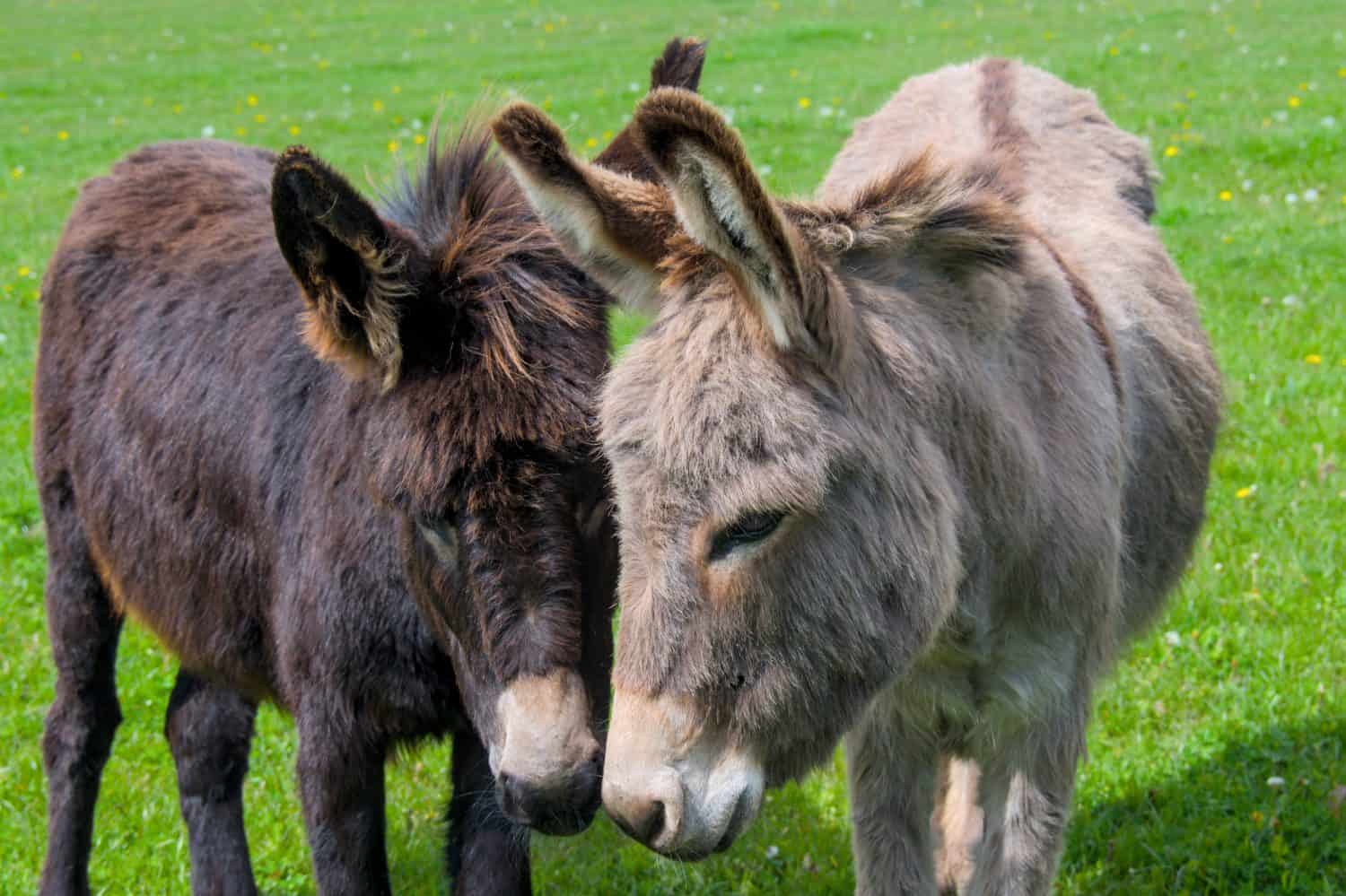
Donkeys are highly attuned herd animals, and even fall into severe periods of grief when their friends die.
©Brinja Schmidt/Shutterstock.com
There is the quintessential image of a man and his donkey, alone in the desert. This is a result of mankind’s use of donkeys for work purposes. On their own terms, however, donkeys are incredibly social animals. They prefer their herds, making friendships with other donkeys that can last a lifetime. Donkeys even mourn the loss of their friends when they die.
This process of mourning and subsequent grief can become so extreme that donkeys may refuse to eat or drink. If this continues, they are at risk of developing hyperlipaemia, a potentially fatal condition caused by a lack of food intake. It shows how much donkeys crave companionship. That’s why it’s wise to buy pairs of donkeys for your property or purposes instead of a single individual. Doing so will make them so much happier.
Affection
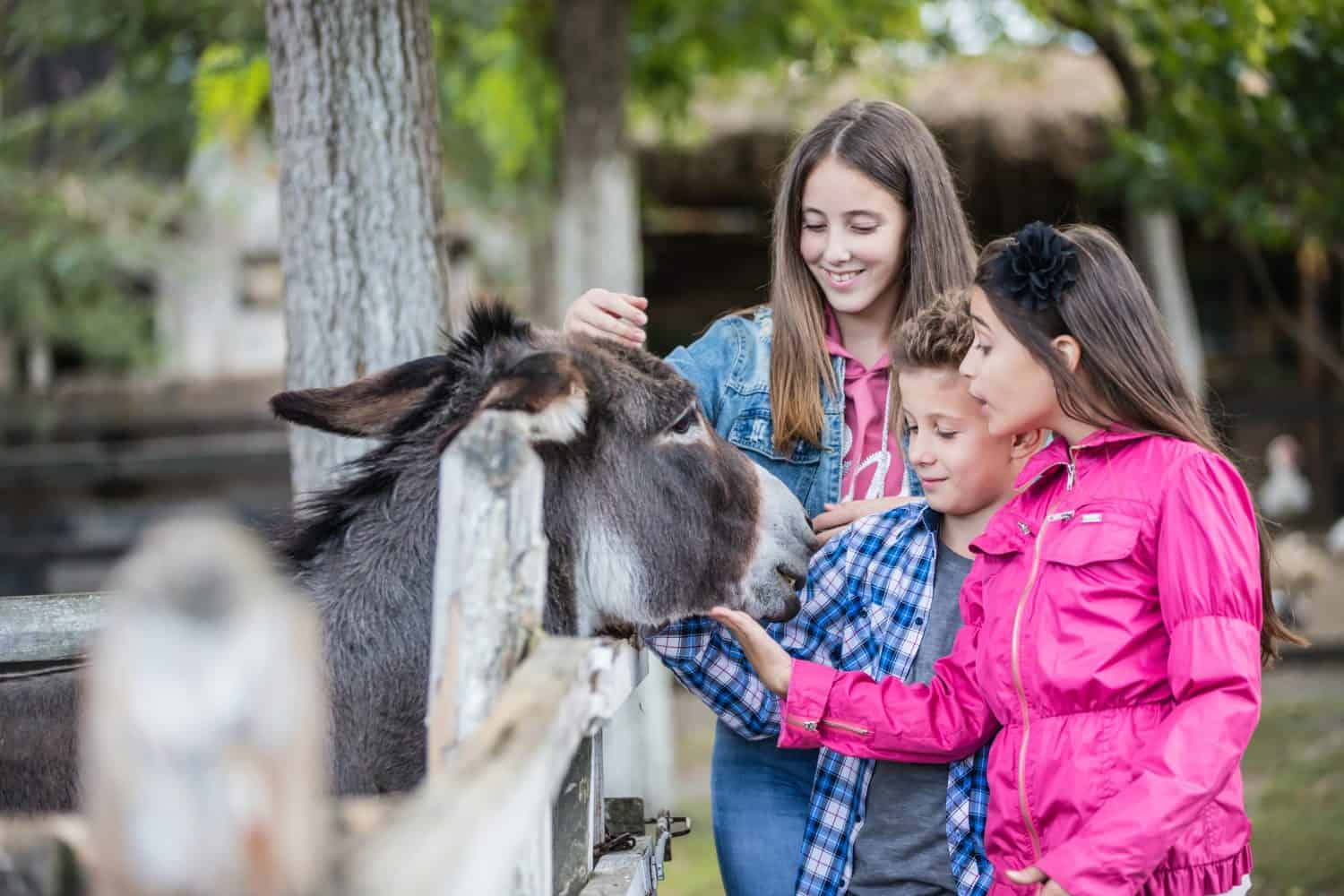
Donkeys’ affectionate and patient natures make them perfect service animals.
©Jovica Varga/Shutterstock.com
Donkeys don’t just buddy up with their fellow donkeys. They love humans, too, it’s true. There’s nothing they enjoy more than a nice pet on their backs, some light scratching behind the ears, or even some kind words. They are incredibly loyal animals, with shrewd intelligence, and a sense of compassion for many types of animals. They crave social interaction, and receiving affection plays a big role in making them happy.
This sense of care and compassion makes donkeys, especially mini donkeys, excellent therapy animals. They are used in animal-assisted therapy for people with special needs, veterans, and seniors living in nursing or assisted living homes. Besides their patience and intelligence, donkeys are likely to return whatever affection you give them. They are truly one of the sweetest animals on the farm, and even just a little love goes a long way.