
Quick Take
- Feeding honey bee larvae royal jelly doesn't fully explain how a queen is made. See the old theory →
- The shape of a bee's nursery turns out to matter far more than anyone realized, with queens raised in the wrong one paying a steep price. Explore the queen's cell →
- Researchers just discovered an entirely new type of worker bee. Meet the new bee role →
- Two honeybee species separated by continents use the exact same secret strategy to crown a new queen, and the strategy has more to do than diet alone. Discover the shared strategy →
Scientists have long believed the key to making a young honeybee into a queen was to feed her royal jelly. Royal jelly is a highly nutritious milky secretion that all honeybee larvae are fed for at least the first three days of their lives. After that, worker bee larvae are fed a standard diet, while queen larvae continue to receive large amounts of royal jelly. However, a new study published in the journal Nature has uncovered that there is more going on in creating a queen bee than we previously thought.
“This work highlights how much sophistication exists inside insect societies,” Boris Baer, an entomologist whose laboratory contributed to the study, said in a statement. “Honeybee colonies are not simply collections of individuals. They function as integrated biological systems capable of engineering their own environments.”
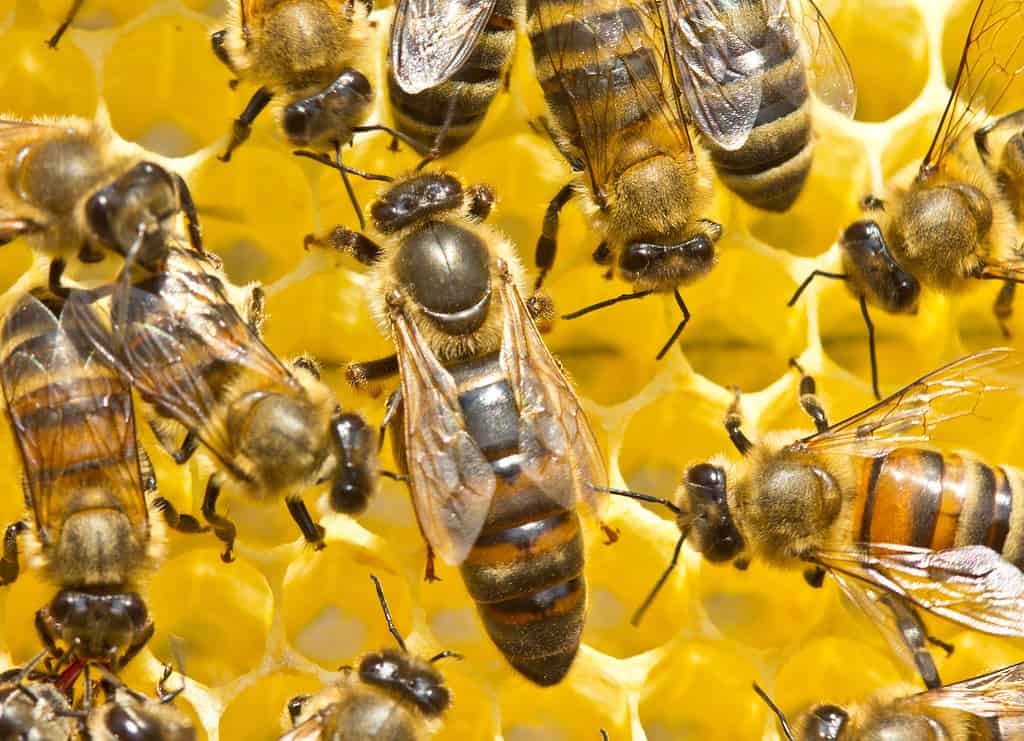
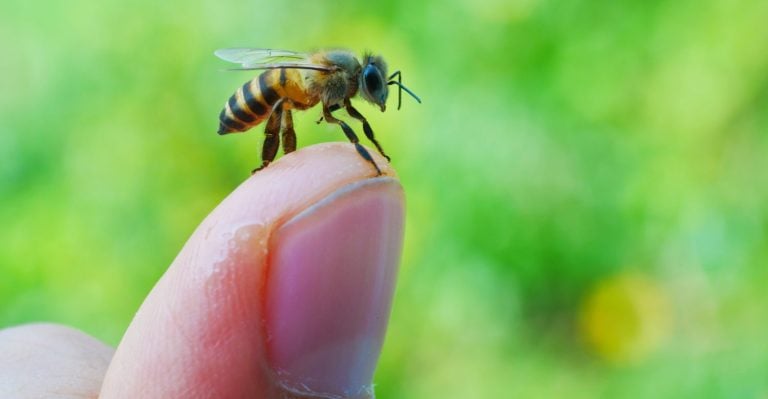
The queen honeybee is about two times larger than a worker bee.
©iStock.com/Inventori
What Are Eusocial Insects?
Bees are eusocial insects. Some of the other insects that share this trait are ants, wasps, and termites. Social animals, including humans, live in groups and cooperate to help achieve common goals. But eusocial insects have a highly structured social system that is organized with a clear division of labor.
Usually, only one or very few eusocial insects in a colony reproduce. Overlapping generations of eusocial insects live together, and the older ones typically help care for the younger members. Eusocial insects are highly complex, and the more we study their behavior, the more we learn how much we still have to discover.
The Long-Standing Theory About Queen Bees

Honey bee workers gather pollen to feed the colony.
©MagicBloods/Shutterstock.com
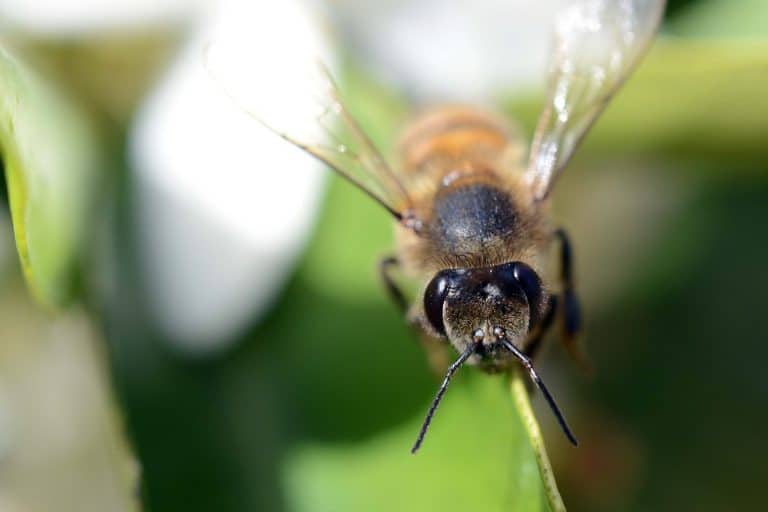
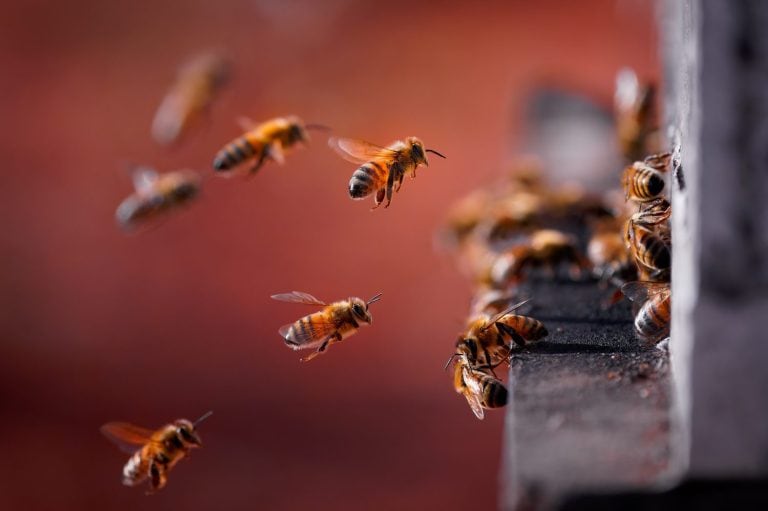
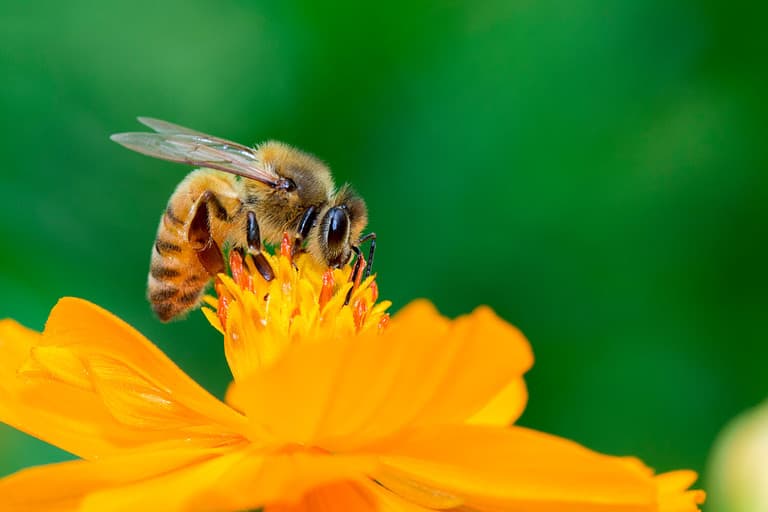
Honey bees (Apis mellifera) live in eusocial colonies with a queen, workers, and drones. It’s generally the workers that we see flying around as they forage for food for the hive. Drones are the male honey bees, and their only job is to mate with a female queen.
Each colony usually has one queen, who is the only female that reproduces. The long-standing theory is that when a queen dies, workers select a larva and feed it royal jelly, enabling it to develop into a fertile female (a new queen) rather than a sterile worker.
Inside the Peanut-Shaped Royal Crib
The newly published research revealed that the process by which a larva develops into a queen, rather than a worker bee, is more complex than simply eating royal jelly. Baer explained in the statement, “The old idea was relatively simple: take an egg, move it into a queen cell, feed it royal jelly, and you get a queen.”
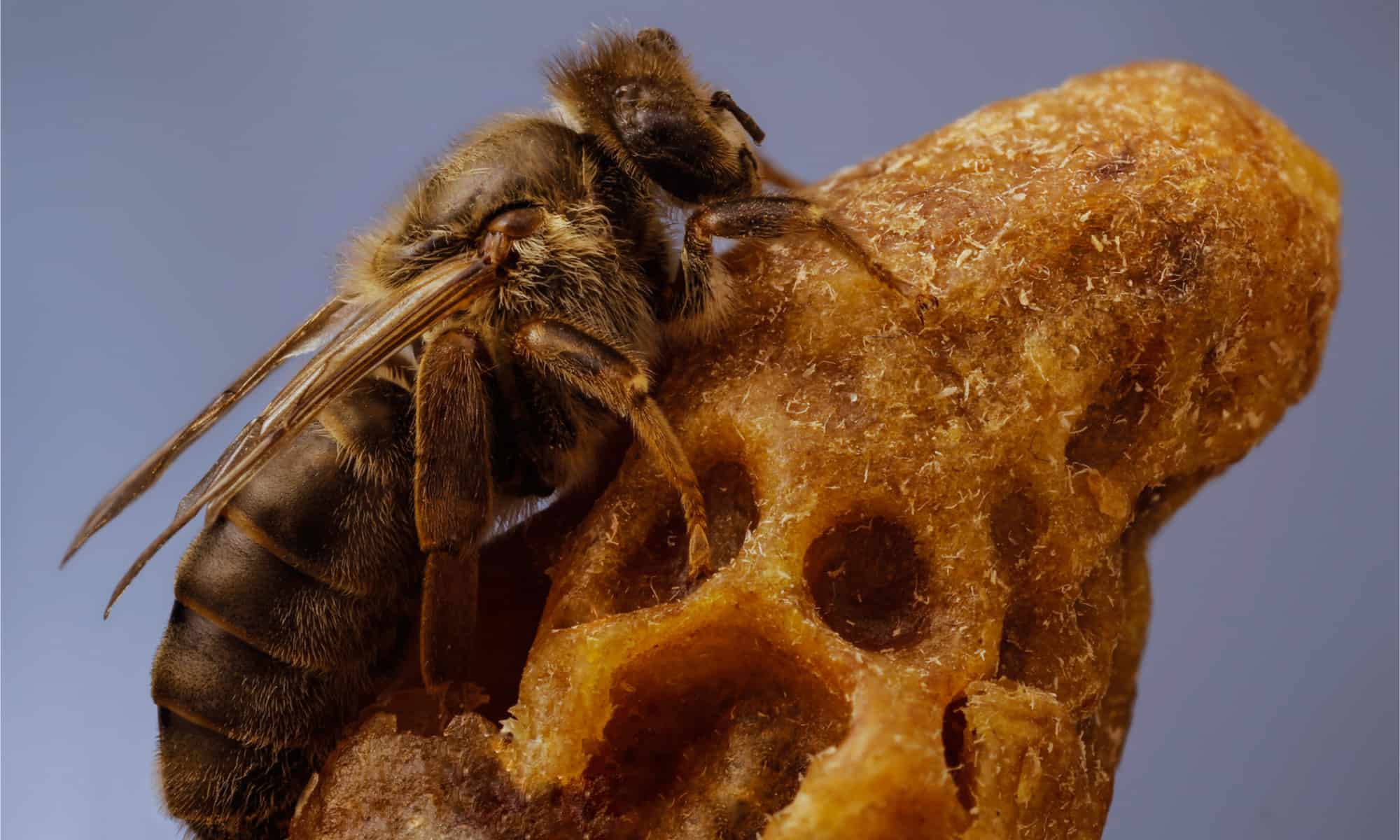
Researchers studied queen brood cells in relation to regular worker chambers. The colony raises and takes care of worker bee larvae living in hexagonal cells. On the contrary, scientists learned that the “royal cribs” were not hexagonal but instead were peanut-shaped. “What we found,” said Baer, “is that there’s an entire machinery behind this process. It’s much more sophisticated than we imagined.”
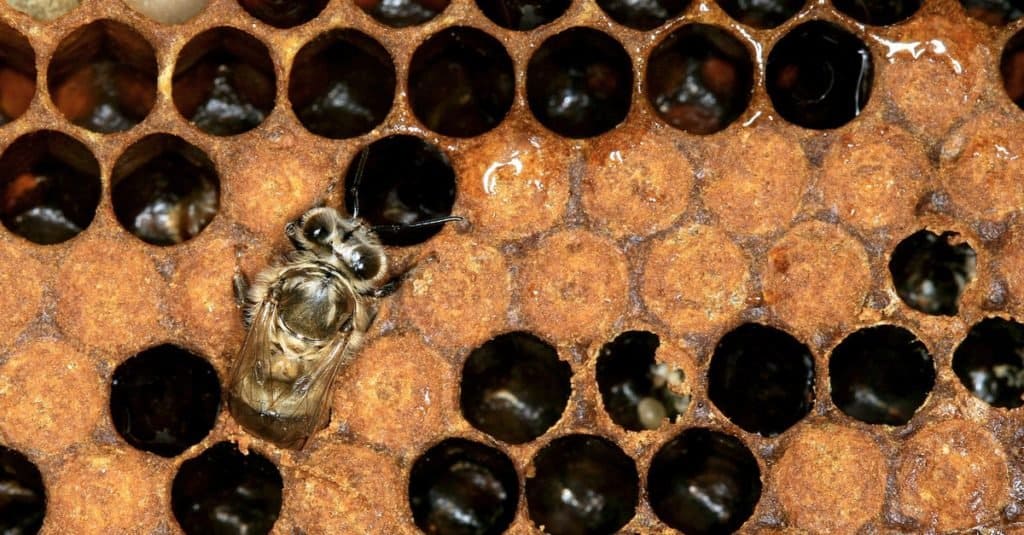
Bee larvae are raised in honeycomb chambers called brood cells.
©GIRODJL/Shutterstock.com
The royal brood cells are more than just shaped differently. They are built with a different type of wax than the worker nurseries. The wax has special properties that maintain a warmer and damper environment. It’s also more pliable and less dense than regular honey bee wax. To understand the difference, researchers raised larvae in both queen cells and worker cells and fed them royal jelly. Queen bees raised in cells made from regular worker wax did not grow as large as typical queen bees, and many of them died.
Meet the “Queen Cell Builders” Behind Bee Royalty
During the study, researchers discovered a new kind of worker bee, which they called “queen cell builders.” Scientists learned that the queen cell builders actively gather wax and modify it to make the peanut-shaped cells. While these young worker bees are caring for the queen, their physiology changes. They have higher body temperatures and activate specific biological processes to create the special wax. This is not accidental; it is a purposeful process in which workers engineer cells specifically designed for raising future queen bees.
The special workers use their elevated body heat to maintain warmth for the queen larvae. The extra warmth helped the queens develop faster than regular worker bees, which is essential for a hive that needs a new queen.
Baer explained, “You can think of it as something like Buckingham Palace. There is a dedicated group of bees focused entirely on raising the queen, and if they don’t get it right, the colony cannot reproduce.” Researchers found this strategy in both Asian and European honeybee species.
Rethinking How Nature Creates a Queen Honey Bee
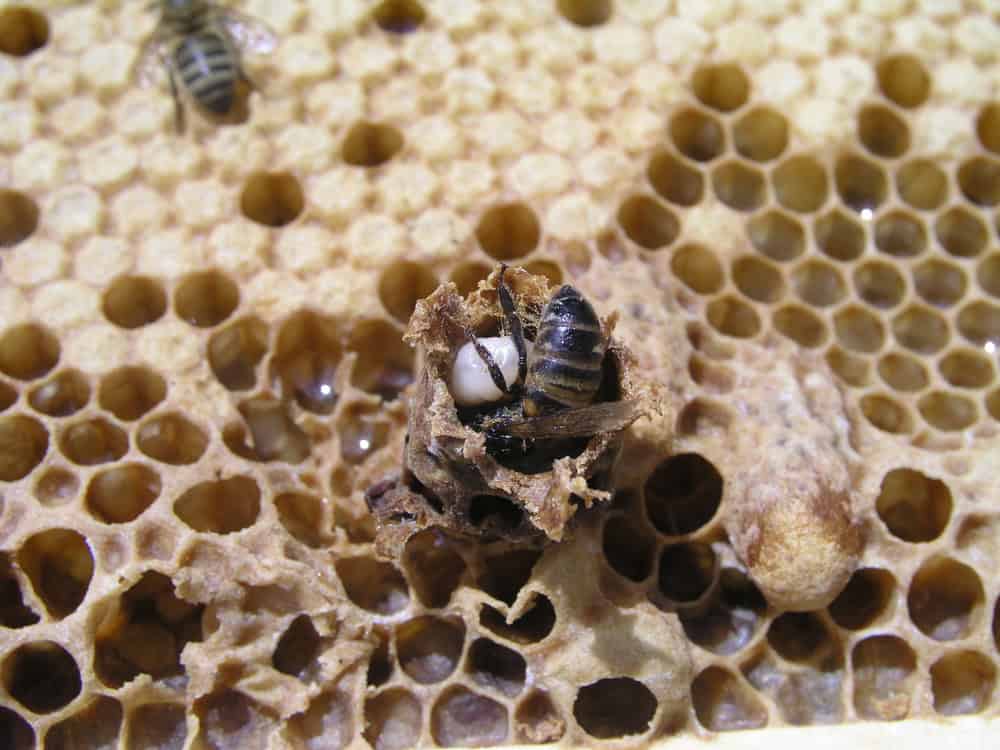
It takes more than eating royal jelly to make a queen honey bee.
©Lipatova Maryna/Shutterstock.com
This groundbreaking research reshapes our understanding of honey bee colonies. More than just feeding a new bee with royal jelly, the entire process of creating a new queen is highly sophisticated. The colony is more than merely a collection of insects; it is a highly organized group capable of deliberately engineering the process to create a new queen, without which they would not survive.