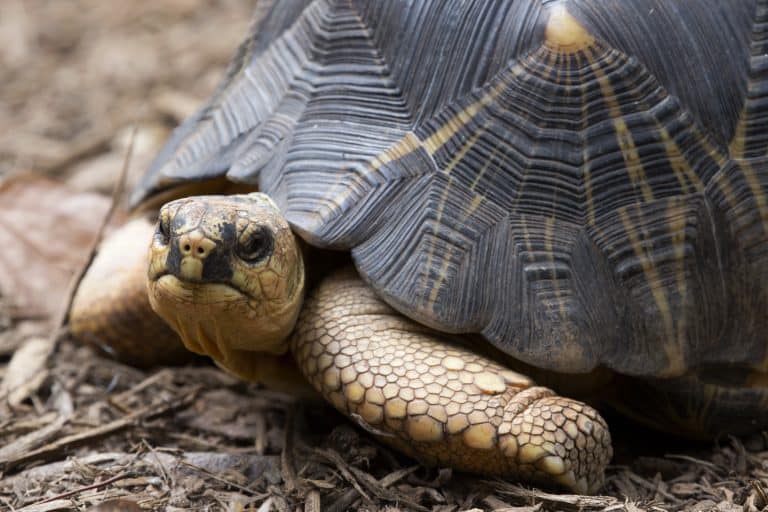

Shyness is surprisingly common in the animal kingdom. Many species rely on stealth, quiet movements, and strong avoidance instincts to survive. Shy animals typically stay out of open spaces, avoid direct eye contact (especially in primates, where eye contact can signal aggression), hide behind vegetation, or stay active only at night. Their elusive behavior helps them escape predators, reduce stress, and keep their energy use low. Read on to learn about ten animals famous for their natural shyness and what we know about their secretive habits. And if you find you haven’t heard of a lot of these animals before, there’s a good reason for that: They’re shy!
Okapi
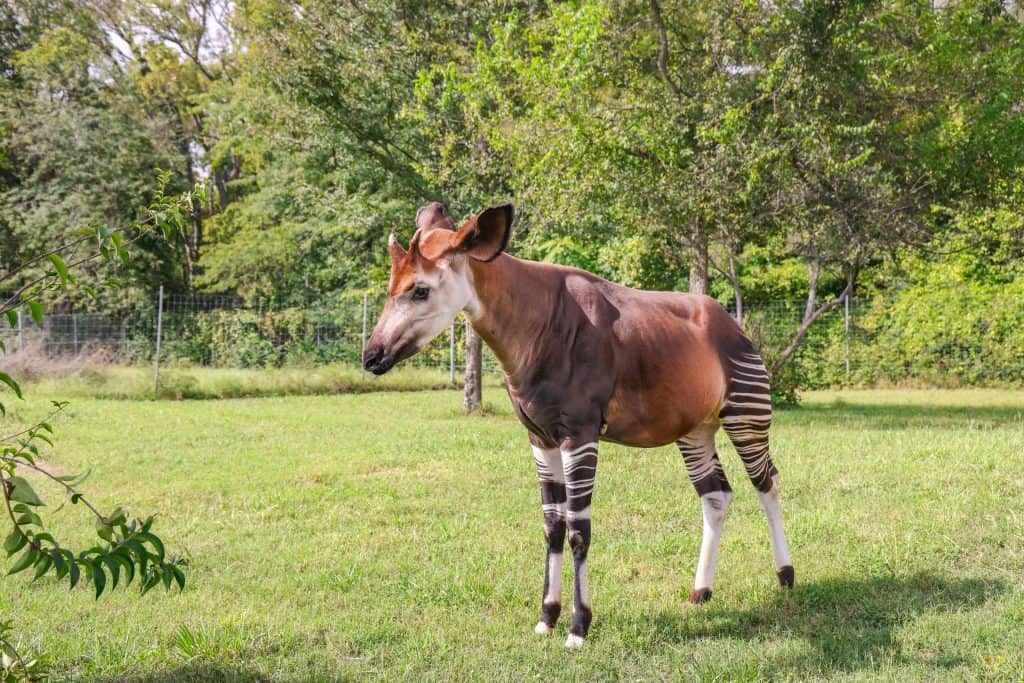
The attention-grabbing striped legs of the okapi actually assist in its shyness, helping it to camouflage itself and hide.
©Courtesy of Nashville Zoo
The okapi is a medium-sized forest ungulate, native solely to the Ituri Rainforest of the Democratic Republic of Congo. It occupies some of the densest and darkest forests on Earth (quite convenient if you happen to be a shy animal who likes to hide). They have highly flexible, prehensile tongues used for grooming and stripping vegetation, helpful for their diet of leaves, bamboo shoots, fungi, and fruit. Okapis evolved in predator-heavy forests and rely on staying unseen rather than outrunning danger.
Other shy behaviors: freezing when alarmed, slipping quietly through foliage, using striped legs as camouflage, and maintaining individual territories marked with scent glands on their feet.
Fun Fact: The okapi is the closest living relative of the giraffe, despite the fact that it barely resembles one at first glance.
Snow Leopard
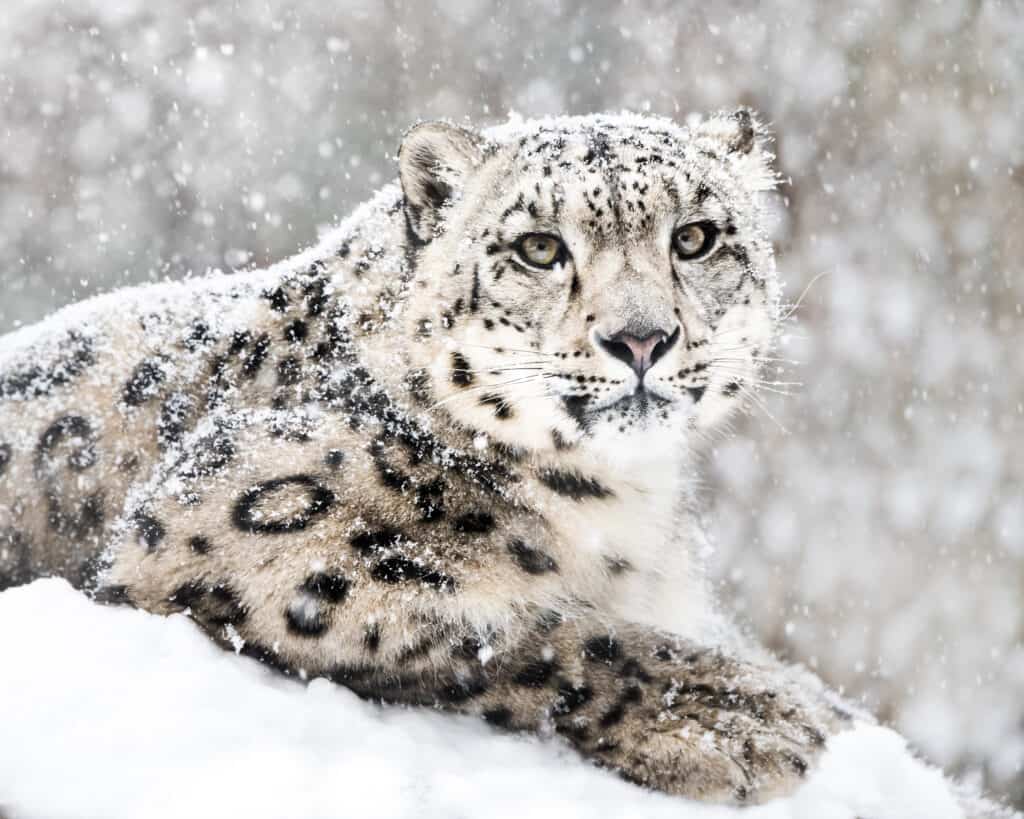
Snow leopard’s coats are perfect for blending into the rocky, snowy terrain.
©Abeselom Zerit/Shutterstock.com
Snow leopards are solitary, thick-furred big cats adapted to some of the harshest environments on the planet, including the Himalayas and mountain ranges across Mongolia, China, and Central Asia. They live at elevations often in the range of 9,000–15,000 feet, which means that if you’re a shy animal, you’re unlikely to encounter many others at such high elevations. Their wide paws act like natural snowshoes, and their dense fur keeps them insulated against intense mountain cold. Snow leopards rely on stealth rather than speed as they prey on blue sheep, ibex, marmots, and hares. Their survival depends on remaining unseen in harsh, open landscapes where stealth is essential.
Other shy behaviors include: camouflaging in rocky terrain, remaining active mostly at dawn and dusk, and retreating quickly when they detect humans.
Fun Fact: A snow leopard’s long, thick tail works like a scarf, wrapping around its face for warmth during extreme cold.
Narwhal

Narwhals hide out 5000 feet beneath arctic ice.
©iStock.com/dottedhippo
Narwhals are medium-sized toothed whales found exclusively in cold Arctic waters near Canada, Greenland, Norway, and Russia. They are deep-diving specialists that feed on Greenland halibut, Arctic cod, squid, and shrimp, often hunting at depths of close to 5,000 feet. Narwhals migrate seasonally, wintering beneath pack ice and summering in fjords and coastal bays. Living beneath the ice off the coast of northern Canada is already isolating for narwhals, and they further avoid unfamiliar sounds and disturbances, fleeing from boat motors and research vessels.
Other shy behaviors include: quiet surfacing, deep diving when startled, and traveling in small, tight-knit groups.
Fun Fact: Males (and occasionally females) are known for their long tusks. But this “tusk” is actually an elongated tooth filled with millions of sensitive nerve endings.
Aardvark
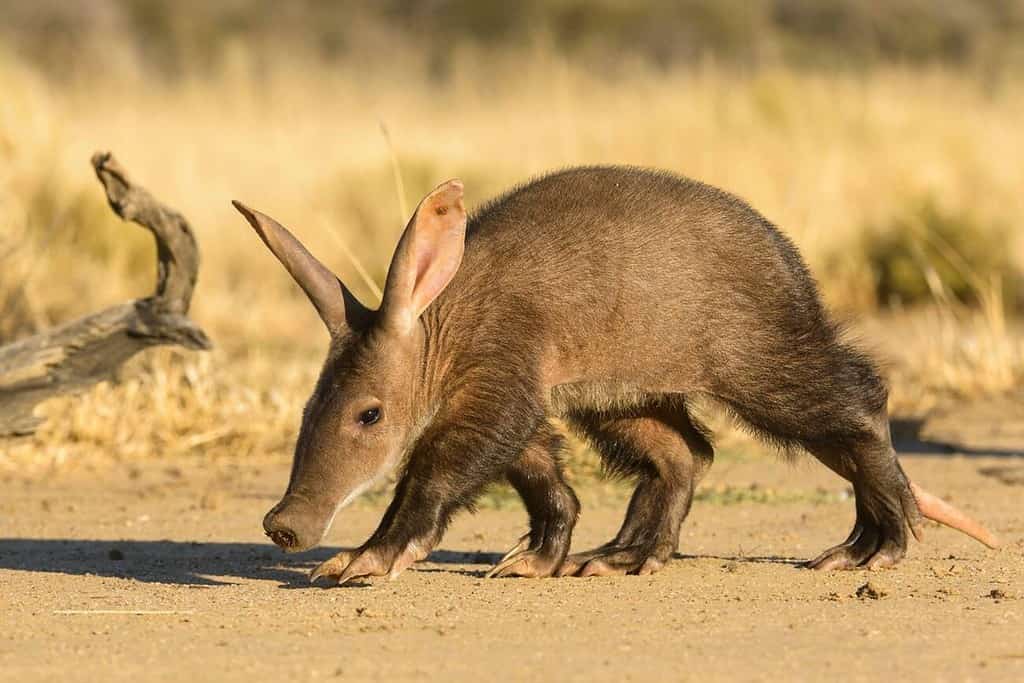
The aardvark’s tubular snout gives it a heightened sense of smell, helping it to navigate at night.
©AdamZ9/Shutterstock.com
Aardvarks are nocturnal, burrowing mammals found throughout much of Sub-Saharan Africa. They live alone, roam large territories, and create extensive burrows, which can also serve as shelters for many other species. They feed almost entirely on ants and termites, using specialized claws to break open mounds and a long, sticky tongue to gather insects. The enhanced sense of smell due to their tubular snouts, and their sensitive hearing help them navigate the night. Their nighttime lifestyle and solitary behavior evolved to help them avoid predators and heat.
Other shy behaviors: emerging only in darkness, retreating quickly into burrows, and freezing when startled.
Fun Fact: Due to their powerful, shovel-like forelimbs, aardvarks can excavate a new burrow in minutes
Saola
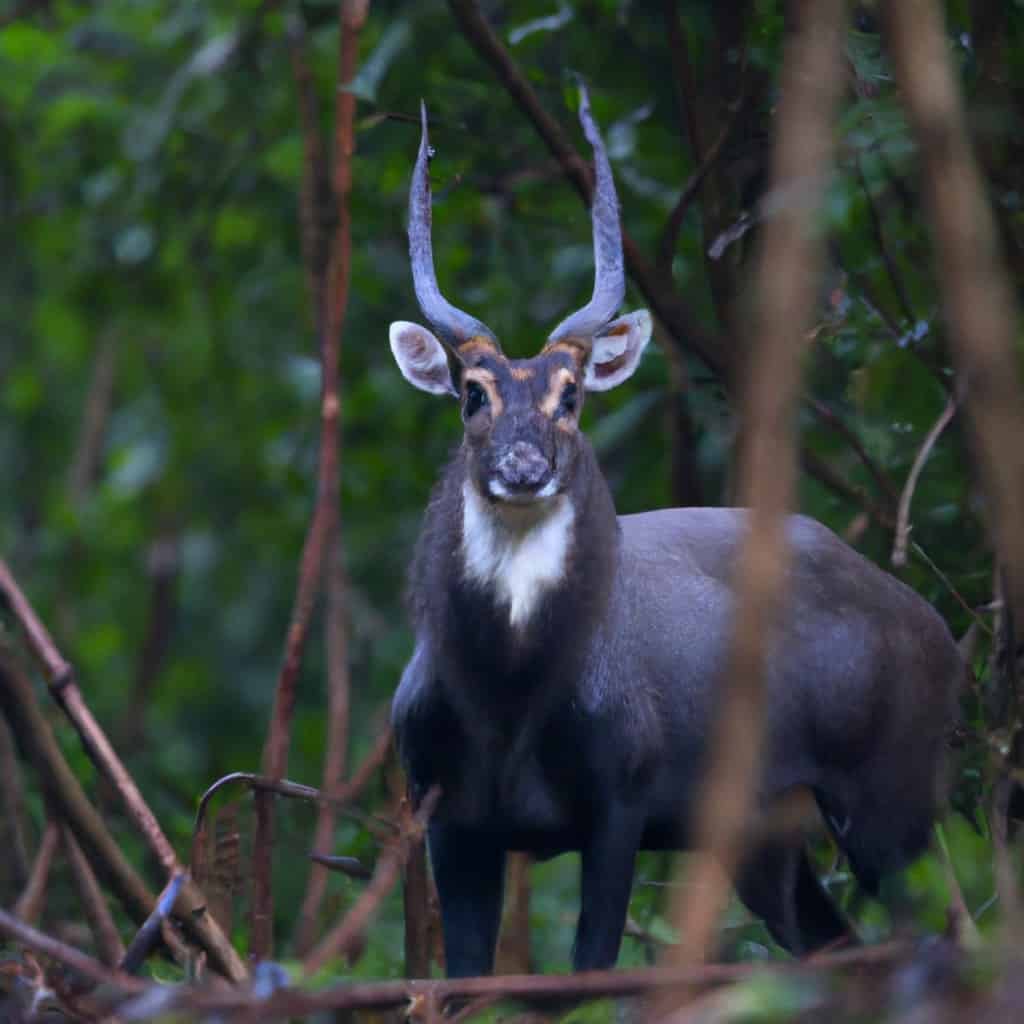
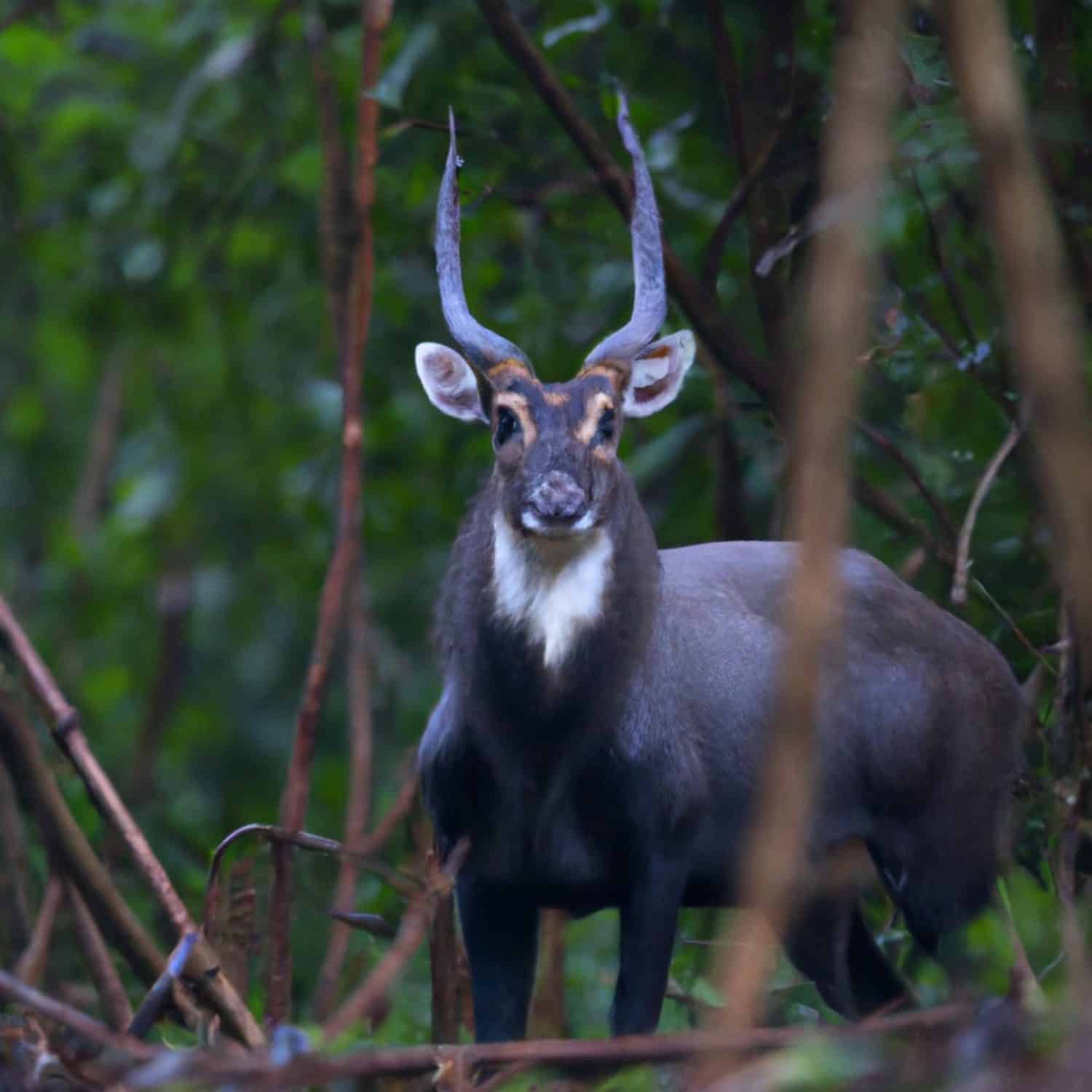
Saola’s are so rarely seen that they’ve earned the nickname “Asian unicorn.”
©Bruyu/Shutterstock.com
The saola is a critically endangered forest bovine found only in the remote Annamite Mountains of Vietnam and Laos. Often called the “Asian unicorn,” it lives in wet evergreen forests near streams and feeds on tender leaves, shrubs, and riverbank vegetation. These small, slender ungulates have distinctive parallel horns found in both males and females. They are extremely rarely observed and are among the least documented large mammals in the world, inhabiting remote forests and instinctively avoiding anything unfamiliar, including humans.
Other shy behaviors: quiet movement, avoidance of open areas, and an exceptional ability to stay concealed, even at close range.
Fun Fact: Saola weren’t discovered by science until 1992, despite being a large mammal.
Red Panda
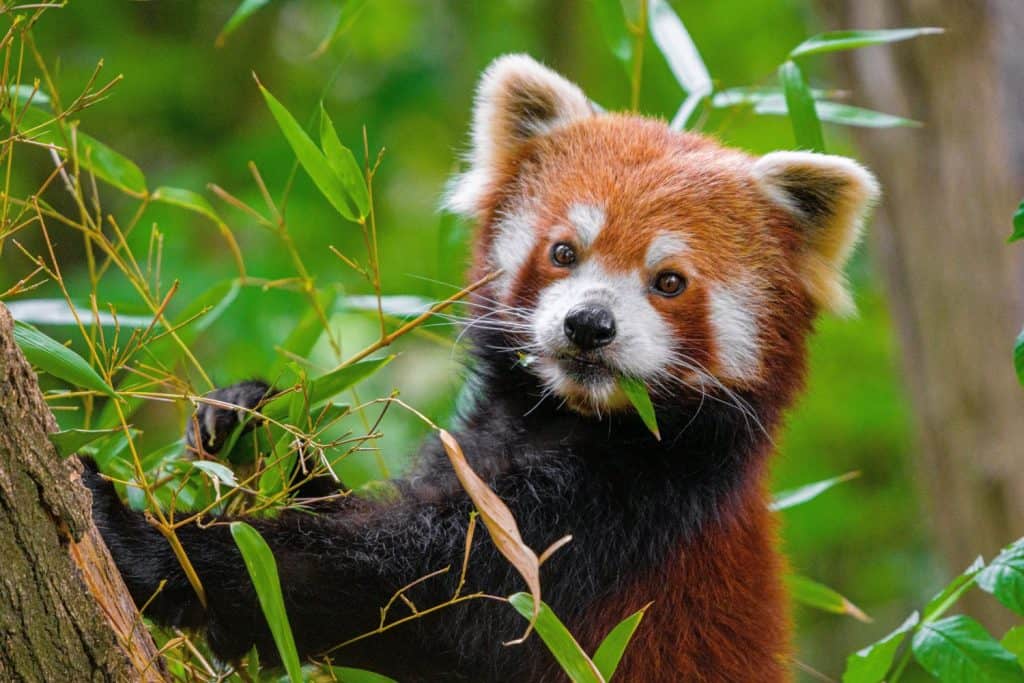
These shy little guys like to take naps way up high in tree branches where nobody can bother them.
©aktarulislam068/Shutterstock.com
Red pandas are small, arboreal mammals native to the cool, temperate forests of the Himalayas and high-altitude regions of China, Nepal, India, and Bhutan. They primarily eat bamboo, but also consume berries, insects, eggs, and small animals. Red pandas are natural climbers, using semi-retractable claws and a long, bushy tail for balance. They spend most of their time in treetops, often curled on branches or tucked inside tree hollows—a perfect hiding spot for a shy animal.
Other shy behaviors: staying hidden in thick canopy cover, resting high in branches, moving quietly at dawn or dusk, and avoiding vocalizations.
Fun Fact: The red panda was the original panda, named long before the giant panda.
Giant Anteater
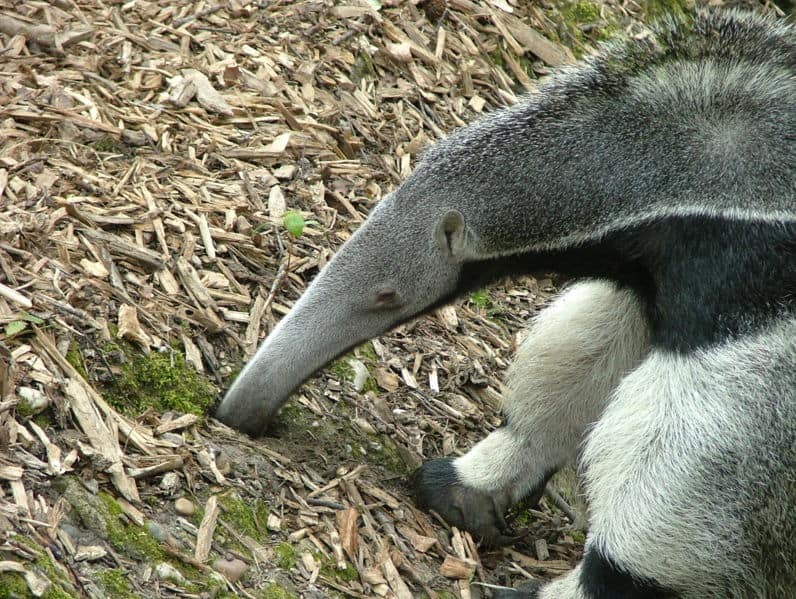
Because they’re slow and have poor eyesight, staying hidden is the anteater’s best form of defence.
©user:Borsi112, CC BY-SA 3.0, via Wikimedia Commons – Original / License
Giant anteaters inhabit grasslands, wetlands, and tropical forests across Central and South America. They are specialized insectivores that eat ants (as their name might suggest…) and termites using an elongated snout and a tongue that can extend more than two feet! With coarse hair, powerful limbs, and large bushy tails that provide shade, these animals are built for both foraging and protection. They typically move slowly, but if necessary, they can run or defend themselves with formidable claws. Their slow movement and poor eyesight make avoidance the safest strategy against encountering potential threats.
Other shy behaviors: sticking to quiet areas, moving with deliberate caution, and slipping into tall vegetation when disturbed.
Fun Fact: A giant anteater’s tongue can flick up to 150 times per minute.
Shoebill
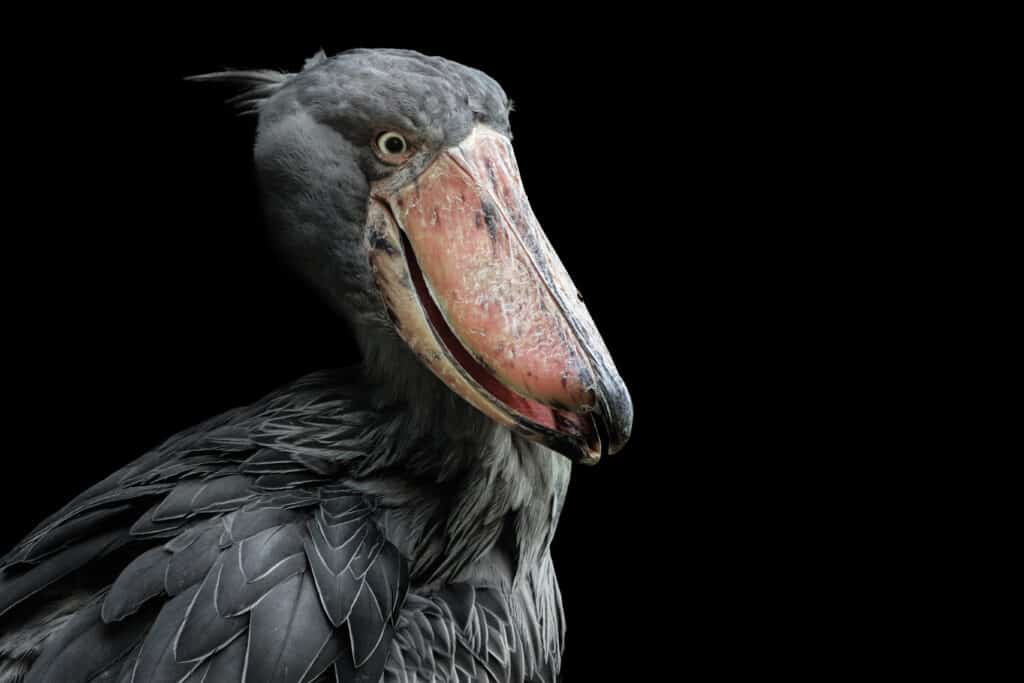
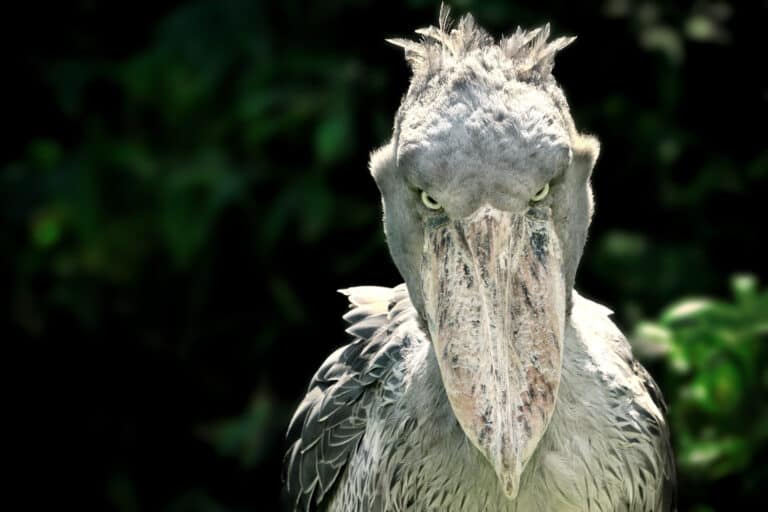
The shoebill is so shy it builds nests on floating vegetation–creating its own island.
©Marek Mihulka/Shutterstock.com
The shoebill is a large, prehistoric-looking bird, inhabiting freshwater marshes and papyrus swamps in countries such as Uganda, South Sudan, and Zambia. Feeding mainly on lungfish, tilapia, frogs, and small reptiles, it captures prey with its massive shoe-shaped bill (hence its name). Shoebills are ambush hunters that rely on extreme stillness to surprise prey. They prefer remote, undisturbed wetlands, building large nests on floating vegetation—in other words, literally creating their own islands. They are highly sensitive to disturbance and avoid areas with human activity.
Other shy behaviors: standing motionless for long periods, hiding in reeds, and retreating when approached.
Fun Fact: Shoebills communicate with a loud “bill clatter,” snapping their bills together like castanets.
Fossa
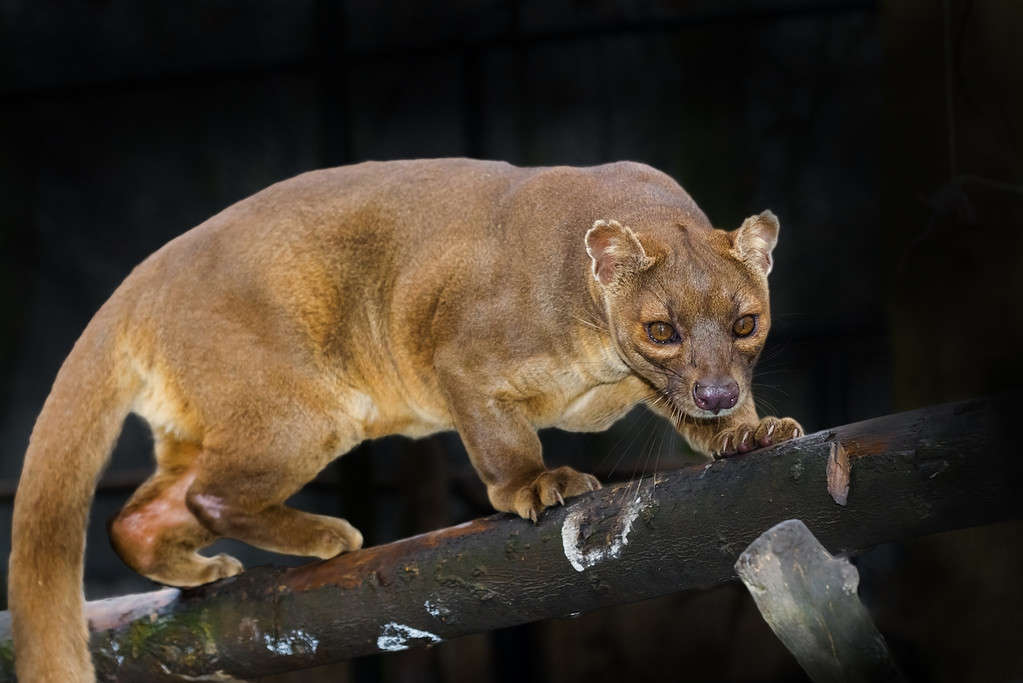
The fossa doesn’t even like to be around its own species, except during mating season.
©Belizar73/ via Getty Images
Madagascar’s largest native predator, fossas, inhabit the island’s dry deciduous forests and humid rainforests, where they hunt lemurs, rodents, birds, and reptiles. Fossas are agile climbers, equally capable on the ground and in the canopy, their long tails aiding in balancing on branches, their semi-retractable claws allowing cat-like agility. They are naturally solitary, maintaining large territories and avoiding contact with their own species except during mating season.
Other shy behaviors: silent stalking, staying in dense vegetation, and keeping wide territories with minimal overlap.
Fun Fact: Despite looking cat-like, fossas are most closely related to mongooses.
Kakapo
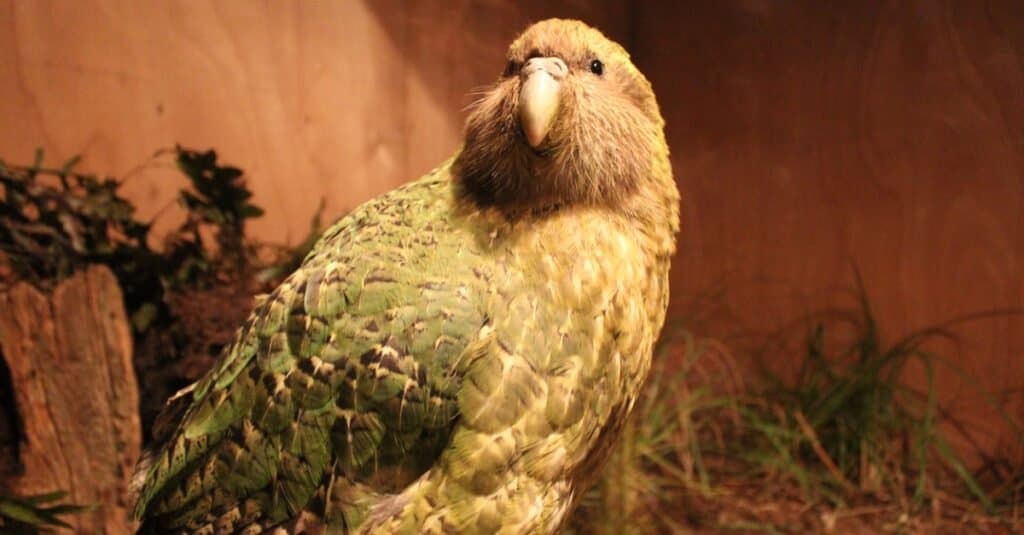
The kakapo’s moss-green plumage helps it blend into the forest.
©Imogen Warren/Shutterstock.com
The kakapo is a large, flightless, nocturnal parrot endemic to New Zealand. It feeds on native plants, including leaves, shoots, roots, berries, and the nutritious fruit of the rimu tree. Kakapos are ground-dwelling birds with moss-green plumage that blends seamlessly into forest vegetation. They breed using a rare “lek” system, where males gather to make booming calls to attract females. Their primary defense is freezing in place, a strategy that once helped them avoid aerial predators. Sadly, kakapos today survive only on predator-free sanctuary islands.
Other shy behaviors: Staying still when threatened, moving only at night, and hiding in vegetation.
Fun Fact: Kakapos have a distinct sweet, musty scent sometimes described as “herbal” or “flowery.”
Conclusion
Shy animals are hard to spot, which is kind of the point, but these elusive behaviors are part of what makes them so fascinating. Whether hiding in dense forests, slipping into the shadows at dusk, or holding perfectly still in marshland reeds, these species show that survival often favors silence, stealth, and staying out of sight. Their secretive lifestyles remind us how much of the natural world still operates quietly beyond human view.