
Quick Take
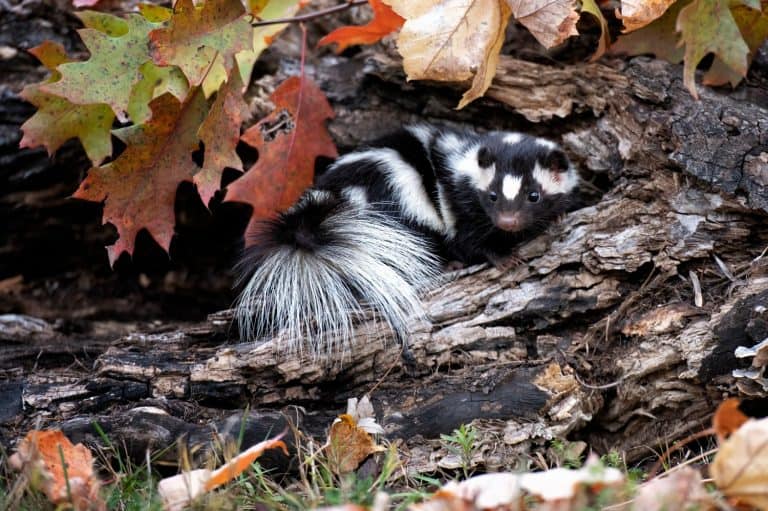
- One animal on this list doesn't use its black-and-white pattern to hide. Instead, it uses the colors to issue a direct threat. See the skunk's warning colors →
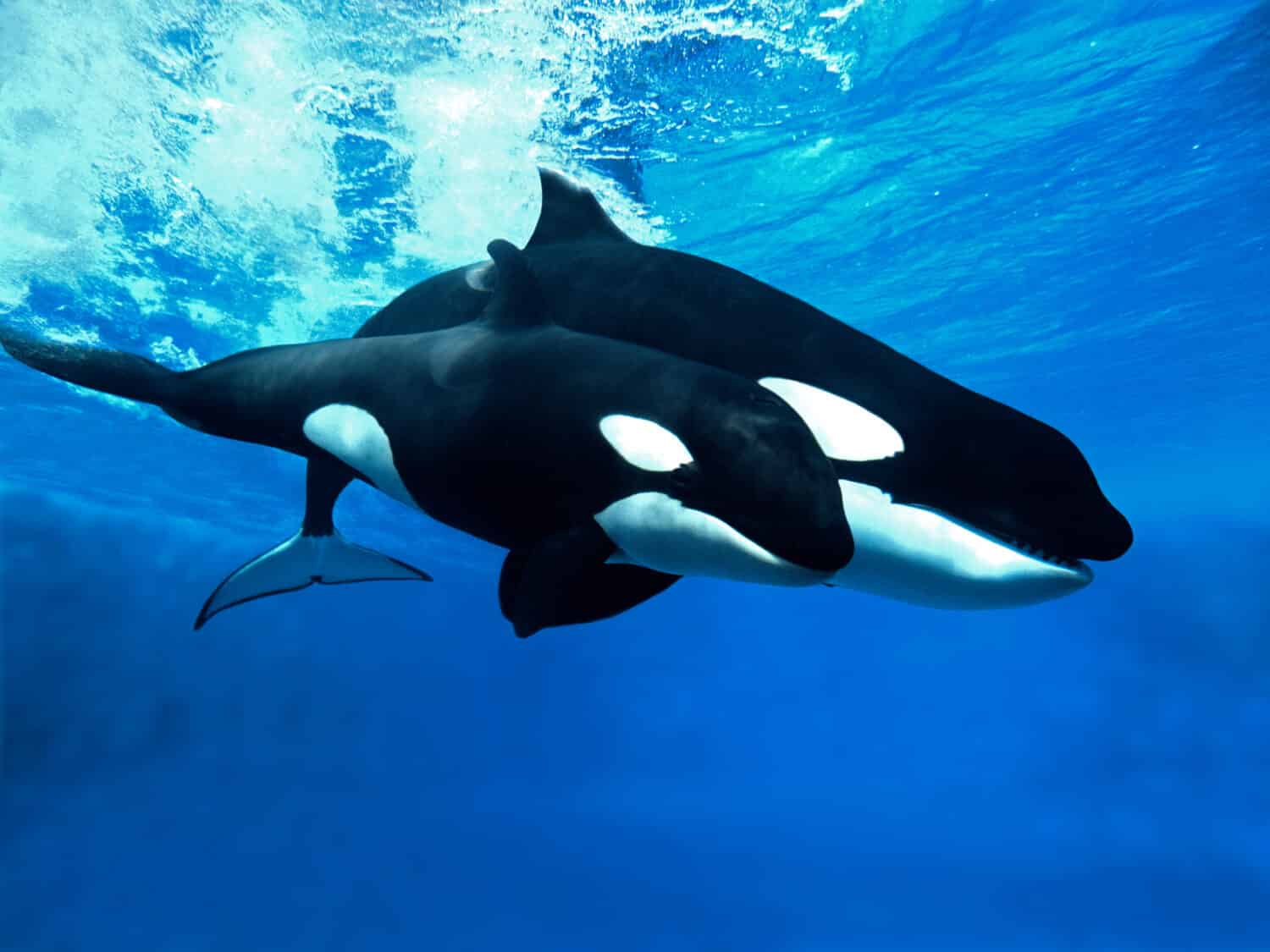
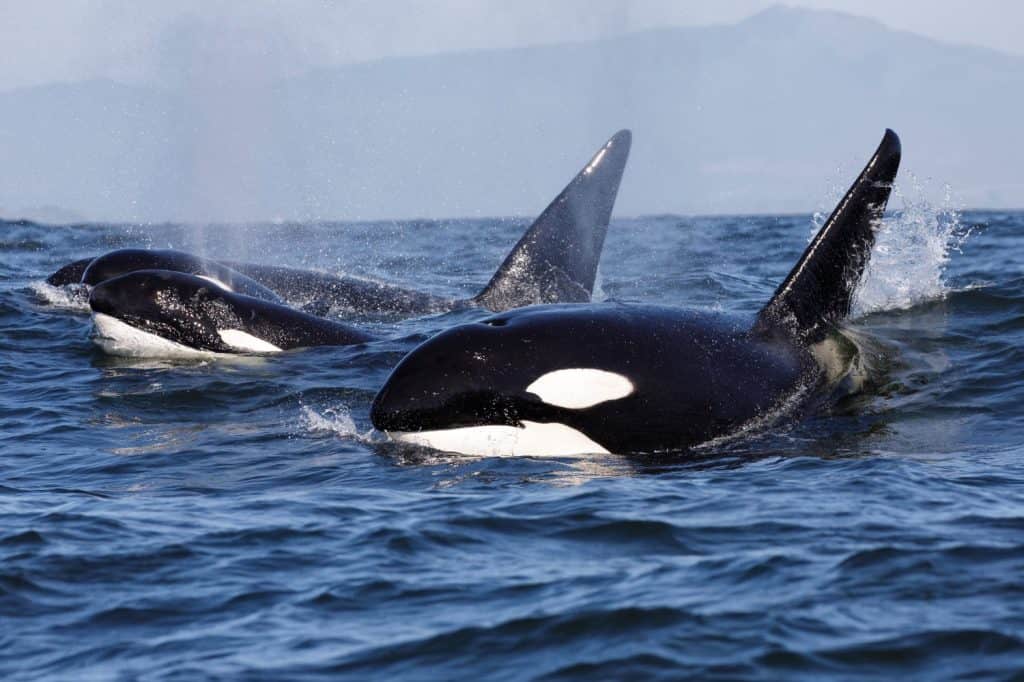
- An orca's two-tone coloring conceals it from prey in two opposite directions at the same time, and the trick behind this is simpler than you'd expect. How orca countershading works →
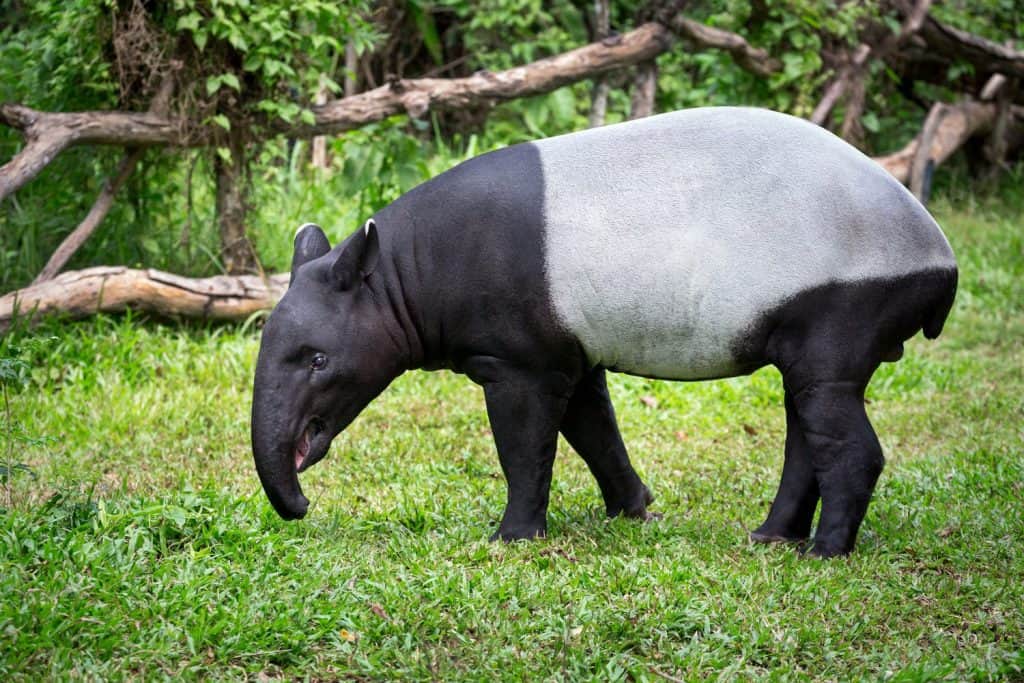
- One of these animals disguises itself as an inanimate object, and the illusion works thanks to its black-and-white pattern. The tapir's rock disguise →
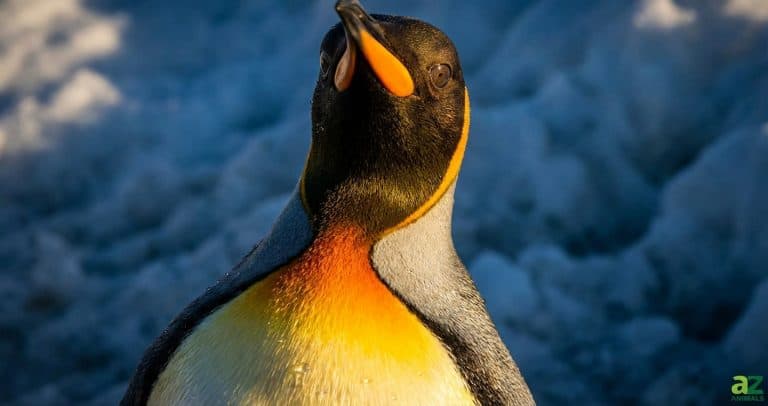
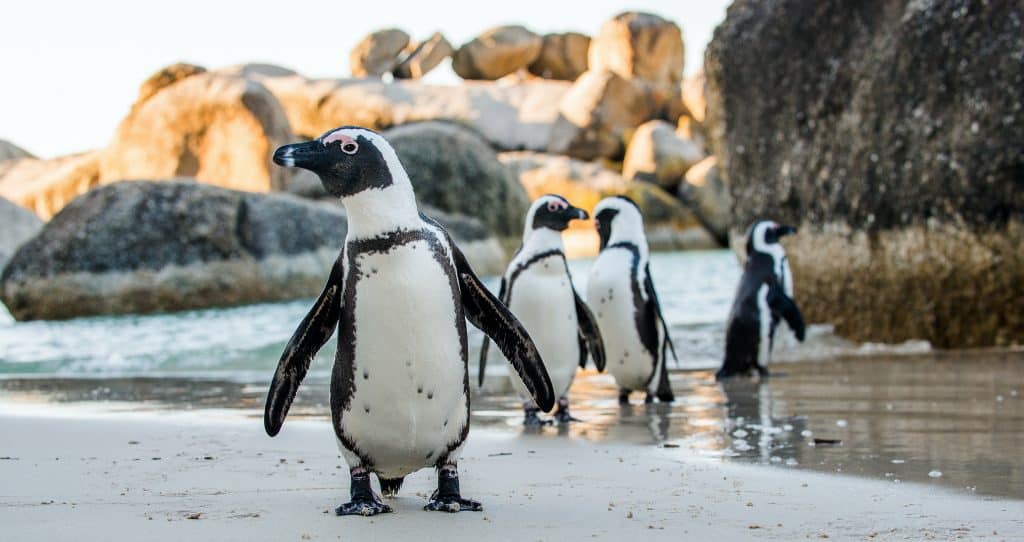
- African penguins carry something on their bodies that works exactly like a human fingerprint, and this feature serves a surprisingly practical purpose. Penguin unique chest markings →
When people think of black-and-white animals, zebras are usually the first creatures that come to mind. While zebras get all the attention in the monochrome animal world, nature is full of other species that feature the same contrasting color combination. Black and white patterns can provide camouflage, help animals communicate, or even tell predators it is best to keep their distance. In many cases, these classic color patterns make animals look beautiful and elegant in their wild habitat. Here are eight black-and-white animals that prove zebras don’t get to hog all the style.
1. Giant Panda

©Saqib alii/Shutterstock.com
The giant panda’s black-and-white coat is one of the most recognizable in the animal kingdom. Scientists are still figuring out its exact purpose, but the coloration may help the bears blend into both snowy landscapes and shadowy mountains. The black eye patches might be used as a form of intraspecies communication. Their unique markings have become synonymous with global animal conservation.
2. Orca
©Tory Kallman/Shutterstock.com
Orcas feature a striking black-and-white pattern that likely has several purposes. Researchers believe the white underbelly conceals them from prey looking upward toward the bright sunlit surface. Similarly, the dark back makes them blend with deep ocean waters from above, so seals do not see them coming. This type of dual camouflage is called countershading, and it is but one reason these marine predators are such skilled hunters.
3. African Penguin
©Sergey Uryadnikov/Shutterstock.com
African penguins have black backs, white bellies, and distinctive black markings on their chests. Like orcas, they use countershading to reduce their visibility in the water. Because each penguin’s chest marks are slightly different, they function as identification, somewhat like human fingerprints. Their coloration is both highly useful and quite charming, giving them that tuxedo-like appearance. Sadly, these beautiful birds are endangered.
4. Skunk

©beebatch/iStock via Getty Images
Unlike other animals on this list, the skunk does not use its black-and-white coloration as camouflage. Instead, it presents a warning. Predators quickly learn to associate the monochrome pattern with the animal’s unpleasant defensive spray. The lovely black and white stripes essentially advertise that the skunk is not worth going after. This type of warning coloration is known as aposematism. It’s very effective, allowing skunks to avoid conflict.
5. Malayan Tapir
©jeep2499/Shutterstock.com
The Malayan tapir looks almost as if it was once completely black before someone came along and painted the middle of its body white. The unusual pattern of dark and light is thought to break up the animal’s outline in dimly lit forests, as they are mainly active at night. From a distance, the pattern can make the tapir look like a large but harmless rock. These shy herbivores are also the largest of the world’s tapir species.
6. Colobus Monkey

©Vladimir Wrangel/Shutterstock.com
Several species of colobus monkeys sport beautiful black-and-white coats. Many have long white tails and flowing white fur around the shoulders. Their striking and elegant appearance makes them one of Africa’s most distinctive primates. Though stylish, the real purpose of the coloration may be to help group members keep track of each other while swinging swiftly through dense forests. Some species can leap huge distances between trees.
7. American Badger
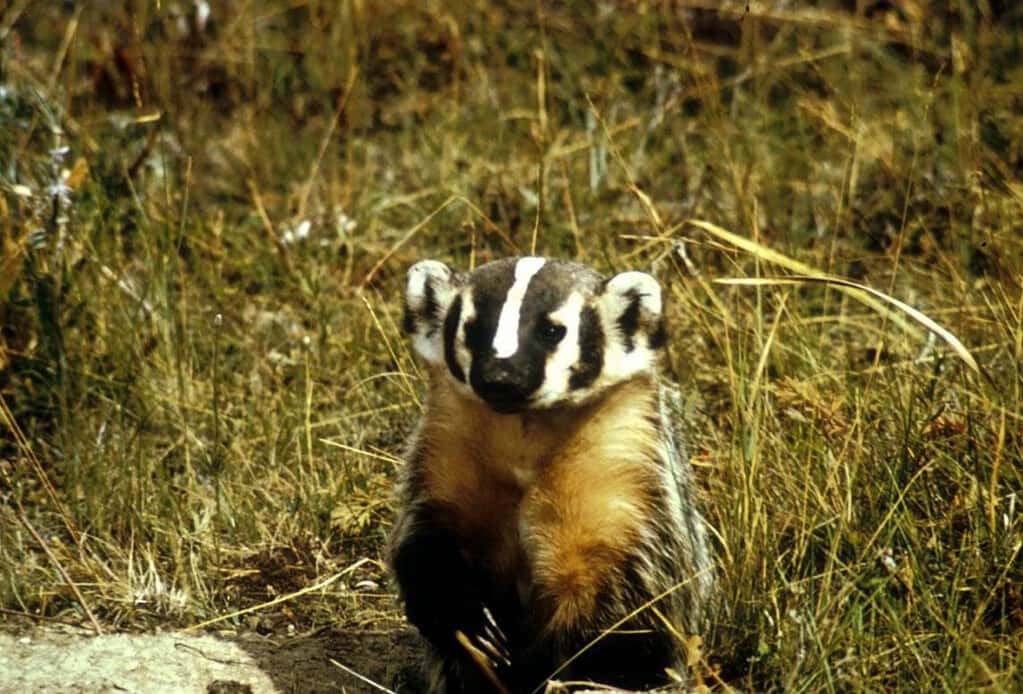
©U.S. Fish and Wildlife Service, Public domain, via Wikimedia Commons – Original / License
American badgers are typically dark gray or black with white stripes, which run from the nose over the head. These bright, almost blindingly white face stripes make them easy to identify even at a distance. Badgers are expert diggers and can be both aggressive and hard to subdue. Their unique facial markings may be a warning of their fierce nature.
8. Pied Avocet
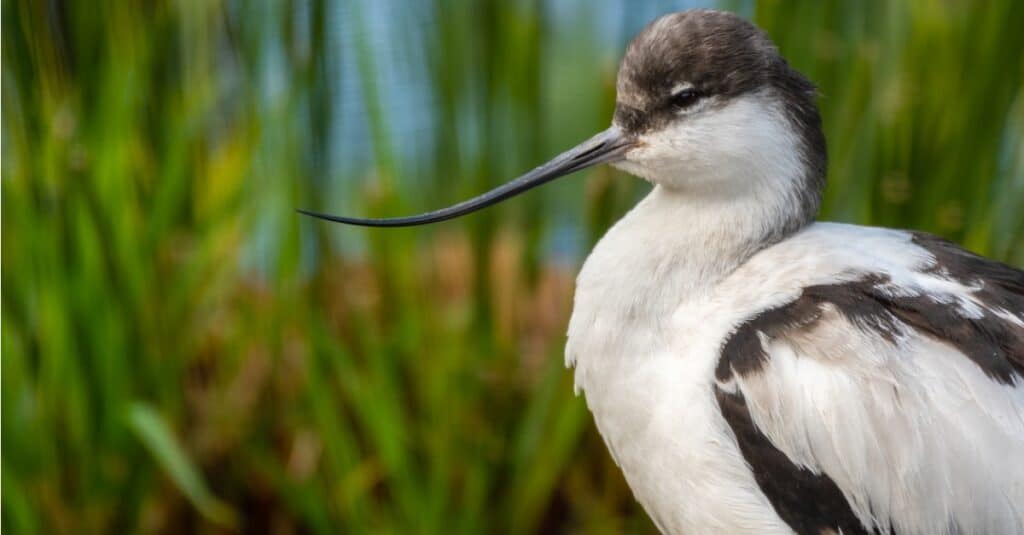
©iStock.com/Ian Fox
The pied avocet is a graceful bird often seen wading in shallow waters. It has distinctive black-and-white feathers and a sharp, upturned bill. The contrasting colors stand out against the muted tones of marshes and shallow wetlands. The bird uses its oddly shaped bill to search the shallows for tiny aquatic critters. During breeding season, their plumage becomes even more defined. The pied avocet is certainly one of the most elegant wading birds on Earth.