
Quick Take
- The most venomous snake on this list is also one of the least dangerous, reframing what 'dangerous' actually means. Deadly venom, rare bites →
- One snake on this list has relatively weak venom yet causes more bites than almost any other, and its secret weapon has nothing to do with aggression. Camouflage drives most bites →
- Not all rattlesnake venom works the same way. One species carries a neurological threat that sets it apart from every other rattler in the country. Neurotoxic threat explained →
- Encountering a snake by accident is actually how most bites happen, and some well-camouflaged species make an accident more inevitable. How accidental encounters happen →
When it comes to identifying the most dangerous snakes in America, the answer isn’t as straightforward as some may think. While most of us assume venom strength equates to most dangerous, this is not always the case. “Most dangerous” can mean several different things, including the potency of a snake’s venom, its venom yield (how much toxin is injected with each bite), its level of aggression, or how likely it is to encounter humans and deliver a bite. Some snakes have extremely powerful venom but are rarely spotted, making them pose little overall risk. Likewise, others are less venomous but far more widespread or commonly encountered. Understanding these distinctions will help you gain a clearer picture of real-world risk.
Across the United States, a variety of venomous snakes fit into the “dangerous” category, including massive rattlesnakes and smaller, well-camouflaged species hiding in plain sight. Each species has its own unique combination of venom strength, behavior, and likelihood of human interaction. In many cases, bites occur not because snakes are aggressive, but because they are accidentally startled or disturbed. However, an accidental bite is still a bite, and many of these snakes have venom strong enough to require medical attention. By looking at multiple factors together, we can better understand which snakes truly rank among the most dangerous in America.
Eastern Diamondback Rattlesnake
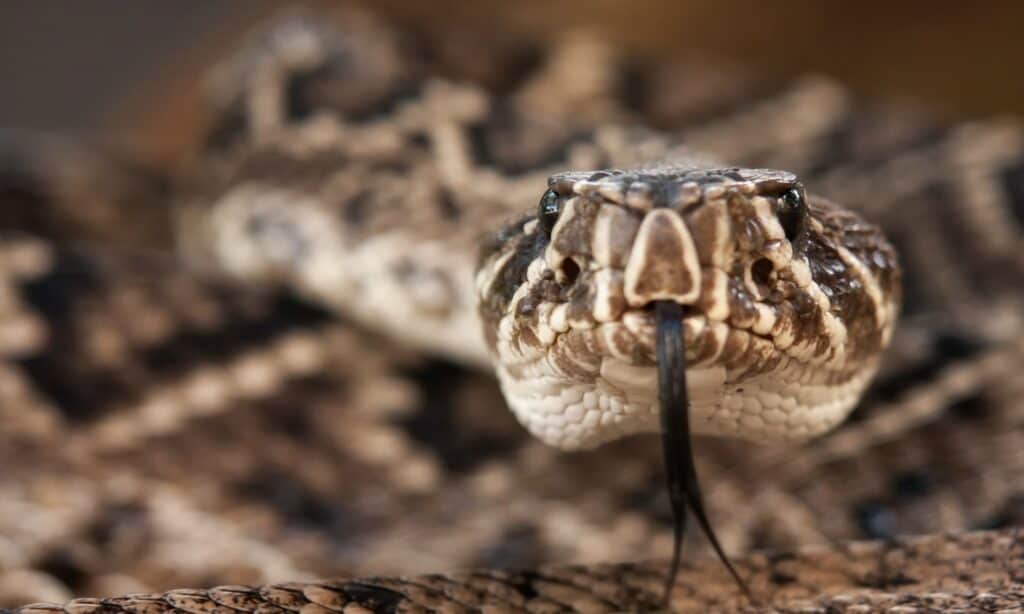
©iStock.com/Wide-River-Rick
Venom level: Very high
Aggression level: Low to moderate
Likelihood of encounter / chance of bite: Low
The Eastern diamondback rattlesnake is the largest venomous snake in North America, known for its striking diamond pattern and heavy body. These highly toxic snakes have a large venom yield, making bites extremely serious. Despite this, it is generally not aggressive and prefers to avoid confrontation. Bites are relatively rare and generally occur if the snake is accidentally disturbed in its southeastern U.S. habitat. If a diamondback feels threatened, it will often give a warning rattle before defending itself.
Western Diamondback Rattlesnake

©PhilBilly/iStock via Getty Images
Venom level: High
Aggression level: Moderate
Likelihood of encounter / chance of bite: Moderate to high
The Western diamondback rattlesnake is widespread across the southwestern United States, meaning it frequently comes into contact with humans and is responsible for a significant number of annual snakebites. Its venom is strong, though not as potent as its eastern cousin’s. Even still, its toxin is capable of causing tissue damage and systemic issues. Additionally, this species is more defensive than most and may stand its ground when threatened, increasing the likelihood of a bite.
Timber Rattlesnake
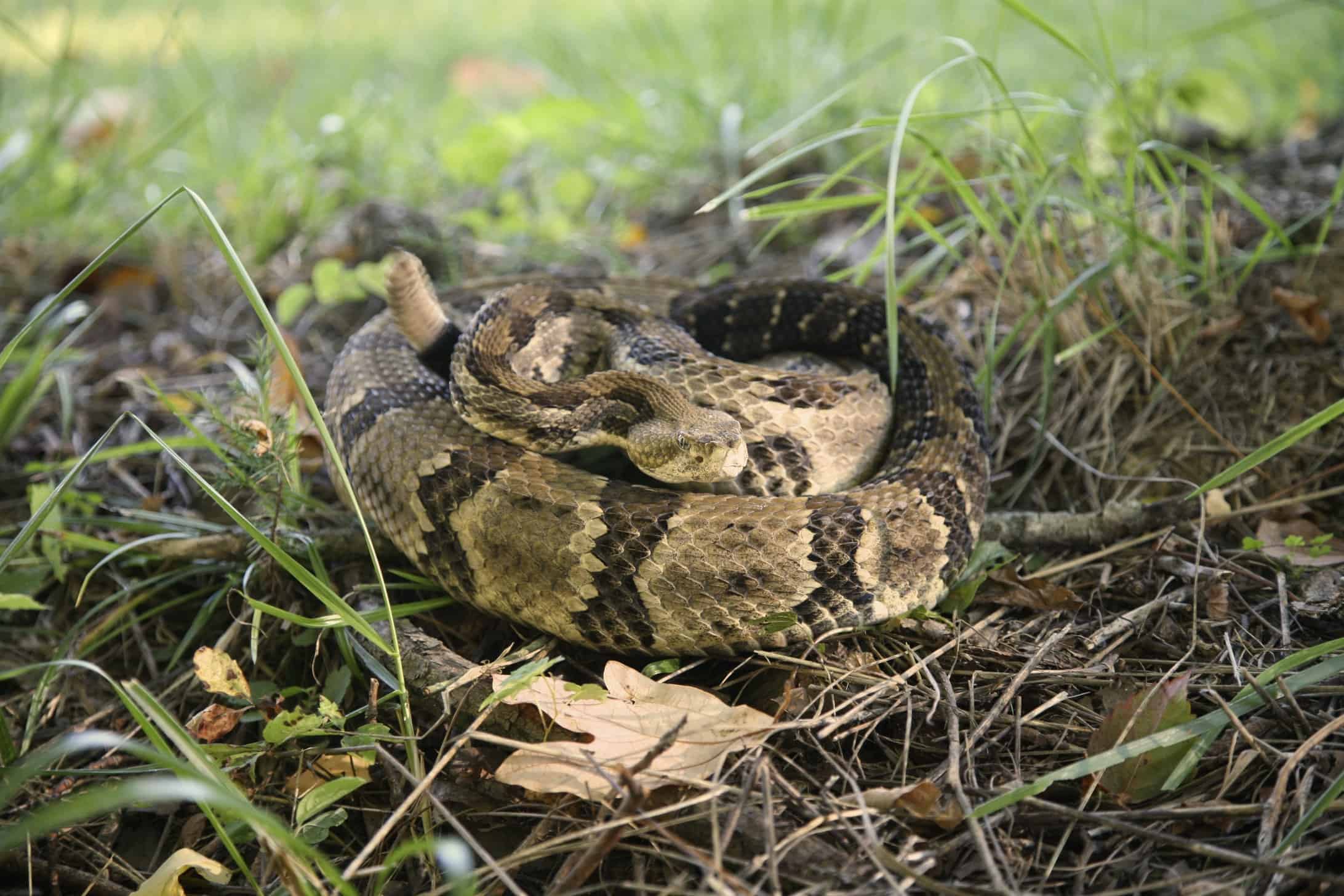
©iStock.com/NajaShots
Venom level: High
Aggression level: Low
Likelihood of encounter / chance of bite: Low
The timber rattlesnake inhabits forests and rocky hillsides in the eastern states. It is recognized for its variation in color and distinctive rattle. Its venom is potent, bringing both hemotoxic and neurotoxic effects, depending on the population. It won’t hesitate to defend itself if need be, but is otherwise calm and not aggressive. Bites are uncommon due to its reclusive nature but can be serious when they occur.
Mojave Rattlesnake
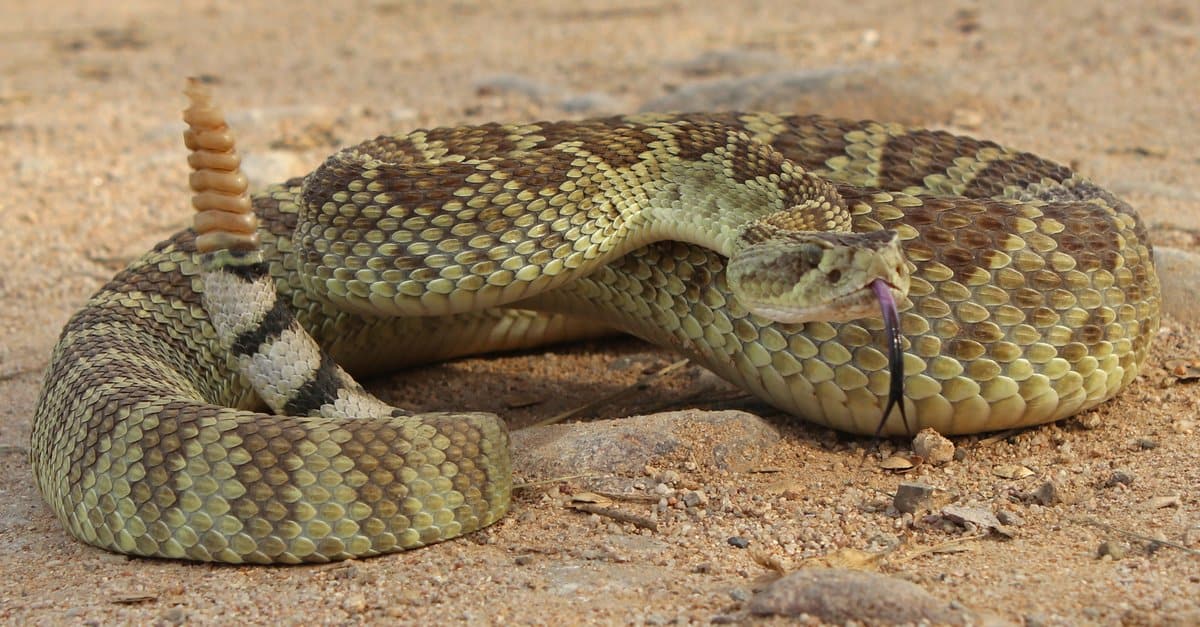
©Creeping Things/Shutterstock.com
Venom level: Very high
Aggression level: Moderate to high
Likelihood of encounter / chance of bite: Low to moderate
The Mojave rattlesnake, found in desert areas of the Southwest, has a reputation for being one of the most dangerous rattlesnakes. Bites are especially dangerous, as its venom can include extremely powerful neurotoxins alongside tissue-damaging components. This species can also be more assertive than others and may not flee when approached. While encounters are not too common, bites require urgent medical attention.
Cottonmouth
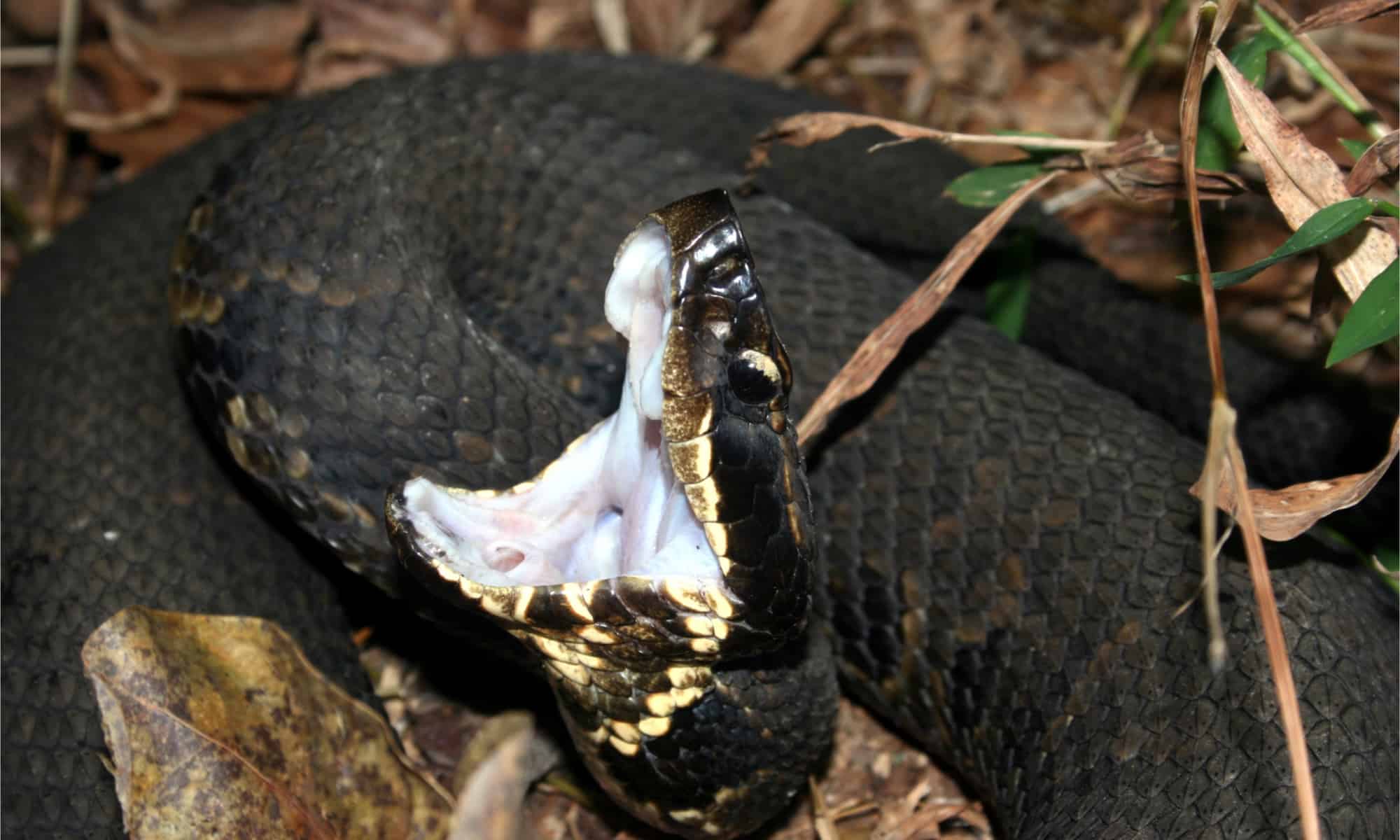
©Psychotic Nature/Shutterstock.com
Venom level: Moderate to high
Aggression level: Moderate
Likelihood of encounter / chance of bite: Moderate
The cottonmouth, or water moccasin, is a semi-aquatic snake found in the southeastern U.S. Preferring the water, this species loves swamps, bayous, rivers, and lakes. Its venom level is high and bites are painful, though death is rare with treatment. Cottonmouths are notorious for their defensive behavior; these black snakes open their mouths in a threat display to reveal a white interior. Bites are uncommon.
Copperhead
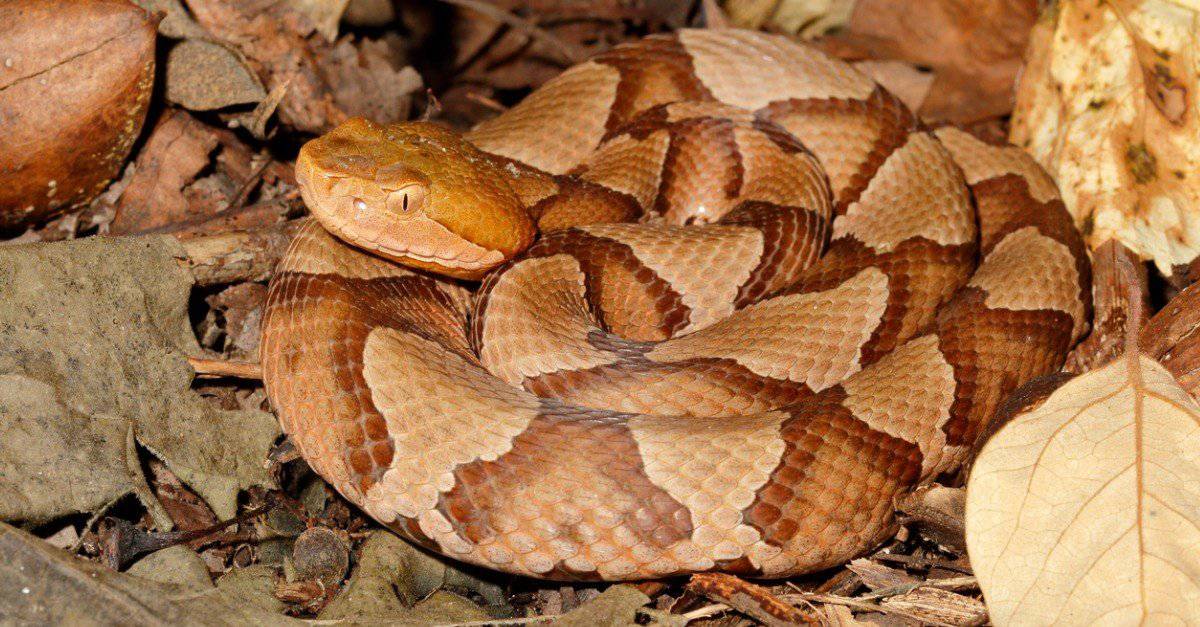
©iStock.com/David Kenny
Venom level: Low to moderate
Aggression level: Low
Likelihood of encounter / chance of bite: High
Copperheads are some of the most commonly encountered venomous snakes in the eastern United States, likely due to their excellent camouflage. Their venom is relatively mild compared to other pit vipers, but bites can still be painful and require medical attention. These snakes are not particularly aggressive, but they may not retreat, choosing to remain still and allow their effective camouflage to protect them. Because they blend in so well, accidental encounters are more likely, which can lead to bites.
Eastern Coral Snake
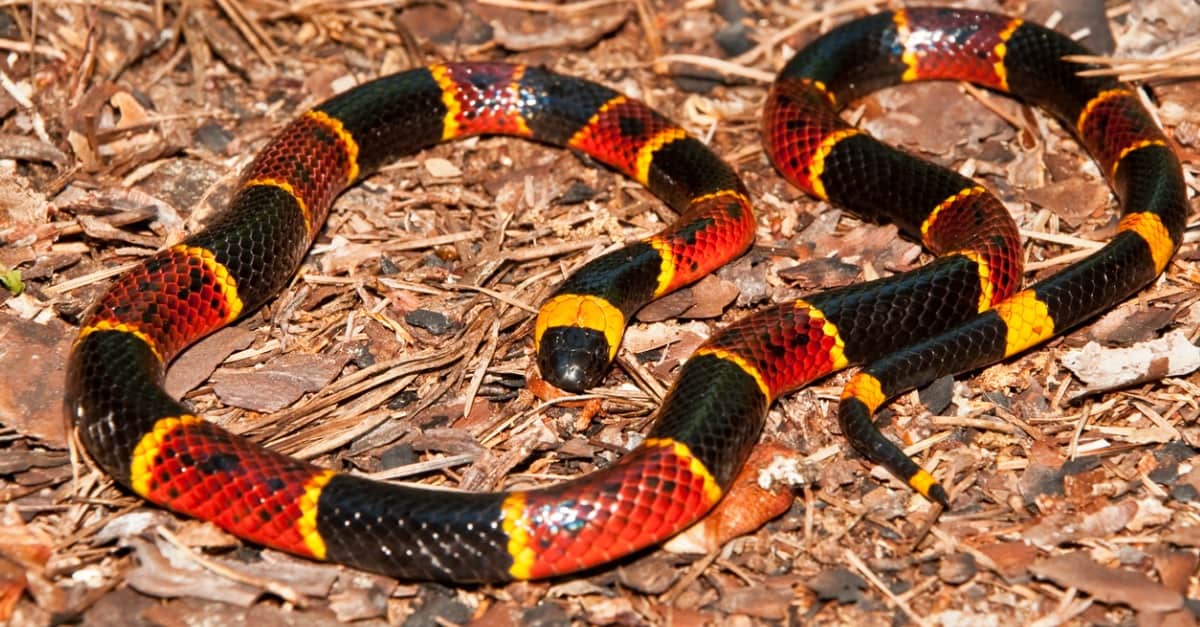
©iStock.com/JasonOndreicka
Venom level: Very high
Aggression level: Very low
Likelihood of encounter / chance of bite: Very low
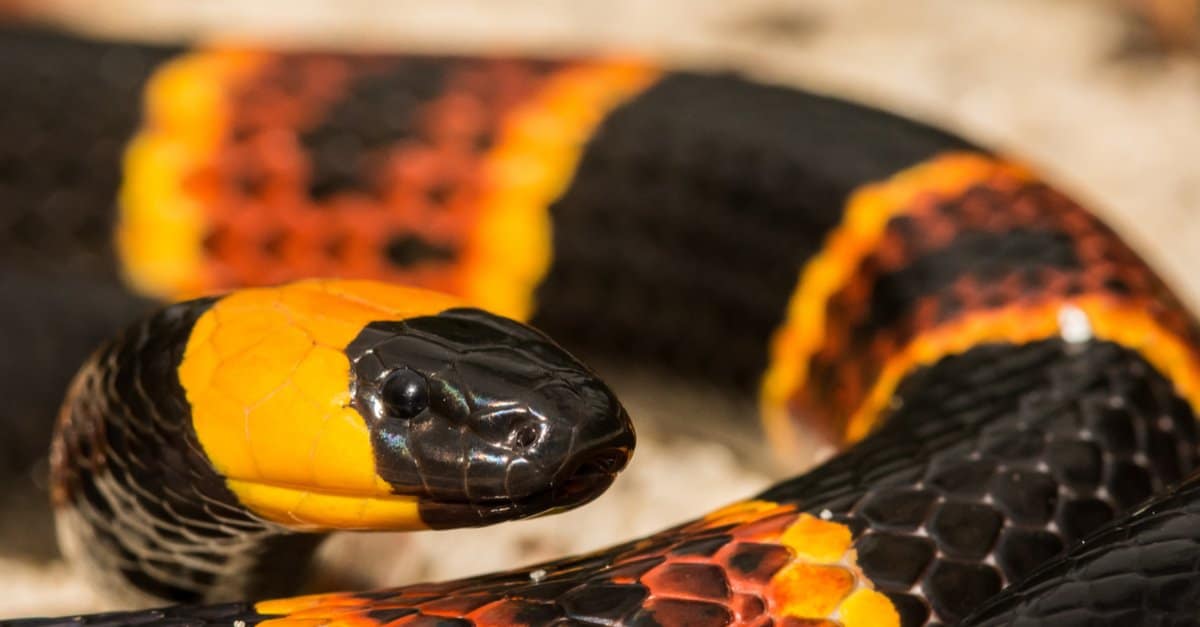
The eastern coral snake is a brightly colored species with alternating red, yellow, and black bands running the length of its body. This snake inhabits the southeastern U.S. Its venom is so potent it affects the nervous system and can cause respiratory failure. Fortunately, this highly venomous snake is secretive in nature and rarely seen. Due to its avoidance of humans, bites are extremely rare.
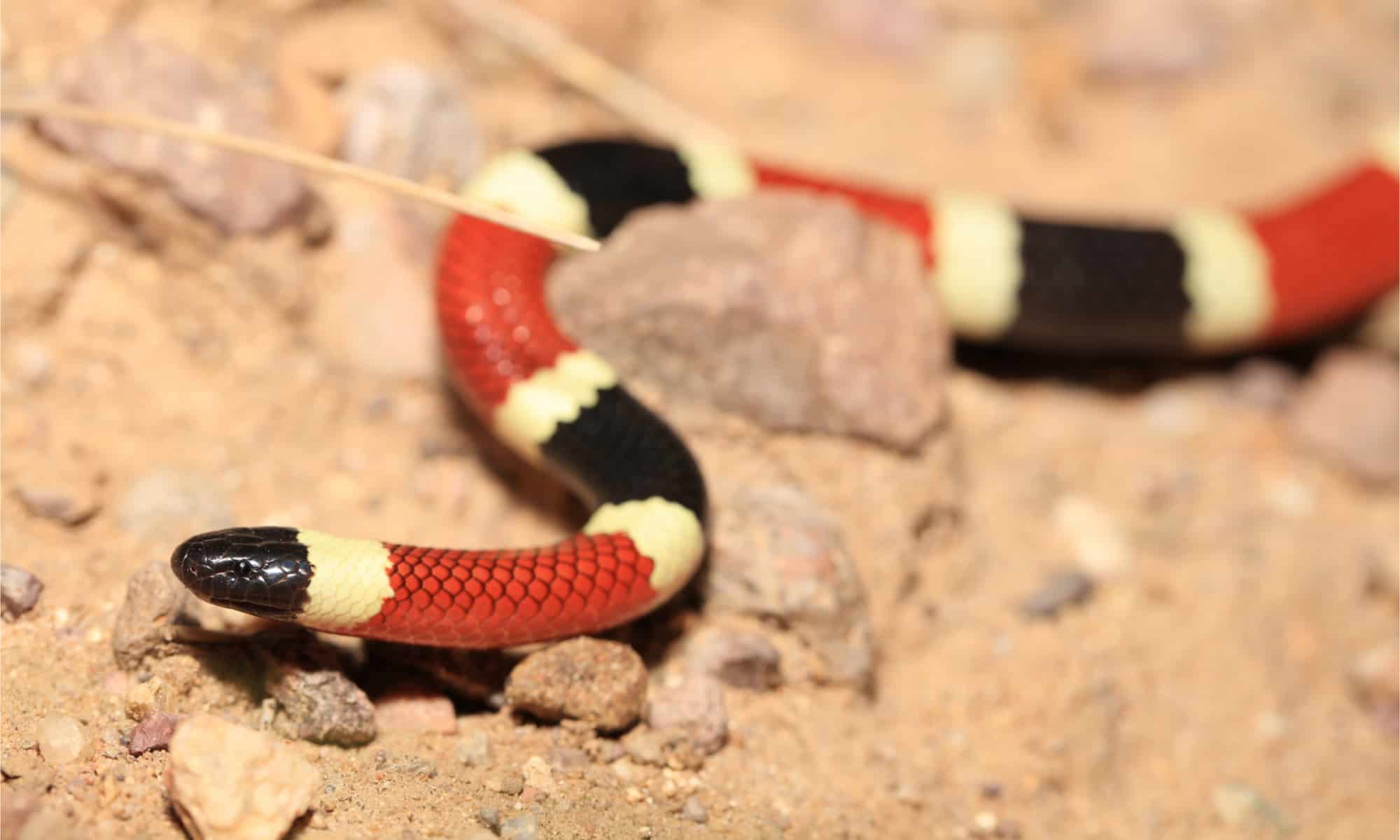
Western Coral Snake
©Alexander Wong/Shutterstock.com
Venom level: High
Aggression level: Very low
Likelihood of encounter / chance of bite: Very low
The western coral snake displays a color-banded pattern and inhabits desert regions of the southwestern states and northern Mexico. Its venom is slightly less powerful than its eastern counterpart, though still neurotoxic. Like with the eastern version, envenomation is rare because the species is reclusive and spends much of its time hidden underground or beneath debris. As a result, bites are very uncommon.
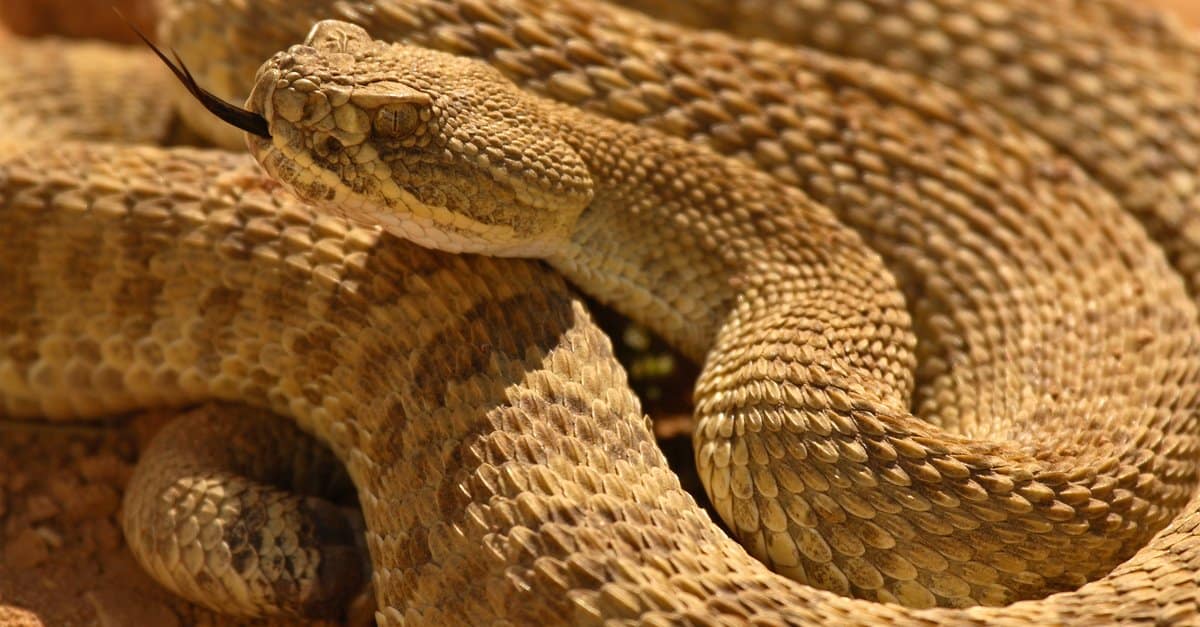
Prairie Rattlesnake
©Max Allen/Shutterstock.com
Venom level: Moderate to high
Aggression level: Low to moderate
Likelihood of encounter / chance of bite: Moderate
The prairie rattlesnake is found across grasslands and open terrain of the central and western United States. Though not nearly as venomous as other species on this list, its venom is medically significant and can cause both tissue damage and systemic symptoms. The snake is not known to be aggressive. When encountered, this species is apt to give a warning rattle and bites are relatively uncommon.
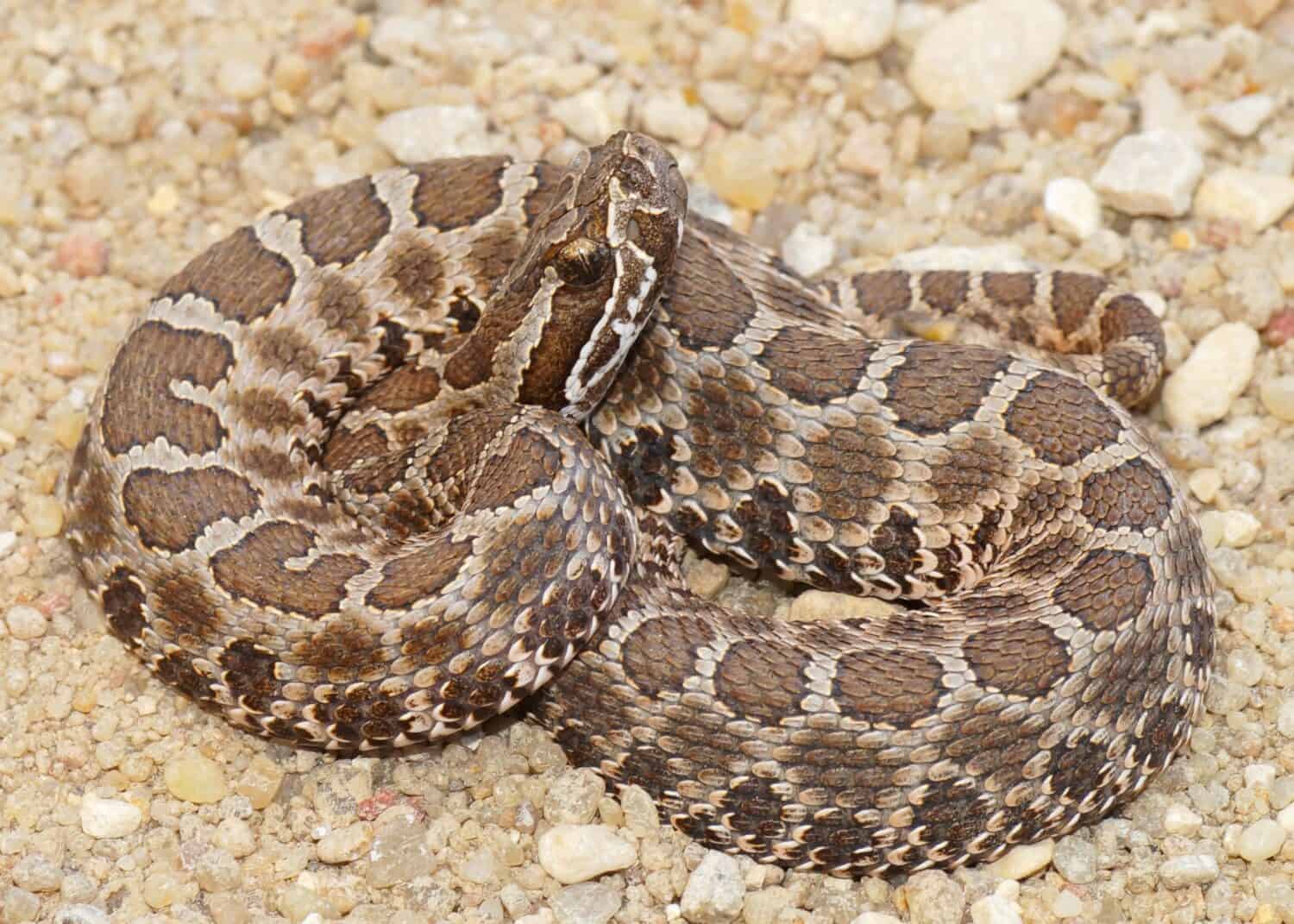
Massasauga Rattlesnake
©Matt Jeppson/Shutterstock.com
Venom level: Moderate
Aggression level: Low
Likelihood of encounter / chance of bite: Low
The massasauga rattlesnake is a smaller species inhabiting wetlands and grasslands of the Midwest and Great Lakes region. While its venom is potent for its size, it is not delivered in large quantities. Dwindling populations combined with its shy nature make bites uncommon. When rare encounters occur, this snake is not aggressive and relies on camouflage to avoid detection.