
Quick Take
- The passenger pigeon's greatest strength was its sheer social dominance, and that very trait turned out to be the one that sealed its fate. See how sociality backfired →
- The last great gathering of passenger pigeons should have saved the species. Instead, it triggered the final collapse. Read about the Petoskey nesting →
- Martha's death was more than just a death. It set off a chain of events that permanently changed how humans protect birds. Discover Martha's lasting impact →
Have you heard the heartbreaking story of the last passenger pigeon to ever live? Flocks of this pigeon species were once so dense that they’d block out the sun for days. Yet, a toxic mix of commercial hunting and deforestation brought a population of five billion down to a single bird. Martha, the last-standing passenger pigeon, tragically died alone in a cage in 1914.
Although devastating, this story became a driving force behind modern bird conservation efforts. In this article, we speak with Bob Mulvihill, Lead Ornithologist at the National Aviary, about the demise of passenger pigeons. Learn about Martha’s final days and the resulting rise of bird conservation efforts.
Passenger Pigeon Extinction
The passenger pigeon, also known as the wild pigeon, was a species native to North America that is now extinct. Unfortunately, the last living passenger pigeon, Martha, died in the early 1900s.
“The story of the passenger pigeon’s extinction, aptly titled ‘From Billions to None,’ is hard to comprehend in this day and age of conservation ethics, wildlife protections, and widespread community interest in bird watching, bird feeding, and monitoring of bird populations,” says Mulvihill. “Hundreds of millions of passenger pigeons nested in vast colonies stretching over hundreds of miles of forest. In the early nineteenth century, they could darken the skies when their flocks of millions took to flight.”
Sometimes, skies would remain dark for days at a time, thanks to the vastness of these flocks.
“It was the birds’ highly social and colonial nesting behavior that was the species’ Achilles heel,” Mulvihill explains. “In great numbers, their population was strong and impressive, but as they became the targets of vast market hunters in the mid-1800’s, aided by the newly built railroad and telegraph lines, they soon experienced an onslaught from which they would never recover.”
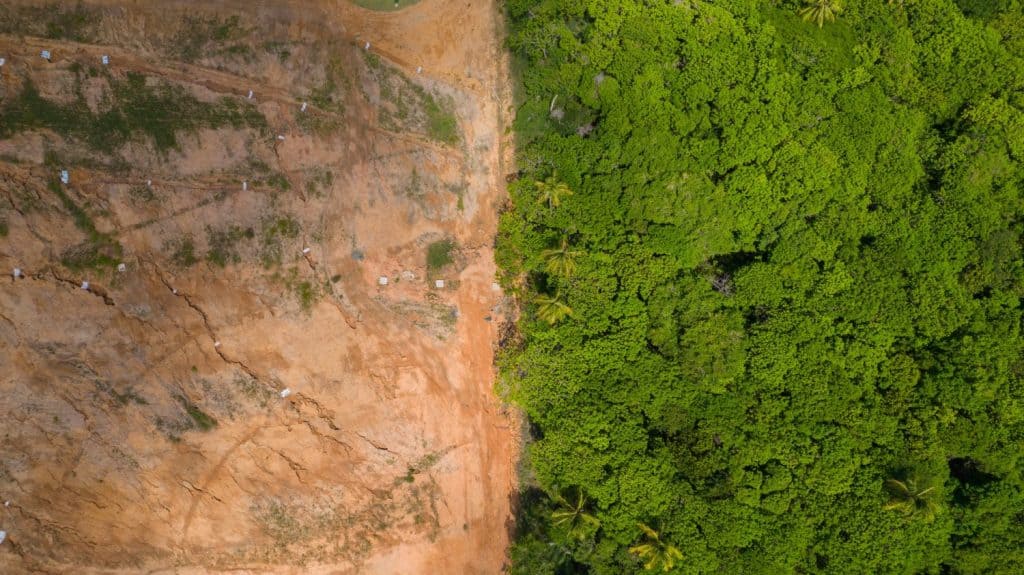
Deforestation contributed to the passenger pigeon’s extinction.
©Gabriel S Fernandes/Shutterstock.com
The greatest threats to this particular pigeon species included commercial overhunting and deforestation. Many passenger pigeons were shot, poisoned, and even burned. However, not all humans viewed them with such disdain.
“In contrast, Native Americans, having long associated with the species, incorporated the passenger pigeon into their beliefs and rituals, performing dances and songs inspired by the bird,” Mulvihill explains. “As a food source, they focused on young pigeons and generally refrained from entering the nesting colonies before the adults could produce their young. Their sustainable hunting of the species did not reduce the overall population.”
The last surviving passenger pigeon is perhaps the most famous of all birds native to North America.
Bob Mulvihill, Lead Ornithologist at the National Aviary
The Last Nesting of Passenger Pigeons
As time passed and hunters continued to kill passenger pigeons, the species’ fate grew increasingly grim.
“By the 1840s, it had become much easier to locate passenger pigeon colonies, decimate each one in turn, and then quickly transport eggs and killed birds to markets in the big cities,” Mulvihill continues. “Because it was so lucrative, likely thousands of people did little else except chase the birds throughout the year. The unremitting hunting tore the social fabric of the large colonies, and this resulted in little or no reproduction year after year.”
However, in 1871, central Wisconsin saw the largest recorded nesting of passenger pigeons. Several years later, the Great Petoskey Nesting of 1878 occurred, when millions of wild pigeons gathered for the last time on the shores of Lake Michigan.
“When word of these nesting congregations got out, hunters converged on the locations and drove off or killed the adults before any young could be raised,” says Mulvihill.
As a result, hunters were able to net or shoot large numbers of birds.
The Story of Martha: The Last Passenger Pigeon to Exist
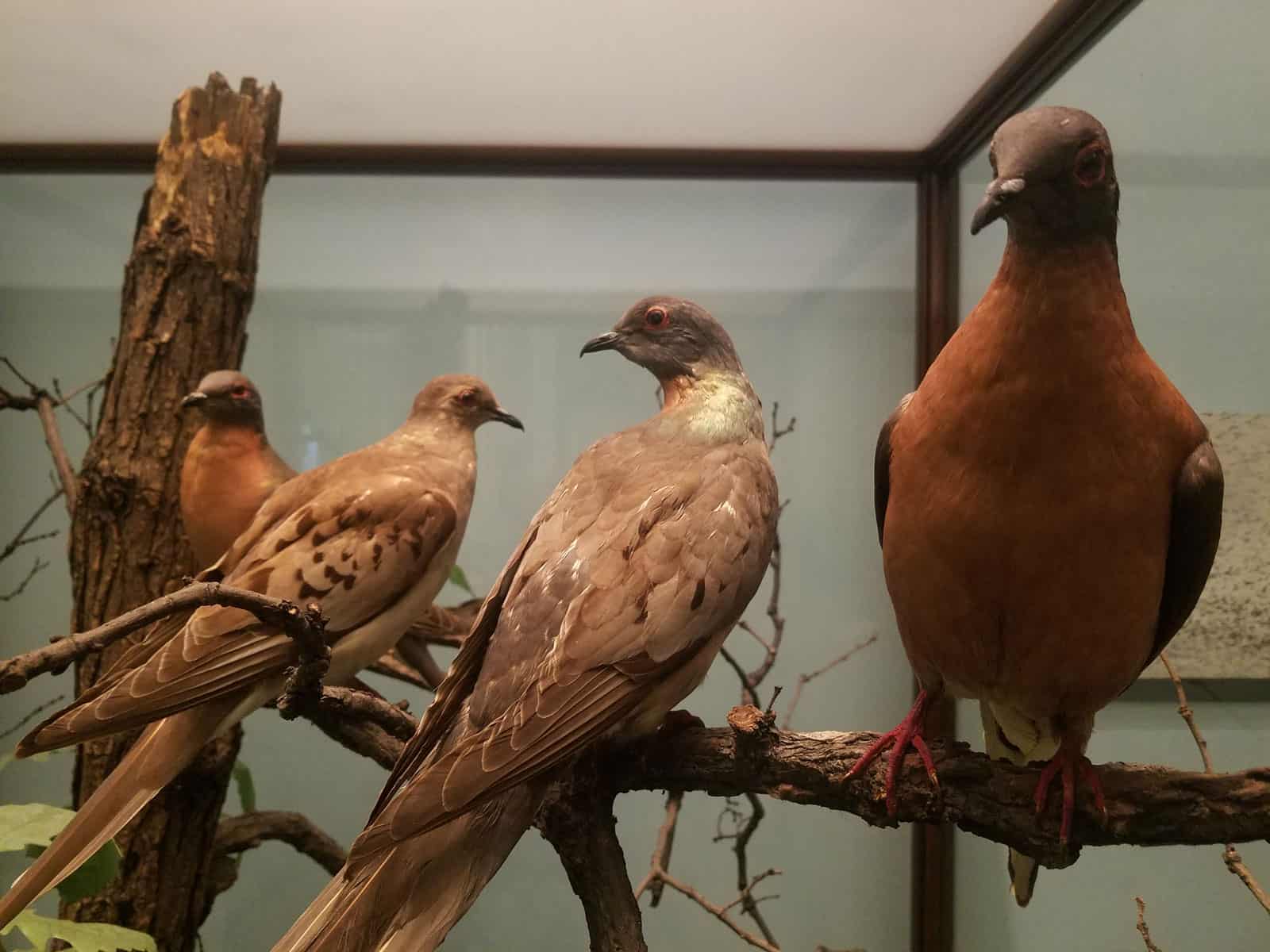
In the early 1900s, a wild pigeon named Martha became the last living passenger pigeon. Unfortunately, Martha died alone in her cage in 1914.
“The last surviving passenger pigeon is perhaps the most famous of all birds native to North America,” says Mulvihill. “Born into a small captive flock in Chicago (possibly in a laudable but too-late effort to preserve the species), and named ‘Martha’ in honor of Martha Washington, she and a few others of her kind were sent to the Cincinnati Zoo in 1902. The last of her cage mates, George, died in 1911. For three years, Martha lived on as the last of her species, until she too passed on September 1, 1914.”
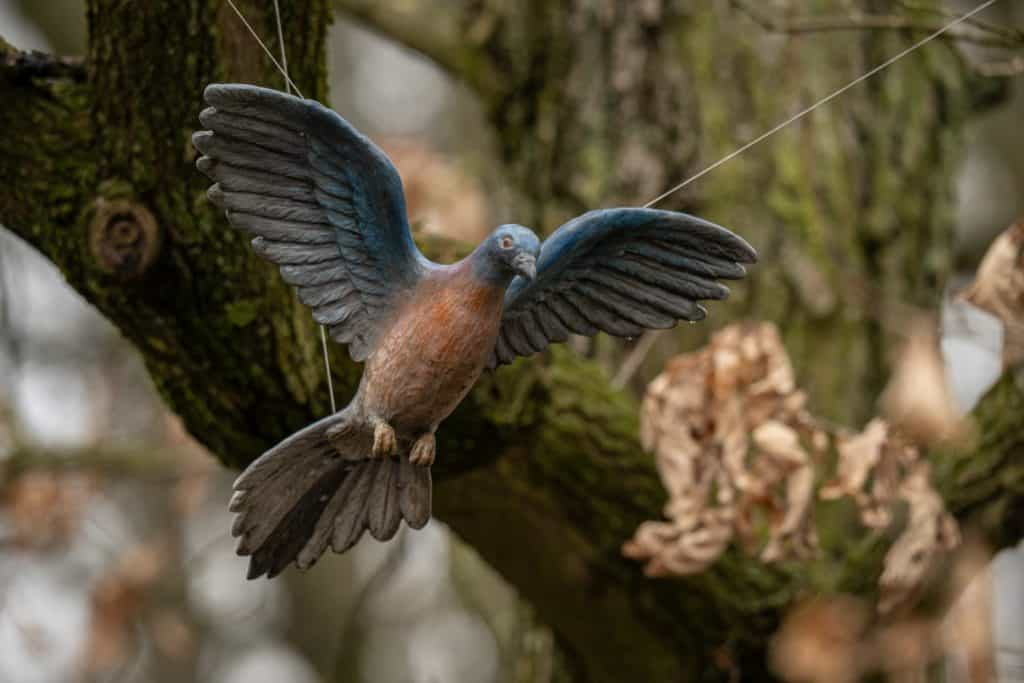
The memory of passenger pigeons is kept alive by figurines and monuments.
©Lapis2380/Shutterstock.com
“Upon her death, she was frozen in a block of ice and sent by train to the Smithsonian Institution, where her remains are preserved to this day,” he adds.
The devastating death of Martha marked the extinction of passenger pigeons as a species, a human-caused loss that helped inspire the modern bird conservation movement in the early 20th century.