
Quick Take
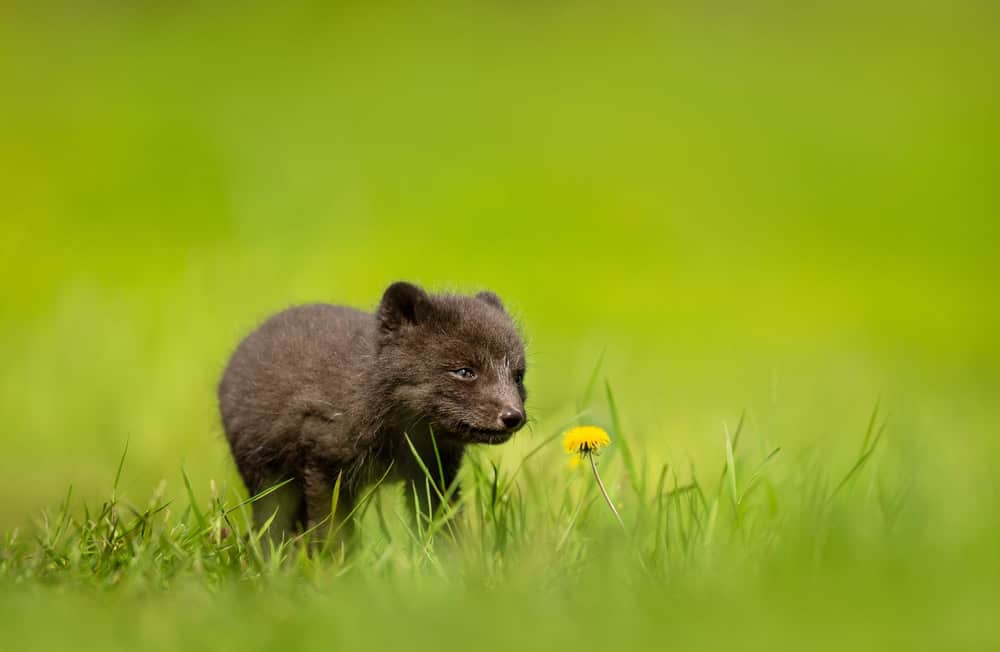
- Blue morph Arctic foxes do not turn white in winter. They comprise about 3 percent of the population.
- Blue morphs tend to live in coastal areas and islands such as Iceland, Greenland, and the Aleutian Islands.
- The blue coat color variant is caused by a genetic mutation.
The fabulous winning image in the Grand Prize category of the National Wildlife Federation photo contest captures a blue morph Arctic fox sitting on the high bluffs of St. George Island, Alaska. The winning photographer, Kathleen Borshanian, spotted the fox about 75 feet away. She used a telephoto lens to capture the fairytale-like image without disturbing the fox or her nearby kits.
A Nomadic Lifestyle
Arctic foxes (Vulpes lagopus) are also known as snow foxes or polar foxes. They are perfectly adapted to the harsh realities of life in the Arctic and alpine tundra habitats. Their range extends through the Arctic regions of Eurasia, North America, Greenland, and Iceland.
These foxes lead a nomadic life, wandering in small groups in search of food. They are primarily carnivores and prey on small mammals (such as lemmings), as well as insects, birds, fish, eggs, and carrion. However, they also eat plant material, such as fruit. Groups living near the coast have a diet containing more marine mammals and seabirds, whereas inland populations eat more lemmings.
They do not hibernate, but instead construct dens in cliffs where a family social group will shelter. The dens have multiple entrances and can be used for hundreds of years by subsequent generations of the same family.
Why Is The Arctic Fox Blue?
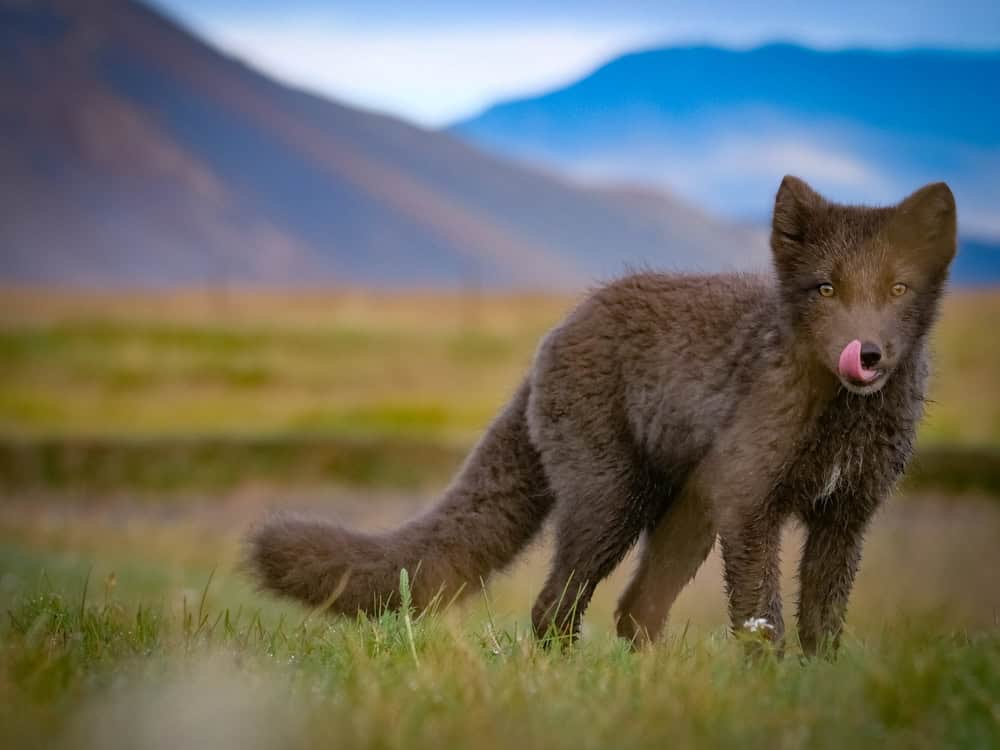
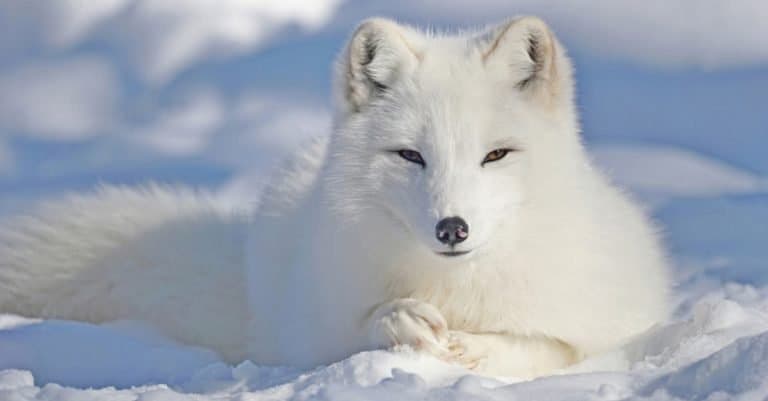
Blue Arctic foxes do not turn white in the winter.
©martinkremer.cz/Shutterstock.com
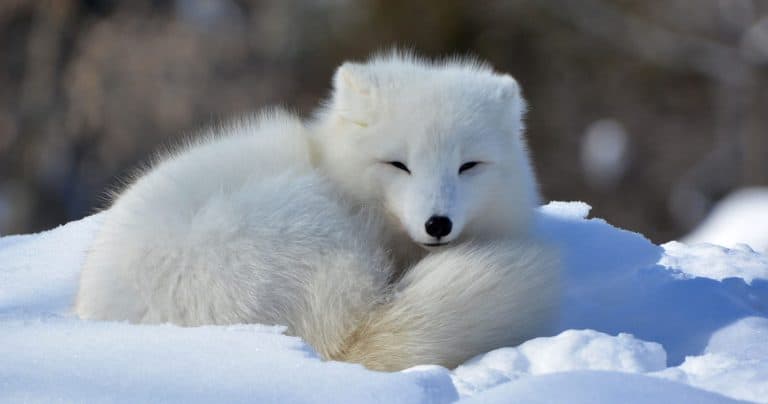
The gorgeous animal in the prize-winning picture is a blue morph arctic fox. There are two color morphs in this species, the blue morph and the more common white variant. In general, the blue morphs tend to live in coastal areas and islands. They are found on Iceland, Greenland, and the Aleutian Islands of Alaska, including St. George Island, where the winning picture was taken.
In the white morph variant, pigment production is dramatically reduced in winter, resulting in a white coat. This highly insulated winter fur is shed in May and replaced by a shorter brown or grey coat. In the blue variant, the summer coat is a uniform dark grey-blue, and the winter coat is on. The variation in coat color is caused by a genetic mutation.