
Quick Take
- Humpback whales fed off San Diego during a rare feeding frenzy as dolphins maintained a large bait ball, enabling hundreds of sardines to be gulped.
- Dolphins help maintain bait balls by circling and squeezing fish, keeping them from escaping and aiding feeding for both species.
- Bait balls attract predators and drive cooperative hunting, letting humpbacks and dolphins share the abundant prey.
As the winter months fast approach, some whale species are making their way from the Antarctic to the warmer waters of Baja California. One species, the humpback whale, has nearly reached its destination, with many being spotted in Southern California waters from late summer through early winter. But one group recently decided to take a much-needed meal break near the entrance to the Pacific Ocean, creating a rare humpback feeding frenzy off the San Diego coast—a sight even the most seasoned boat captain had never witnessed.
A Historic Moment
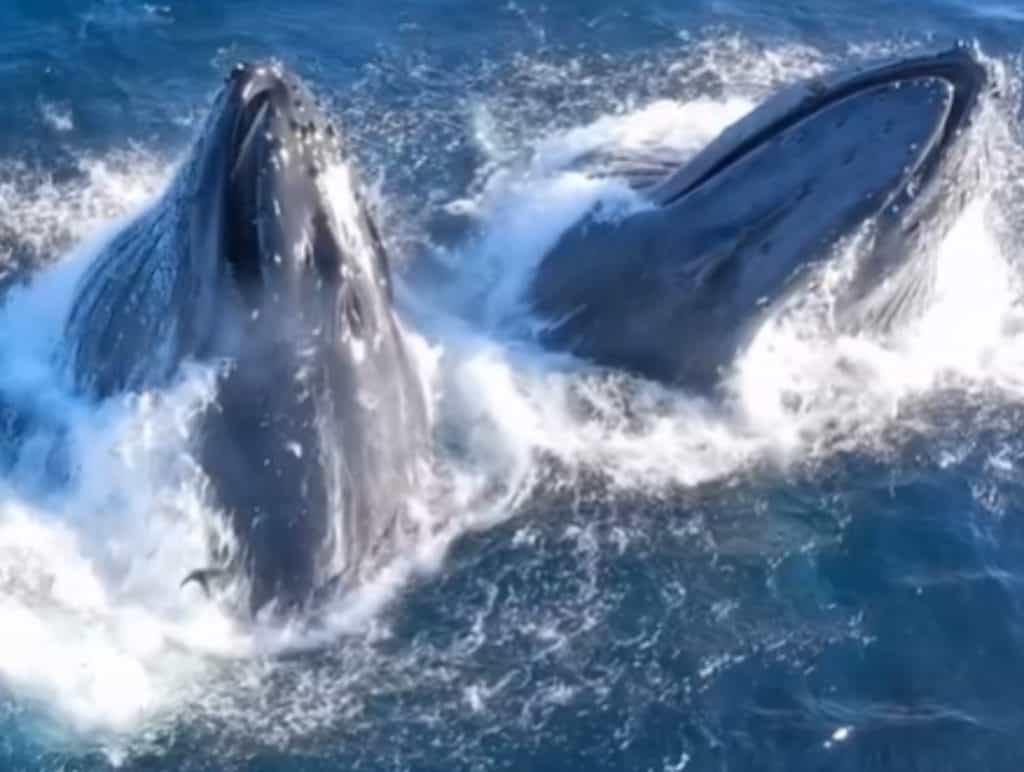
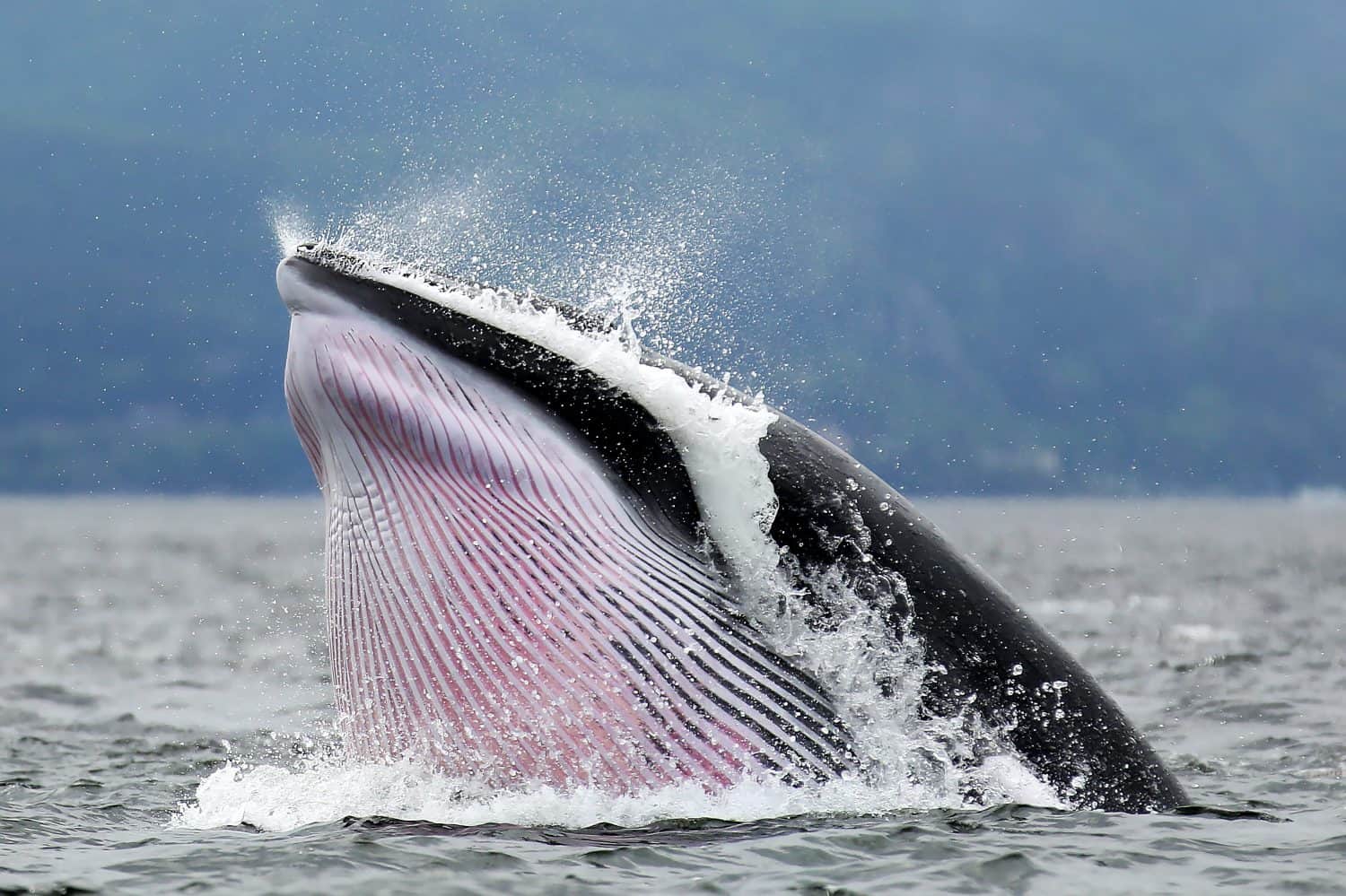
Humpback whales come to the surface of the Pacific Ocean as they consume hundreds of sardines in one gulp.
© – Original
Until the 1950s, sardines were abundant in Southern California waters. However, due to overfishing and changes in the oceanic cycle that altered water temperatures, sardine populations declined rapidly, leading to strict fishing limits and only very small harvests being allowed.
By the 1990s, the population began to increase. While there is a larger population of sardines off the coast of San Diego today, the numbers pale in comparison to those in the Pacific Northwest. Therefore, when the humpback whales participate in a feeding frenzy, that is the region where they are typically seen.
That all changed on December 7, 2025, when San Diego Whale Watch had a chartered boat on the water 15 miles outside of Mission Bay. The humpback whales, aided by long-beaked common dolphins, lunged through the air as they fed on a bait ball. As the video shows, a massive number of fish are being pushed toward the surface. The location of the fish allows the whales to consume hundreds of fish in one gulp, making the bait ball an easy meal for them.
Described as a “once-in-a-lifetime sight” off the California coast, everyone onboard, from the seasoned pros to those who had never seen a whale up close, was in awe. Watching the four whales come to the surface simultaneously in pairs was a magnificent sight and likely something that will not be seen again anytime soon.
“We normally don’t have the abundance of sardine or northern anchovy that they have in the Pacific Northwest,” Captain Michael Merriam with San Diego Whale Watch explains to Fox 5 News. “A lot of the whale watchers here have only seen this stuff on screens, including myself. I had never seen this behavior in Southern California.”
The whales are hungry as they make their way to Baja, California, on their migration journey. Thanks to the dolphins maintaining the bait ball, these four humpback whales got a satiating meal, hopefully allowing them to reach their destination safely.
What Is a Bait Ball?
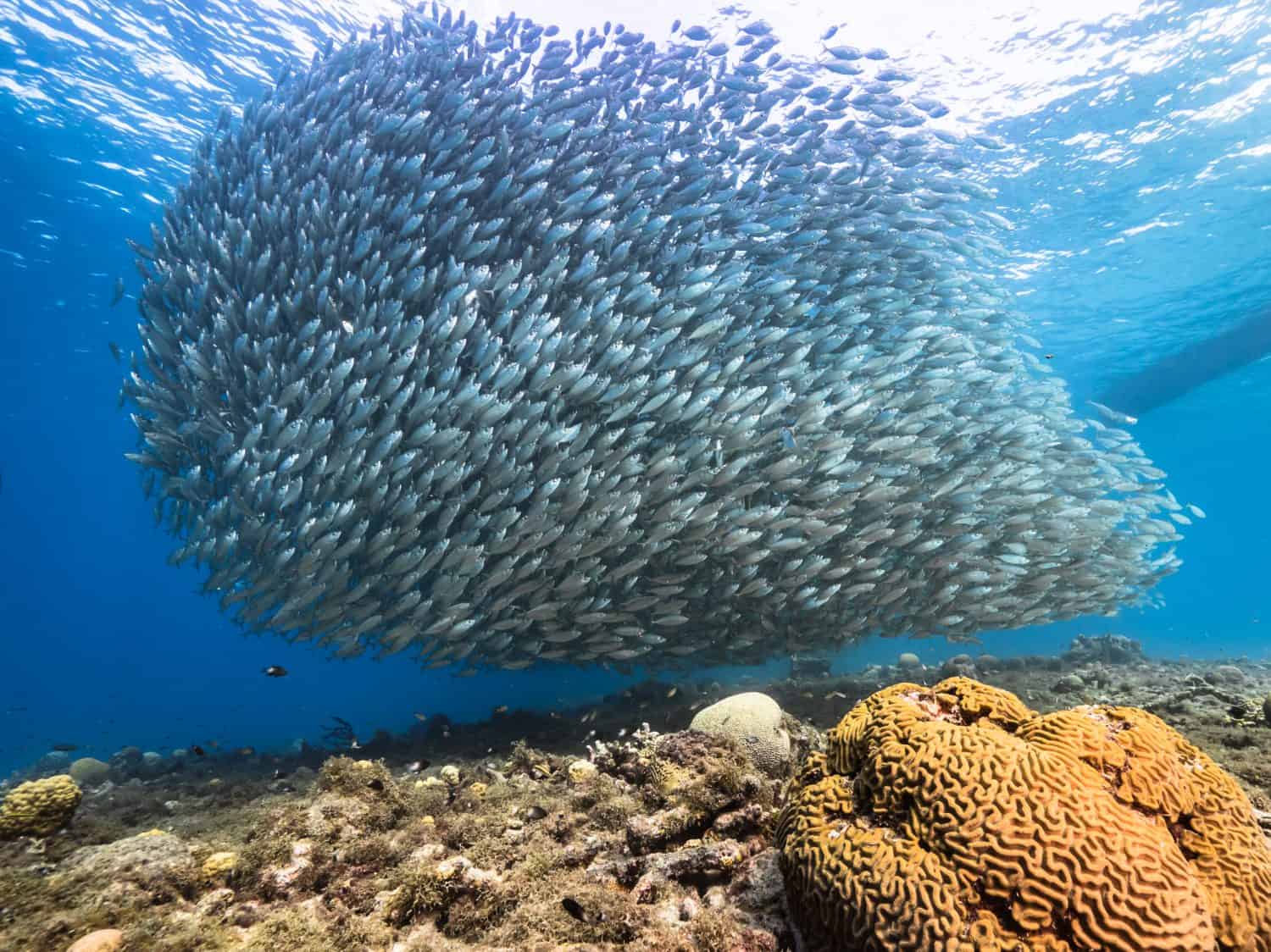
A bait ball is a large group of fish that compact themselves as much as possible so that predators cannot pick out individual fish to target when hunting.
©NaturePicsFilms/Shutterstock.com
When fish swim alone, they are far more likely to be attacked and eaten by predators. When they swim in a school, the fish become harder to attack individually. Attacking a single fish becomes even more difficult when the school forms a bait ball.
A bait ball is a spherical mass of small fish. The fish form this mass when they feel under attack. The formation of the bait ball means that no one fish can be singled out. Instead, the fish move as one unit. When humpback whales eat mouthfuls of fish at once, the tight grouping of the fish makes them more vulnerable to being consumed.
The most common fish that create a bait ball include:
- Sardines
- Anchovies
- Herring
- Menhaden
- Shad
- Glass minnows
- Pilchards
While the number of fish in a bait ball can vary, the size of the formation is relatively large. A bait ball can range in size from 32 to 65 feet in diameter. Therefore, when the dolphins were maintaining the bait ball, they had to cover a significant area of the ocean to keep all the fish together.
Why Dolphins Help Maintain A Bait Ball
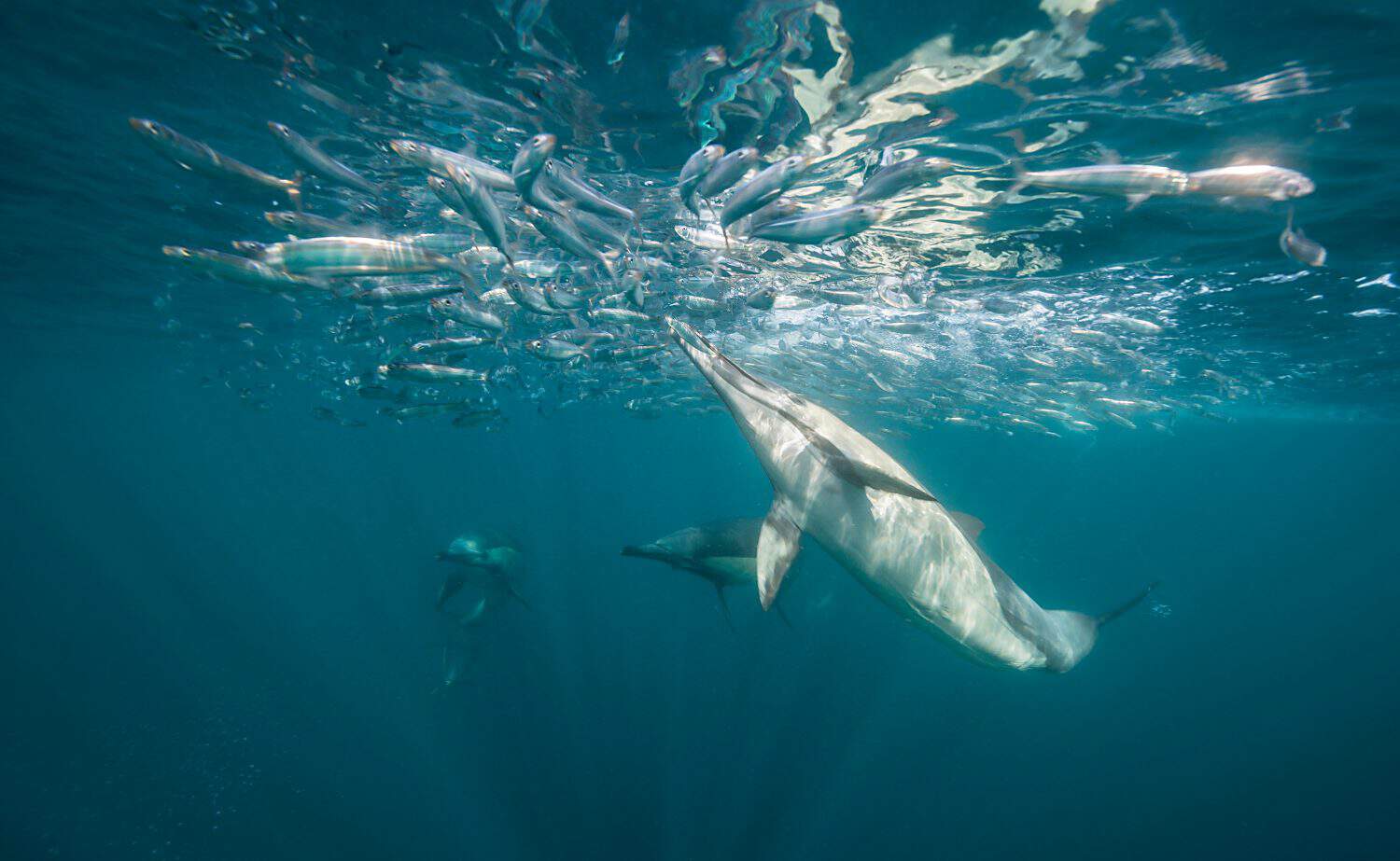
Dolphins maintain bait balls to ensure each member of the pod has a meal.
©wildestanimal/Shutterstock.com
Dolphins do not form the bait ball. However, when they see one has taken shape, dolphins do what they can to keep the bait ball maintained. Thanks to their speed and agility, it takes little effort on the part of the dolphins to make this happen.
After seeing a bait ball form, dolphins will encircle it. Keeping the fish in a tight group ensures the fish will not scatter en masse into the open ocean. As the bait ball moves, dolphins move with it, tightening the circle around the fish. Sensing they are under attack, the fish cluster even more tightly toward the center of the bait ball.
The bait ball is pushed toward the ocean’s surface, preventing the fish from escaping upward. At this point, dolphins move in one by one to feed. As long as the bait ball is maintained against the surface of the ocean, there is nowhere for the fish to go. The teamwork dolphins display in keeping the bait ball intact ensures that every member of the pod gets a meal—something not guaranteed when chasing individual fish.
An Example of Teamwork
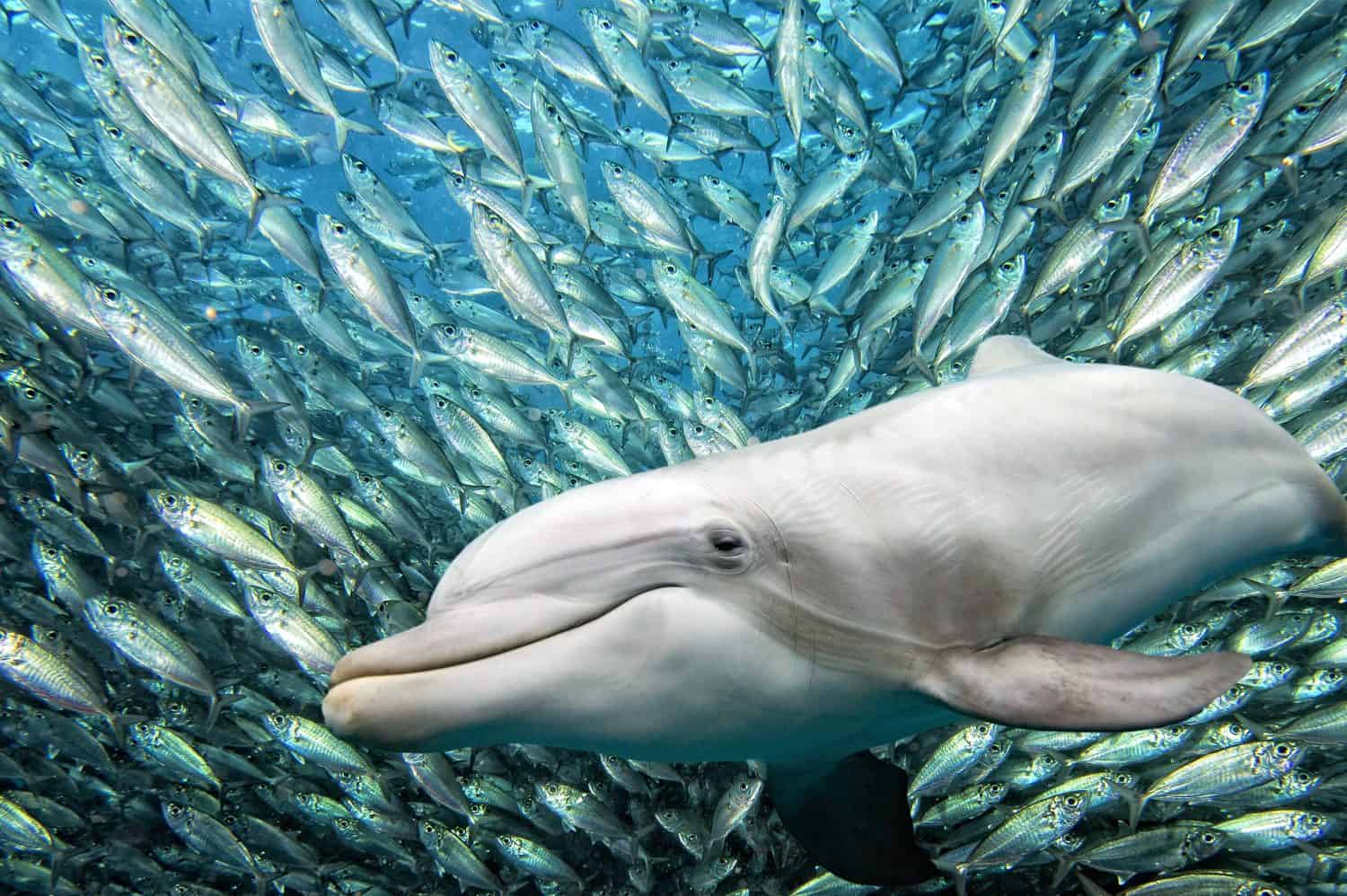
Dolphins and humpback whales are known to work together so that both species can feed from a bait ball.
©Andrea Izzotti/Shutterstock.com
As humpback whales gulped mouthfuls of fish, many observers seemed to forget that the dolphins helped maintain the bait ball that made it possible. This raises the question: were the dolphins intentionally helping the whales get a meal, or did the humpback whales simply take advantage of the opportunity while migrating?
In this situation, the humpback whales and the dolphins worked together to maintain the bait ball. This cooperative hunting ensured that all predators involved would successfully hunt the fish. With a little team effort, neither the dolphins nor the whales had to work very hard to keep the fish in one spot. Each species could take a turn eating the fish. Consequently, neither the humpback whales nor the dolphins were short of prey in this situation.
By working together, both the humpback whales and the dolphins successfully ate until they were full. They are not the only species to work together when going after a bait ball. Other species also participate in this phenomenon to take advantage of so many fish being in one spot at a time.
Other Animals That Make Bait Balls
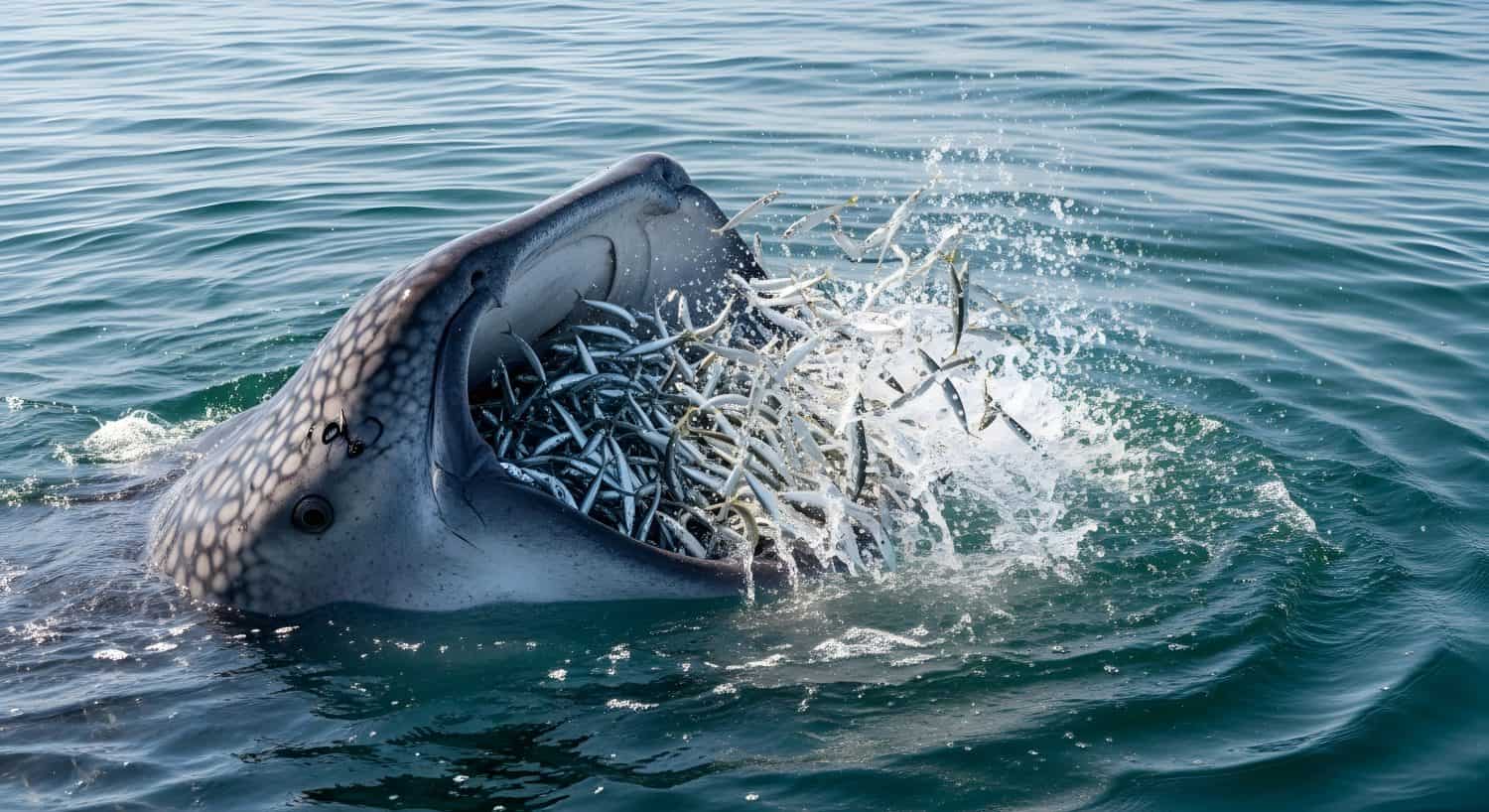
Other species, like this whale shark, will work with other species to maintain and feed from a bait ball.
©jafarsodik/Shutterstock.com
As bait balls form, it makes sense for different predator species to work together to keep the fish in a group for the greater good of each species. As it turns out, other species work like the humpback whales and dolphins do to go after fish in bait balls.
In addition to humpback whales and dolphins working together to consume fish from a bait ball, these species also work together:
- Dolphins and seabirds – Dolphins work from the bottom, as birds work from the top, to keep the fish in a tight spiral. Working together allows both species to consume the fish.
- Sharks and big fish – Sharks and big fish do not help in the same way that marine mammals and seabirds do. Instead, these animals will swim through the bait ball or slap the fish in it with their tails to stun them. This makes it easier for all species hunting the bait ball.
Despite small fish working together to make themselves look larger, this does not always dissuade predators. When a bait ball forms, predators are drawn to the large number of fish. While some of these fish will escape predators, others will not survive.
Bait balls are an essential part of aquatic life. Bait balls help smaller fish survive by making it harder for predators to single out individuals. They also help keep predators satiated by the volume of fish they can eat at a time. Within this amazing phenomenon, it could be surprising that species would work together to share food. However, animals seem to recognize that teamwork brings the greatest rewards.