Quick Take
- A chameleon's tongue works nothing like you'd expect, and the physics behind it are genuinely jaw-dropping. See the tongue mechanics →
- Chameleons can strike faster than a blink, and the real surprise is what happens before the tongue ever moves. Discover the spring-loaded strike →
- There's something at the very tip of a chameleon's tongue that makes missing almost impossible. See the sticky tip explained →
- Your least favorite house pest may have already met its match, though the solution is probably not what you'd reach for first. Meet the in-home exterminator →
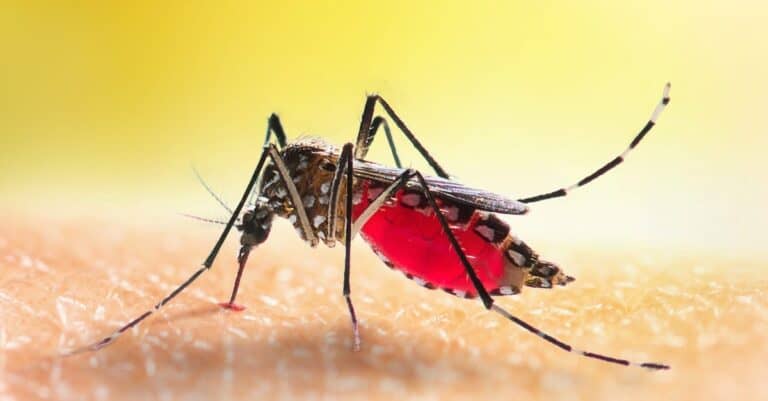
House pests can be some of the most annoying things out there. Who enjoys the sight of a giant mosquito buzzing around in the corner of a room? Thankfully, there are other, more welcome pets that can take care of them. One example is the chameleon. This Instagram post by @franklin.thechameleon shows it quickly catching a mosquito as a snack. Read on to learn more.
Continue reading
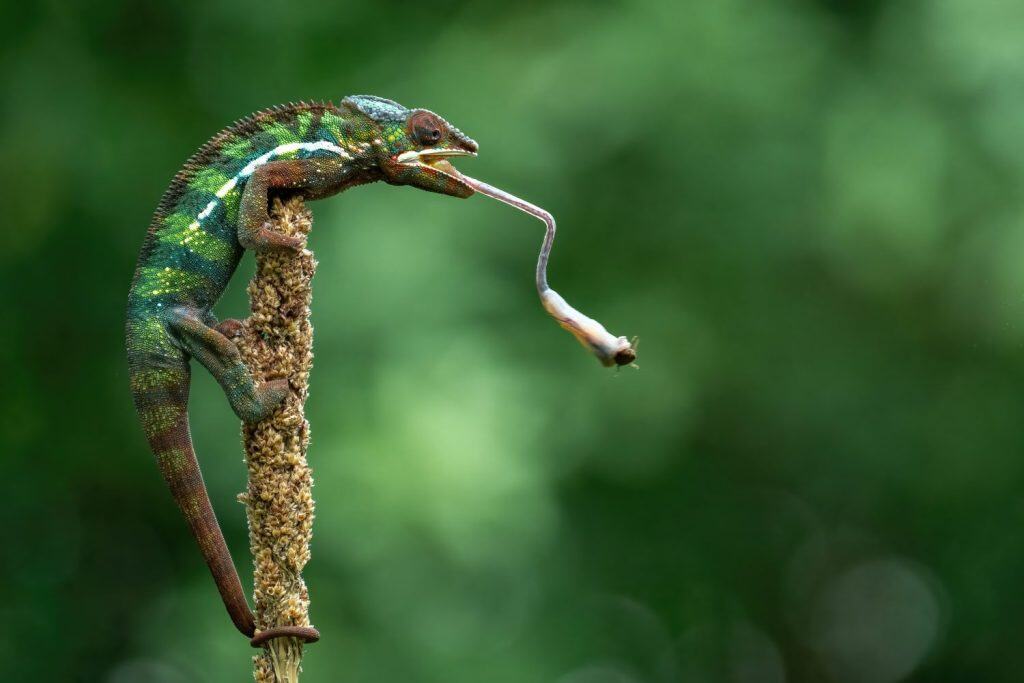
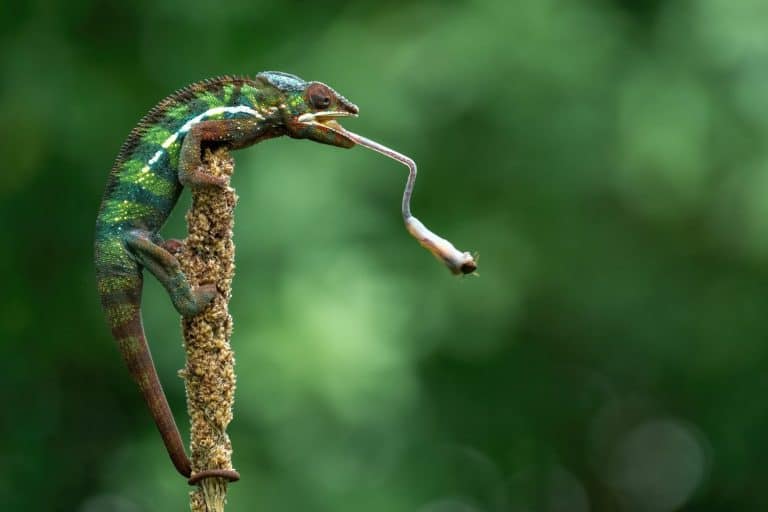
Chameleons have a sticky pad at the end of their tongue that insects stick to before being drawn into the reptile’s mouth.
©Lauren Suryanata/Shutterstock.com
How Chameleons Catch Insects
Chameleons are uncommon but amazing pets. While they’re famous for the ability to change colors, they also make great exterminators. Thanks to their long and lightning-fast tongues, they can lap up insects better than a frog. This includes mosquitoes. While mosquitoes are not a staple of a chameleon’s diet, they are not unwelcome either. Chameleons are primarily insectivores that feed on moths, flies, crickets, grasshoppers, and more. Thankfully, mosquitoes are on that list as well. When large mosquitoes enter the home, chameleons can quickly eat them, sparing us the hassle of extermination. The video above is a great example of this, but just how quick are chameleon tongues?
Chameleons can shoot their tongue out at prey extremely fast. While it depends on the species and the individual chameleon, most can launch their tongues at over 13 miles per hour — and some can even accelerate from 0 to 60 miles per hour in just 1/100th of a second! Some can even reach prey in about .07 seconds. So in the blink of an eye, an annoying insect that you’ve wanted gone from your house can disappear. To do this, they essentially load their tongue like a spring. They contract the muscles in their tongue slowly. Once enough energy has been stored, the tissue rapidly recoils and catapults the tongue forward. It functions like a ballistic projectile, allowing the tongue to catch prey with precision.
At the end of a chameleon’s tongue is a sticky pad. Chameleons can shoot their tongue out at prey extremely fast. While it depends on the species and the individual chameleon, most can launch their tongues at over 13 miles per hour — and some can even accelerate from 0 to 60 miles per hour in just 1/100th of a second! Some can even reach prey in about .07 seconds. So in the blink of an eye, an annoying insect that you’ve wanted gone from your house can disappear. To do this, they essentially load their tongue like a spring. They contract the muscles in their tongue slowly. Once enough energy has been stored, the tissue rapidly recoils and catapults the tongue forward. It functions like a ballistic projectile, allowing the tongue to catch prey with precision. At the end of a chameleon’s tongue is a sticky pad. Prey sticks to this pad before the tongue retracts into the chameleon’s mouth. Because of all these amazing adaptations, chameleons are some of the best hunters out there.