
Quick Take
- Hummingbirds break a lift-generation rule that governs virtually every other bird, and that single difference is what makes their aerial abilities seem physically impossible. See the flight physics →
- Before attempting a nonstop, 500-mile open-water crossing, ruby-throated hummingbirds do something extreme to their bodies that sounds impossible for a creature lighter than a nickel. Explore the Gulf crossing →
- Each night during migration, hummingbirds enter a survival state that looks nothing like sleep, and without it the journey would be fatal. Discover how torpor works →
Every year, nature lovers around the world get together to enjoy the wonderful holiday known as National Hummingbird Day. Held annually on the first Saturday in September, this day celebrates the amazing hummingbird migration that happens every year so that we can stop, take notice, and enjoy their seasonal beauty.
We’re often so captivated by the beauty of hummingbirds that we may forget just how remarkable these winged creatures are. They hover with helicopter-like precision, fly upside down for brief moments, accelerate faster than many larger birds, and complete migrations that span thousands of miles. Once you learn the physics of hummingbirds, you’ll love them even more, so let’s look into the science of these tiny acrobats and other amazing facts you’ll love to learn.
Continue reading
Many Different Hummingbirds
Many people mistakenly believe that all hummingbirds are the same species, but the reality is that the hummingbird family is surprisingly diverse. Scientists have identified more than 360 species, nearly all of which live in the Americas. Their range stretches from the icy wilderness of southern Alaska to the southern tip of South America, with the greatest diversity found in tropical regions. Countries like Ecuador, Colombia, Peru, and Costa Rica are also hummingbird hotspots, where dozens of species may live within a relatively small area.
In addition to living in different places, each type of hummingbird is also very unique. For example, there’s the fiery-throated hummingbird that has brilliant rainbow colors across its throat. There’s also the bee hummingbird of Cuba that is listed as the world’s smallest bird. And don’t forget about the sword-billed hummingbird, which has a bill that’s longer than the rest of its body, which allows it to reach deeply hidden nectar. The point is that they’re all very different and each species has adapted to different climates, flowers, elevations, and migration routes, creating one of the most specialized bird families on Earth.
The Physics of Their Impossible Flight
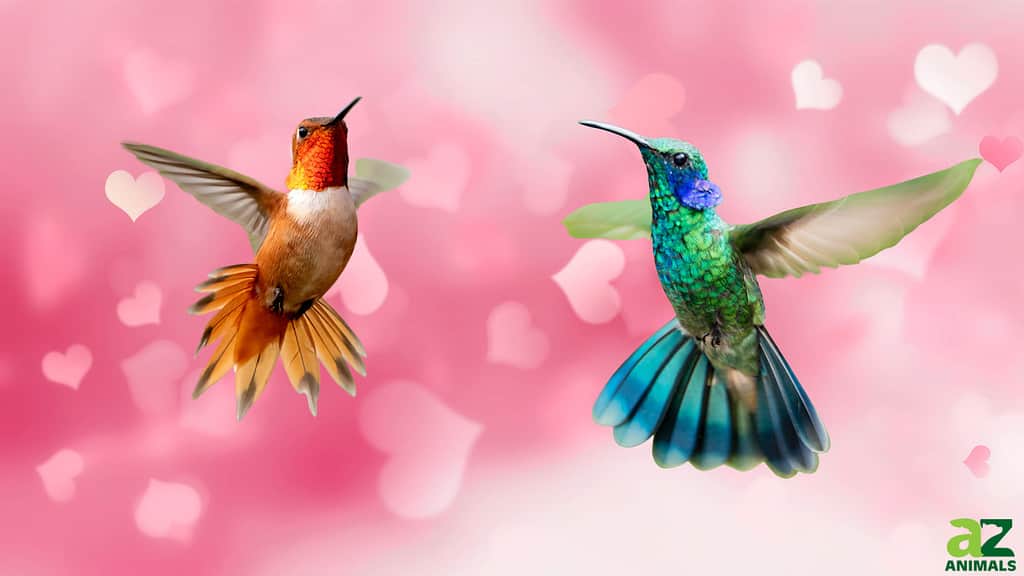
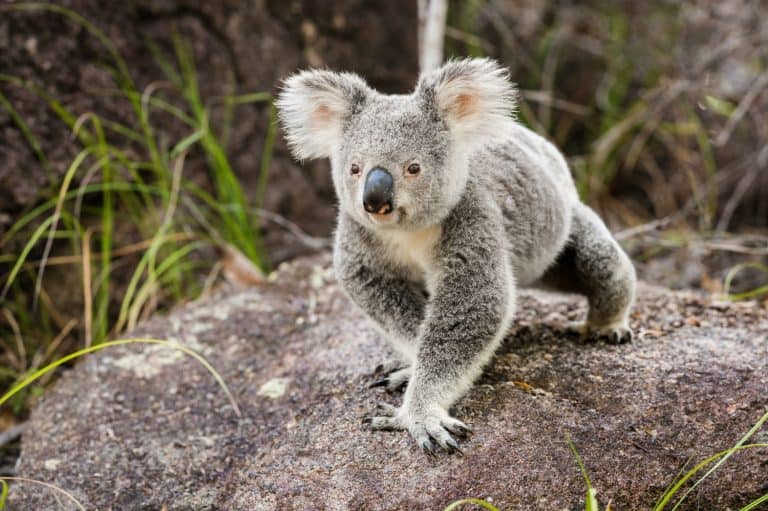
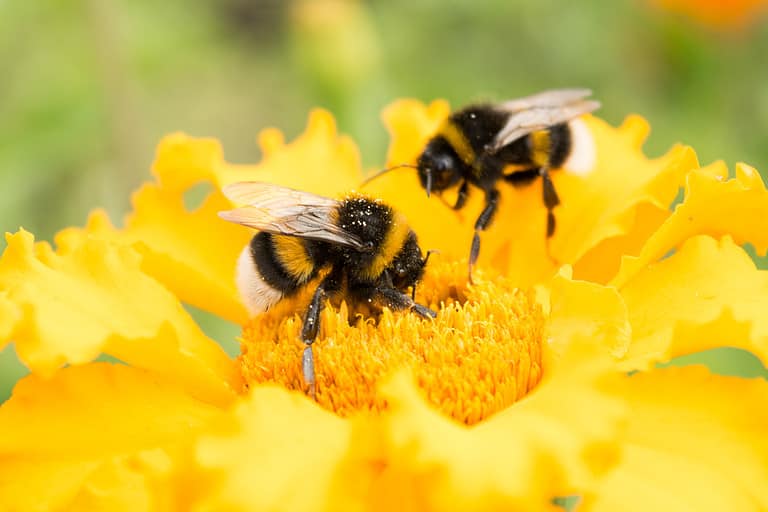
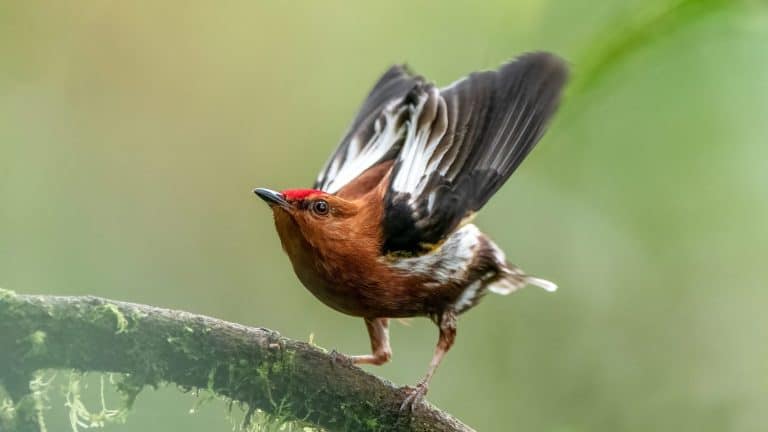
The world of hummingbirds is very diverse with no two species being quite the same.
©Frank Cone from Pexels, OGphoto from Getty Images Signature, and Iuliia_Syrotina_28 from Getty Images/ via Canva.com
The thought of hummingbird migration becomes even more awe-inspiring when you realize just how these birds fly and what they’re able to accomplish with their little bodies. Hummingbirds are astonishing because their flying abilities are virtually unmatched by any other bird.
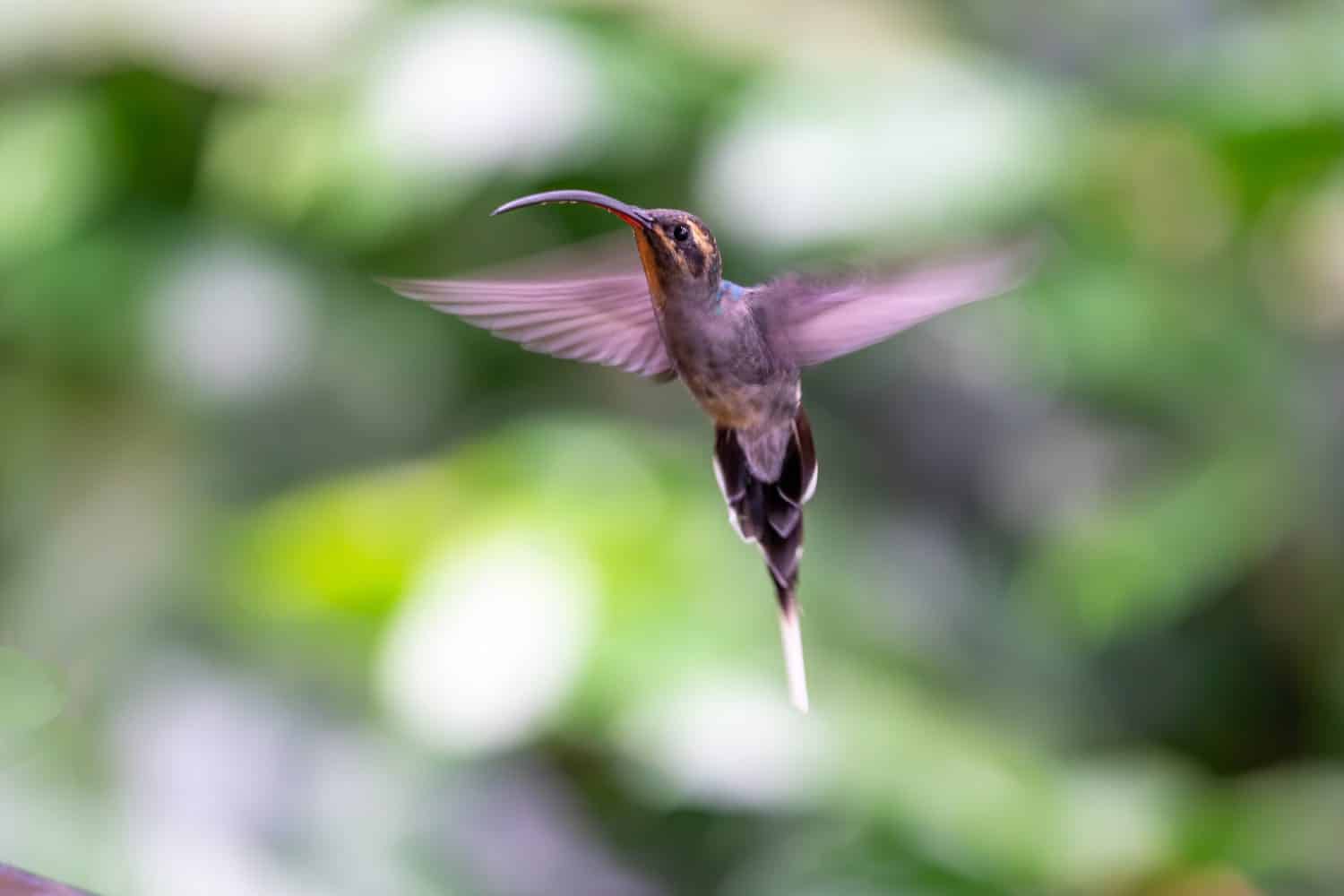
Most birds generate lift primarily on the downward stroke of their wings. Hummingbirds, however, generate lift on both the downstroke and the upstroke by rotating their wings in a unique figure-eight pattern. This is how they can appear to hover almost perfectly still. Unlike other birds, whose wing joints bend similarly to human elbows, hummingbirds rotate their wings mainly from the shoulder. This remarkable flexibility gives them exceptional control over every movement.
Due to this amazing science, many hummingbird species can beat their wings anywhere from 50 to more than 80 times every second during normal flight. In human terms, that’s like clapping your hands 80 times in a single second. Then, imagine doing that for hours. That incredible wing speed creates the familiar humming sound that gives hummingbirds their name.
By using their amazing talents, hummingbirds can do many amazing maneuvers, including:
- Hover in one place
- Fly straight upward
- Fly straight downward
- Fly sideways
- Fly backward
- Instantly reverse direction
- Rotate in midair
- Hang upside down briefly while feeding
Few other birds can match this versatility.
Incredible Speed
In addition to being incredibly agile, hummingbirds are also very fast. Many species can comfortably cruise between 20-30 miles per hour, with some exceeding 60 miles per hour during courtship maneuvers. It’s also amazing how quickly hummingbirds can get to their max speed. A hummingbird can go from hovering to full-speed flight almost instantly, allowing it to evade predators, chase rivals, or claim a flower before another bird arrives.
Amazing Metabolism
A typical hummingbird migration is filled with many flower stops, and that’s because the movement of hummingbirds and their incredible flight require enormous amounts of energy. In fact, the birds have one of the fastest metabolisms of any warm-blooded animal, and their hearts may beat over 1,200 times per minute during active flight.
To fuel this constant activity, hummingbirds spend much of their day feeding. It’s not unheard of for hummingbirds to visit 1,000 to 2,000 flowers daily, consuming nectar almost continuously. They also eat tiny insects and spiders, which provide the proteins, fats, vitamins, and minerals that nectar alone cannot supply.
Nectar is the perfect fuel because its sugars can be quickly converted into energy, allowing hummingbirds to use it almost immediately after feeding. Scientists have discovered that hummingbirds can burn recently ingested sugars directly during flight instead of storing everything first as fat. This is how they’re able to keep flying nonstop throughout the day.
During long migration journeys, hummingbirds need to conserve energy at night when feeding on nectar isn’t possible. At these times, they enter a survival state called torpor, during which their body temperature drops dramatically, their heart rate slows significantly, their breathing becomes slower, and their metabolism decreases. Essentially, they enter a temporary energy-saving mode until sunrise. When morning arrives, they gradually warm themselves and resume their demanding lifestyle.
An Amazing Hummingbird Migration Journey
While hummingbird flight is incredible, their migration is arguably even more impressive. You’ll be amazed at how far a bird that often weighs only a few grams can fly.
Let’s take the ruby-throated hummingbird for example. Every autumn, millions leave breeding grounds across the eastern United States and Canada, with many of them eventually reaching as far as Mexico or Central America. The journey becomes even more challenging when they cross the Gulf of Mexico, which they typically fly directly across rather than around. This trek can cover more than 500 miles and may take up to 24 hours. They may have to fly for hundreds of miles without stopping.
To accomplish this feat, hummingbirds fuel up before departure, and when we say they fuel up, we really mean it. They eat constantly, their body fat increases, and some nearly double their body weight. This action is essential to survive the journey. The fat they create serves as lightweight, energy-dense fuel that powers the nonstop flights ahead. After completing a major migration leg, much of that stored fat has been burned away, and they need to feed again.
It’s worth mentioning how hummingbirds know where to go when they depart. Scientists are still trying to pinpoint exactly how the birds can go so far without a map. Some suggested theories of navigational tools include:
- The position of the sun
- Earth’s magnetic field
- Familiar landmarks
- Internal biological clocks
- Possibly even polarized light patterns in the sky
Much of their route is genetically programmed. It’s even more incredible when you learn that many young hummingbirds make the first migration trek without the help of an experienced adult.
The Relationship Between Flowers and Hummingbirds
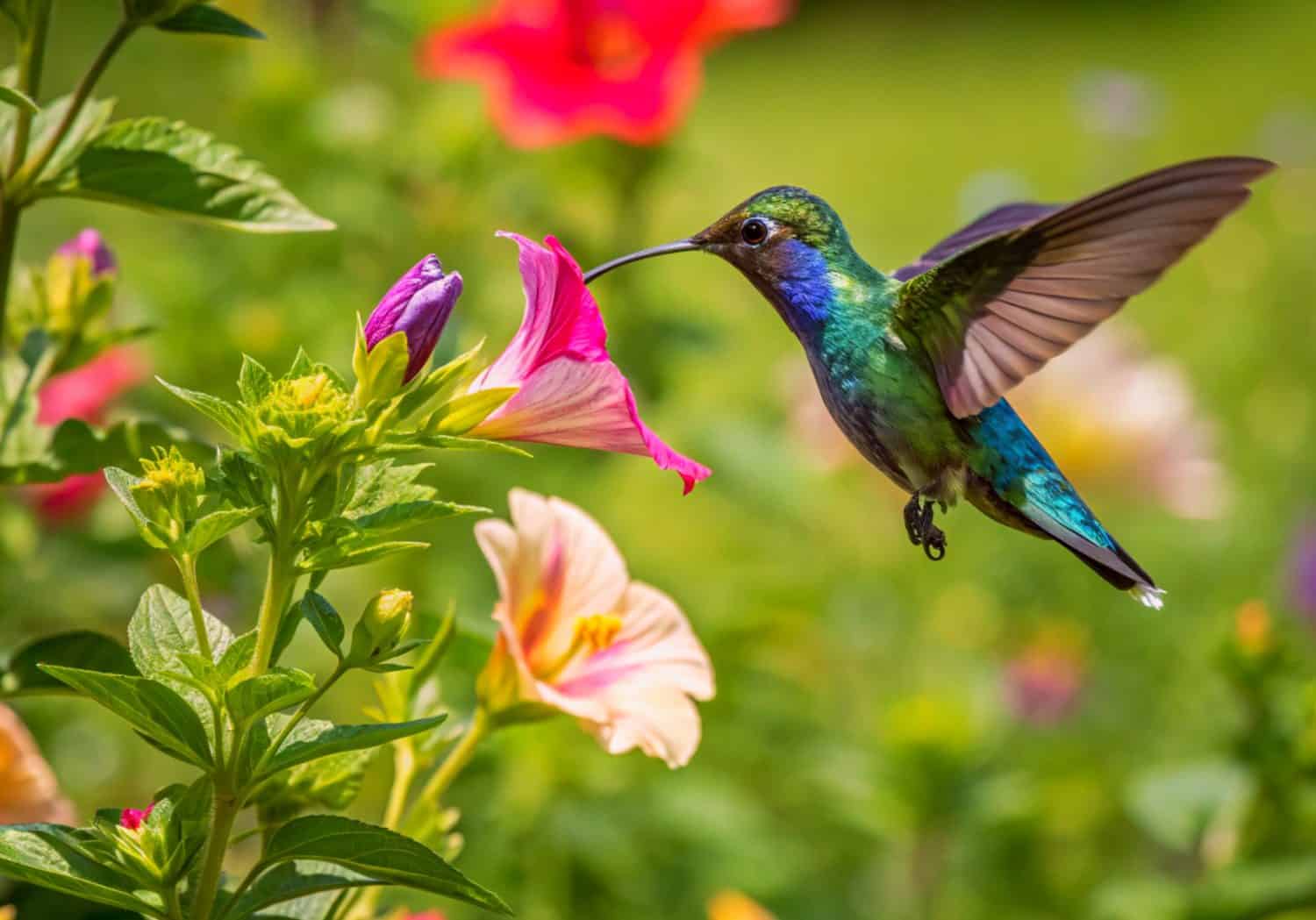
Hummingbirds needs flowers as much as flowers need hummingbirds.
©Graphic Designer 17/Shutterstock.com
Hummingbirds and flowers have long-term relationships that span years, and they are mutually beneficial. The flowers provide nectar, the hummingbirds transfer pollen, and the circle of life continues.
Although bees often receive the spotlight when it comes to being a pollination specialist, hummingbirds are also vital, especially throughout America. They help to pollinate hundreds of species, from trumpet vines to coral honeysuckle to bee balm, cardinal flowers, and more. Many wildflowers have evolved specifically to attract hummingbirds rather than insects, and their shapes often perfectly match the length and curvature of local hummingbird bills. It’s quite an astonishing partnership.
Due to how much nectar they need, it should be no surprise that hummingbirds are fiercely territorial. A single flowering shrub or backyard feeder may become valuable real estate, and you’ll often observe one hummingbird chasing away every competitor. Despite weighing only a few grams, hummingbirds fearlessly dive at crows, hawks, squirrels, and occasionally even humans who venture too close to a favored feeder. With that in mind, hummingbirds are often the target of predators, including snakes, large spiders, and cats, among others.
Creating a Hummingbird-Friendly Backyard
If you want to reap the benefits of the next hummingbird migration and have a possible sighting on National Hummingbird Day, then make your backyard a perfect resting place. Here are the many ways that you can attract these hovering beauties:
Choose the Right Feeder
In addition to choosing the flowers that hummingbirds like to frequent, you can also hang a birdfeeder. Choose a feeder with multiple feeding ports, bright red coloring, a leak-resistant design, and one that is easy to clean. Cleaning the feeder is essential because dirty feeders can contain mold and bacteria. Hot water should be enough to clean the feeder if you maintain it regularly. Use a mild vinegar solution for tougher stains.
You can increase your chances by creating a simple homemade nectar solution. To do so, mix one part ordinary white granulated sugar with four parts water. Then, pour it into the feeder. Never use red food coloring, as the dyes offer no benefit and may even deter the birds. Also, avoid honey, brown sugar, artificial sweeteners, or commercial mixes with unnecessary additives, as these will not attract hummingbirds.
Add a Water Feature
Though hummingbirds mostly get their hydration from nectar, they also enjoy water. You can make your yard more alluring with a water feature. Hummingbirds enjoy moving water, so don’t go for a deep birdbath. Instead, consider adding a feature that has gentle dripping water, shallow moving water, or a fountain spray.
Avoid Pesticides
If you want to attract hummingbirds to your home, you’ll also need to tolerate insects in your yard, as they are an important part of the birds’ diet. Using pesticides can greatly reduce the birds’ food supply, and chemicals could also potentially contaminate nectar sources. By gardening naturally whenever possible, you can help support the complete hummingbird food web. Native plants, healthy insect populations, and clean water all contribute to a thriving hummingbird habitat.
Small Birds Inspire Big Wonder
Hummingbirds are incredible creatures whose existence and ability to thrive seem almost impossible. They are biological wonders, and they remind us of Mother Nature’s amazing talents. National Hummingbird Day offers us a chance to celebrate these stellar species and the glory of their remarkable behaviors. The next time you hear the soft hum of wings outside your window, pause for a moment. That tiny bird hovering before a blossom isn’t just feeding—it’s performing one of the most sophisticated aerial displays in the natural world.