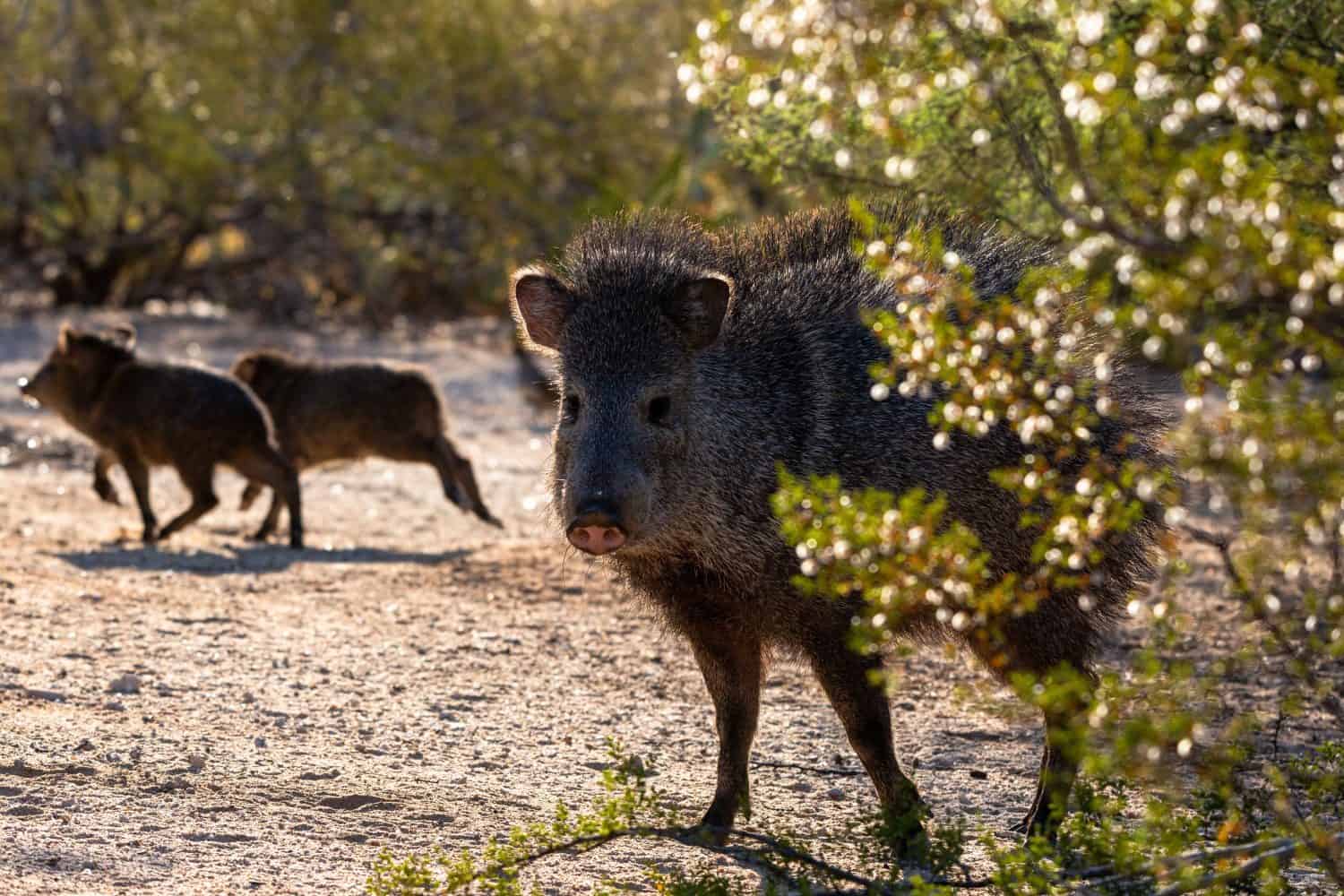

Quick Take
- Related to pigs, javelinas are smaller, porcine mammals that live in the Sonoran and Chihuahuan deserts.
- Javelina hunting seasons are generally set for the cooler months, but the exact dates vary by state and region. In some areas, hunting may begin as early as fall and extend into late winter or even year-round, depending on local regulations
- Summer temperatures encourage javelinas to be nocturnal. In the winter, they spend more time out in the open. This coincides with breeding tendencies, which makes hunting in the winter more effective for population health.
- Hunters act as citizen scientists by conducting rudimentary population surveys of javelinas.
- Winter hunting season represents a harmony of javelina abundance and wildlife agency objectives.
Javelinas have a storied history in North America, even if they are not well understood by people who live outside of the southwestern United States. Also called Peccaries or skunk pigs, likely due to their snouts, javelinas aren’t exactly pigs. While they are ungulates in the family closest to pigs (Suidae), javelinas differ from pigs or hogs in multiple ways. These creatures are smaller and belong to a family of hoofed animals that come from South America. In the Southwest, they are a commonly hunted mammal. This hunting industry requires careful wildlife management that aligns the hunts with reproductive cycles, climate conditions, and conservation goals.
A superficial investigation of the javelina hunting season might make it seem to be a hunter’s market. However, nothing could be further from the truth. Javelinas are hunted in the freezing winter months for very specific reasons that have to do with ecology, biology, and herd hierarchy. Years of study and trial-and-error research have transformed javelina hunting season from a fish-in-a-barrel extravaganza into an expertly managed conservation procedure. Let’s learn more about why javelina hunting season happens in the winter, and how it protects the long-term health and survival of one of the western hemisphere’s most enduring mammals.
Javelina Background
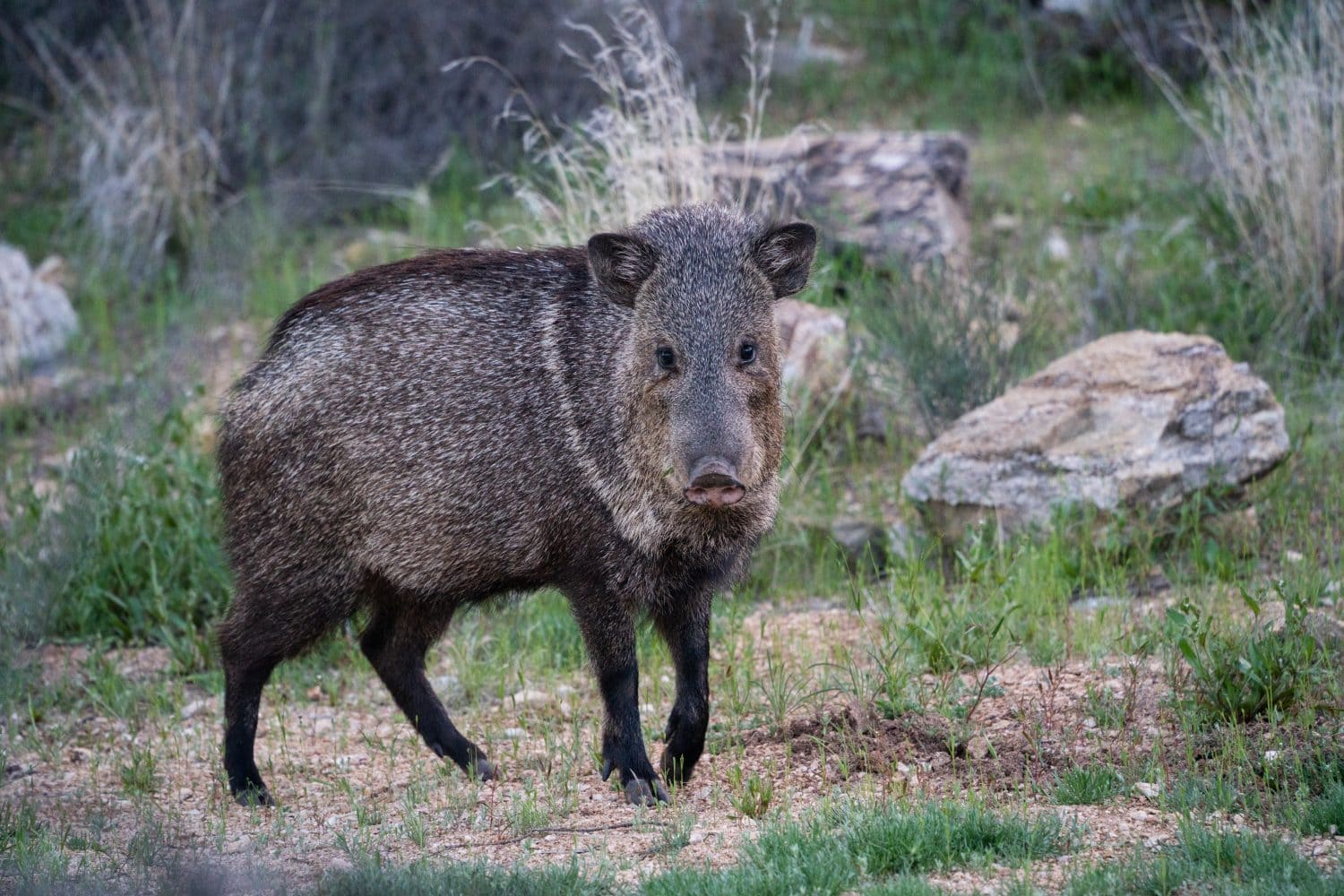
Javelinas lack tails but have three-chambered stomachs.
©Andreas Michael Staver/Shutterstock.com
The untrained eye easily mistakes javelinas for pigs, but they are actually a member of the Tayassuidae family. This group of New World mammals branched off from the swine family (Suidae) at least 40 million years ago. Both pigs and javelinas have snouts and cloven hooves, but the latter have some unique characteristics. Javelinas may lack tails, but they have straight tusks that rub together and sharpen, as well as labyrinthine, three-chambered stomachs like cows. While pigs are sizable, javelinas are considerably smaller. They stand about 20 inches tall at the shoulder on average. Their bodies are covered in bristly, salt-and-pepper fur. Interestingly, this includes a defined necklace-like band of whiter hair around their necks.
Javelinas are opportunistic in most aspects of life. While they usually breed in late fall when rainfall is abundant, they can successfully mate all year round. Their diet, too, is dictated by the conditions of the desert. They are opportunistic herbivores with a penchant for prickly pear cactus. Not only does this provide them with water and nutrition, but they are quite literally adapted to the plant. For example, they swallow the sharp cactus spines without injury. If cactus is hard to find, javelinas sniff out tubers, plant bulbs, and even the occasional insect.
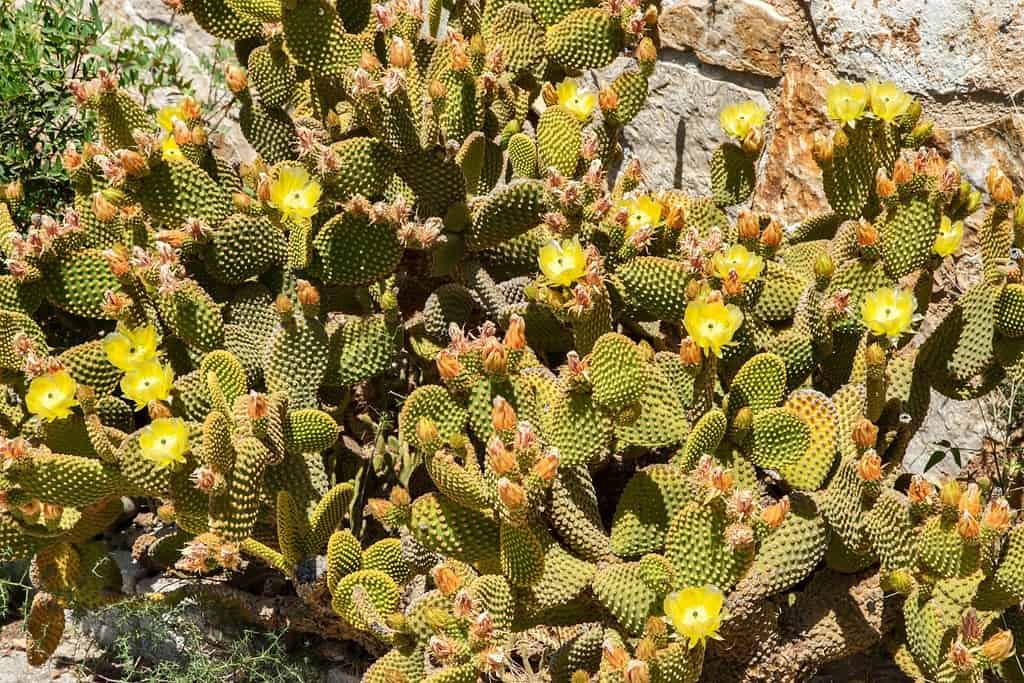
Javelinas are specifically adapted to prickly pear cactus, which is a staple of their diet; they can eat cactus spines without injury and even absorb the plant’s oxalic acid.
©Alexander Varbenov/Shutterstock.com
Wherever javelinas go, they tend to do so as a unit. They live in intimate social groups called squadrons, which contain between six and 30 individuals. These creatures can’t see very well, so they rely on their acute sense of smell to communicate, navigate, and sniff out threats. Interestingly, javelinas feature a scent gland on their lower backs. They rub these together to create a type of distinct group odor. This allows them to identify members of their own squadron. This potent odor also allows hunters to detect them.
Fair Weather Foodstuff
The Sonoran and Chihuahuan deserts are home to javelinas, but javelinas don’t always feel at home in these places. While mule deer and elk are equipped to handle the extreme temperature swings of the desert’s winter months, javelinas are more vulnerable to these shifts. They lack the dense undercoat necessary for insulation. Plus, their bodies have a metabolic rate that makes them particularly vulnerable to heat stress.
When it’s hot in the summertime, javelinas confine their activity to nighttime. The rest of the day, they take cover under dense mesquite or patches of prickly pear. The desert sun in the middle of summer is simply too oppressive to let javelinas roam free. If hunting season were held during these high-heat months, both hunter and prey would suffer. For javelinas in particular, high temperatures can lead to capture myopathy. This condition results from overexertion or extreme stress. Muscle tissue breaks down, releasing toxins and eventually causing organ failure.
This is one of the key reasons wildlife authorities often schedule javelina hunting seasons during the cooler months, though the specific dates can vary widely by state and region. Restricting hunting to this period ensures that temperatures are within the javelina’s “thermoneutral zone.” This way, javelinas aren’t over-stressed, and successful hunters get higher-quality meat.
(A Lack of) Breeding Seasons
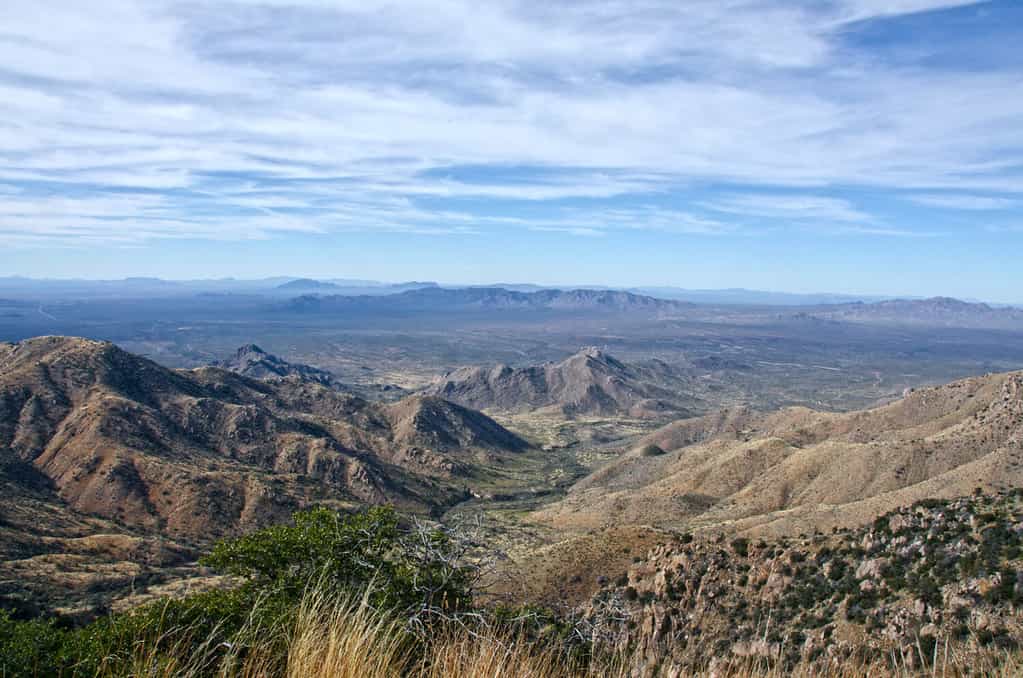
The desert can be an unforgiving place, especially during the summer. That’s one reason wildlife authorities keep javelina hunting season in the more manageable winter months.
©PhotoTrippingAmerica/Shutterstock.com
These pig-like creatures are special for several reasons. One of these reasons has to do with their breeding schedule. Other big-game species, like white-tailed deer, mate during a specific time of year in what is called a “rut.” Javelinas, however, are entirely opportunistic breeders. They mate when they can, all year round, especially when there is enough rainfall to support their food sources. That said, these creatures tend to breed in the late fall and early winter when rainfall produces enough plants to provide food and shelter.
Hunting can be conservation, especially when people time it effectively. That is one reason why wildlife agencies restrict hunting during this creature’s birthing season, which typically happens in early summer. This involves a two-fold strategy. For one, young javelinas, called “reds” for their vermillion-colored coats, are born in the summer. By the time winter rolls around, they are old enough to function without nursing. Second, winter-restricted hunts allow specialists to more reliably count population numbers. By tracking how many young ones survived the summer monsoons, authorities can adjust the hunting tag limits for the following year.
Citizen Scientists
It bears repeating that javelinas are nothing without their tribe. As intensely social animals, they rely on their squadrons for protection, communication, and survival. When winter comes, these squadrons become even more intimate. To conserve heat, javelina squadrons will huddle together in tight bunches. Such behavior is a boon for wildlife authorities, as it allows them to easily survey population numbers. During the summer, javelinas are more nocturnal and spread out, making easy census surveys elusive.
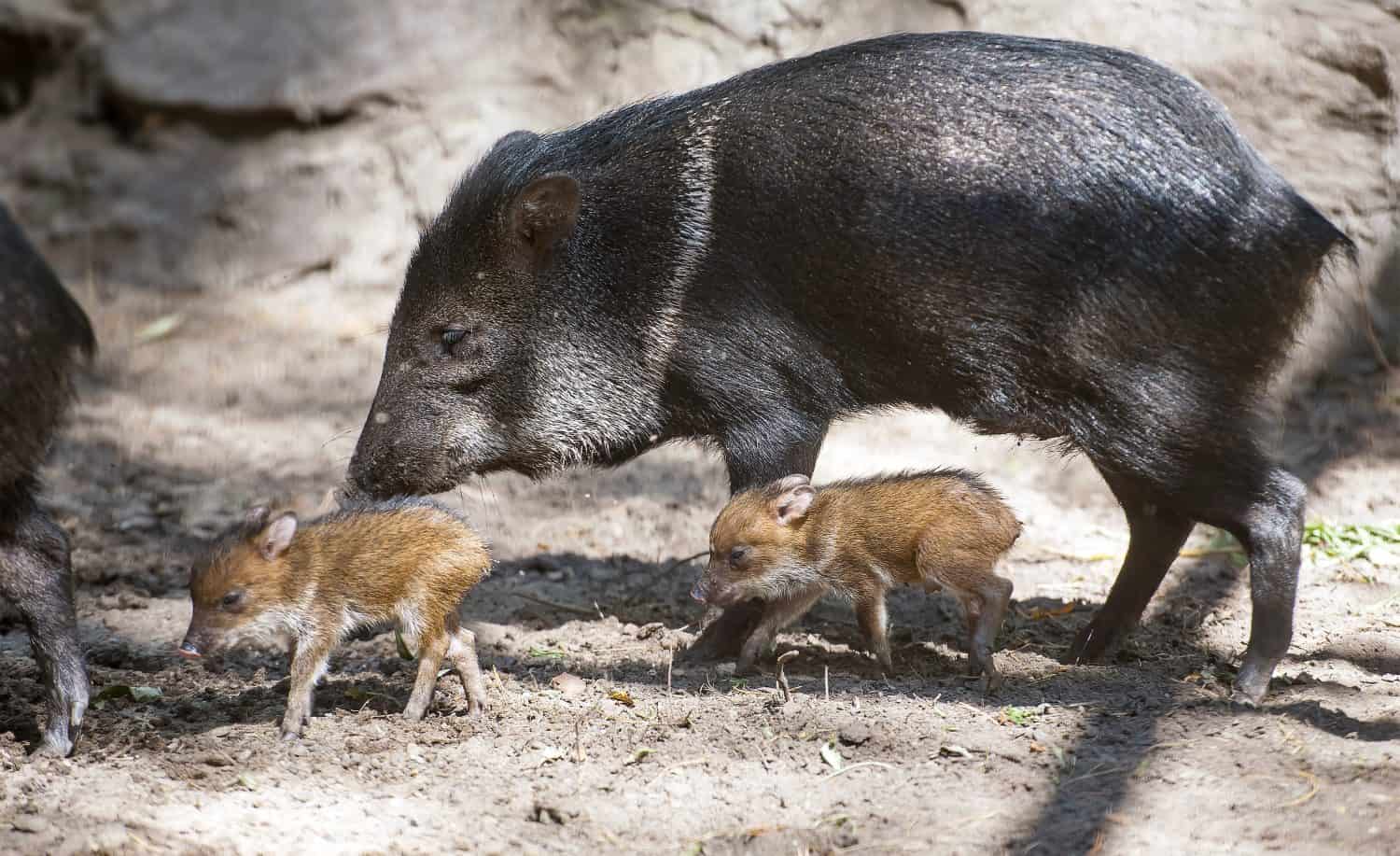
A simple survey of the adult-to-juvenile ratio can tell scientists how healthy a given javelina population is.
©PaniYani/Shutterstock.com
Scientists can’t be everywhere at once, so they often rely on hunters acting in the capacity of “citizen scientists” to fill in the knowledge gaps. Hunters have a vested interest in javelina movements, so scientists use their incentivized observations to give a sense of the creatures’ movements and populations. Even a simple survey of adult-to-juvenile ratios can provide a clear indicator of population health in a given area.
Defensive Dormancy
By timing javelina hunting season with the winter, wildlife authorities protect the desert. Despite its tough conditions, desert ecosystems are fragile. Plants that make up the majority of the javelina diet are scarcer or, at least, in a state of semi-dormancy. A winter hunting season takes the pressure off the plants because they are already dormant. Hunters run less risk of stepping on and destroying important desert plants if the winter has sent them underground.
Hunting javelina in the summer, besides the prohibitive temperatures, is arguably cruel. They tend to hang around water sources, and shooting them would be akin to shooting fish in a barrel. Though they bunch up in squadrons in winter, they are more dispersed across the landscape overall than in summer. This allows for a fair chase and restricts potential over-harvesting.
The javelina hunting seasons in cooler months bring harmony. This strategy strikes a careful balance between the health of javelina populations and the conservation goals of wildlife agencies. Each player, from hunter to authority to javelina, plays a part in ensuring the health and abundance of the southwestern desert are maintained.