
Quick Take
- Two sloth bear cubs were born at the Smithsonian National Zoo on December 7, 2025.
- It is the first time in 12 years that sloth bear babies are present at the zoo.
- The birth is part of the Association of Zoos and Aquariums’ Species Survival Plan program to support breeding and reproduction of threatened species.
- The sloth bear cubs will be available for public viewing in spring 2026.
For the Smithsonian National Zoo and Conservation Biology Institute (NZCBI), Christmas came early in 2025. Zookeepers were delighted to welcome two new arrivals—sloth bear cubs, born in an off-exhibit den in the Asia Trail exhibit.
Meet the Zoo’s Sloth Bear Cubs
The two cubs, born in the early morning hours of December 7, 2025, marked the first time in 12 years that the Zoo had sloth bear cubs in residence. They were born to Molly, a recent addition to the Zoo. Both mother and cubs appear healthy.
Animal care teams are monitoring mom and cubs remotely to avoid disturbing the trio. Caregivers are ensuring that the mother has access to the necessary nesting materials and food to properly care for her babies. The sex of the cubs has not yet been determined. Zookeepers are waiting for that to happen before naming the cubs.
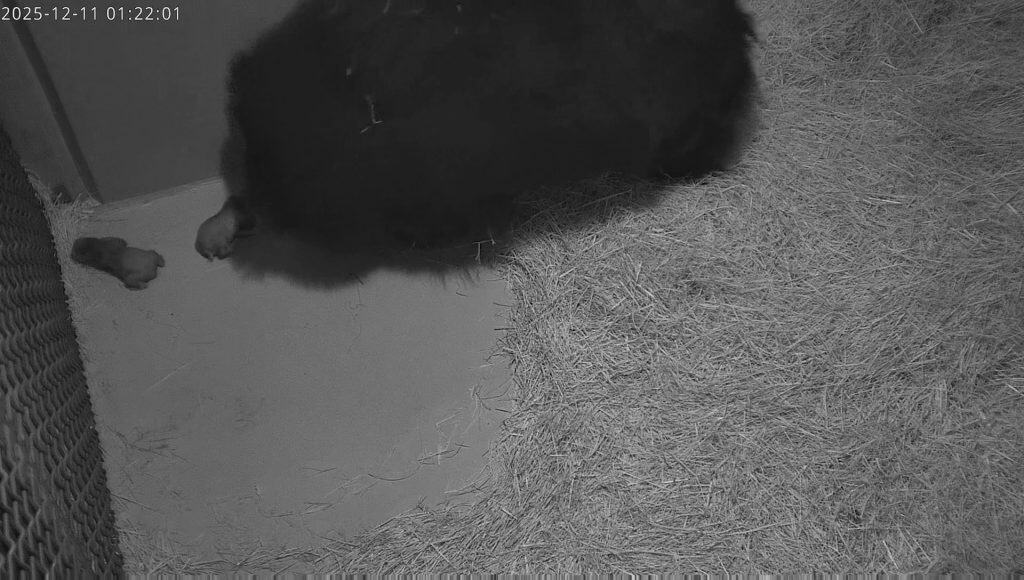
Sloth bear Molly with her two tiny cubs.
©Smithsonian’s National Zoo and Conservation Biology Institute – Original / License
The cubs’ arrival was extra special because NZCBI is one of only 15 Association of Zoos and Aquariums (AZA)-accredited zoos that have sloth bears as residents. Overall, there are only 42 sloth bears in total at the 15 AZA-accredited zoos. The addition of two healthy cubs is a significant contribution to the species’ captive population.
“The birth of two sloth bear cubs at the Smithsonian’s National Zoo is a significant achievement for the AZA’s Species Survival Plan,” says Asia Trail curator Michael Brown-Palsgrove. “These cubs strengthen the genetic diversity and sustainability of the managed population while also supporting global conservation efforts for this vulnerable species through research, education, and public engagement.”
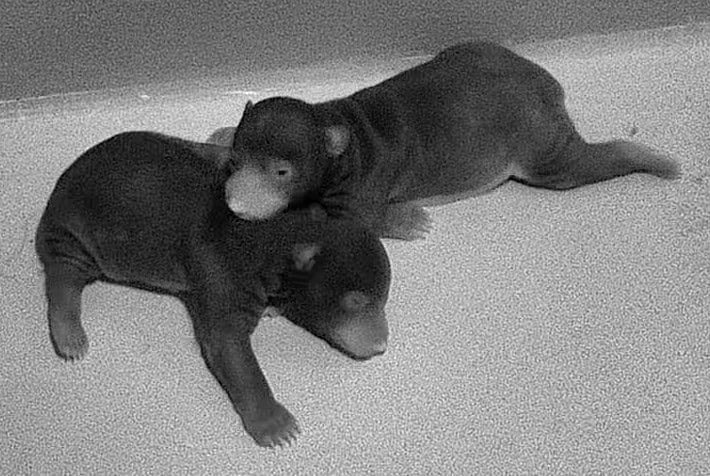
Sloth bear cubs are blind and helpless at birth. They weigh just one pound and spend their time nursing and sleeping. Their eyes open in about a month, and they begin walking at around 45 days. They will nurse for about one year. Throughout this time, Mom Molly will remain very protective of her offspring.
According to Stacey Tabellario, Animal Keeper at the Smithsonian National Zoo, even zoo personnel won’t see the cubs in person for several months. “Until the cubs are big enough to hop on mom’s back, she will keep them in the den where she feels safest,” she says. “Once she can move around, confident that her babies are secure on her back, she will gradually introduce them to the outside world.”
She also notes that Molly is doing an excellent job as a first-time mom. She is protective, caring, and nurturing. One sign that animal keepers had that the cubs were doing well was when they heard the distinctive “humming” sound that sloth bear cubs make when nursing. Tabellario likens the sound to a car trying to start, and says it is an audible sign to mom that the cubs are content.
“It took hours after the cubs were born for us to hear the first audible humming sounds,” she says. “When we finally heard it, we were all overjoyed!”
She estimates that it will be a few more months before the cubs make their first foray into the outside world.
A Pregnancy Focused on Conservation
Molly’s pregnancy was a planned breeding via the AZA’s Species Survival Plan (SSP). The plan coordinates the genetic management of sloth bears across all accredited AZA zoos. The selection process, according to Tabellario, is extensive and well-coordinated.
“The AZA carefully considers the genetic makeup of each bear to determine if it will be a good match to produce cubs with desirable genetics,” she says. “Once a match is made, bears are moved among the AZA zoos to facilitate breeding.”
Molly is six years old, and she arrived at NZCBI in April 2025 from the AZA-accredited Sunset Zoo in Manhattan, Kansas.
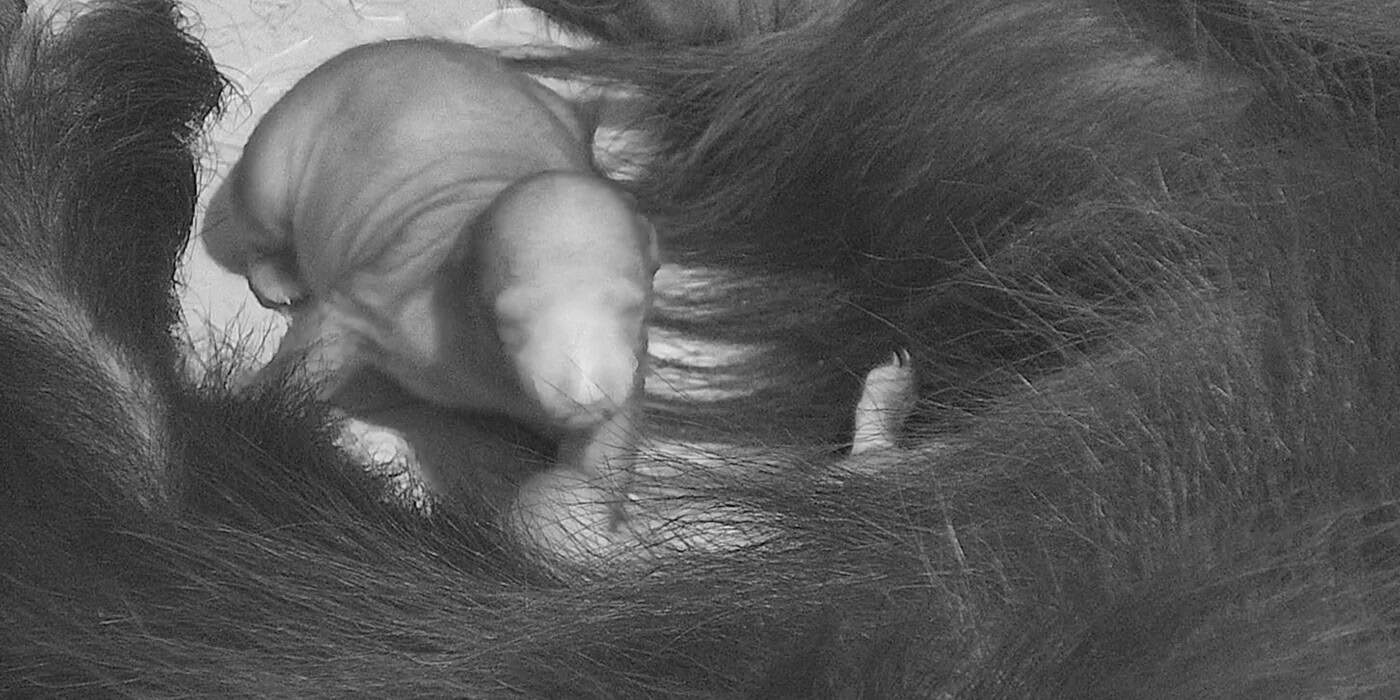
One of the two sloth bear cubs shortly after birth.
©Smithsonian’s National Zoo and Conservation Biology Institute – Original / License
It took hours after the cubs were born for us to hear the first audible humming sounds. When we finally heard it, we were all overjoyed!
Stacey Tabellario, Animal Keeper at the Smithsonian National Zoo
Molly was gradually introduced to NZCBI’s two resident male sloth bears, Niko, age 11, and Deemak, age 7. Once the three adult bears were comfortable with each other, they didn’t waste any time. Zoo staff noticed breeding behavior between Molly and both male bears almost right away.
As of today, it is unknown which male bear is the father. It is possible that each male fathered one of the cubs, which is not unusual in the wild. When the cubs are bigger, keepers can extract DNA from them. The genetic material will then be tested against samples from Niko and Deemak in NZCBI’s onsite genomics lab.
Discover More About Sloth Bears
Sloth bears, Melursus ursinus, are native to the forests and grasslands of Sri Lanka, India, and southern Nepal. They were once known to also live in Bhutan and Bangladesh, but it is unconfirmed that any sloth bears are still present in those two countries. Officially, they are considered no longer present in Bangladesh, with Bhutan remaining an uncertainty.
Adult sloth bears are five to six feet (1.5 to 2 meters) long and stand two to three feet (0.5 to 1 meter) tall at the shoulder. They weigh, on average, between 200 and 300 pounds (90 to 140 kg). They have shaggy black coats and short, light brown muzzles.
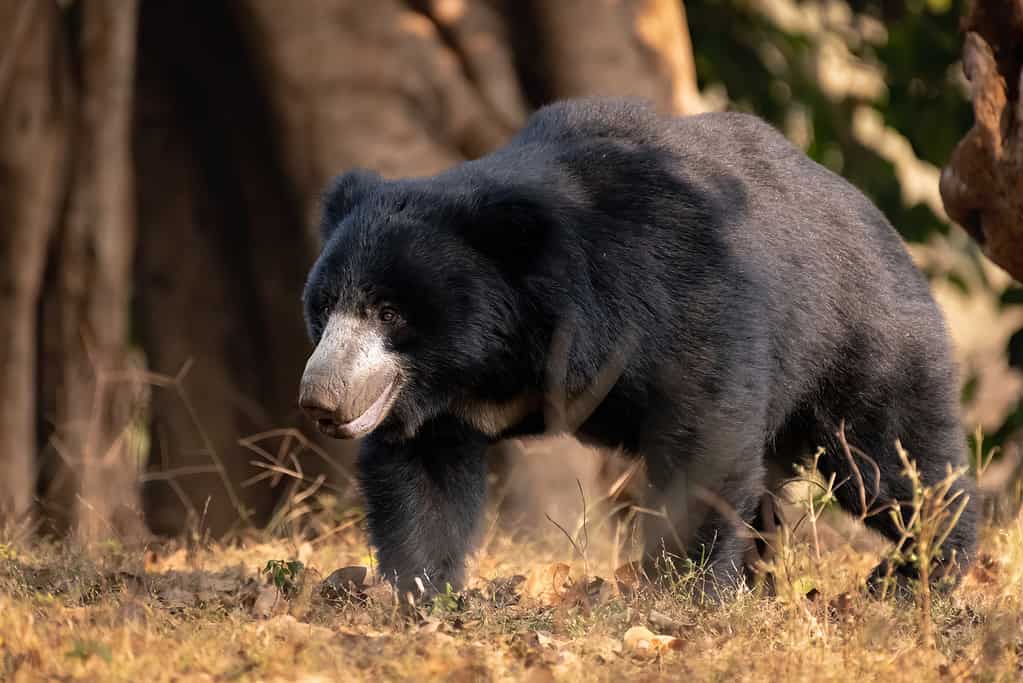
A large adult sloth bear walking about in the forests of the Ranthambore Tiger Reserve in Rajasthan, India.
©Malcolm/iStock via Getty Images
Sloth bears consume both fruit and insects. When trees are bare, the bears use their long, curved claws to dig for ants and termites. If food is especially scarce, sloth bears will raid farm crops and even eat carrion.
Sloth bears possess the unique ability to fully close their nostrils. This helps protect them from insects, dirt, and dust when they excavate insect nests. They also have a gap where the two top front teeth should be. This space allows them to suck up insects easily.
Sloth bears also have large canine teeth, which they use for defense against their natural predators—tigers, jackals, leopards, wolves, and other bear species. They are generally solitary animals, but in the wild, small groups may form if food resources are plentiful. Unlike many other bear species, sloth bears do not hibernate.
One of the most interesting aspects of sloth bears is their intelligence. According to Tabellario, while all bears are smart, sloth bears are at the head of the class. “We often joke that sloth bears are actually apes in bear suits due to their intelligence,” she notes. If all bears were in the same school class, “sloth bears would definitely be the valedictorians.”
Why These Cubs Are a Conservation Win
There are estimated to be fewer than 20,000 sloth bears left in the wild. They are on the IUCN’s red list, where the species is considered vulnerable. The majority of these wild sloth bears live in India, with an estimated population of around 6,000 to 11,000. Sri Lanka is home to fewer than 1,000 sloth bears. Some estimates put that number even lower at around 500.
The biggest threats to sloth bears in the wild are habitat loss, poaching, and human-bear conflicts. Researchers note that sloth bears perceive humans as predators, which increases the likelihood of conflict when they encounter people.
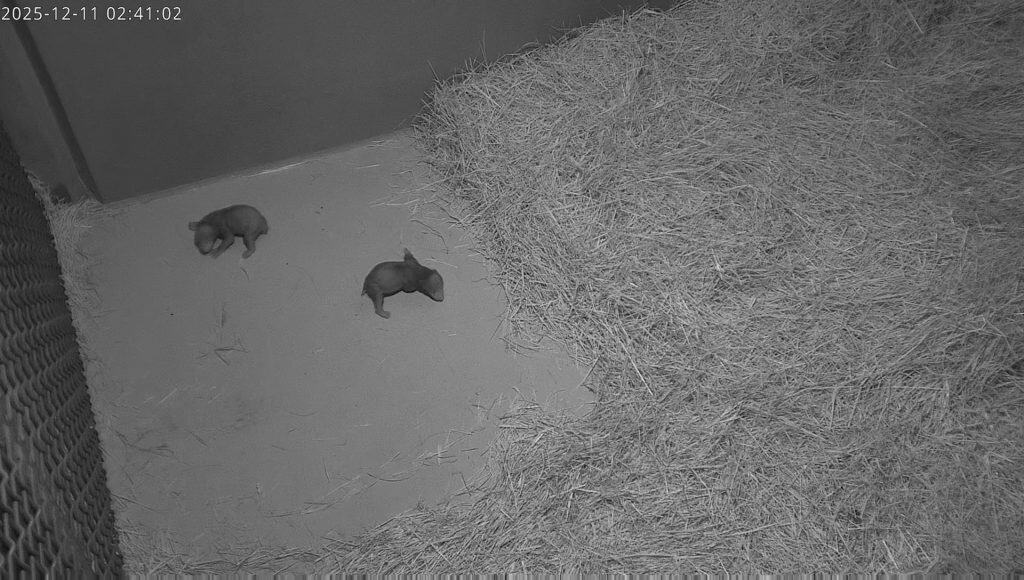
Sloth bear cubs are blind and helpless at birth.
©Smithsonian’s National Zoo and Conservation Biology Institute – Original / License
In captivity, it is believed there are around 300 sloth bears in zoos around the world. Only 42 of those are in AZA-accredited zoos. Successful breeding and reproduction under close AZA scrutiny ensures a strong genetic line for future generations of sloth bears in captivity. These successful births and healthy cubs help increase sloth bear populations and reduce the risk of extinction for the species.
NZCBI contributes to sloth bear conservation in other ways, too. According to the Zoo, in addition to breeding and reproduction efforts, “NZCBI contributes to sloth bear conservation in Asia through the AZA’s SAFE Sloth Bear program, participating in wildlife surveys and monitoring efforts across the species’ range.”