
Quick Take
- Reaching a 17-pound fledgling weight is a survival requirement for every young Albatross.
- A 1-foot nest height creates a life-threatening spatial constraint for developing chicks.
- Parental recognition is counter-intuitively tied to nest location rather than biological identity.
- The upright posture stage is vital for managing extreme temperature fluctuations.
Albatrosses are some of the largest birds in the world. While they might be smaller in height and size than birds like ostriches, they are famous for having the largest wingspan. Given their impressive size, it’s no surprise that albatross chicks are also notably large. This Instagram post by @artneversleeps shows different pictures of albatross chicks sitting upright in their nest. Read on to learn more about baby albatrosses and their development.

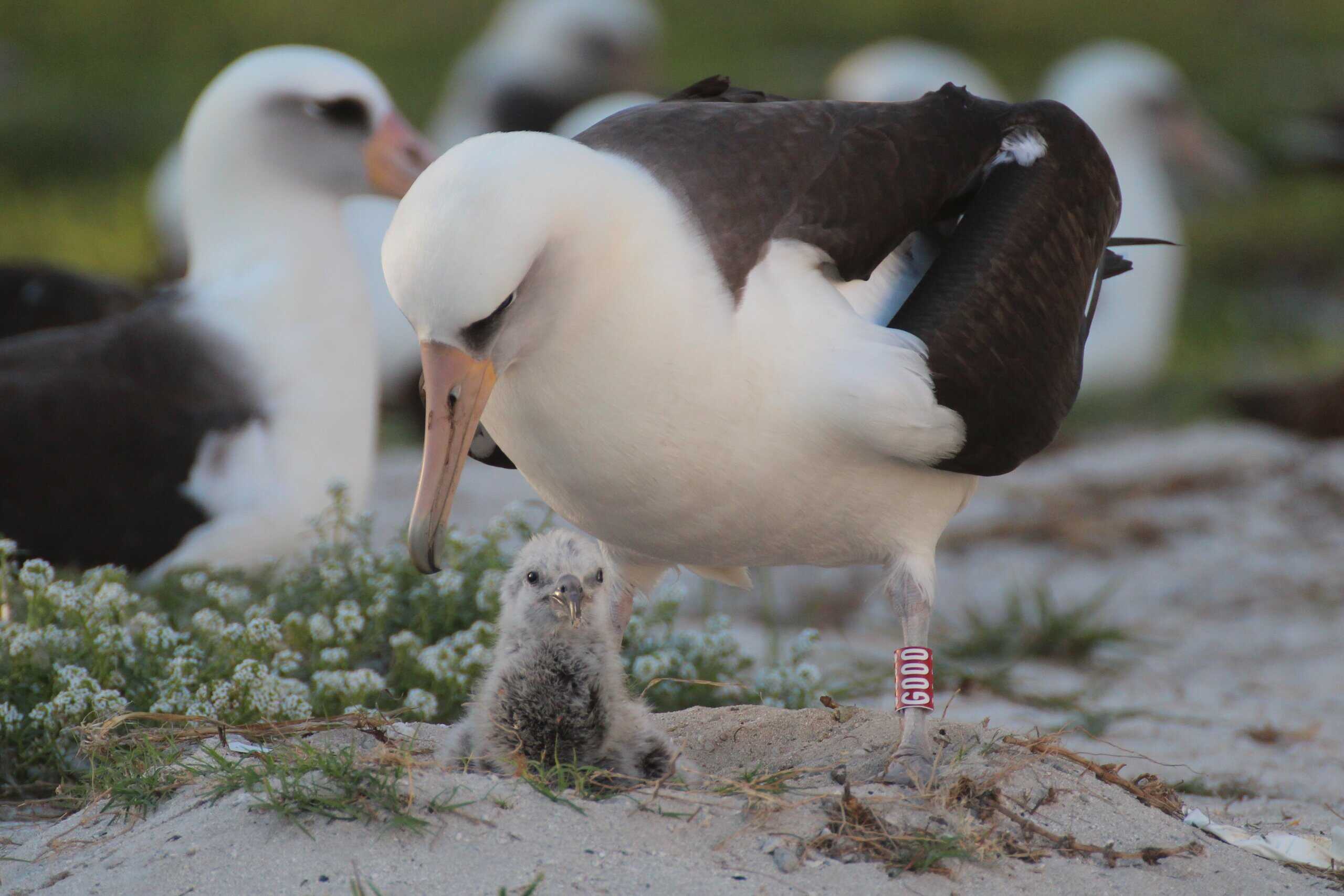
This albatross chick has quickly outgrown its nest.
©Giedriius/Shutterstock.com
The Baby Albatross’s Exponential Growth
Albatross chicks are born relatively small compared to their adult counterparts, often weighing less than a pound. However, their growth is exponential, reaching roughly six pounds by the end of the first month, and 17 pounds by the time they reach fledgling age at around seven months old. Chicks sit upright in their nest as they develop. While it looks adorable, as seen in the photos above, it also serves practical purposes. For one, this posture helps with their temperature regulation. Given the open and exposed environment they nest in, temperatures often fluctuate greatly throughout the day. Sitting upright allows the chick to stand up in the heat to improve airflow and to curl up in the cold to conserve warmth.
Sitting upright also helps them maintain balance in their tall nests. Their nests can be a foot or more off the ground, making it important for chicks to balance safely in the nest. Falling out of the nest can be dangerous, as the parent does not recognize their own baby unless it is in their nest. This means that if a chick falls out and cannot get back in, no other bird will come to help it.
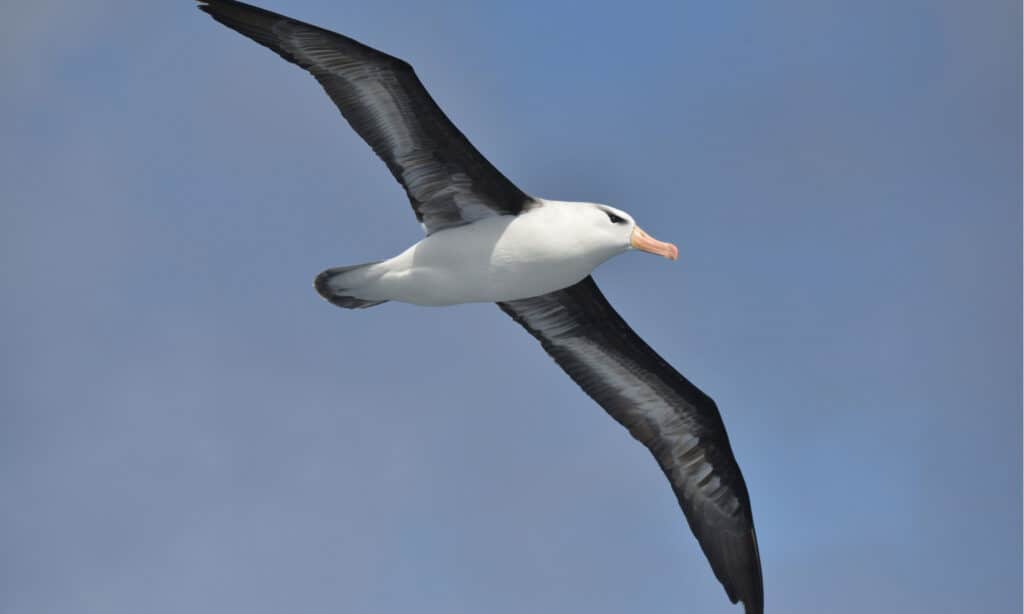
An incredibly wide wingspan allows the albatross to glide.
©Vladimir Strnad/Shutterstock.com
A Massive Wingspan
The albatross’s wingspan is what makes it so famous. Their wings begin to grow rapidly at around four to five months of age. By the time they fledge, usually around 9 to 10 months old, their wings are nearly fully developed and can reach up to 11 feet across in the largest species. They develop such vast wingspans because they need them for the long journeys they undertake. Albatrosses often travel thousands of miles without landing. Their wingspan allows them to glide, conserving energy. It has been observed that albatrosses even sleep while gliding, making them all the more fascinating. Their massive wingspan is a feat of nature and a marvel of avian capability.