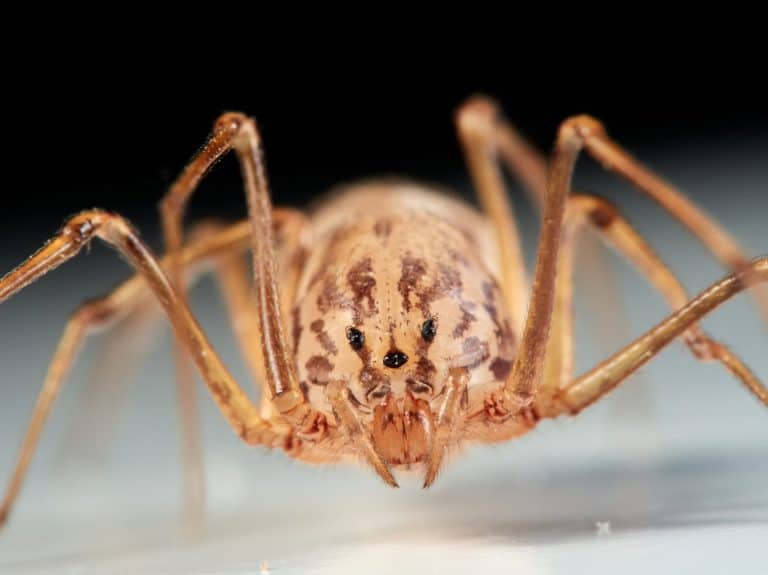
Quick Take
- Some birds and insects can process visual information at more than 200 flashes per second, more than three times faster than humans.
- Species with fast-paced lifestyles, especially flying animals and pursuit predators, have the highest visual processing speeds.
- Rapid visual perception requires significant energy, so it evolves only when it provides a clear survival advantage.
As athletes become elite, you’ll often hear commentators say that “the game has slowed down for them.” Take football, for example. The quarterback has the ball and has just a few seconds to decide what to do with it before the opposing team’s defense crushes him.
There are 21 other players on the field, all doing different things, and the quarterback has to be aware of what each one is doing in order to make the best decision about what to do with the ball—again, all in just a few seconds. How much easier would his decision be if he could see the action in slow motion? For elite quarterbacks, that’s just how the game feels to them.
Let’s now move this concept over to the animal kingdom. Have you ever tried to swat a housefly with your bare hand? Not easy, right? How does the fly react so quickly? It’s almost as if it sees your hand coming in slow motion.
A groundbreaking study from Trinity College Dublin suggests that for many animals, fast vision really is a survival cheat code. Researchers analyzing 237 species found that the speed at which animals process visual information is tightly linked to how they live. The faster and more intense the lifestyle, the faster the vision. In other words, predators that rely on speed and precision don’t just move quickly. They see quickly. Some animals process visual information more than three times faster than humans. To them, our world might look like it’s running on a slightly slower playback speed.

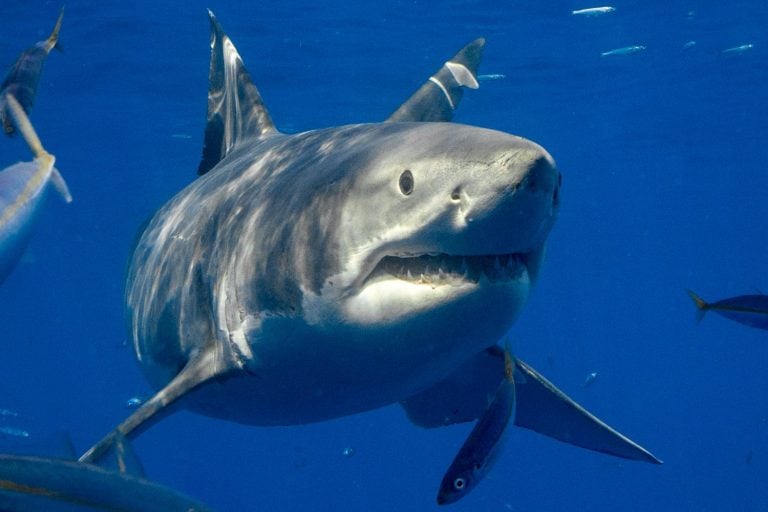
Some birds and insects can detect more than 200 flashes per second, allowing them to perceive motion far faster than humans.
©Matt Cuda/Shutterstock.com
Seeing Time, Not Just Space
When we think about vision, we usually think about sharpness. Eagles can spot prey from far away. Cats can see in low light. But there’s another dimension to sight that’s just as important: time.
Scientists measure this using something called critical flicker fusion, or CFF. It’s the fastest rate at which a flickering light can be perceived as separate flashes instead of a steady glow. If a light blinks faster than your brain can process, it just looks continuous.
For humans, that threshold is around 60 flashes per second under normal conditions. That’s why old movies filmed at about 24 frames per second look smooth to us, even though the “moving” image has actually flickered 24 times.
But some animals leave us in the dust. Certain birds and insects can detect more than 200 flashes per second. That means their brains can process changes occurring more than three times faster than ours. From their perspective, movements that look like blurs to us, such as propeller blades, are broken down into crisp, distinct moments. Imagine watching a hummingbird’s wings in perfect detail without slow-motion replay. For some animals, that’s just how they see.
Fast Lives Demand Fast Vision
The Trinity team, working with researchers from the University of Galway, compared CFF values across 237 species, including insects, birds, mammals, and fish. Then they matched those values to ecological traits like whether the species flies, hunts moving prey, or lives in bright environments.
The pattern was clear. Flying species had the fastest visual processing speeds, roughly twice as high as non-flying animals on average. That makes sense. Flying requires constant adjustments in three-dimensional space. A slight miscalculation at 30 miles per hour or more can mean a crash.
Pursuit predators also stood out. Animals that chase fast, maneuverable prey had significantly higher temporal resolution than species that graze on plants or feed on stationary food. If your dinner runs, jumps, or zigzags, you need to be able to track it precisely. If it sits motionless on a plate, you do not.
Bright light played a role, too. Species active in sunny, well-lit environments tended to have faster vision than those living in darkness or deep water. Processing rapid visual updates takes energy. That’s a worthwhile expenditure in bright light where there’s a lot to see, but far less so in darkness.
In aquatic systems, smaller and more maneuverable species often processed visual information faster than larger ones. For a small fish darting through coral, quick perception can mean the difference between escaping and becoming lunch.

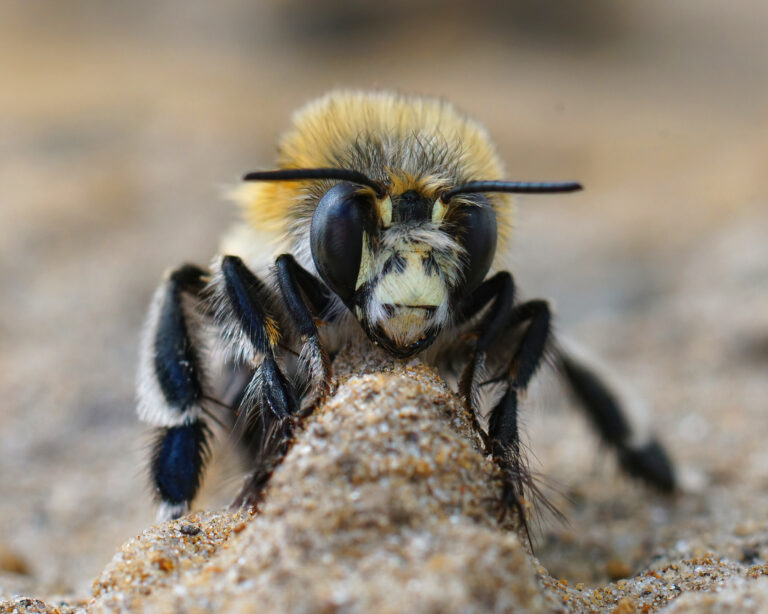
Flying species were found to have roughly twice the visual processing speed of non-flying animals in the 237-species study.
©Katiekk2/iStock / Getty Images Plus via Getty Images
Autrum‘s Hypothesis
The study supports a long-standing concept known as Autrum’s hypothesis. Proposed by German physiologist Hans Autrum in the 20th century, the idea suggests that sensory systems evolve to match an animal’s ecological needs.
In simple terms, you don’t need racecar-level vision if you move like a sloth.
This research provides broad evidence across the animal kingdom that perception speed evolves in step with lifestyle. It’s not random. It’s shaped by natural selection.
If reacting a fraction of a second faster increases your odds of survival, evolution will nudge your nervous system in that direction. Over millions of years, those nudges add up.
Predators in a Slow-Motion World
Let’s zoom in on what this means for predators. Consider a dragonfly, a classic pursuit hunter. Dragonflies can intercept flying prey mid-air with astonishing accuracy. Their nervous systems are finely tuned for tracking moving targets, predicting where prey will be rather than just where it is.
With high CFF values, a dragonfly effectively experiences more visual snapshots per second than we do. If a mosquito changes direction, the dragonfly’s brain registers that shift as a series of distinct updates. To us, it might look like a blur.
The same principle applies to many birds of prey. A falcon diving toward a moving bird needs to adjust its path in real time. Higher temporal resolution means more detailed motion information. The world doesn’t blur past in streaks; it unfolds in sharp increments.
The more visual data your brain can process per second, the more precisely you can act. To a fast predator, the chaos of a chase may feel more manageable than it looks to us.

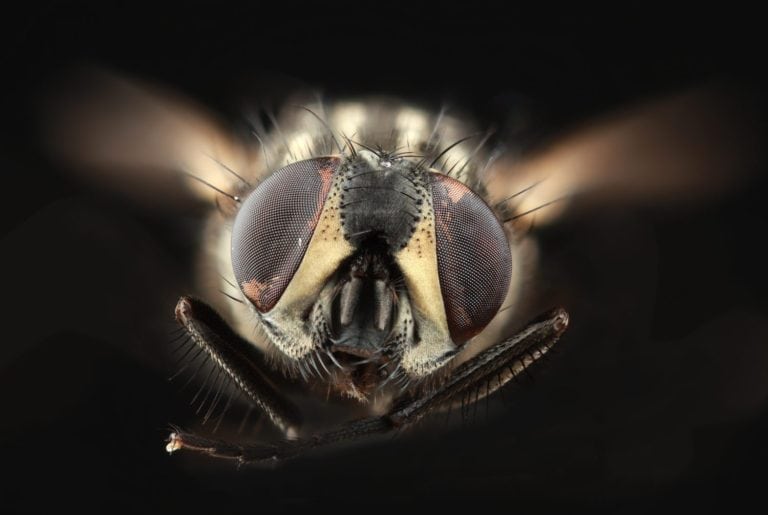
Dragonflies can intercept flying prey mid-air, thanks in part to their ability to process rapid changes in motion.
©Martin_Davis/Shutterstock.com
Energy Isn’t Free
Fast visual processing requires energy. Nerve cells firing at high rates consume more fuel. Brains are already among the most energy-hungry organs in the body. That’s why not every species has ultra-fast vision.
If you’re a grazing herbivore feeding on stationary plants, you don’t need to track high-speed targets. If you’re a deep-sea creature in dim light, rapid flicker detection may not provide much benefit. Evolution tends to favor efficiency. You only invest in high-speed processing if it pays off in survival.
So, Where Do Humans Rank?
At around 60 flashes per second, human vision is respectable but not elite. That’s more than enough for walking, driving, playing sports, and even performing delicate tasks. But we’re not aerial pursuit predators.
Our strengths lie elsewhere. We’ve evolved powerful visual acuity, color perception, and extraordinary pattern recognition. We can read, interpret facial expressions, and track complex social cues. Our brains invest heavily in processing meaning, not just motion.
Artificial Light and a Flickering Future
The Trinity researchers also raised an important modern concern: artificial lighting. Many human-made lights flicker at frequencies we don’t consciously notice. But species with higher CFF thresholds might clearly detect that flicker.
For a bird or aquatic predator with ultra-fast vision, certain artificial lights could appear as rapid, distracting flashes rather than steady illumination—like the way we experience a strobe light. That could interfere with hunting, navigation, and predator-prey interactions.
As artificial light spreads across landscapes and waterways, understanding how different species perceive flicker could actually become a conservation issue. What looks harmless to us might appear visually chaotic to another animal.
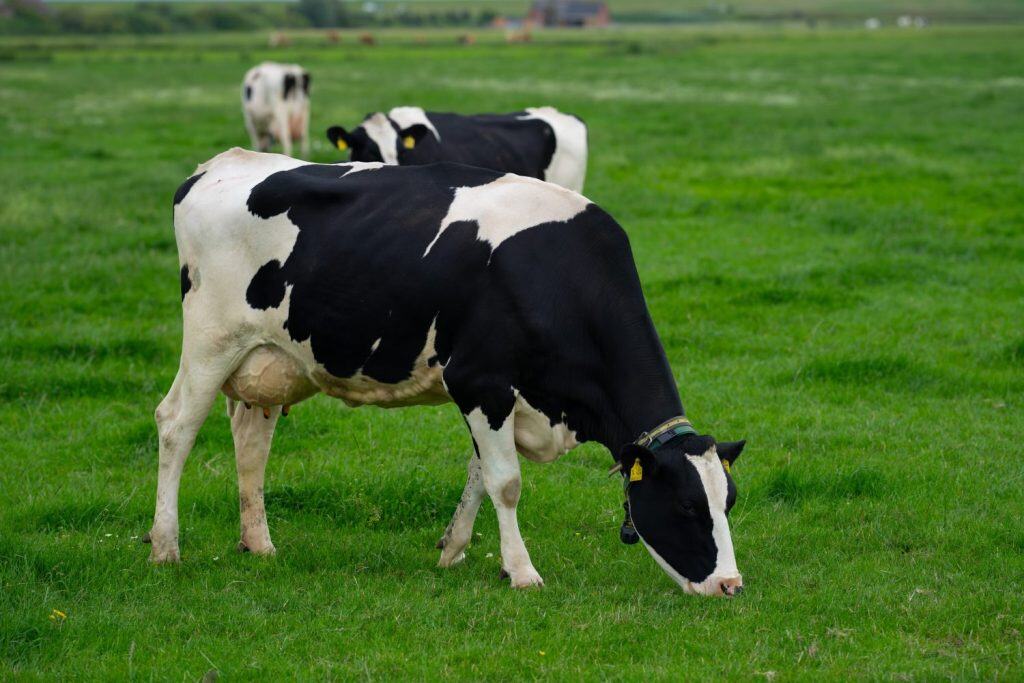
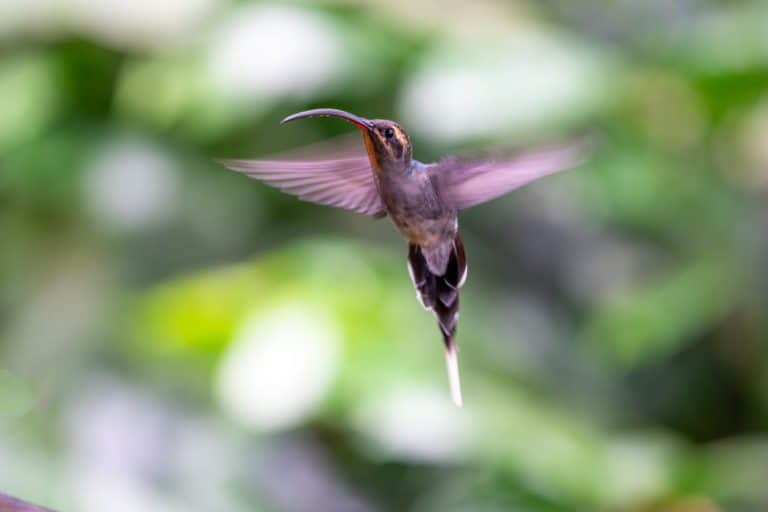
Grazing herbivores that feed on stationary plants don’t require the ultra-fast visual systems seen in pursuit predators.
©K-Shoot Background/Shutterstock.com
Nature’s Frame Rate
For fast-moving predators and aerial hunters, high-speed vision offers a decisive edge. By processing visual data at more than 200 flashes per second, some species effectively slow down the chaos of motion, giving themselves the precision needed to strike.
For slower or low-light species, that extra speed isn’t worth the energy cost. Their worlds move at a different pace, perfectly suited to their needs.
As for that quarterback, it turns out he’s just seeing the world at around 60 flashes per second, just like the rest of us. The next time you’re watching a game and someone tells you the “game has slowed down for him,” you can confidently respond, “Well, metaphorically perhaps, but he sure ain’t no dragonfly.”