
Quick Take
- The sharp-nosed viper earned a chilling nickname tied to exactly how many steps you have after a bite, and the story behind it is darker than you'd expect. The chilling nickname explained →
- Its venom attacks the body in a fundamentally different way than most people picture snake venom working. See how the venom works →
- The mechanics behind a viper's strike are nothing like a muscle flexing, and the real explanation is far more surprising. Discover the strike mechanics →
- Sharp-nosed vipers rarely go looking for humans, yet bites happen constantly. The reason why reveals a critical mistake people don't realize they're making. Why bites keep happening →
Snakes are some of the stealthiest and deadliest hunters in nature. Using their powerful bites and lethal poison, they can immobilize prey of many different sizes. But have you ever wondered just how fast they can bite? This YouTube video by Evans EvoMorph Lab shows a sharp-nosed viper striking at a speed so quick that the attack is over in the blink of an eye. Read here to learn more about how quickly these snakes bite.
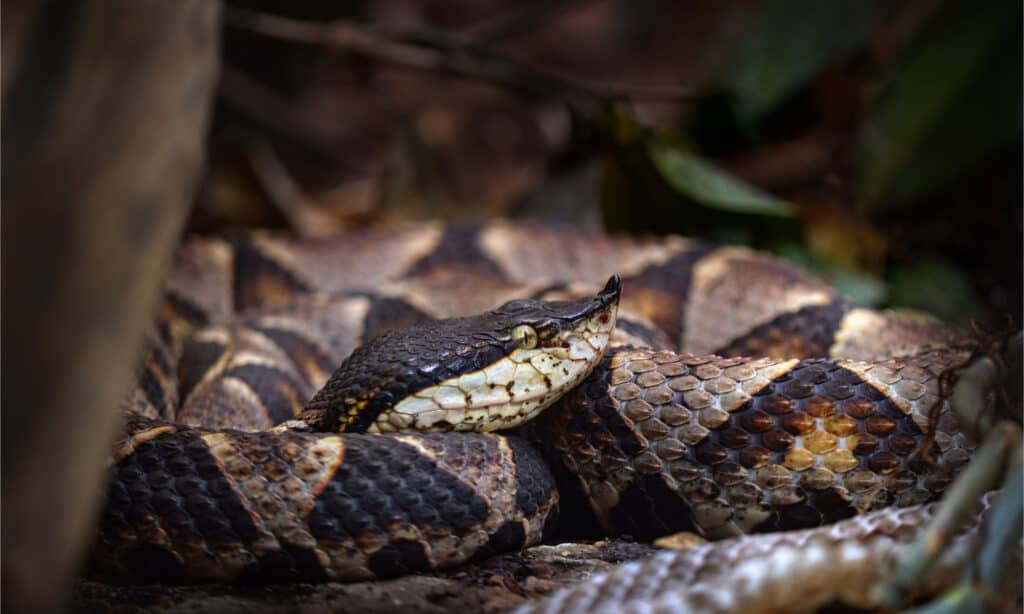
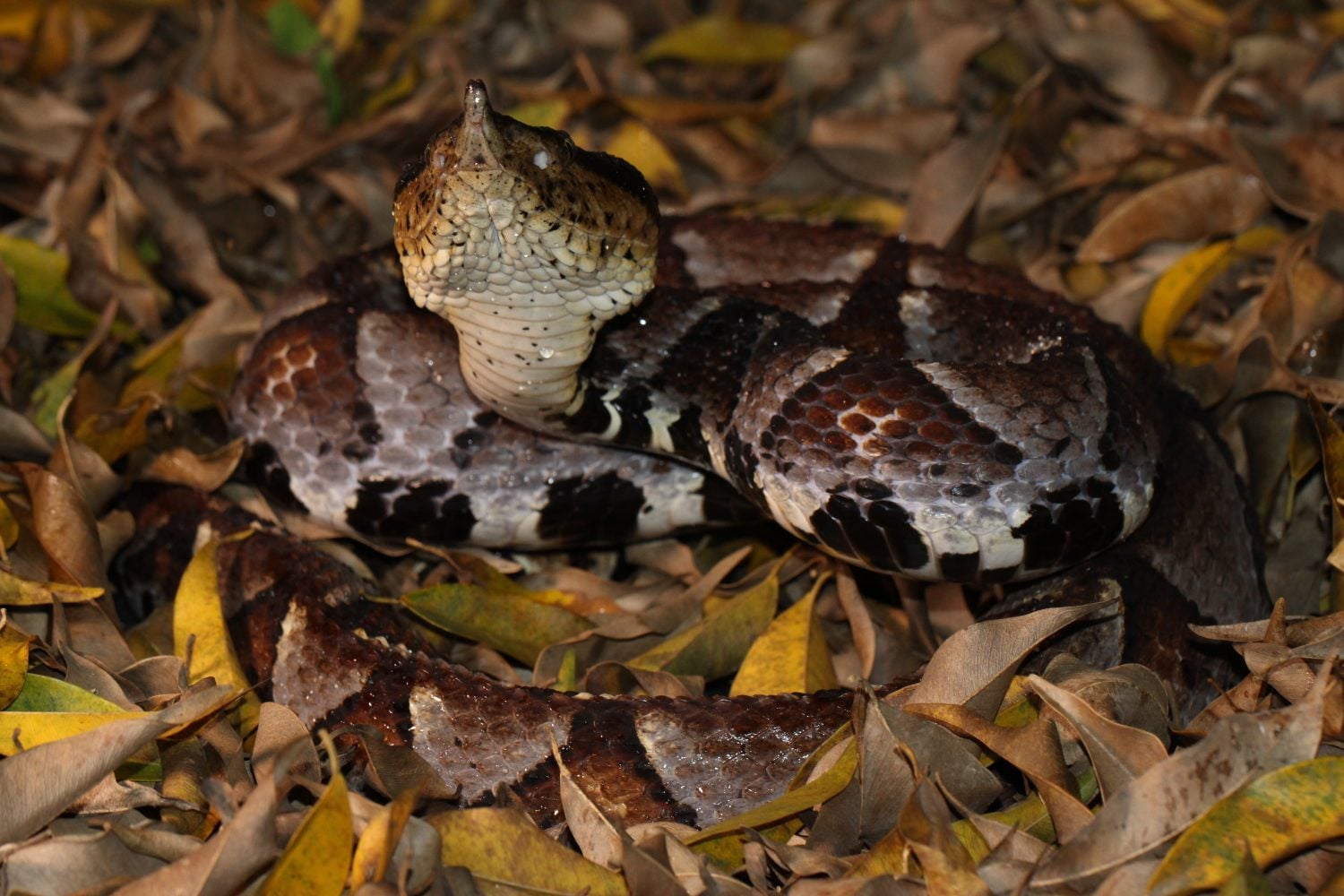
You can find a sharp-nosed viper in Asia.
©Ondrej Prosicky/Shutterstock.com
Viper Bites
The sharp-nosed viper is one of the most feared vipers in Asia. Native to East Asia specifically, these snakes are among the quickest and most venomous out there. So what makes their venom so toxic? Sharp-nosed viper venom is mostly made up of hemotoxins, which attack the blood and tissue of its victims. This differs from neurotoxic venom that attacks the nervous system and has different effects on the body. For example, hemotoxic venom can cause internal bleeding, tissue death, issues with blood clotting, and massive swelling. Their potent toxins have earned the sharp-nosed viper the nickname “hundred-pacer” as it’s said that a bite leaves the victim about 100 steps before they collapse.
These vipers are native to East Asia in countries like southern China, Taiwan, and northern Vietnam. Their habitats include forests, rocky slopes, farmland, and other rural or uninhabited areas. They often blend in with leaf litter on the forest floor, making them difficult to spot. As ambush predators, they remain hidden until they strike, making them hard to detect. Sharp-nosed vipers hunt rats, birds, frogs, lizards, and more. They don’t actually target humans, but bites still occur, often when the snake is acting defensively. Because they are hard to see, accidental bites can occur if you get too close and startle the snake. It is important to be aware of your surroundings if you are out in nature.
How Fast Do They Bite?
The video above shows the incredible speed at which the sharp-nosed viper can strike. Not just this species alone, but vipers as a whole are some of the fastest striking snakes in the world. Multiple studies have recorded this incredible reflex, with many snakes able to launch attacks in under a second, faster than we can blink! Their speed comes from their tightly coiled muscles and explosive reflexes. Elastic tendons and muscles release in quick succession, allowing them to launch forward and bite their prey. While their bite force isn’t anything comparable to a crocodile’s, sharp-nosed vipers specialize in quick fang penetration and venom delivery. This allows them to get in and get out while limiting the danger they are exposed to.