
Quick Take
- Harar's residents don't just tolerate wild hyenas wandering their streets at night. They actually built the city to let them in, and the reason is more practical than you'd expect. See how the city was designed →
- Nigeria also has 'Hyena Men,' but their approach sits at the opposite end of the ethical spectrum, and the difference reveals exactly why Harar's model works. Compare the two traditions →
- Harar's centuries-old peace with one of Africa's most feared predators is now under threat, though the biggest danger isn't the hyenas themselves. Explore the modern threats →
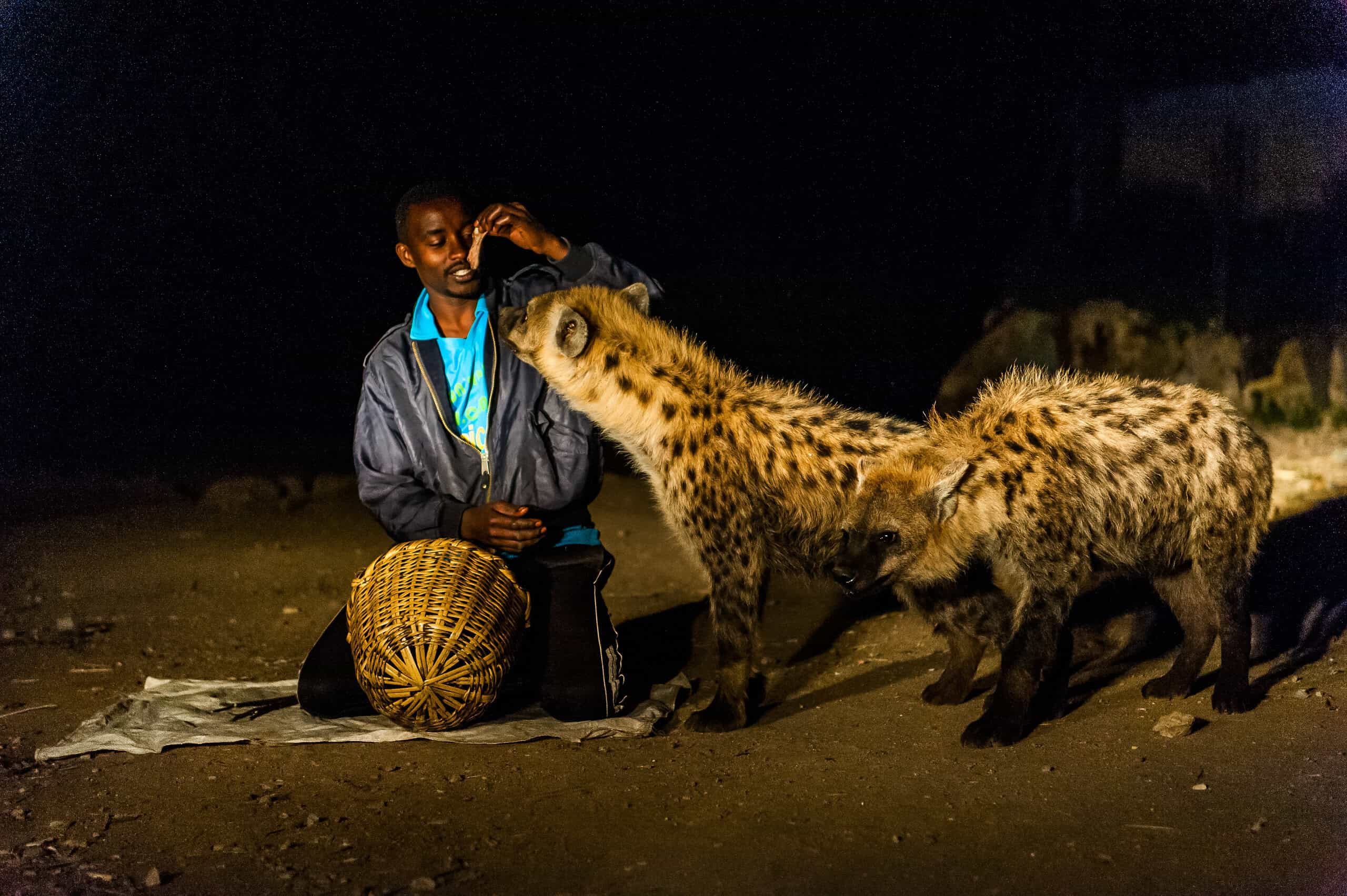
As night falls over the ancient walled city of Harar, something unusual happens just beyond the gates. One by one, wild spotted hyenas slip out of the darkness, their powerful jaws and eerie calls earning them a fearsome reputation across much of the world. But here, in this corner of eastern Ethiopia, Harar’s residents do not chase the hyenas away; instead, they invite them closer.
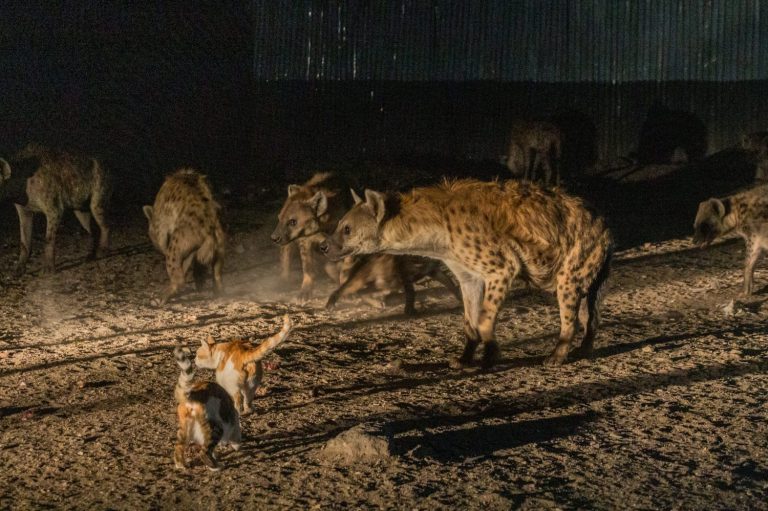
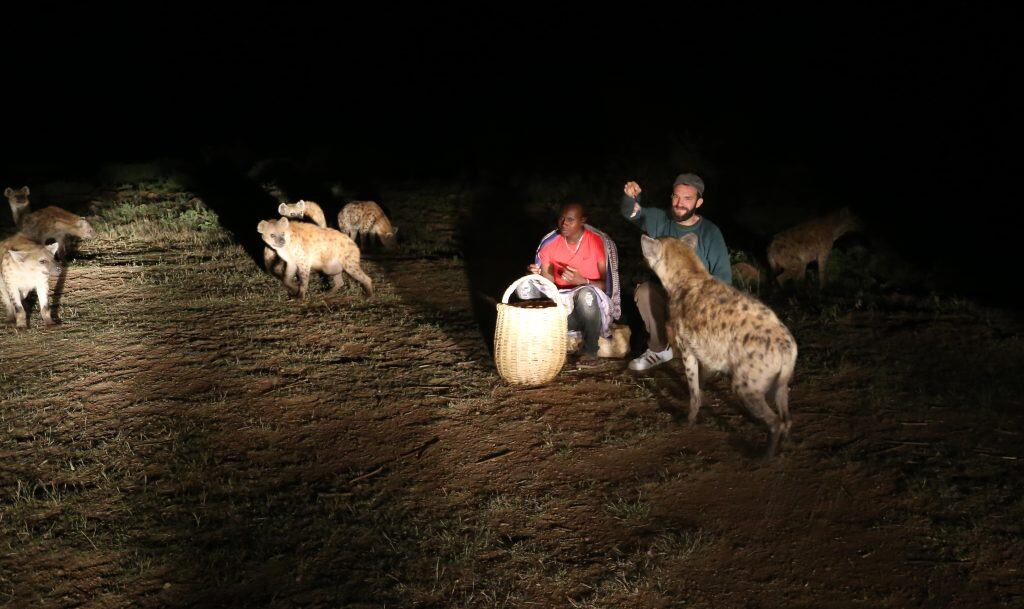
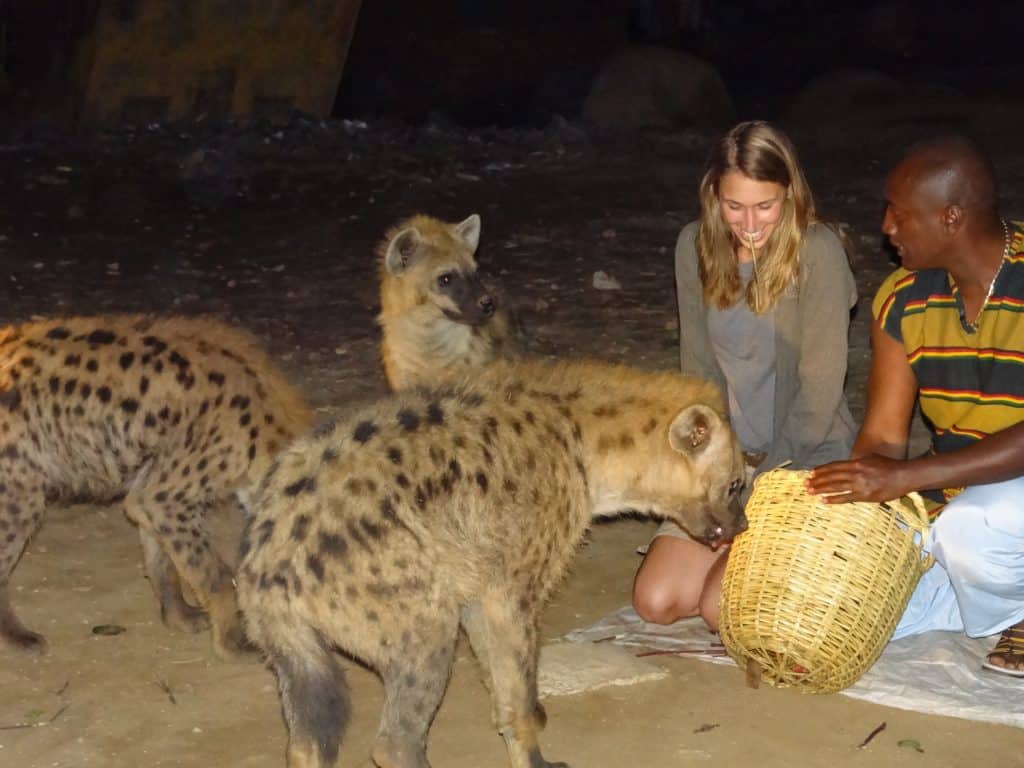
At the edge of the city, a small group of men — known as the “Hyena Men” — call to the animals and offer them scraps of meat. The hyenas approach without hesitation. Some take food directly from human hands. The boldest lean in close enough to snatch a bite from a stick held between a man’s teeth. At first glance, this behavior may seem reckless or even unbelievable.
But in Harar Jugol, this nightly ritual is neither a stunt nor a spectacle — it’s a long-standing strategy for coexistence. For generations, residents have coexisted with one of Africa’s most misunderstood predators, turning a potential threat into something closer to a neighbor. In a world where large carnivores are often pushed out, fenced in, or killed, Harar offers a rare alternative. It prioritizes coexistence and relationships over separation.
An Ancient Pact with Spiritual Guardians
In Harar, the bond between humans and hyenas isn’t accidental — it’s intentional, strategic, and deeply cultural. Local legend says this unique relationship began centuries ago during a severe famine. To prevent attacks, local saints reportedly struck a deal with starving hyenas. The town would provide food in exchange for peace. Residents continue to honor that ancient treaty during Ashura by leaving out bowls of porridge for the animals.
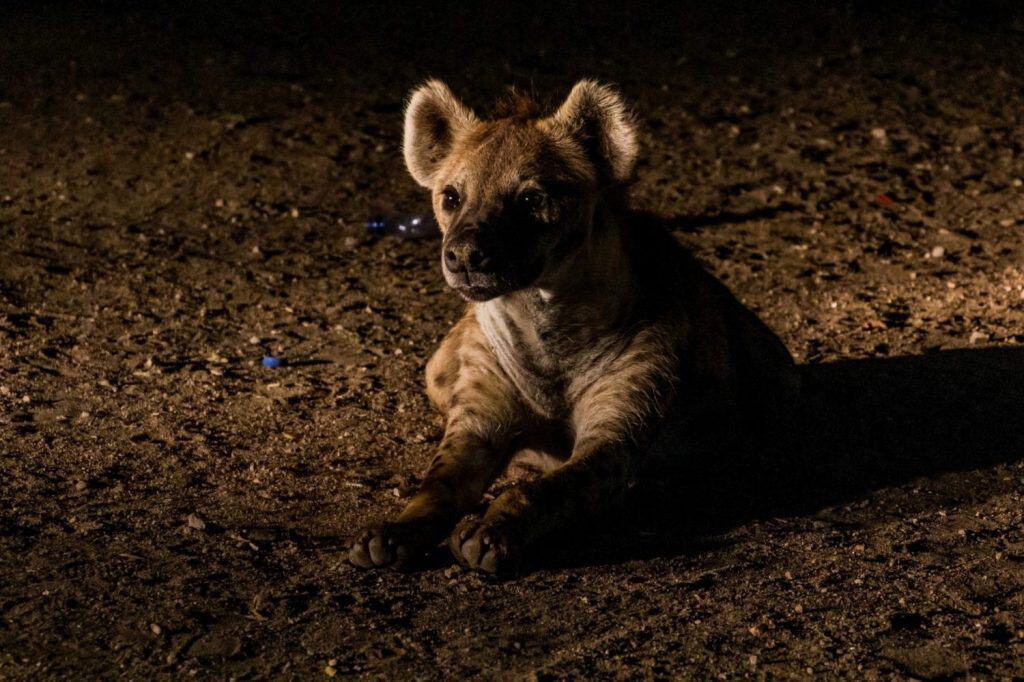
Yusuf Mume Salleh began tossing scraps to wild hyenas in the 1960s.
©Matyas Rehak/Shutterstock.com
But the connection runs deeper than physical safety; the Harari people also view the hyenas through a spiritual lens. They are seen as much more than just scavengers; they are also protectors of the community. Known locally as waraba, or “newsmen,” hyenas are believed to carry messages between the living and the spirit world. The animals are also believed to hunt and consume harmful spirits, known as djinn, during the night. When they regurgitate indigestible material, it is traditionally interpreted as the animal expelling the captured evil spirits from this world.
For the people of Harar, feeding the hyenas isn’t just about managing a predator — it is an active participation in a sacred relationship that bridges the physical and unseen worlds.
Built for Coexistence
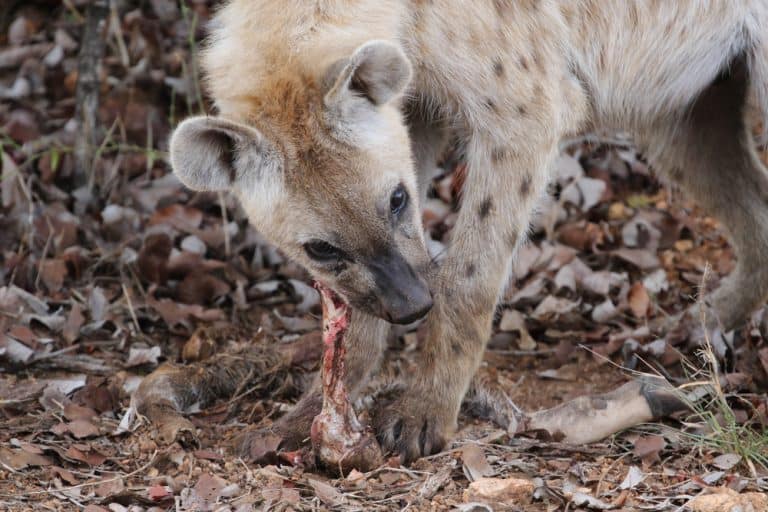
In Harar, the relationship with hyenas is integrated into the city’s architecture, creating a practical system that benefits both humans and animals. Small openings in the city walls — often called “hyena doors” — allow the animals to move in and out of the city at night. This access allows them to act as a natural waste management crew. They consume organic waste and animal remains that would otherwise accumulate in the narrow streets, thus keeping the city clean.
Spotted hyenas live in matriarchal groups.
©Sailko / CC BY 3.0 / Wikimedia Commons – Original / License
The benefits are both practical and symbolic. Because the hyenas have easy access to human scraps and are fed nightly, they have little incentive to hunt livestock or approach people aggressively. While no wild animal is truly predictable, Harar’s system has resulted in an unusually stable coexistence — unlike in other regions, where hyenas are routinely killed in retaliation or even on sight. In conservation terms, it’s a simple but powerful idea: meet an animal’s needs, and the potential for conflict decreases exponentially.
Passing Down Knowledge Through Generations
The modern version of this practice began with Yusuf Mume Salleh, who started feeding the hyenas during the 1960s to keep them away from his crops and livestock. Over time, what began as a way to ward off predators evolved into a bond of mutual trust and a formal ritual.
Today, Yusuf’s son, Abbas Yusuf, continues the legacy as one of Harar’s Hyena Men, maintaining the nightly ritual and sharing his knowledge of hyena behavior with interested locals and visitors. This isn’t just a casual interaction; it’s a learned expertise passed down within a family that understands both the risks and the rewards.
Male spotted hyenas are smaller than females.
©msafari2425 / CC BY 2.0 / Wikimedia Commons – Original / License
The relationship between this family and the hyena pack is deeply personal. Individual hyenas are recognized by sight and given names, while their moods and hierarchies are observed. By appearing at the same time and behaving consistently each night, the humans provide predictability, which helps the wild animals feel secure during these interactions. While these hyenas remain wild and dangerous, the Yusuf family has used their expertise and consistency to bridge the gap between two very different species.
From Survival Strategy to Tourism
What started as a practical local solution has evolved into one of Ethiopia’s most iconic wildlife experiences, drawing global attention to the city of Harar. The nightly feedings have become a major draw for international travelers, who visit to witness or even join in the nightly feedings. The ritual now supports local livelihoods, with fees paid to the “Hyena Men” providing a steady income for the handlers. Nearby hotels, restaurants, and other businesses also benefit from the influx of tourists drawn by the hyena ritual.
There are also ongoing efforts to formalize and protect this tradition through more structured ecotourism initiatives, improved infrastructure, and cultural exhibits. By managing the experience carefully, the city hopes to ensure the survival of both the cultural ritual and the local hyena population.
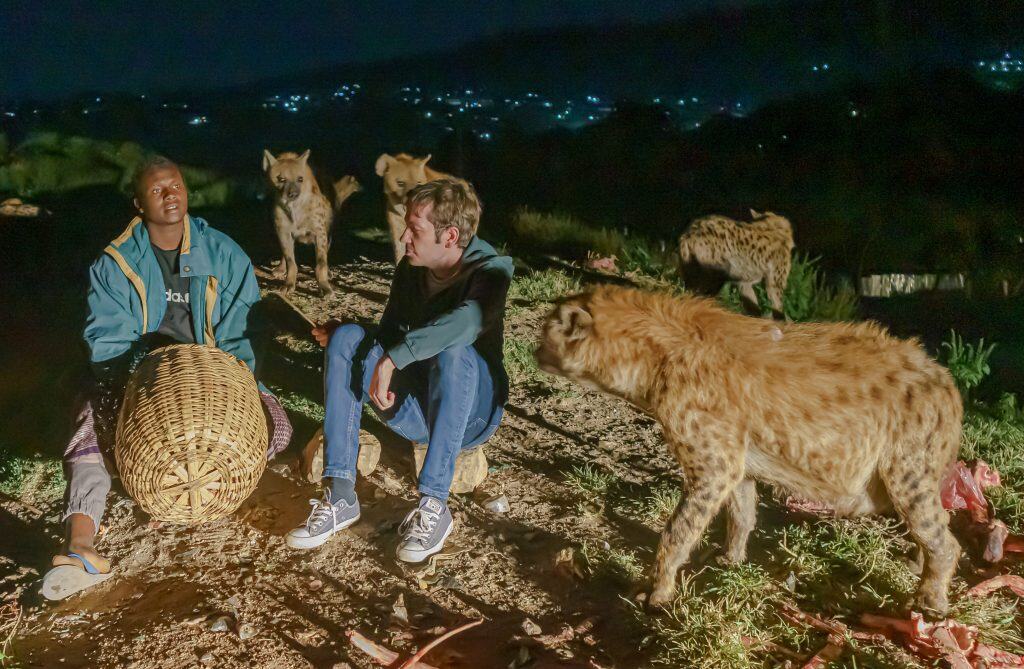
Hyenas perform a vital sanitation service in and around Harar.
©Ninara31 / CC BY 2.0 / Wikimedia Commons – Original / License
However, while growth brings opportunity, it also introduces a delicate tension common in conservation: how to share a rare human–wildlife relationship with the world without disrupting the balance that makes it possible.
The Nigerian “Gadawan Kura” Model in Contrast
The relationship between humans and hyenas in Harar stands in sharp contrast to other traditions, particularly those found in Nigeria. This comparison highlights two very different philosophies regarding wildlife.
In parts of Nigeria, a group known as the “Hyena Men” or Gadawan Kura (roughly translated as the “hyena handlers” or “hyena guides”) interacts with these animals in a much more controlled and public way. Unlike the free-roaming hyenas of Harar, the Gadawan Kura keep these animals in captivity and take them from city to city to perform in street shows. These shows often involve chaining or restraining the animals and incorporating them into displays linked to traditional medicine, demonstrations of physical strength, or mysticism.
For generations, these “hyena men” have passed down the tradition of working with animals that many people have misunderstood as sinister scavengers. In reality, handlers often treat these hyenas as companions and rely on them as a vital source of income.
In addition to public performances, the hyena men and their animals play a unique role in local culture. Healers use hyena hair and saliva to create various remedies. In rural towns, neighbors often directly support the hyena men and their animals, regarding them as important members of the community.
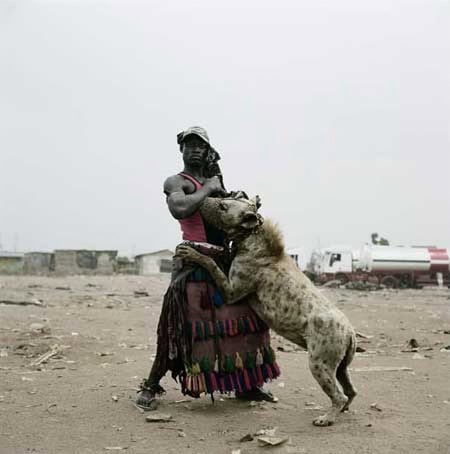
Throughout much of Africa, people still fear spotted hyenas or see them as pests.
©Floor from New York, USA / CC BY-SA 2.0 / Wikimedia Commons – Original / License
While the Gadawan Kura tradition is culturally significant, it raises ethical and ecological concerns. Capturing hyenas from their natural habitats to keep as pets or use as performers can disrupt and damage wild populations. Confinement also prevents the animals from engaging in their natural social and predatory behaviors. Because it relies on capturing wild animals rather than coexisting with them, experts increasingly view the practice as unsustainable — for both the animals and the tradition itself.
A Fragile Balance in a Changing World
While the peaceful coexistence in Harar is an incredible achievement, it remains a fragile balance that faces serious modern threats. The city is growing and expanding into the surrounding hills. As a result, the natural territory where hyenas live and hunt is shrinking. New buildings and roads also block the traditional paths these animals use to enter and exit the city. As the physical distance between human homes and animal habitats decreases, the likelihood of accidental encounters between species increases.
At the same time, not everyone shares Harar’s unique cultural perspective. Outside the old city, people still widely fear hyenas, viewing them as dangerous pests and frequently killing them. Even within the city, occasional conflicts remind residents that hyenas are wild animals, not domesticated pets. People tolerate them because of this careful system, but the animals remain untamed and unpredictable.
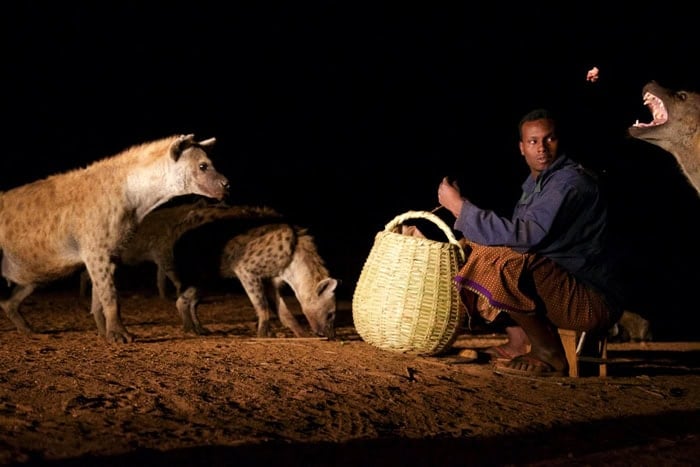
Spotted hyenas are keystone predators that help to keep ecosystems balanced.
©Wesagn / CC BY-SA 4.0 / Wikimedia Commons – Original / License
The situation in Harar serves as both a success story and a cautionary tale for the rest of the world. Across Africa, spotted hyena numbers are dropping due to habitat loss and human-wildlife conflict. Harar provides a rare counterexample of how humans and predators can coexist. However, it also serves as a warning that such harmony requires more than tradition alone. Maintaining this harmony requires active planning and ongoing effort to withstand modern pressures.
Changing the Old Narrative and Rethinking Predators
The “Hyena Men” provide a living example of peaceful human-wildlife relations. Their work demonstrates that the goal isn’t to eliminate all danger or risk. Instead, the focus is on managing that risk through ritual, consistency, and cultural respect.
In doing so, they challenge one of conservation’s most persistent assumptions: that large predators and dense human populations cannot coexist. Harar proves this assumption wrong by showing that predators can actually become a functional part of the community. With the right conditions, predators can become part of a shared system, contributing to sanitation, culture, and even local economies.
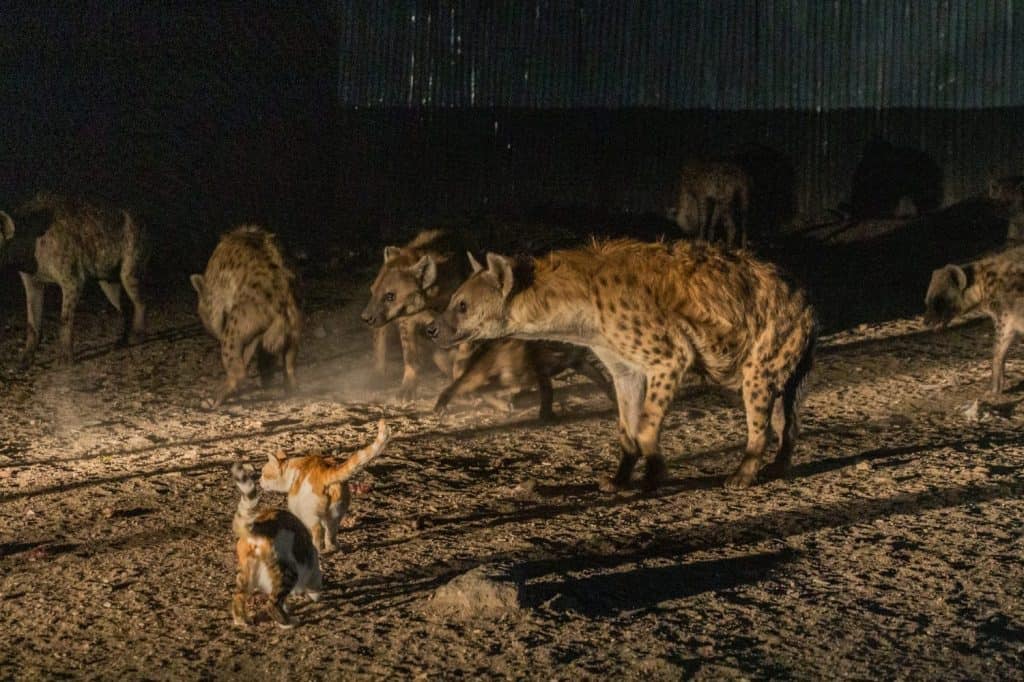
Harar’s hyenas are challenging the “villain” stereotype, demonstrating that they are actually intelligent, social creatures.
©Matyas Rehak/Shutterstock.com
The lesson from the Hyena Men of Harar isn’t necessarily that every city should start feeding hyenas. Instead, it offers a broader and much more powerful idea. Coexistence happens when human systems change to accommodate wildlife, rather than forcing wildlife to disappear. By meeting the animals’ needs, we reduce the friction that leads to conflict.
As our global population grows and cities push further into the wild, this model is more relevant than ever. It suggests a future where we don’t just fight against nature, but instead find creative ways to live alongside it. Harar is a rare example of a shared system, reminding us that respecting the boundaries and needs of wild animals not only protects them but also creates a richer, more functional world for us all. In a world where expanding cities increasingly collide with shrinking habitats, that idea may be more valuable than ever.