
Quick Take
- The Monte León National Park hosts a Magellanic penguin colony of about 40,000 breeding pairs, potentially feeding reintroduced pumas.
- The Resource Dispersion Hypothesis predicts pumas concentrate near the penguin colony when prey is abundant and clustered.
- Reintroduced pumas show concentrated movements near the penguin colony and are five times more likely to encounter another puma.
- Read on to discover how puma displacement distance changes when the penguins leave and whether any leave the park for another colony.
Wildlife restoration is a key strategy for regenerating damaged ecosystems. We know that many species have been driven out of their traditional ranges by human activities, including overhunting. The human race is at least attempting to make amends in some areas by reintroducing native species. The aim is to re-establish key trophic interactions. This means that the newly introduced animals may eat vegetation, hunt, or scavenge on existing species. However, the ecosystems themselves may have undergone significant changes since the animal was wiped out, which in turn causes interesting interactions to take place. In one fascinating example of this, reintroduced pumas are changing their behavior to take advantage of an abundant food source: Magellanic penguin colonies.
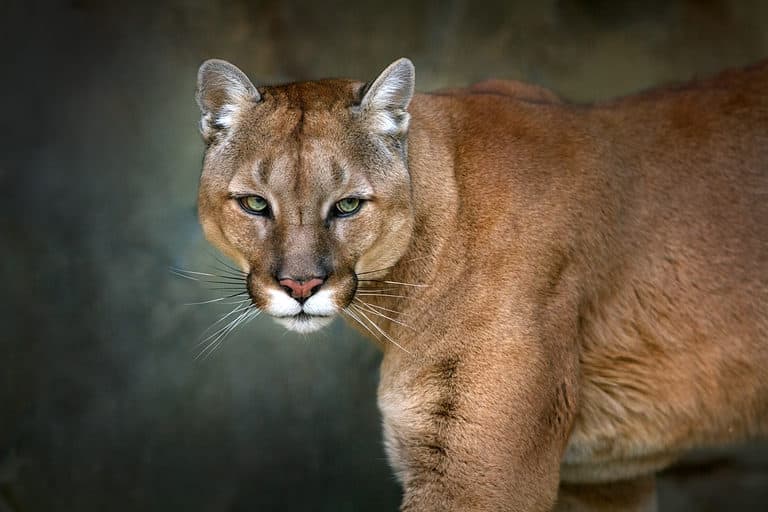
Pumas, also known as mountain lions (Puma concolor), are a large and slender cat (feline) species. They have short and coarse yellowish-brown to grayish-brown fur with a whiter throat and chest. These are solitary animals who establish a home territory where they hunt for prey, mainly at night. As one of the top predators in any given area, they take their pick of ungulates (such as deer and moose) and smaller creatures (such as rabbits, skunks, and birds). It is their willingness to prey on domestic livestock that has brought them into conflict with human populations.
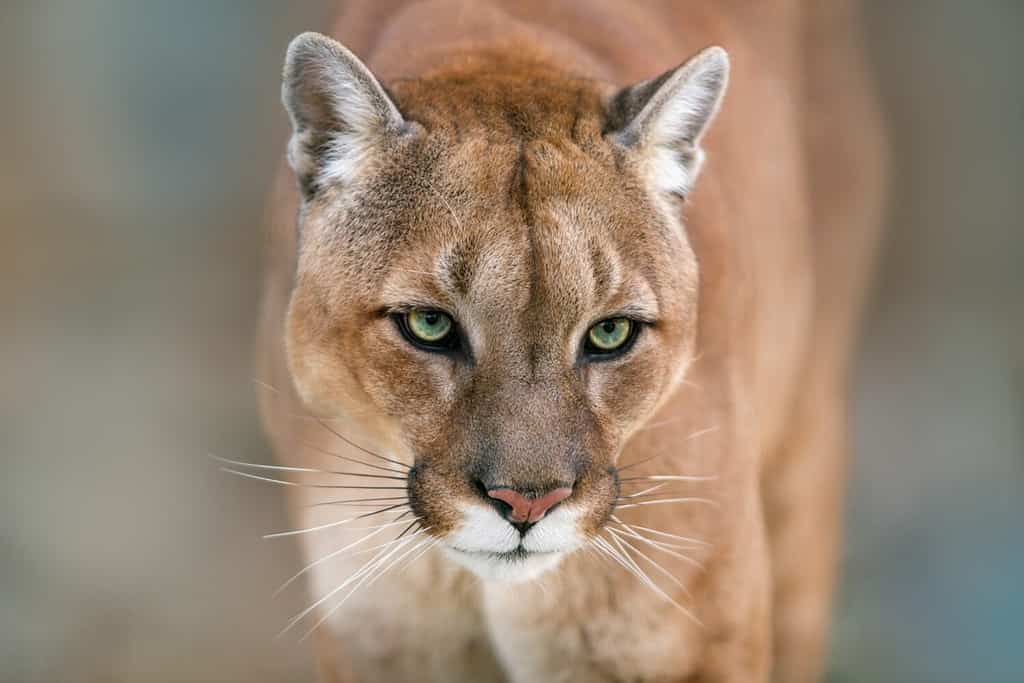
Puma populations suffered from overhunting.
©Kwadrat/Shutterstock.com
During the twentieth century, European settlers largely wiped out pumas, also known as mountain lions, from coastal Patagonia in South America. Other predators, such as foxes and several herbivores, were also extirpated (wiped out) to accommodate sheep ranching. This allowed Magellanic penguins to move into the area without running the risk of getting eaten, and they did not pass up the opportunity!
Magellanic penguins (Spheniscus magellanicus) live and breed in the Neotropical region along the southern coast of South America. They mainly eat pelagic fish and spend a lot of time out at sea. However, they are migratory and travel south to breed on the southern shores of South America and nearby oceanic islands. These penguins nest on sandy shores or cliff faces. While on land, they are preyed on by foxes, pampas cats, and pumas.
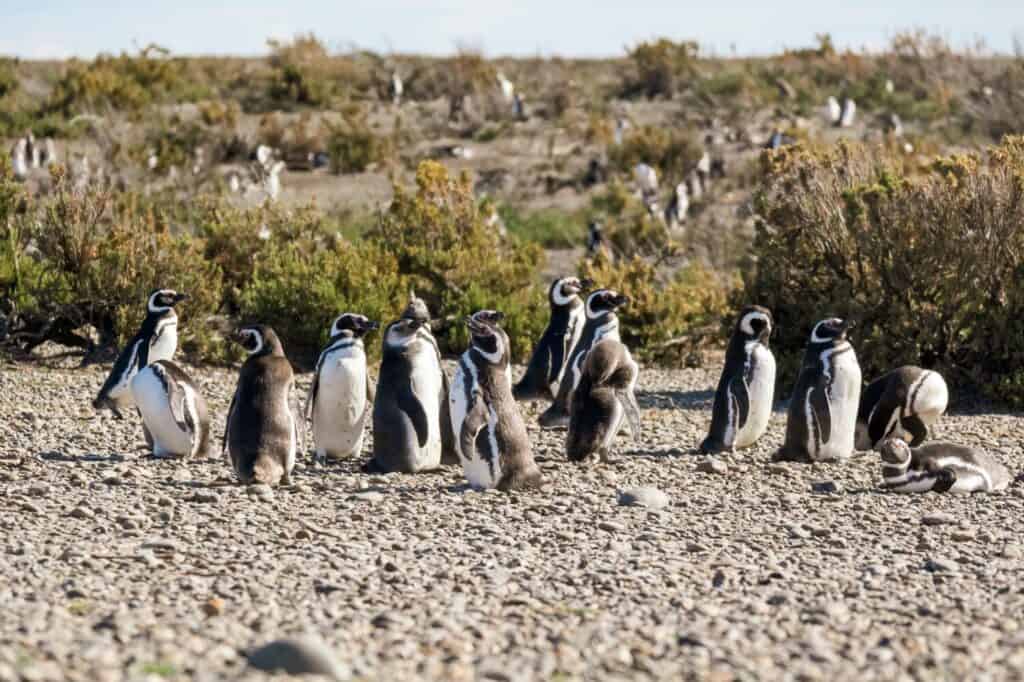
Magellanic penguin colonies made the most of the puma’s absence.
©Claudio Barrientos/Shutterstock.com
Crucially, the eradication of pumas and some other mainland predators from regions of Patagonia appears to have facilitated the expansion of Magellanic penguins. Monte León National Park (MLNP) is a former ranch that was donated to the Argentinian Park Service in 2004. It is home to a breeding colony of Magellanic penguins comprising approximately 40,000 breeding pairs. This is a potential feast for reintroduced pumas! Scientists predicted that pumas would be willing to change their behavior to take advantage of the abundant penguin colony.
The resource dispersion hypothesis suggests that a predator’s behavior can be altered by the availability and distribution of food. The Magellanic penguins at Monte León National Park are abundant but concentrated in a small area during their breeding season, which lasts from September to April. So, scientists predicted that when the penguins were present, the pumas would stay close to the area where penguins are found and aggregate around the penguin colony. Usually, pumas are solitary animals with territories that can span up to 85 square kilometers. The scientists predicted that the abundance of food would make pumas more tolerant of the presence of other pumas. As a result, the abundance of prey would lead to a higher density of pumas in the park.
To test this theory, they analyzed a dataset of GPS-collared pumas to assess their movement patterns and social interactions both in the presence of and absence of penguins. Camera traps were also used to estimate puma density. The findings of this observational study clearly indicated that reintroduced puma behavior was changed by the presence of the penguins. These birds represent a valuable and easily accessible food source for the pumas. The big cats had more concentrated movements and met each other more often around the penguin colony. These pumas spent more time near the penguin colony than usual. When they left the area, they returned more quickly and more frequently than expected.
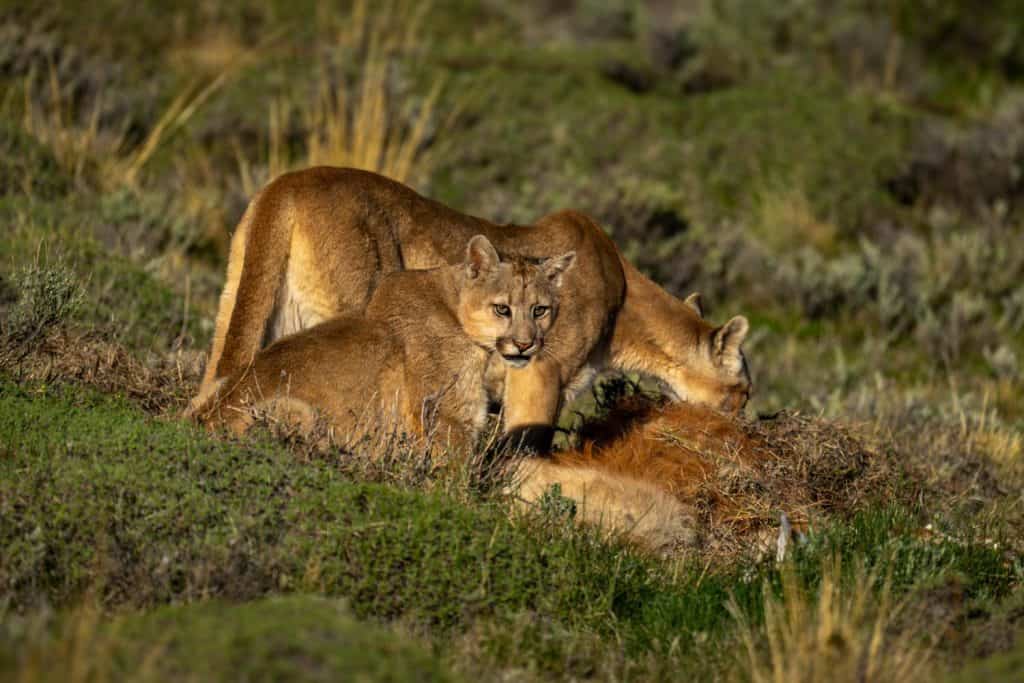
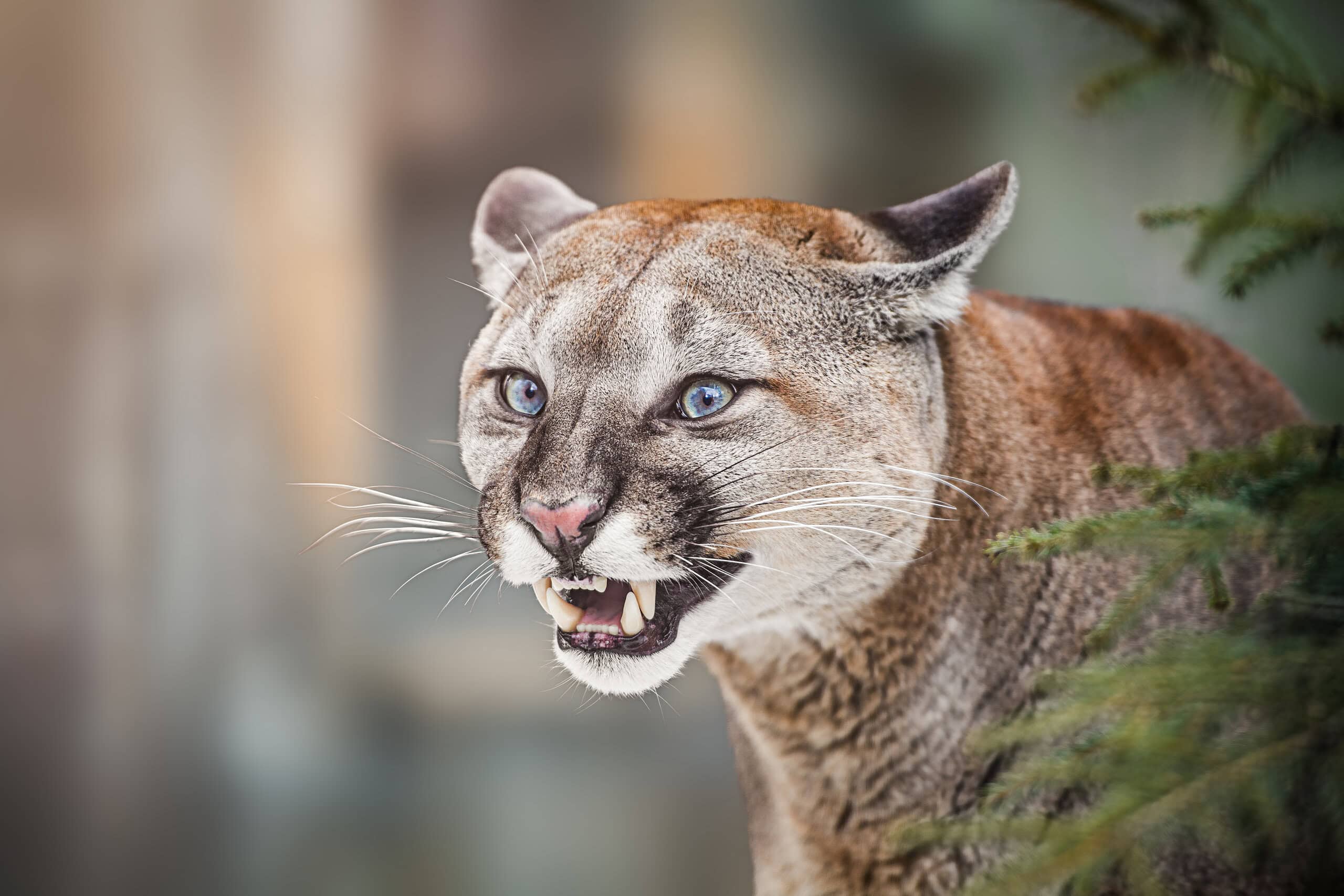
Pumas usually tend to avoid each other.
©Nick Dale Photo/Shutterstock.com
So, how do these pumas behave when the penguins are not there? The study showed that their displacement distance dramatically increased, and they searched for food over a wider area. However, they still came back to where the colony was located. This may be because they were waiting for the birds to return, but they could also be scavenging the bodies of dead penguins left behind. One puma even left the park entirely and was found near another penguin colony along the coast!
Overall, this study shows that when a predator returns to an area and finds a new food source, they are willing to change their behavior to take advantage of it. This was reflected in the way the pumas moved within the park. However, it was also evident in their interactions with each other. Historically, puma interactions were considered rare, but around penguin colonies, they are much more frequent. Pumas that hunt penguins are five times more likely to encounter another puma than those in other populations. They appear to be willing to tolerate the presence of other pumas and do not avoid them as they would usually do. There is clearly no point in bickering over food when there is so much to go around!