







Quick Take
- Skunks have a natural immunity that lets them hunt prey most animals can't touch, which is not what you'd expect from a creature famous for running away. See what skunks hunt →
- One specific predator has cracked the code on defeating the skunk's legendary spray, and its technique is surprisingly clinical. Discover skunk predators →
- Albino skunks exist, but their rare genetics come with a hidden cost most people never consider.
- A skunk's spray range is probably further than you think, and knowing the actual distance would likely change how you'd behave around one in the wild. Check the spray range →
Skunks are omnivores, eating a diet of insects, fruit, fish, amphibians, reptiles, and small mammals. This animal is best known for its ability to spray an odorous (stinky) liquid from its scent glands. They use the spray as a defense against predators. Skunks live in Canada, the United States, Mexico, and South America. Female skunks give birth once a year.

5 Incredible Skunk Facts
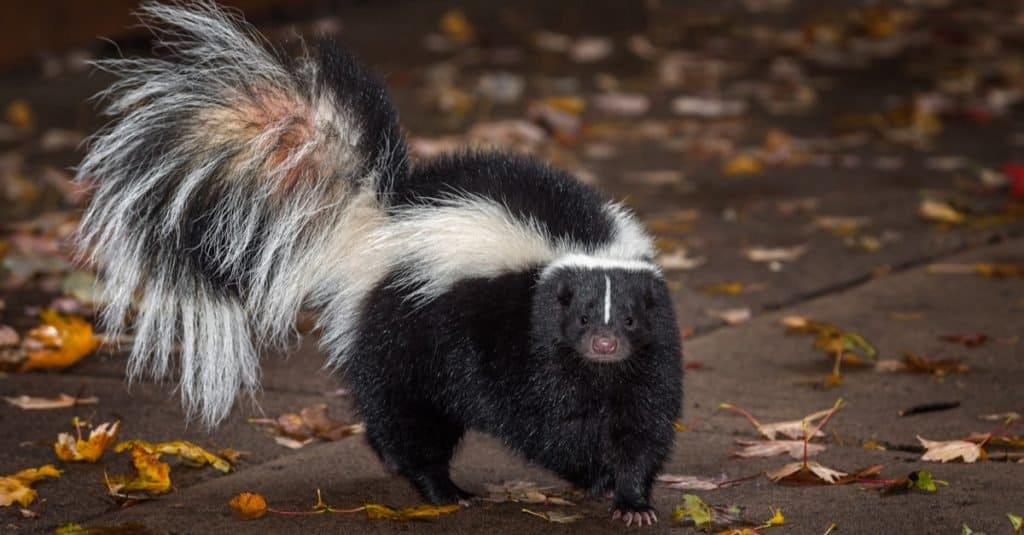
A female can have 2 to 10 babies in a litter.
©Geoffrey Kuchera/Shutterstock.com
- These animals use their strong front legs and claws to dig for insects.
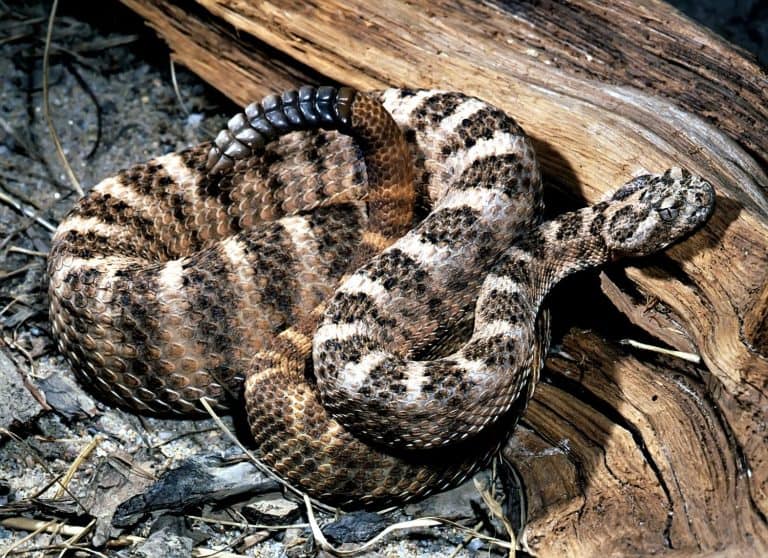
- Skunks are not affected by snake venom.
- They live in dens, hollow logs, burrows, and even abandoned barns and houses.
- A female can have 2 to 10 babies in a litter.
- Skunks are known to carry rabies and can pass it to other animals or even a family pet.
Evolution and Origins
Skunks have been around for millions of years. In fact, the oldest fossil identified as a skunk dates back to about 11 or 12 million years ago and was discovered in what is now Germany. Data suggests that the skunk family first appeared about 30 to 40 million years ago.
Additionally, some animals have a skunk-like dentition dating back to the Late Cretaceous Epoch.
Classification and Scientific Name
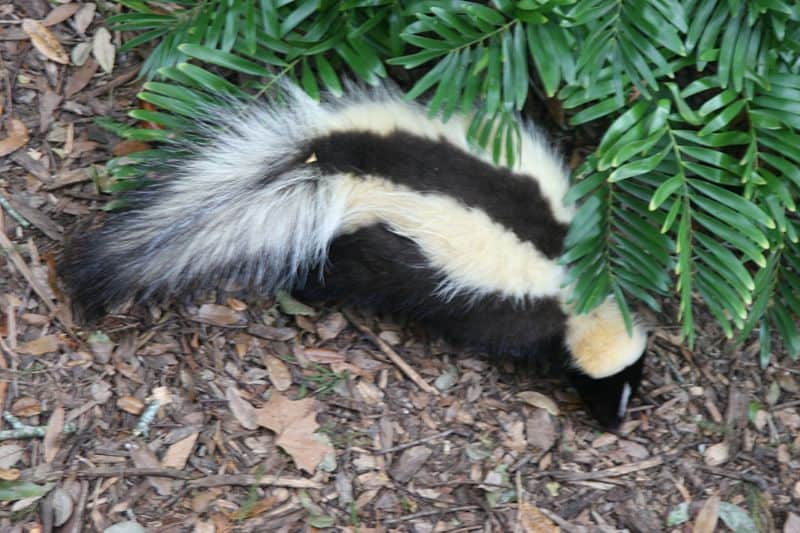
The scientific name for one of the skunk species is Mephitis mephitis.
©Kevin Bowman / Creative Commons – Original
This animal is sometimes called a polecat. At one time, they were mistaken for striped polecats (Ictonyx striatus) due to their similar appearance.
These animals belong to the Mephitidae family and the class Mammalia.
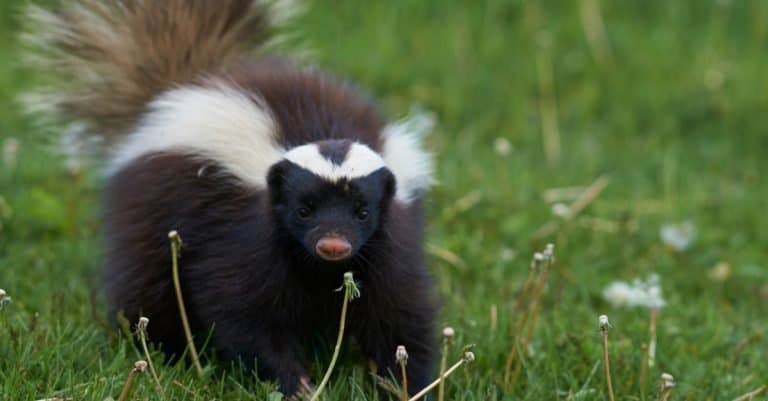
The skunk family includes at least 13 species, which include:
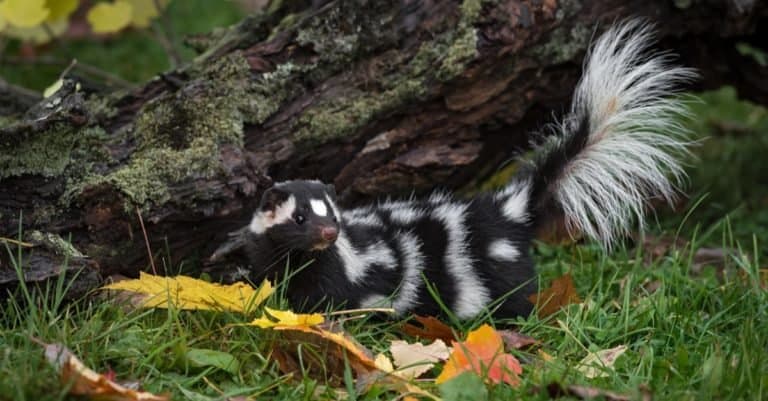
- Eastern spotted skunk (Spilogale putorius)
- Western spotted skunk (Spilogale gracilis)
- Southern spotted skunk (Spilogale angustifrons)
- Pygmy spotted skunk (Spilogale pygmaea)
- Hog-nosed skunk (Conepatus leuconotus)
- Humboldt’s hog-nosed skunk (Conepatus humboldtii)
- Striped skunk (Mephitis mephitis)
- Hooded skunk (Mephitis macroura)
- Molina’s hog-nosed skunk (Conepatus chinga)
- Striped hog-nosed skunk (Conepatus semistriatus)
- Sunda stink badger (Teledu) (Mydaus javanensis)
- Palawan Stink Badger (Mydaus marchei)
Appearance and Behavior
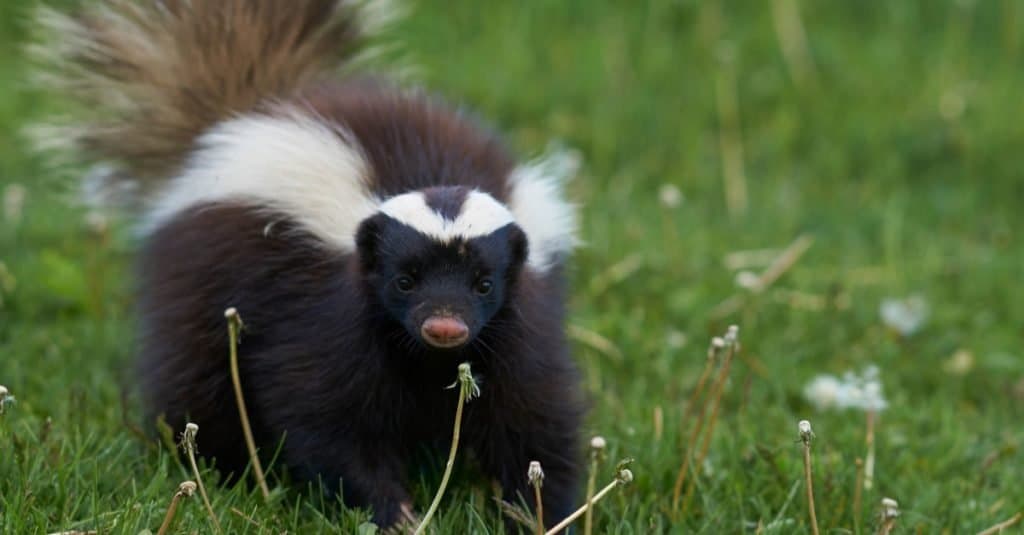
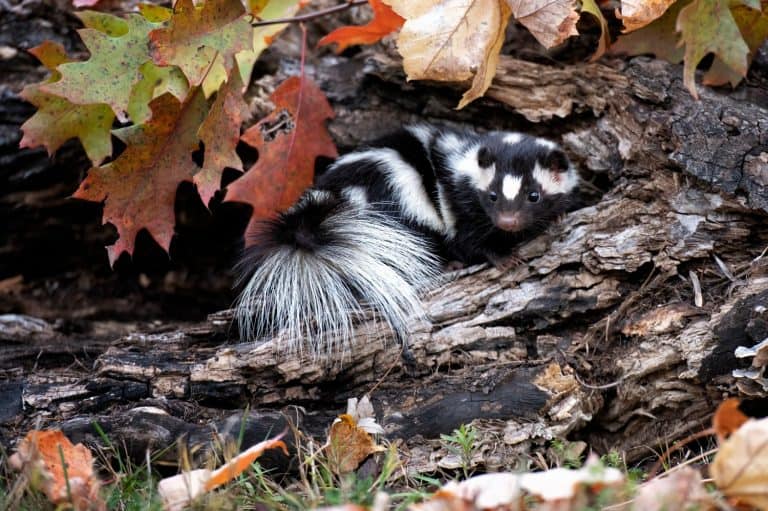
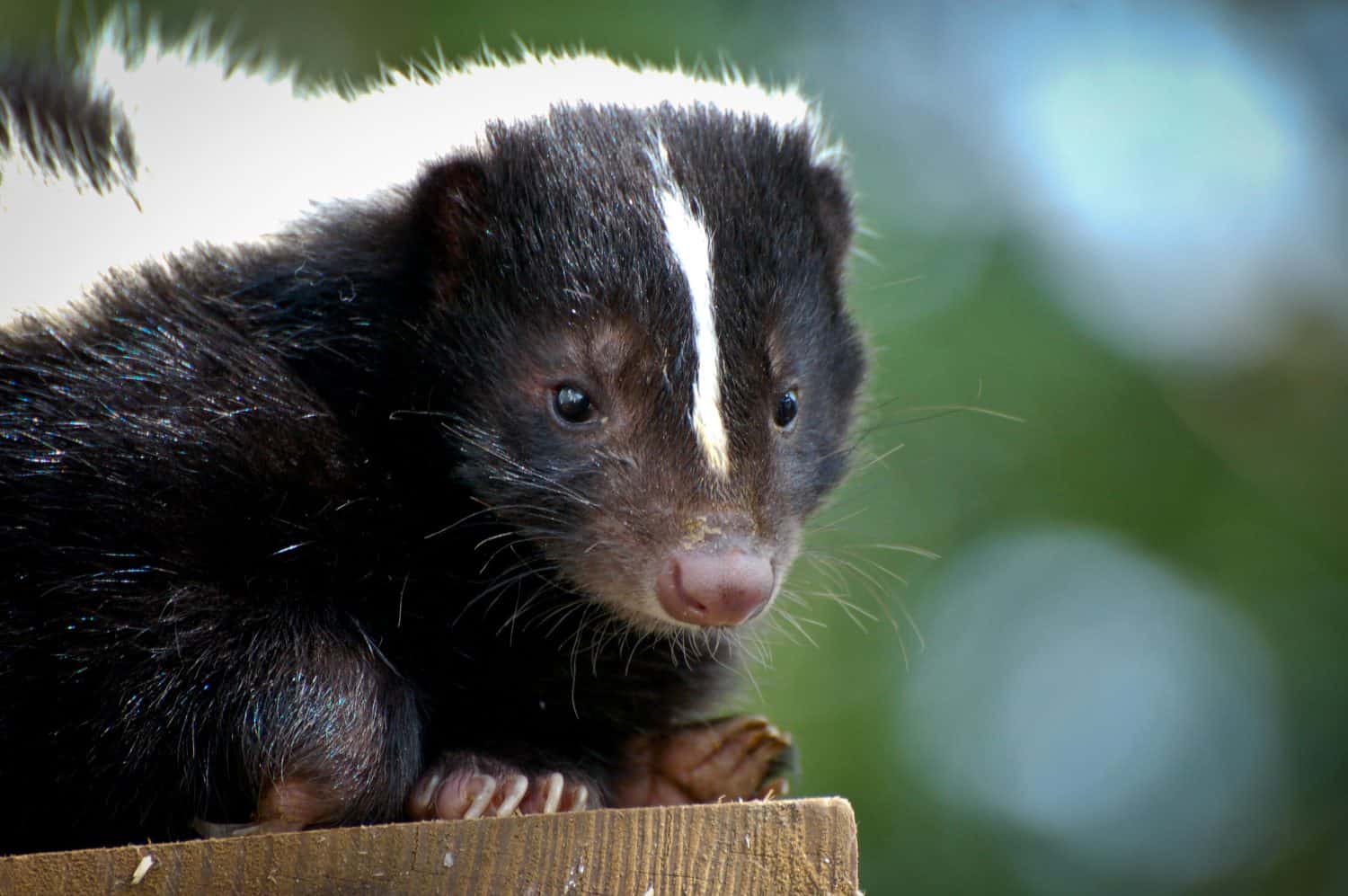
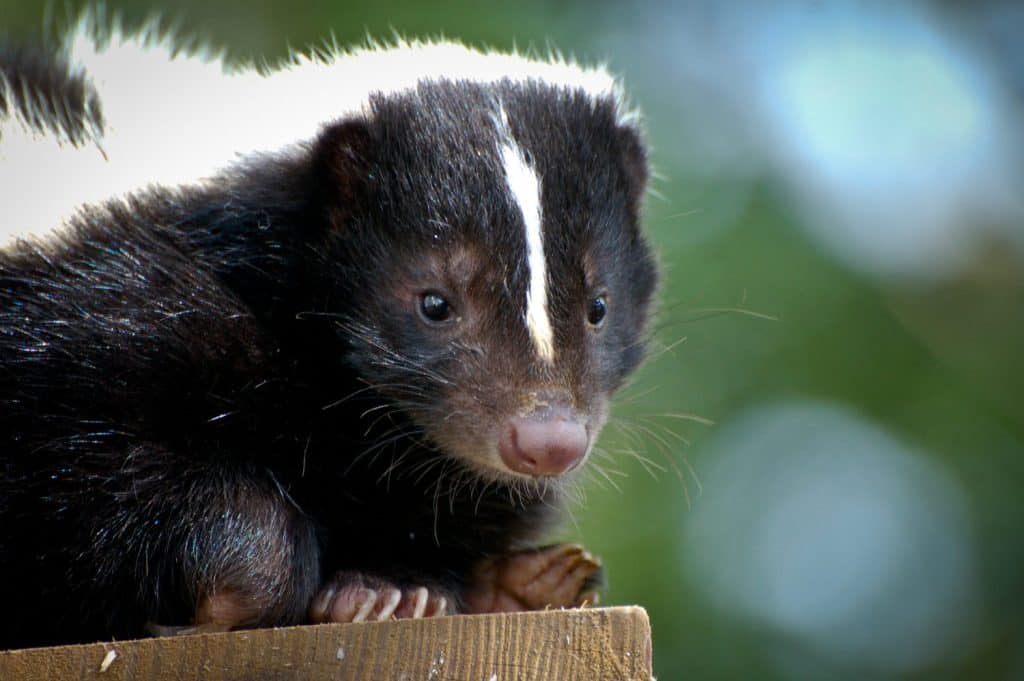
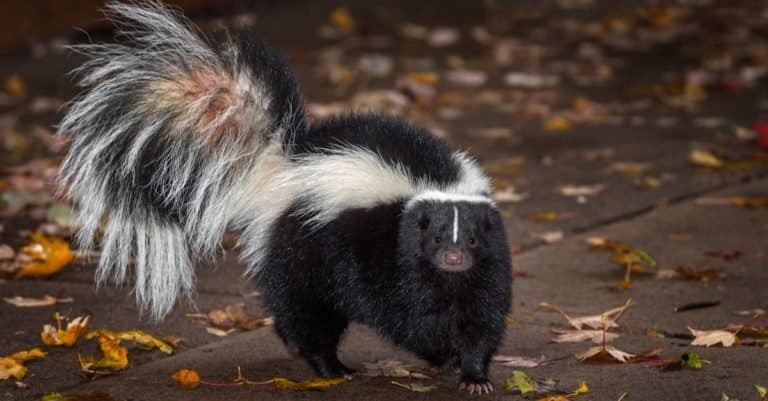
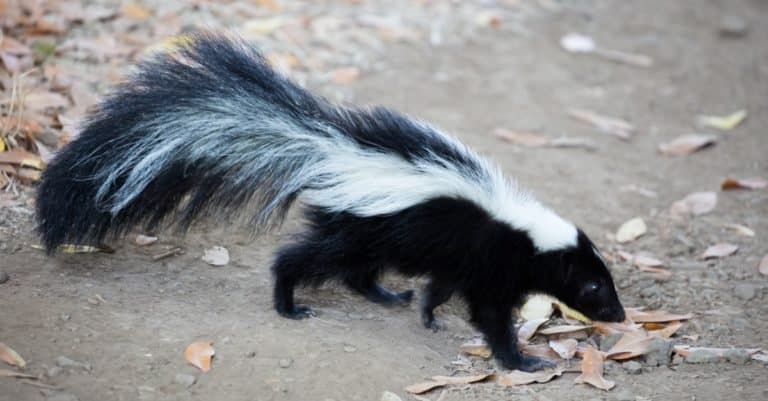
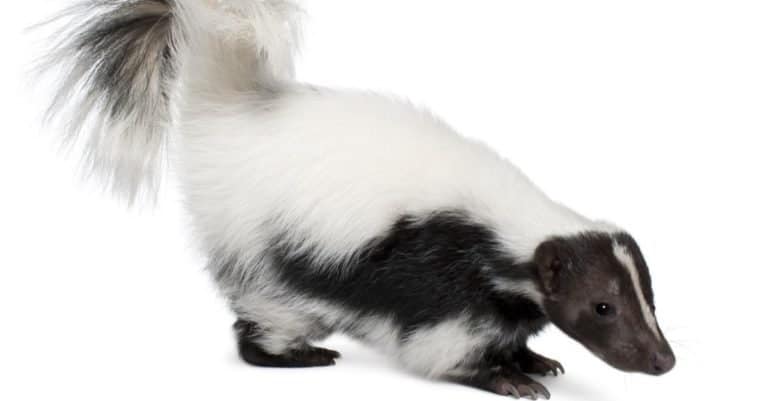
The most recognizable species has black fur with two wide stripes of white on its back, making the skunk one of the most recognizable animals.
©Jeremy Richards/Shutterstock.com
The most recognizable species has black fur with two wide stripes of white on its back. Other species have swirls or spots of white on their black fur. An exception is an albino skunk. It has a coat of pure white fur. Albino skunks are rare.
They can’t produce the melanin that darkens their fur. Albino skunks are different from animals with mostly white fur. One way to tell them apart is that a white skunk has black eyes and an albino skunk has red eyes. Unfortunately, albino skunks usually have a short lifespan because they have other medical issues as a result of their rare genetics.
This animal’s traditional black and white coat makes it easily recognizable by humans. However, to its natural predators, the stark white stripe or spotted design of its coat is a visual signal to stay away.
These animals have four feet, tiny black eyes, and bristly tails with a mixture of black and white fur. Skunks have sharp teeth that help them eat a variety of items. This animal has strong front feet with long claws that help it dig burrows or look for worms and other insects. But you probably won’t see them digging a burrow.
They are known for taking up residence in burrows that have been abandoned by foxes, woodchucks, and other animals.
Some of these animals can use their claws to climb. The spotted skunk is able to use its strong feet and claws to climb trees. Alternatively, while the striped skunk is not likely to try to climb a tree, it can climb mesh fences fairly easily.
The animal’s body is from 14 to 37 inches long with a tail that can be as long as 15 inches. They can weigh from less than 1 pound to 14 pounds. To picture a 19-inch skunk, imagine 9 golf tees lined up end to end.
When it comes to weight, an average-sized skunk (about 10 pounds) weighs the same as a housecat. The American hog-nosed species is one of the longest, measuring 2.7 feet from the tip of its nose to the end of its tail.
The most notable feature of this animal is its ability to spray: when threatened, it releases a foul-smelling liquid from scent glands beneath its tail. This liquid can travel up to 15 feet, so a predator doesn’t have to be close to a skunk to get sprayed.
Though this liquid isn’t poisonous, it takes several days for the smell to wear off an animal’s fur or body. Plus, if it gets into the eyes of an animal, it can sting. The predator runs off in an effort to get away from the powerful smell. That’s why this spray is so effective as a defense mechanism.
Skunks are mostly solitary animals. However, those that live in colder places may gather in groups of 10 to 20 inside burrows to keep warm.
A group of skunks is called a surfeit. Generally, they are shy creatures that try to stay out of sight. The only time these creatures show aggression is during breeding season when they are competing for mates. It is also important to know that skunks are not rodents.
Habitat
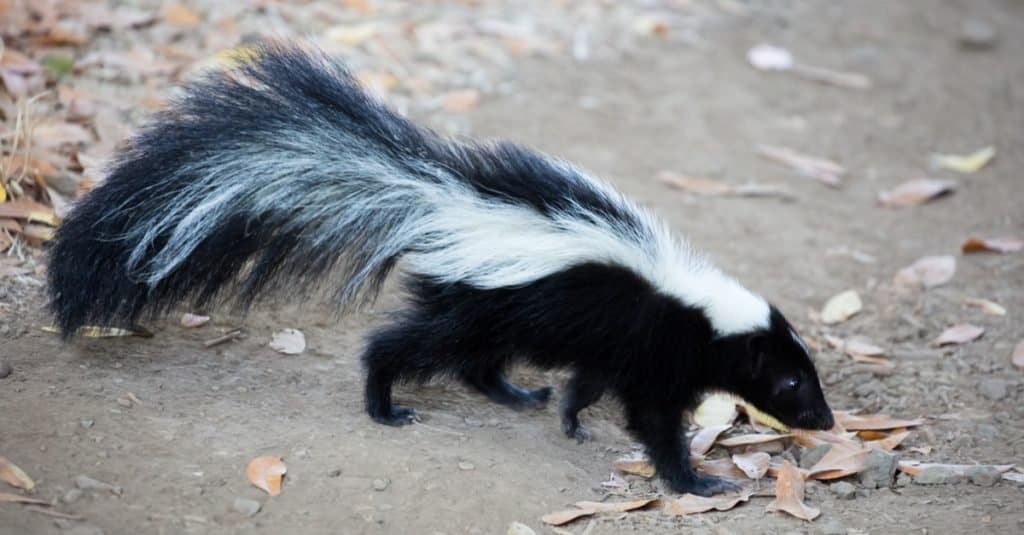
These animals live in Canada, the United States, Mexico, and South America.
©yhelfman/Shutterstock.com
These animals live in Canada, the United States, Mexico, and South America. They live in places with a temperate climate. Specifically, their habitat includes forests and woodlands where they can find hollowed logs or brush piles.
They sometimes live in burrows that have been abandoned by another animal. Most of them are found living within 2 miles of a stream or creek, so they have access to drinking water along with fish, frogs, and other types of prey.
During the cold-weather months, these animals stay in burrows to keep warm. Though they don’t officially hibernate, they sleep a lot during this season.
Furthermore, these animals don’t migrate; they live their entire lives within about a 2-mile range of their hollow log, den, or other shelter.
Diet
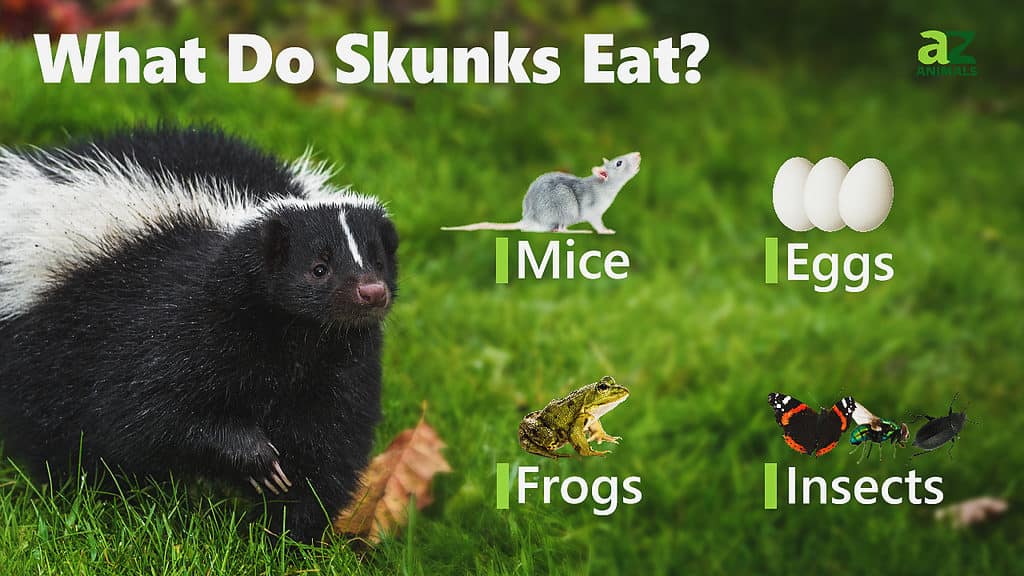
These animals are omnivores. Biologists consider them opportunistic feeders, meaning they don’t have a fixed list of preferred foods. They’ll take the opportunity to eat anything available to them in their environment. For instance, if a skunk wanders into a neighborhood and finds a bird feeder, it will eat seeds that have fallen on the ground.
What do skunks eat?
They eat fruit, plants, rodents, grasshoppers, worms, bird eggs, and frogs. They can also eat venomous snakes because they are immune to snake venom. These creatures eat whatever food source is most plentiful during the particular season.
Predators and Threats
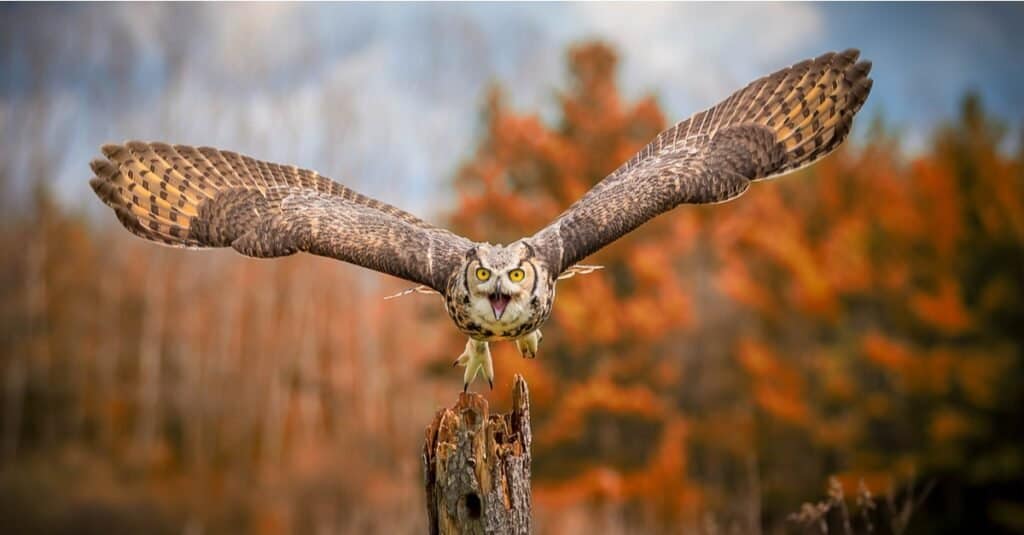
A flying Great Horned Owl preys on skunks.
©Imran Ashraf/Shutterstock.com
Because these animals are active at night, they are vulnerable to great horned owls. This owl can see the movement of a skunk in the dark. It can swoop down to capture it before the skunk is able to turn and release its repellent.
Other winged predators of these animals include bald eagles and golden eagles. Though coyotes and foxes are predators of the skunk, they are sometimes discouraged from approaching due to the skunk’s coloration and spray.
Drought is one environmental threat to skunks. Deforestation is another threat to the habitat of these animals. These animals are sometimes killed as pests in neighborhoods because they are known carriers of rabies. This disease can be passed on to a pet dog or cat. A human can also contract rabies from a skunk if the person is bitten or scratched. Anyone bitten or scratched by a skunk should seek immediate medical attention.
As a note, these animals help to keep the population of insects and mice under control. In short, they serve an important purpose in the ecosystem as well.
The conservation status of the skunk is Least Concern with a stable population.
What eats skunks?
The great horned owl is one of the main predators of these animals. Others include golden eagles, foxes, and coyotes.
Reproduction, Babies, and Lifespan
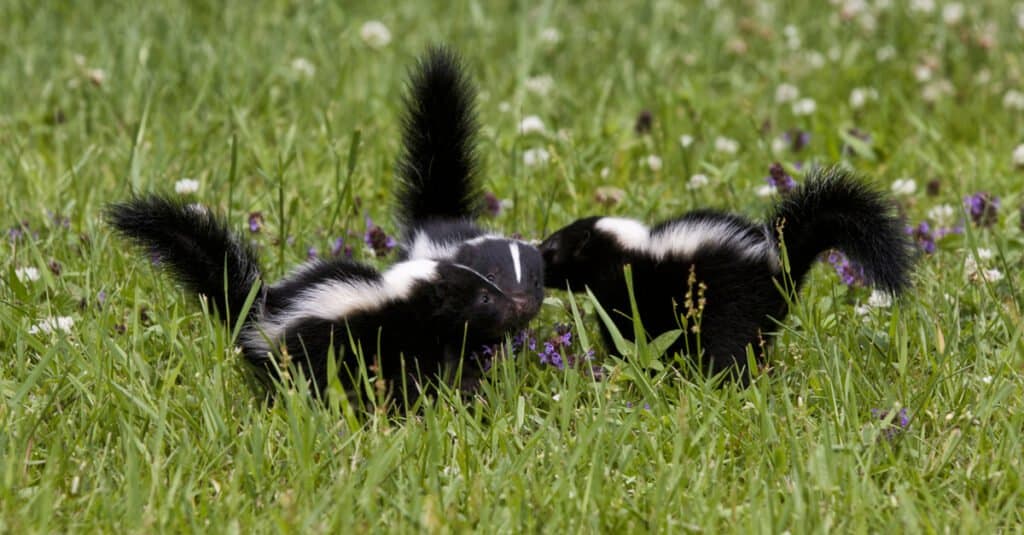
Skunks give birth to live babies in a den of grass.
©Debbie Steinhausser/Shutterstock.com
The breeding season of these animals is between February and April. A male seeks out a female and circles around her to determine if she is ready to mate.
If the female wants nothing to do with the male, she releases her spray to chase him off. A male mates with several females in one breeding season. The gestation period of a female is 60 days. Females have just one litter per year.
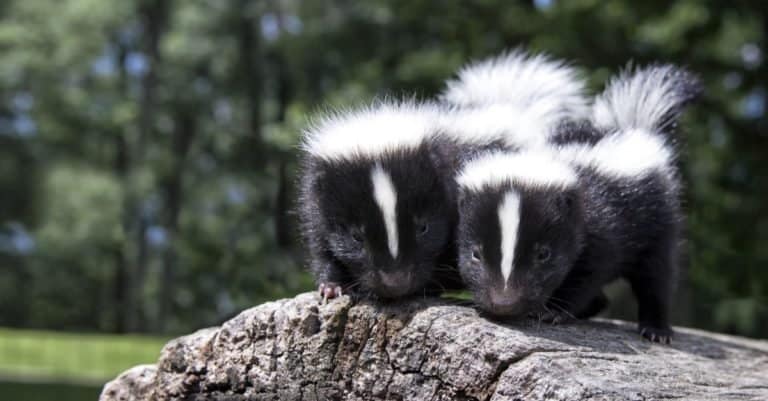
The animal has live babies, aka kits, in a den filled with grass. A litter can contain from 2 to 10 kits. Each baby weighs around one ounce at birth and is not able to see or hear until it’s three weeks old. The female takes sole care of the kits and nurses them until they are six weeks old.
At that time, the female allows the kits to explore outside the den, and they are weaned by the age of two months.
They become independent at around two months old and set off to find their own shelter. Once a baby starts moving around outside of the den, it’s vulnerable to predators including owls, eagles, coyotes, and foxes. It’s not uncommon for kits to be killed before reaching one year old.
The lifespan of a skunk can reach up to 7 years, but the average is 3 years.
Population
The IUCN Red List of Threatened Species reports no specific population. But because females have one litter of up to 10 kits per year, the population of this animal remains stable. The conservation status of the skunk is Least Concern.
Zoo
You can visit these animals in the zoo. Visit the displays at the following zoos.
- Striped skunks are on display at the San Diego Zoo
- See a gathering of striped skunks at the Elmwood Park Zoo
Skunk Pictures
View all of our Skunk pictures in the gallery.

Geoffrey Kuchera/Shutterstock.com
Sources
- Wikipedia / Accessed March 3, 2021
- Chesapeake Bay Program / Accessed March 3, 2021
- Massachusetts / Accessed March 3, 2021