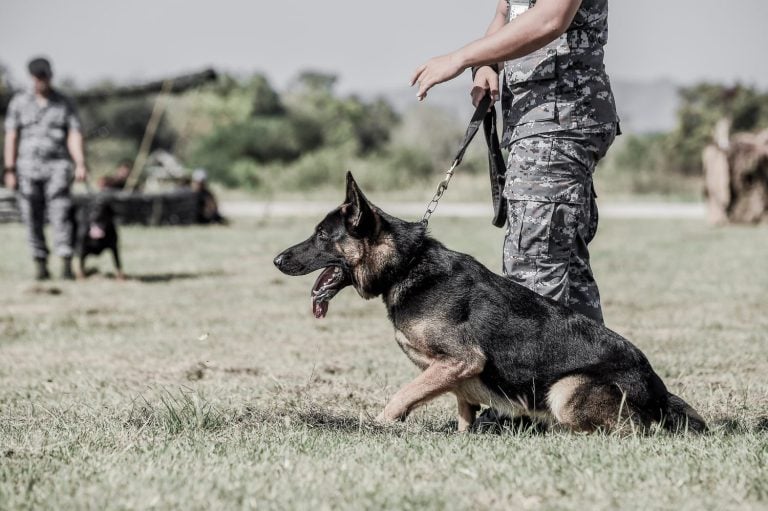
Quick Take
- Mastering 400-hour instruction blocks is one of many requirements for achieving K-9 operational status, but K-9 training durations and requirements vary widely by agency and region.
- The APCA off-lead obedience standard creates a barrier that most unrefined handler-dog teams cannot bypass.
- Counterintuitive milestones like neutrality often determine success more than spectacular physical feats.
- The graduation evaluation must be conducted with the handler present to earn K-9 certification.
Watching a cat stroll past a line of unmoving police dogs in this viral Instagram reel can’t help but make you wonder: what does it actually take for a dog to be trusted in public-facing, high-stakes work like police work, especially when distractions show up out of nowhere? This is the reality for well-trained K-9 dogs, as distractions can make the difference between success and failure.
In reality, most K-9 teams do not graduate from their training based on a single dramatic moment, as the Instagram reel suggests. They pass a structured certification under written standards that test them on many aspects of police work. What are K-9 tests like for the dogs enrolled, and how can you tell if a dog is excelling in its training?
We spoke with AKC-certified dog trainer Teagan Coleman of NLR Explore Dog Training for answers. This is what it’s like to train a dog for police work and all of the rigorous requirements involved in the process.
Are Cats Always the Final Test for Police Dogs in Training?
While an entertaining choice for an Instagram reel, cats are not typically used as the last barrier separating a dog from official K-9 certification. However, the cat represents a distraction-proofing demonstration involving neutrality and impulse control. Using a cat isn’t a universal, standardized final exam across agencies, but it certainly does the job for this aspect of their training.
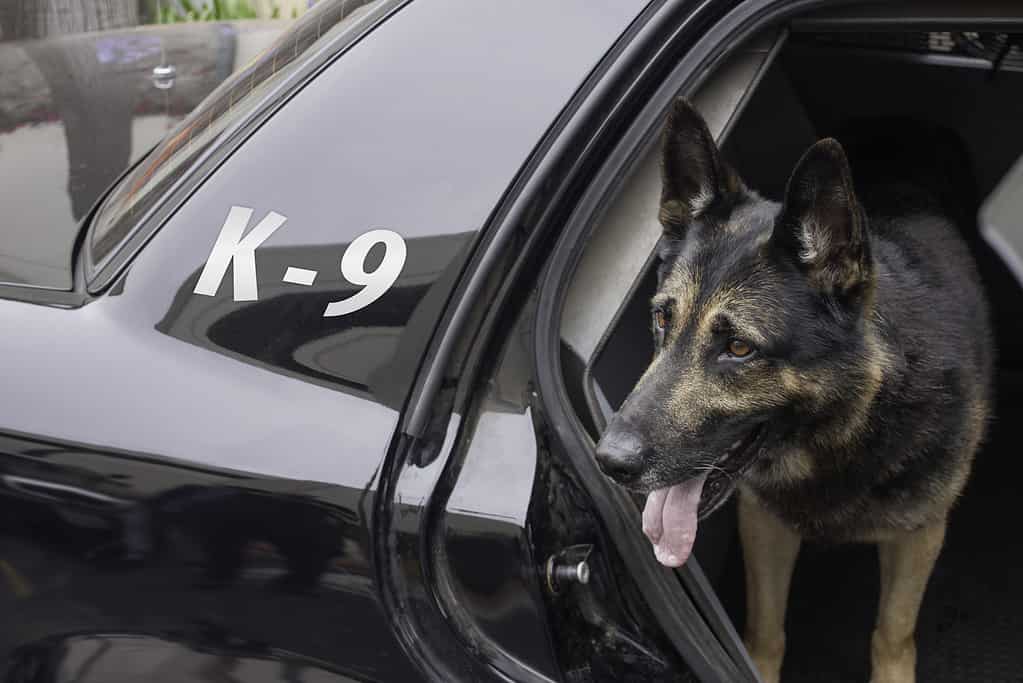
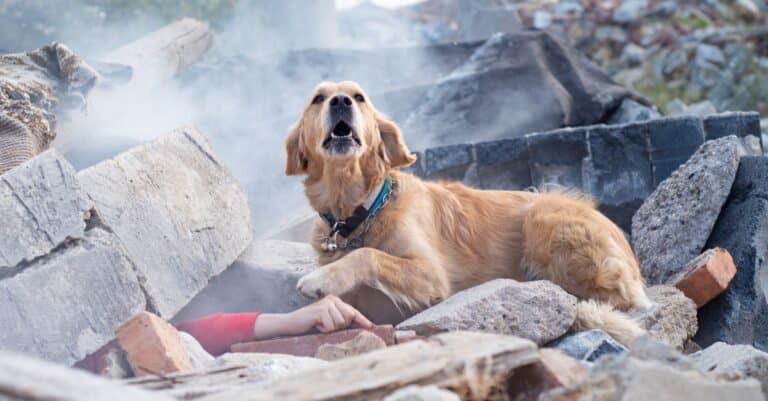
K-9 training requires many hours of initial training followed by training for the entirety of the dog’s career.
©805promo/iStock via Getty Images
For all K-9 testing, obedience, and handler control must be demonstrated in earnest, especially in distracting environments. According to the American Police Canine Association certification standards, passing off-lead obedience is a prerequisite before moving into other certification phases, where the dog will be worked off lead.
Coleman states, “That cat in that Instagram clip isn’t actually the point of the test. The point is neutrality and stability; if a dog can’t ignore a moving trigger on cue, their handler can’t safely direct them on the job.”
What the Final Test Usually Means for K-9s
All police dogs attend a certification day, or an agency’s graduation evaluation, where a dog and handler team must demonstrate performance to a clear, documented standard. Those standards vary by organization and region, but most include tests on the following topics:
- Obedience and control, often including off-lead work
- Role-specific searching tasks, such as detection, tracking, trailing, area or building searches, and evidence search
- Controlled engagement requirements for patrol teams, with clear outs/recalls and handler direction
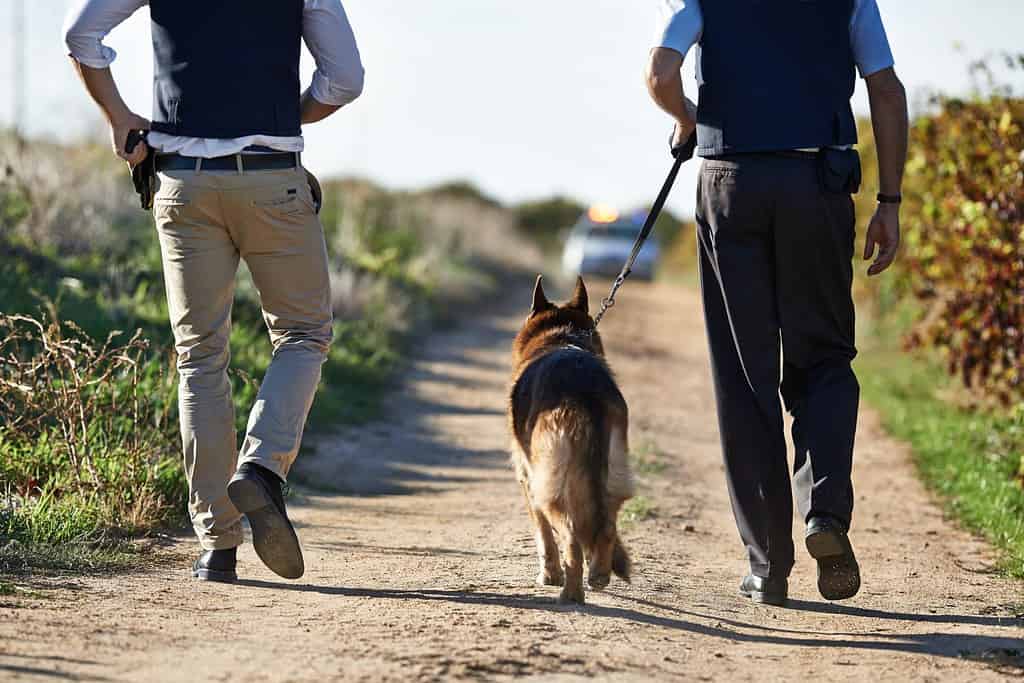
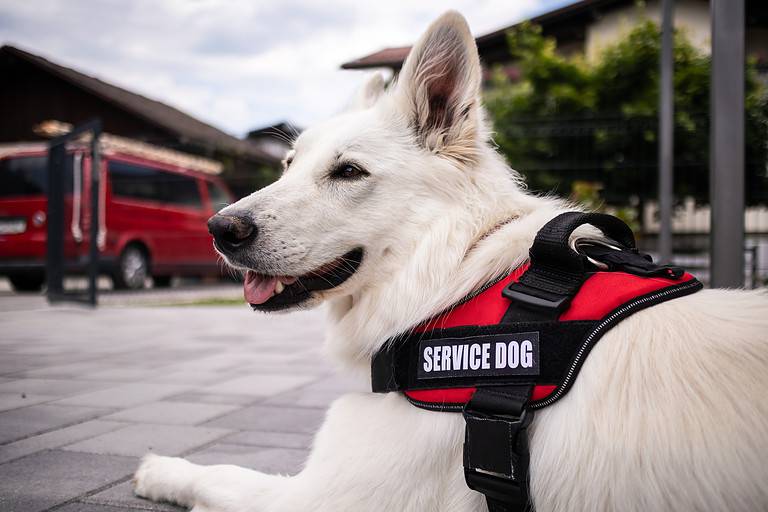
Handlers must be just as reliable and consistent as the dogs they work with.
©PeopleImages.com – Yuri A/Shutterstock.com
Coleman adds, “Handlers and dogs need to be trained equally. A dog can be as obedient as possible, but if a handler isn’t ready to deal with certain circumstances that a K-9 unit will face, it’ll all be for nothing.”
What K-9 Training Looks Like Before Certification
Most credible K-9 programs train both the dog and the handler together, testing them as a team. To prepare for K-9 or police dog certification, training typically involves the following core concepts:
- Selection and evaluation of the dog
- Stability in new environments, startle recovery, confidence on odd surfaces, neutrality around people
- Motivation (including toy or food drives) and persistence, depending on the job
- Foundation obedience and engagement
- Clear positions, clean heeling, reliable recall, stays, out/off-switch behaviors
- Environmental proofing
- Stairs, slick floors, elevators, crowds, loud sounds, confined spaces, vehicles
- Specialty skill development
- Detection dogs: odor recognition, search patterns, clear indication behavior
- Patrol dogs: searching, tactical control, and controlled apprehension skills were used
- Scenario work
- Realistic environments, timed problem-solving, and handler decision-making
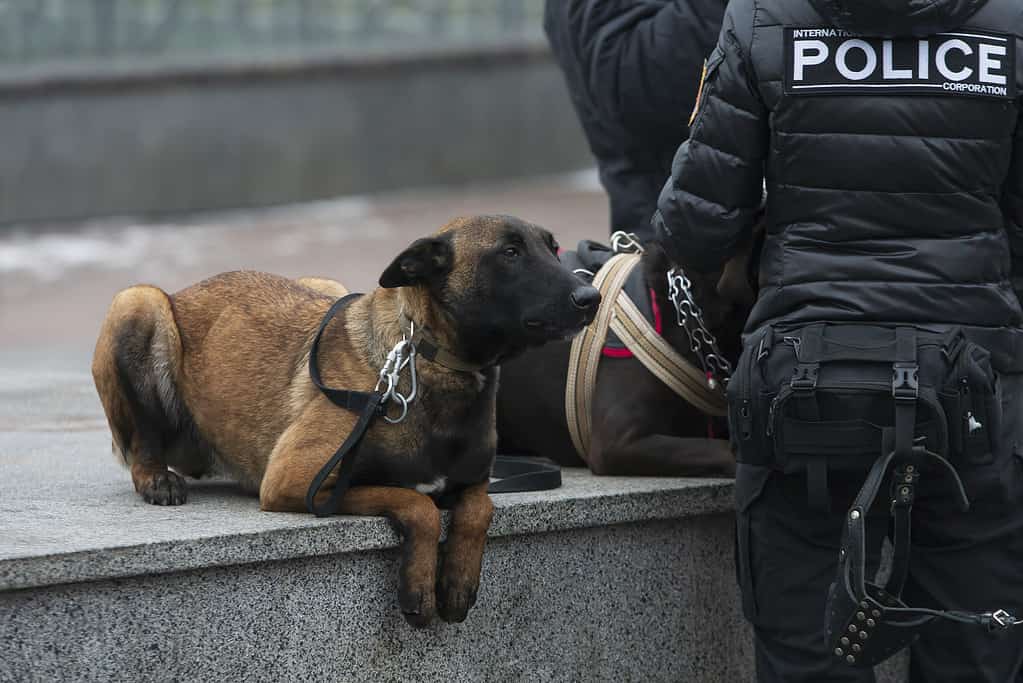
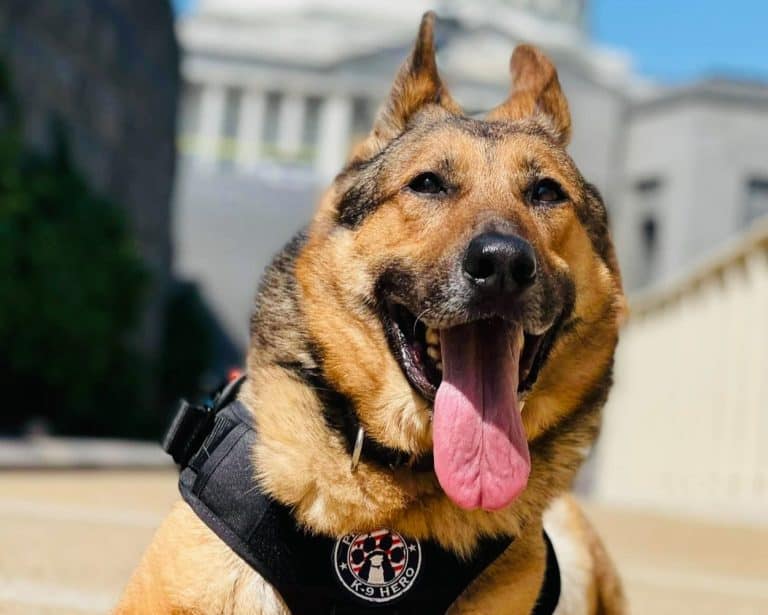
Ignoring distractions is one of the biggest requirements for K-9 dogs.
©vzmaze/iStock via Getty Images
“The biggest milestones are sometimes the boring ones when it comes to police dog training. It may seem simple, but obedience, neutrality, confidence, and training a dog that can reset fast after something unexpected are all huge wins for this kind of work.” Coleman states.
How Long Does K-9 Training Last?
While every country and even city has its own standards, K-9 training time is usually measured in months or hundreds of hours, followed by ongoing maintenance training for the rest of the dog’s working life.
The Salt Lake City Police Department’s K-9 overview states that even the basic training program for patrol dogs takes about four months of full-time work. Teams also continue training after certification, which means graduating with a certification is only the first part of a lifelong process.
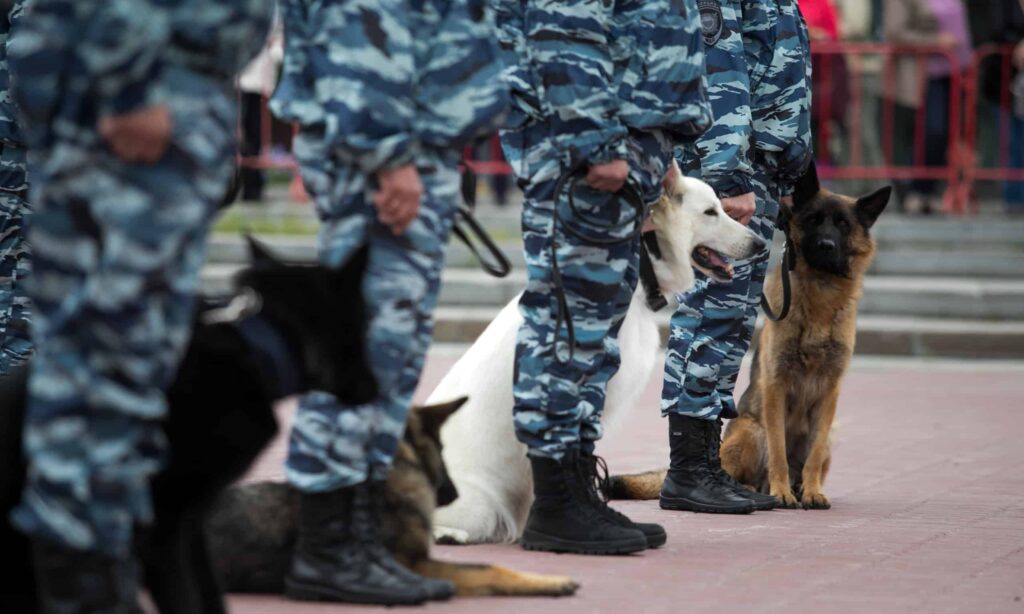
Military working dogs are taught a variety of tasks, such as attacking, tracking, bomb detection, and patrolling.
©iStock.com/Semen Salivanchuk
For another example, the Winston-Salem K-9 Training & Certifications requires each K-9 team to complete a 400-hour block of instruction before being released. Ongoing monthly in-service training requirements are also part of the program, so both dog and handler are consistently trained.
A dog can be as obedient as possible, but if a handler isn’t ready to deal with certain circumstances that a K-9 unit will face, it’ll all be for nothing.
Teagan Coleman, AKC-certified dog trainer
Patrol K-9 vs. Detection-Only K-9: What Gets Tested
The average person may think of K-9 training as a single track or training program. However, in reality, the final evaluation looks very different depending on whether the dog is going to be part of a patrol team, a detection-only team, or a dual-purpose team that combines both programs. Here’s a brief overview of the differences between these tests and programs.
Patrol K-9 Teams
Patrol certification is built around the idea that the dog may be used in dynamic, high-risk situations, which is why graduating dogs from this program have to show both capability and control. The final test for patrol work typically involves the following, but countries and organizations may differ:
- Off-lead obedience under distraction
- Suspect searching with area/building search scenarios
- Criminal apprehension phases, with recalls and handler direction, were carefully observed
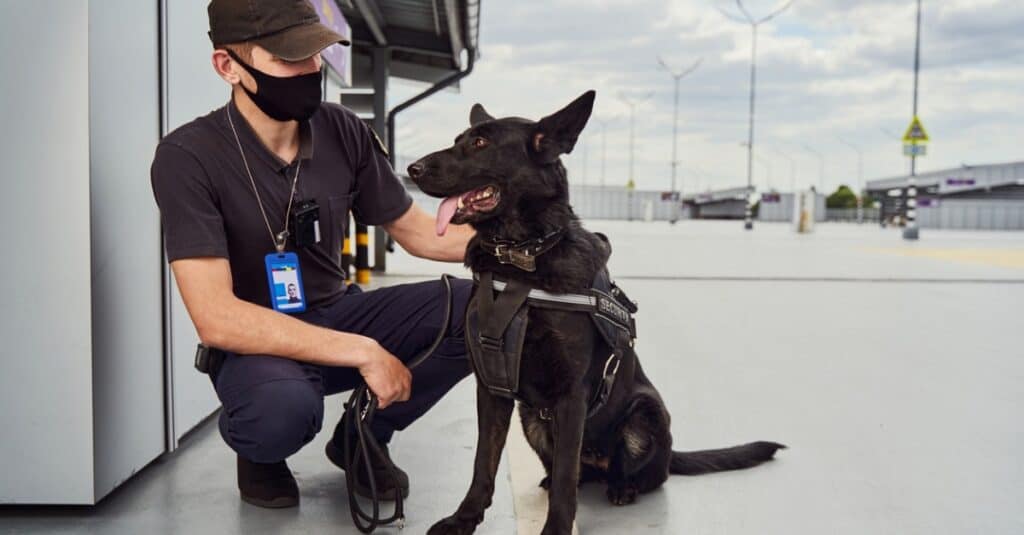
Off-lead obedience is a must for patrol dogs, no matter where they’re located in the world.
©iStock.com/Svitlana Hulko
Coleman adds, “A dog that can engage but can’t obey a recall command instantly becomes a liability, because the handler has to be able to stop the behavior on demand. No matter how eager a dog is, they need to be obedient.”
Detection-Only Teams
Detection final testing is extremely strict about a dog’s reliability and clarity, because false alerts and poor handling create real legal and operational problems. The final test for detection work looks a bit different, but there are similarities to patrol testing, including:
- Search strategy and coverage
- Clear, consistent indications during detection testing
- Distraction resistance, including food, people, noise, or competing scents
- Handler consistency, which is vital to the success of any detection operation
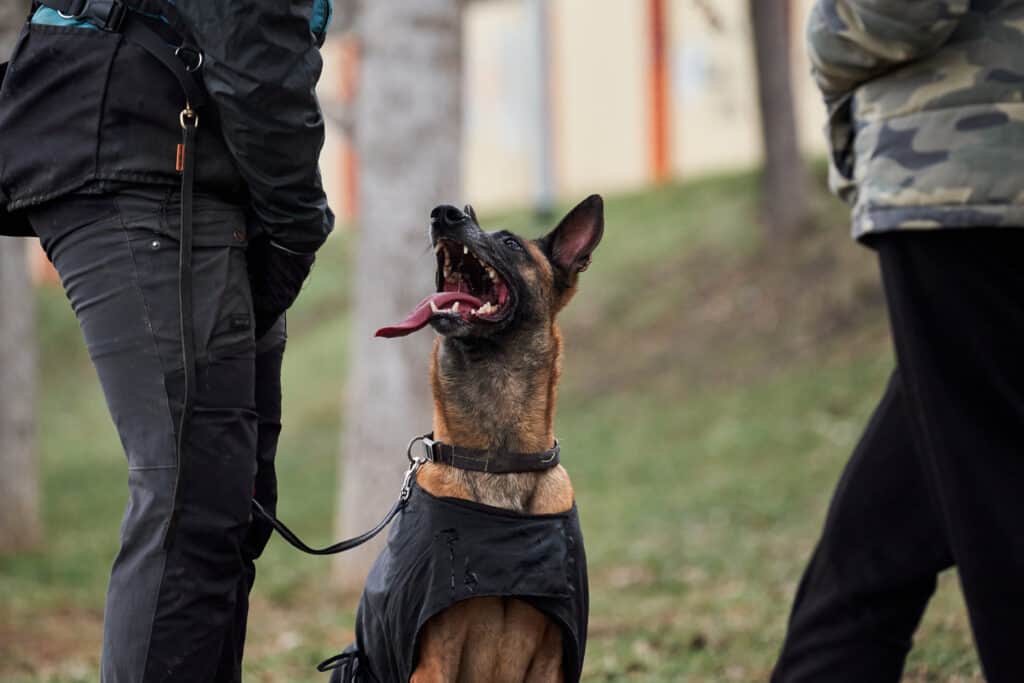
Highly-trained dogs, such as those in K-9 work, stare because they’re awaiting their next orders.
©lightman_pic/Shutterstock.com
Obedience and neutrality matter in detection work, just as they do in patrol work, because the dog regularly works in public spaces. That’s why many programs still treat off-lead control as foundational, with obedience treated as a prerequisite step before other steps in the program.
Why Distraction Proofing for K-9s Matters
Real life is full of surprises, which can be incredibly difficult for dogs that are used to routine and doing as they please. Distraction proofing is all about preventing unsafe reactions in public spaces and making sure a handler can direct work efficiently and safely alongside their dog.
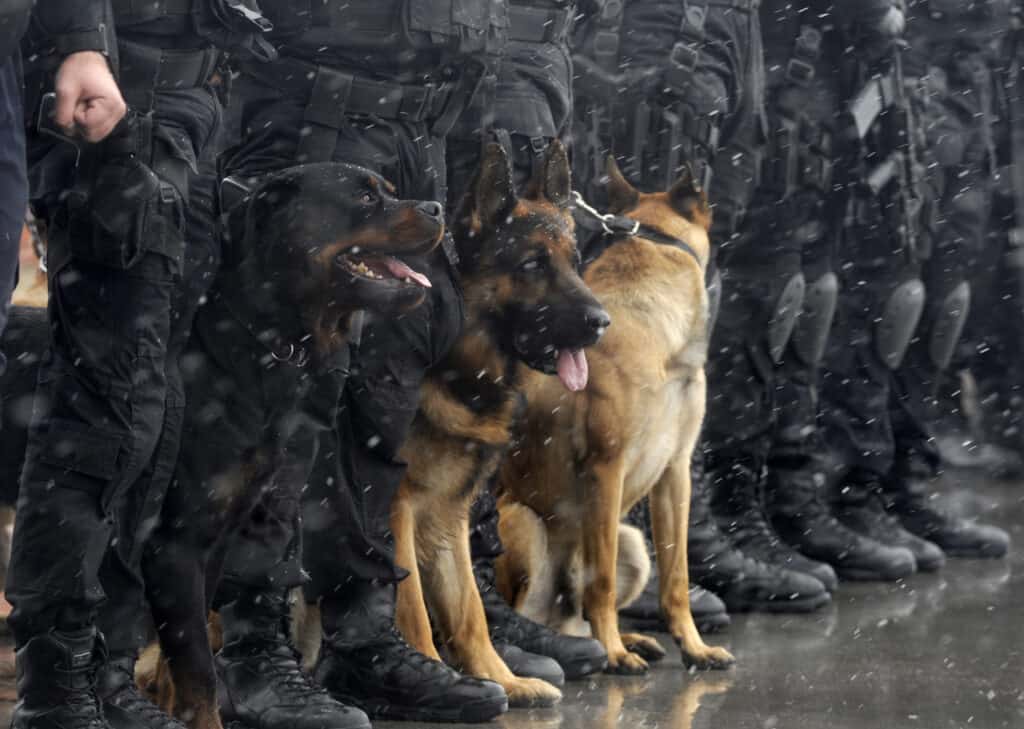
Trained dogs can sniff out drugs, bombs, and more, making them incredibly useful for law enforcement and the military.
©bibiphoto/Shutterstock.com
Coleman adds, “In any K-9 program, the goal isn’t to train a dog that never notices things. The actual goal is a dog that notices its surroundings, stays neutral, is aware but not acting on impulse, and waits for the handler to command them and lead them.”
What is the Final Test for K-9s?
If a K-9 dog passes all of its tests, including one rooted in distraction-based activities, a formal certification is issued. This certification proves that both a dog and its handler can perform role-specific work while staying under tight handler control. The cat shown in the Instagram reel is a great example of a distraction, but true excellence is demonstrated by consistently meeting written standards during testing.