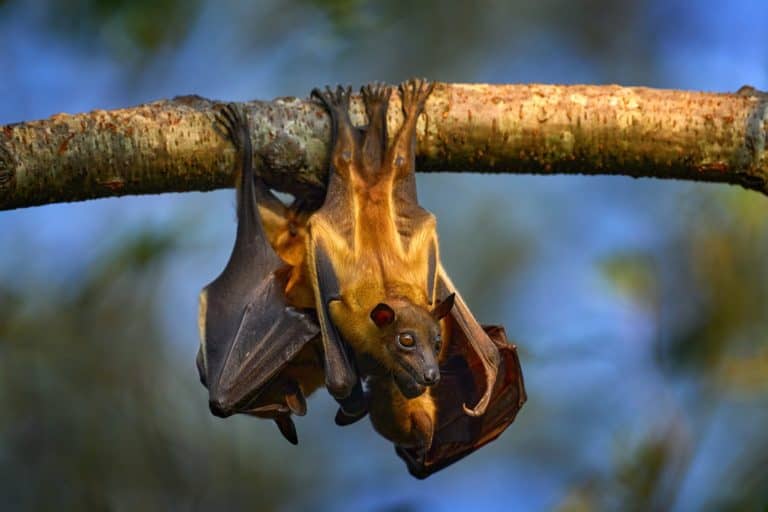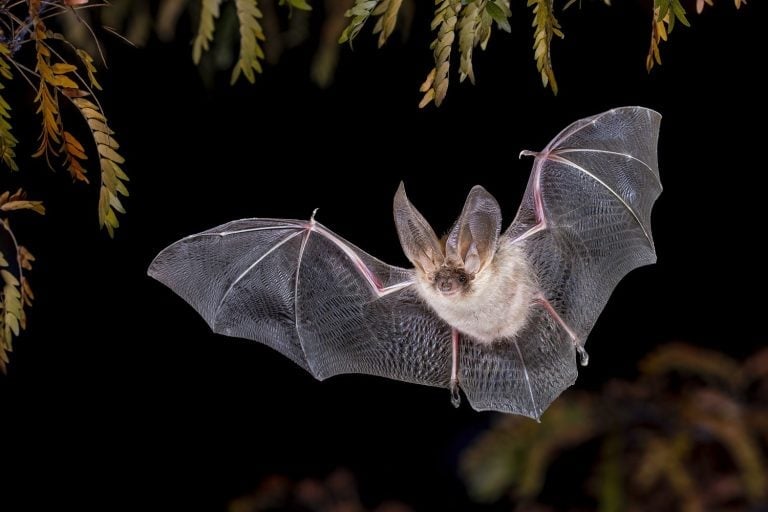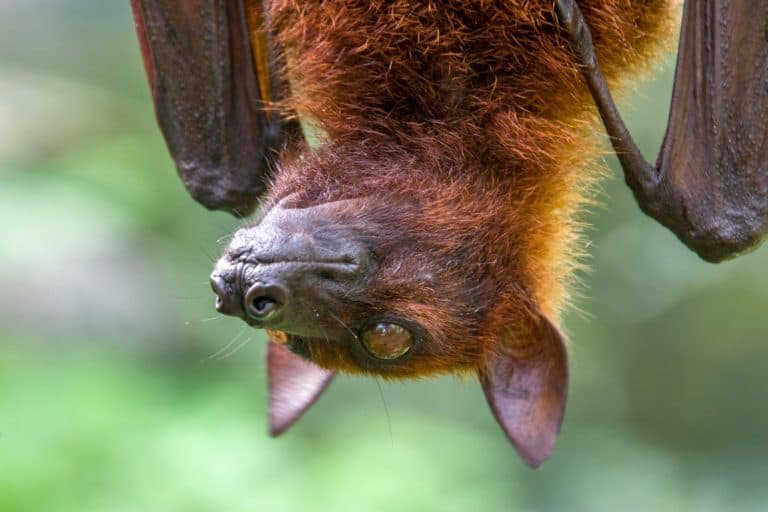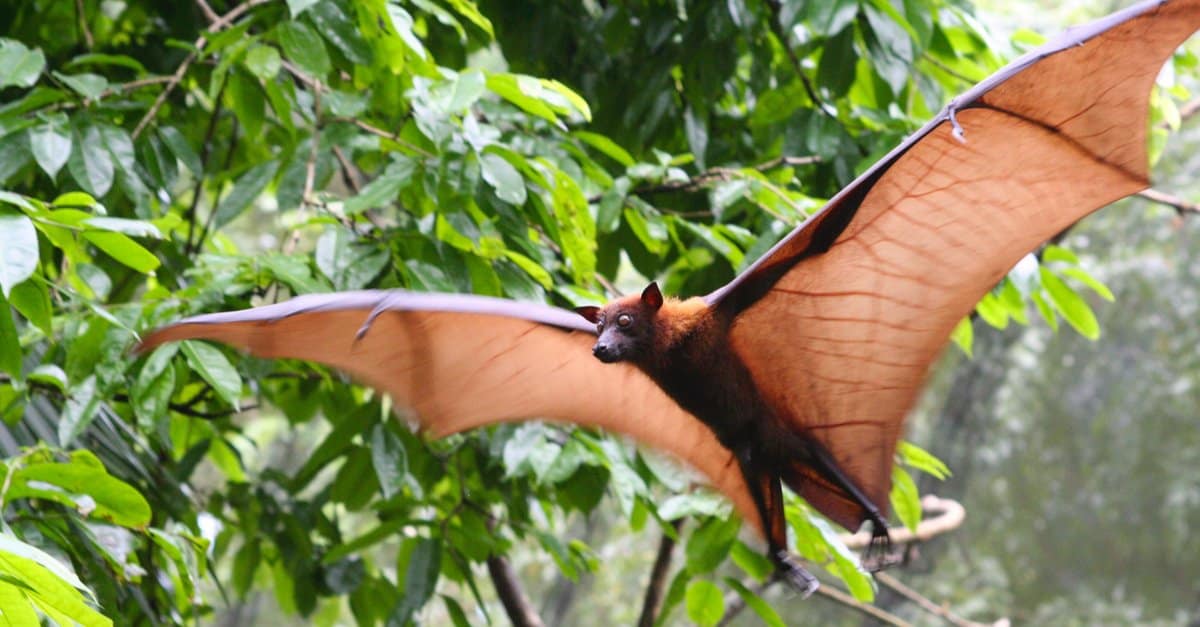

When you picture a bat, you probably imagine a small, dark creature fluttering about the night sky or an old dusty attic. However, not all bats fit this stereotype. Some of the world’s largest bats, known as “megabats,” have wingspans that can stretch over 5 feet — that’s taller than many humans!
Unlike their smaller relatives, most megabats don’t rely on echolocation to navigate. Instead, they use their excellent sense of smell and amazing eyesight to find their way around. Many megabats are also called “flying foxes” because their long, narrow faces look strikingly similar to those of a fox, giving the impression of a fox with wings. So, which of these enormous creatures holds the title of the largest bat in the world?
8. Ryukyu Flying Fox (Pteropus dasymallus)
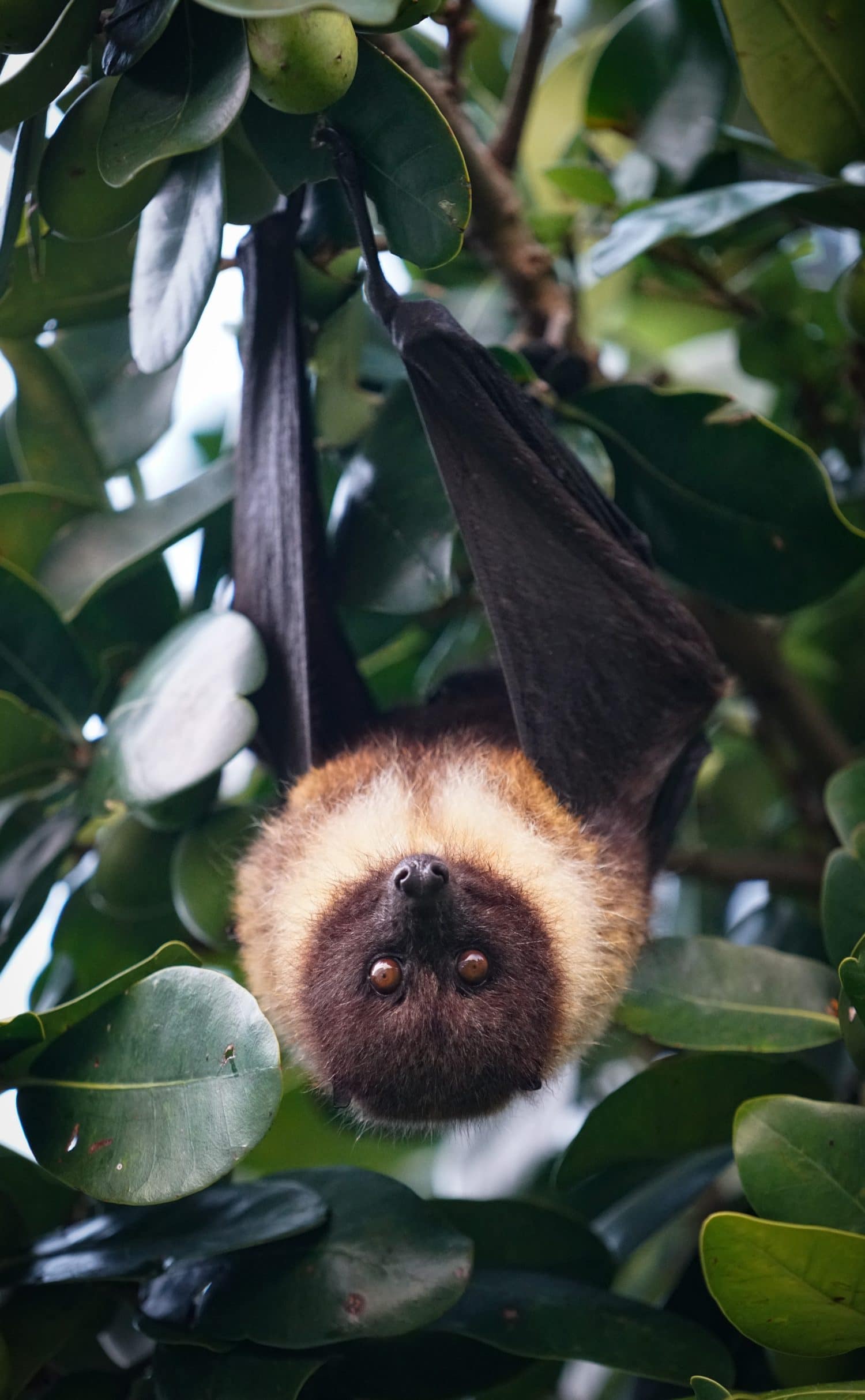
During the day, the Ryukyu flying fox usually roosts alone or in small groups in trees within tropical or subtropical forests.
©Gregory Justis/Shutterstock.com
The Ryukyu flying fox is a large fruit bat found in the Philippines, Taiwan, and Japan’s Ryukyu Islands. It has woolly brown or reddish-brown fur, black wings, and a distinctive orange or yellowish collar around its neck. Although it’s a frugivore and mainly eats fruits, the Ryukyu flying fox’s diet is quite expansive, including leaves, nectar, tree bark, and sometimes even insects.
Unfortunately, the Ryukyu flying fox is considered a Vulnerable species by the International Union for Conservation of Nature (IUCN) due to habitat loss, hunting, and getting caught in crop nets.
7. Lyle’s Flying Fox (Pteropus lylei)
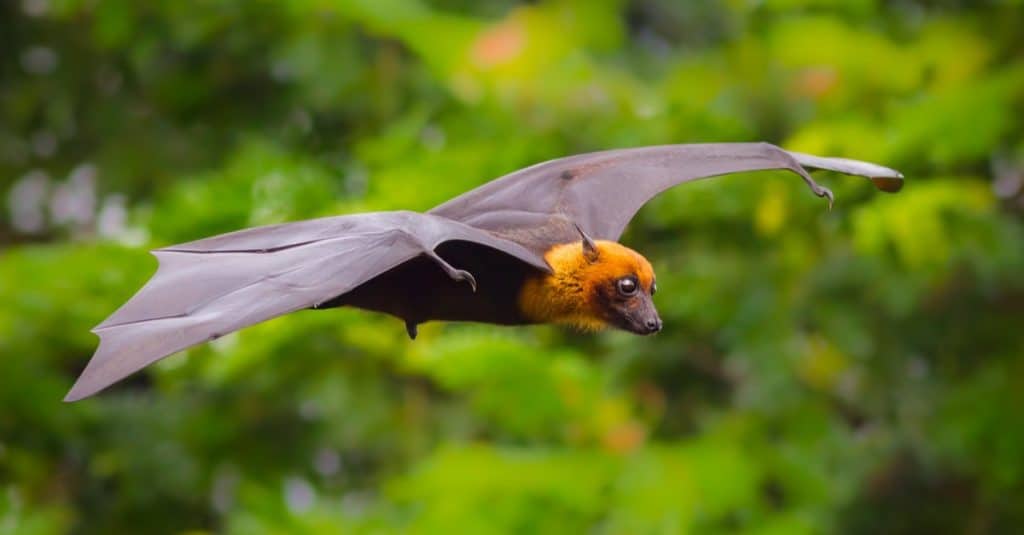
Lyle’s flying fox’s role in seed dispersal makes it vital to its local ecosystem.
©kajornyot wildlife photography/Shutterstock.com
Found in Thailand, Cambodia, and Vietnam, Lyle’s flying fox is a large bat with a wingspan stretching from 3 to 4 feet 11 inches and weighing at least 1 pound. It has fluffy orange or yellow fur around the neck that contrasts with its dark brown head and wings. Lyle’s flying foxes often roost in forests near human settlements and have a particular fondness for trees found at Buddhist temples, where monks sometimes care for and protect them.
As frugivores, Lyle’s flying foxes mainly eat fruit, and they particularly have a taste for cultivated orchard fruits and figs. Unfortunately, this preference can lead to conflict with farmers, who sometimes kill the bats to protect their crops. The bats also eat leaves and flowers from dozens of other plant species. Lyle’s flying foxes can eat up to 50% of their body weight each day, returning to the same roosting spot after a night of foraging. Sadly, the IUCN Red List classifies Lyle’s flying fox as a Vulnerable species. Its population has declined by over 30% in the last 15 years due to threats like habitat loss and degradation, deforestation, hunting, and the illegal wildlife trade.
6. Large Flying Fox (Pteropus vampyrus)
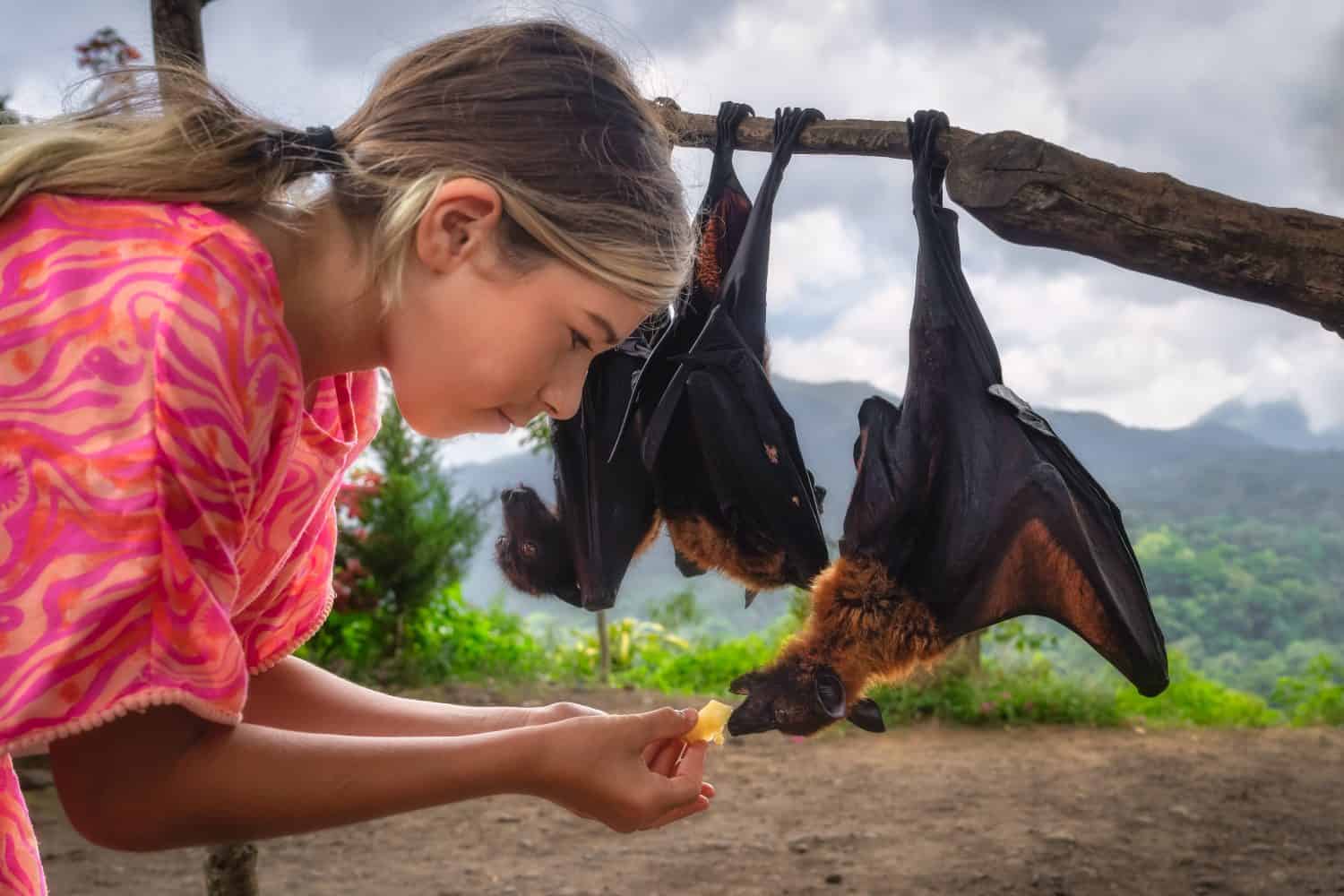
Populations of large flying foxes are declining considerably due to habitat loss and other human-related factors.
©Dawid K Photography/Shutterstock.com
Also known as the Malayan flying fox, this bat is one of the largest in the world, weighing between 1.5 and 3 pounds with a wingspan of up to 4 feet 11 inches. Its dark body is often highlighted by woolly orange or golden fur around its shoulders. Found throughout Southeast Asia, these enormous bats prefer roosting in secluded areas like swamps, mangroves, orchards, coastal areas, and various forests.
Large flying foxes are highly social animals that live in colonies ranging from a few hundred to several thousand bats, and sometimes even share their roosts with other species of flying foxes. Their diet consists of nectar, pollen, flowers, leaves, and fruits, and they have a particular fondness for figs. Sadly, the large flying fox is currently classified as an Endangered species by the IUCN.
5. Seychelles Flying Fox (Pteropus seychellensis)
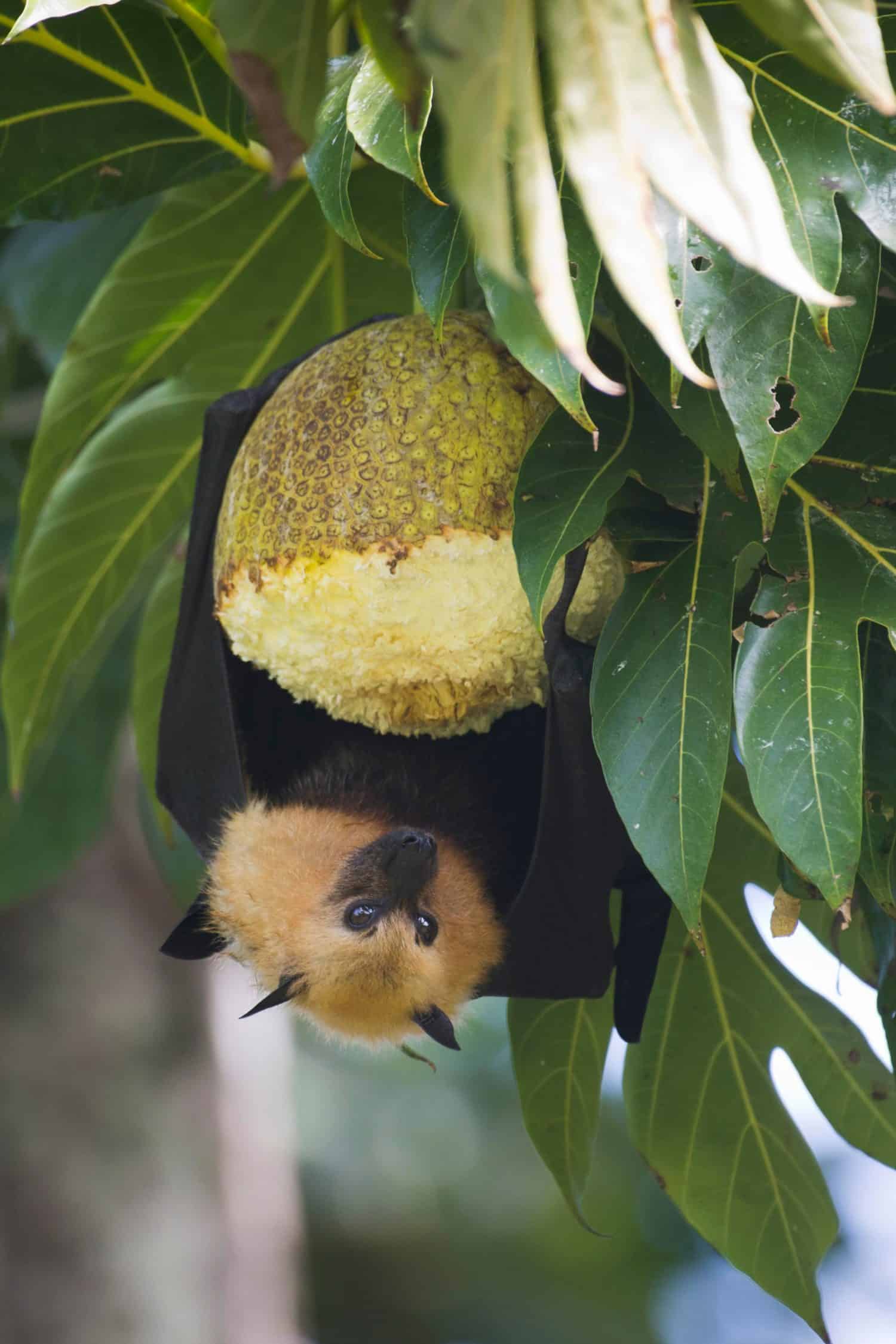
The Seychelles flying fox sometimes skims salt water from the ocean’s surface.
©imageBROKER.com/Shutterstock.com
As its name suggests, the Seychelles flying fox lives on the Seychelles Islands off the coast of East Africa. It is found on several islands and is one of the few native land mammals in Seychelles. This bat is easy to spot with its vibrant orange or yellow head and contrasting black wings, which can span 3 to 5 feet. Although the bats remain on the island year-round, they are most frequently observed between November and February.
As frugivores, Seychelles flying foxes play a crucial role in the island’s ecosystem, pollinating and spreading the seeds of various plants and fruit trees. Unfortunately, the Seychelles flying fox faces serious threats from local tourism; it is hunted for its meat, which is served in restaurants and resorts catering to tourists, with inhumane methods often used for capture.
4. Indian Flying Fox (Pteropus medius)
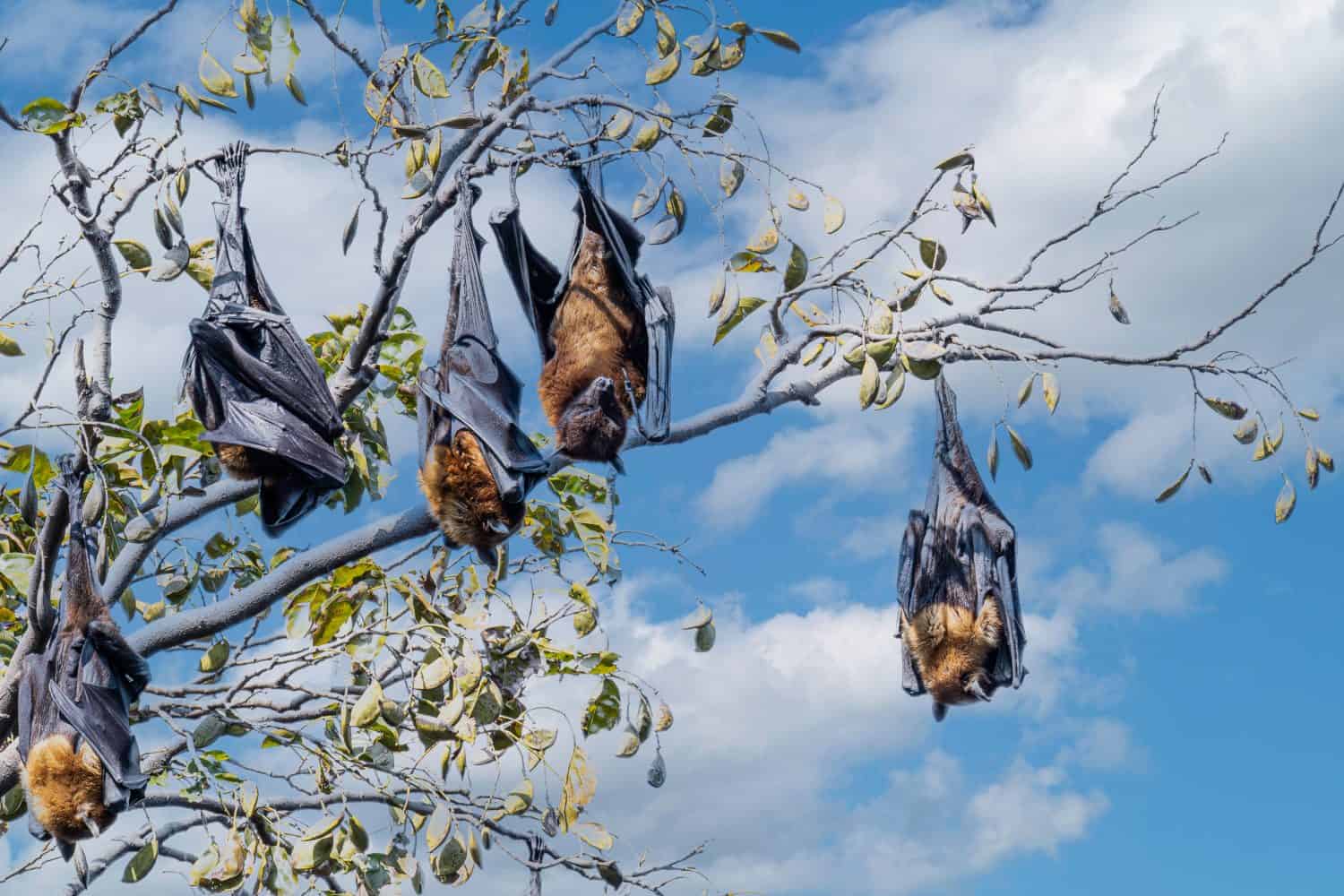
The Indian flying fox is the largest bat in India.
©Pravine/Shutterstock.com
Found in the tropical forests and wetlands of southern Asia, the Indian flying fox is a giant fruit bat that can weigh up to 3.5 pounds with a wingspan of nearly 5 feet.
Living in colonies of hundreds or even thousands of other bats, the Indian flying fox plays a vital role in its ecosystem by pollinating flowers and dispersing seeds. It mainly eats flowers, fruits, juice, and nectar, although it occasionally snacks on insects. Unfortunately, this important species is threatened by urbanization and habitat destruction.
3. Livingstone’s Flying Fox (Pteropus livingstonii)
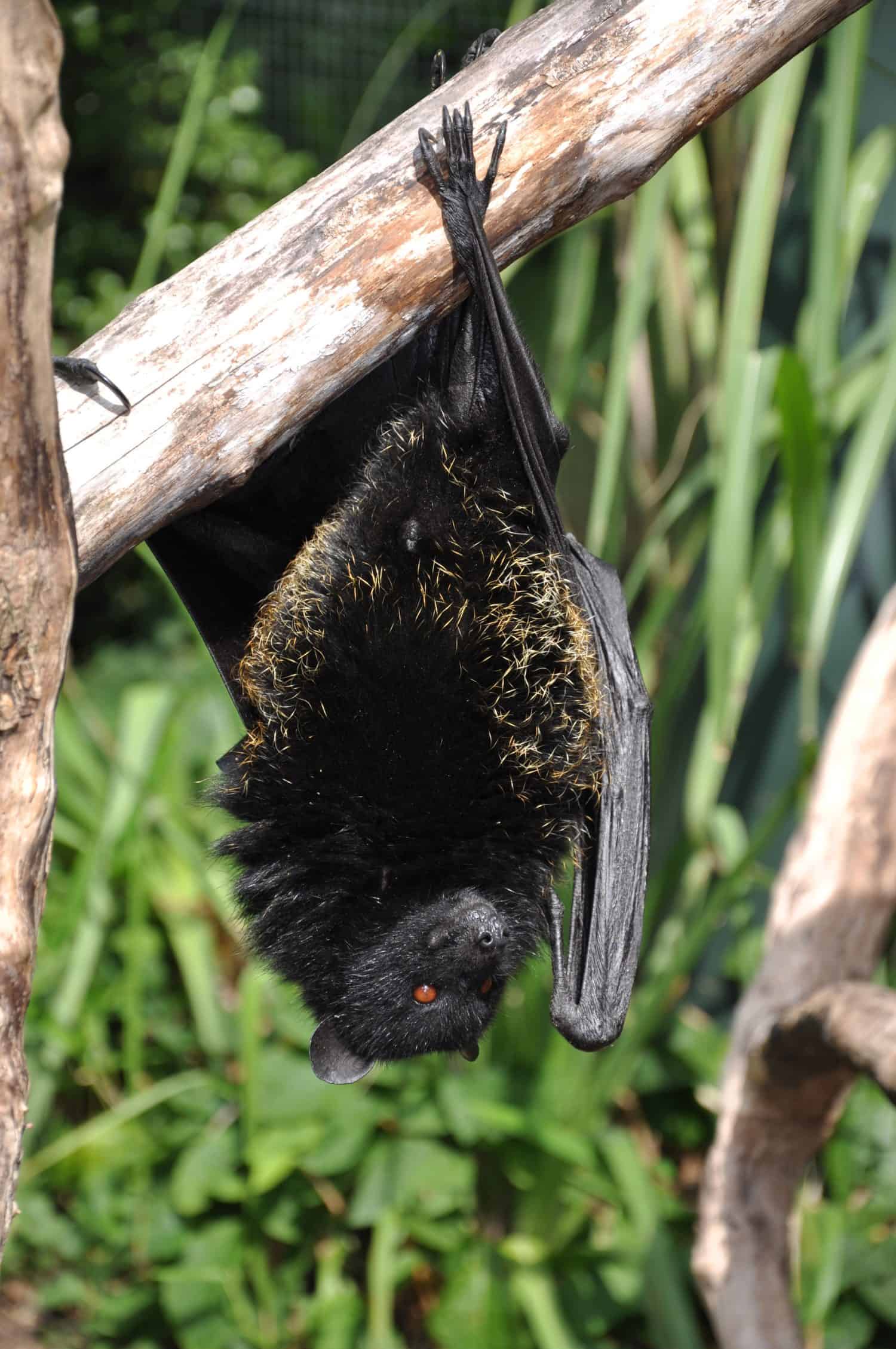
In rare instances, Livingstone’s flying foxes may also eat insects.
©Bob Cheung/Shutterstock.com
Also known as the Comoros flying fox, this bat is one of the largest in the world, with a wingspan stretching up to 5 feet. It is found exclusively on two of the Comoros Islands, off the coast of Madagascar. Livingstone’s flying foxes have long, dark fur, round ears, and striking copper-colored eyes. They mainly eat leaves, fruit, and pollen, and have a particular fondness for figs and the flowers and fruit of the kapok tree.
Tragically, Livingstone’s flying fox is a Critically Endangered species, with only about 1,200 bats remaining in the world. Its population is dwindling due to habitat loss from the agricultural and timber industries.
2. Pemba Flying Fox (Pteropus voeltzkowi)
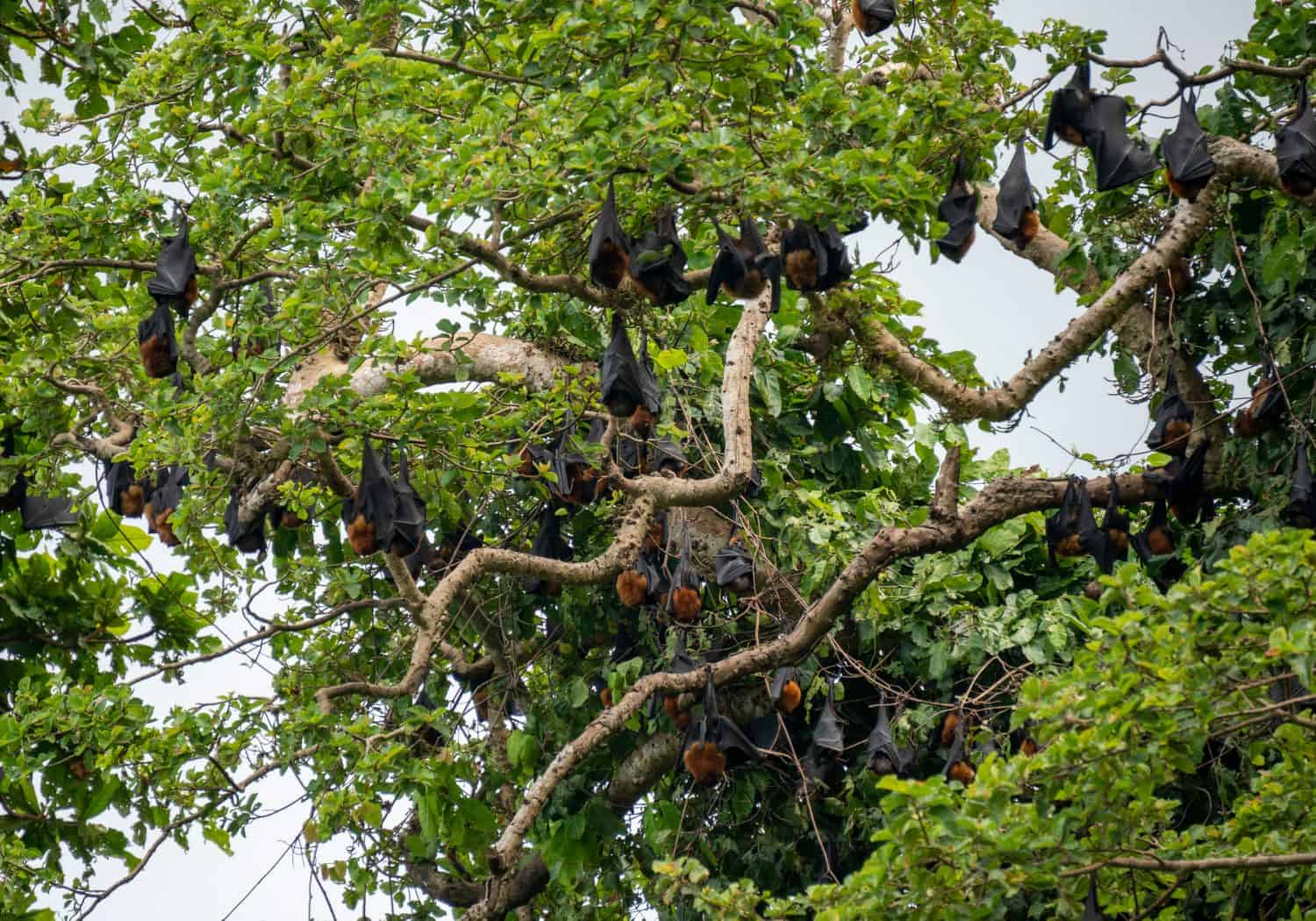
Pemba flying foxes are social bats that live in large tree-roosting colonies.
©Gideon Ikigai/Shutterstock.com
This giant bat lives exclusively in the tropical forests of Pemba Island off the coast of Tanzania. It is easy to spot thanks to its bright auburn fur and a face that resembles that of a fox or a dog. While it only weighs around 1 pound, its impressive wingspan can reach up to 5.5 feet. Pemba flying foxes primarily eat fruits like mangoes and figs, along with leaves and nectar. They are vital to their island ecosystem because they help spread seeds, which aid in the growth of new plants.
The Pemba flying fox was once Critically Endangered, with only a few hundred bats left in the early 1990s. Thanks to the efforts of conservationists and local communities, however, the population rebounded to around 5,000 by the late 1990s and to an estimated 22,000 to 36,000 in 2006.
1. Giant Golden-Crowned Flying Fox (Acerodon jubatus)
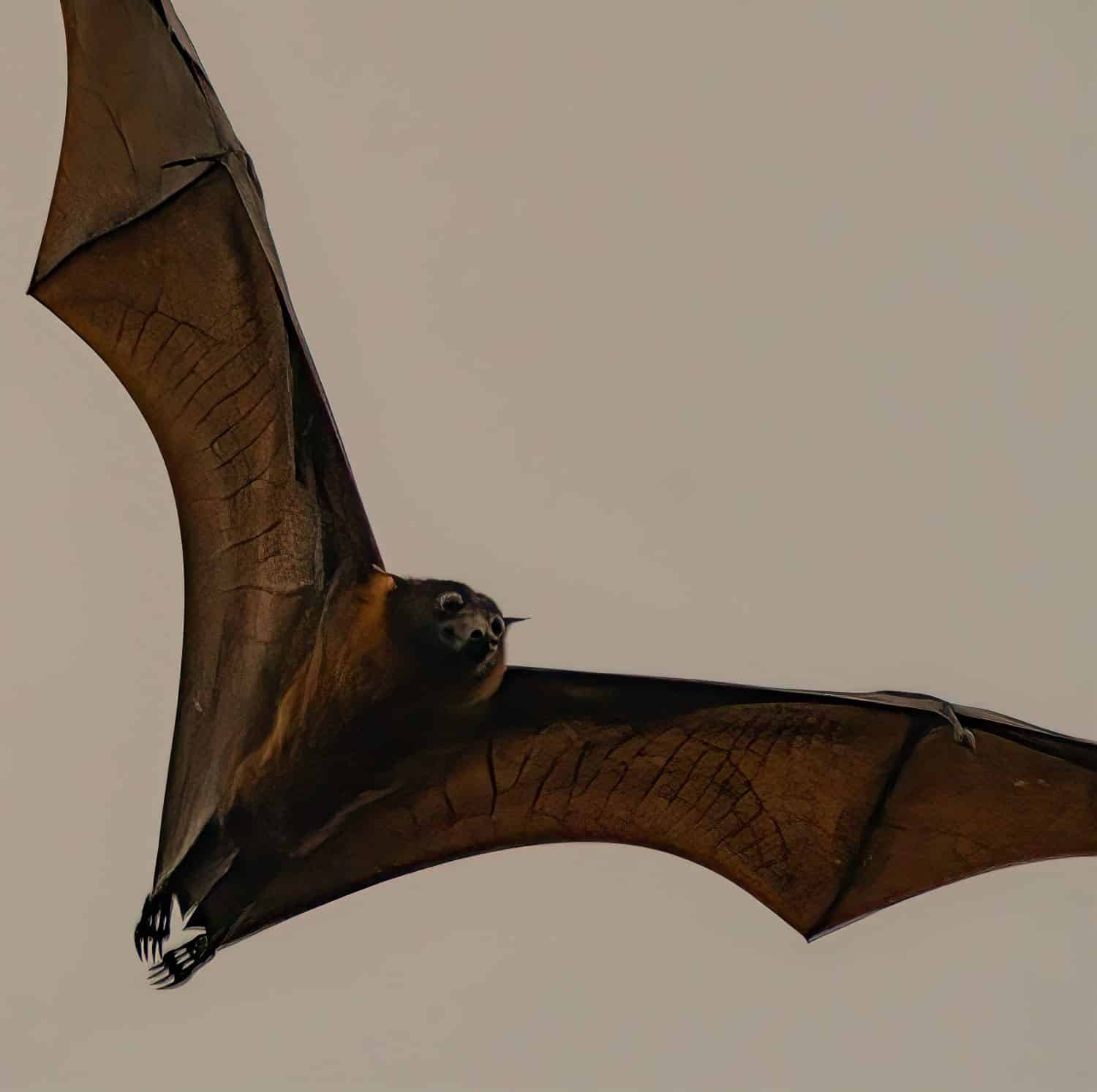
The giant golden-crowned flying fox is also called the golden-capped fruit bat.
©Mohammad Rezwan/Shutterstock.com
The largest bat in the world is the giant golden-crowned flying fox. With a wingspan stretching 5.5 feet or more and a weight of up to 3 pounds, it is not only one of the largest but also one of the heaviest bats. Found exclusively in the Philippines, these massive bats live across most of the islands, roosting in trees. They often share their colonies with other bat species. Their name comes from the striking golden fur on their heads, which resembles a crown or cap. Giant golden-crowned flying foxes mainly eat figs, but they also occasionally eat leaves and fruit from banyan trees. Sadly, these gargantuan bats are classified as Endangered by the IUCN due to severe habitat loss and hunting.