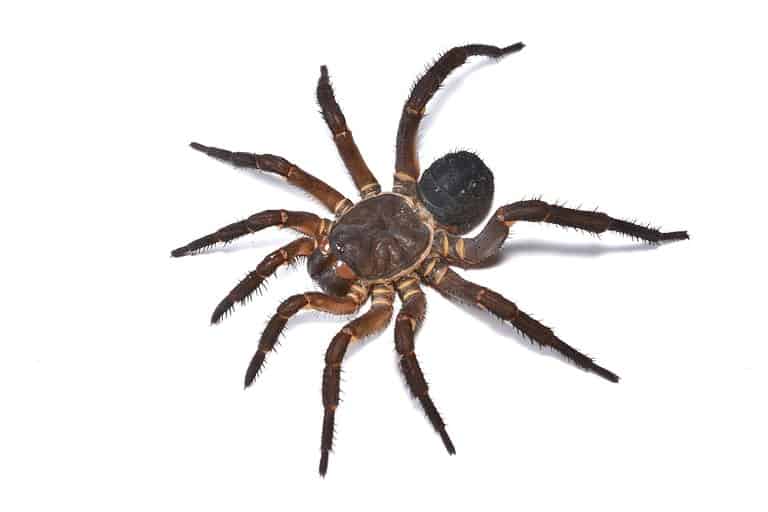

Spiders have developed several ingenious defense mechanisms to avoid being eaten, but the wheel spider has one of the most energetic. You can see it in action in this extraordinary YouTube clip. Read on to discover more about how and where this cartwheeling arachnid lives and why it needs to be so agile.
Wheel Spider Lifestyle
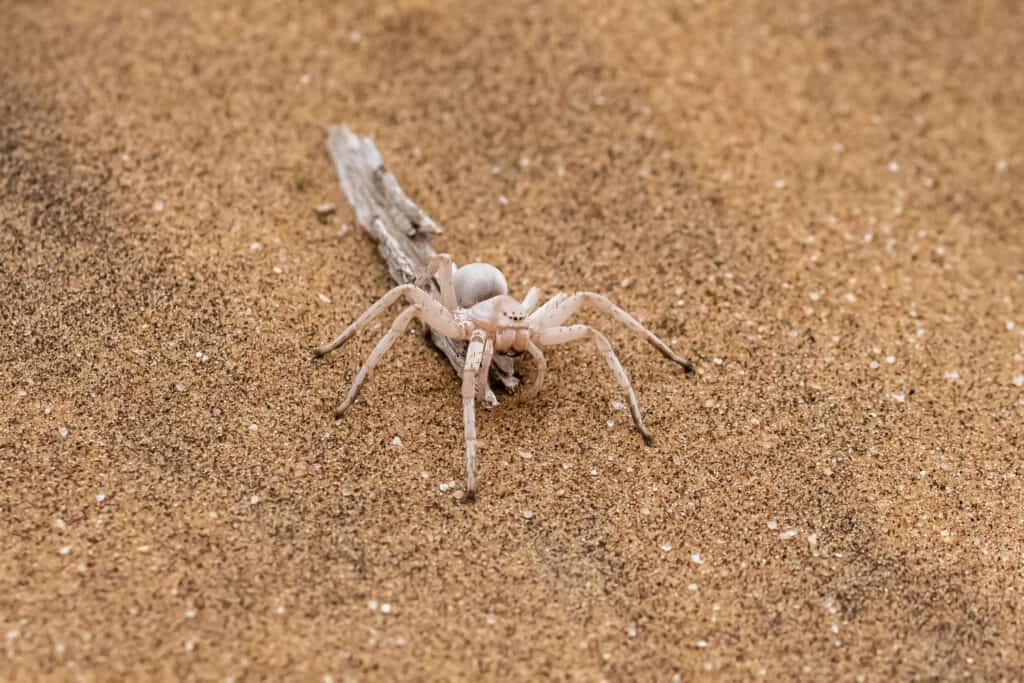
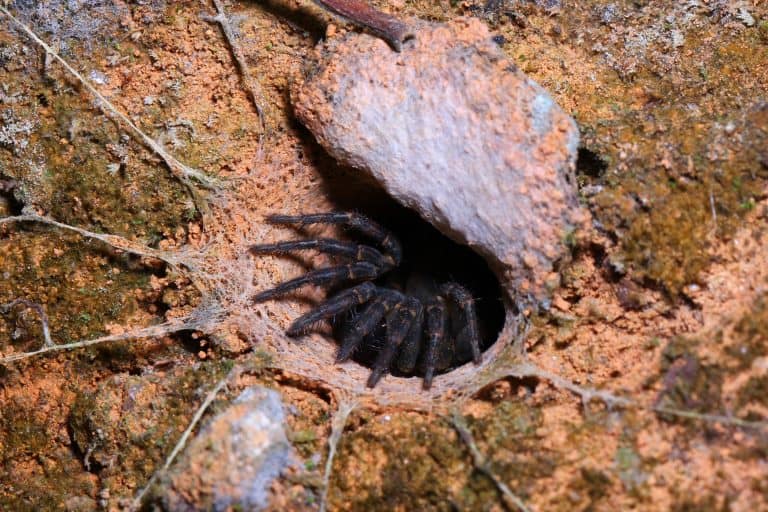
The golden wheel spider usually hides in burrows.
©iStock.com/Wirestock
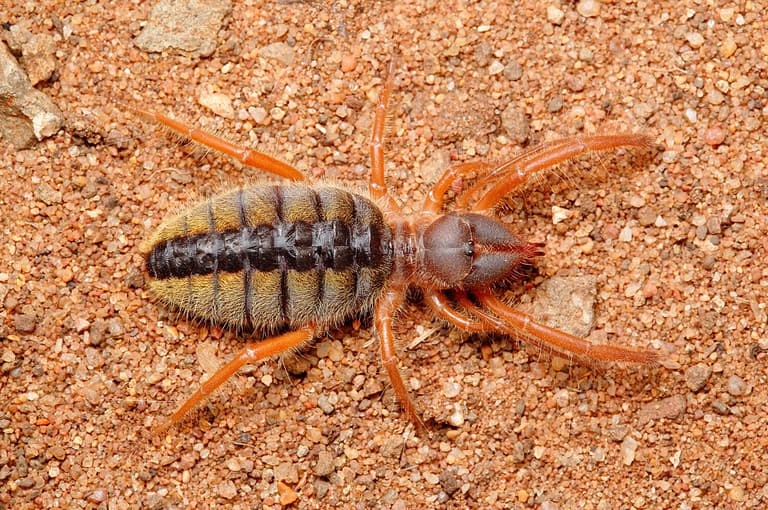
Wheel spiders (Carparachne aureoflava) are a native species of Namibia. Their bodies are about 0.7 inches long. They are a yellow-brown color, matching the sand of their habitat. Webs are not very useful in this desert environment because there is nothing to attach them to, and they would quickly become covered in sand. Instead, these are free-ranging hunting spiders who head out at night to find prey. They feed on insects and other small invertebrates.
When not hunting, they bury themselves out of sight in silk-lined burrows in the sand. These can be up to 18 inches deep and require the spider to move 2.6 gallons of sand! However, while this construction process is underway, the spider has to spend time out in the open, and that is when it is vulnerable to attack.
Using Acrobatics to Evade Attack
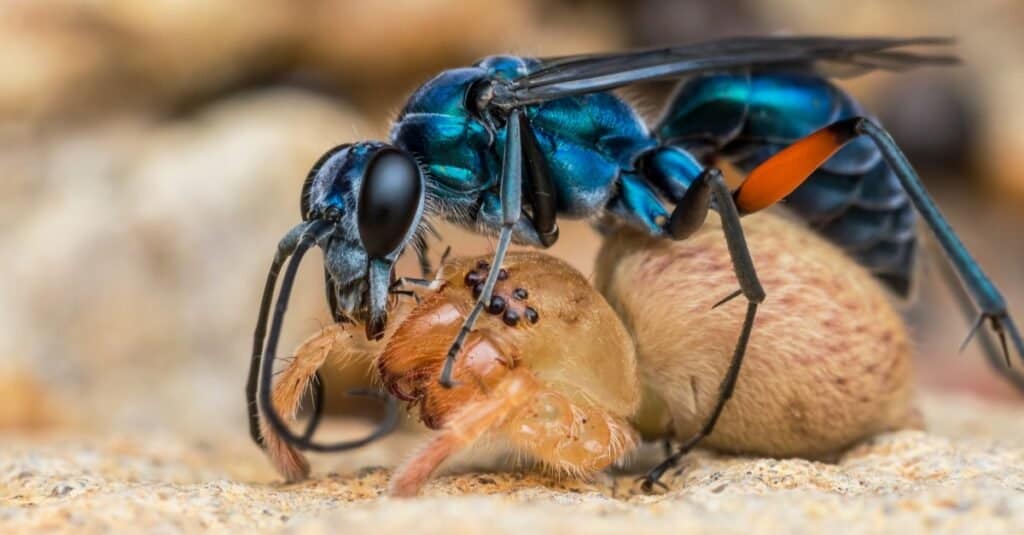
Wheel spiders have to escape the wasps to stay alive.
©Ranjit_Mahara_Photography/Shutterstock.com
Wheel spiders are preyed on by a type of insect called pompilid wasps or spider wasps. The female wasp stings the spider to paralyze it and then drags it into a burrow. Here, she lays an egg in its abdomen so when the larva hatches, it will be able to feed on the spider’s body.
In an environment of sand dunes, escaping quickly is crucial to avoid this fate. To escape predators, this spider has developed an acrobatic routine that allows it to move much faster than it could by simply running. They tuck their bodies into a circle and use their legs as paddles to cartwheel down the slopes. They achieve 44 turns a second, and some reports claim that they can reach speeds of over 6 feet per second. This movement is so impressive that it has inspired the development of rolling robots designed for potential planetary exploration, including Mars.